A freestanding gas range starts around a thousand dollars, while a 60-inch pro-style range with dual fuel runs several thousand.
If you regularly run multiple dishes at different temperatures, a double oven range gives you the capacity; if you need speed and precise control, induction heats faster than gas and keeps the surface cooler.
Gas ranges need a supply line or propane tank, electric and induction models require 240 volts, and dual-fuel setups need both, so fuel type and your kitchen’s existing hookups narrow the field before you pick a finish or a burner count.
1. Freestanding Gas Range
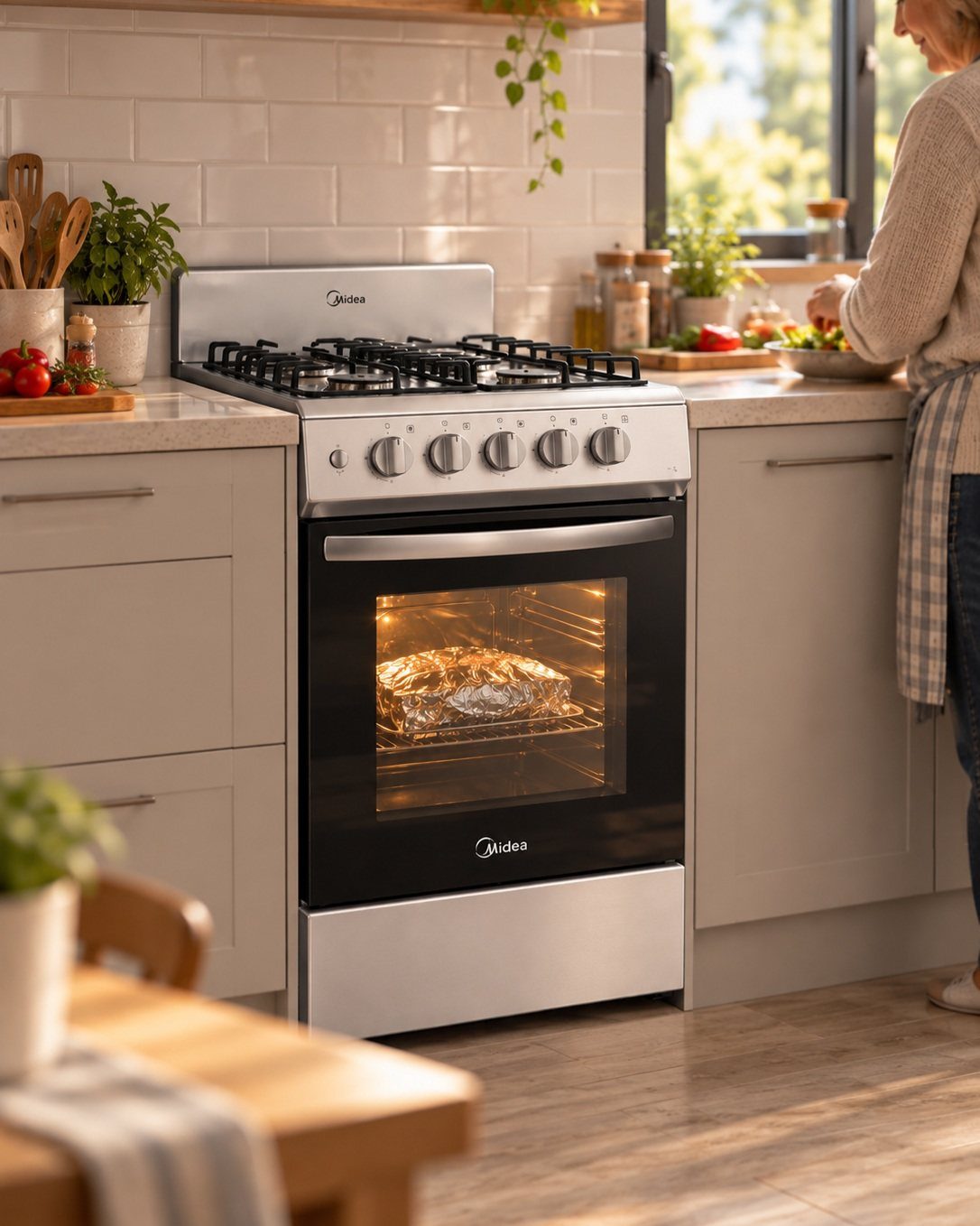
A freestanding gas range sits on its own rather than slotting between counters, so it can anchor a kitchen layout without custom millwork.
I like this option when the cooking side of the room needs presence but the budget can’t stretch to a built-in or a full pro-style range.
The visible gap at the back lets you pull the unit forward for cleaning, and the exposed sides mean you can place it at the end of a counter run or in an island if gas supply permits.
Most models sit 30 inches wide, though a few run narrower for tight galley kitchens.
One tradeoff: the sides show, so pick a finish that holds up.
Stainless reads clean in most kitchens, but it shows fingerprints. Black or white enamel hides wear better over time.
2. Double Oven Range
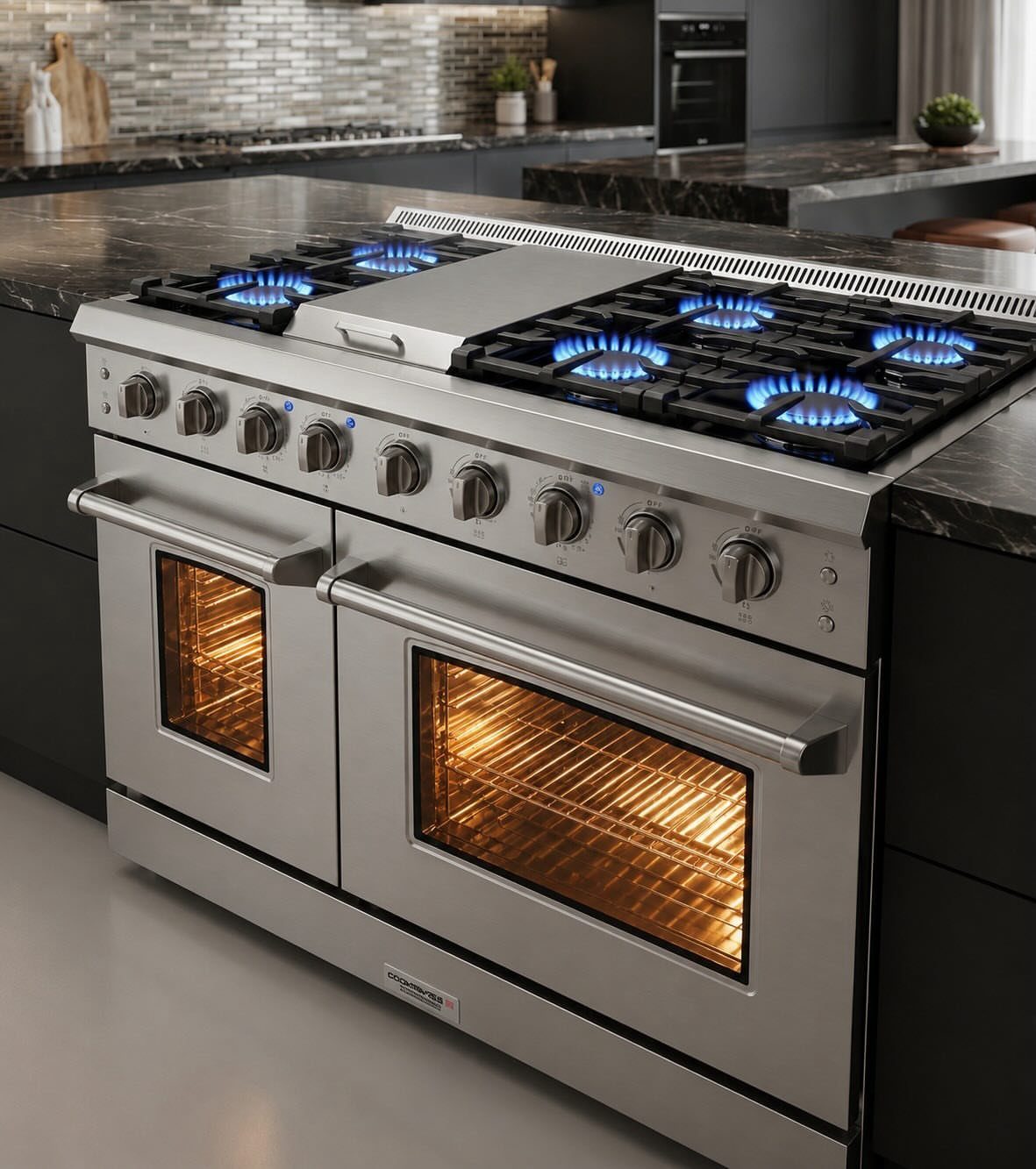
Two ovens in one range let you roast and bake at different temperatures at the same time, which saves time when dinner has multiple parts.
I recommend this setup for anyone who regularly cooks large meals or hosts, because the smaller upper oven heats faster for everyday use while the lower one handles full-sheet pans or a turkey.
The visible version runs on gas, which gives better control over the cooktop than electric coils.
Most double oven ranges measure 30 inches wide and fit a standard range opening, so installation stays straightforward if you already have gas supply and the right electrical hookup for the ignition.
The main cost is capacity: each oven runs smaller than a single full-size cavity, so oversized roasting pans may not fit.
3. Induction Cooktop
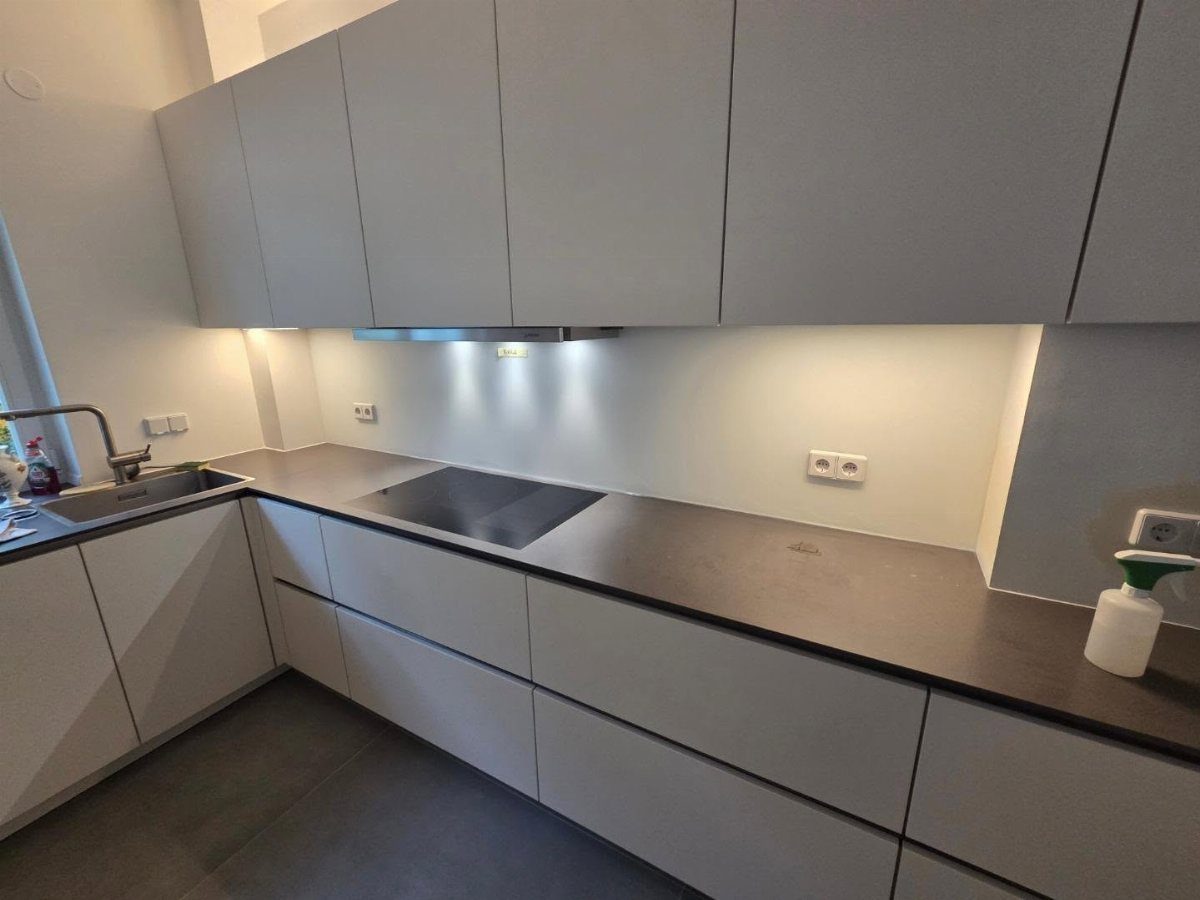
Induction heats cookware directly through magnetic fields rather than heating the cooktop surface first, so water boils faster and the surface stays cooler to the touch.
The visible setup sits flush with the counter, which gives a clean look and makes spills easier to wipe.
You need cookware that a magnet sticks to: cast iron and most stainless work, but aluminum and copper alone do not.
I’ve had clients learn their existing pots won’t work after install, so test them with a fridge magnet before you buy.
Induction runs on 240V, and installation cost jumps if your kitchen isn’t already wired for it. You get speed and control that rivals gas, with less heat escaping into the room during summer.
4. Large Statement Range
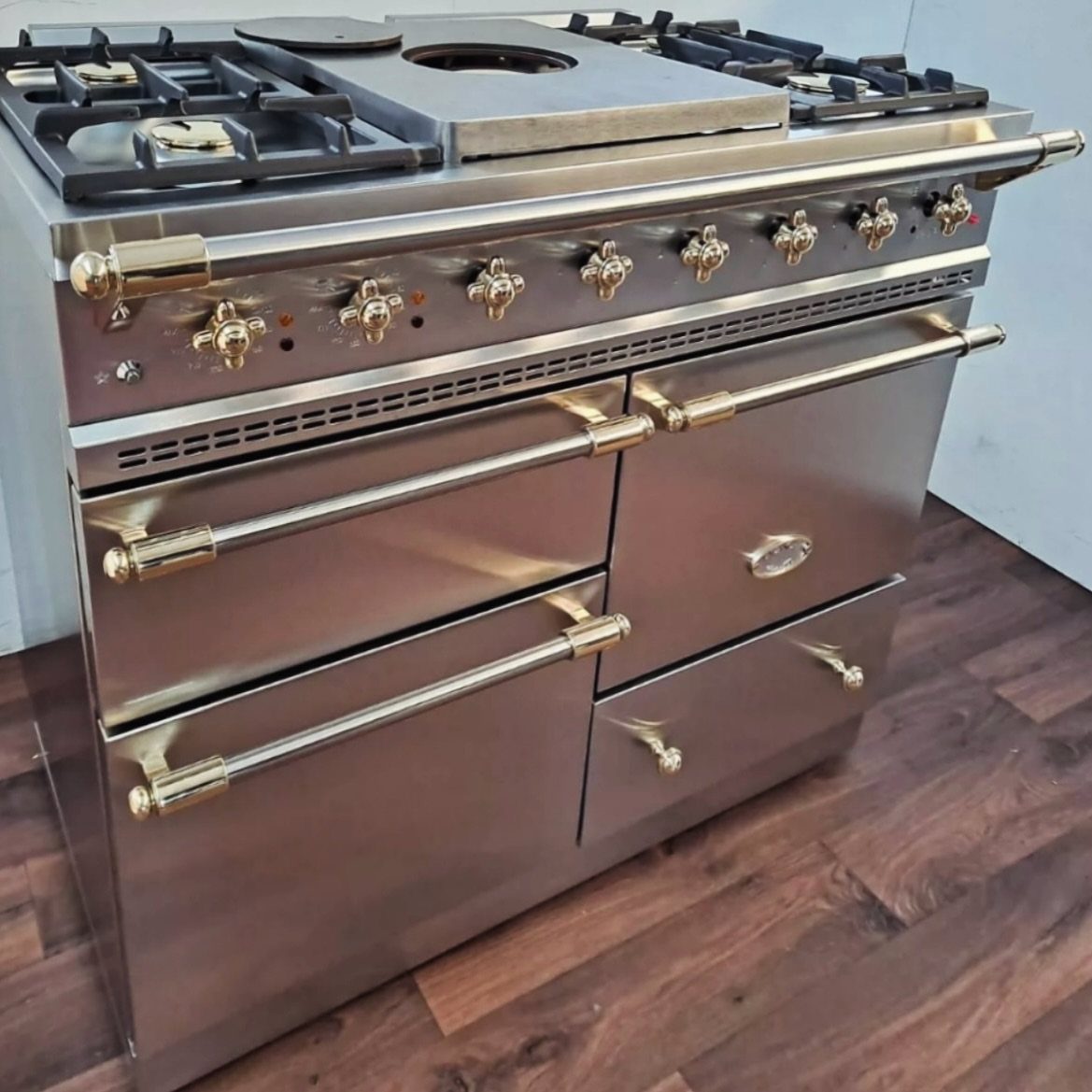
A range that spans 48 or 60 inches turns the stove into the room’s main feature, and the extra burners and oven capacity suit anyone who cooks for a crowd or runs multiple dishes at once.
The visible model combines a wide cooktop, multiple ovens, and pro-style details that read serious.
Most large ranges need at least 48 inches of clear counter space, which rules them out in galley or apartment kitchens.
Fuel matters too: gas requires a larger supply line than a standard 30-inch range, and electric models pull more power than a typical kitchen circuit provides.
If you have the space and the hookups already in place, this setup delivers more cooking capacity than any other single appliance.
5. Window-front Range
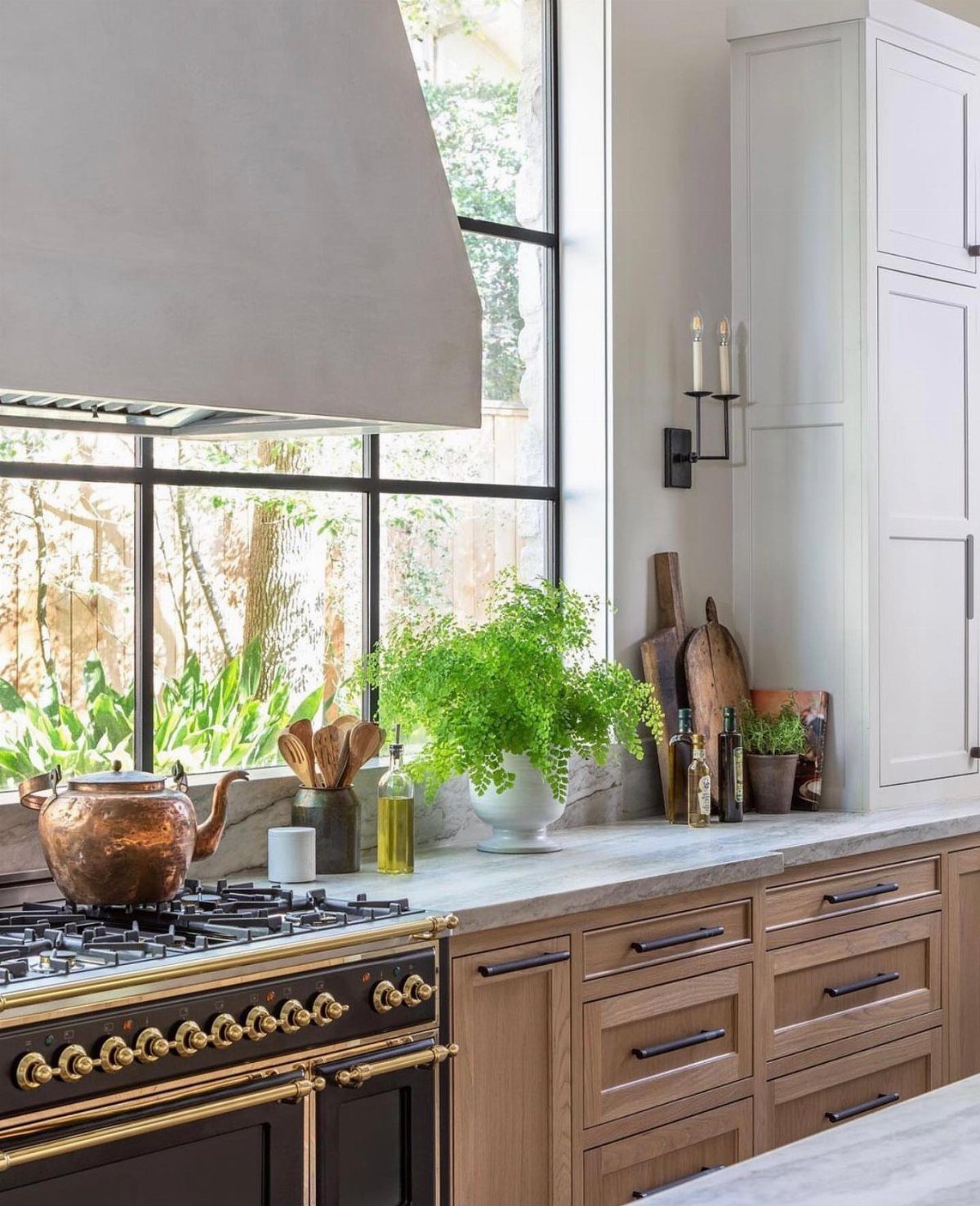
Placing a range in front of a window gives the cook natural light and a view, which makes prep and cooking feel less isolating in a kitchen that doesn’t open to other rooms.
The visible setup places the range in front of the window, and a hood mounted overhead handles ventilation without blocking sight lines.
Check local code first: some jurisdictions require a certain clearance between burners and combustible materials, and older wood window frames may not meet that standard. If the window sits close, consider replacing the frame with metal or raising the sill.
Grease settles on glass faster than on tile, so this layout works best when you clean the window weekly. A narrow sill keeps clutter off the ledge and reduces what needs wiping down after cooking.
6. Ornate Gas Range
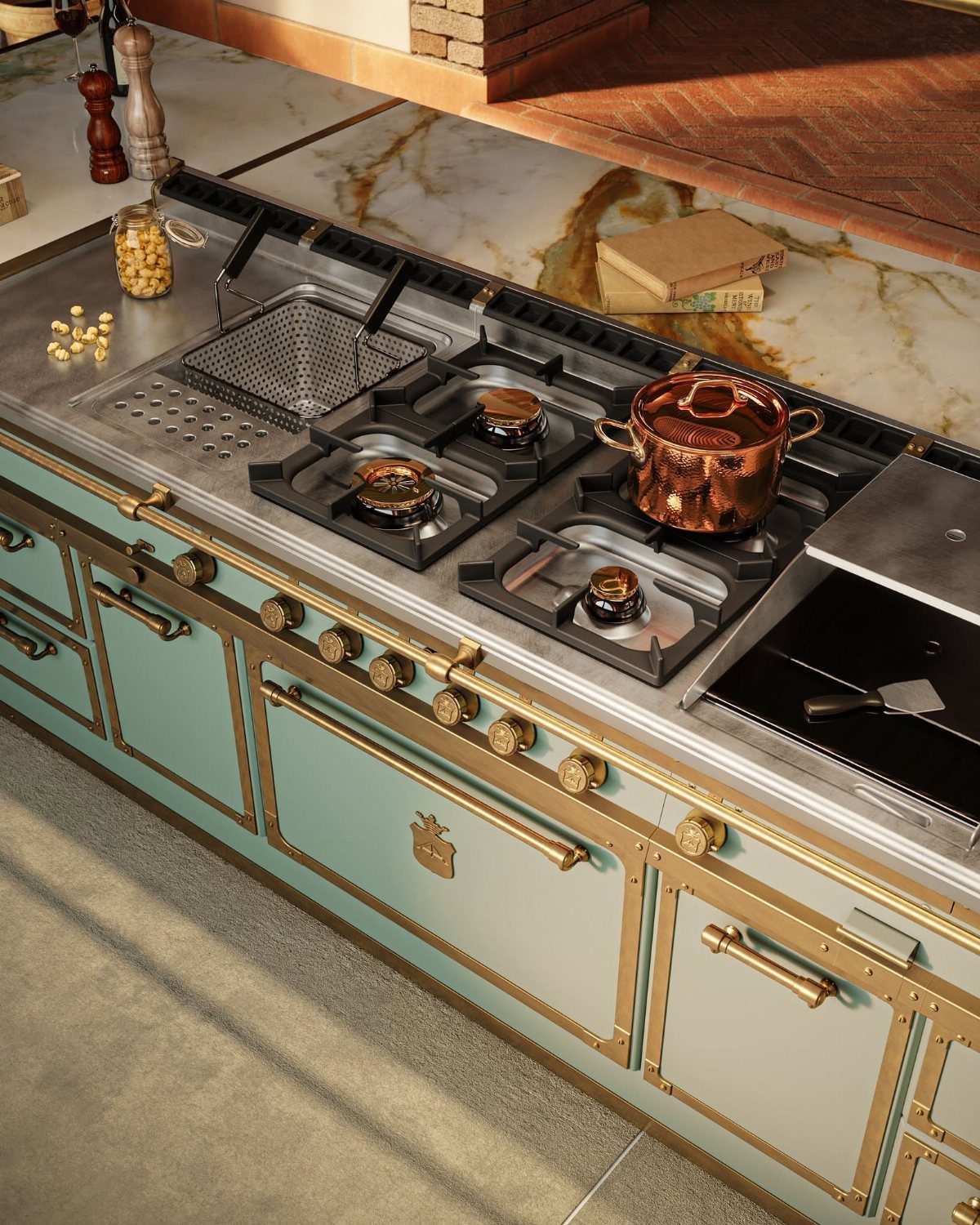
An ornate gas range with decorative trim, curved details, and metallic accents suits a kitchen that leans traditional or maximalist.
The visible model pairs a pale finish with brass knobs and copper cookware, which reads softer than black or stainless while still anchoring the room.
Ranges like this often come from European brands and carry a premium over standard models. Installation is the same as any freestanding gas range, but lead times run longer, and finishes sometimes require special order.
I reach for this option when the kitchen has other decorative elements, carved hood surrounds or tile patterns, because a plain range would feel out of step. In a minimal or transitional kitchen, the detail level can look fussy.
7. Contrasting Black Range
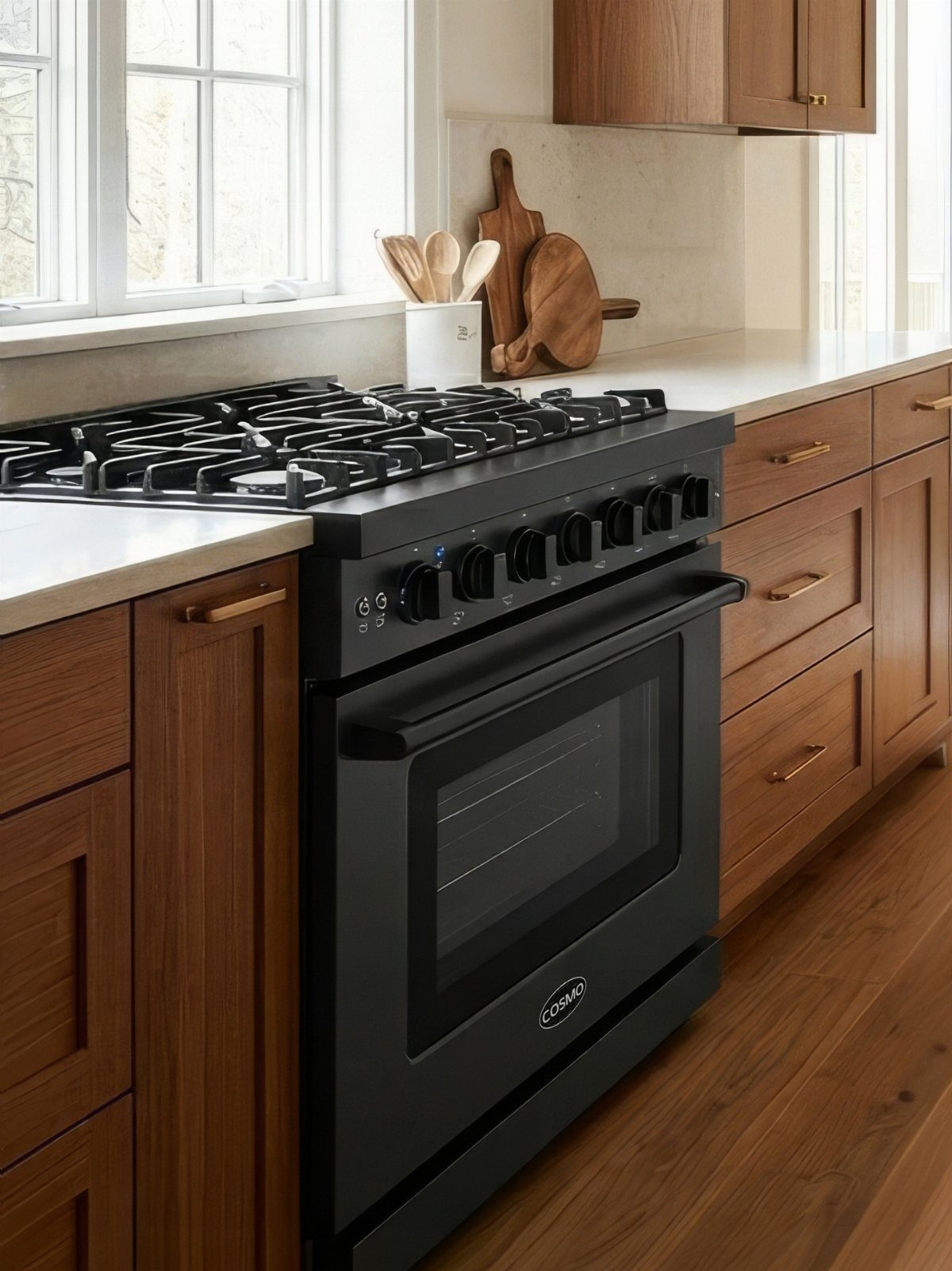
A black range against light counters and wood cabinetry creates a clean focal point without requiring custom color or vintage hunting. The dark finish grounds the space and hides wear better than stainless, which shows every fingerprint and smudge.
This works best when the rest of the kitchen stays warm or neutral.
If you add black hardware, a black sink, and black light fixtures all at once, the contrast loses its punch. One dark anchor is often enough.
8. Custom-color Range
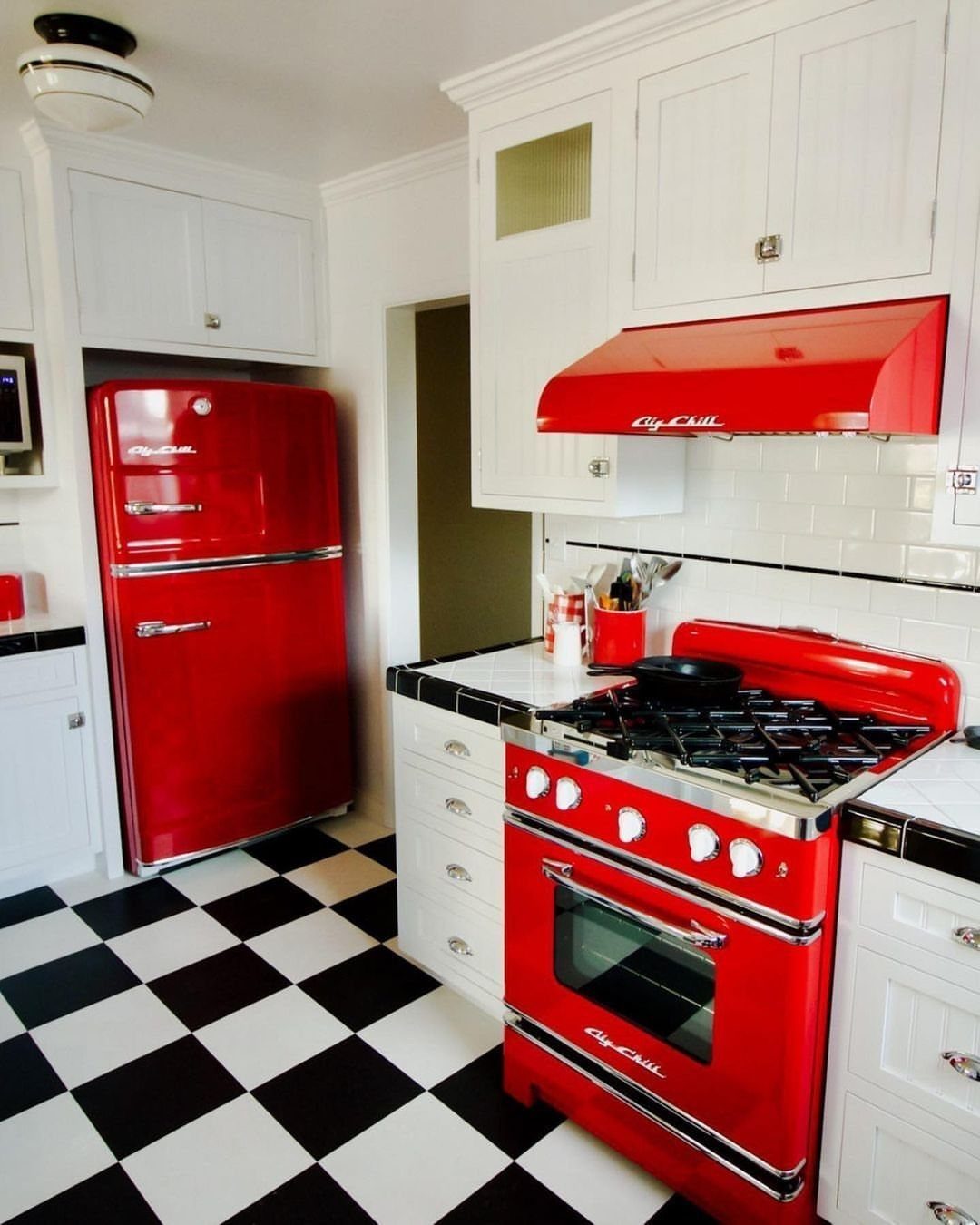
Some brands let you order a range in nearly any color, or you can pay a specialty shop to re-enamel a vintage model.
The visible red range matches the fridge, which ties the appliances together in a kitchen that leans retro or bold.
Custom finishes add weeks to delivery and hundreds to the price, sometimes more if you need a specific match. If you go this route, order samples first, because screen colors rarely match the baked enamel you get.
A single colored appliance can work on its own, but two or more in the same finish read more intentional.
9. Gas Cooktop
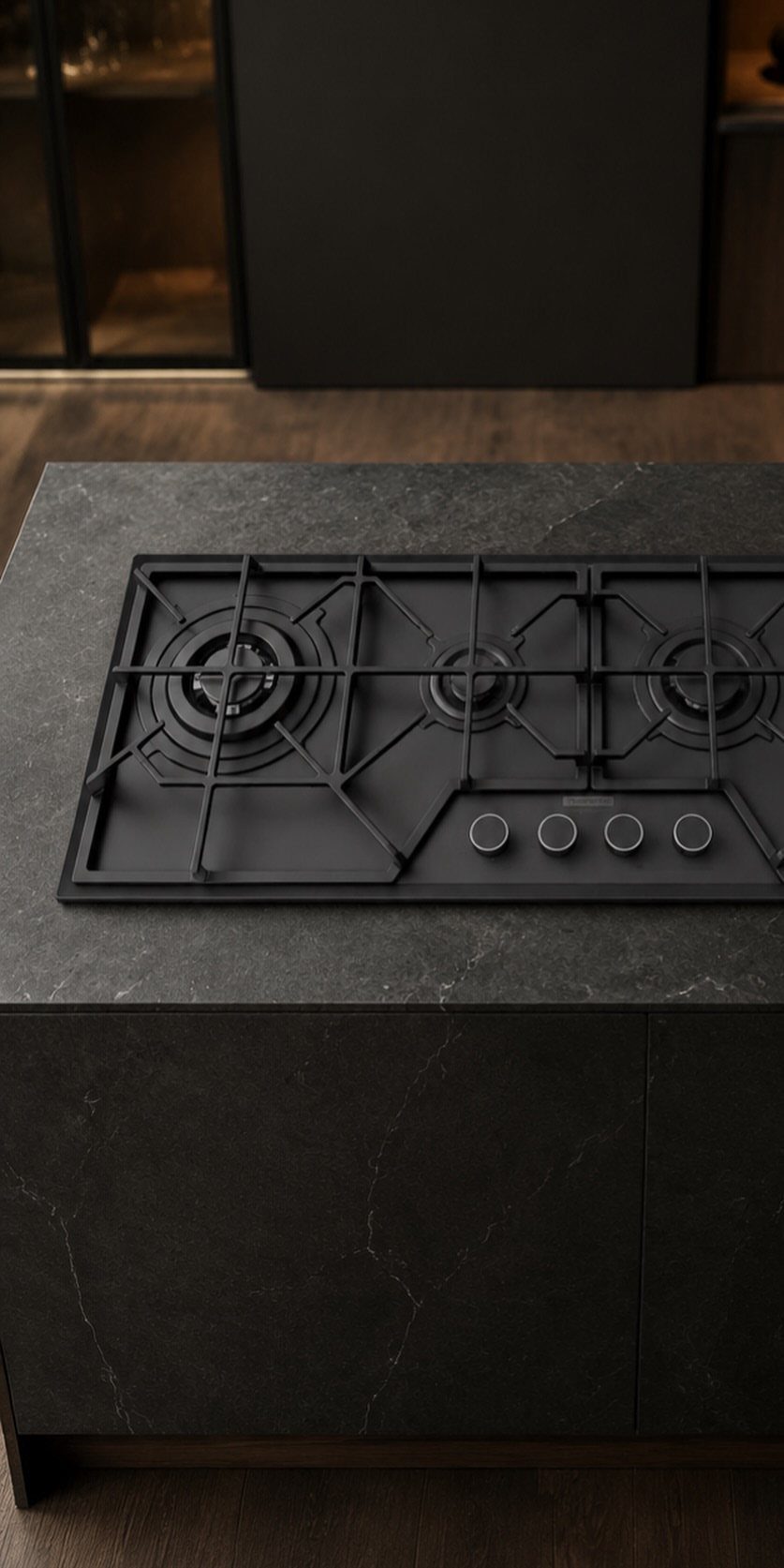
A gas cooktop drops into the counter without an oven below, which frees up base cabinet space for drawers or a second oven elsewhere.
The visible four-burner model sits in a marble island, and the dark stone hides stains better than white or light quartz.
Gas gives immediate heat control, but you need a vent hood or downdraft system to handle fumes. Most cooktops require a cutout, and installation means running a gas line if one isn’t already there.
This setup suits open kitchens where the cooking surface faces the room and wall oven placement makes more sense than a full range.
10. Slide-in Electric Range
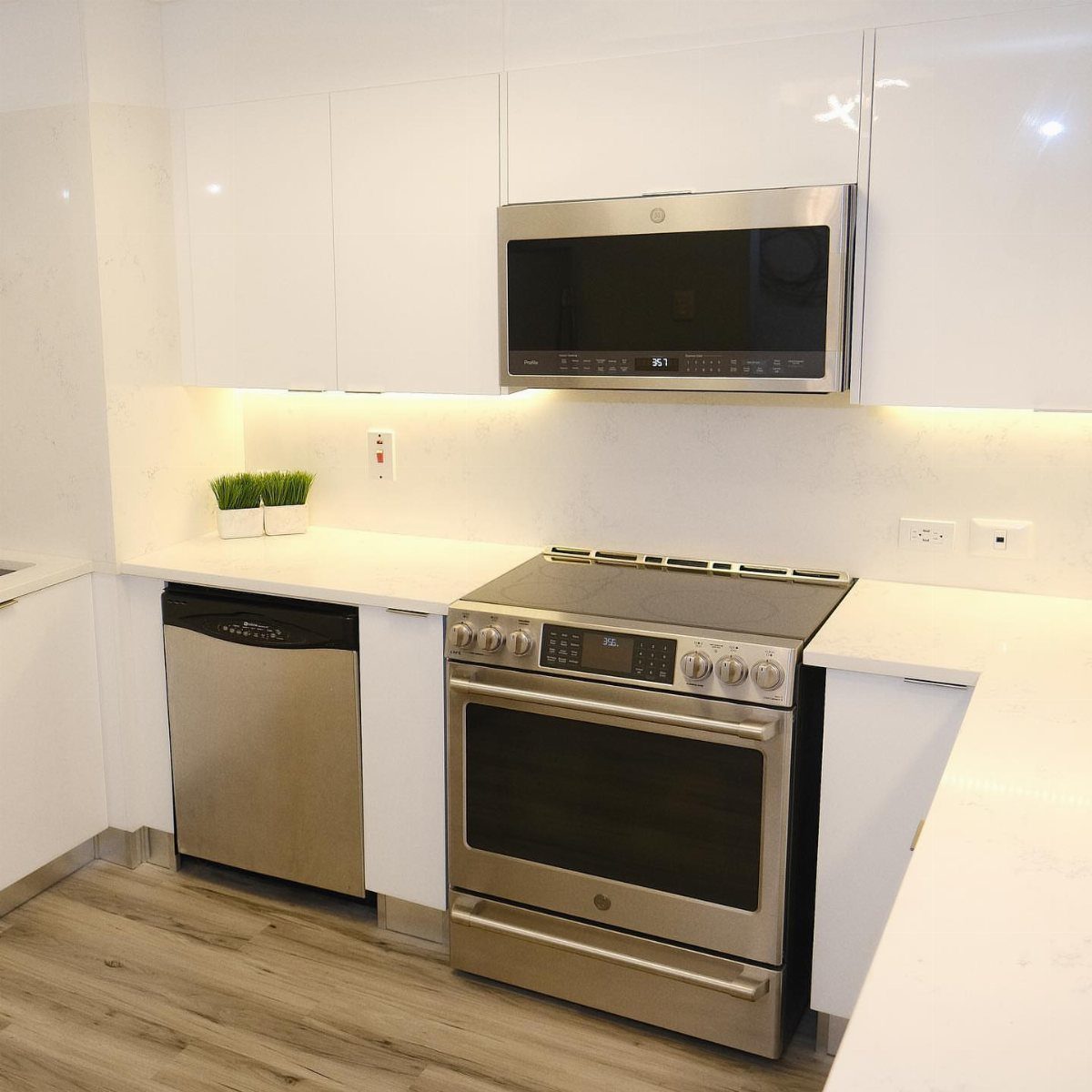
A slide-in range fits between cabinets with finished sides and front-mounted controls, so it reads more like a built-in appliance than a freestanding one.
The visible stainless model sits flush with the counter, and the lack of a back panel means you add your own backsplash material all the way across.
Electric coil or smooth-top models cost less than gas and need no venting beyond what code requires for general kitchen air exchange. Installation is simpler if you already have a 240V outlet in place.
Electric burners take longer to cool down, so you can’t drop temperature as fast as gas.
11. Pro-style Range
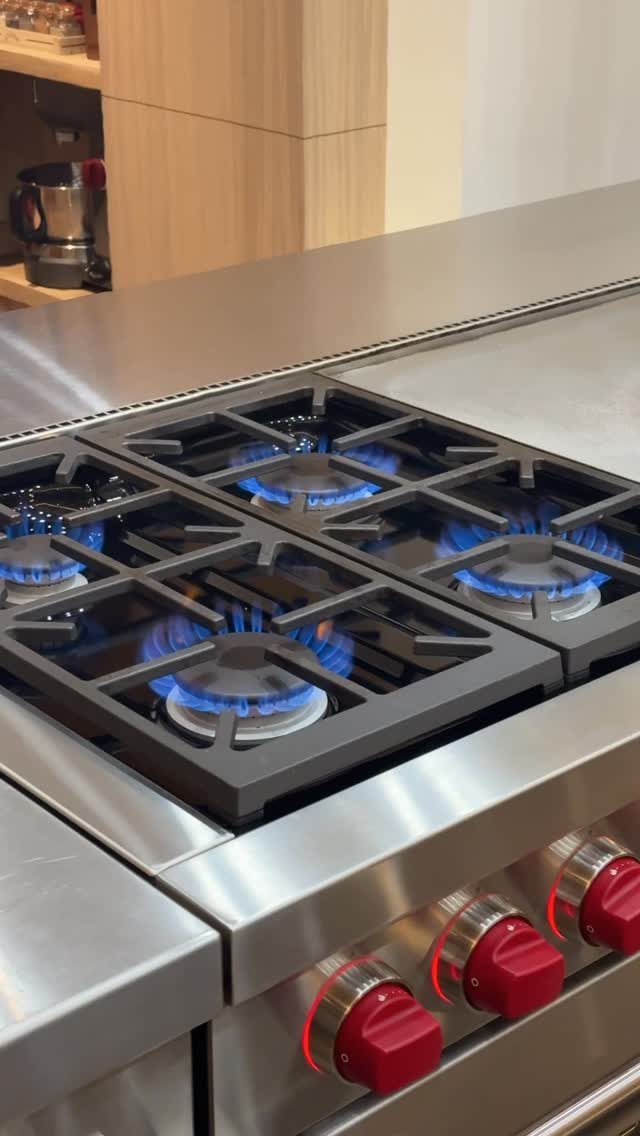
A pro-style range borrows the look and some of the function of commercial equipment but fits residential kitchens without requiring special venting or fireproofing.
The visible model shows heavy grates, sealed burners, and red knobs that stand out against stainless, which gives the range presence even when it’s not in use.
Pro-style ranges deliver higher BTU output than standard residential models, so you get faster boiling and better searing. Dual-fuel versions pair gas burners with electric convection ovens, which gives you control on top and even baking below.
Expect to pay more than a standard range, and check whether your kitchen needs a makeup air system to meet code with the higher BTU output.
12. Blue Stove
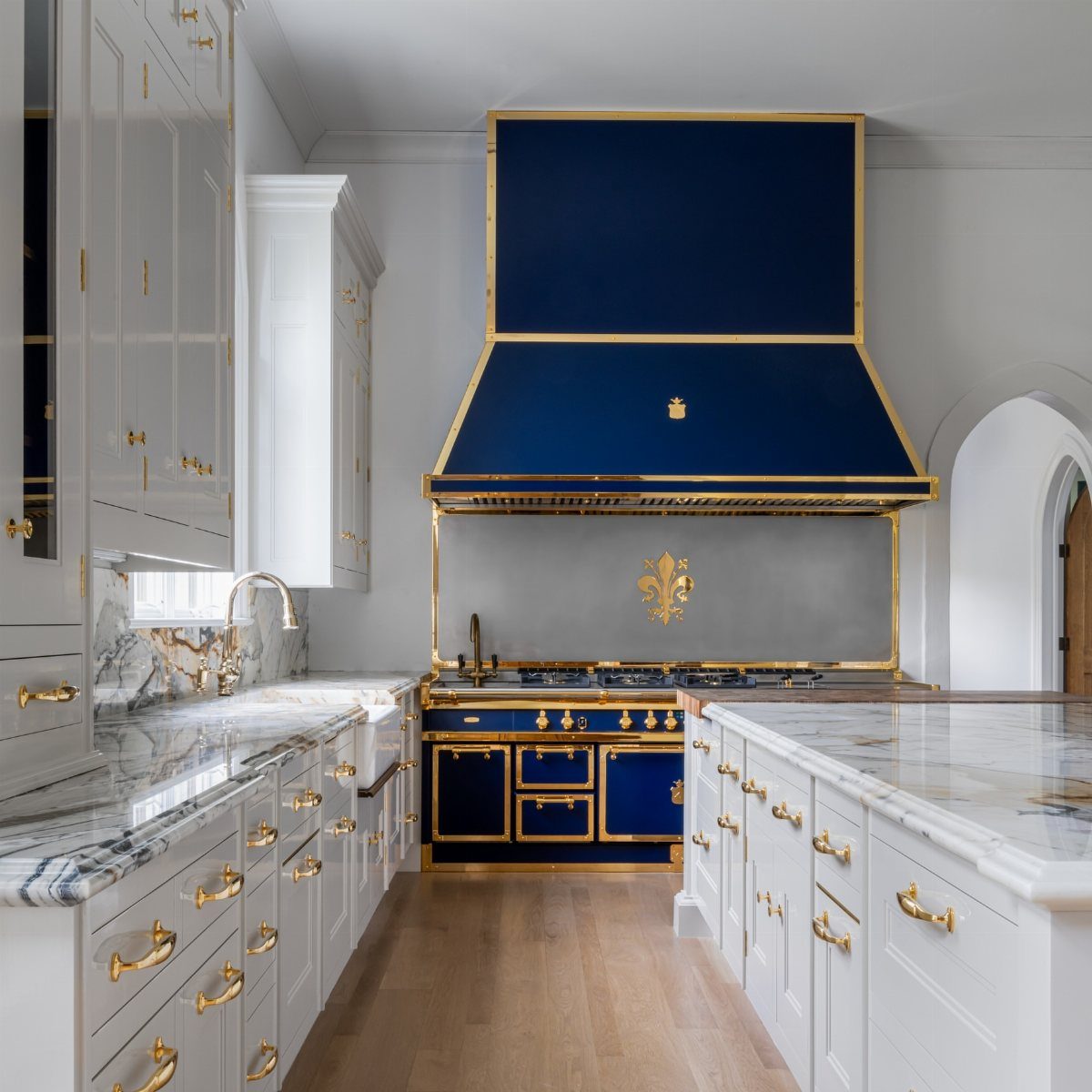
A blue stove in a saturated shade turns the appliance into decor rather than letting it fade into the background.
The visible navy model with gold trim anchors a white kitchen, and the color pulls weight without requiring bright tile or bold paint elsewhere.
Blue reads formal in darker tones and cheerful in lighter ones, so pick the shade based on the mood you want. Custom colors cost more than standard finishes, but some European brands offer blue as a stock option.
If the kitchen already has patterned tile, colored cabinets, or a busy backsplash, a colored stove can feel like too much.
13. Vintage Cream Stove
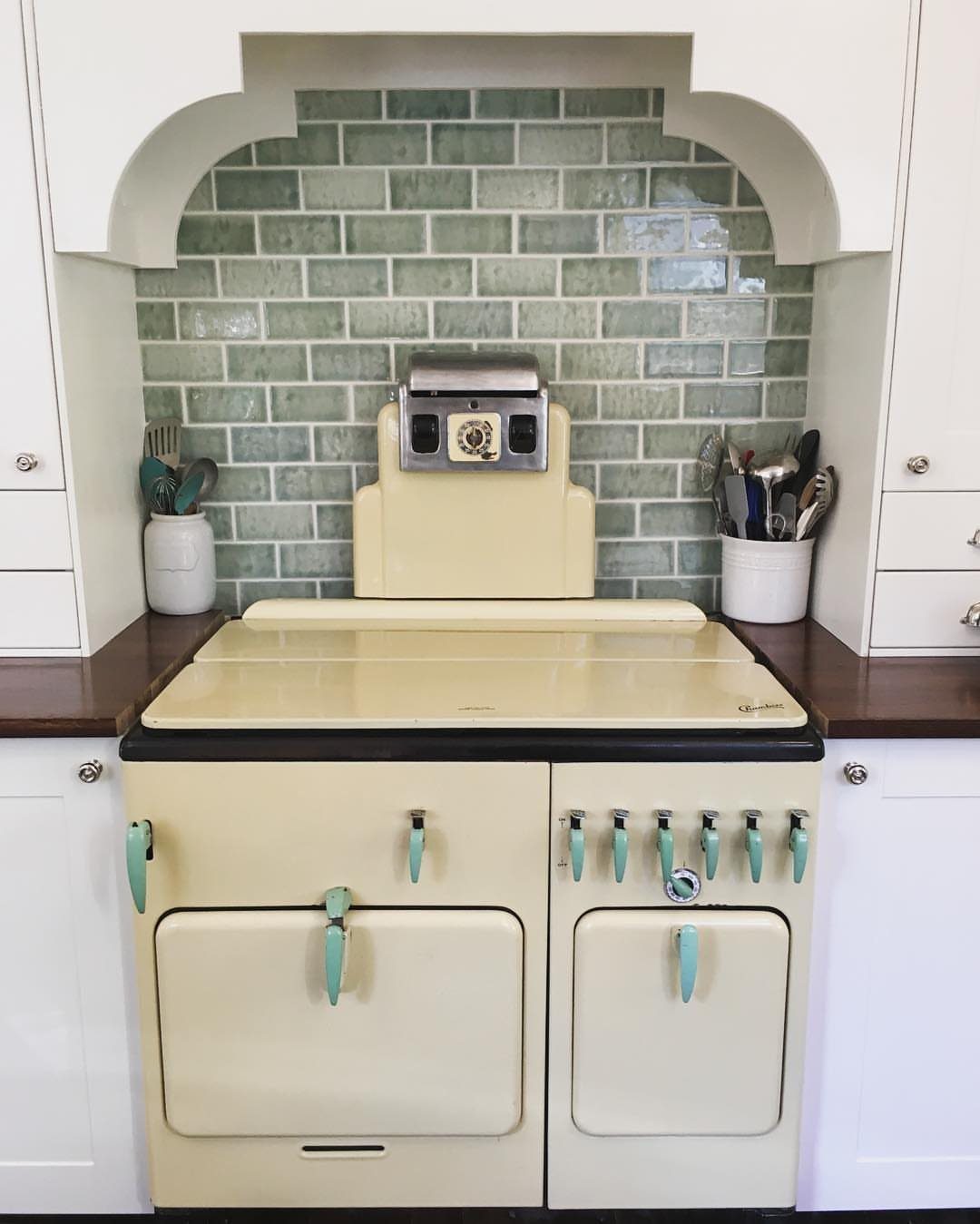
A cream stove with colored handles softens a kitchen that already leans vintage or traditional. The visible model pairs teal accents with green tile and dark wood, which keeps the palette grounded rather than sweet.
Cream hides wear better than pure white and reads warmer than stainless. When cabinets or walls already carry bold color, a neutral appliance holds the room steady instead of adding another competing element.
Most vintage-style ranges in pale finishes come from European brands or specialty U.S. makers, so expect longer lead times and higher prices than standard models.
14. Colorful Vintage Stove
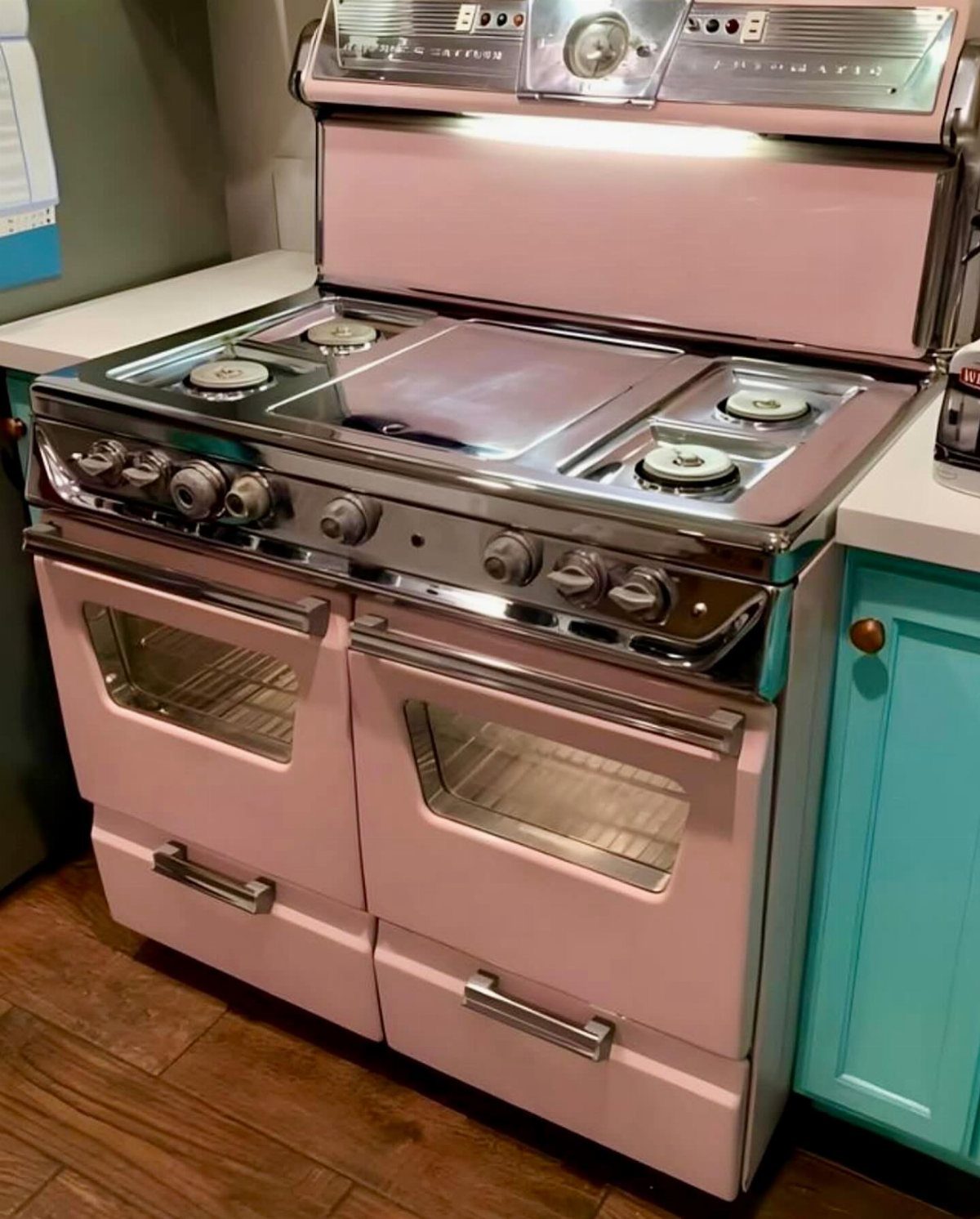
The visible model with chrome trim sits next to a light blue cabinet, and the 2 colors together read playful without tipping into childish.
This works when the kitchen has enough other color to support it. A single bright appliance in an otherwise neutral room can feel stranded.
Vintage-style ranges in saturated colors usually require custom order or specialty sourcing, which adds cost and time. If you want the look without the wait, some brands offer pale pink as a stock finish.
15. Antique Cast-iron Stove
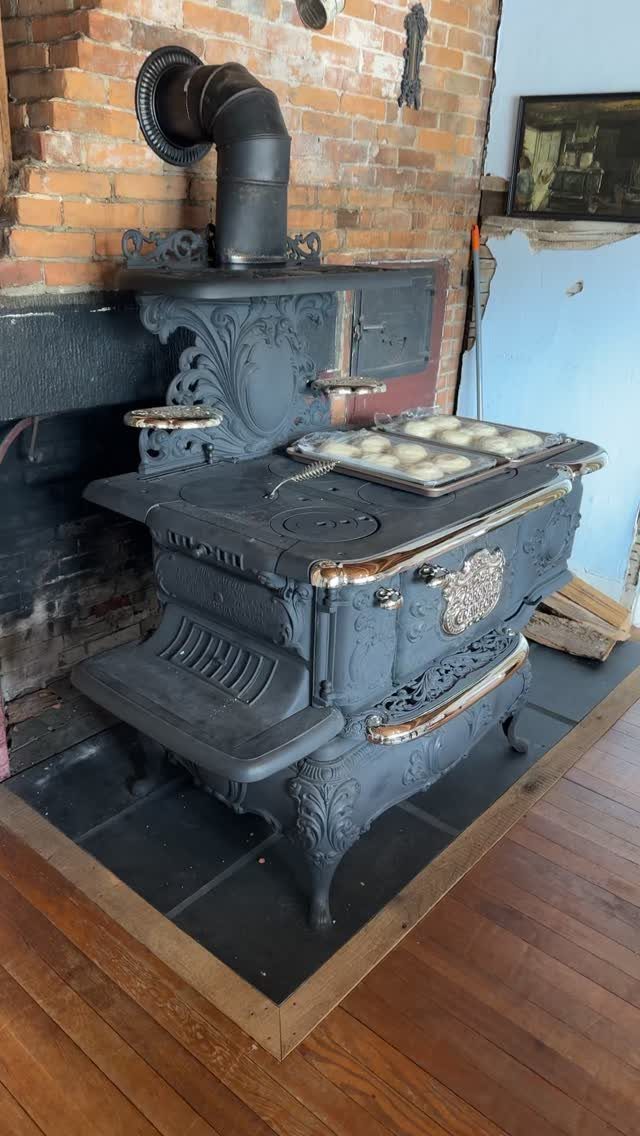
An antique cast-iron wood-burning stove belongs in a kitchen built before central heating or in a rural property where wood fuel makes sense.
The visible model sits against a brick wall on a dark hearth, and the ornate casting adds period detail that modern appliances cannot match.
These stoves heat the room as much as they cook, which helps in winter but makes summer cooking uncomfortable.
You need a chimney or flue in working condition, and most do not meet current code for primary cooking appliances in new construction.
If you want the look without burning wood, a few makers produce gas or electric ranges styled to match antique cast iron.
16. Gas Cooktop in Marble
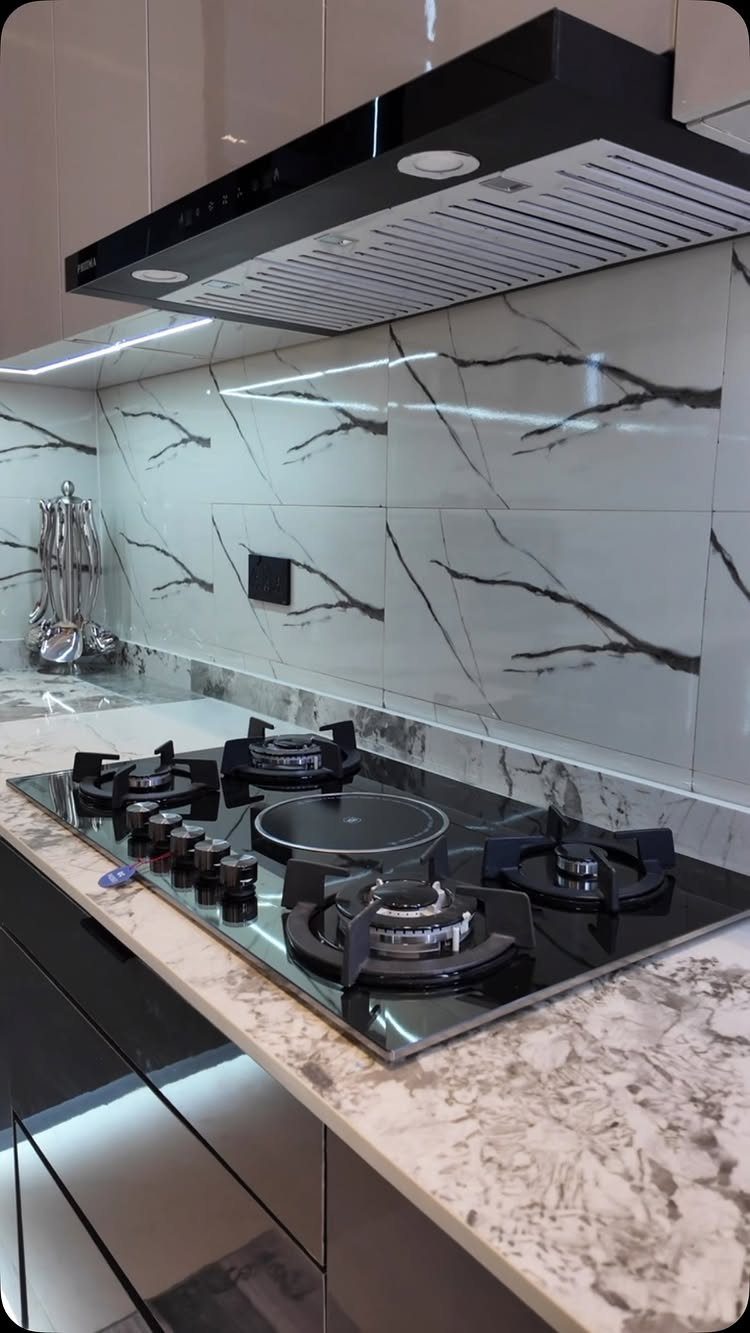
A black gas cooktop set into white marble gives clean contrast and keeps the cooking surface low profile. The visible setup pairs it with a dark hood above, which balances the proportions and handles ventilation without crowding the backsplash.
Marble stains and etches from acidic spills, so this material takes more maintenance than quartz or solid surface around a cooktop. Seal it well and wipe up tomato sauce or lemon juice immediately.
Black glass hides some stains better than stainless grates, but it shows fingerprints and water spots, so daily wiping keeps it looking sharp.
17. Minimalist Built-in Cooktop
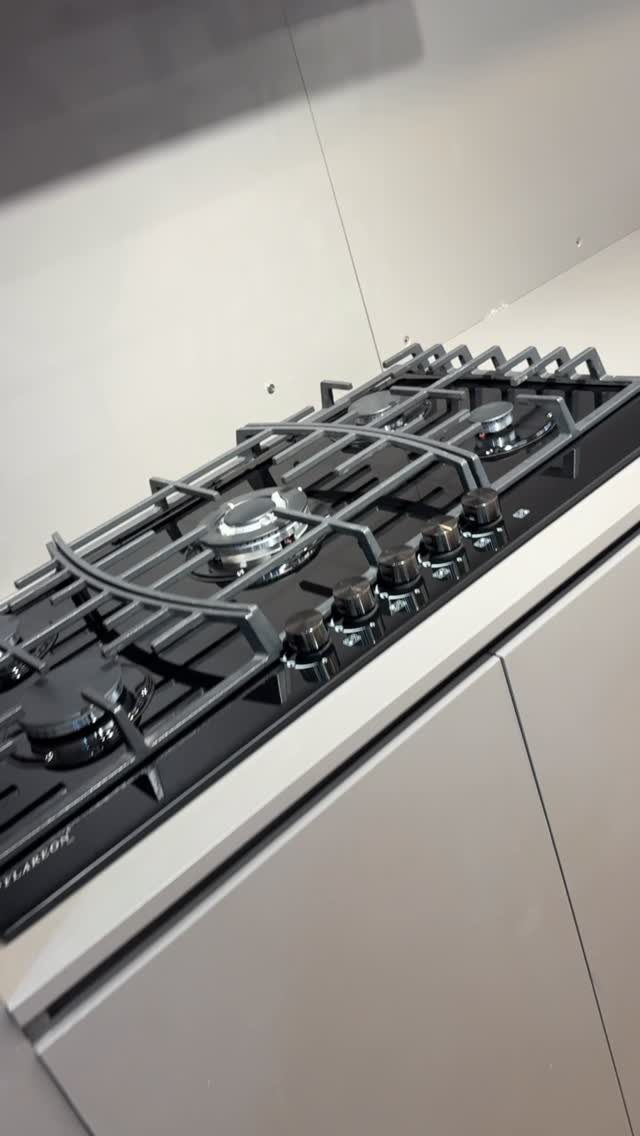
A built-in gas cooktop in a light counter and minimal kitchen keeps the focus on function rather than appliance styling.
The visible black model sits flush with the surface, and the simple surround means no decorative trim or color pulls attention away from counters and cabinets.
This setup suits modern or Scandinavian kitchens where appliances stay understated. Pair it with a flush or hidden hood to keep the wall clean.
Built-in cooktops free up base cabinet space below for drawers or a wall oven elsewhere, which works well in kitchens where counter runs are broken up or an island holds the cooking zone.
Choosing Cooking Fuel
Gas ranges need a natural gas line or propane tank, while electric and induction models run on 240 volts. If your kitchen has a standard 120-volt outlet, adding the heavier circuit means hiring an electrician, which adds to install cost.
Gas gives you visible flame and instant heat adjustment.
Turn the knob down and the temperature drops right away. Electric coils and radiant cooktops take longer to respond, though induction matches gas for speed.
Dual-fuel ranges cost more than single-fuel options and need both gas and 240-volt electric hookups.
Ventilation and Gas Emissions
Cooking produces heat, smoke, and fumes, so ventilation keeps the air cleaner and the kitchen more comfortable. Turn on the range hood when you cook, and open a window or door if the room feels stuffy.
Consumer Reports tested gas ranges and found that some models emitted concerning nitrogen oxide levels, even with just one burner running. Good ventilation reduces exposure, so use the hood every time you cook on gas.
A gas range typically lasts 15 to 20 years, depending on how often you use it and how well you maintain it. Installation quality and brand also affect lifespan.
Most gas burners light with a match if the power goes out, which gives you a way to cook when the electricity is down.
“The average lifespan of a gas stove is typically around 15 to 20 years,” says Rachel Morrison, senior designer and vice president at Morrison Interiors in Costa Mesa, California.
Range Size and Cooking Needs
Pro-style models run 36 to 48 inches wide, giving you 6 or more burners and a second oven, but they eat counter space fast.
Consider how you cook when picking burner count and output. A high-power burner speeds up boiling, and a dedicated simmer setting holds low heat for sauces without constant adjustment.
If you roast large cuts or bake multiple trays at once, a bigger oven cavity or a double oven range gives you the space.
Pro-style and dual-fuel ranges often cost more than standard electric or gas models, and some lack features like digital displays or preheat lights that come standard on less expensive options.
Frequently Asked Questions
What is the best stove for your kitchen?
Pick the stove based on how you cook and what hookups you already have.
Gas gives faster heat control and works during power outages, induction heats quickly and stays cooler to the touch, and electric costs less to install if you already have a 240-volt outlet.
Match the size to your counter space and cooking volume: standard 30-inch ranges fit most kitchens, while 48-inch or larger models suit anyone who regularly cooks multiple dishes at once.
What are the main types of stoves?
Ranges run on gas, electric, or induction, and most measure 30 inches wide with four burners and a single oven.
Pro ranges stretch to 48 inches wide and often deliver 18,000 BTU or higher on at least one burner, and dual-fuel puts gas burners over an electric convection oven.
Which type of stove is best for home use?
Gas ranges give visible flame and instant heat control, which suits anyone who wants to adjust temperature quickly while cooking.
Electric ranges cost less to install if your kitchen already has 240-volt power, and induction models heat as fast as gas while keeping the cooktop surface cooler.
Pick based on what hookups you have in place and how you cook: gas works during power outages, induction needs magnetic cookware, and electric takes longer to cool down after you turn off the burner.
What is the difference between a gas stove and a gas range?
The stove is the burner surface; the range is the whole unit with burners and oven together.
Stoves often drop into counters as built-in units, and ranges stand alone or slide in between cabinets. Separate cooktops work well when you want a wall oven elsewhere, and ranges suit kitchens where counter runs stay continuous.
What is the average life of a gas stove?
Most gas ranges run 15 to 20 years if you keep the burners clean and check the igniter when clicks start dragging out.
Is gas or electric range better?
Gas heat responds the second you turn the dial, so a rolling boil drops to a simmer without waiting for coils to cool.
Electric needs a 240-volt circuit but no gas line or vent pipe, so the install is simpler when the outlet is already there.
Induction matches gas for speed and keeps the surface cool enough to touch, but every pan has to pass the magnet test or it won’t heat.