Reclaimed wood furniture runs from dining tables and buffets to desks, coffee tables, and bar pieces, with cost decided by the wood’s history, how the joints are cut, and whether you order custom or buy a stock design.
If you want a surface that shows age and texture instead of a smooth mill finish, the decision sits on how much floor space you can give it, what daily use it will see, and which room it lands in.
Pedestal bases free up legroom under round tables, X-shaped legs brace heavier tops without stretchers that crowd feet, and live-edge slabs preserve the log’s natural contour when epoxy fills the voids.
1. Dining Tables
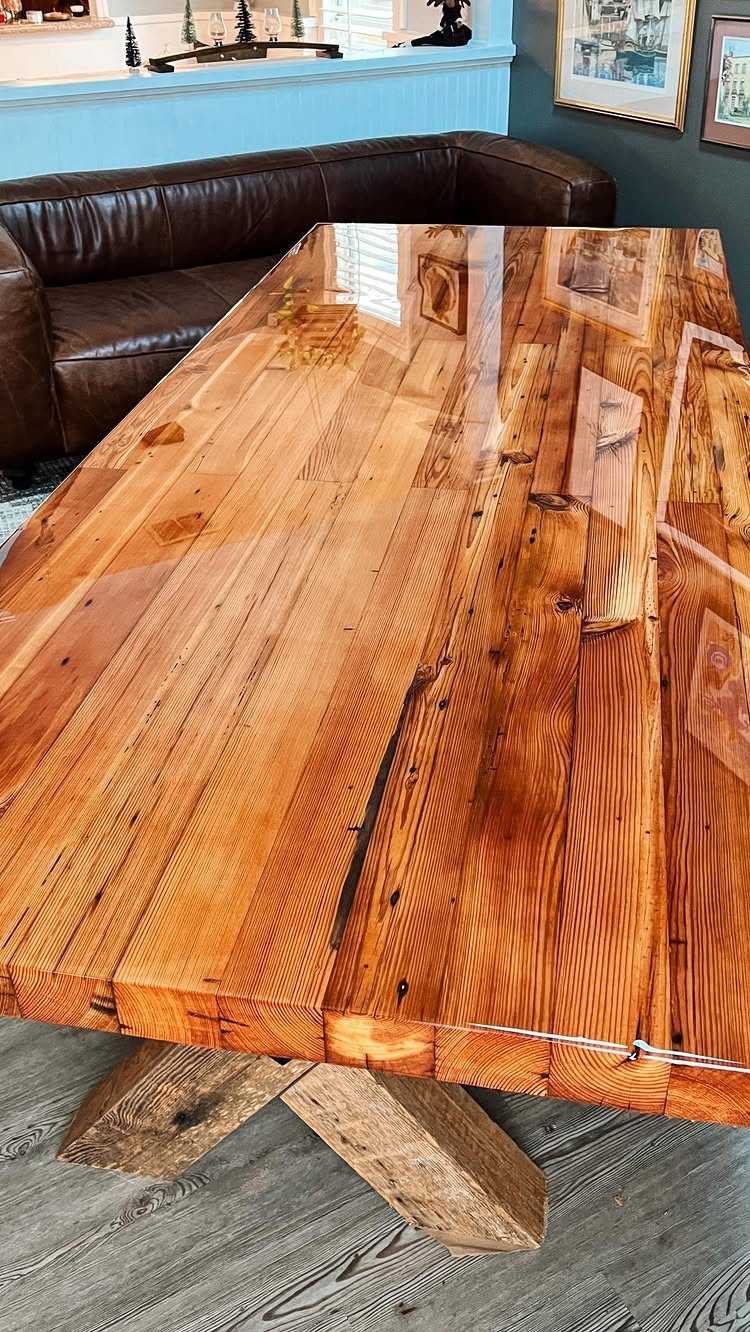
A dining table in reclaimed wood gives the room a focal piece with visible history, usually traced through color shifts and old joinery marks.
I prefer wider tops when the room allows it, because the grain and texture read better at scale.
Custom makers typically offer a choice between smooth modern finishes and rougher sawn surfaces.
An X-base adds structural weight, which keeps a heavy top stable without apron rails that catch knees. If you’re ordering one, ask whether the finish is food-safe and how the maker treats checks in the wood.
2. Coffee Tables
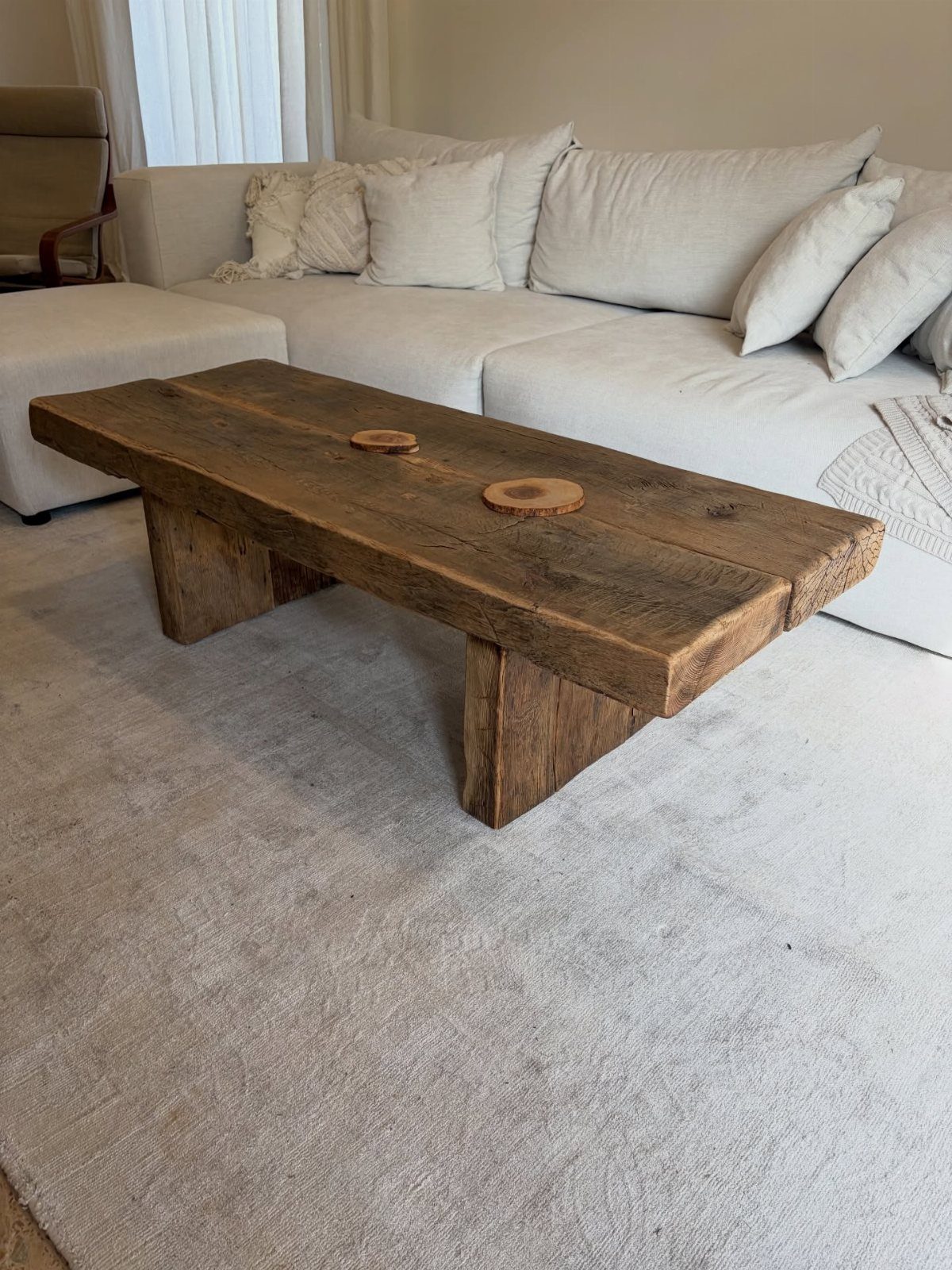
Coffee tables made from reclaimed wood suit living rooms where you want texture underfoot without competing with upholstery. Chunky proportions anchor a light sectional, and the material holds up to daily use better than veneered particleboard.
I usually choose a lower profile when the seating is deep, because it keeps the sightline open. The rustic finish here shows tool marks and natural edges, so expect variation piece to piece.
3. Desks
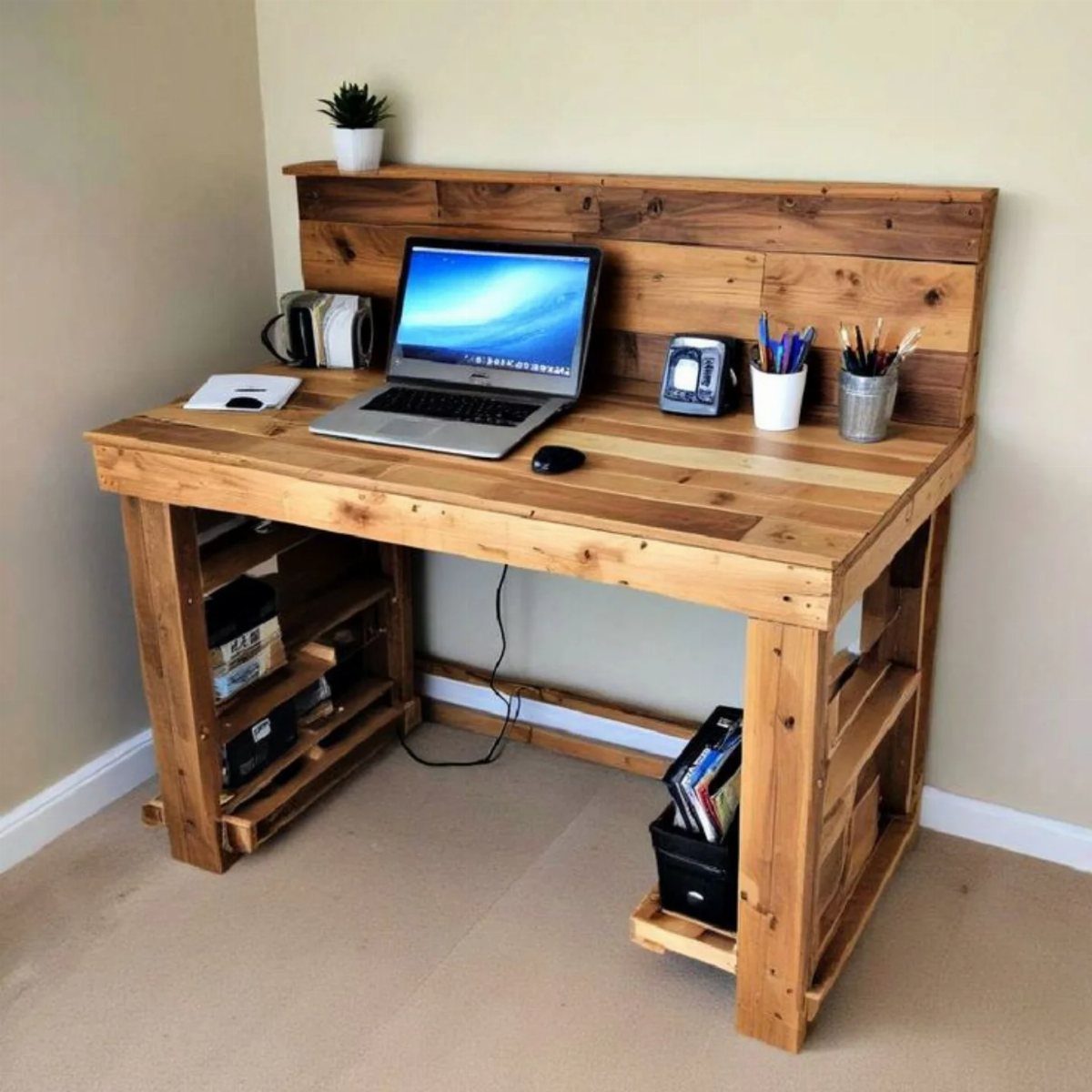
Reclaimed wood desks bring warmth to home offices without the weight of a full executive setup. The grain and patina break up the monotony of screens and cables, and the material is stable enough for monitor arms and desk lamps.
I often request a smooth top finish when clients use the desk for writing or drawing, because splinters and ridges catch paper. A simple trestle base leaves legroom open and keeps the build straightforward.
4. End Tables
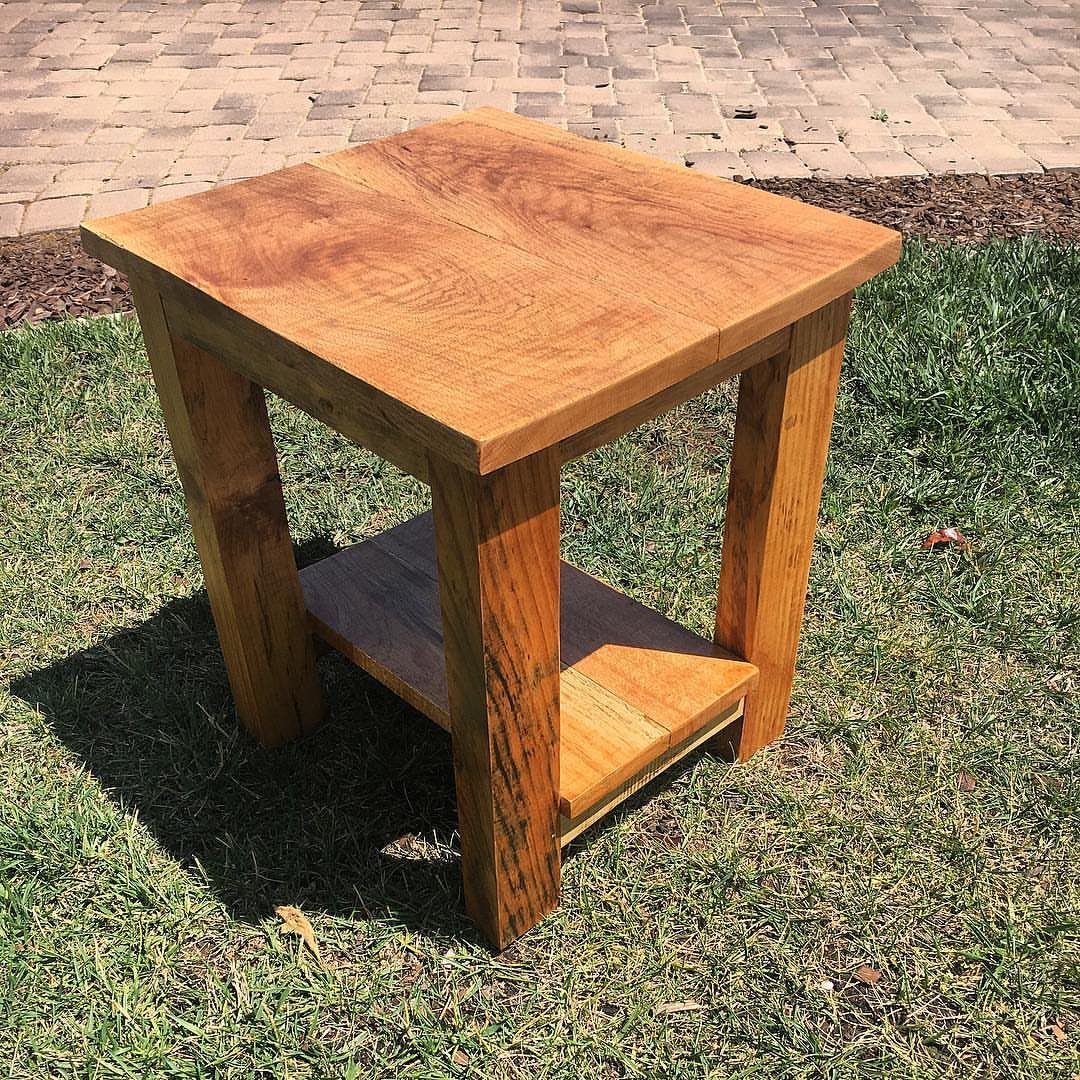
End tables in reclaimed wood fill the gap between sofa arms and lamps. A compact footprint suits smaller living rooms, and a lower shelf adds storage for remotes or books.
I prefer slightly taller pieces when the sofa arm is high, because it keeps the lamp base closer to eye level. The chunky build here telegraphs durability, and the reclaimed material adds character that painted MDF side tables lack.
5. Console Tables
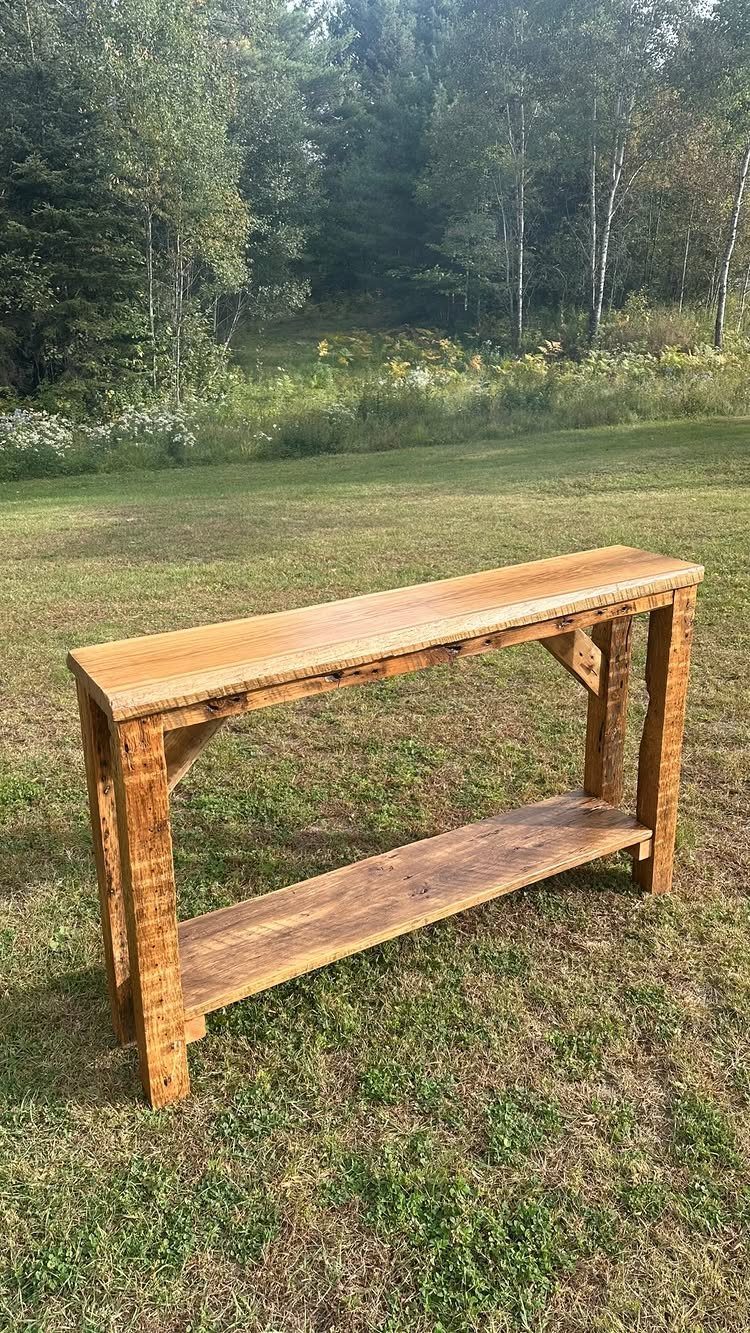
Console tables made from reclaimed wood fit narrow spaces behind sofas or along hallways where depth is limited. A two-tier design adds utility without bulk, and open shelves keep the piece from feeling heavy.
I usually request a smooth top when the console sits under keys or mail, because rough surfaces tip small items. The reclaimed material brings texture to blank walls, and the finish holds up to weather if sealed properly.
6. Buffets
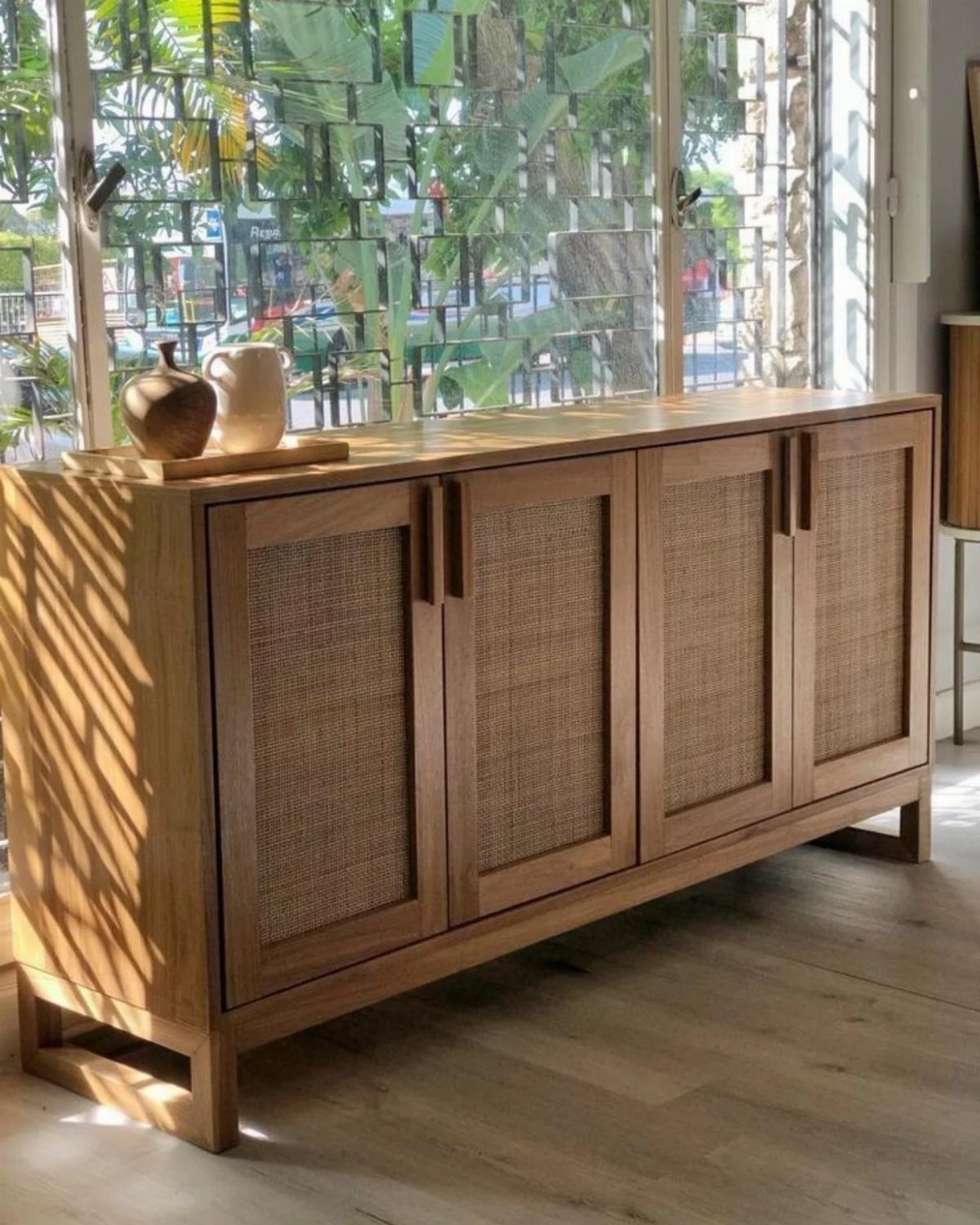
Buffets in reclaimed wood serve as dining-room storage with more presence than standard sideboards. Cane-front doors lighten what could otherwise read as a solid block, and the wood frame adds warmth beside upholstered chairs.
Closed storage works well when the buffet sits in view of the table, because it hides clutter during meals.
The reclaimed wood top can handle hot dishes better than veneer, and the material ages visibly rather than showing wear as damage.
7. Conference Tables
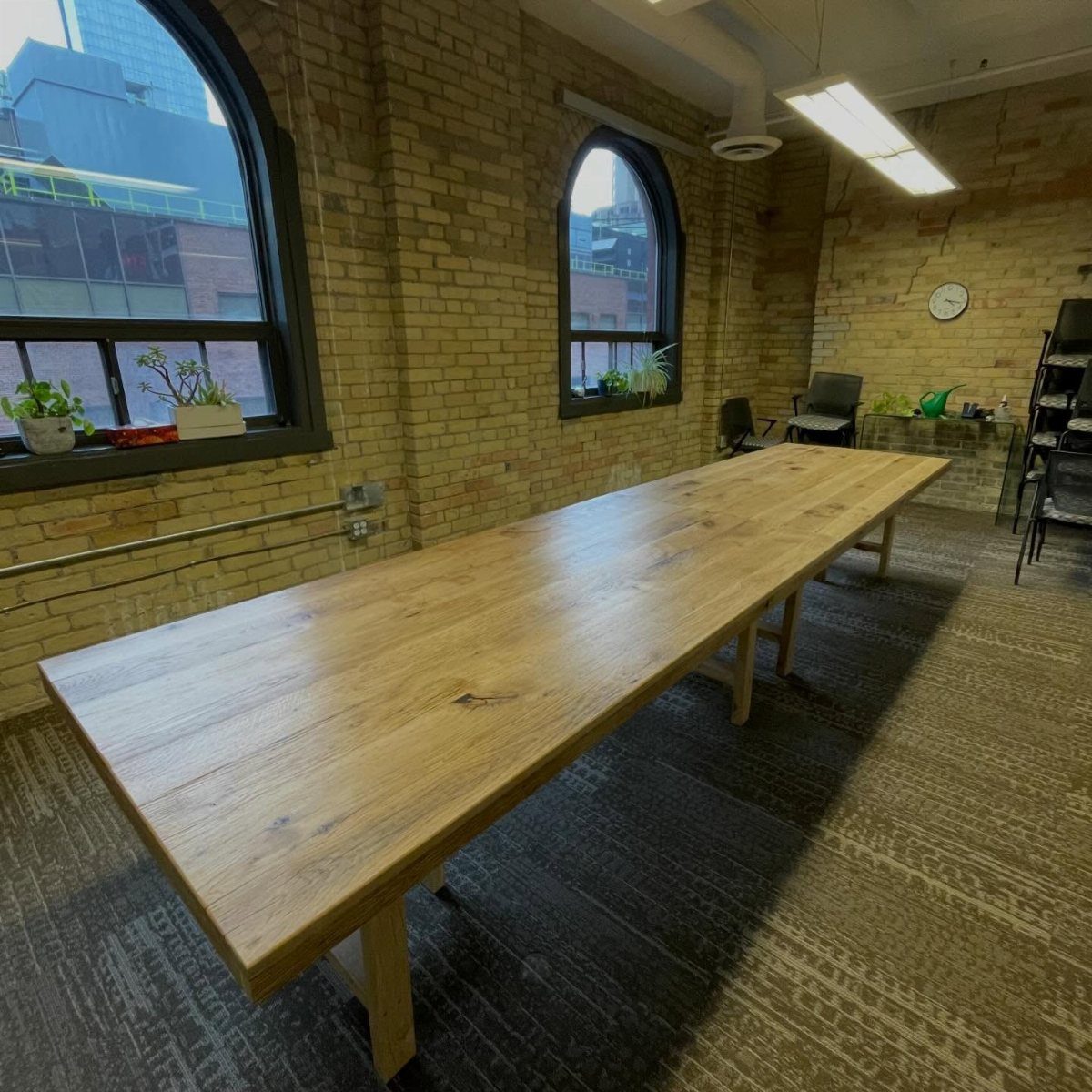
Conference tables in reclaimed wood suit offices and meeting rooms that put durability ahead of a uniform finish.
The long format accommodates larger groups without the corporate look, and reclaimed wood stands up to daily use better than laminate or veneer.
A thicker top reads more substantial in open-plan spaces with high ceilings. A flat finish is better when the table needs to support laptops and documents, because deep grooves catch paper edges.
8. Bookcases and Shelving
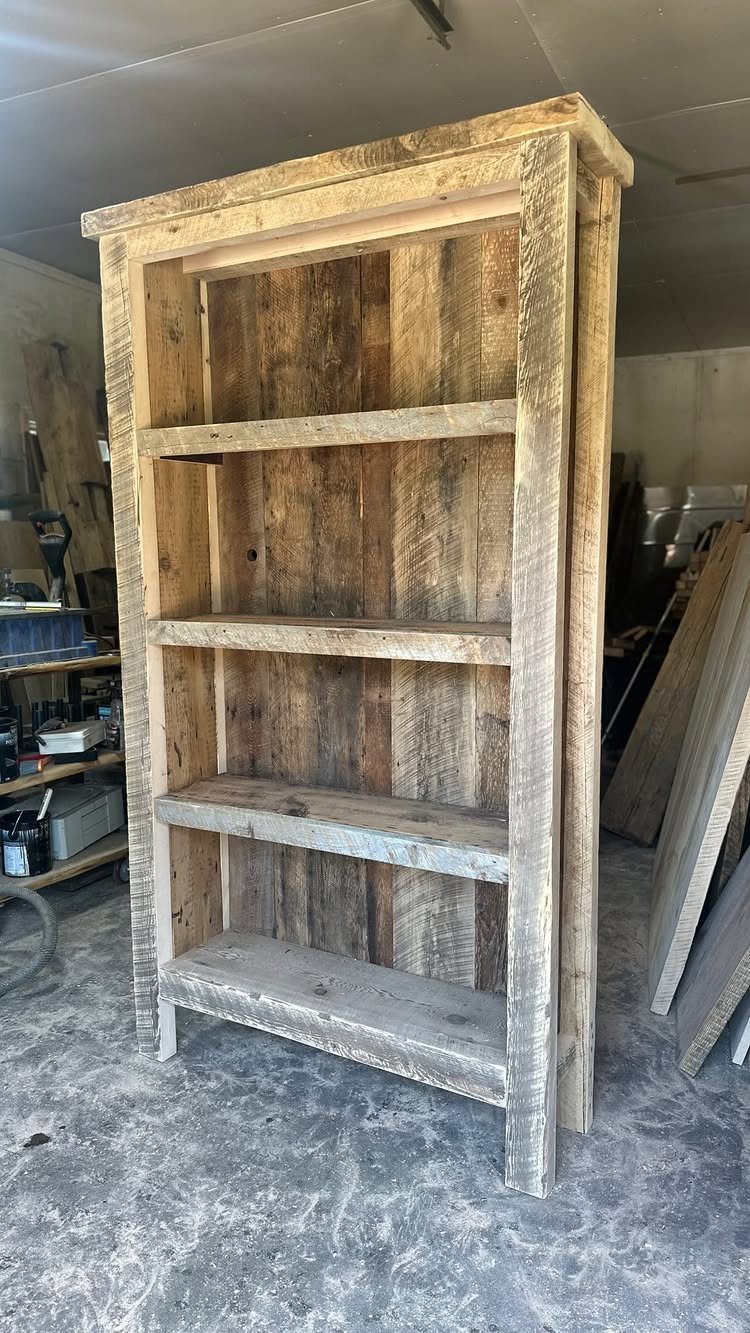
Bookcases made from reclaimed wood add vertical storage without the polished look of built-ins. Open shelves suit workshops, home offices, or living rooms where you want visible texture alongside books or tools.
The weathered surface here shows wear from prior use, which means color and grain vary shelf to shelf. A freestanding unit like this moves easily, and the material ages better than particleboard when humidity shifts.
9. Doors
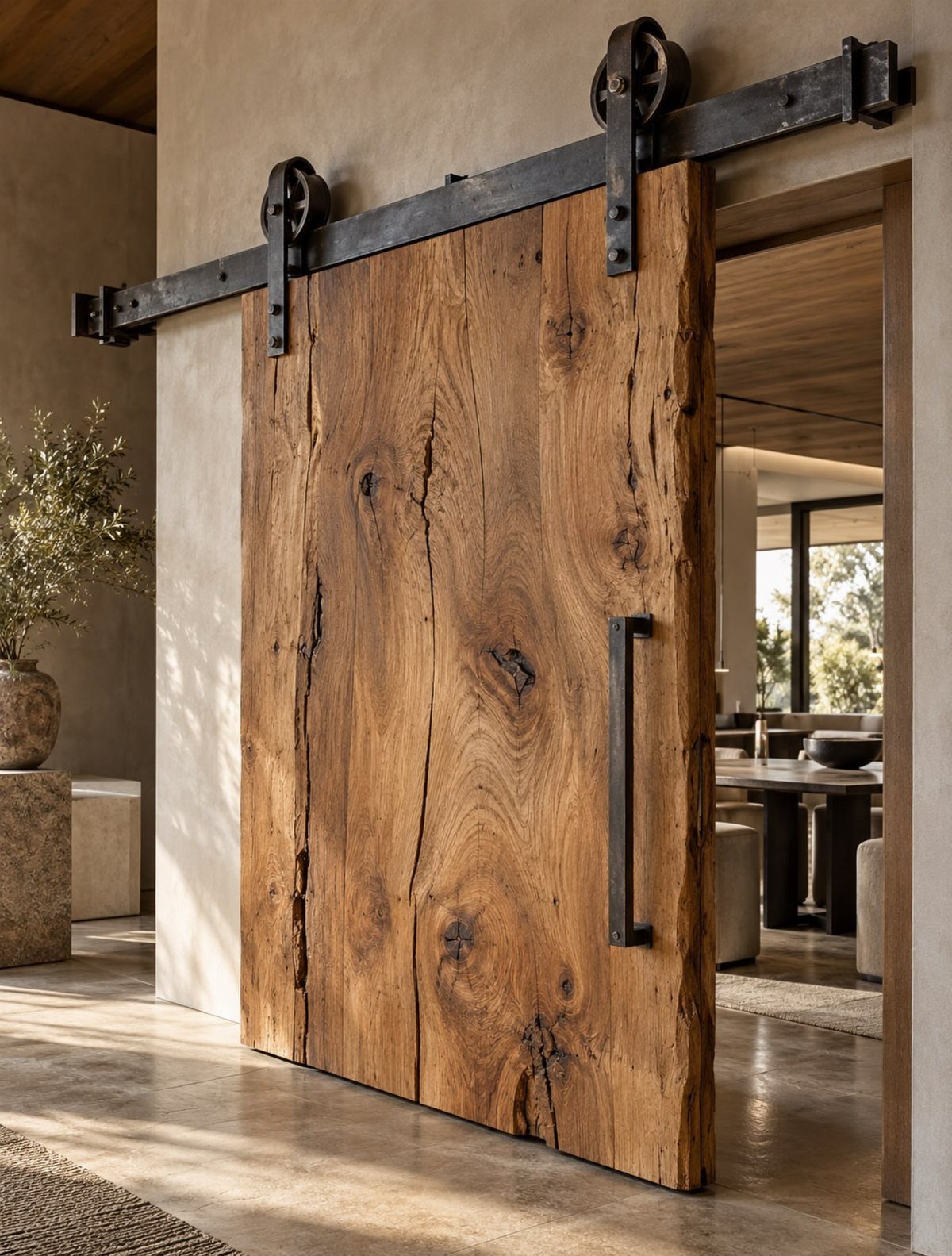
Sliding barn doors made from reclaimed wood partition rooms or close off pantries without the swing clearance a hinged door demands.
The hardware mounts above the frame, so the door hangs proud of the wall and tracks smoothly on a metal rail.
Reclaimed lumber brings character to an otherwise plain opening, and the thickness dampens sound better than hollow-core alternatives. I prefer a smooth face when the door sits in a high-traffic area, because rough edges catch clothing.
10. Mantels
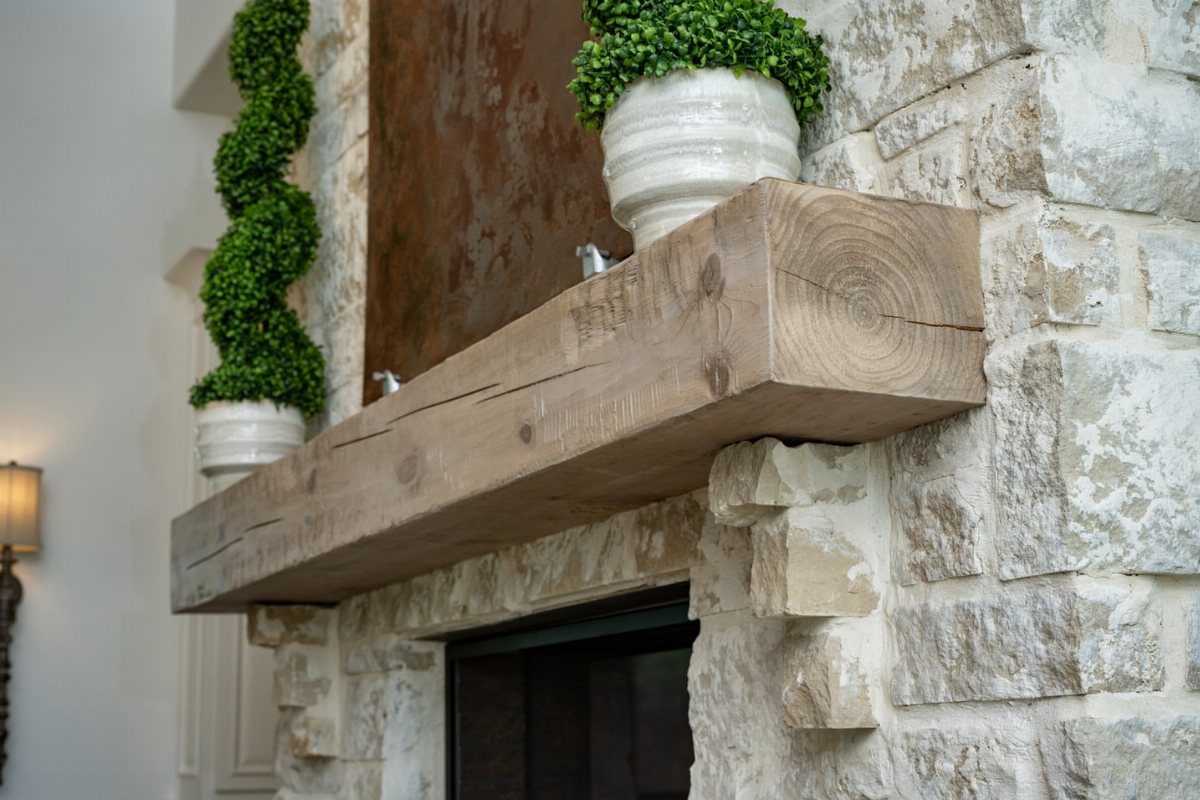
Mantels cut from reclaimed beams add depth to a fireplace surround without the formal lines of painted trim.
The surface here shows saw marks and weathering, which gives the piece presence even when the mantel is left undecorated. Mounting typically requires brackets lag-bolted into studs, and the reclaimed material holds screws better than softer pine.
11. Dining Sets
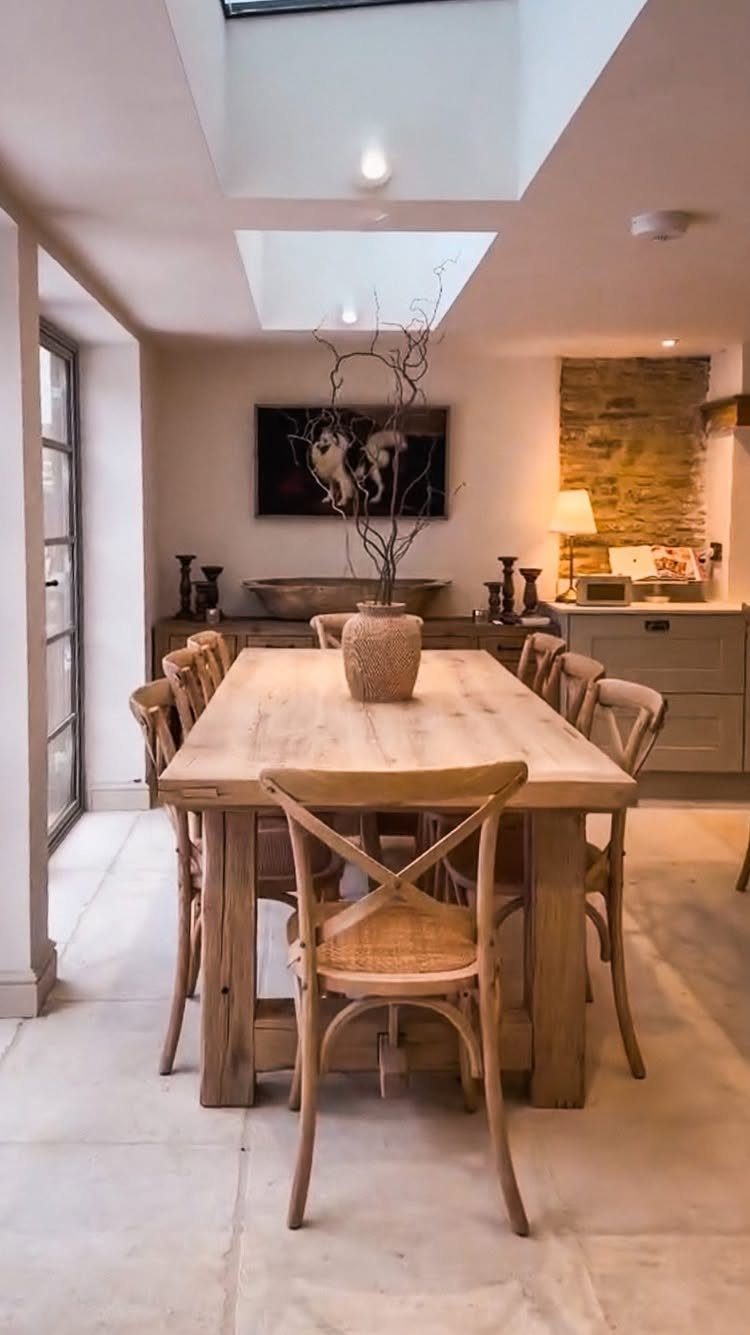
Dining sets pair a reclaimed wood table with matching chairs, which solves the proportions problem when you’re furnishing a new space.
The bundled approach works well when the room is blank, because the pieces already suit each other in scale and finish.
Cross-back chairs add structure without competing with a heavy table, and some makers include a rug sized to the set. Ordering everything together often costs less than sourcing pieces separately.
12. Kitchen Islands
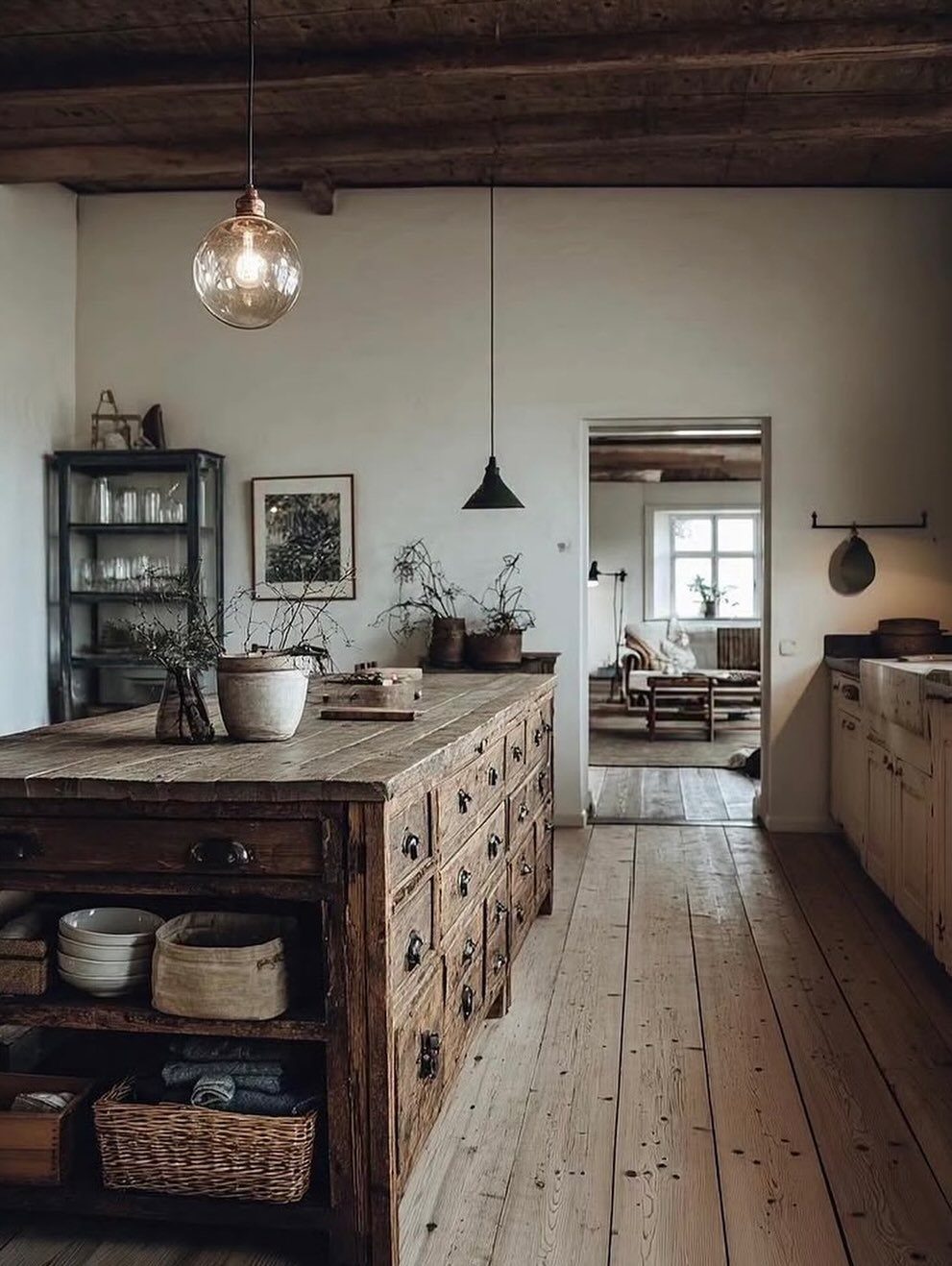
Kitchen islands built from reclaimed barn wood bring work surface and storage into the center of the room. Drawers and open shelves keep utensils and cookware within reach, and the wood top handles spills better than painted cabinetry.
The weathered finish here suits farmhouse kitchens, and the material holds up to prep work when sealed properly. A freestanding island moves if the layout changes, which is harder to do with a built-in peninsula.
13. TV Stands
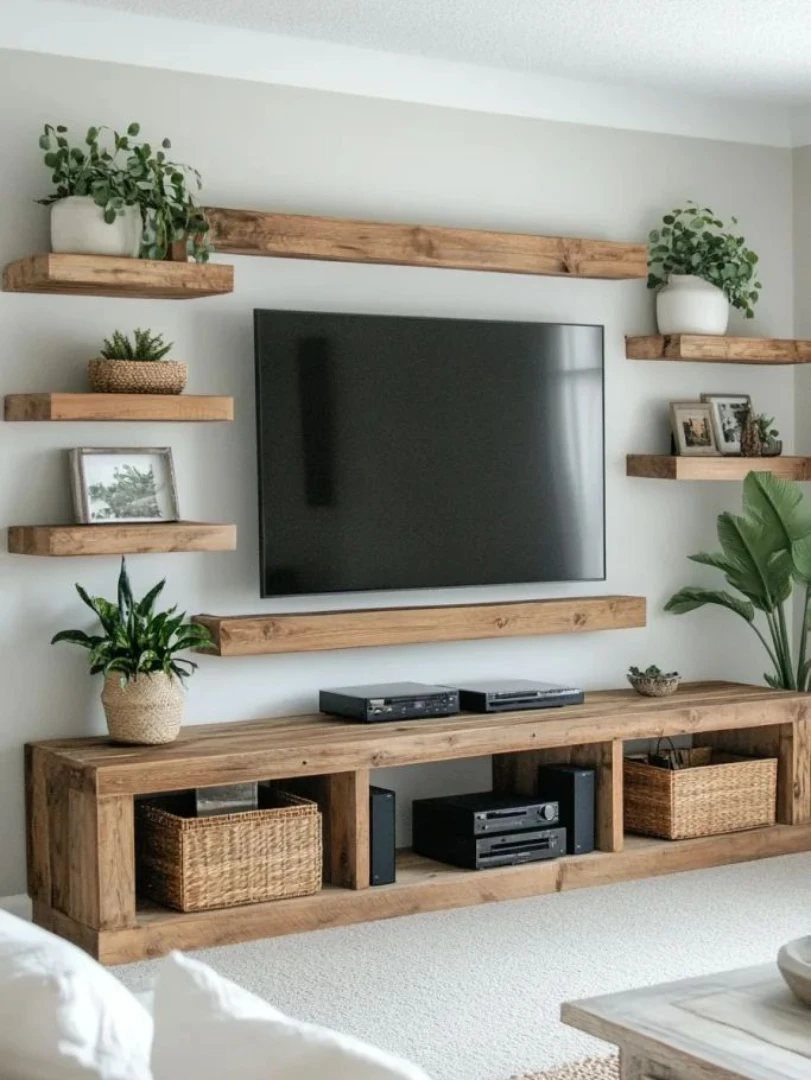
TV stands built from reclaimed wood anchor a living room with storage that sits low and wide. Open shelves hold media players and routers, and the reclaimed material ages better under heat than particleboard.
Wall-mounted shelves extend storage upward and keep the stand surface clear. A simple plank top supports flat screens when braced properly, and the wood finish suits rooms where texture carries the design.
14. Bar Furniture
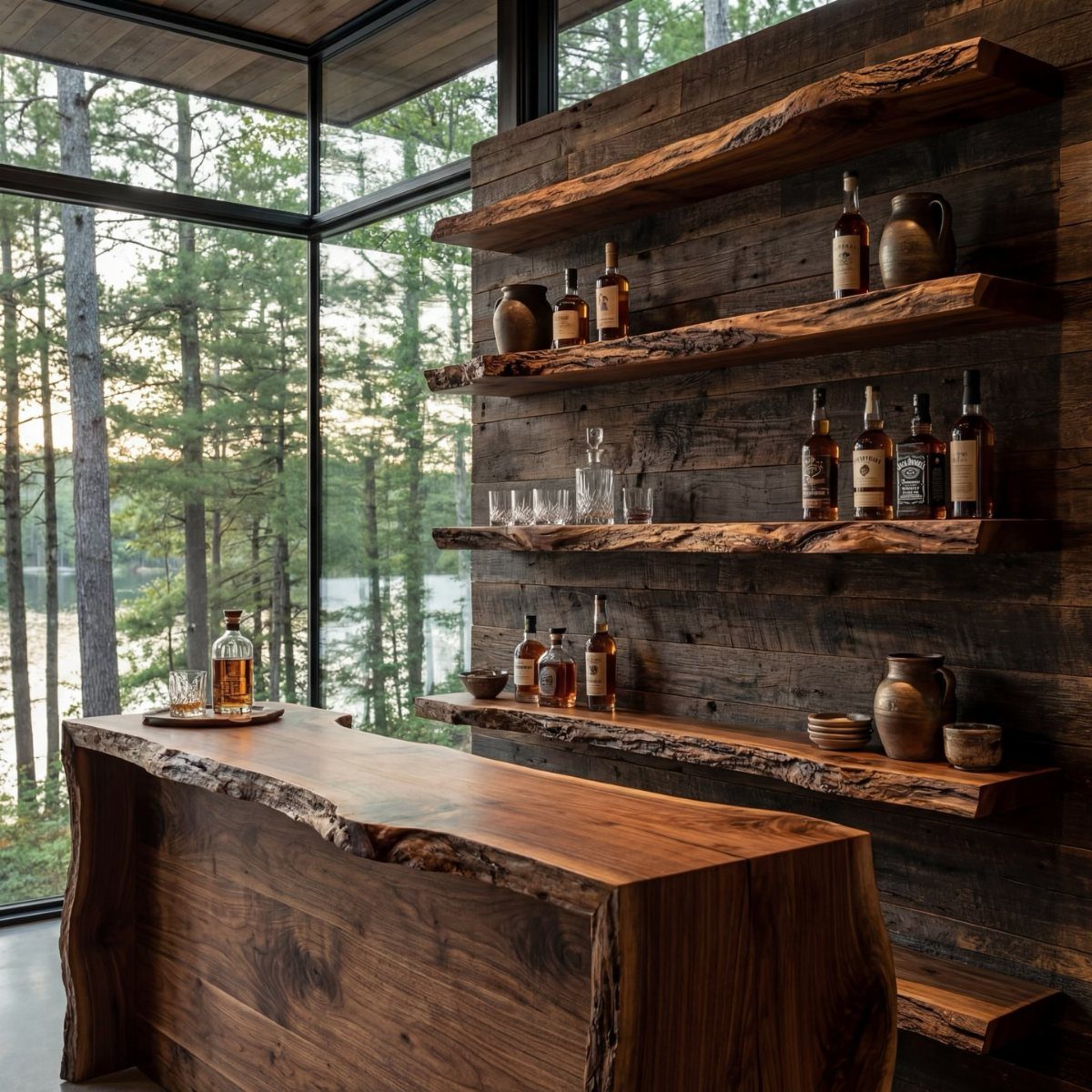
Bar counters and floating shelves in reclaimed wood suit home bars and tasting rooms where you want glassware visible. The live-edge top follows the natural contour of the log and adds movement to an otherwise straight run.
Bottle storage on open shelves keeps labels readable, and the reclaimed finish holds up to spills when sealed with polyurethane. Counter height pairs with standard bar stools, and the wood thickness should match the span to prevent sag under weight.
15. Dining Benches
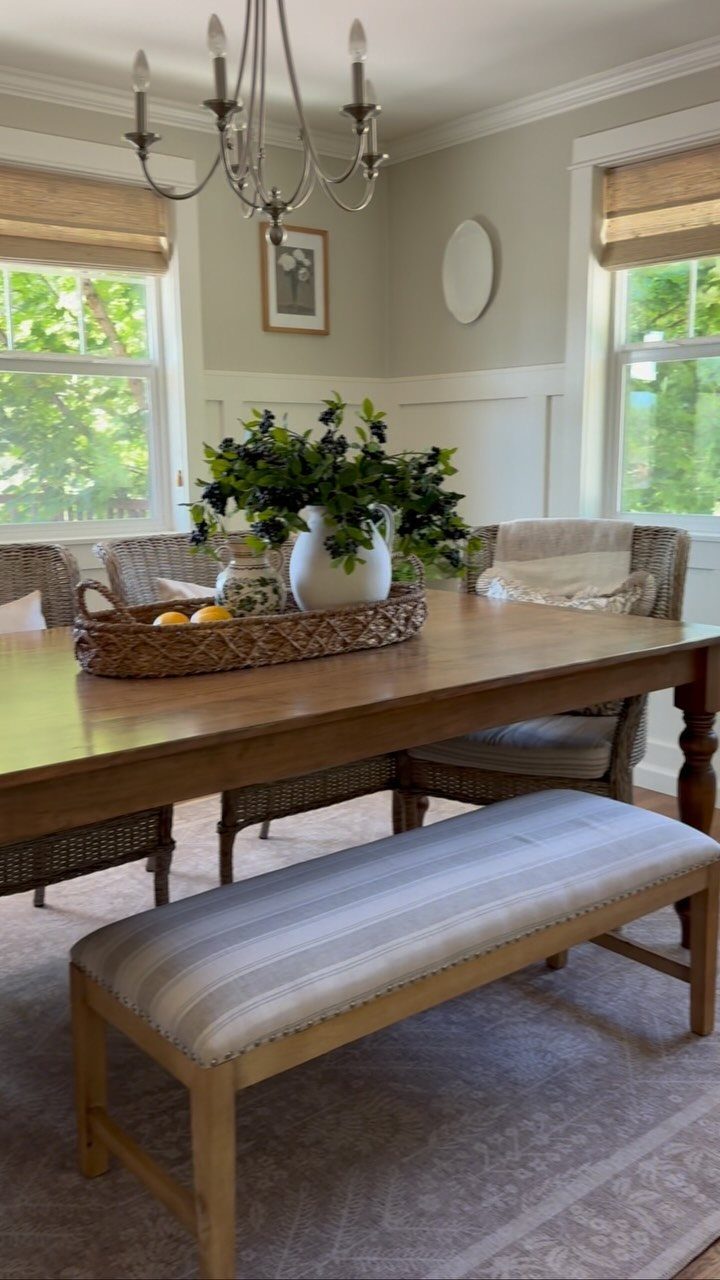
Dining benches seat more people per foot than individual chairs, and upholstered tops soften what would otherwise be a hard surface for long meals.
A bench along one side of the table leaves the other open for chairs, which suits families with mixed seating needs.
Bench depth should stay narrow enough for stability but wide enough to avoid crowding legroom under the table.
16. L-Shaped Desks
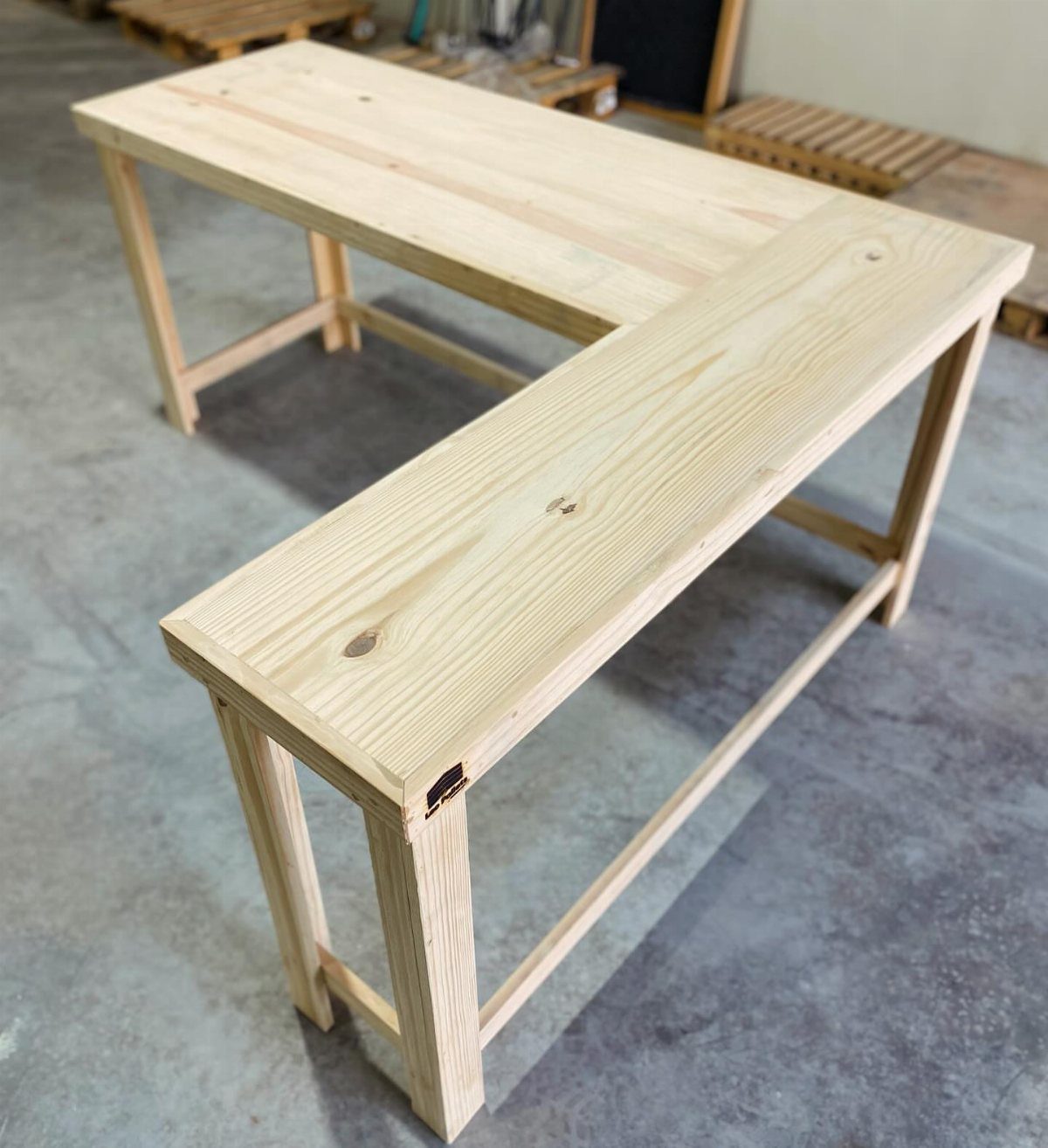
L-shaped desks turn corner space into work surface, which suits home offices and workshops where 2 walls meet. Plank construction keeps the build straightforward, and a light wood finish brightens rooms with limited natural light.
Corner setups allow one surface for a monitor and the other for paperwork or tools. I recommend enough depth on both legs so monitors sit safely back from the edge and the surface stays usable.
17. Live Edge Tables
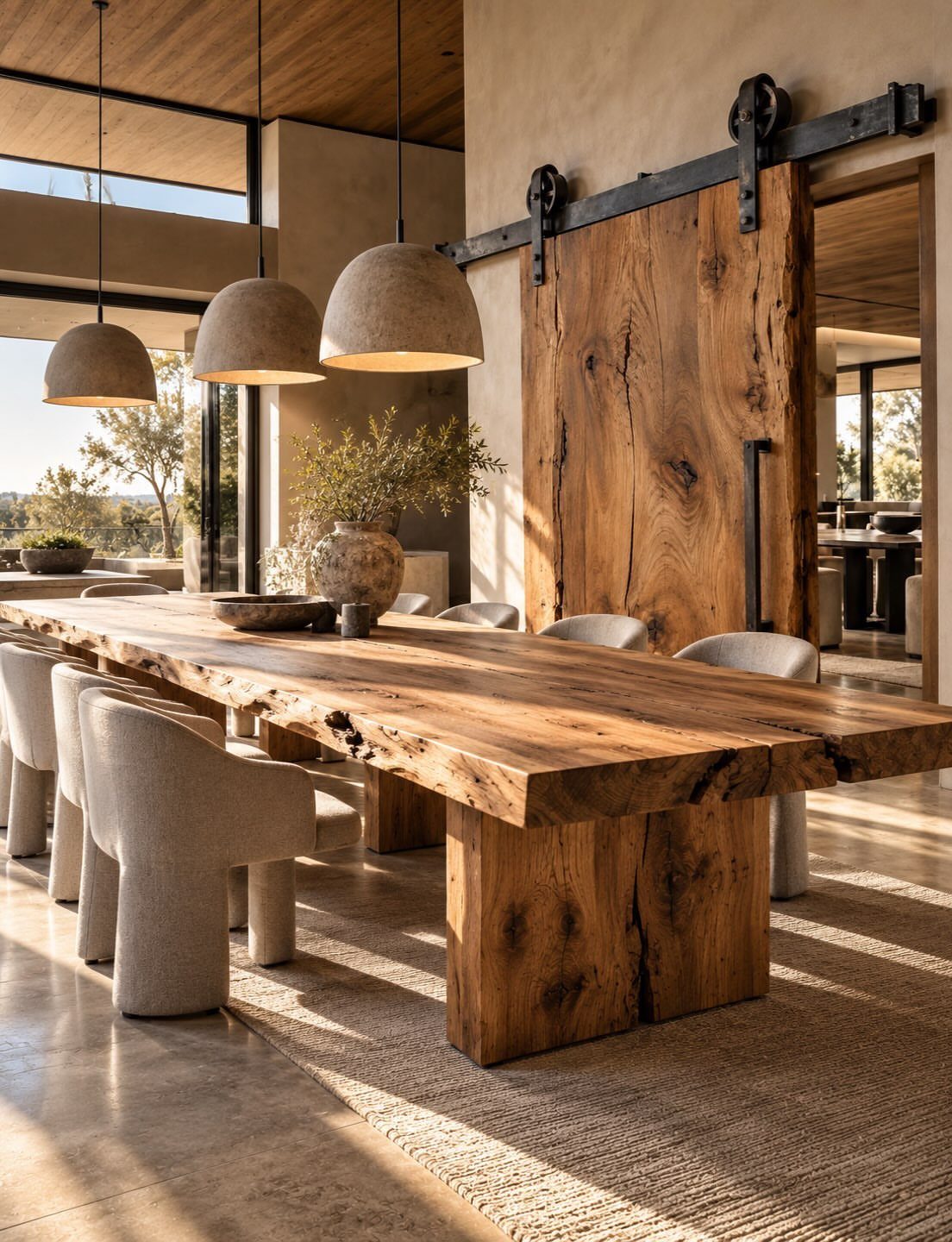
Live-edge tables preserve the natural contour of the log, which means no 2 pieces match exactly. The irregular edge here contrasts with the straight base and upholstered chairs, and the reclaimed wood adds grain variation that sanded lumber lacks.
Wide tops suit dining rooms with high ceilings, because the proportions hold up at scale.
A flattened top surface is necessary for plates and glasses, but the edges stay rough. Epoxy fills large voids and stabilizes cracks without altering the silhouette.
18. Round Tables
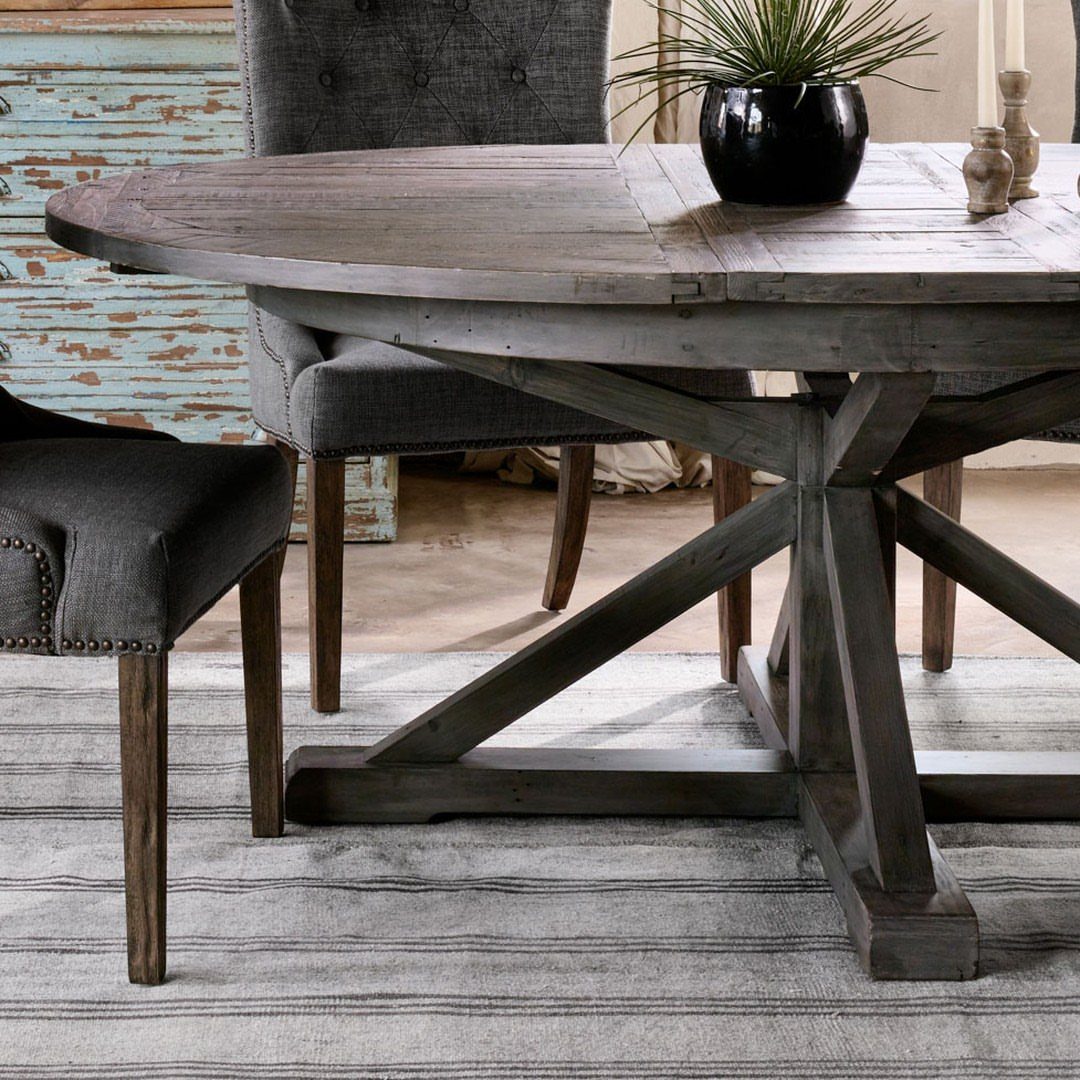
Round tables eliminate corner seating, which distributes space more evenly and suits smaller dining rooms. The pedestal base here keeps legs out of the way, and the reclaimed wood top reads warmer than painted or laminate alternatives.
A 48-inch diameter seats 4 comfortably, and 60 inches fits 6 when chairs are narrow. Grey-toned finishes like this one lighten dark wood without stripping the grain, and the X-shaped base adds stability when the top is heavy.
19. Table Bases and Legs
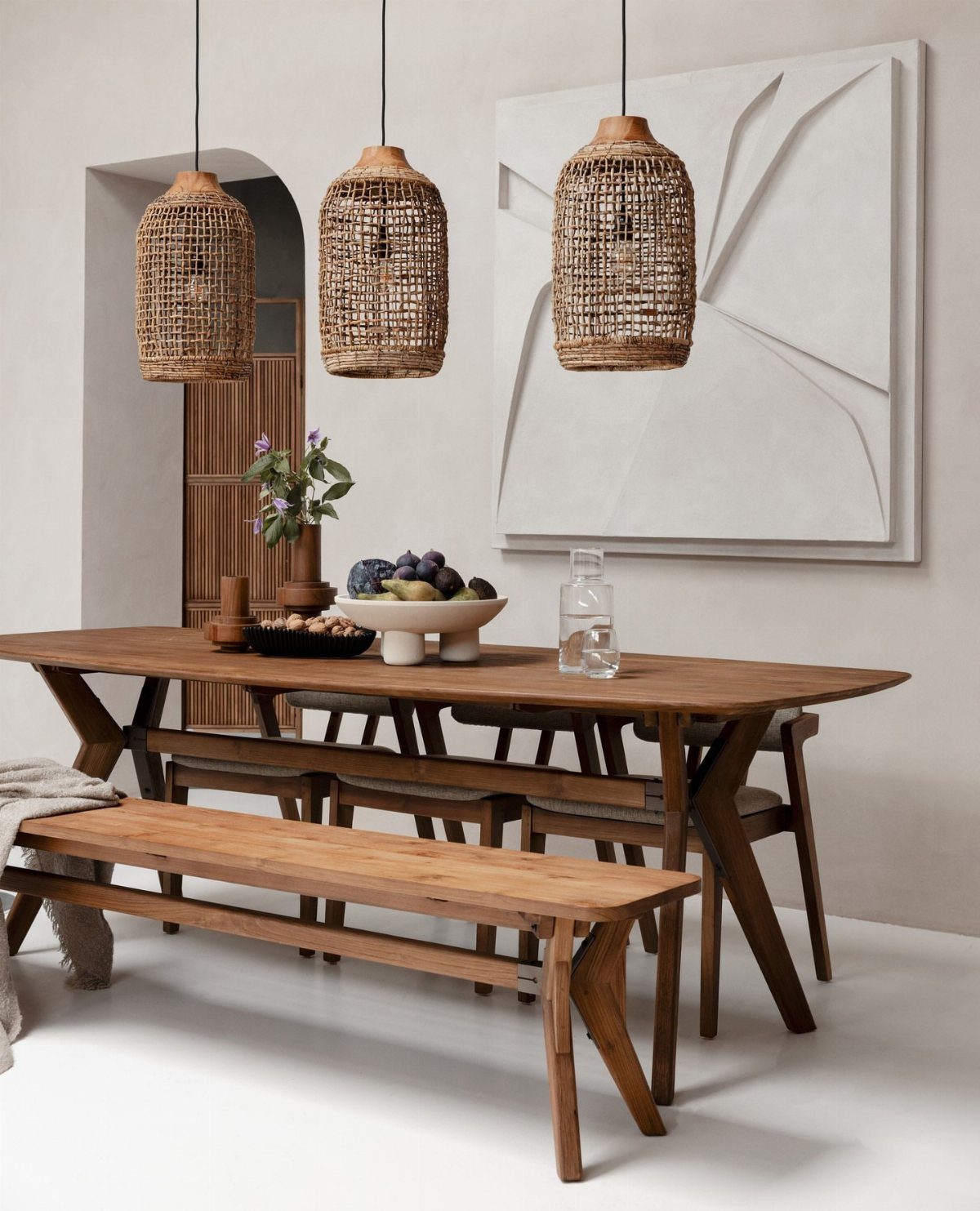
X-shaped legs frame the table cleanly and keep the structure visible, which suits open-plan rooms where the base reads from multiple angles. The crossed members brace each other, so the design stays stable without stretchers that crowd foot space.
Reclaimed wood in the legs picks up the grain and weathering of the top, and the symmetry reads formal enough for dining rooms without losing the material’s rough edge.
A matching bench carries the same joinery, which ties the set together.
20. Rustic Timber Tops
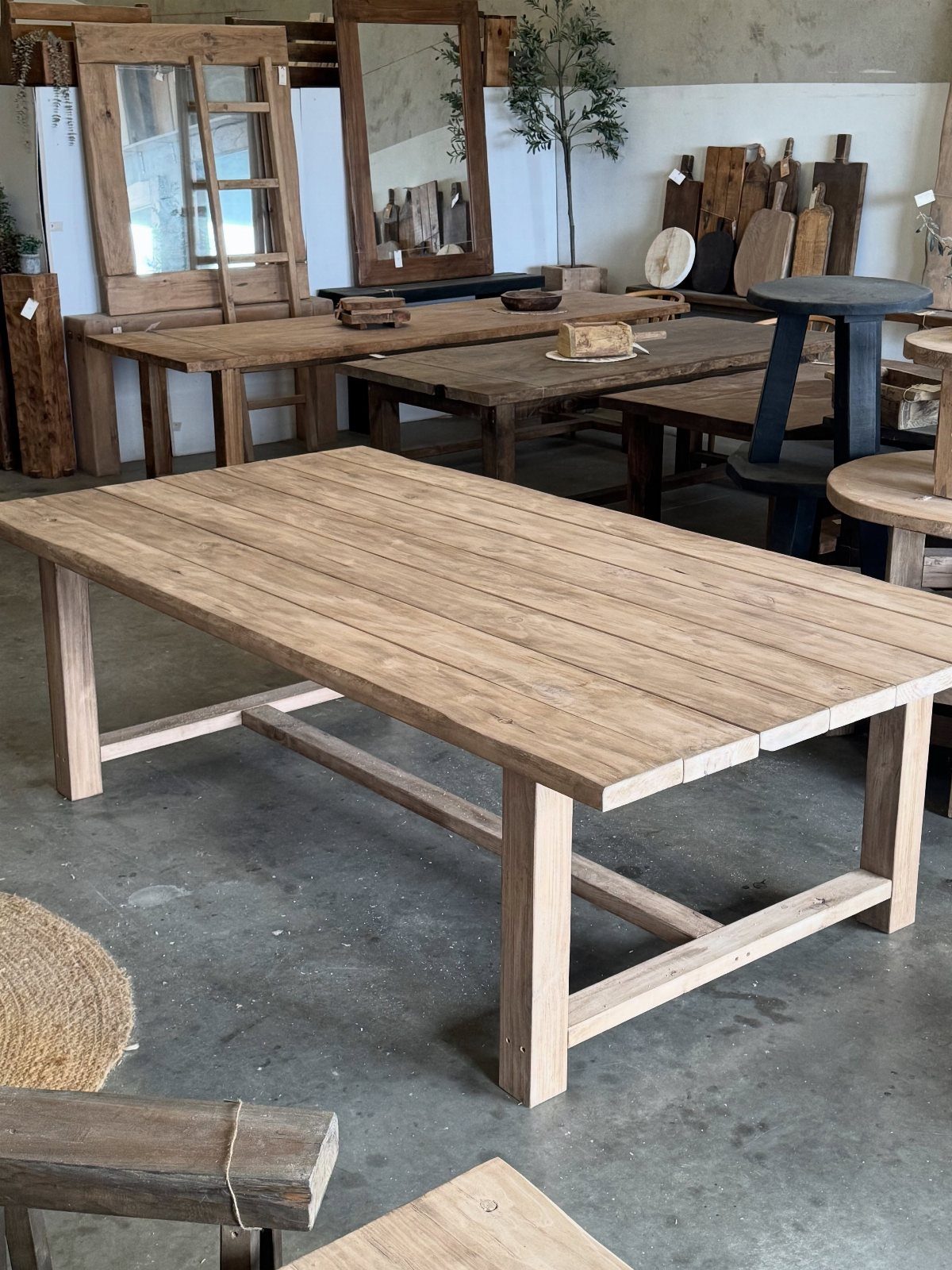
Thick plank tops with saw marks and uneven edges telegraph the reclaimed source more clearly than sanded finishes.
The chunky proportion here suits workshops and casual dining rooms where the table takes daily abuse, and the rough surface adds texture that smooth hardwood lacks.
Surface prep stops at flatten and seal, so expect splinters if the top isn’t finished properly. The material holds screws and brackets well, and the weight keeps the table from shifting during use.
21. Barn Wood Tables
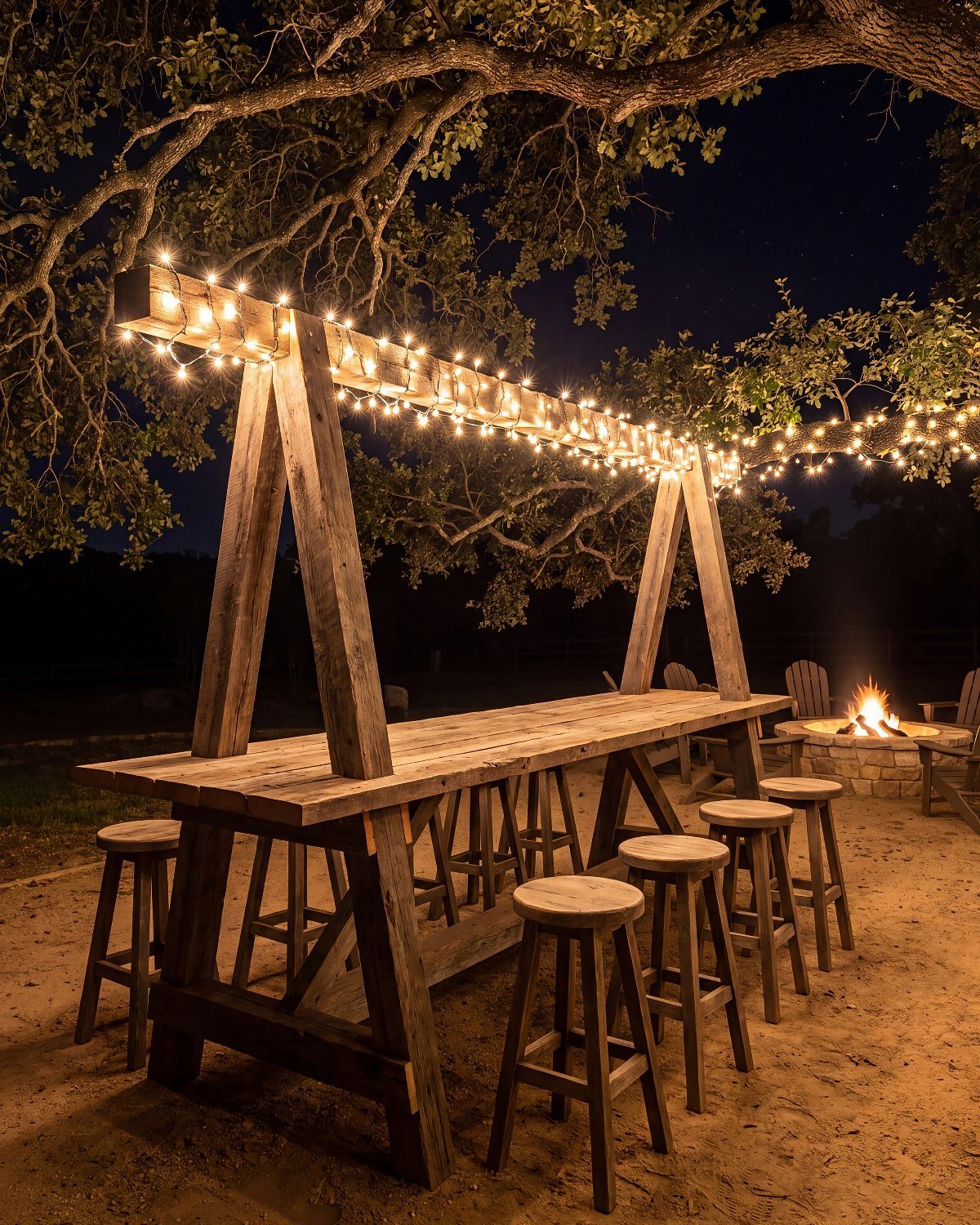
High-top tables made from barn wood fit outdoor spaces and covered patios where counter-height seating suits standing conversations. The reclaimed material holds up to weather when sealed, and matching stools keep the proportions balanced.
Bar height pairs with stools that sit lower by about a foot. The unfinished edges and weathered planks here read casual, so this fits patios better than formal dining rooms.
22. Plank Trestle Tables
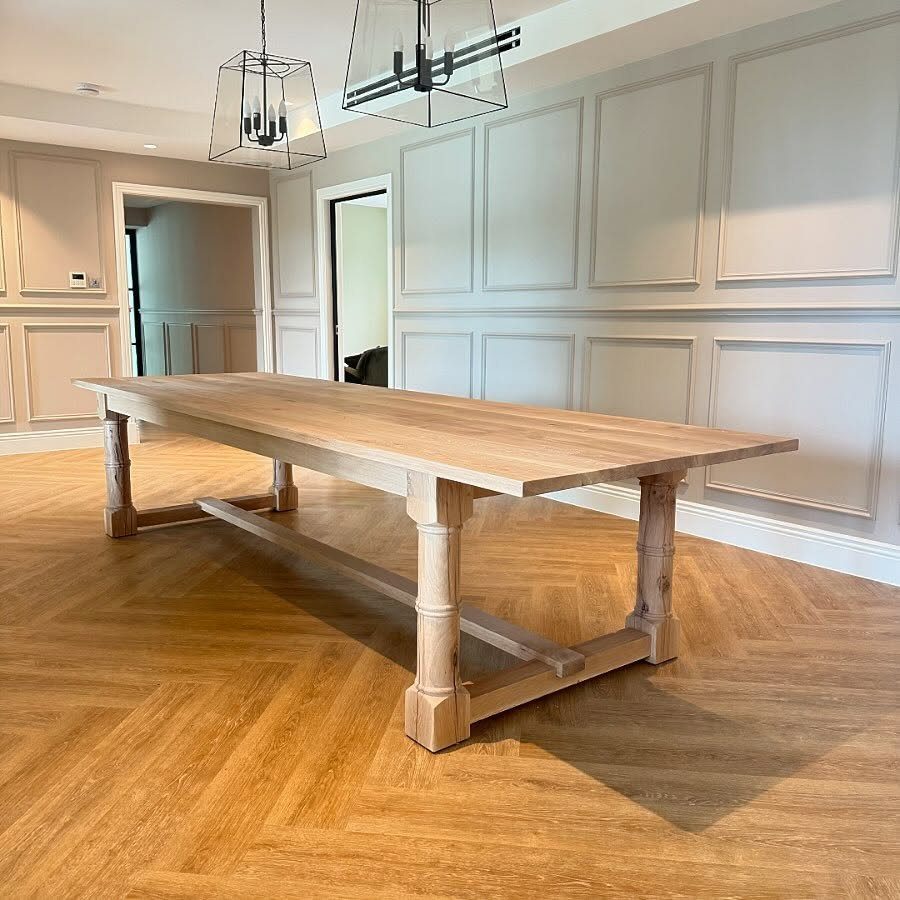
Trestle bases span long tables without center legs, which opens up seating along both sides. The vertical supports brace against a lower stretcher, so the structure stays rigid under weight without aprons that catch knees.
Light-toned reclaimed wood like this brightens rooms with dark flooring, and the plank top shows grain variation piece to piece. A trestle build suits long tables, because the base can handle the span without sagging.
23. Pedestal Tables
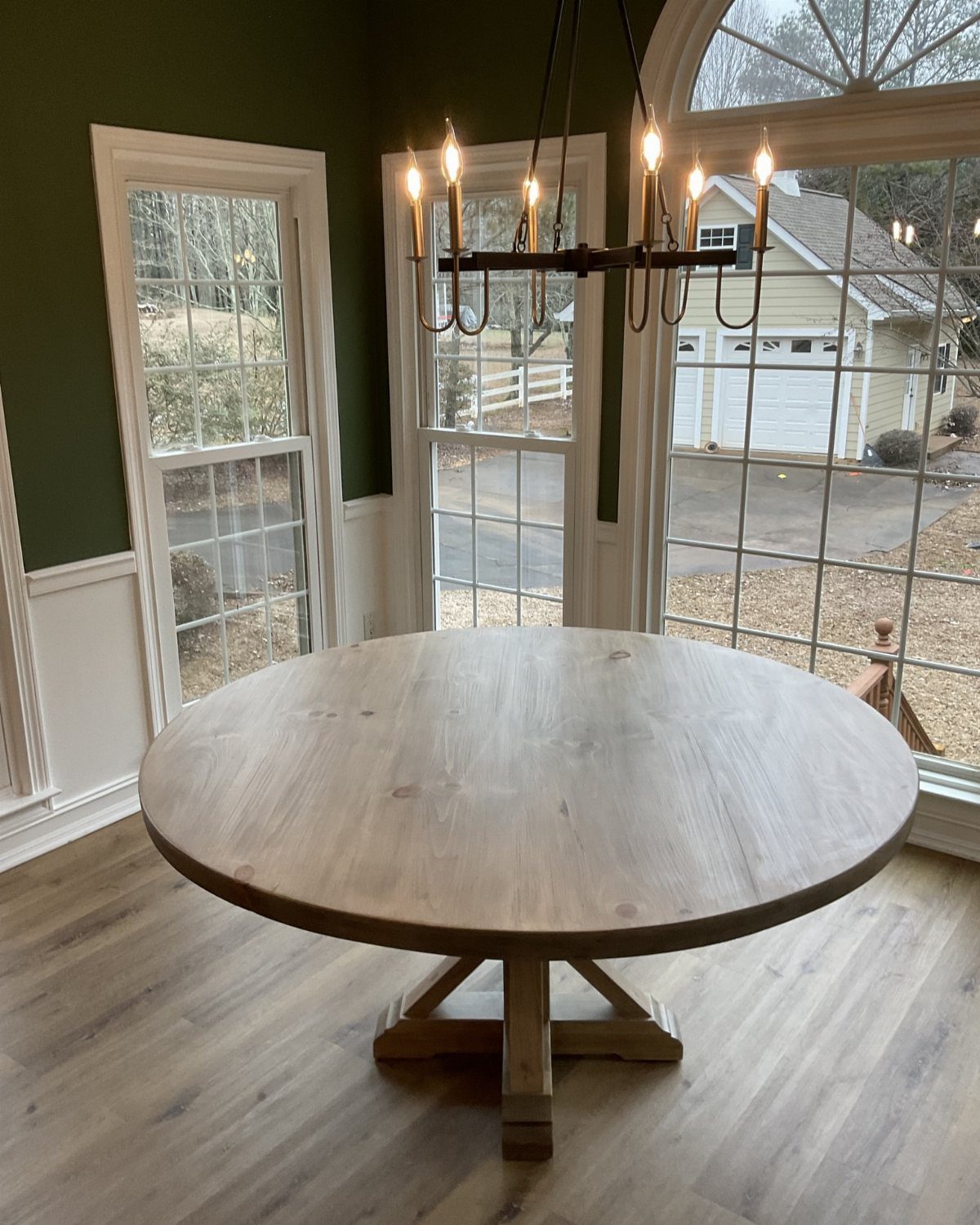
Pedestal bases center the weight under a round or square top, which frees up legroom around the perimeter. A turned column suits formal dining rooms, and the single support allows chairs to tuck in from any angle.
Pedestal tables work best when the top stays moderate in size, because wider spans need a heavier base to prevent tipping.
24. Reclaimed Wood Materials
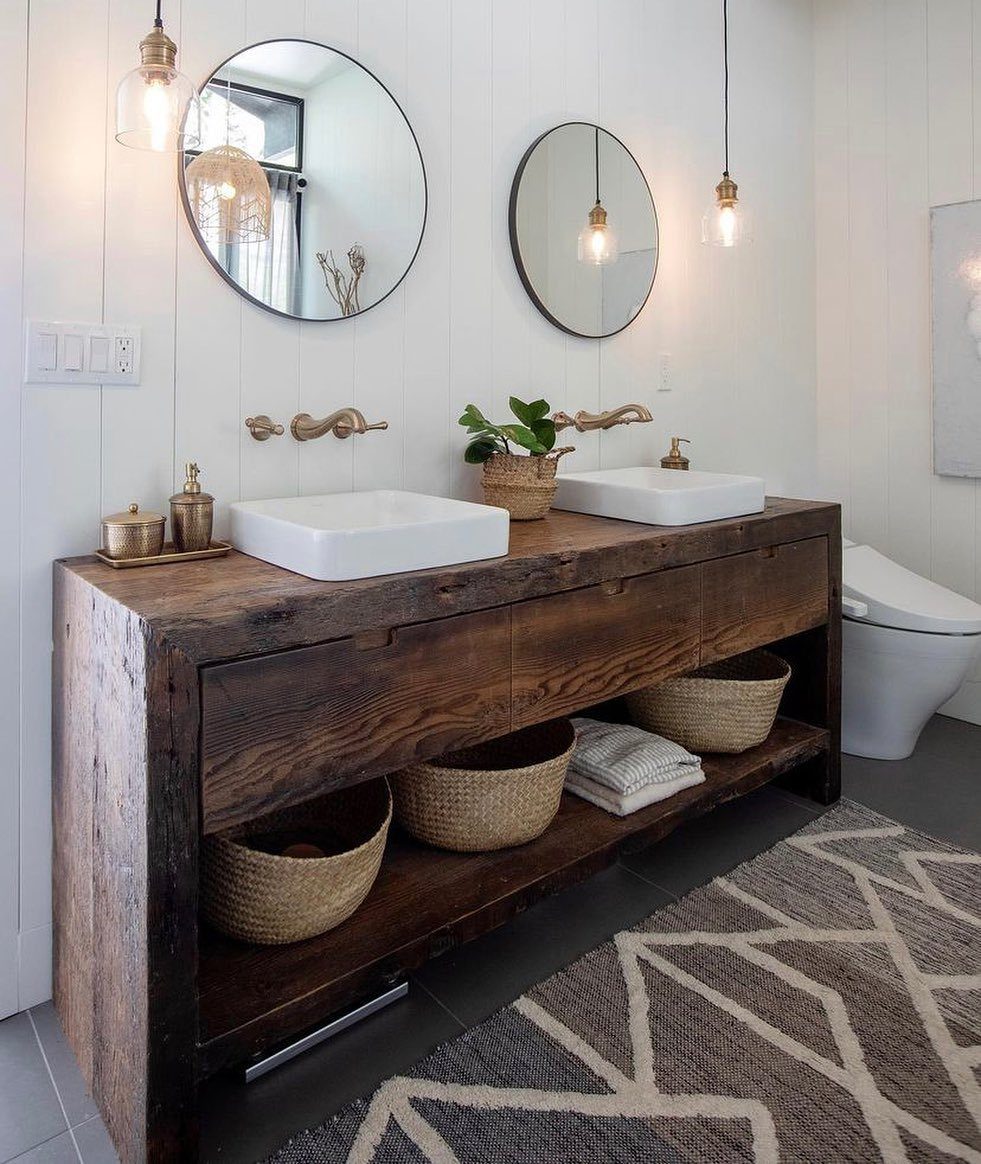
Reclaimed wood furniture draws from species salvaged from barns, factories, and old buildings, each with its own grain and durability. Oak, pine, and Douglas fir show up often, and the weathering gives the material color shifts that new lumber lacks.
A vanity like this one uses reclaimed planks for the cabinet face, and the species determines how well the piece holds screws and handles moisture. Harder woods like oak resist dents better than softer pine, which matters in high-traffic bathrooms.
25. Reclaimed Wood Sideboard
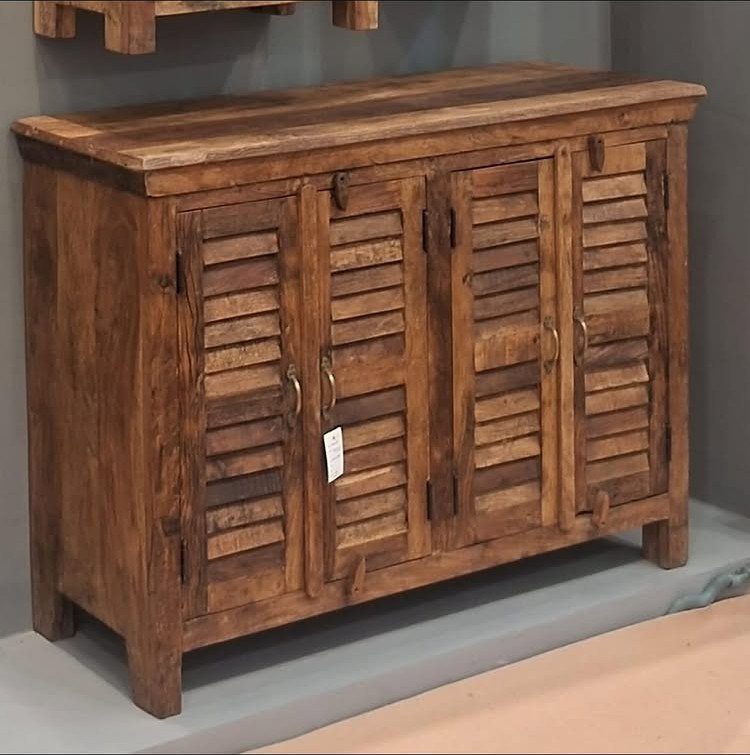
Sideboards with shutter-style doors close off storage cleanly, and the slatted face adds texture to walls where a flat cabinet would read plain.
Reclaimed wood in a weathered finish suits dining rooms and entryways where the piece holds serving dishes or linens.
Metal pulls keep the hardware visible against darker wood, and the low profile sits below window sills without blocking light. A four-door layout divides storage evenly, which helps when you need separate zones for different items.
26. Wooden Benches
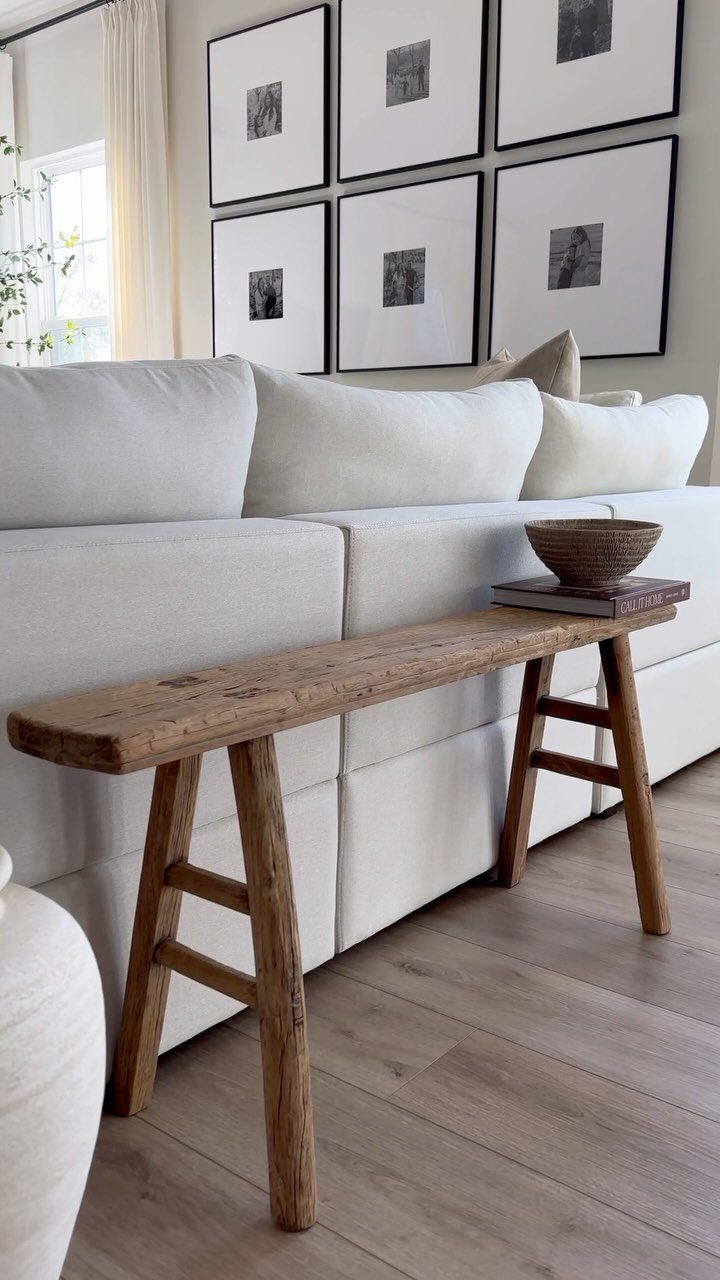
A low bench behind a sofa adds surface area without blocking sightlines, which suits open-plan rooms where the back of the sofa faces a walkway.
Reclaimed wood keeps the piece from reading too polished, and the length spans the sofa width to balance the proportions.
Storage underneath holds throws or magazines, and the flat top works as a landing spot for books or trays. Bench height should stay below the sofa back so the piece tucks in cleanly.
27. Custom Sideboards
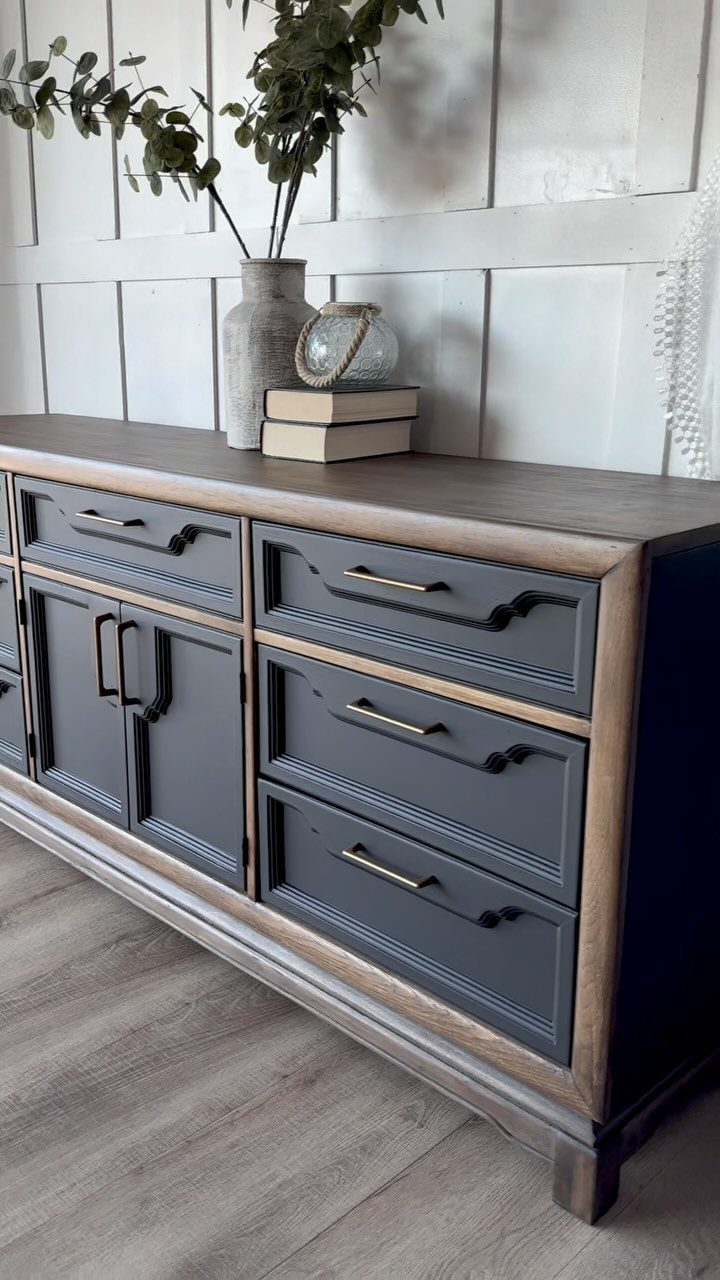
Two-tone sideboards pair painted drawer fronts with a reclaimed wood top, which softens the finish without going fully rustic. The contrast holds together if the painted section stays darker than the wood, anchoring the piece visually.
Reclaimed tops handle wear better than painted surfaces, and the mixed finish suits dining rooms where the sideboard sits against white or neutral walls.
Gold or brass hardware reads warmer against grey paint than chrome, and the wood grain keeps the piece from looking too uniform.
28. River Resin Tables
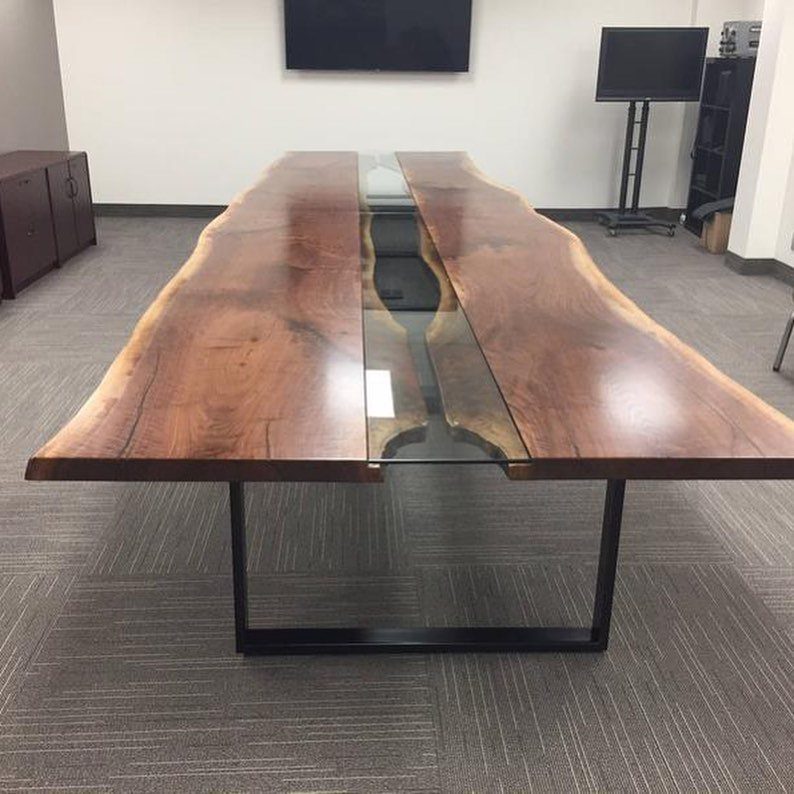
Resin poured between live-edge slabs fills voids and stabilizes cracks while adding a clean contrast to rough wood.
The clear or tinted resin follows the natural gap where the log split, and the polished finish suits modern offices and conference rooms.
Metal legs keep the base minimal so the top stays the focus, and the length accommodates multiple chairs without center supports.
Epoxy resin hardens to a glass-like surface, which means spills wipe clean and the table holds laptops without catching edges.
29. Chevron Dining Tables
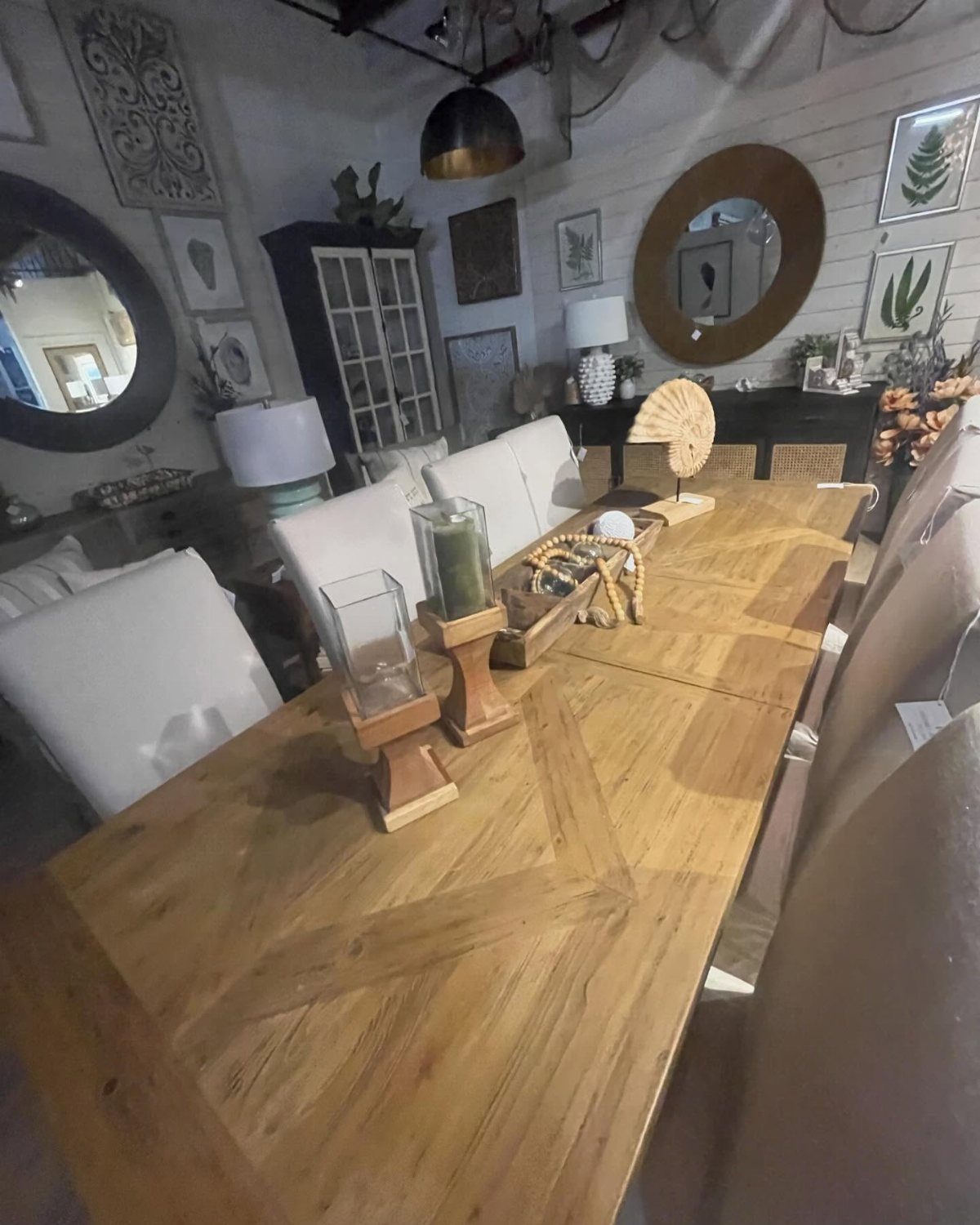
Chevron patterns angle planks toward a center spine, which adds movement to an otherwise flat surface. The mirrored grain draws the eye down the length of the table, and the reclaimed wood shows color variation piece to piece.
This layout requires more cuts and precise joinery than a straight plank top, so expect a higher price.
Light-colored chairs keep the focus on the tabletop, and the pattern suits rectangular tables better than rounds, where the geometry gets harder to match.
30. Glass-Door Hutch Set
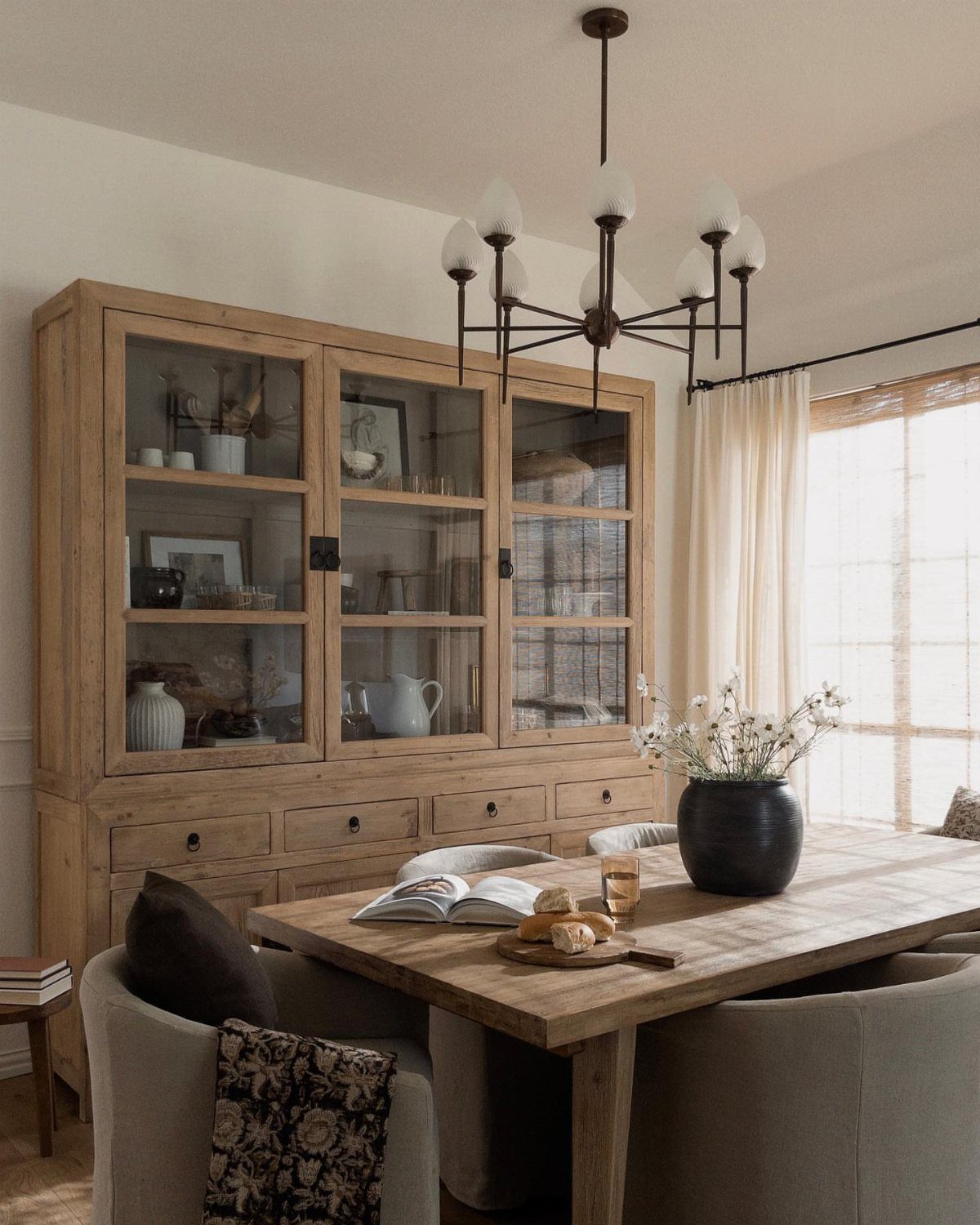
Matching a dining table to a hutch simplifies furniture selection when the room is empty, because the pieces already share finish and proportion.
Glass doors keep dishware visible, which suits formal dining rooms where you want to display china or glassware.
A hutch adds vertical storage without the depth of a full cabinet, and the reclaimed wood ties the set together visually. Light finishes brighten rooms with limited natural light, and the glass reflects ambient light back into the space.
Reclaimed Wood Sustainability
Reclaimed wood furniture uses lumber salvaged from barns, factories, and torn-down buildings instead of material milled from newly felled trees. That cuts demand for virgin timber and keeps usable wood out of landfills.
The age and prior use matter. Boards pulled from a 19th-century barn often come from old-growth forests where trees grew slowly and produced denser, more stable lumber than what commercial forestry yields now.
That density improves longevity, so a piece made from reclaimed material can outlast one built from farmed softwood.
Not every reclaimed piece carries third-party certification, because the material often moves through salvage yards rather than tracked supply chains.
If verified sustainability matters to you, ask the maker whether the wood is FSC-certified reclaimed or carries documentation of its origin.
Frequently Asked Questions
Is reclaimed wood good for furniture?
Reclaimed wood holds up better than particleboard or veneer under daily use, ages visibly rather than showing damage, and adds texture through grain variation and weathering that new lumber lacks.
The material is stable enough for heavy items like monitor arms, handles spills when sealed properly, and holds screws well in harder species like oak.
What are the downsides of using reclaimed wood?
Rough surfaces can catch paper edges or tip small items unless finished smooth, and splinters appear when surface prep stops short of proper sealing.
Color and grain vary piece to piece, which means no 2 items match exactly, and deeper grooves in unfinished tops interfere with documents or laptops.
Is reclaimed wood expensive?
Custom pieces in reclaimed wood cost more when the build requires precise joinery like chevron patterns, which need more cuts than straight plank tops.