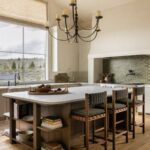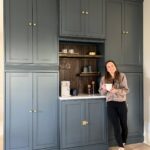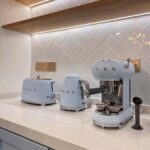
You can fit a coffee station into a closet-mounted cart or build it into a full wall with open shelving and vintage signage.
The format you choose depends on how much floor and wall space you’re willing to give up permanently. A wall-mounted grinder adds height and texture, and a ceramic bean dispenser with a pull tap keeps bulk storage off the counter.
1. Kitchen Coffee Bar
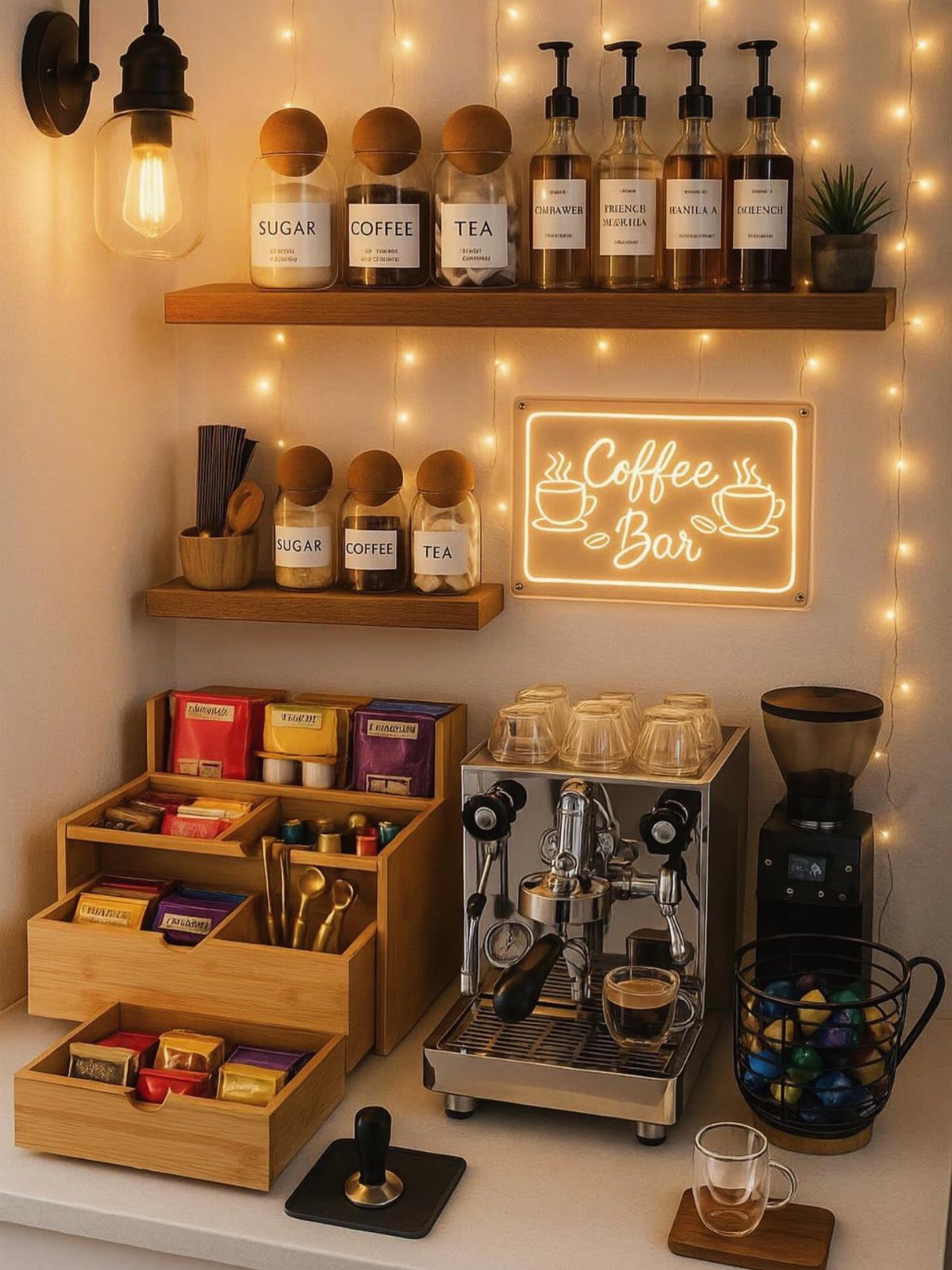
A glowing sign above the counter turns a functional coffee setup into a spot that feels intentional. A neon-style sign mounted against brick or paneling reads clearly even with overhead lighting.
I’ve found that a sign helps when the coffee station shares a wall with other kitchen tasks, because it marks the zone without needing a full partition.
If you don’t want neon, a painted wood sign or metal lettering gives the same finishing effect. Visual weight at eye level makes the station register as a dedicated area instead of just another appliance on the counter.
2. Antique Hutch Coffee Stations
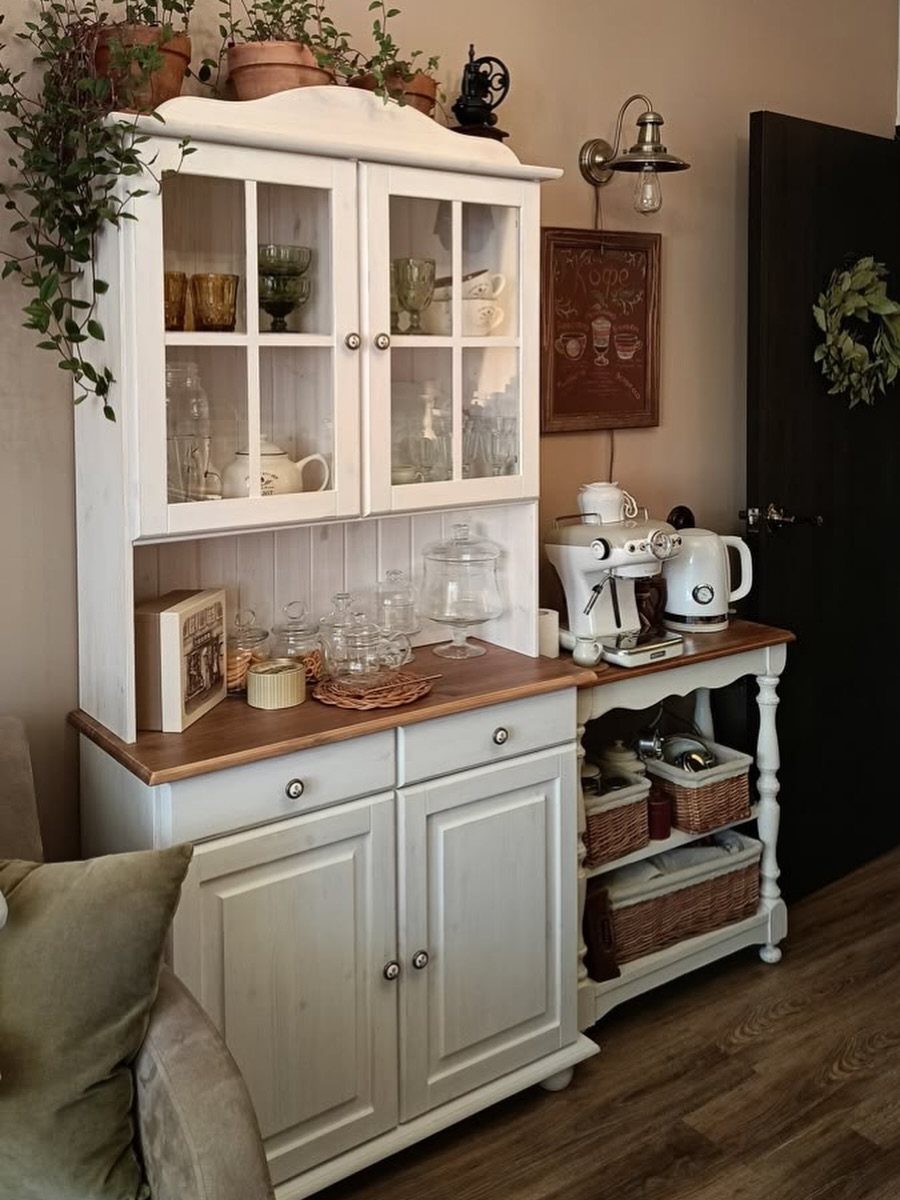
A hutch offers both counter space for brewing and cabinet storage for mugs, beans, and filters in one piece of furniture.
A white finish with glass-front doors keeps the display visible without leaving everything open to dust. I like this format in kitchens where counter space is already tight, because the hutch doesn’t require built-in cabinetry or wall mounting.
You lose floor space. A hutch needs a dedicated wall or nook that isn’t interrupting circulation.
3. Vintage Cart Coffee Bars
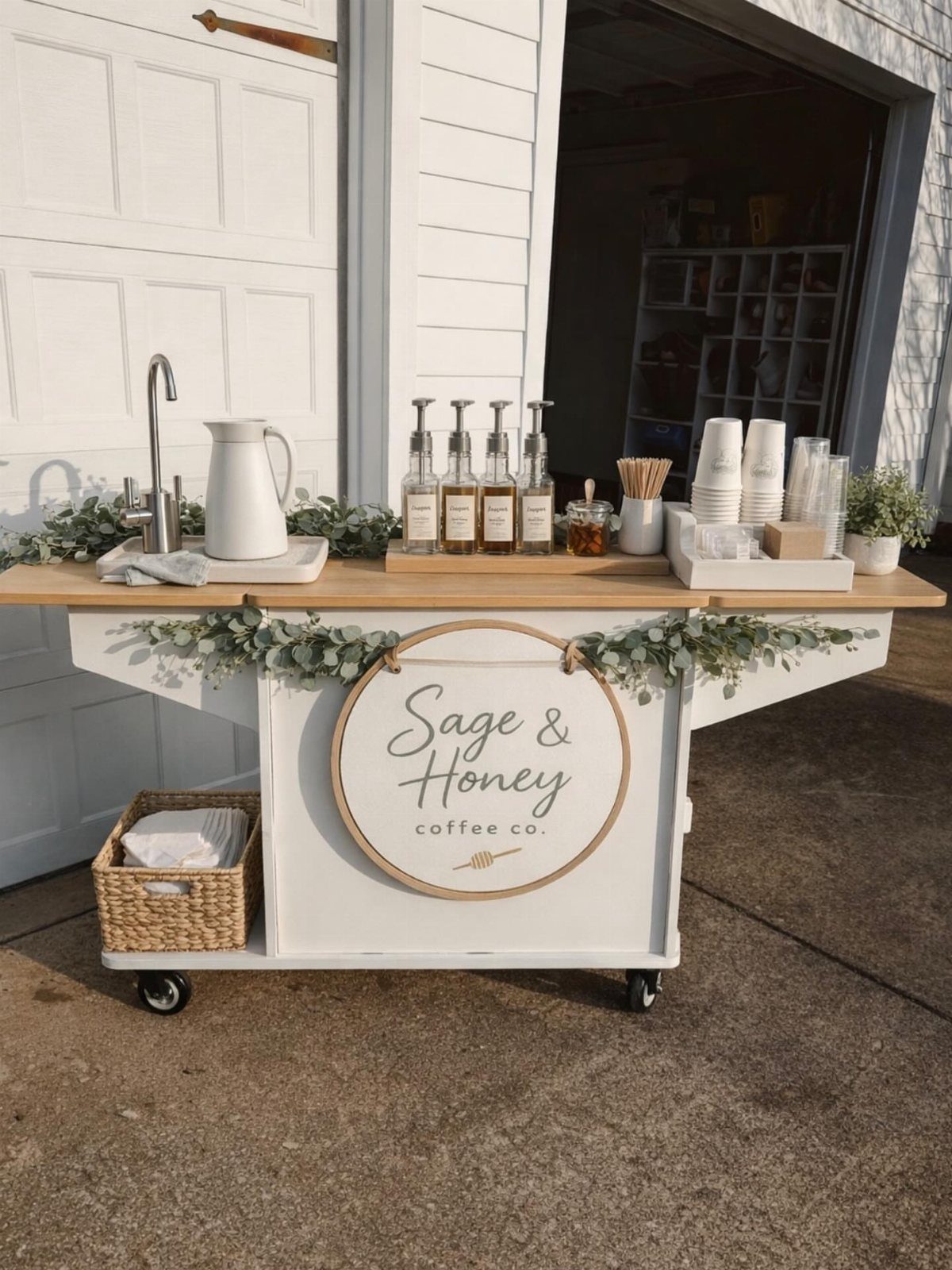
A wheeled cart keeps the coffee station portable, which is useful if you host outdoors or move between rooms. A two-tier cart with a wood top provides room for syrups, cups, and a small brewer without crowding.
I prefer carts with metal frames over all-wood designs, because they hold up better when you’re rolling them across uneven surfaces or grass.
This format works well in small kitchens where counter space is limited during the week, but you want a full setup for weekends. You can roll it into a closet or pantry when it’s not in use.
4. Farmhouse Wall-Mounted Coffee Station
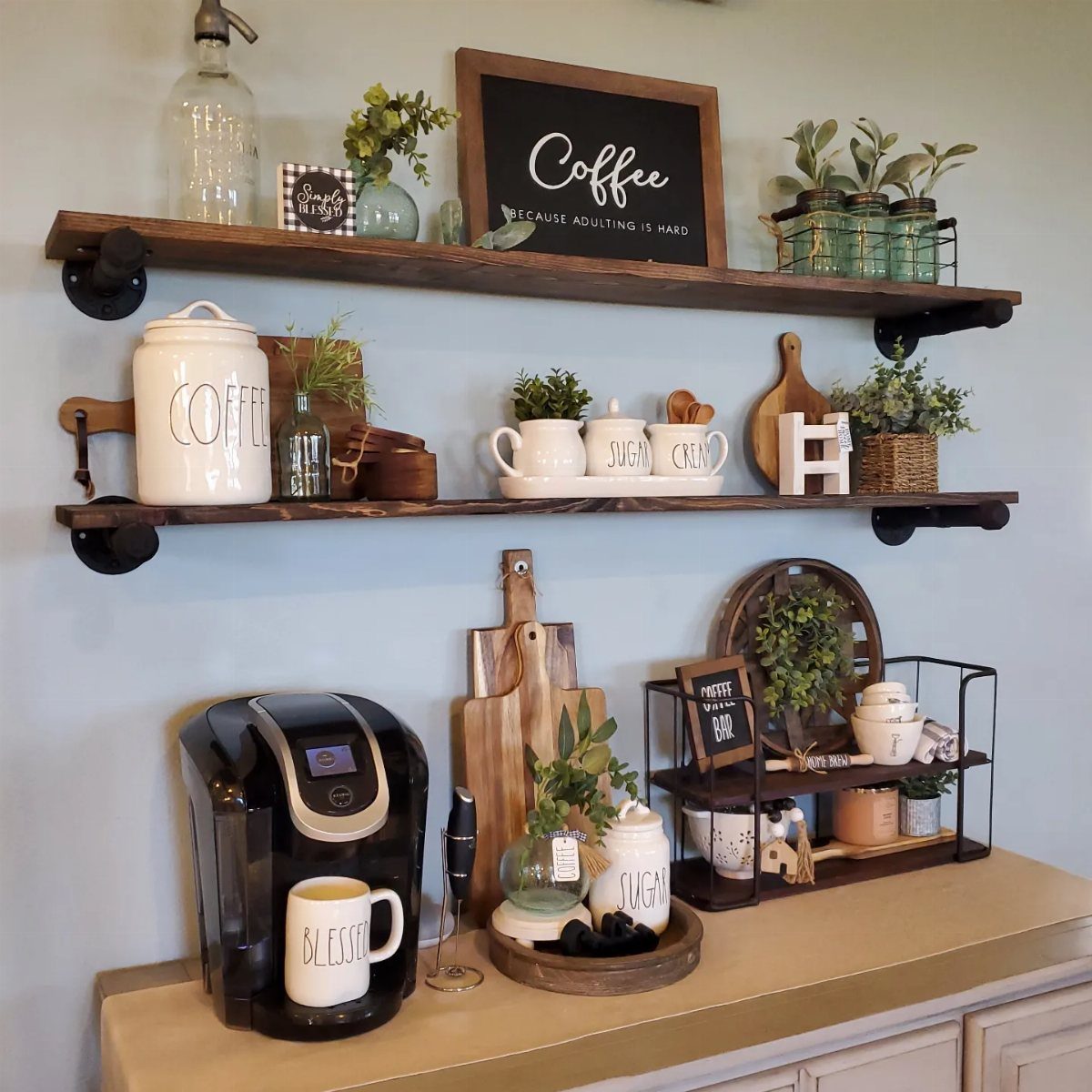
Wall-mounted shelves create a coffee station and save counter and floor space, which makes sense in tight kitchens or rental units where you can’t install permanent cabinetry.
Two stained wood shelves with brackets hold canisters and a framed sign above a counter-mounted single-serve brewer. Mount the lower shelf with enough clearance for a standard coffee maker and enough vertical room above to lift a mug.
This idea needs a load-bearing wall or studs behind it, because a full brewer and water reservoir add more weight than decorative items alone.
5. Old-School Coffee Grinder Displays
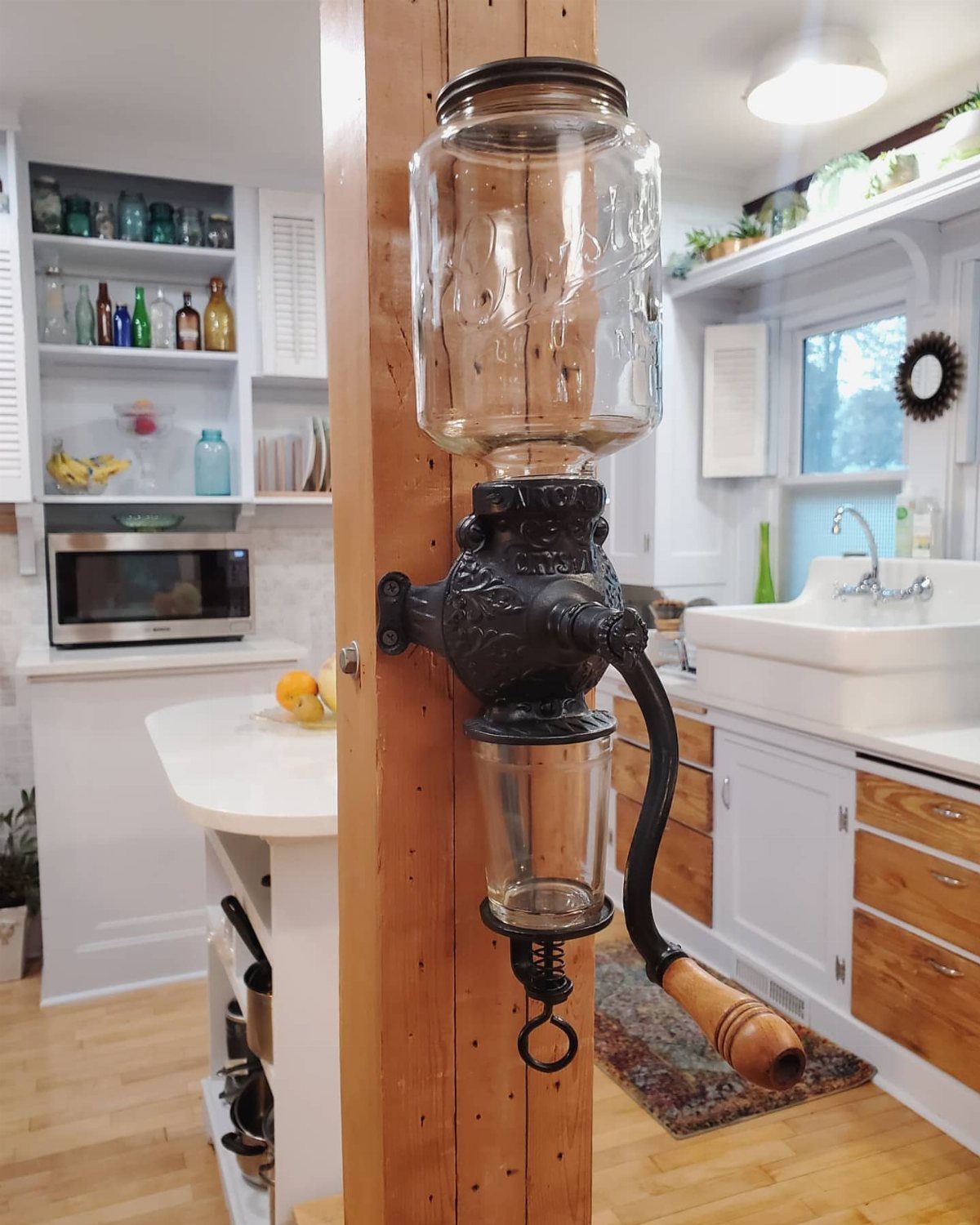
A manual grinder mounted to a post or countertop edge brings a sculptural quality to a coffee station without requiring floor space or wall shelves.
A glass hopper and iron hardware read as antique even if the grinder is a newer reproduction. I’ve found these work best when they’re installed within arm’s reach of the brewing area, so they function as both tool and decoration.
If the grinder still cranks, you can use it for coarse-ground coffee. If the mechanism is worn or missing, it stays a display piece that adds detail to an otherwise plain wall or beam.
6. Vintage Coffee Tin Storage
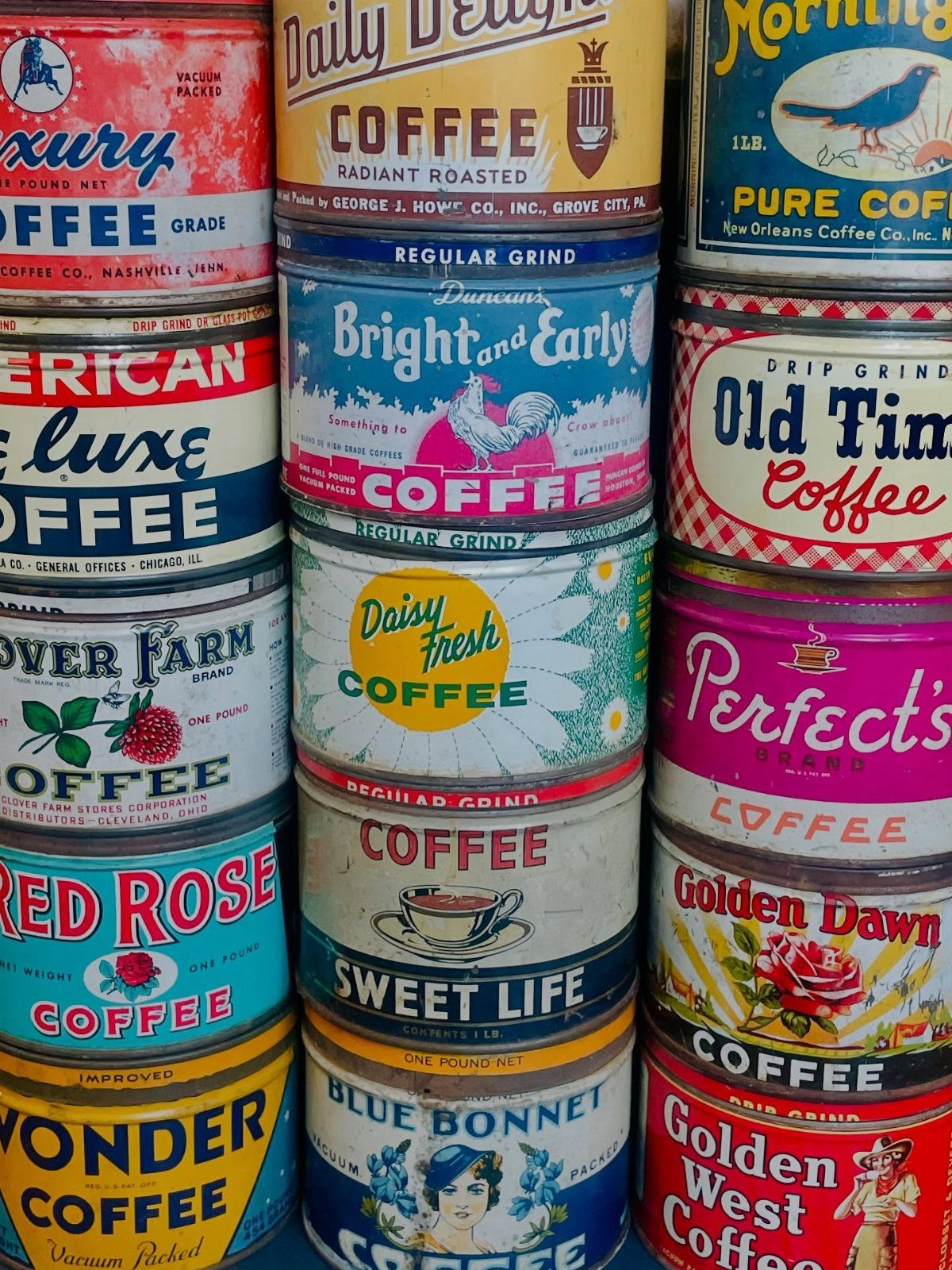
Old coffee tins add color and period detail to a counter or shelf without needing much space.
Painted graphics and brand names from midcentury regional roasters bring in pattern and nostalgia at the same time. I like these because they’re functional for storing coffee, tea, or sugar, and the lids keep everything sealed.
You can find tins at estate sales, antique markets, or online.
Condition varies, so look for pieces where the printing is still legible and the metal isn’t rusted through. If the interior has a coating that’s flaking, use the tin for display only.
7. China Cup and Saucer Walls
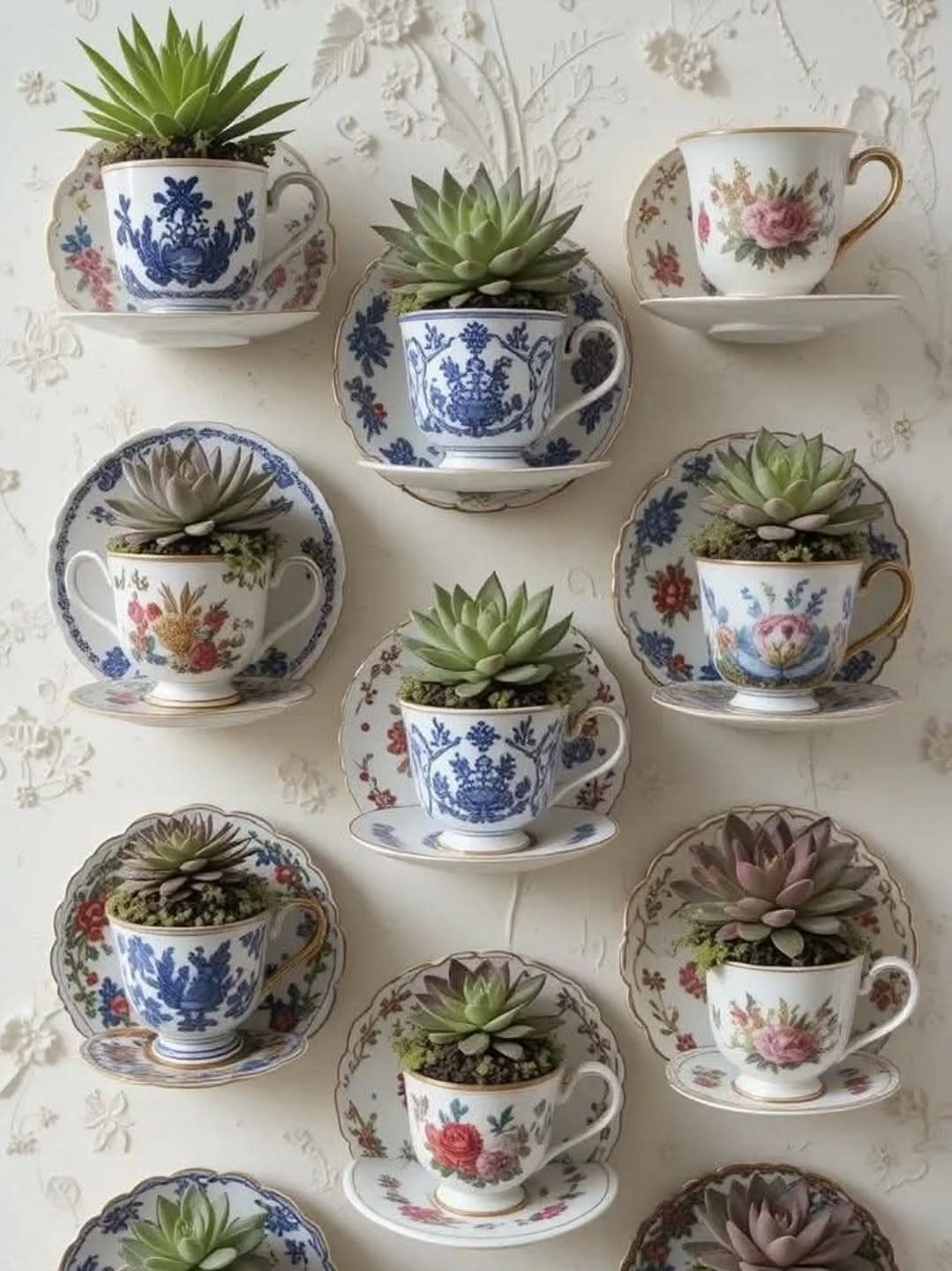
Mounting china cups and saucers vertically turns them into small planters for succulents or air plants.
Each piece attaches with a plate hanger or adhesive disc on the back, so the setup stays secure without drilling through the ceramic. I like this format because it uses pieces that often sit unused in cabinets.
Succulents work here because they need little water and thrive in shallow soil. If you water in place, run a towel underneath the cups first to catch drips.
8. Shabby Chic Coffee Nooks
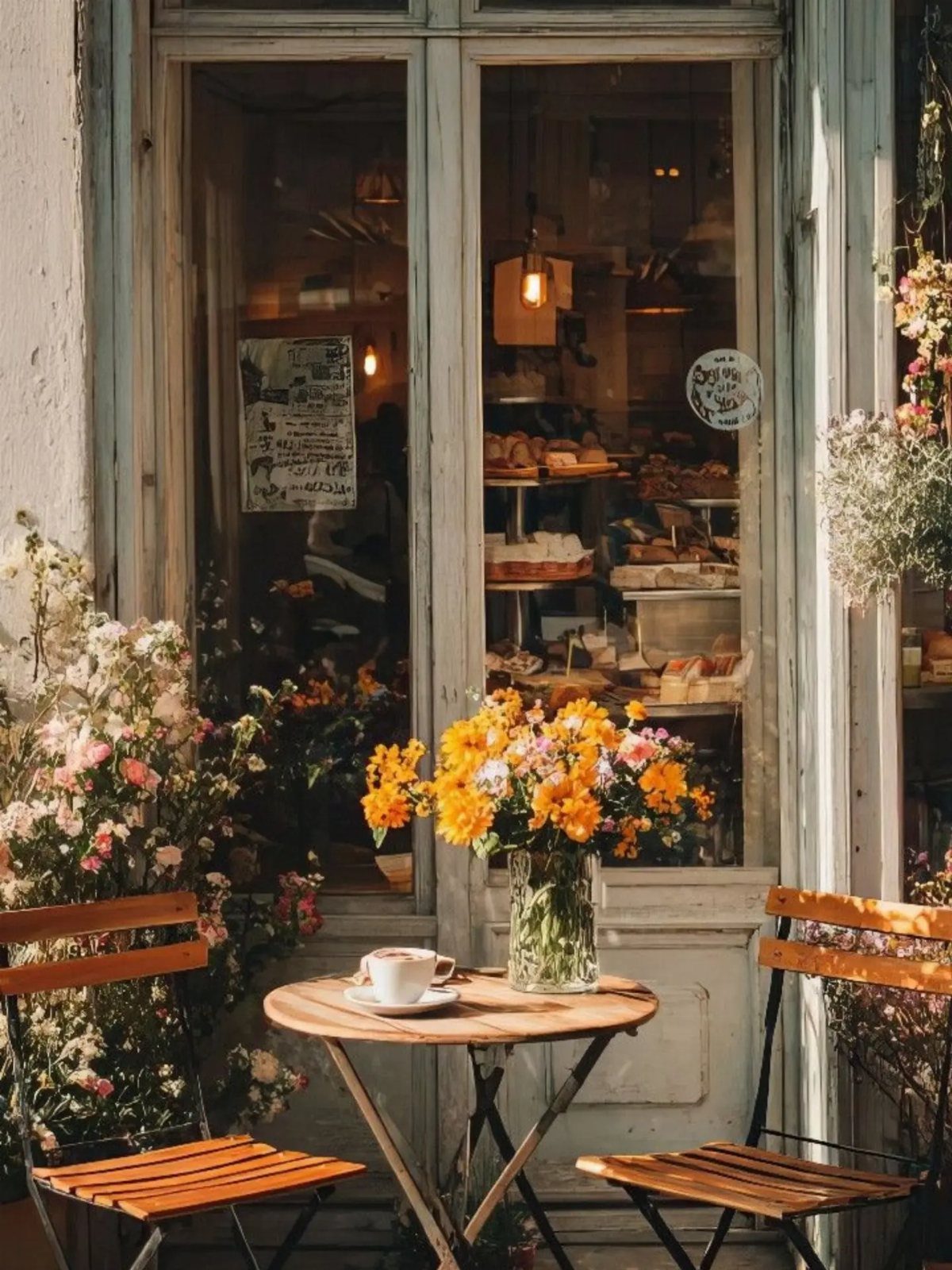
Weathered finishes on outdoor seating and window frames set a worn, unhurried mood that suits a morning coffee ritual.
Peeling paint on shutters or aged wood on chairs gives the scene texture without requiring new purchases. A small round table and mismatched seating fit into tight outdoor corners, patios, or apartment balconies.
Fresh flowers in a simple vase soften the rustic materials. If the seating is truly vintage, check that the joints are stable before regular use.
9. Antique Coffee Cup Display
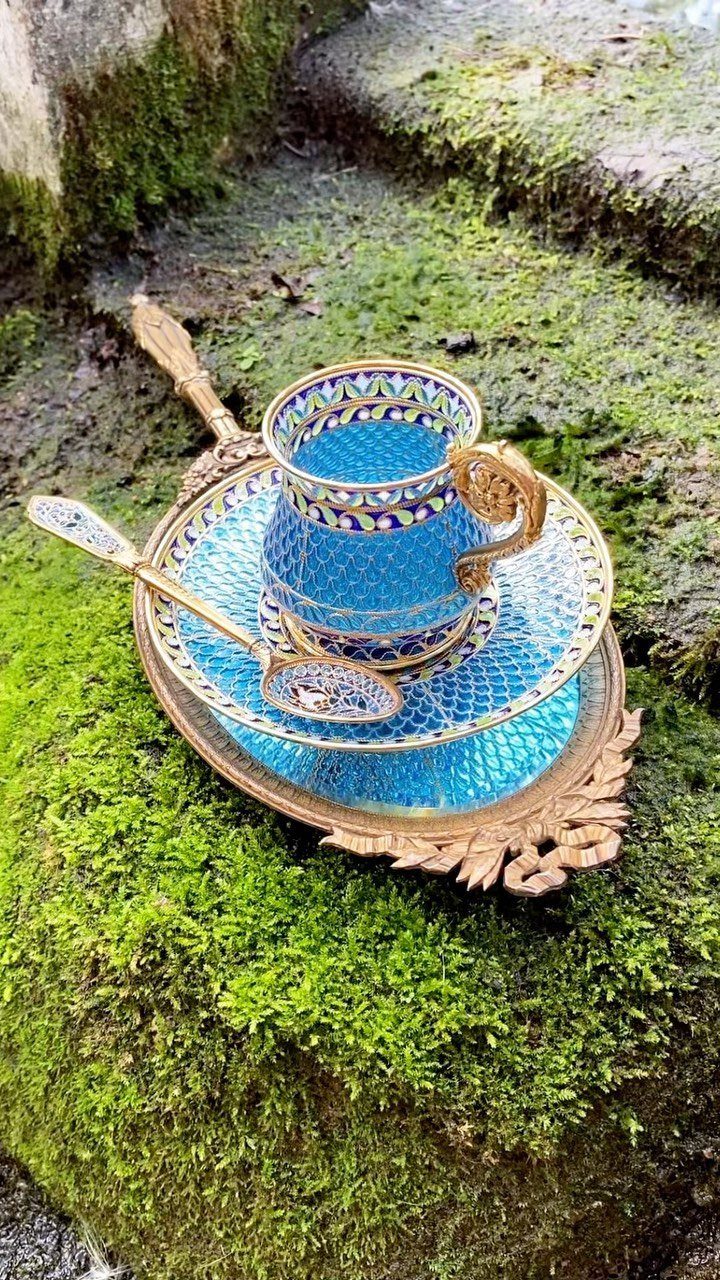
Placing a single ornate cup on a tray isolates it as a display piece rather than part of a functional stack.
Gilded edges and fine detail stand out more when the cup sits alone against moss, fabric, or a plain surface.
This format works for heirloom or flea-market china that’s too delicate for daily use but too detailed to hide in a cabinet.
A tray keeps the arrangement portable, so you can move it between shelves, tables, or windowsills depending on light and season.
10. Vintage Coffee Sign Display
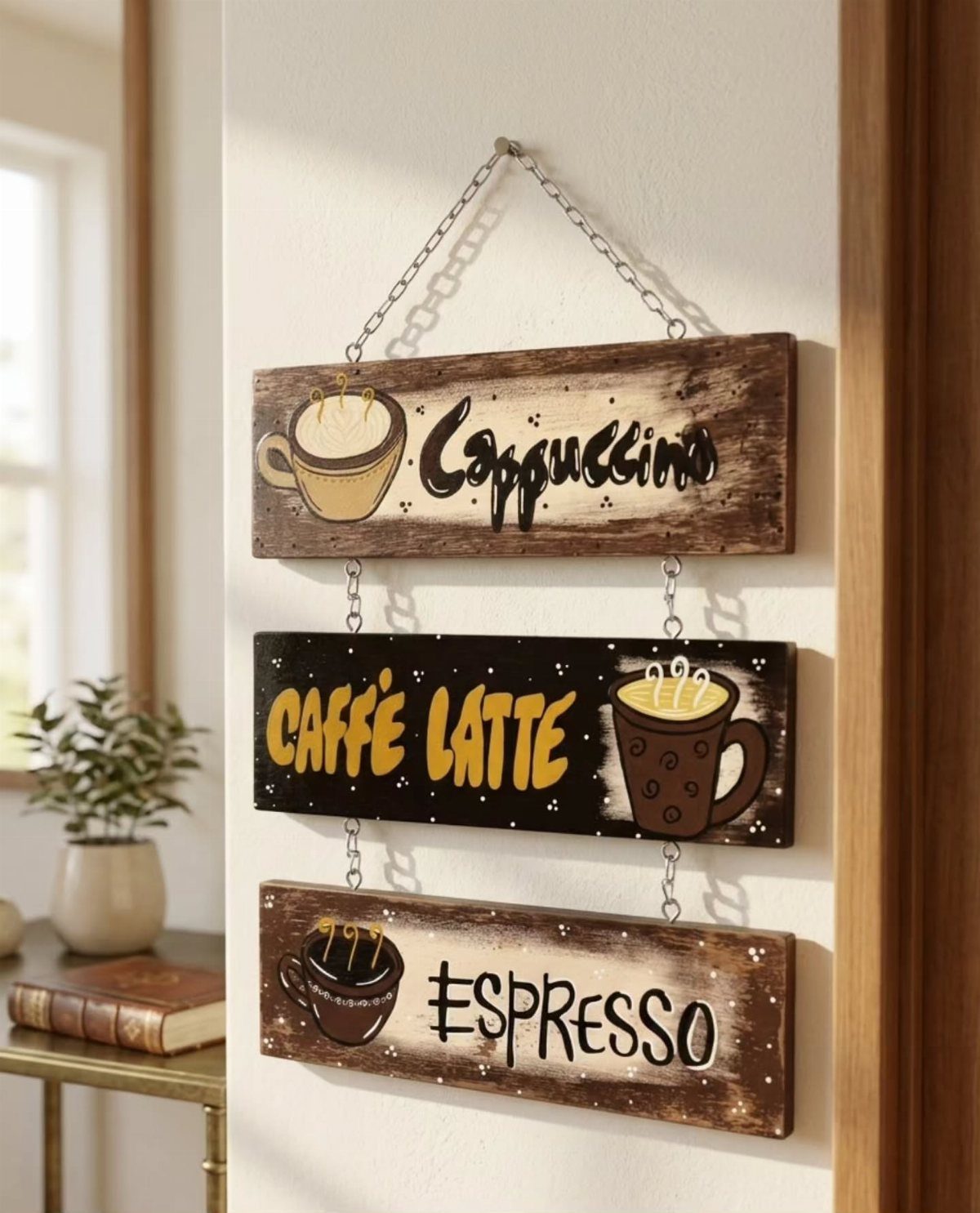
Grouping three or more coffee signs on one wall fills vertical space without needing shelves or cabinetry.
Wood plaques with drink names and simple illustrations read clearly from across a room. Hanging them by chain or cord adds slight dimension and keeps the arrangement casual.
Spacing the signs evenly in a row or staggered column depends on the wall width. I find a row works better on narrow walls, while a stagger suits wider expanses.
11. Coffee Shop Mural
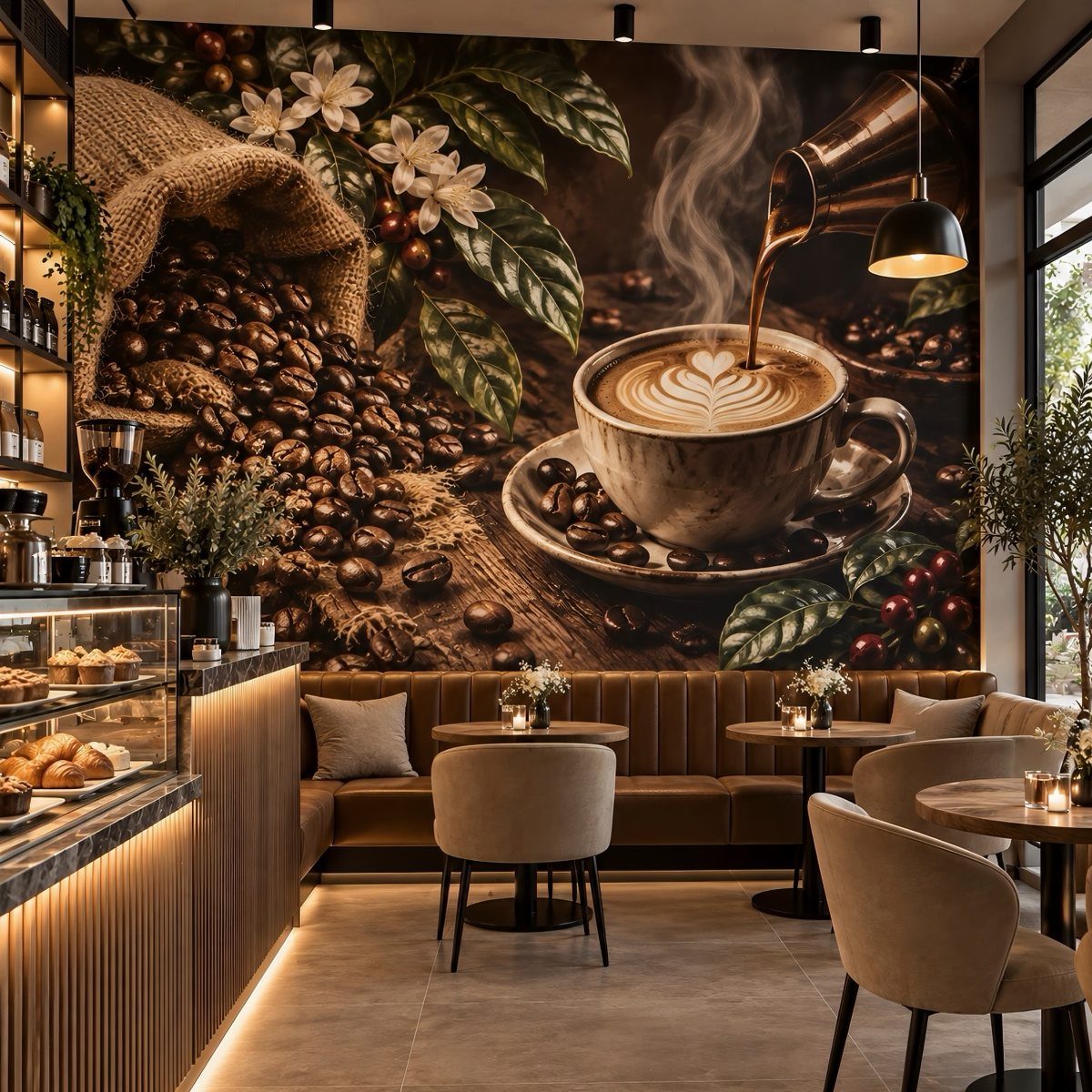
A mural scaled to cover most of a wall anchors a café’s seating area and gives customers something to look at while they wait or sit.
Coffee bean illustrations and latte art in neutral tones stay recognizable without overwhelming the space. This idea suits businesses more than homes, because the scale and subject matter need room and repeat visits to justify the cost.
Booth seating along the mural wall keeps circulation open in front and makes the artwork visible from every table.
12. Antique Coffee Dispenser
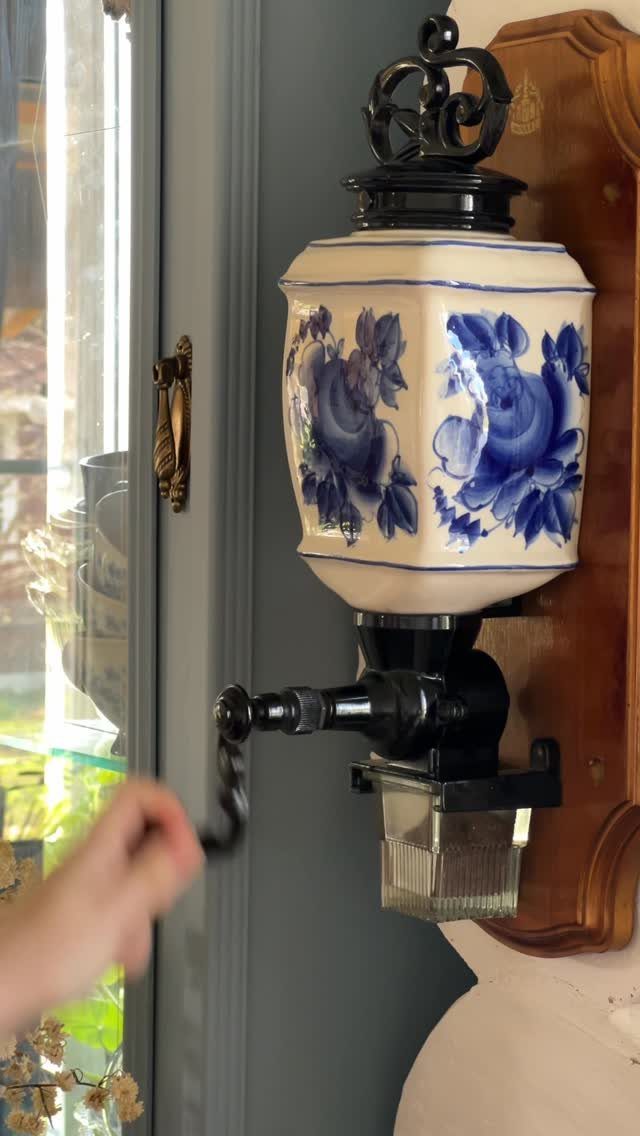
A wall-mounted dispenser with a ceramic reservoir and metal tap brings functional vintage detail to a kitchen or pantry. The crank or lever at the base controls flow, so you can pour without lifting or tilting.
I’ve found these work best for dry goods like coffee beans, rice, or flour, because the ceramic won’t rust and the tap seals tightly.
Mount the dispenser at a height where the tap clears a mug or bowl underneath. If the piece is decorative only, it still adds sculptural interest to a blank wall.
13. Vintage Grinder in Use
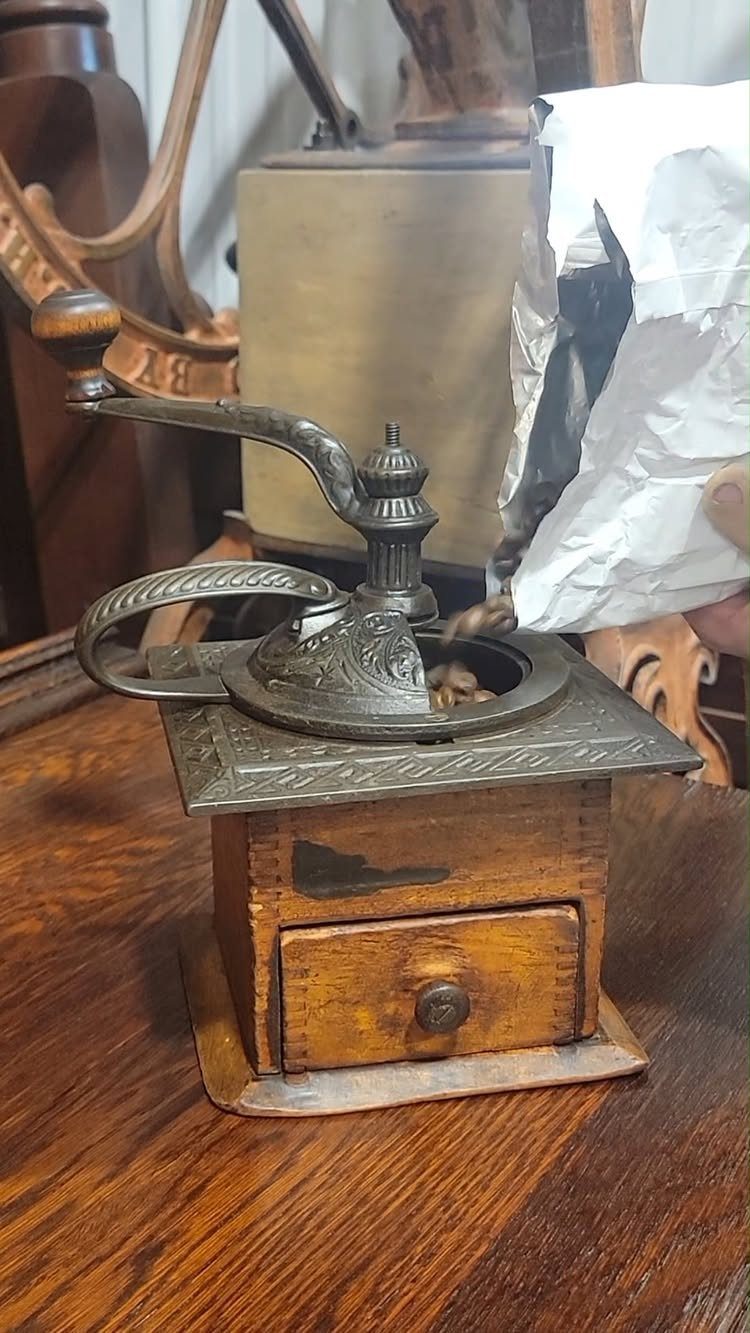
Beans falling into a manual grinder from a hand-held bag is a quiet moment that slows down the routine.
A wood-body grinder with a metal crank sits at table height, which keeps the setup accessible without dedicated counter space. I like this format because it gives the ritual visible steps instead of letting a machine handle everything at once.
If you still grind by hand regularly, keep the grinder on the table or a low shelf where you can work standing or seated.
The process takes longer than electric, but the sound and pace suit mornings when you’re not rushing.
14. Vintage Grinder with Plates
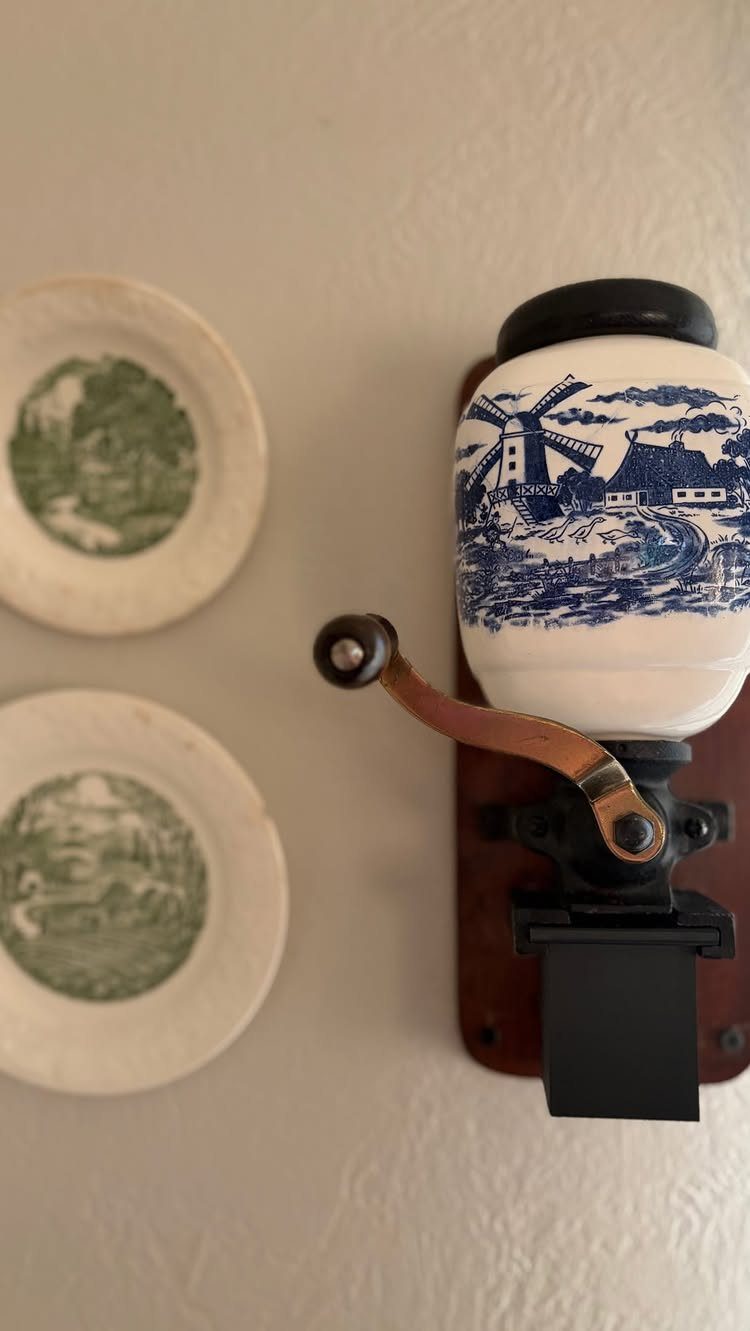
Pairing a wall-mounted grinder with small decorative plates turns a single antique into part of a larger composition.
The blue-and-white windmill pattern on the grinder hopper picks up the colors in the plates, which ties the grouping together without matching exactly. Mounting both on a white wall keeps the focus on the pattern rather than the background.
If you collect transferware or patterned ceramics, this format lets you display pieces that are too small to stand out alone. The grinder adds height and texture next to flat plates.
15. Coffee with Antique Books
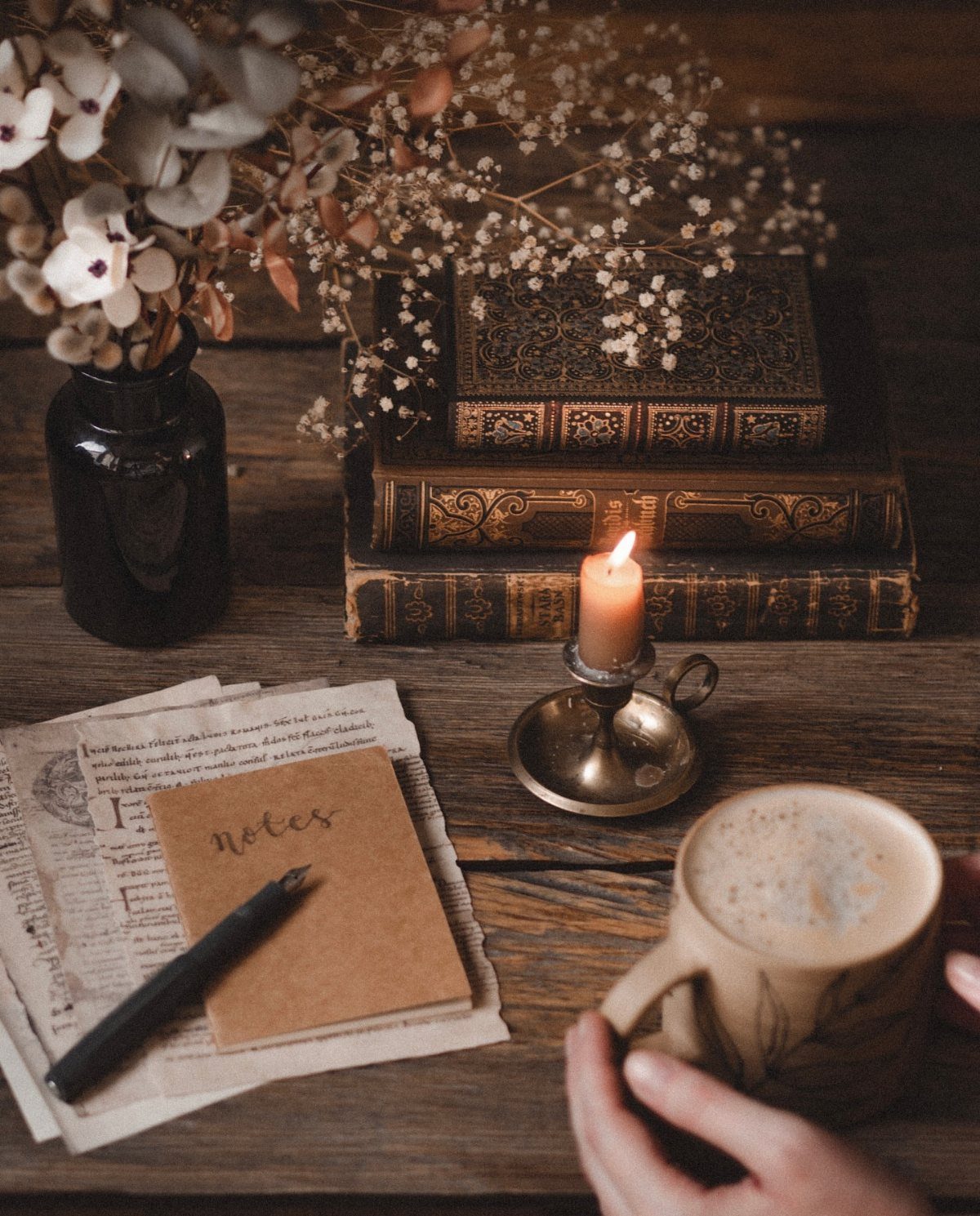
A tabletop arrangement with coffee, candle, leather-bound books, and dried flowers creates a reading nook atmosphere without needing a separate room. The worn covers and aged paper add period detail that new books don’t offer.
I find this setup works best on a side table or desk where the items can stay put for days, because reassembling it every morning loses the lived-in quality.
If the books are actual antiques, keep the candle far enough away that wax or heat won’t damage the spines.
16. Coffee on Vintage Lace
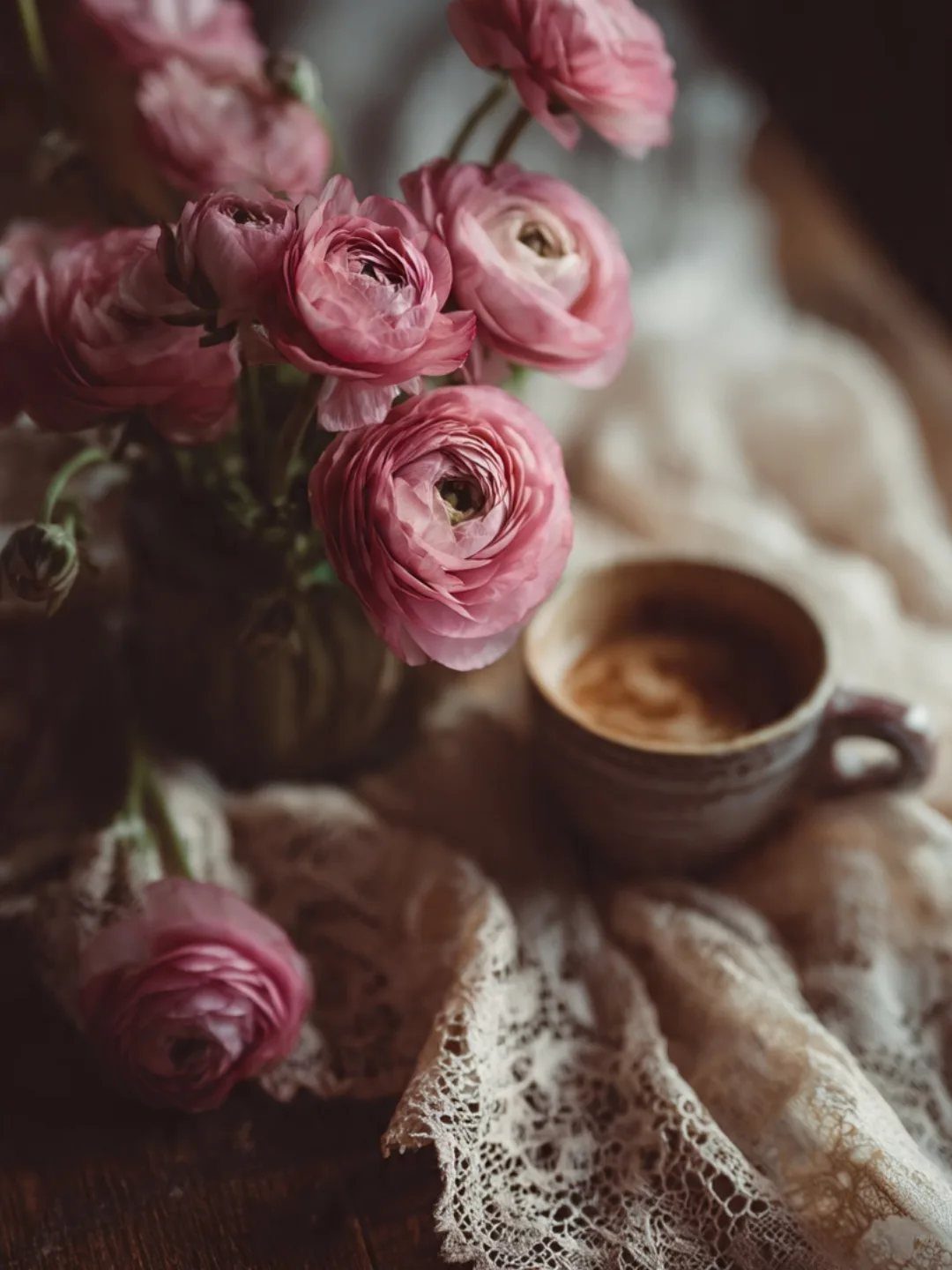
A lace cloth softens a dark wood surface and gives a small coffee cup a more formal setting without adding furniture.
Pink flowers in soft focus balance the delicate textile without competing for attention. This format suits a tray, side table, or breakfast nook where the scale stays intimate.
Lace collects dust and stains easily, so I use it for styled moments rather than daily service. If the cloth is vintage, spot-clean instead of soaking it, because old thread can weaken in water.
17. Antique Desk Coffee Scene
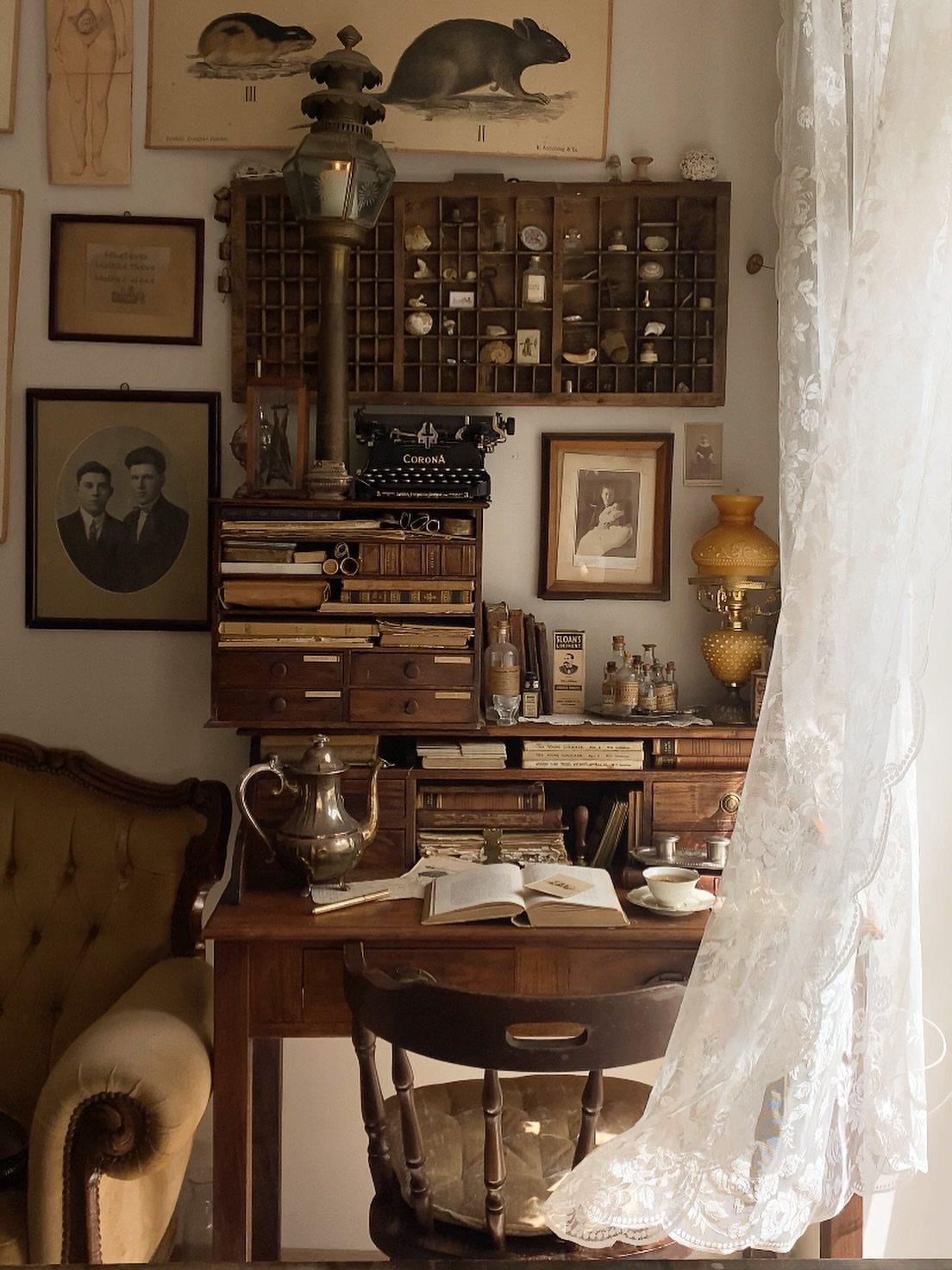
Grouping a silver coffee pot with a typewriter, open books, and framed portraits fills a desk with objects that each carry their own history.
The layered arrangement gives the space depth and makes it feel collected over time rather than assembled in one trip. I like this idea for a home office or library corner where the desk isn’t used for paperwork every day.
If the desk holds active work, keep the coffee service on a separate tray so you can clear it quickly.
Silver tarnishes, so if the pot is functional, polish it between uses or accept the patina as part of the look.
Frequently Asked Questions
Why choose retro coffee signs?
Retro coffee signs add nostalgic detail to kitchens and cafés while celebrating coffee as a ritual rather than just a drink.
They’re made from durable steel or tin that outlasts paper posters, and the classic advertising graphics work in homes, coffee shops, and offices alike.
How do you display antique coffee grinders?
Mount a manual grinder to a wall, post, or counter edge where it’s within arm’s reach of your brewing area so it functions as both tool and decoration.
What makes a good vintage coffee station?
I look for pieces that give you working counter space and enclosed storage in the same footprint, whether that means a narrow hutch or a vintage bar cart.
Antique pieces like manual grinders, old coffee tins, or weathered furniture add texture and history without requiring new purchases.
How do you use vintage coffee tins for storage?
Old coffee tins with painted graphics store coffee, tea, or sugar while adding color and pattern to counters or shelves.