
A coffee station can sit on a countertop, a cart, a sideboard, or float on a shelf, and the one that works depends on whether you need the counter space back.
If you brew the same way every morning, set up the workflow so the grinder sits near the brewer and the mugs stay within reach.
Espresso setups need more depth than drip machines because you work in front of the portafilter, not beside it, and a pour-over corner takes even less room if you’re willing to measure and pour by hand.
1. Countertop Coffee Station
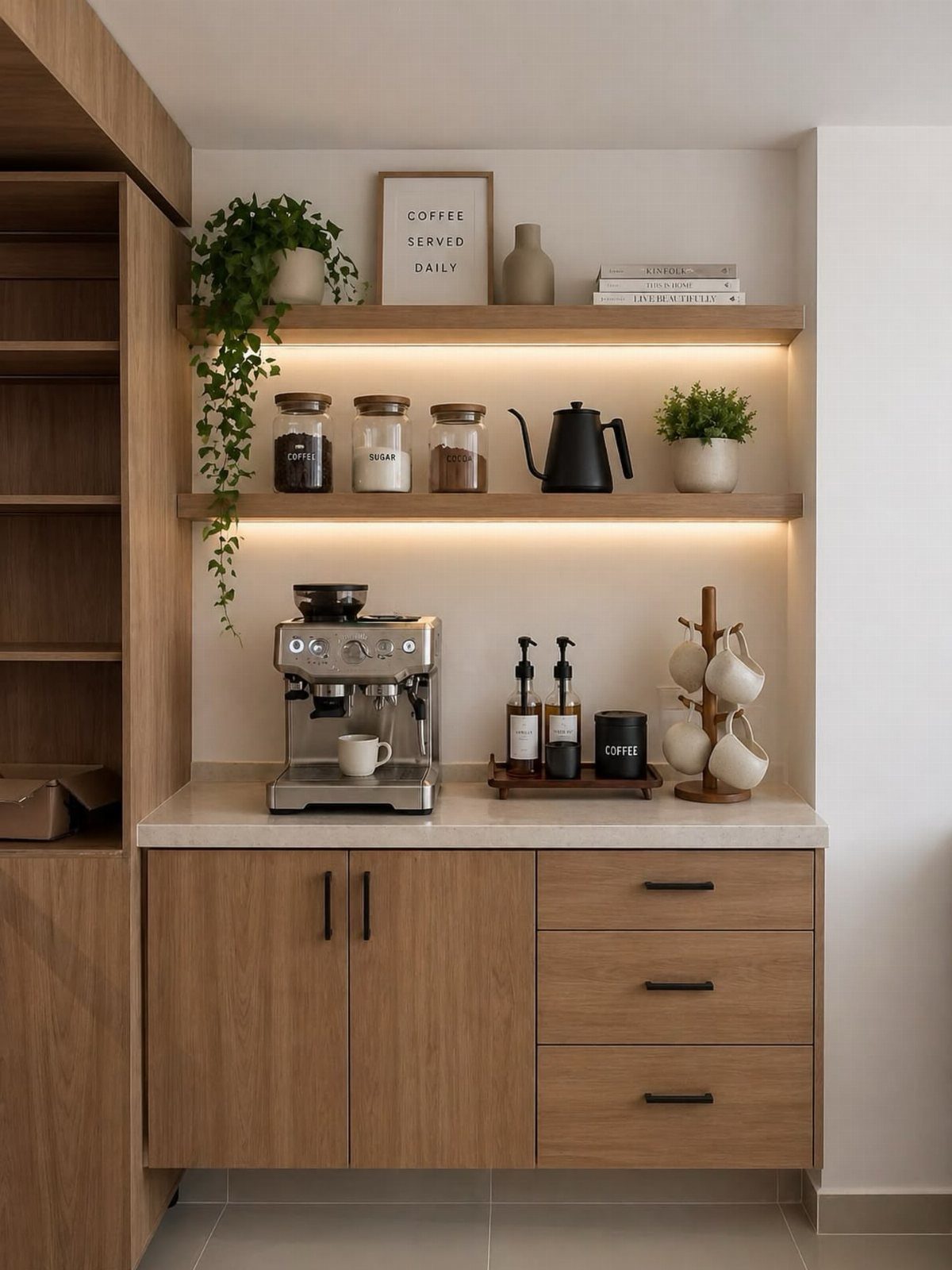
Set up your coffee station directly on an open stretch of kitchen counter and keep everything at hand.
If counter space is tight, limit the footprint and stack mugs or supplies on a single floating shelf above.
A tray underneath corrals drips and defines the zone without permanent changes. I find this works best when the machine stays plugged in and you brew in the same spot every day.
2. Coffee Cart
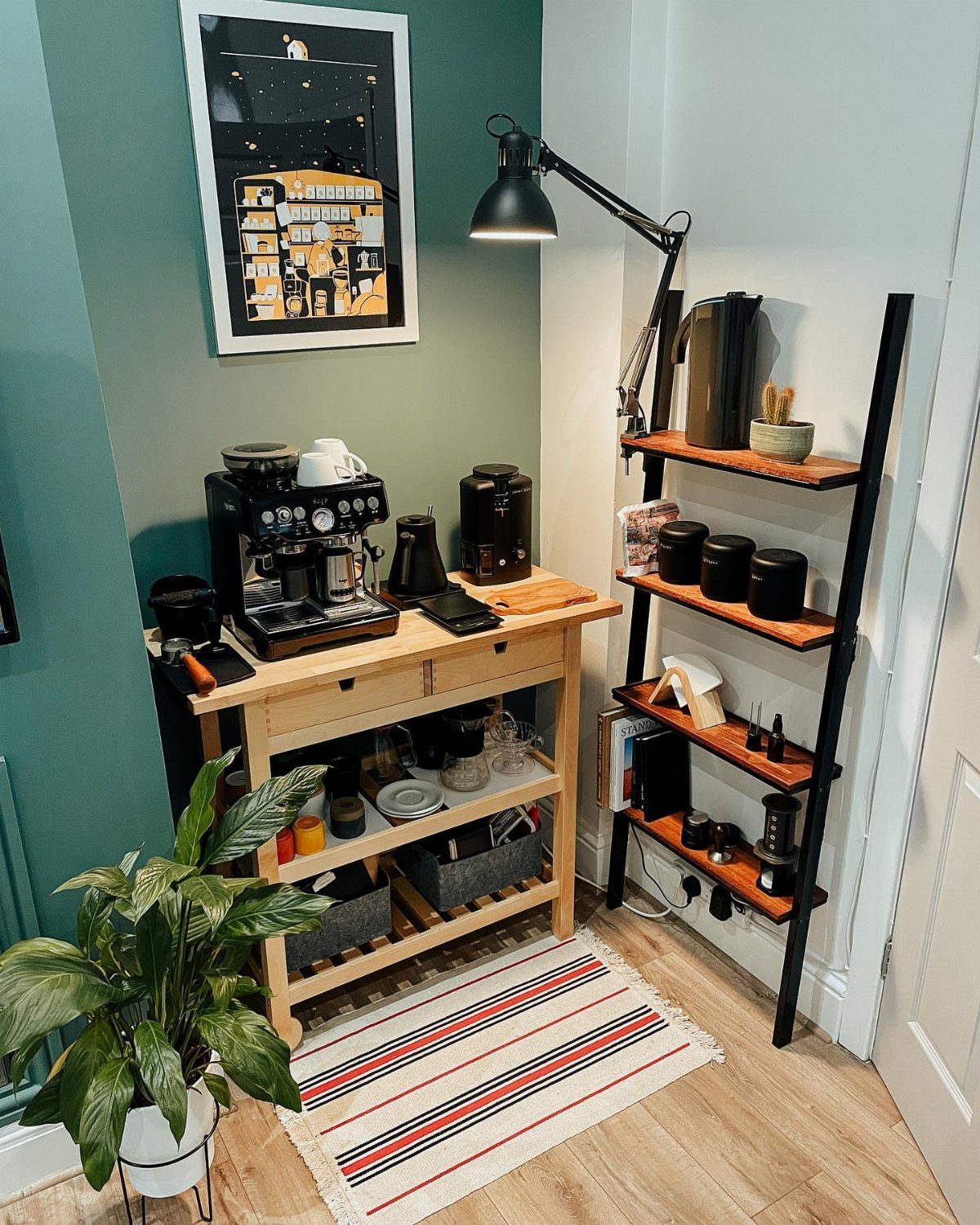
A rolling cart gives you a coffee station that moves where you need it and tucks away when you don’t.
Metal bar carts work too, though wood hides coffee stains better. Look for a cart with enough depth so the machine sits stable, and check that the shelves are fixed rather than removable if you plan to roll it often.
I prefer carts with locking wheels when the setup includes anything hot or heavy.
3. Floating Shelves
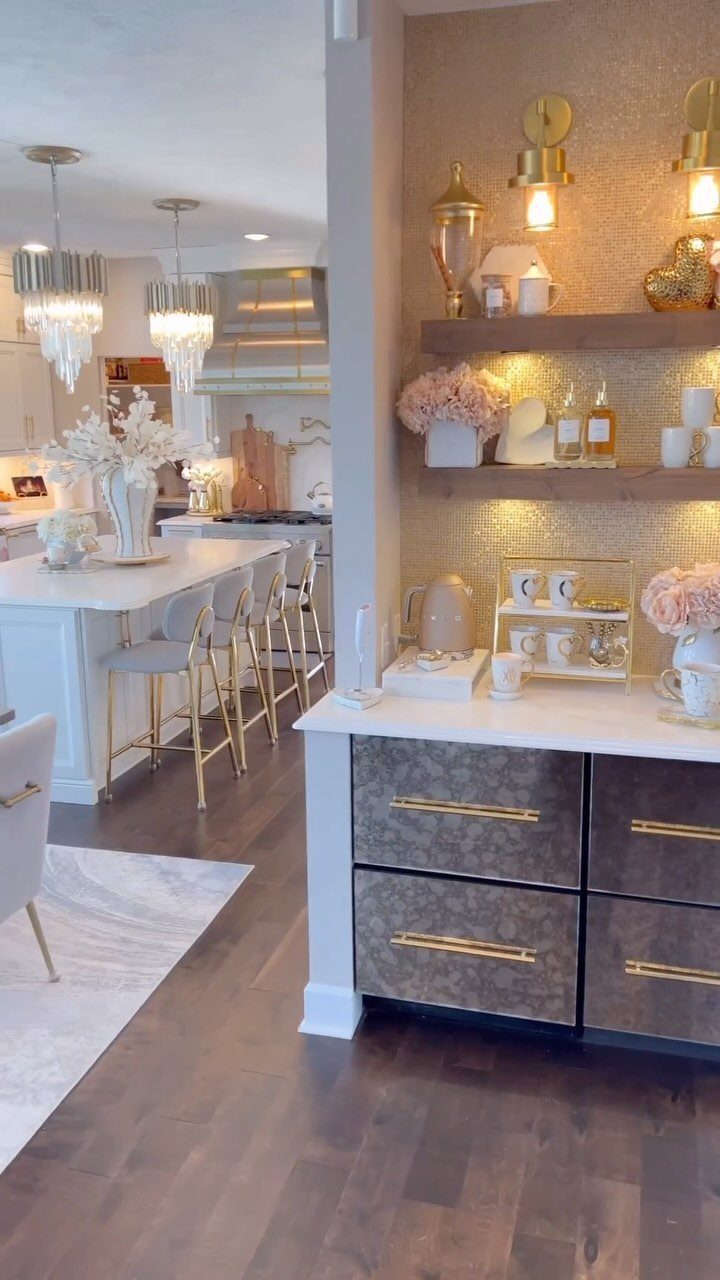
Mount two or three floating shelves above a narrow counter or a section of countertop and store mugs, beans, filters, and backup supplies in plain sight.
Space shelves far enough apart so a mug fits comfortably on each.
If the counter below is shallow, this setup keeps your supplies off the surface and leaves room for the machine and a small work zone. I install shelves well above the counter to avoid a head-knock when reaching forward.
4. Built-In Coffee Bar
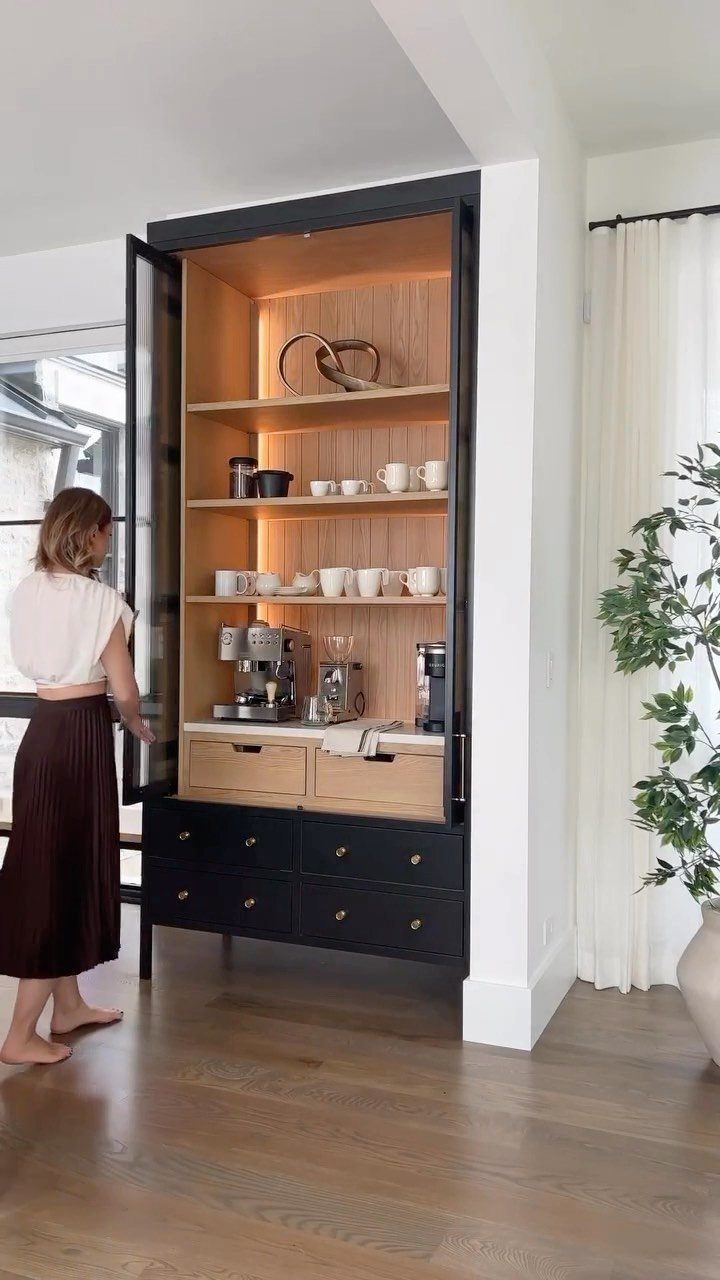
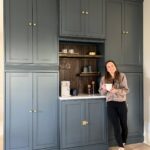
A built-in coffee bar tucks the station into cabinetry, usually with a dedicated countertop, enclosed storage below, and open shelves or cabinets above.
This approach works best in a kitchen remodel or when you have an unused cabinet run to convert.
I size the counter section wide enough for an espresso machine and a small prep area. The tradeoff is permanence: you commit the space, and moving the setup later means altering the cabinetry.
5. Coffee and Tea Station
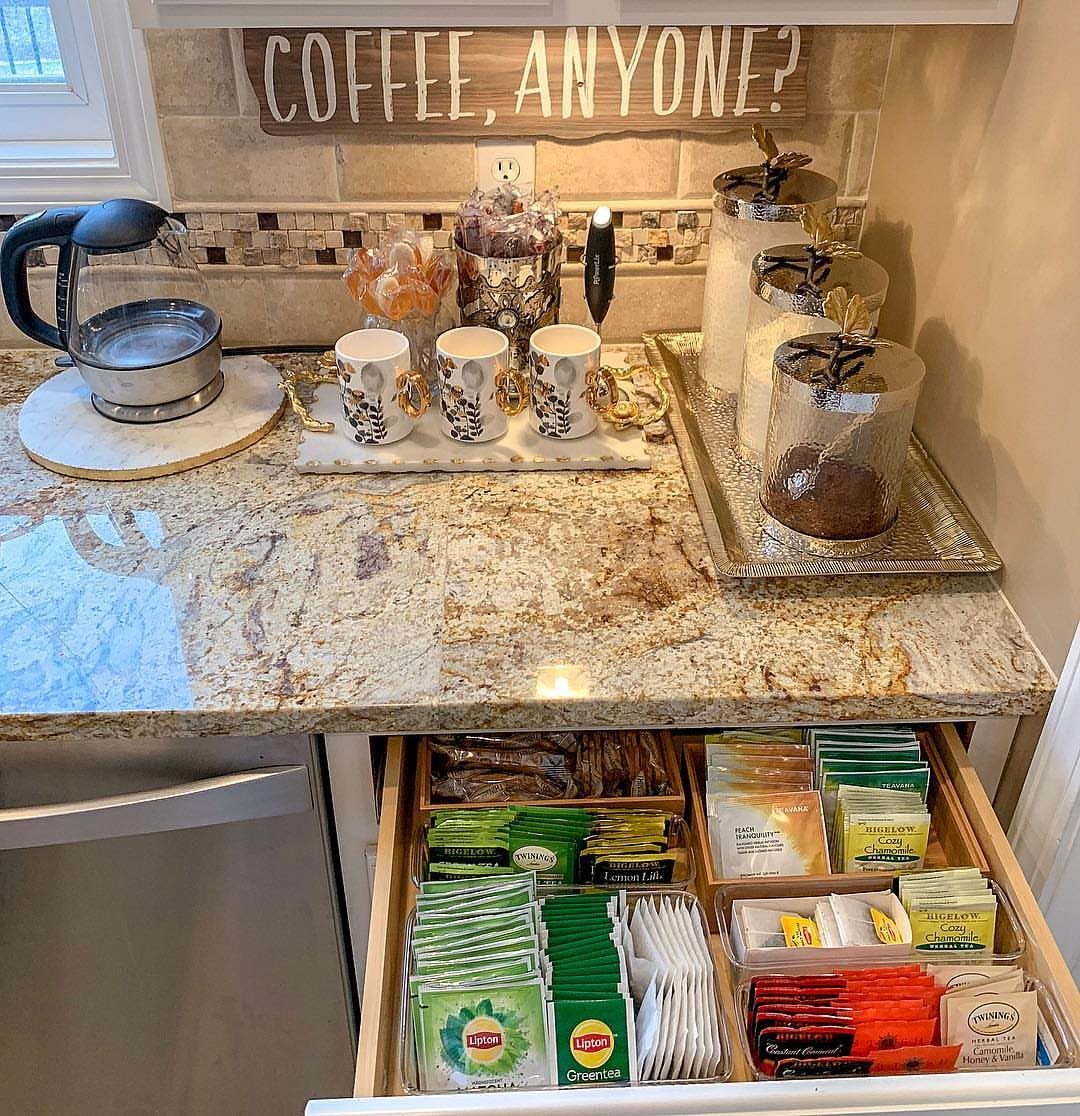
Combine coffee and tea in one station when you brew both regularly and want everything in the same spot.
I recommend a kettle with temperature control if you make pour-over coffee and loose-leaf tea, since each needs a different heat.
Keep coffee and tea supplies separate, either in labeled canisters or in divided drawer inserts, so flavors don’t transfer. This idea saves counter space in a small kitchen but only makes sense if you actually use both.
6. Sideboard Coffee Bar
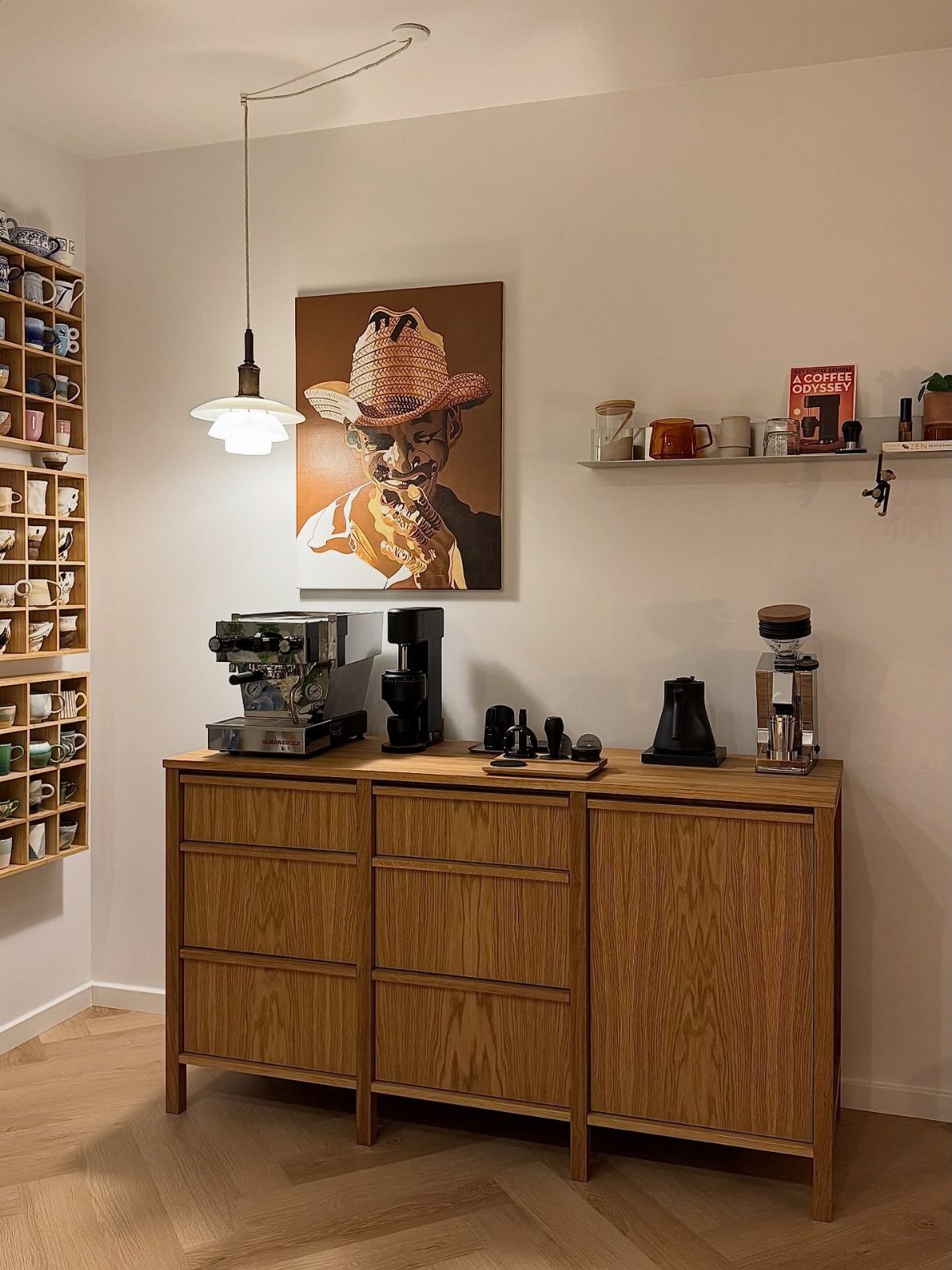
A sideboard or buffet makes a self-contained coffee bar that sits outside the kitchen, often in a dining room or hallway.
I choose a sideboard with enough depth so the machine doesn’t overhang, and I check that the top surface can handle heat and water.
This idea works well when kitchen counter space is spoken for or when you want coffee closer to where you sit in the morning. You need an outlet nearby and a surface you’re willing to dedicate full-time.
7. Coffee Pantry
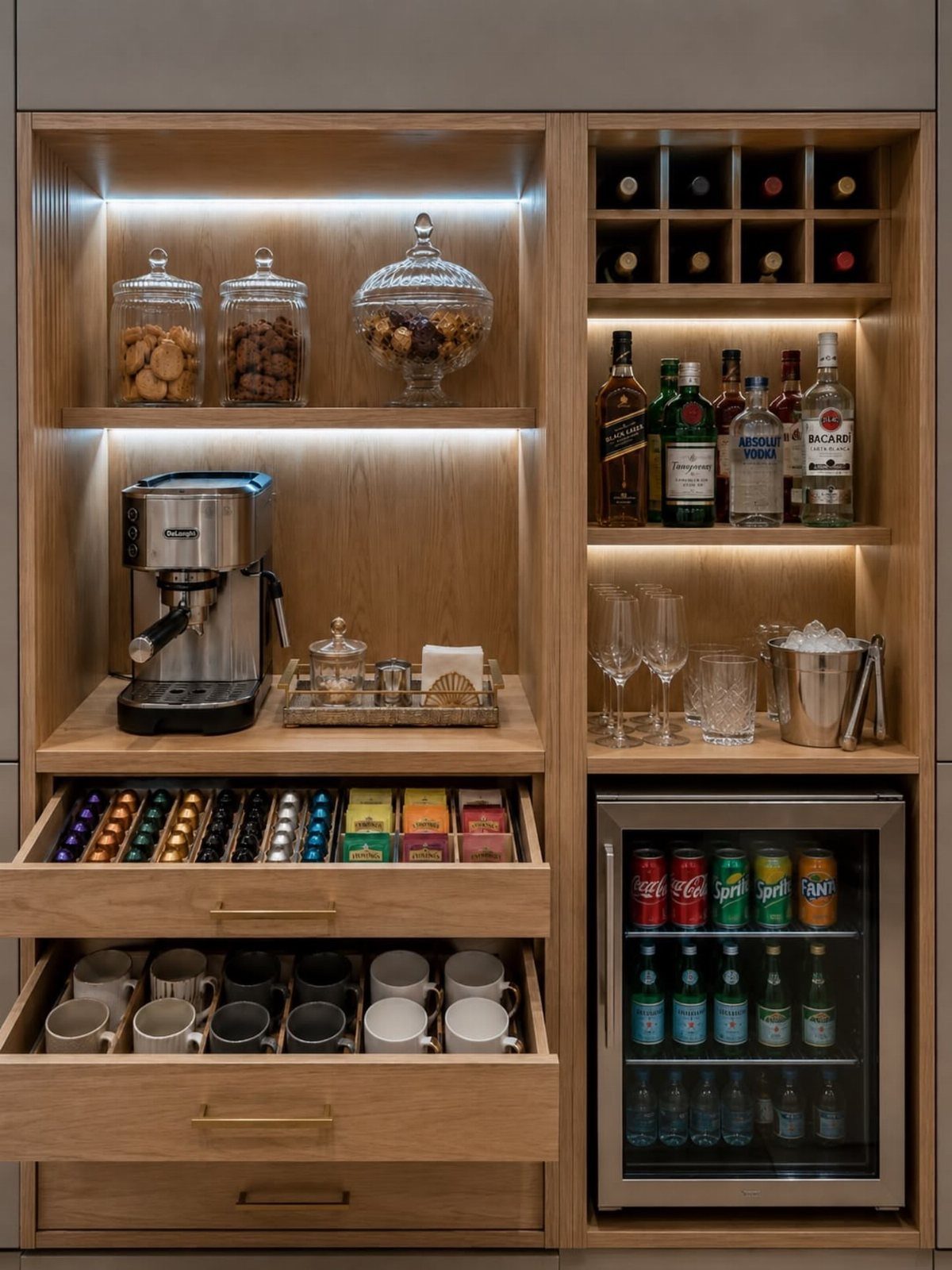
A pantry or closet with a door gives you a coffee station that disappears when you close it.
I find this works a lot better if the pantry is shallow enough to reach everything without leaning in, and if the door swings clear of the counter.
Run power inside if it’s not already there, and check that the machine vents properly in an enclosed space.
This idea trades convenience for a clean sightline, so it suits kitchens where counter clutter bothers you more than walking to a separate spot.
8. Espresso-First Station
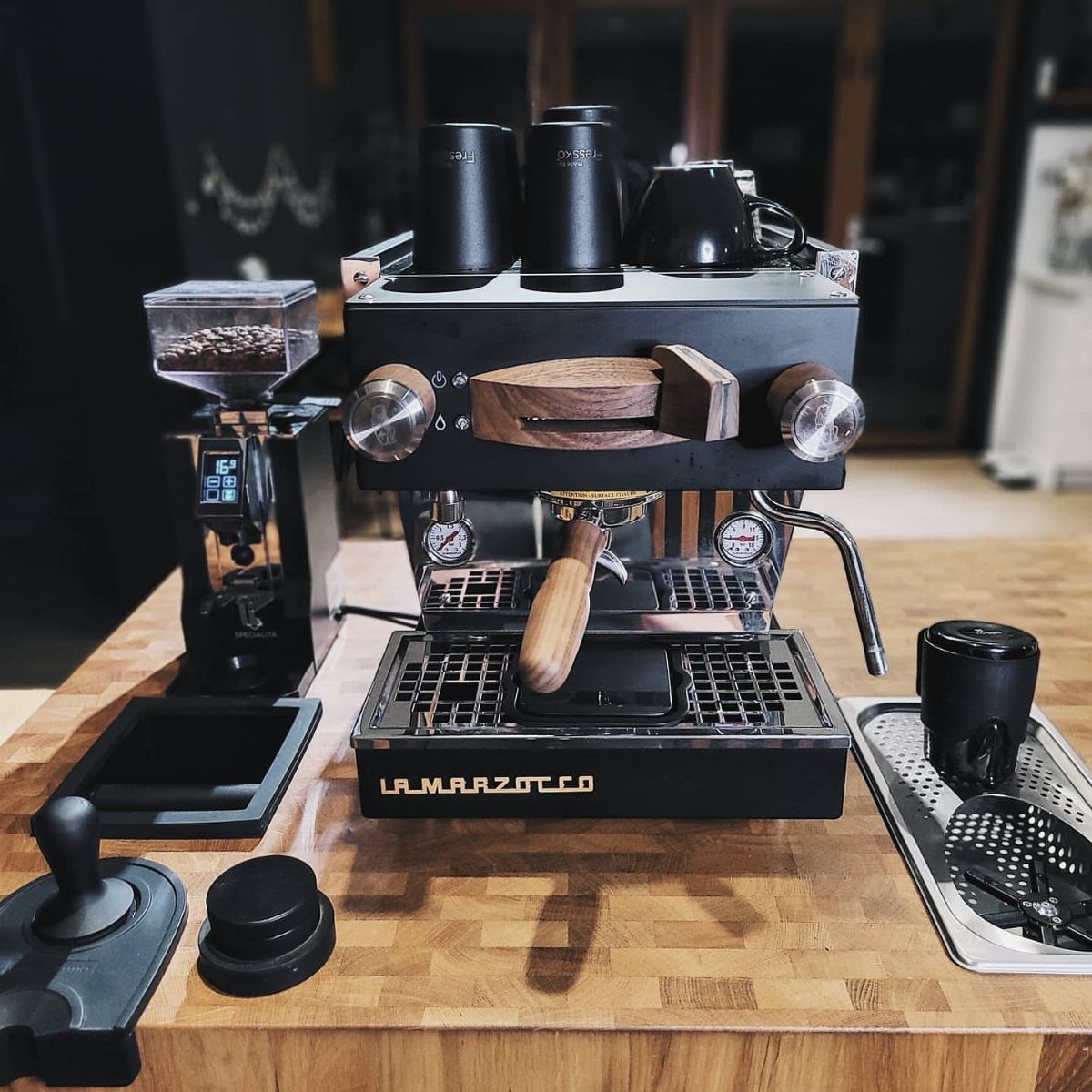
Size the counter around the espresso machine and grinder first, then add a knock box, a scale, and space for dosing and tamping.
If you pull shots daily, keep the milk pitcher and cleaning supplies within arm’s reach.
I place the grinder on the left if I’m right-handed, so grounds move straight into the portafilter. This setup needs more depth than drip coffee, because you work in front of the machine rather than beside it.
9. Pour-Over Corner
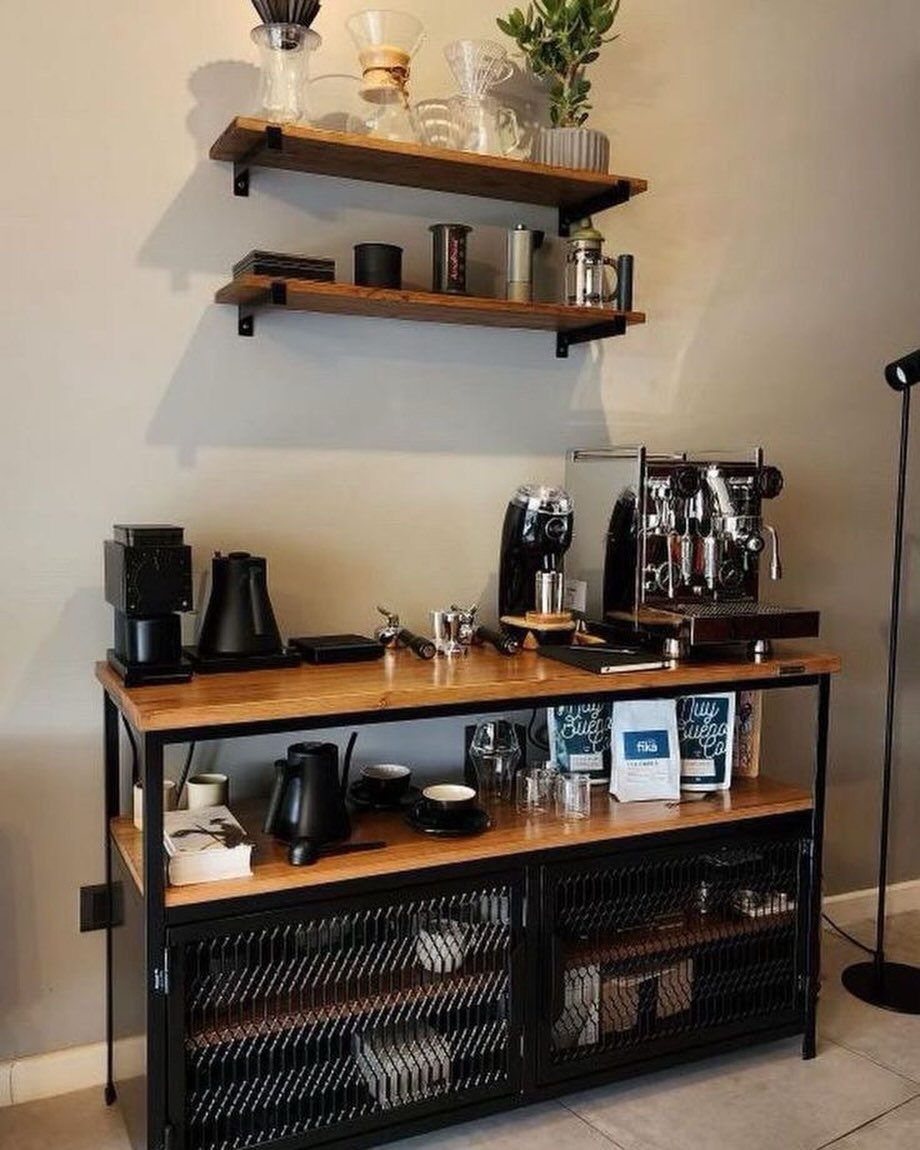
Store a kettle, a pour-over dripper, filters, and a scale together if that’s how you brew most mornings.
A gooseneck kettle gives better control over the pour, and a scale helps with consistency if you measure beans and water.
I keep the dripper on an open shelf so it dries between uses. This setup takes less counter space than an espresso station but needs a bit more attention each time you brew.
10. Coffee and Wine Bar
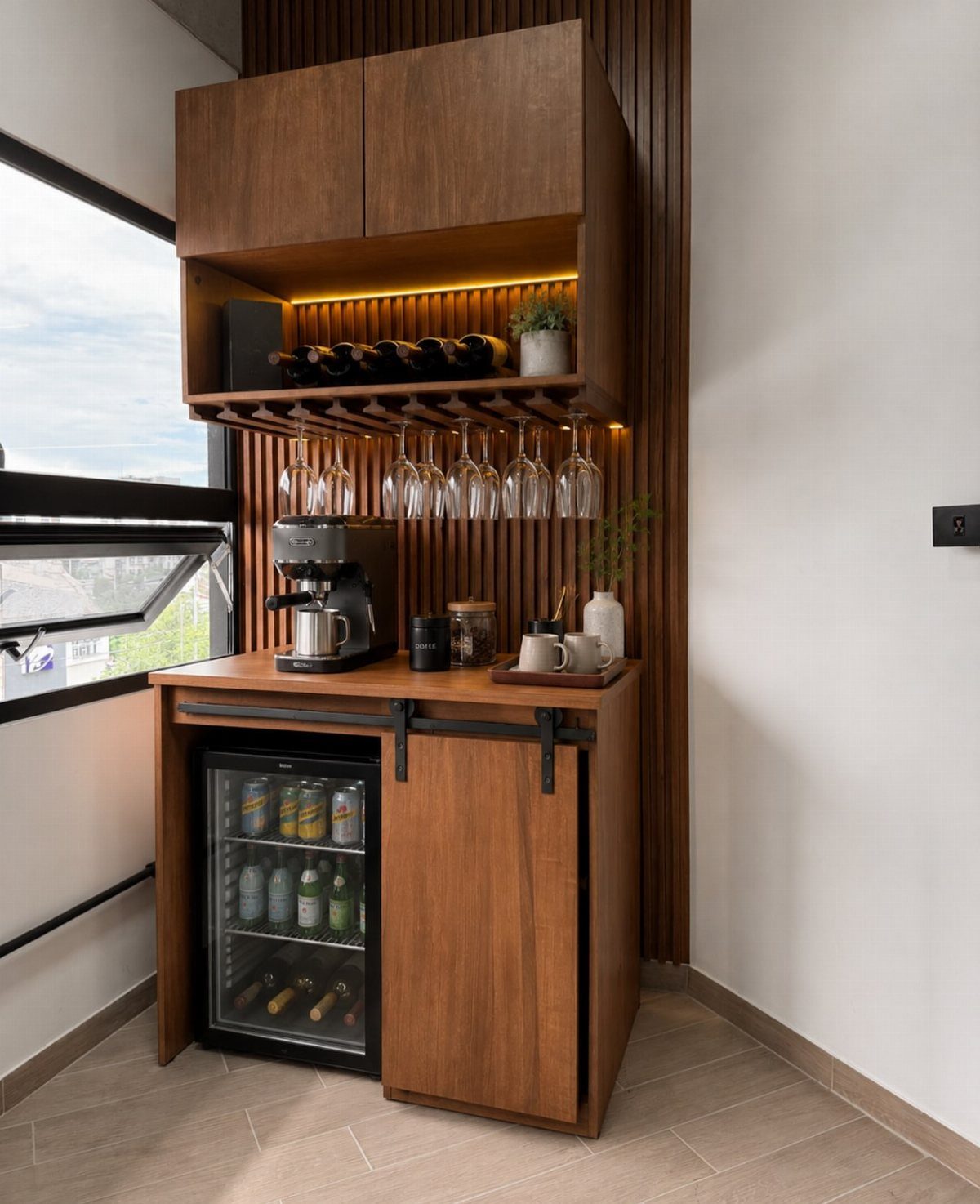
Pair coffee gear with wine storage if you use the same counter for both and want one spot that handles morning and evening service.
I hang wine glasses above and store bottles below, with the coffee machine on the counter between them. A small beverage fridge fits neatly under the counter if you have the depth.
This idea works when the space sits outside the main kitchen, often in a dining room or wet bar, and when you’re willing to dedicate it to drinks only.
11. Mug Shelf
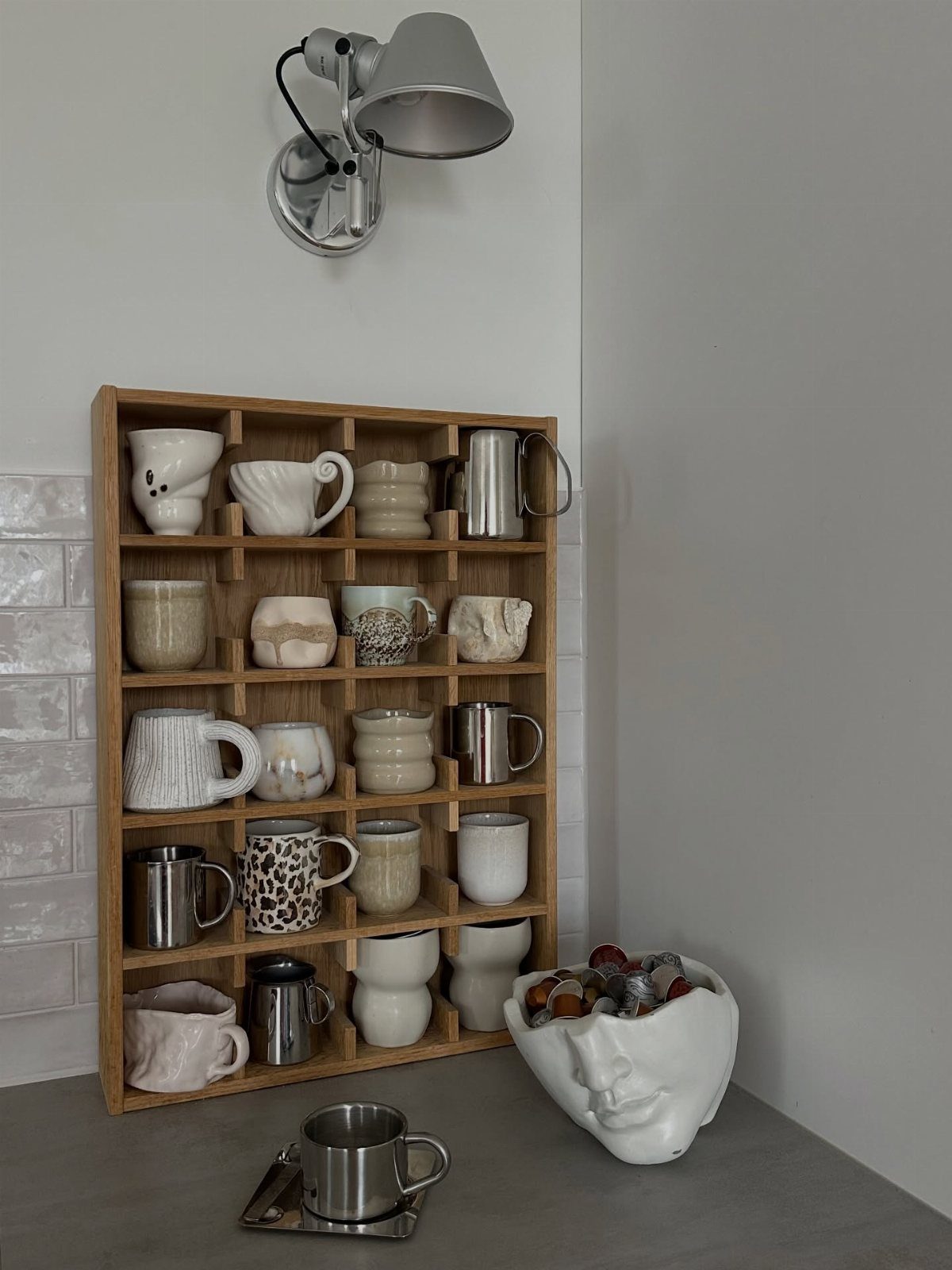
Mount a grid or peg shelf on the wall and hang mugs by their handles so they’re visible and easy to grab.
Space the pegs or grid openings wide enough so mugs don’t knock into each other when you pull one down.
I prefer wood or metal that matches the rest of the coffee setup. This idea frees up cabinet space and keeps your most-used mugs in rotation, but it only makes sense if you like the look of mugs on display.
12. Minimalist Coffee Setup
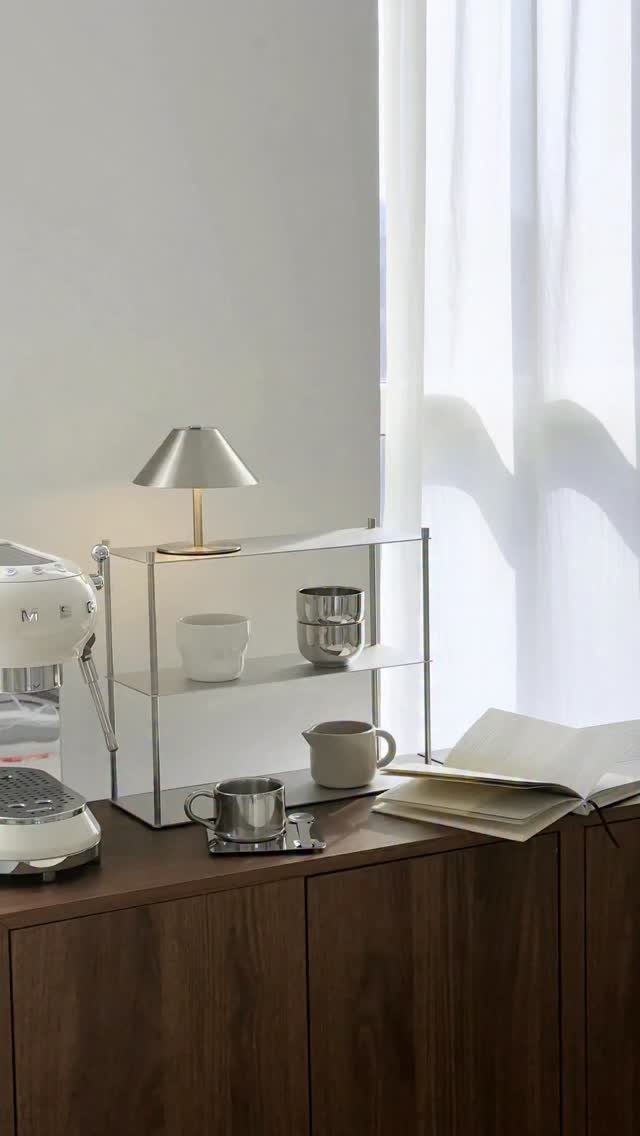
Limit what sits on the counter to the machine, one or two mugs, and whatever you use that day.
Store backup supplies, extra filters, and bags of beans in a closed cabinet or drawer so they don’t crowd the surface.
I find this approach works best in small kitchens where every inch of counter matters, or when you prefer a clean look over quick access to everything at once. You will restock more often.
13. Coffee Bar Cabinet
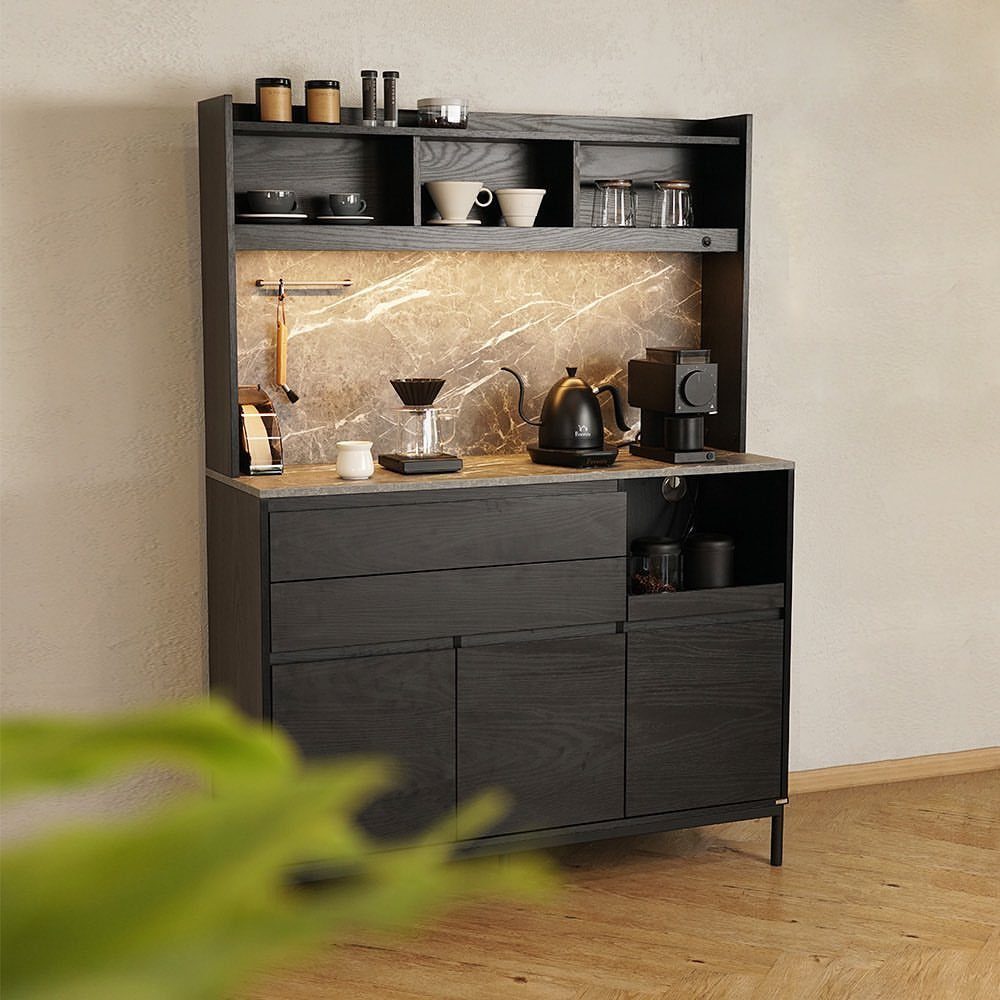
A cabinet or hutch becomes a coffee station when you place the machine on top and store supplies inside.
I look for a piece with a flat surface wide enough for the machine and any prep space you need beside it.
The cabinet below holds filters, beans, backup mugs, and anything you don’t want visible. This idea works well in a dining room or breakfast nook when you want the station to look like furniture rather than a kitchen appliance.
14. Coffee Bar with Greenery
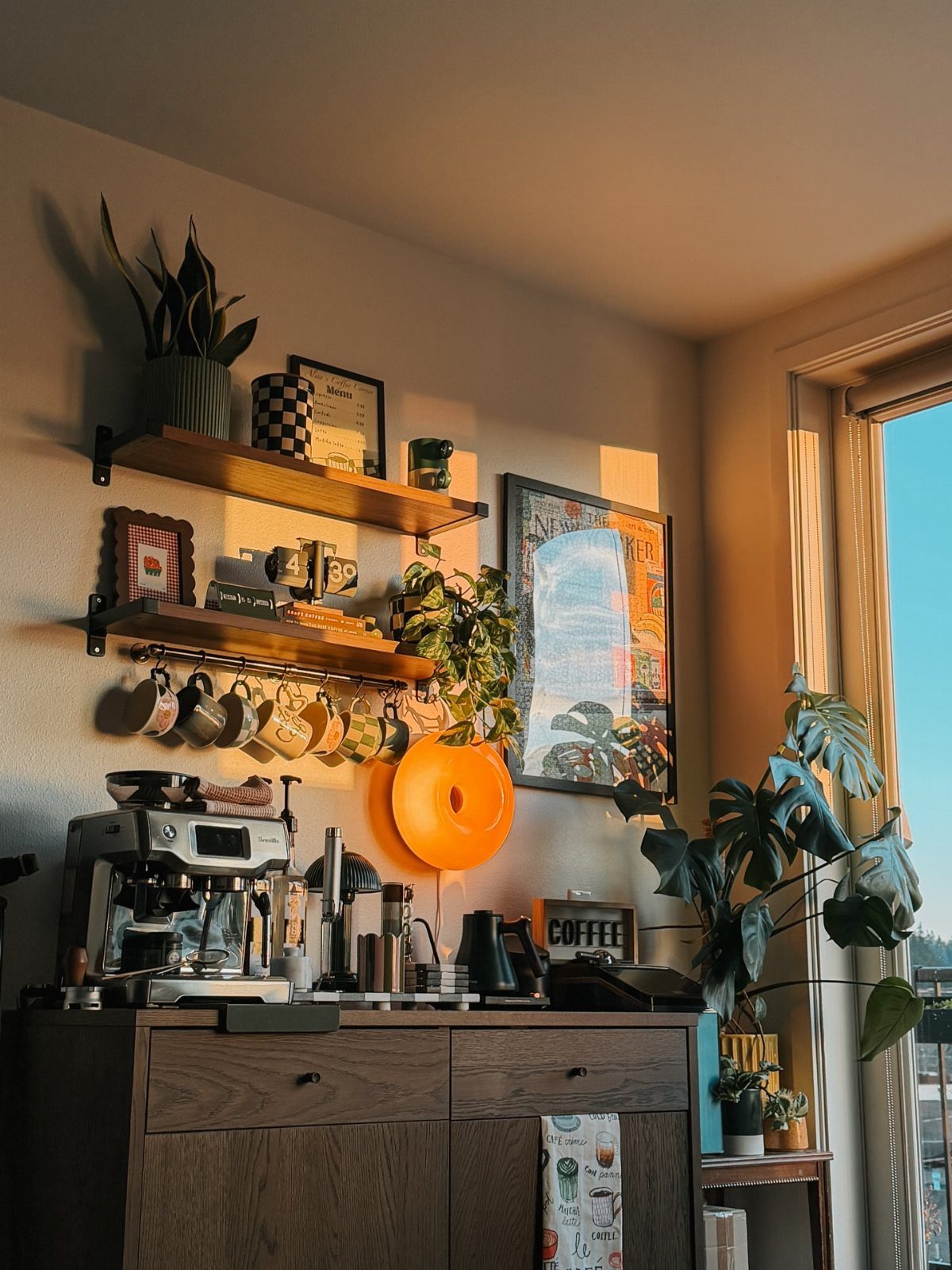
Place small potted plants on the counter, on floating shelves, or hung nearby to soften the look of a coffee station.
I use plants that tolerate steam and occasional splashing, like pothos or snake plants. A row of small pots on an upper shelf brings in green and leaves the counter clear.
This approach works when you already keep houseplants and want the coffee area to feel less utilitarian. Water needs to drain away from the machine and any electrical connections.
15. Coffee Station with Art
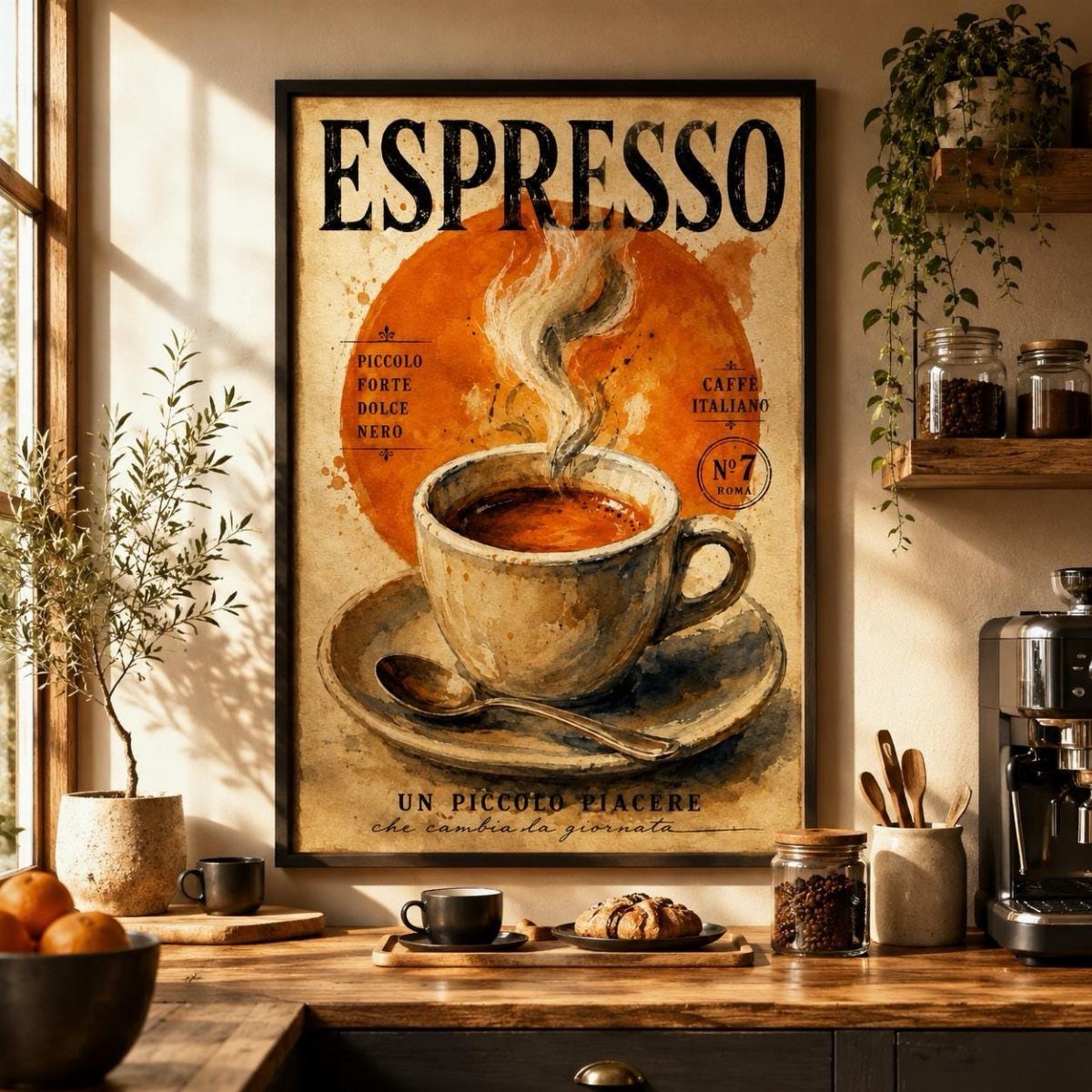
Hang a print, a sign, or a piece of personal art above the coffee station to give the setup its own character.
I frame something coffee-related if the station sits in a dedicated spot, or I use art that ties to the room’s overall style if the coffee bar shares space with other functions.
A single large piece works better than a cluster of small frames, since it holds attention without crowding a small wall.
This idea costs little and changes easily, so it’s a good fit for renters or anyone who updates decor often.
16. Dark Coffee Bar
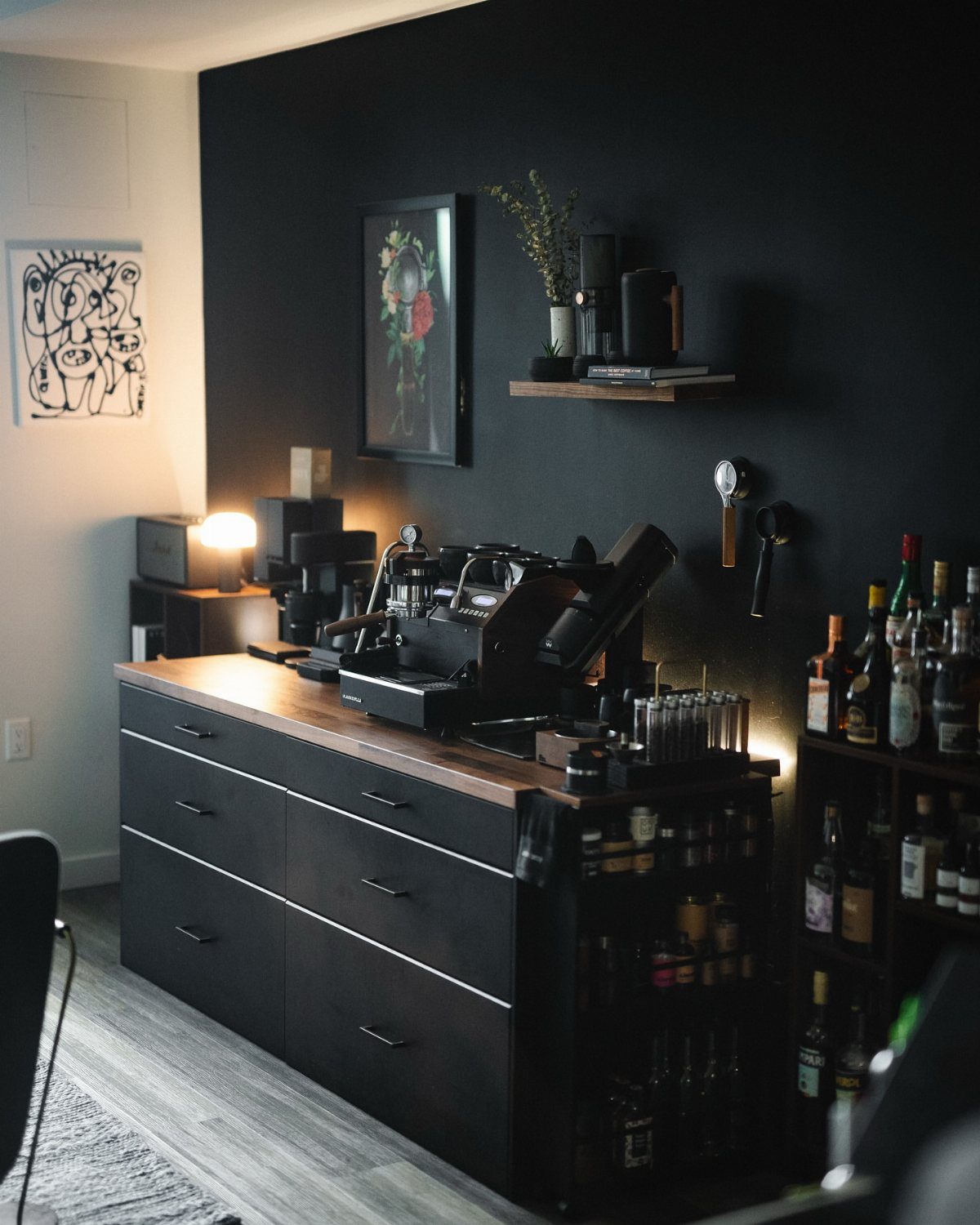
Paint the wall or cabinetry behind the coffee station in a dark color, or use a dark countertop and machine, to create a moody, finished look.
I pair dark surfaces with lighter mugs or open shelving so the gear stays visible.
Black or deep charcoal hides coffee stains better than light tones, which makes this idea practical in a high-use station. Dark colors absorb light, so this works best in a kitchen with good overhead or under-cabinet lighting.
17. Neutral Coffee Nook
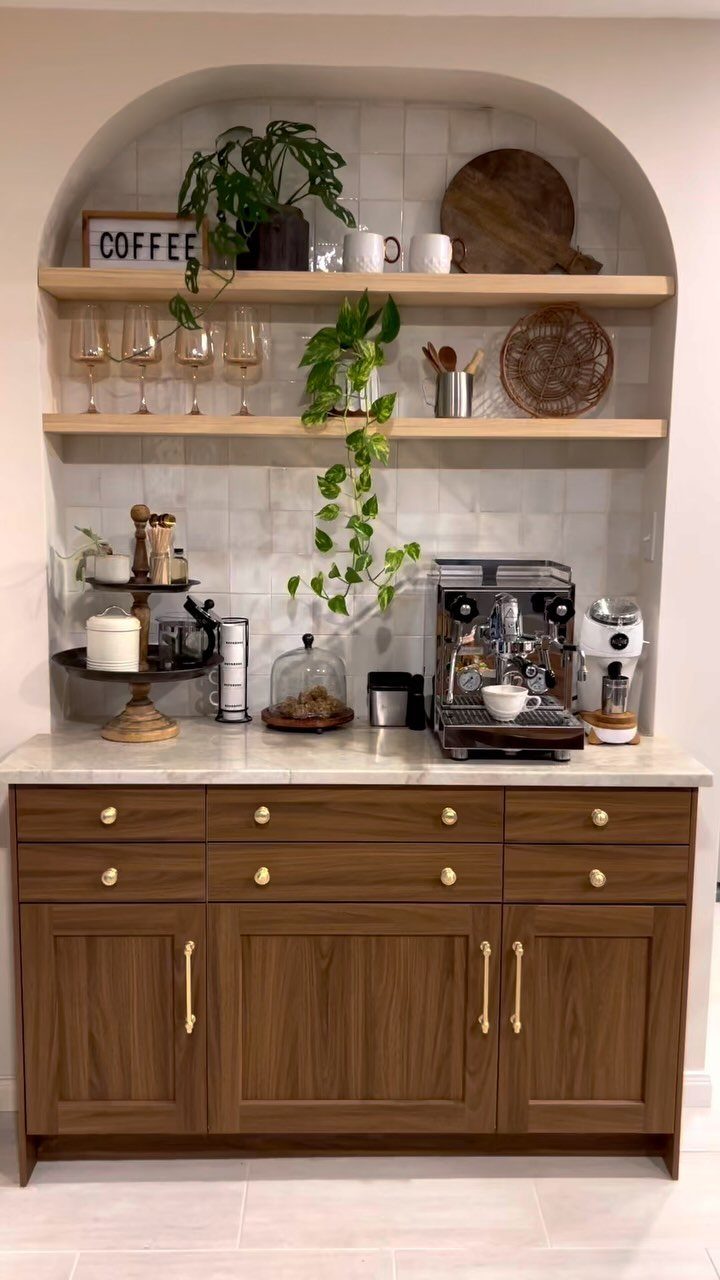
Build a coffee nook in warm neutrals: beige, cream, light wood, or soft gray, with white tile or backsplash if the wall needs protection.
I find this palette reads timeless and suits any kitchen style without competing with it. The lack of bold color keeps the station from dating quickly, and light tones make a small nook feel bigger.
This idea works well when the coffee bar sits in an alcove or under a shelf, where darker colors would close the space in.
18. Bold Color Coffee Bar
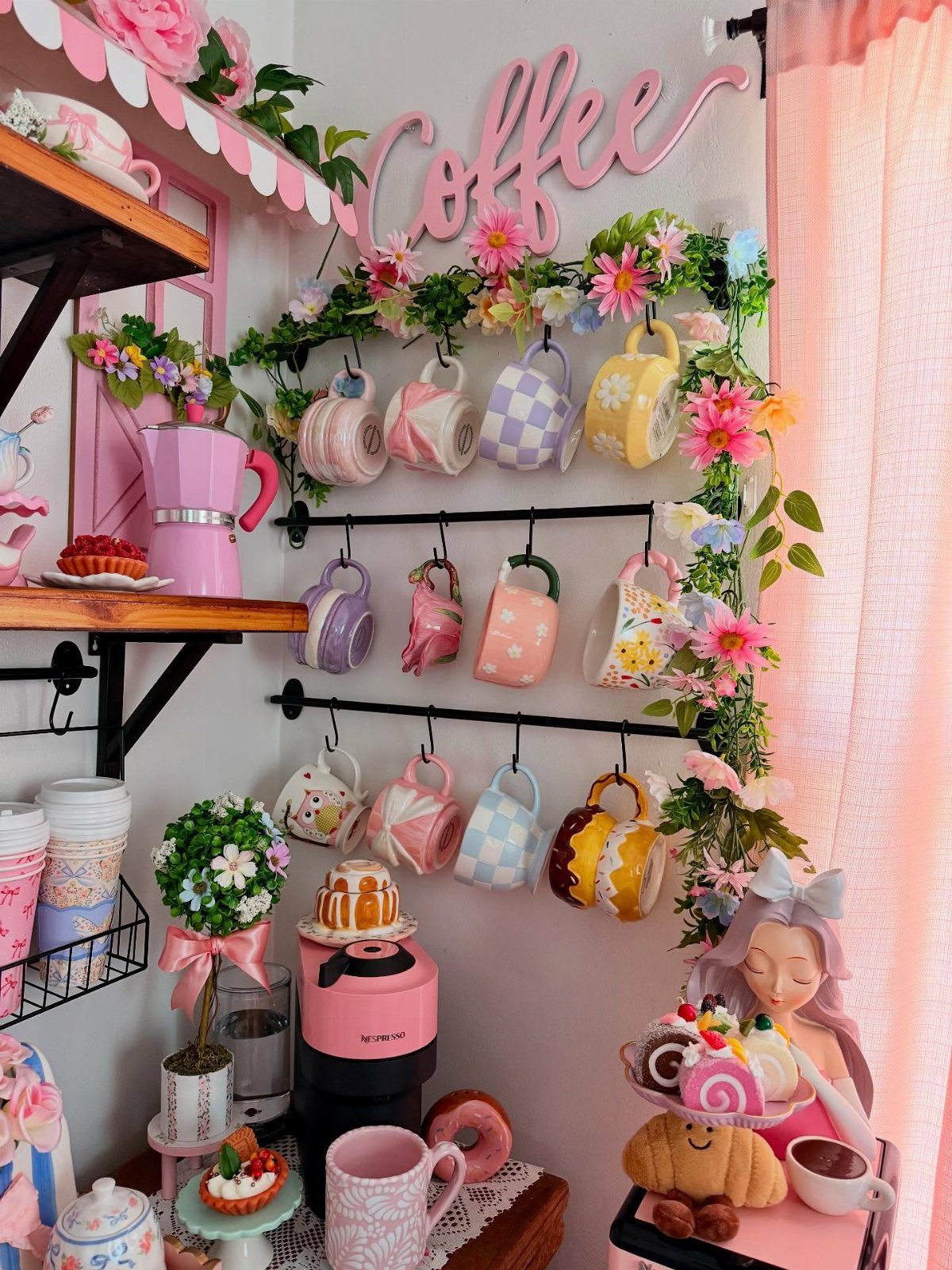
Choose one bold color for the wall, the machine, or the accessories and let that color define the station.
I pick the machine first if it comes in the color I want, then match paint or accents to it. Bright pink, teal, or red all work when the rest of the kitchen stays neutral enough to support it.
This idea turns the coffee bar into the feature you notice first, so it makes sense when the station sits in a visible spot and you want it to draw attention instead of disappearing.
19. Rustic Coffee Bar
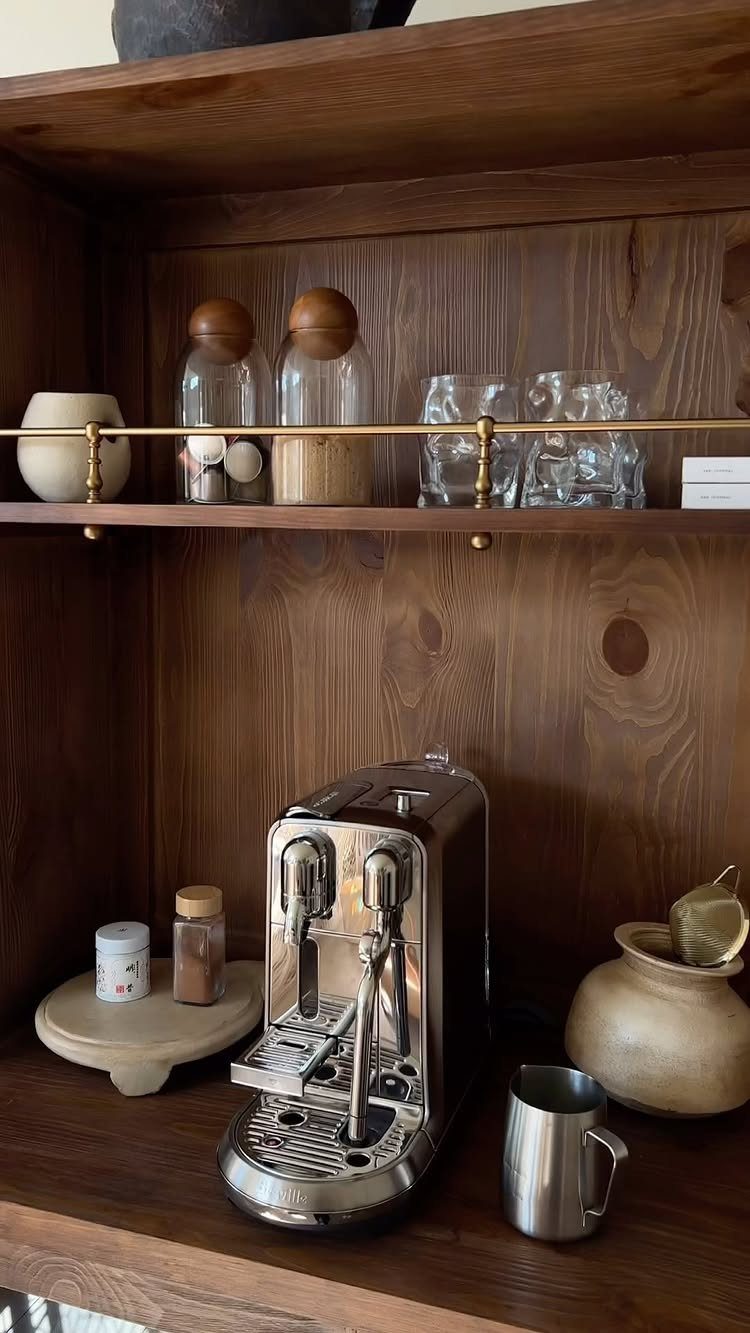
Reclaimed wood shelves, a warm stain, and visible hardware give a coffee station the worn-in look of a farmhouse kitchen.
I look for open shelving in thick wood or distressed pine, paired with metal brackets or a pipe rail.
Mason jars hold beans and filters, and the machine sits on a surface that already has some age or patina. This look fits traditional kitchens naturally; in a modern space, those same rustic details read as mismatched.
20. Midcentury Coffee Bar
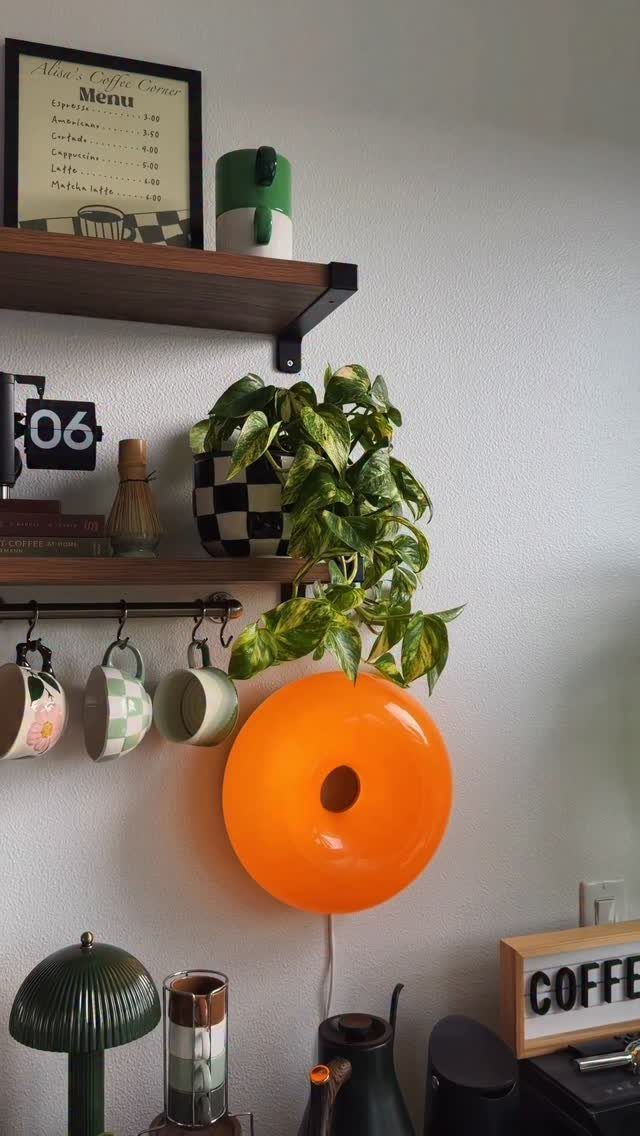
Tapered wood legs, clean lines, and a warm accent color bring midcentury style to a coffee bar.
I pair walnut or teak-tone shelving with brass or black hardware, and I keep accessories simple: ceramic mugs, a clock with a minimal face, or a single pendant in a saturated color like orange or mustard.
This approach works when the furniture already follows that era, and it falls flat if the rest of the kitchen reads industrial or farmhouse. The warm wood and pop of color define the style without needing vintage equipment.
Coffee Brewing Equipment and Methods
Pick your method before you size the station. Drip machines need less counter depth than espresso setups, which ask for room in front of the machine for dosing and tamping.
Pour-over takes even less space but requires a gooseneck kettle and a scale if you want repeatable results. French press is the simplest: kettle, press, timer.
A grinder matters more than the brewer.
Blade grinders are fast and cheap, but burr grinders give consistent particle size, which affects extraction. If you pull espresso shots, a burr grinder is not optional.
Single-serve machines suit speed over flavor. I recommend them when convenience decides the choice, not when someone cares how the coffee tastes.
A milk frother adds one more piece of gear. Battery-powered wand frothers are small and easy to store; steam wands built into espresso machines take up no extra counter space but cost more upfront.
Workflow and Station Organization
I line mine up in brew sequence when I make the same drink every morning.
Grinder first, then the brewer, then mugs and milk if you add it. When everything sits in sequence, you stop reaching back across your own work.
Keep only what you use daily on the counter. Backup filters, extra beans, and cleaning supplies belong in a drawer or cabinet below, not crowding the surface where you actually brew.
A small tray or bin near the machine holds spent grounds or used filters until you empty it.
A cloth within reach cuts cleanup time. Drips and spills happen every morning; wiping them immediately keeps the counter usable.
Cord Water and Appliance Safety
Run all cords to a single power strip mounted behind or below the counter, then route the strip’s cable to the wall outlet. This keeps cords off the work surface and stops them from snagging mugs or knocking the kettle.
Leave room beside the sink or near a water source for filling the reservoir or kettle without carrying a full machine across the kitchen. If the brewer sits far from water, keep a pitcher nearby for refills.
Check the manual before plugging an espresso machine into a smart outlet or timer. Some machines need to warm up under their own control, and cutting power mid-cycle can damage internal components.
Machines in closed cabinets need air circulation. I leave the cabinet door open while brewing, or I cut a vent in the back panel if the station is permanent and the machine runs hot.
Frequently Asked Questions
What do I need for my coffee station?
You need brewing equipment (machine, kettle, or press), a grinder if you use whole beans, mugs, and whatever you add to your coffee like milk or sweeteners.
Stock the drawer or bin nearest the machine with filters, a scoop, and a small brush. Start with what you use daily and skip accessories that sit idle.
Where should I put my coffee bar at home?
Place it on a kitchen counter near an outlet and a water source, or use a sideboard, cart, or cabinet in the dining room if counter space is tight.
The spot needs power, enough depth for your machine, and room to work in front of it. A pantry or closet works if you prefer the station hidden behind a door.
What should a coffee bar include?
Include the brewer, grinder, mugs, and supplies for the drinks you make: beans or grounds, filters, milk, sugar, stirrers.
Store backups in a drawer or cabinet so the counter holds only what you use that morning. A folded towel under the brewer catches drips, and a lidded container next to it holds used grounds until you empty it.
How do you make a coffee bar on a budget?
Use a small table, cart, or existing counter space instead of new cabinetry, and limit gear to one good grinder and one reliable brewer.
A wood tray underneath, glass canisters for coffee and sugar, and three matching mugs give the corner a finished look for under thirty dollars.
Skip decorative extras and spend on the grinder, since it affects flavor more than the brewer does.
How do you make a coffee bar in a small space?
Limit what sits on the counter to the machine and one or two mugs, then store everything else in a cabinet or on a single floating shelf above.
A cart or narrow sideboard takes less room than built-in cabinetry. Hang mugs on a wall-mounted grid to free up surface space.
Should a kitchen coffee bar have a sink?
A sink is helpful but not required. Placing the station near the kitchen sink lets you fill the reservoir or rinse equipment without carrying water across the room.
How to set up a coffee bar at your home?
Pick a spot with an outlet and enough counter depth for your machine, then arrange gear in brew sequence: grinder, brewer, mugs. Store supplies you use daily within arm’s reach and keep backups in a drawer below.
Plug everything into one power strip mounted inside the cabinet or under the counter, and set a pitcher on the tray so the reservoir fills without carrying the machine to the sink.