Storage divides into what you reach for daily and what sits until you need it, and the difference decides whether the solution belongs at eye level or tucked away.
Pull-out shelves and vertical racks handle depth in base cabinets where you can’t see the back row, while door-mounted holders and under-cabinet shelves claim space that otherwise goes unused.
Bamboo cutlery trays divide drawers without the flex you get from plastic, and a dedicated knife storage spot keeps blades sharp and out of the way.
1. Pantry Bins
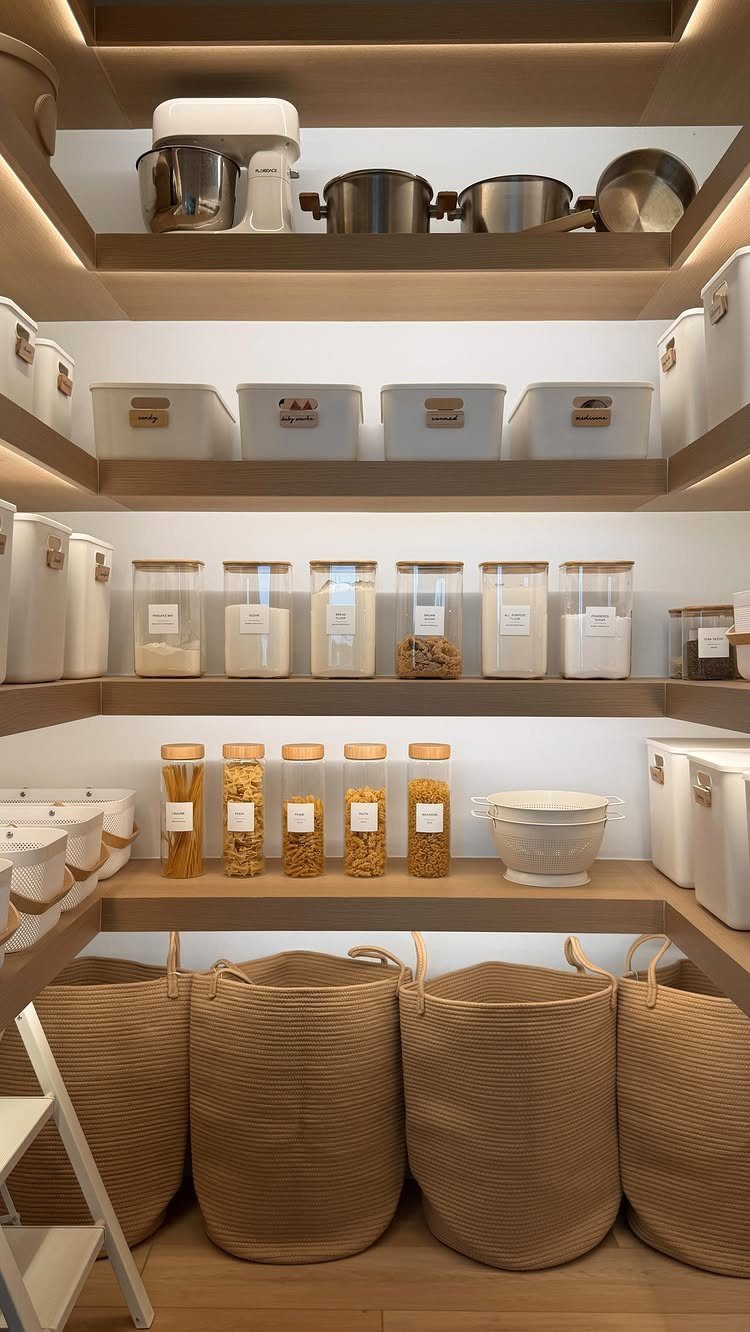
Bins keep dry goods, snacks, and other pantry items contained and visible instead of scattered across deep shelves.
I group similar items together in clear or labeled bins so nothing gets lost at the back, and I can pull the whole bin forward instead of digging through individual packages.
In a walk-in pantry or tall cabinet, bins on upper shelves hold things you use less often, while the middle zone stays open for what you reach for every day.
Woven baskets on the floor work for bulky items like onions, potatoes, or kitchen towels.
2. Cabinet Door Storage
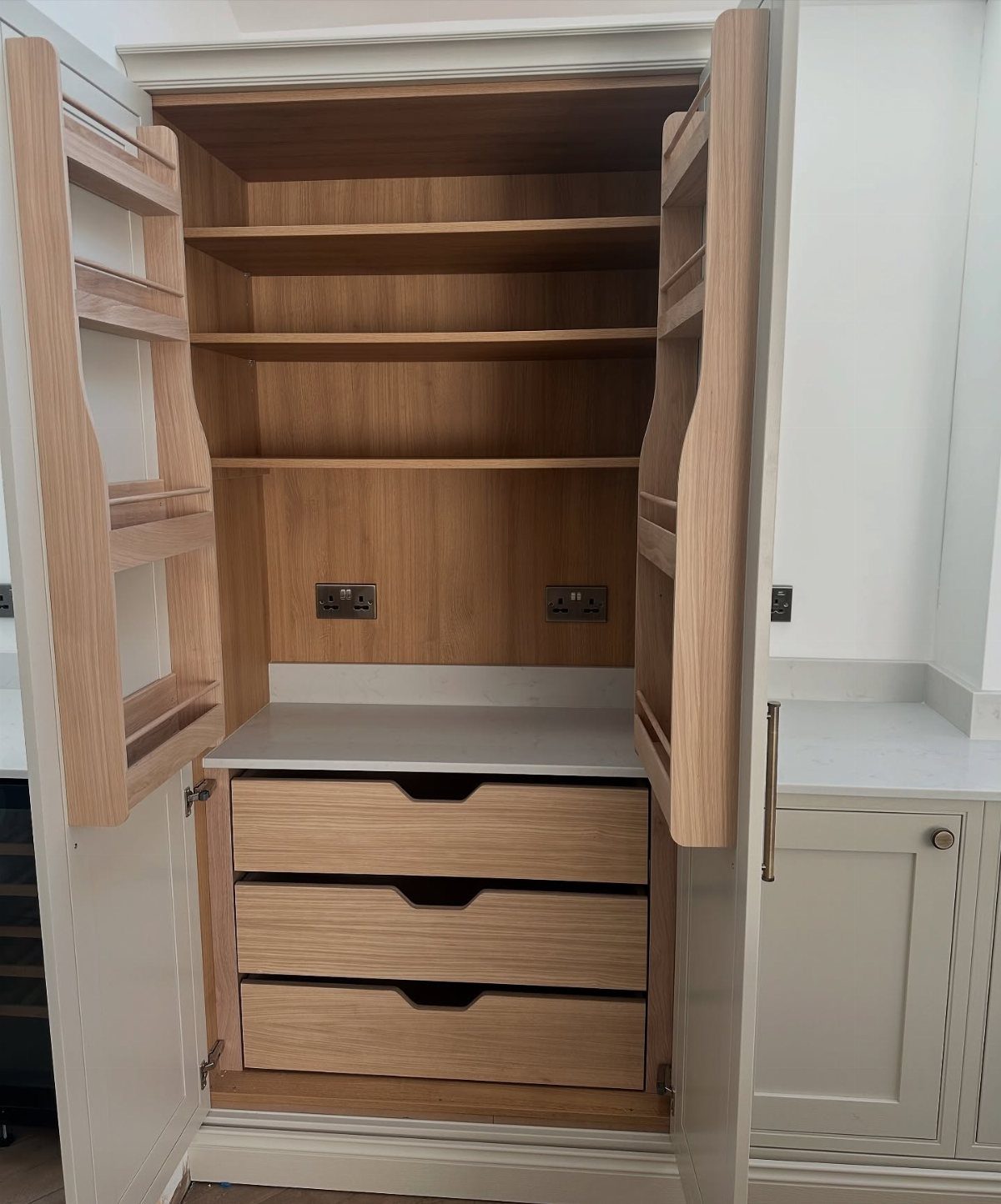
The inside of a cabinet door usually sits empty while you stack items on the shelves behind it.
Mounting shallow racks, baskets, or hooks there pulls lids, spices, foil, or cutting boards out of the main storage area and keeps them in plain sight when you open the door.
This setup works best on doors that open wide and don’t already have shelves or appliances directly behind them. I measure the clearance before adding anything, since a rack that interferes with what’s inside the cabinet defeats the purpose.
3. Pull-out Shelves
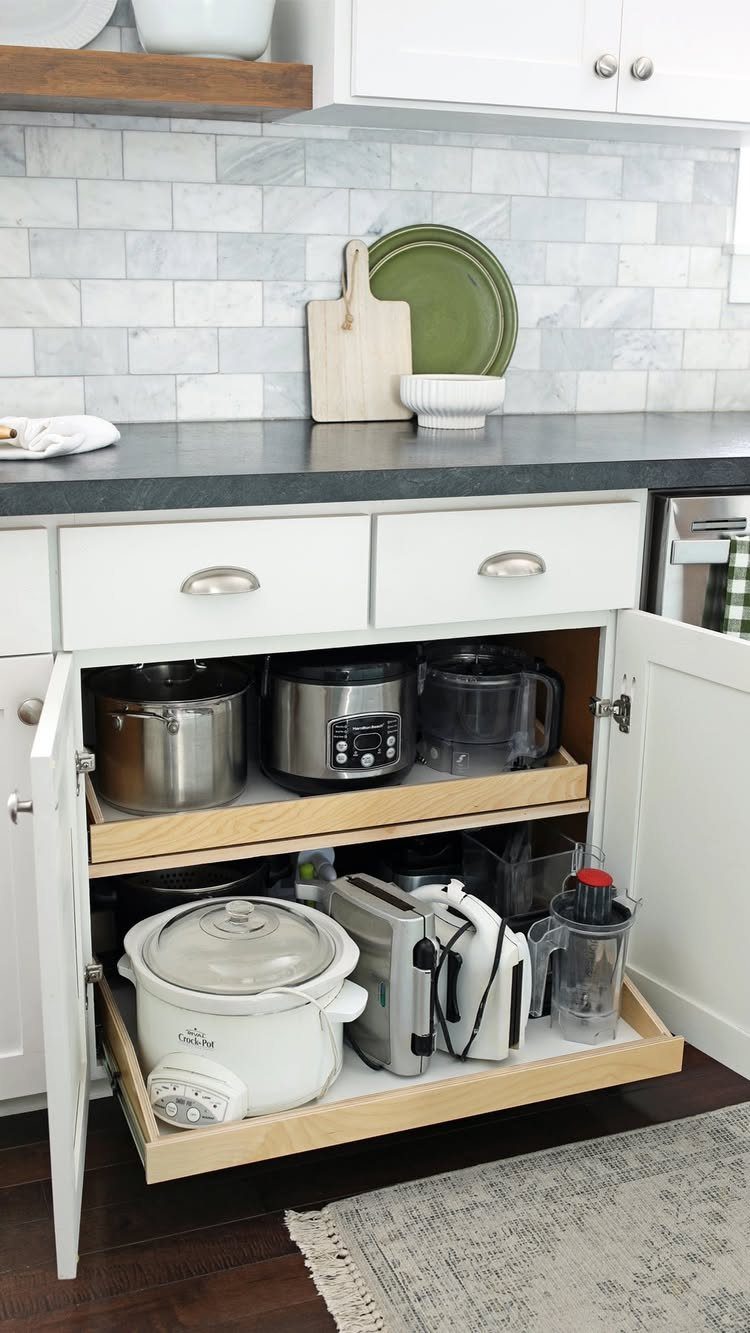
Pull-out shelves bring the back of a deep cabinet forward so you’re not kneeling and reaching past the front row to find what you need.
I use them most often for appliances that are too heavy or awkward to lift over a fixed shelf, and for items stored in lower cabinets where visibility is poor.
The installation is straightforward if you’re comfortable with a drill, and most hardware stores carry slide kits rated for kitchen loads. The result is a cabinet that works more like a drawer.
4. Drawer Dividers
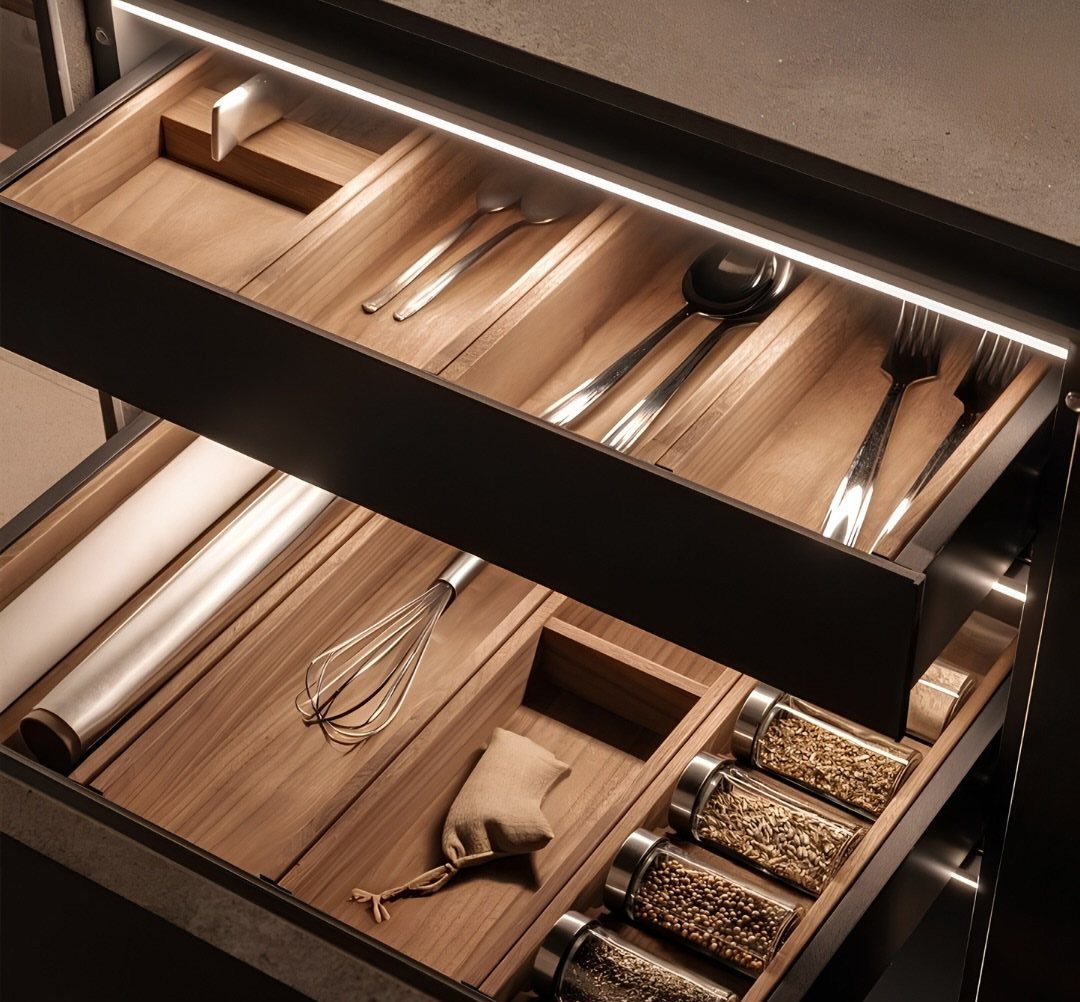
Drawer dividers turn a single open box into separate zones for forks, knives, whisks, or baking tools. Without them, utensils slide around and pile on top of each other every time you open the drawer.
I prefer adjustable dividers that fit different drawer widths and let you change the layout later. Spring-loaded or interlocking versions stay put without fasteners, which matters if you’re organizing a rental or want the option to rearrange.
For shallow drawers, a simple tray works fine. Deeper drawers benefit from taller dividers that keep items upright.
5. Clear Cereal Containers
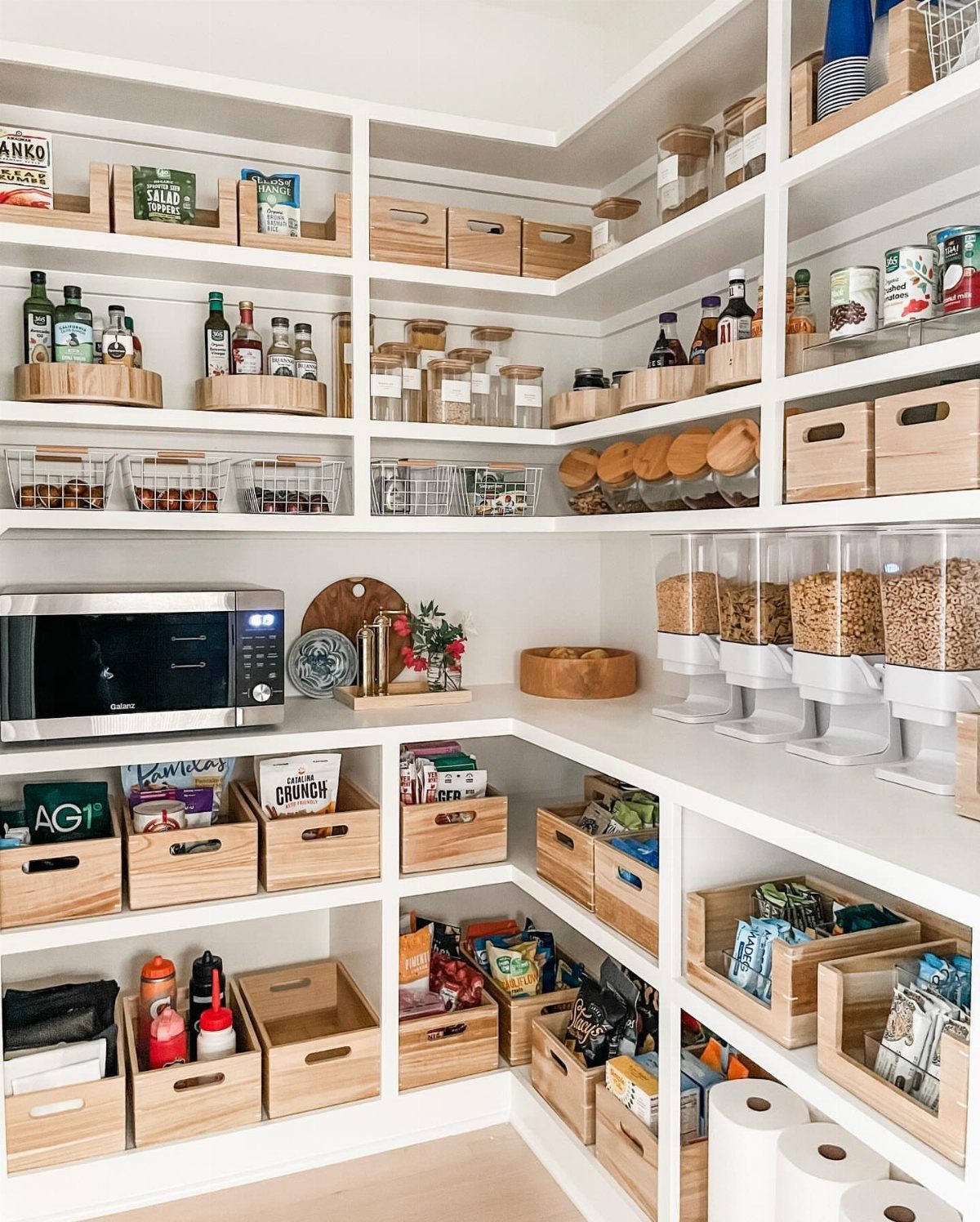
Clear containers let you see how much cereal, pasta, or flour you have left without opening a bag or box, and they stack more neatly than the packaging they replace.
I transfer dry goods into these as soon as I bring them home, which keeps the pantry looking uniform and makes it easier to spot when something is running low.
Square or rectangular containers use shelf space more efficiently than round ones. If you’re storing different grains or cereals, labels help, but the clear sides usually tell you what’s inside at a glance.
6. Spice Racks
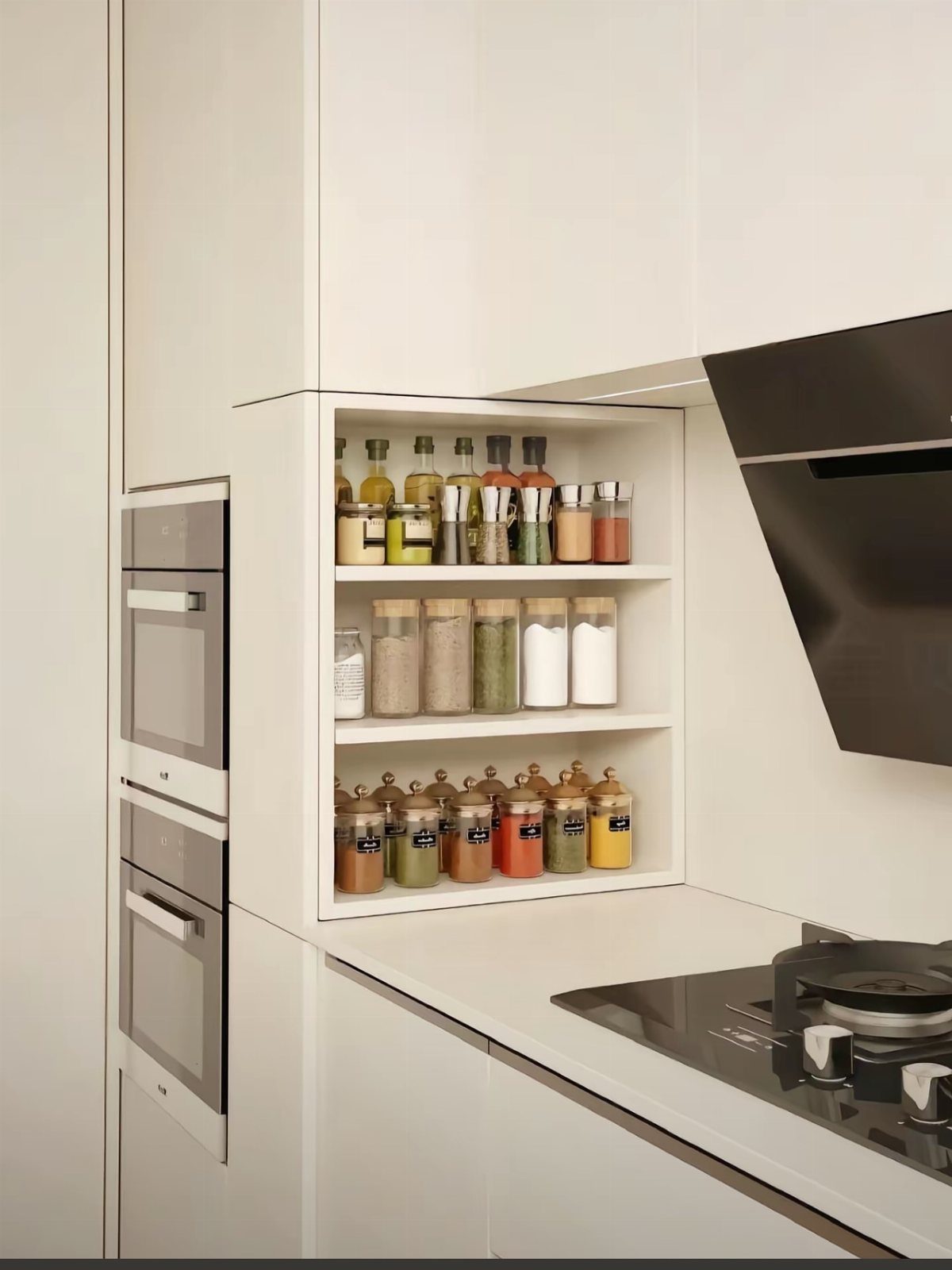
A spice rack gathers bottles and jars in one place instead of letting them spread across multiple shelves or get pushed to the back of a cabinet.
I keep mine near the stove so everything is within reach while cooking, and I can read labels without pulling out half the contents of a cupboard.
Built-in racks next to the range or inside a cabinet door work well in kitchens with limited counter space. Freestanding tiered shelves or drawer inserts suit deeper cabinets where visibility from above matters more than wall access.
7. Under-sink Storage
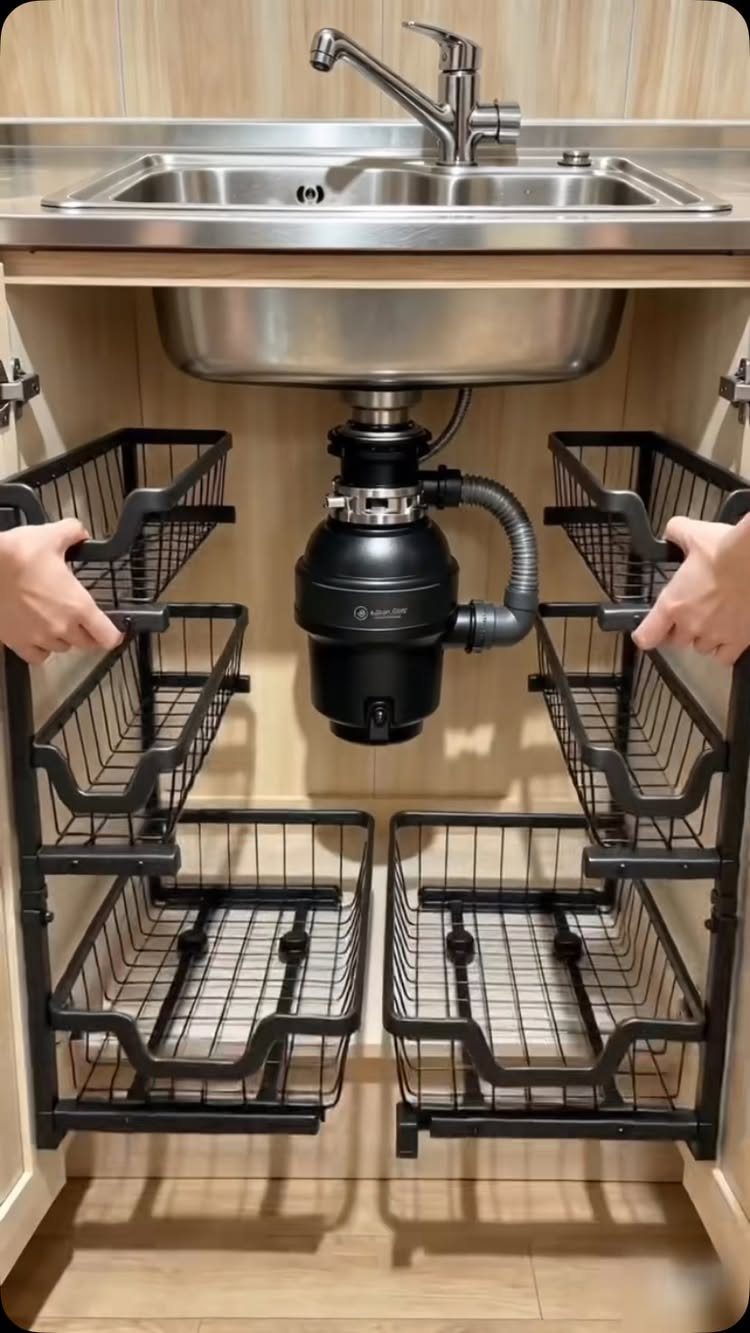
The cabinet below the sink is often deep and awkward, with plumbing that blocks part of the space. Sliding drawers or stackable bins work around the pipes and let you pull items forward instead of crouching to reach the back.
I keep cleaning supplies, dish soap refills, and trash bags here. A caddy that fits around the plumbing holds spray bottles upright and keeps them from tipping when you grab one in a hurry.
8. Vertical Storage
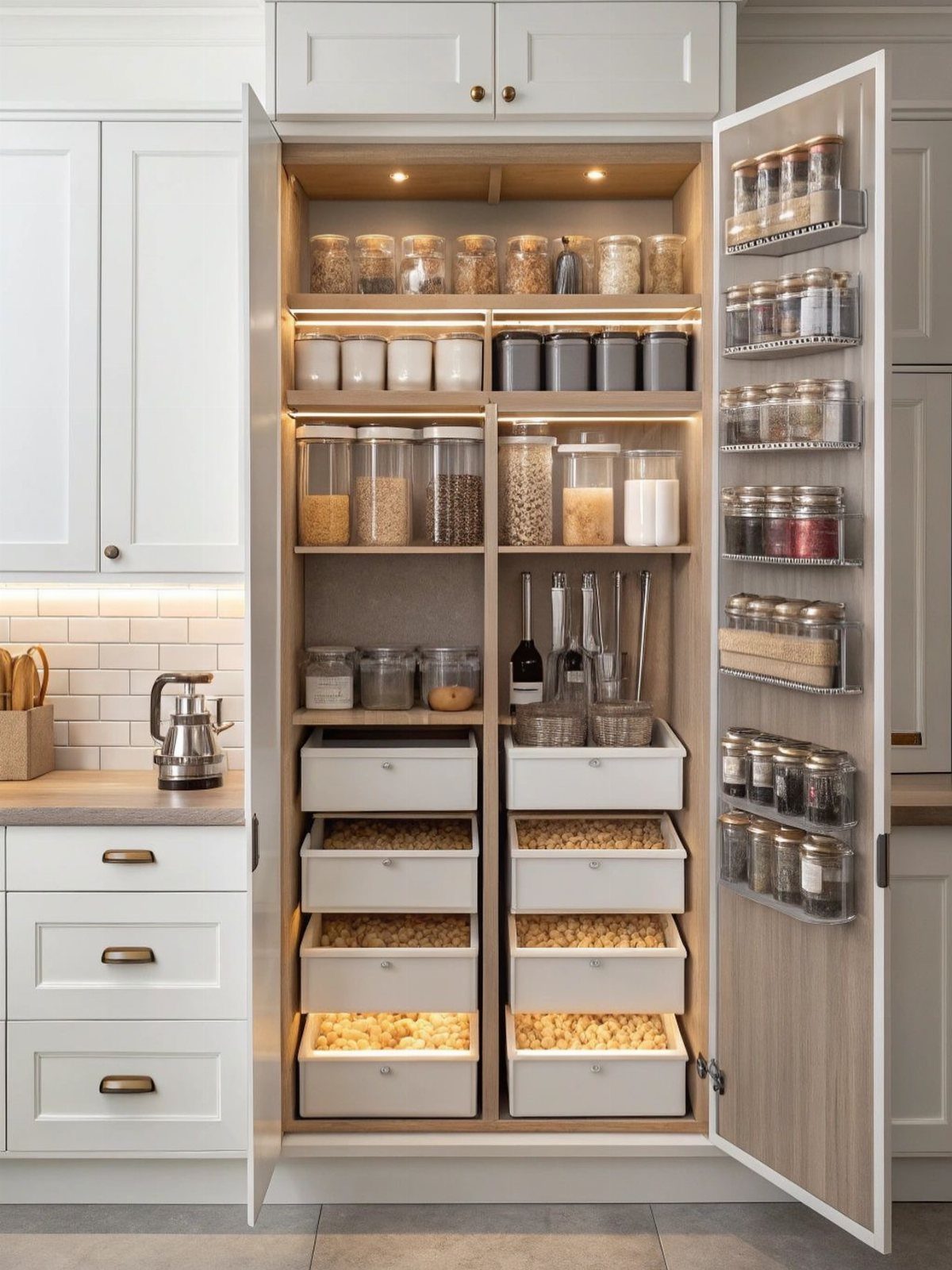
Stacking items or mounting storage on cabinet doors and walls uses height instead of floor or counter space. Tall shelves, tiered risers, or door-mounted racks let you fit more into the same footprint.
I add shelf risers inside cabinets to create a second level for cans, jars, or mugs.
Hooks or narrow racks on the inside of pantry doors hold spices, wraps, or small packets. Fill the column from bottom shelf to top without stacking so high that the top row sits out of reach.
9. Labeled Jars and Containers
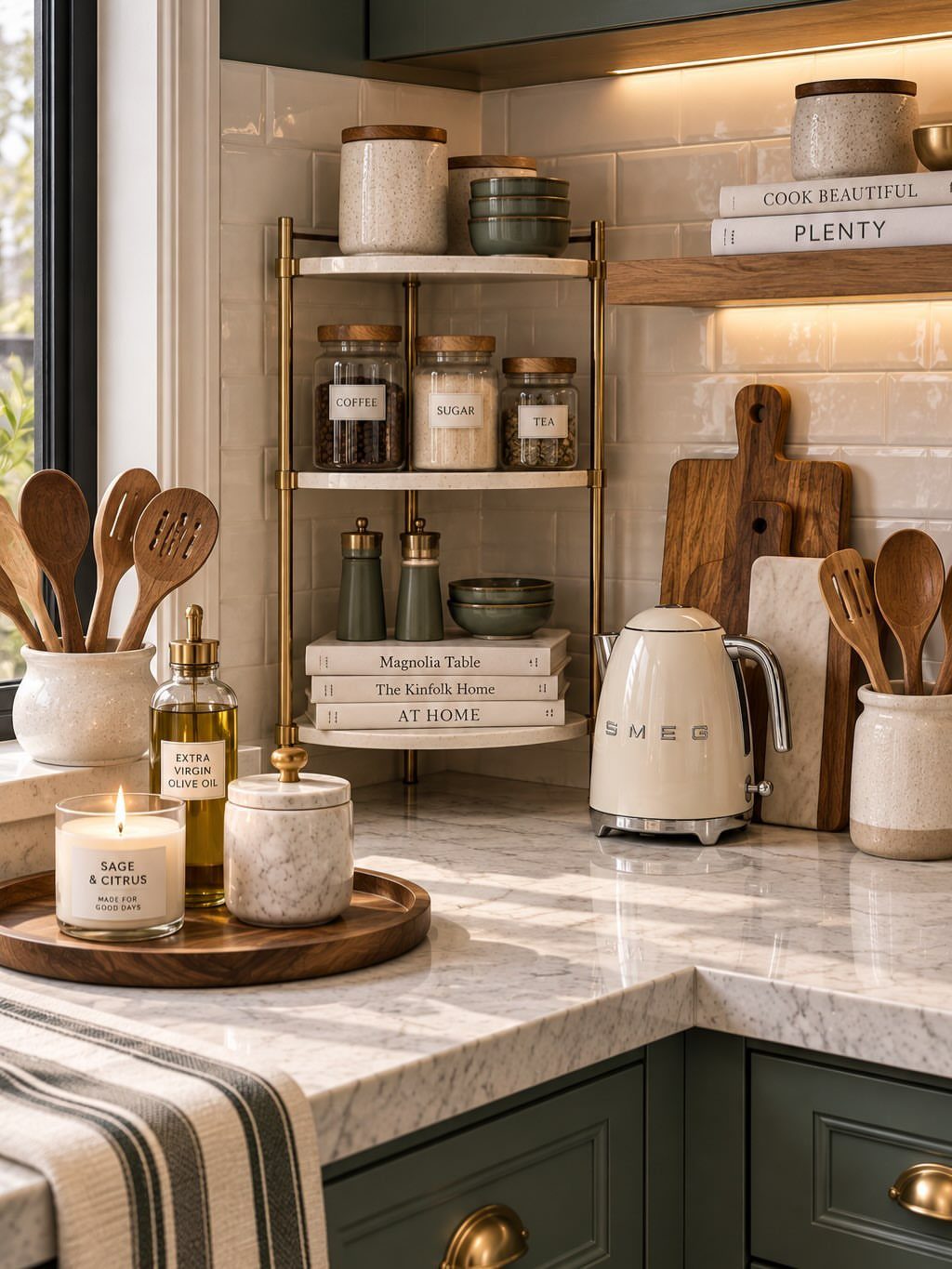
Labels tell you and everyone else in the house what belongs in each container and where it goes when you’re done with it.
I label jars of flour, sugar, or coffee so no one has to open three before finding the right one.
A printed label or a strip of tape with handwriting works equally well.
Consistency is where this works or falls apart. If you label one container, label all of them in the same system, or the setup feels half-finished.
10. Appliance Storage
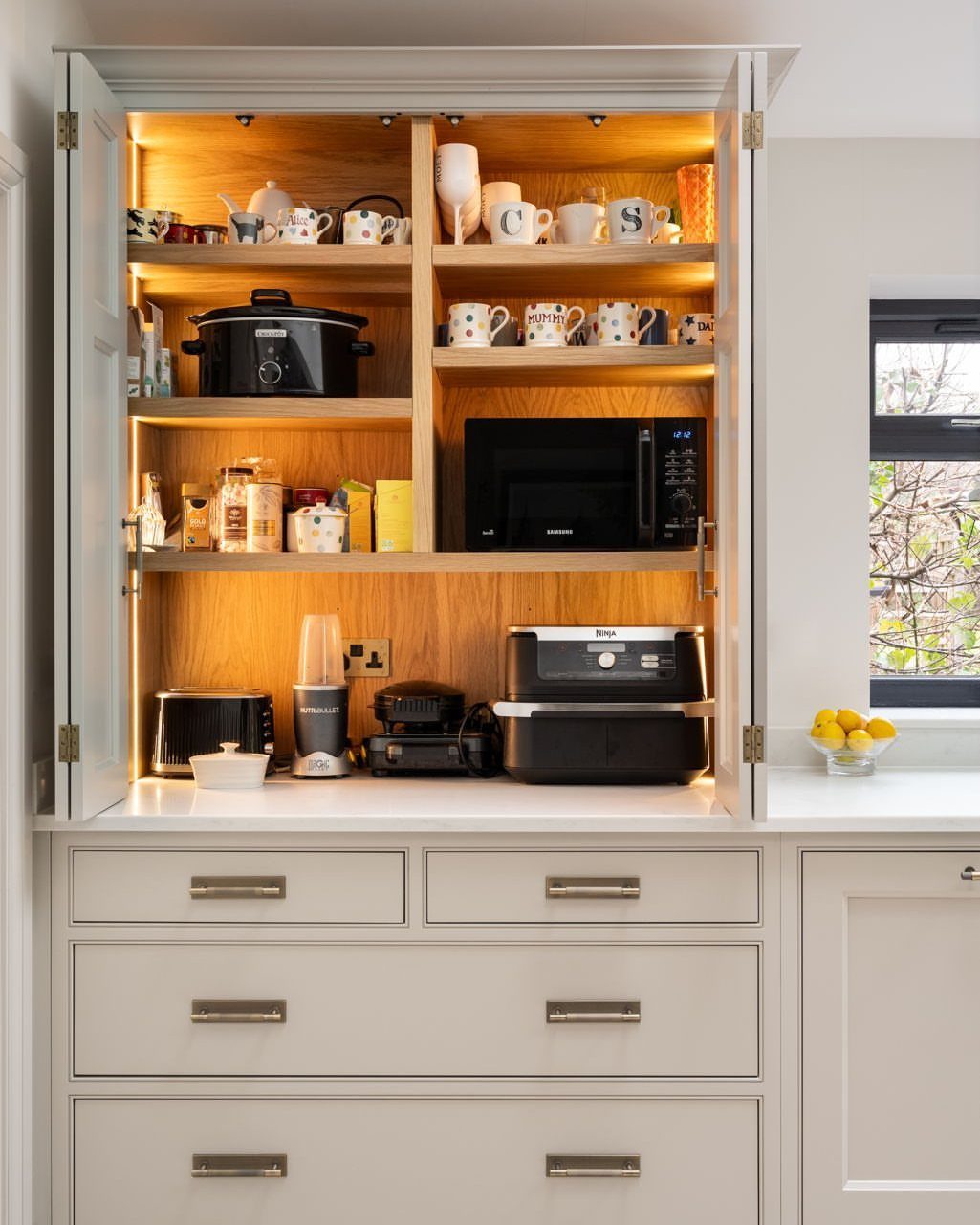
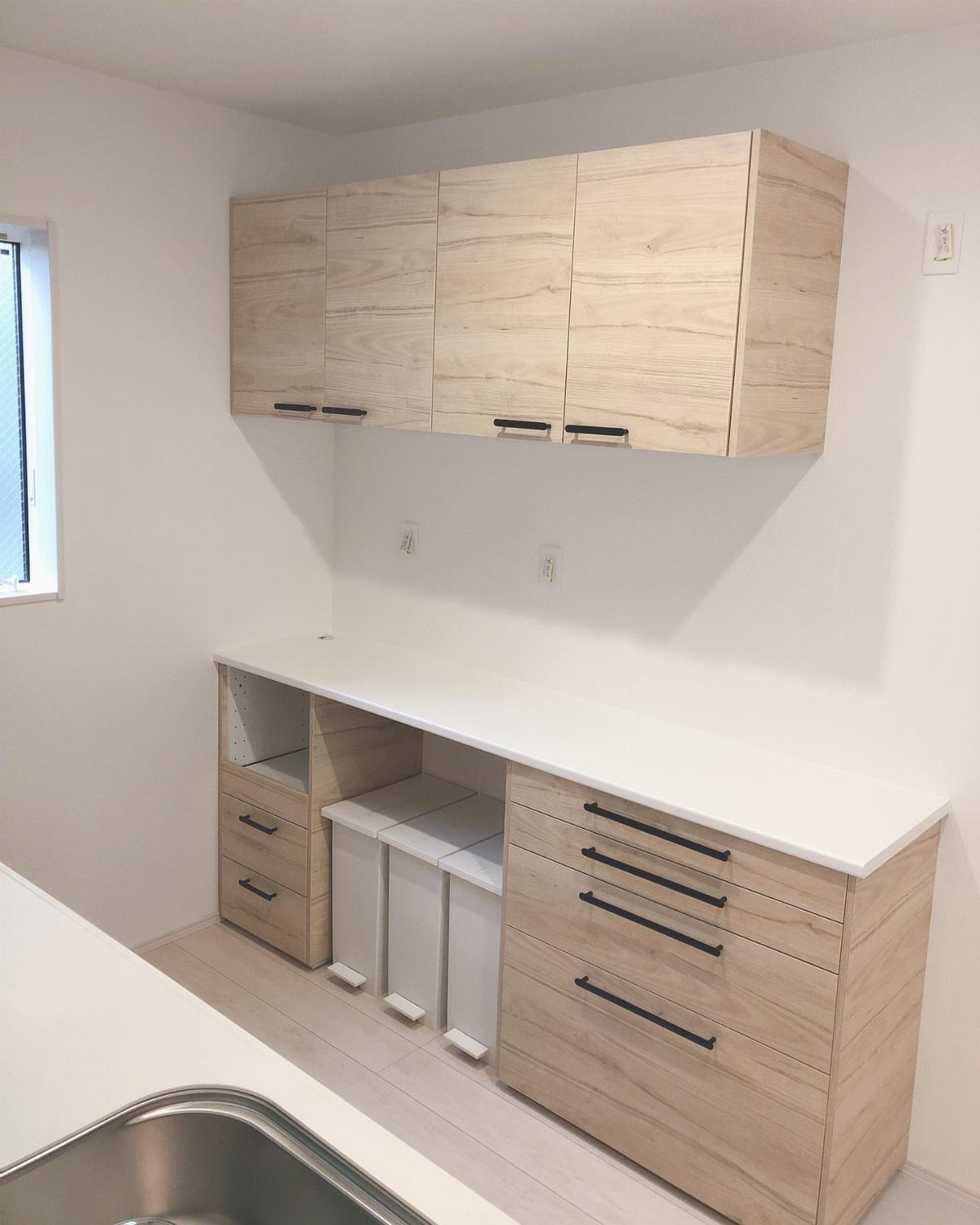
Storing small appliances in a dedicated cabinet or on a lower shelf keeps counters clear and makes it easier to find what you need.
I group coffee makers, blenders, and toasters together so everything related to one task is in the same spot.
Appliances you use daily can stay on the counter. The rest go into a cabinet at a height you can lift them from without strain.
Cord management matters here. Velcro ties or clips keep cables from tangling when you pull an appliance out.
11. Pots and Pans Storage
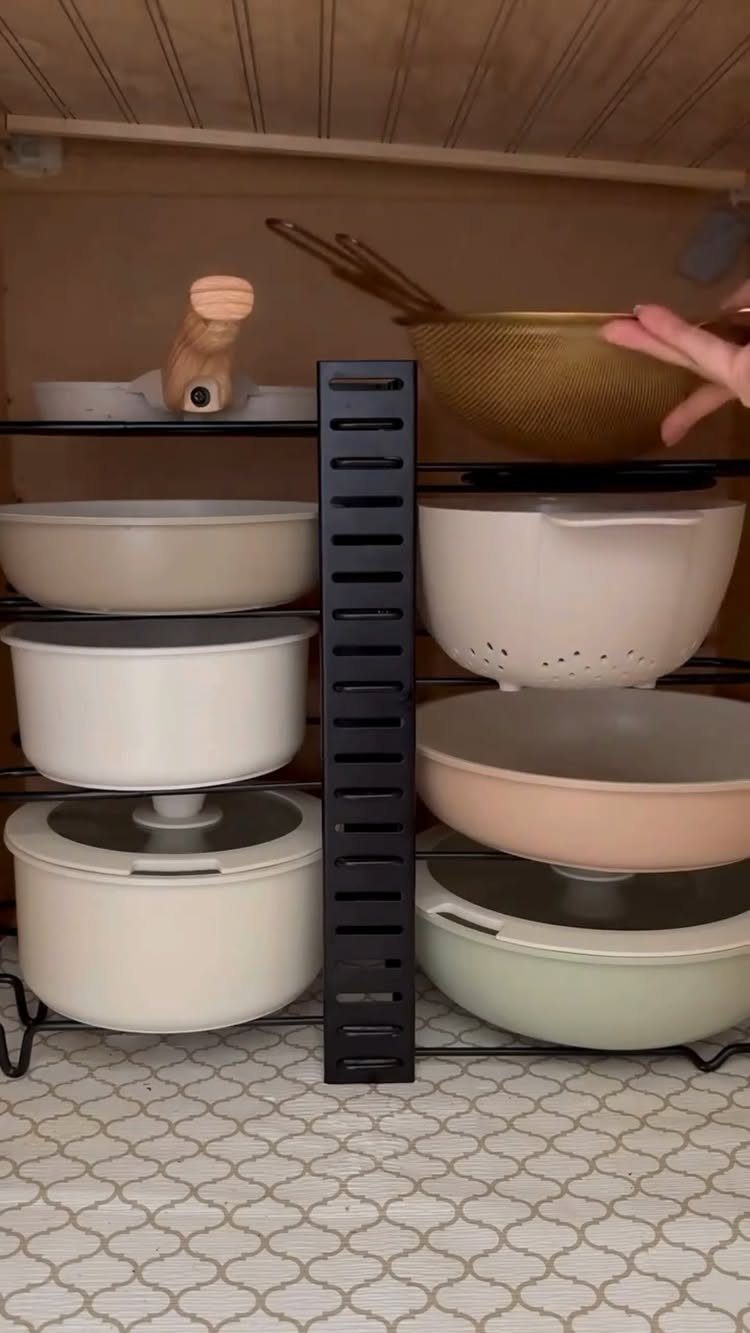
Pots and pans stacked directly on top of each other are hard to separate without pulling the whole pile apart. Racks or vertical dividers let you slide one piece out without disturbing the rest.
I store heavy cookware in lower cabinets close to the stove.
Racks that sit on the cabinet floor hold pans upright like files in a drawer. Lids go in a separate holder or on the inside of the cabinet door so they don’t take up space in the main storage area.
12. Bamboo Cutlery Tray
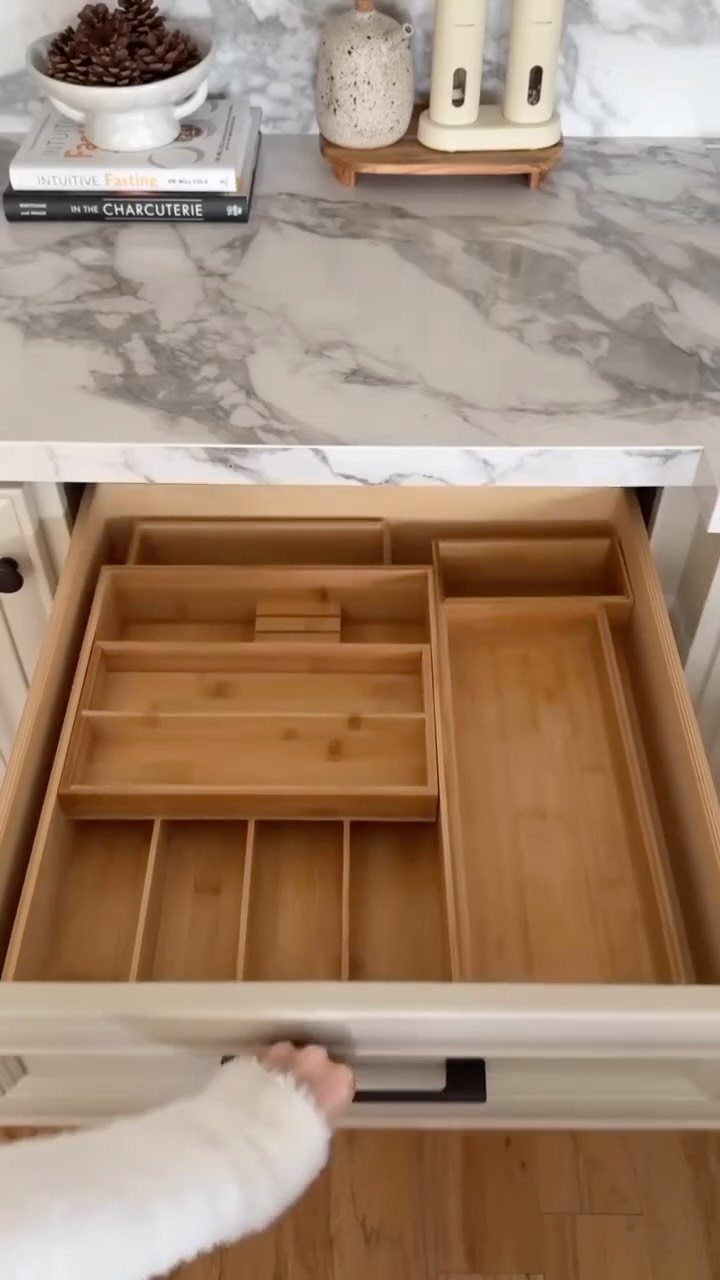
A cutlery tray divides a drawer into slots for forks, knives, spoons, and serving utensils. Bamboo trays fit most standard drawers and hold up better than plastic when utensils are damp.
I measure the drawer before buying a tray to avoid gaps or an overhang that keeps the drawer from closing.
Expandable trays adjust to fit different widths, which matters if you’re organizing more than one drawer or moving the tray later.
13. Over-fridge Storage
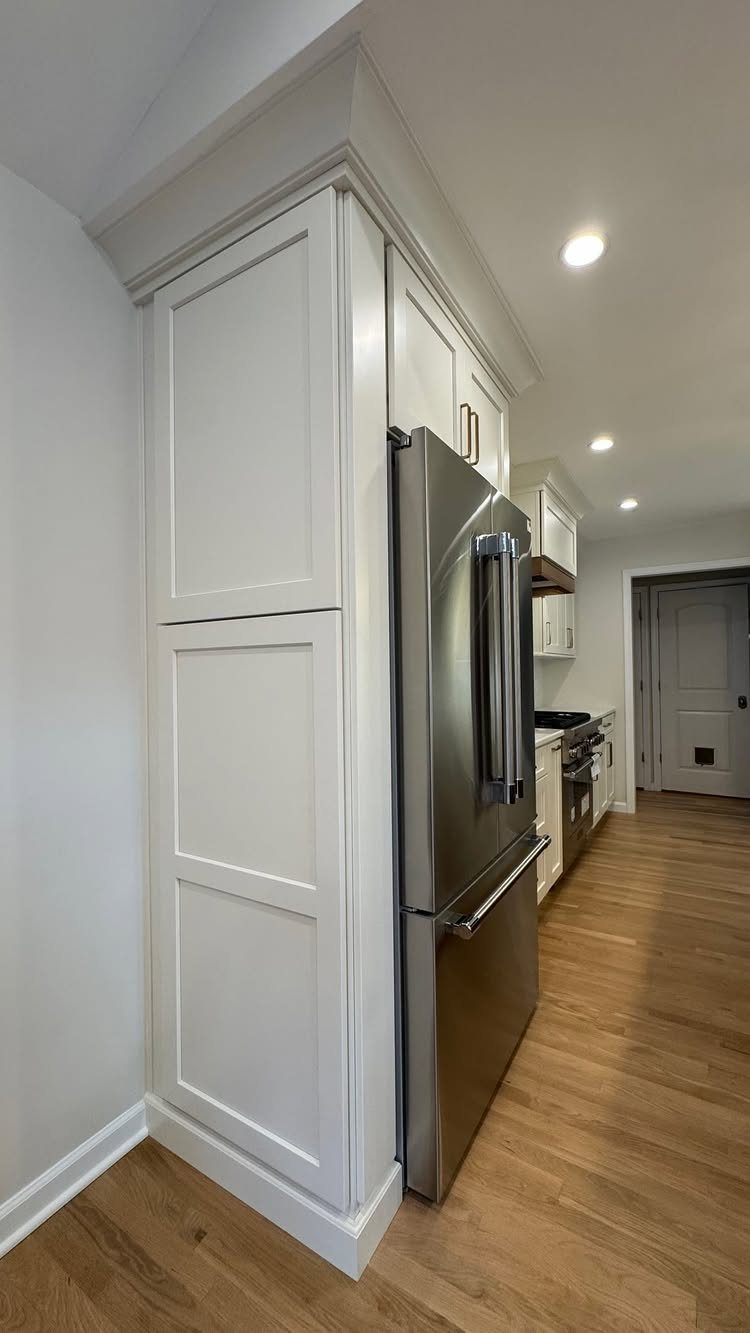
The cabinet above the fridge is often deep enough to store items you don’t reach for daily but still want accessible. I keep extra pantry staples, serving platters, or small appliances up there.
If the space is open-fronted, a cabinet door can be added to match the rest of the kitchen. Without a door, bins or baskets keep items from looking messy when viewed from below.
14. Recycling Bag Holder
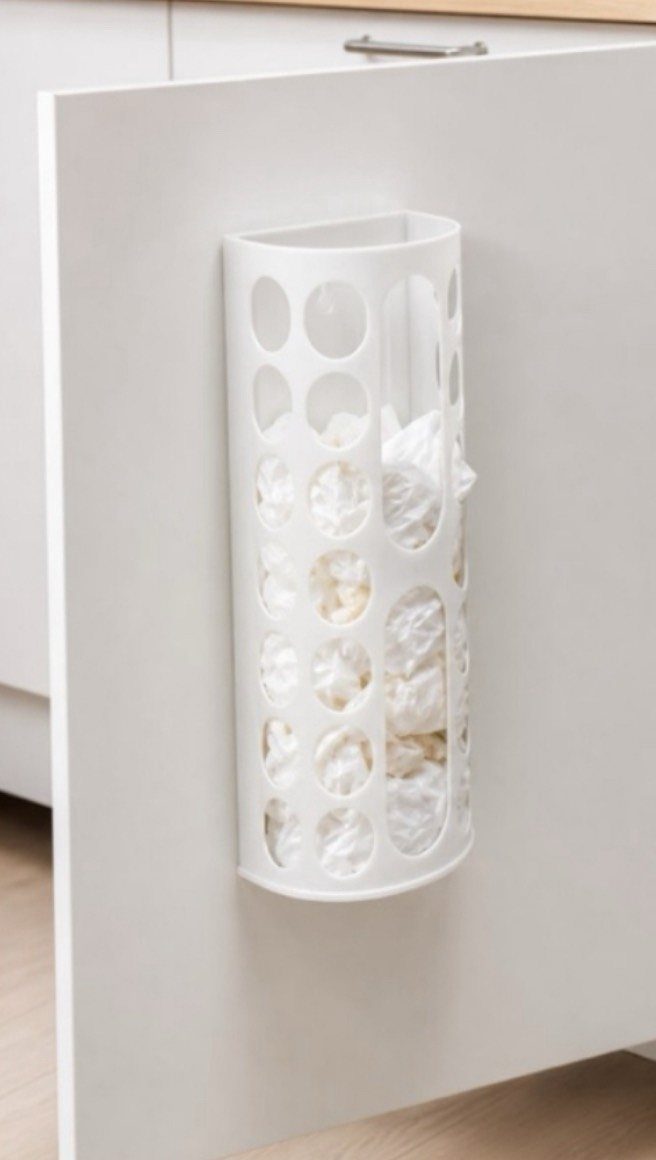
Mounting a holder on the inside of a cabinet door keeps plastic bags grouped and out of sight. I hang one near the sink or the trash so bags are easy to grab when I need them.
The holder sits flat against the door and doesn’t interfere with what’s stored on the shelves behind it. Most versions have perforations or an open bottom that lets you pull one bag at a time.
15. Knife Storage
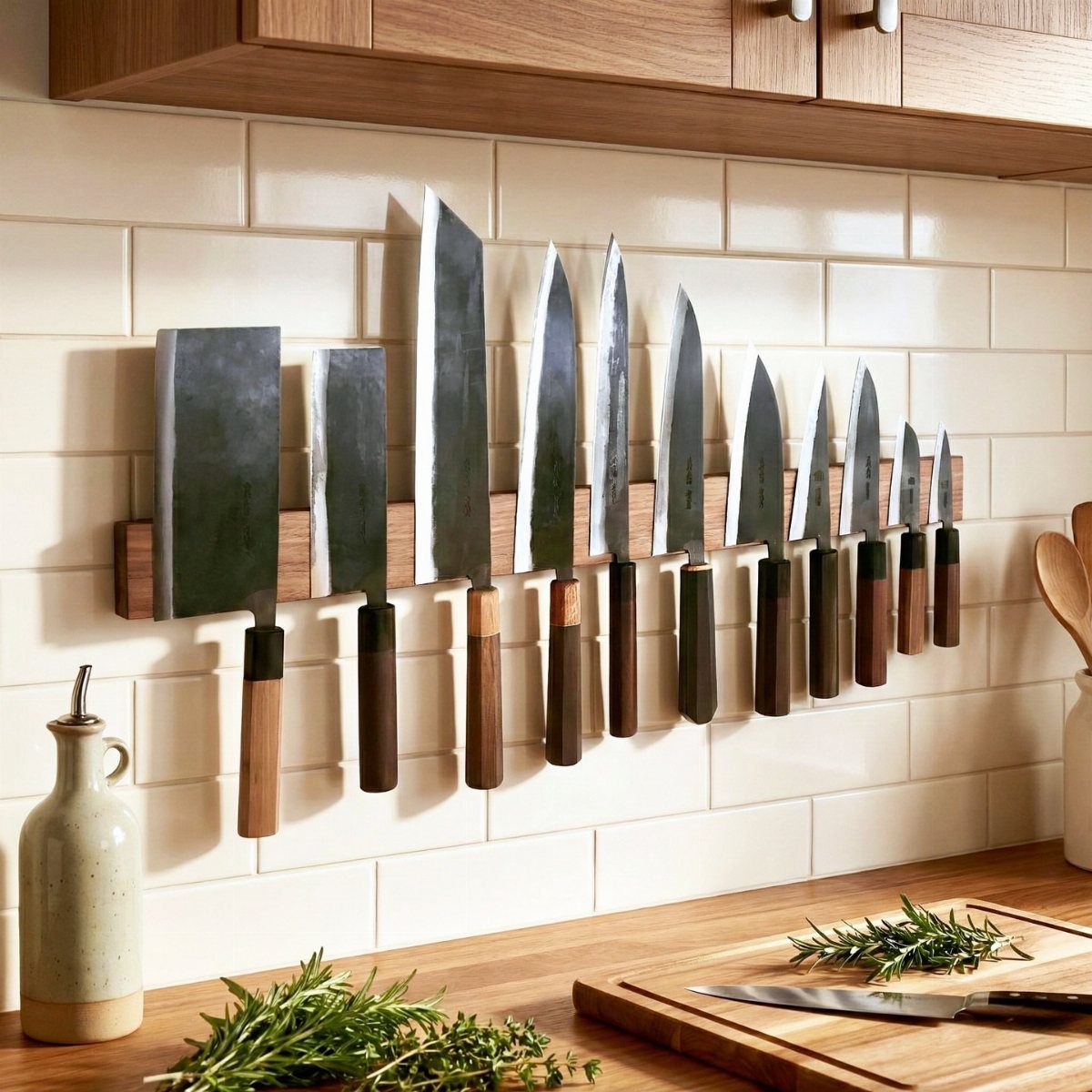
A magnetic strip mounted on the wall holds knives by their blades and keeps them visible and within reach.
I position the strip near the cutting board so knives are close when I need them, and the counter stays clear of a bulky block.
The strip works best on a wall with studs or backing that can support the weight. Knives hang edge-up, which keeps the blades sharp longer than a drawer where they rub against other utensils.
16. Under-cabinet Cookbook Shelf
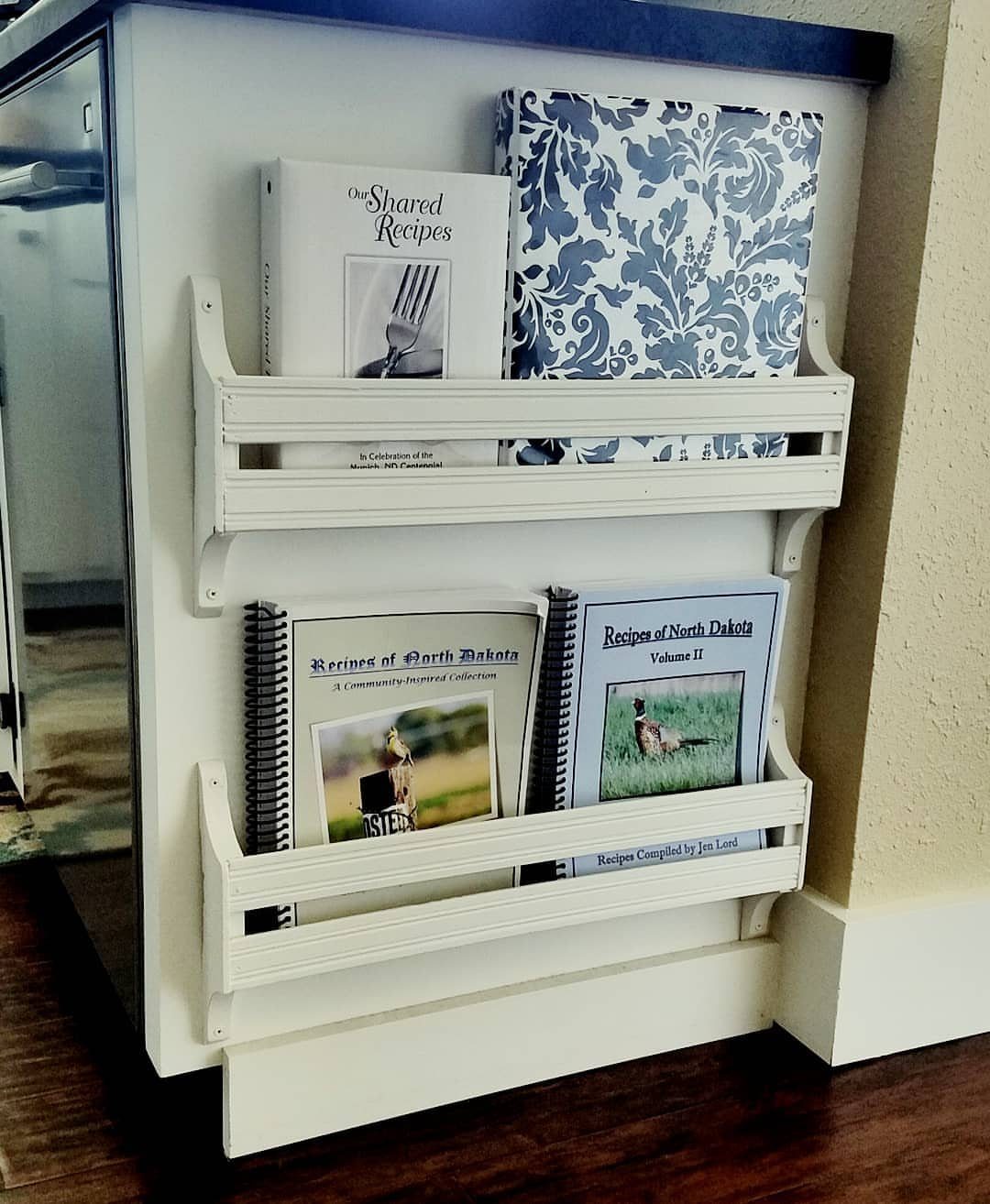
A small shelf mounted under a cabinet holds a cookbook or tablet at eye level while you cook. I install one near the prep area so recipes stay open and readable, and the counter stays clear.
The shelf can be one or two tiers depending on how many books you reference at once. Mounting it on the cabinet side instead of the underside works in kitchens where wall space is limited.
17. Snack and Dinner Cabinet Shelves
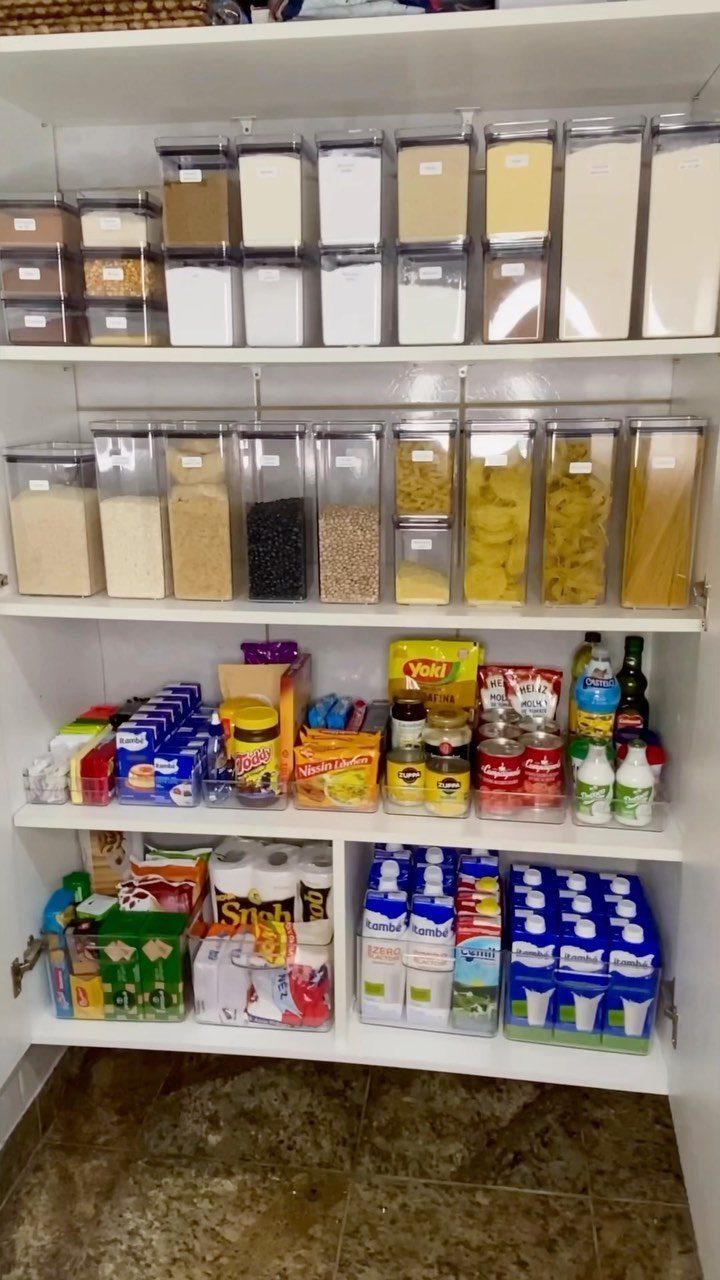
Assigning specific shelves to snacks and dinner ingredients makes it faster to find what you need and easier to see when you’re running low.
I group similar items together so pasta, grains, and sauces each have their own spot, and snacks stay on a separate shelf where everyone can reach them.
Clear bins keep smaller packages from getting buried, and labels or consistent placement help the system hold up when other people in the house put groceries away.
Frequently Asked Questions
How do you organize kitchen cabinets?
Start by grouping similar items together and assigning each category a specific shelf or zone so you can find what you need quickly.
Use bins to contain smaller packages, add pull-out shelves in lower cabinets for visibility, and mount door racks for items like lids or spices.
Store what you use daily at eye level and keep less-used items on higher or lower shelves.
How to make more storage space in the kitchen?
Mount racks or hooks on the inside of cabinet doors to hold lids, spices, or cutting boards that would otherwise take up shelf space.
Add shelf risers to create a second level inside cabinets, and use vertical dividers to stand pans and baking sheets upright like files.
Store small appliances in a cabinet instead of on the counter, and keep less-used items on the highest shelves or above the fridge.
What can I put inside my kitchen cabinets?
I store dry goods in clear containers or bins on pantry shelves, cookware and baking pans in lower cabinets near the stove, and small appliances in cabinets at a height I can lift them from comfortably.
Each zone gets items related to one task or meal type so nothing gets lost.