
Black cabinets and walnut bring contrast into a kitchen without leaning cold or sterile, and the pairing works across budgets from walnut counters to live-edge islands.
The deciding factor is how much warmth you want to preserve: black cabinets with walnut counters or islands keep the wood visible and the room balanced, while walnut cabinets with black stone pull the palette darker.
1. White Quartz and Marble
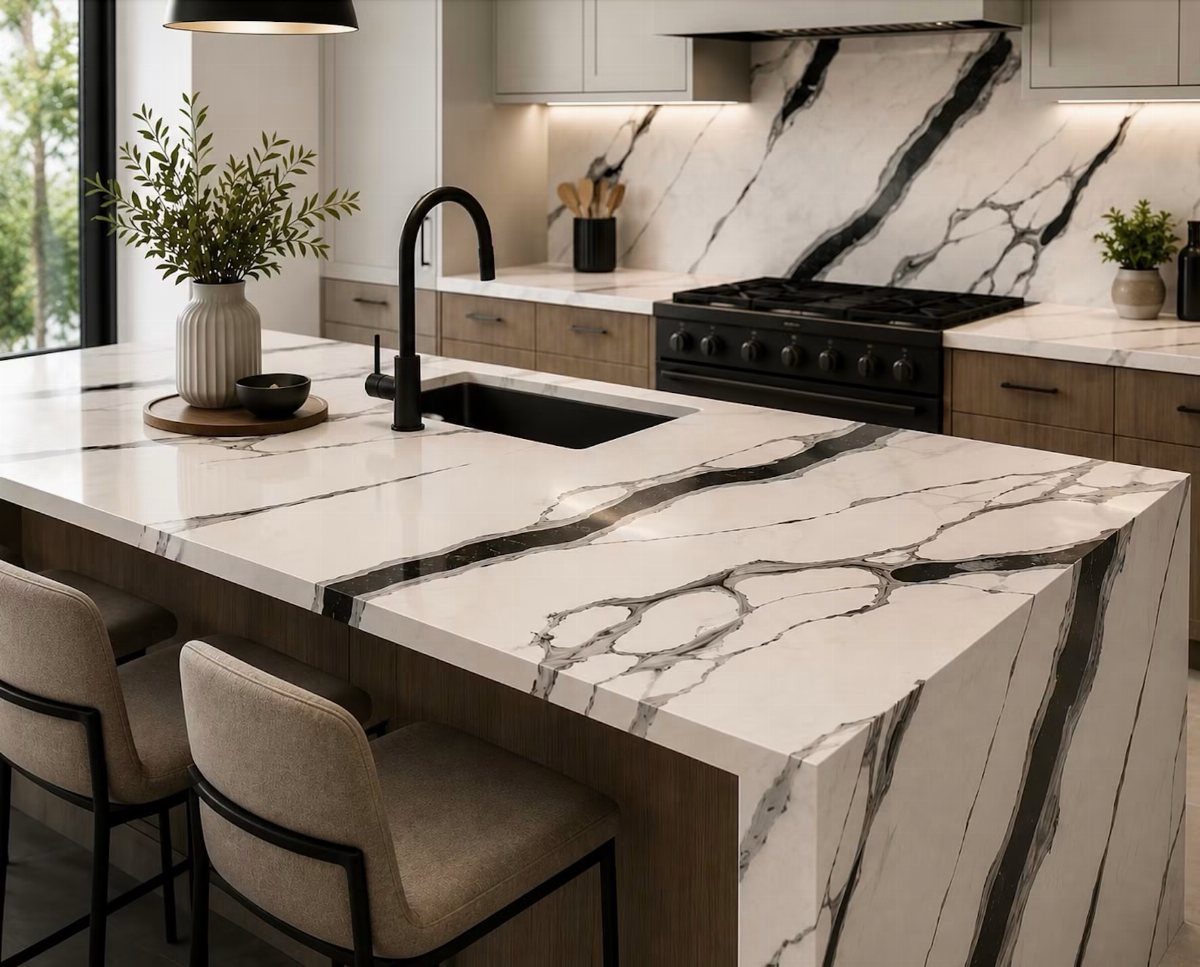
White marble counters sharpen the warmth of walnut cabinets without competing with the grain.
The veining in the stone picks up enough movement to keep the contrast from feeling flat, and a waterfall edge on an island adds weight to an open plan.
I usually bring black faucets and range hoods into this setup because they anchor the palette without introducing a third wood tone.
The one place this balance falls apart is when the marble veining runs too busy or too yellow. Stay with white stone that leans cool, and the walnut stays rich instead of muddy.
2. Walnut Cabinets with Matte-Black Fixtures
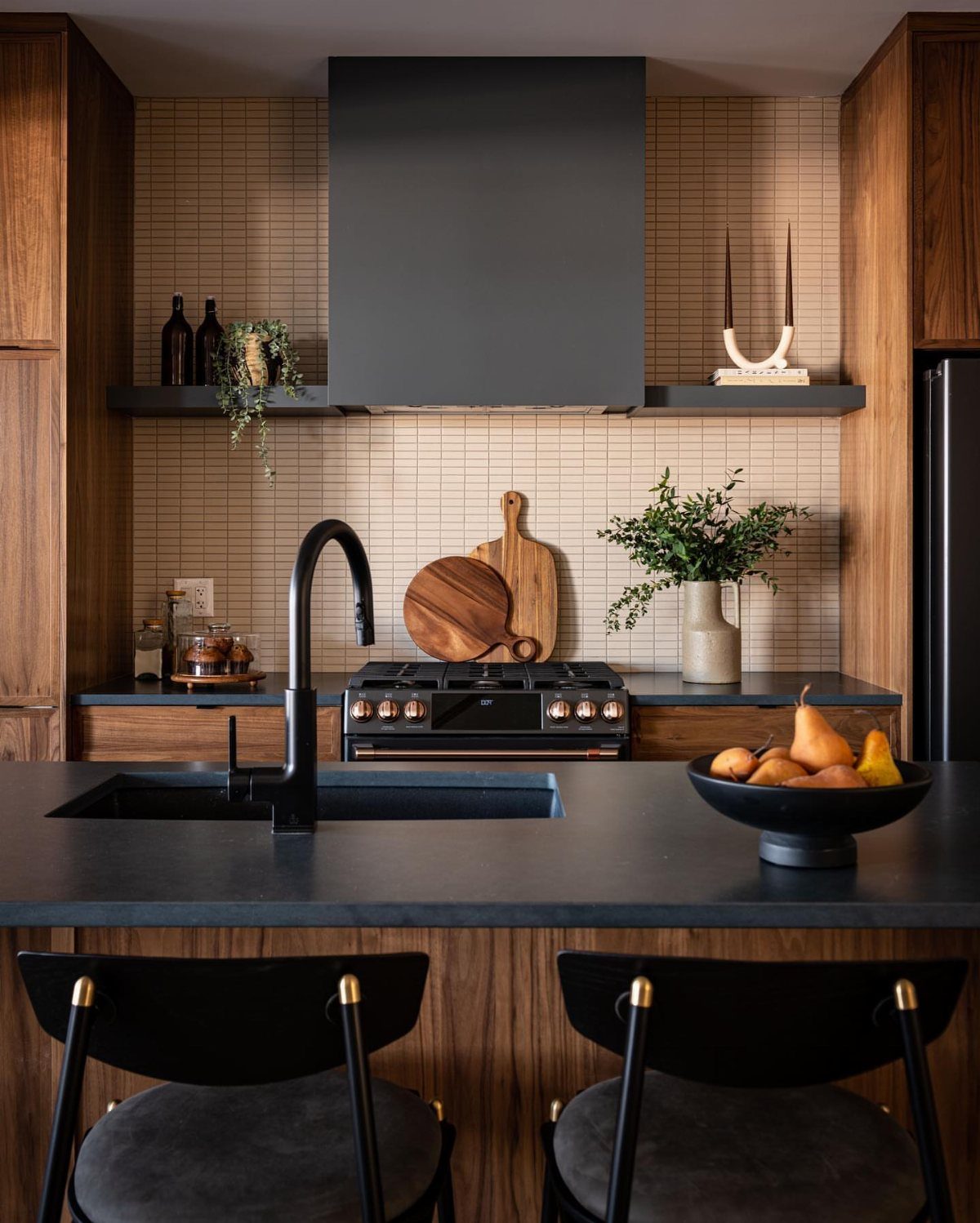
Matte-black hardware and fixtures give walnut cabinets a cleaner edge than brass or stainless steel.
The combination reads modern without losing the warmth that makes walnut worth using in the first place. I prefer black faucets with a low profile and black range hoods that sit flush to the wall.
Counters in black stone or dark concrete keep the palette tight, though I’ve seen this work with lighter stone when the kitchen has enough walnut to hold the room.
The one caution is overdoing black. If more than half the surfaces go dark, the space starts feeling closed in.
3. Mid-Century Walnut Cabinets
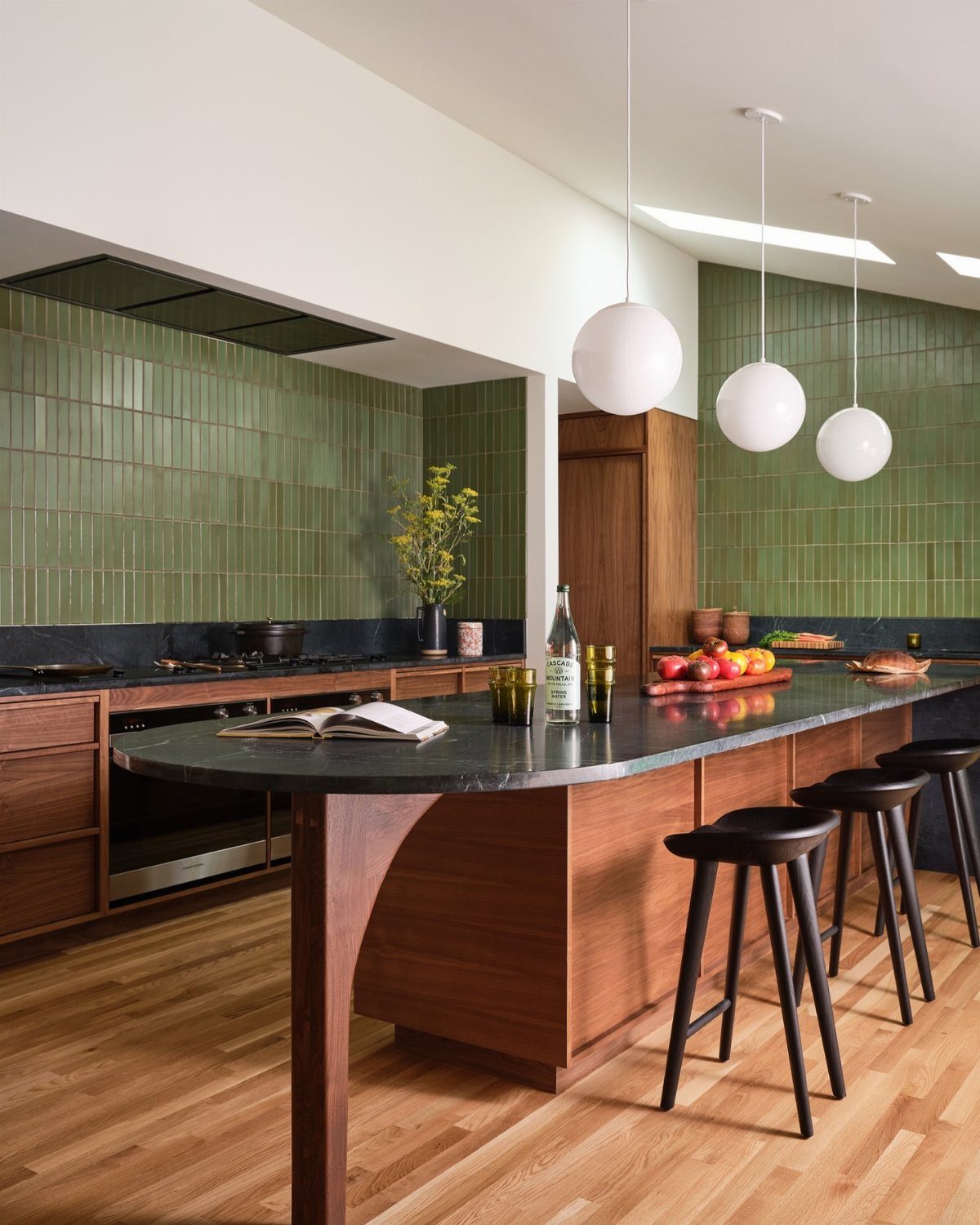
Flat-front walnut cabinets with minimal hardware and horizontal grain sit comfortably in mid-century kitchens, especially when the room has good natural light.
The style needs a simple layout and a low island. I like keeping counters dark to match the cabinet tone, which makes the walnut feel cohesive rather than interrupted.
Avoid adding too many open shelves. A few floating walnut shelves work, but stacking them high breaks the clean lines that make this style hold up.
4. Black Walnut Cabinets
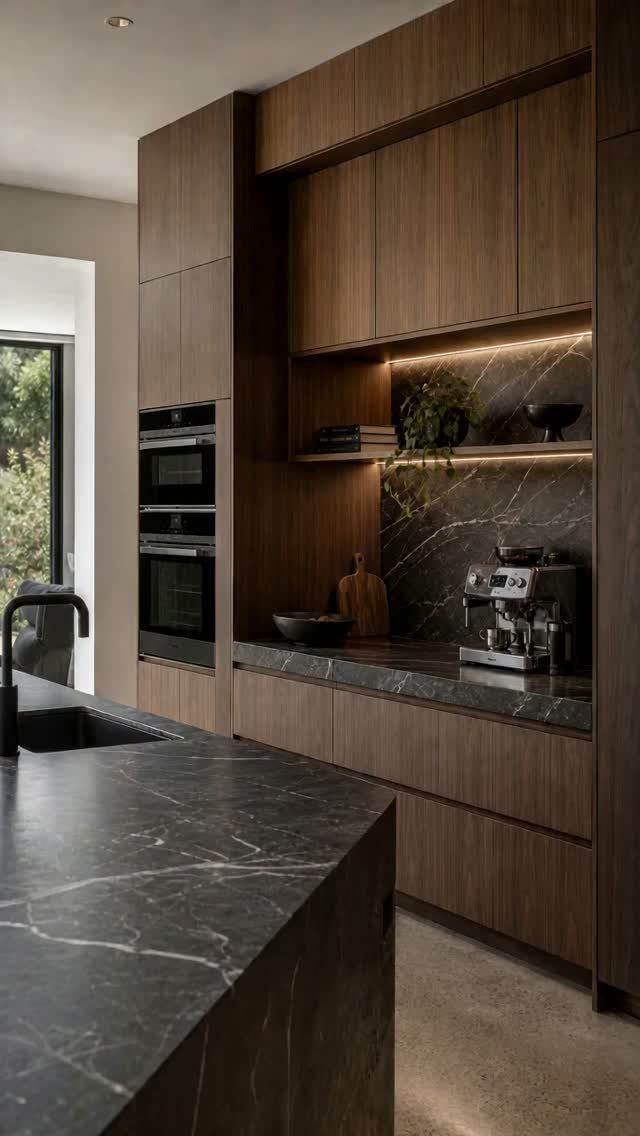
Black walnut runs darker and richer than standard walnut, with deep brown tones that border on espresso. It suits high-end kitchens where the cabinets need to carry the room, and it pairs cleanly with black stone counters and backsplashes.
The grain still shows, but the overall effect is more restrained than lighter walnut. I use black walnut when the client wants warmth but doesn’t want the wood to dominate.
The cost is higher than standard walnut, and the finish requires care. Oil-based sealers bring out the color better than water-based options.
5. Walnut Marble Kitchen
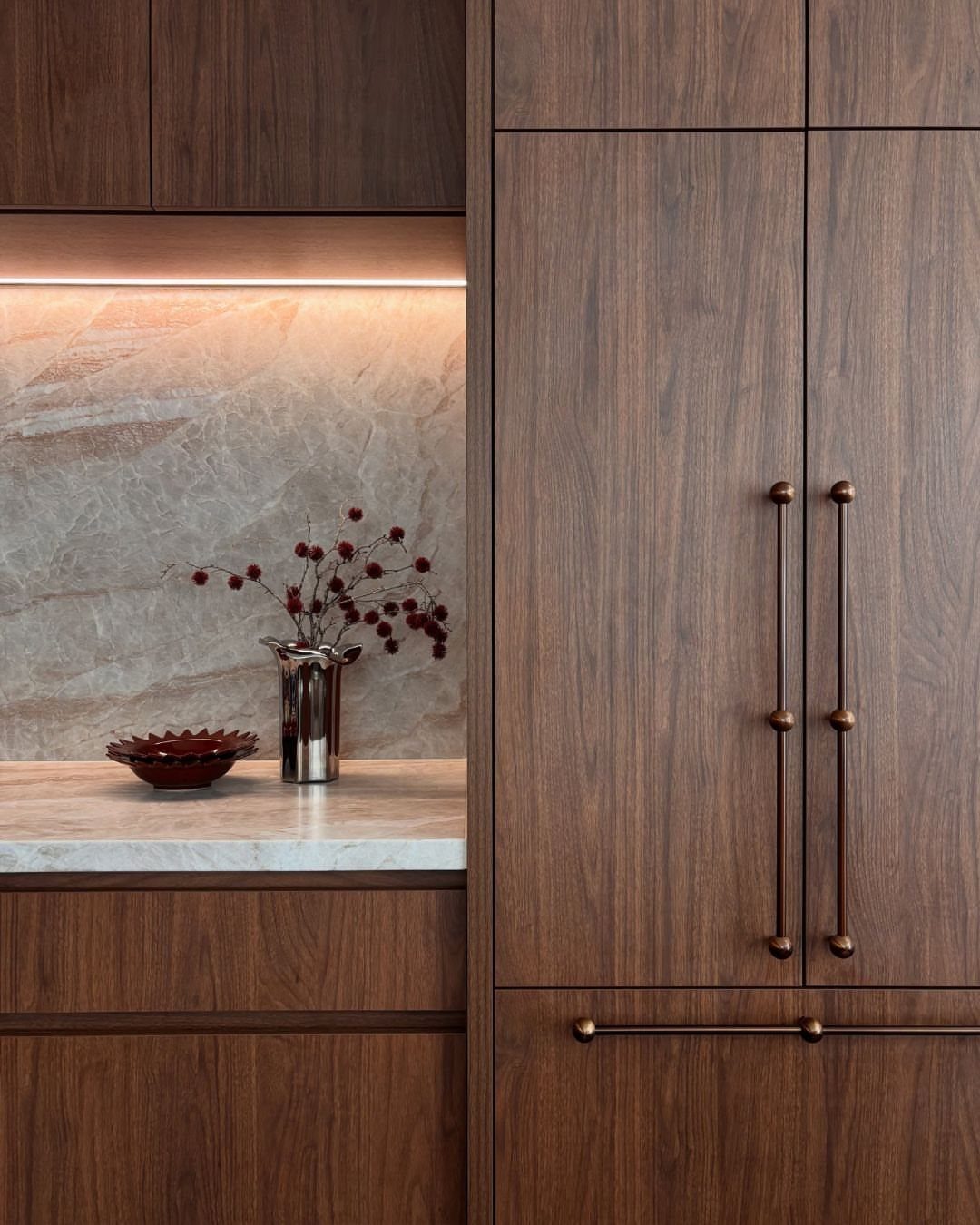
Marble counters and backsplashes soften walnut cabinets while keeping the kitchen feeling polished.
White marble with gray veining is the most reliable choice, though I’ve used warmer cream-toned marble when the walnut leans lighter. Long bronze or brass pulls add a bit of refinement without feeling overly formal.
Under-cabinet lighting makes the marble glow and picks up the detail in the veining. The one place this setup needs attention is at the backsplash seam.
If the marble runs vertically behind the cabinets, make sure the veining aligns. A mismatch is obvious.
6. Walnut Sandstone Counters
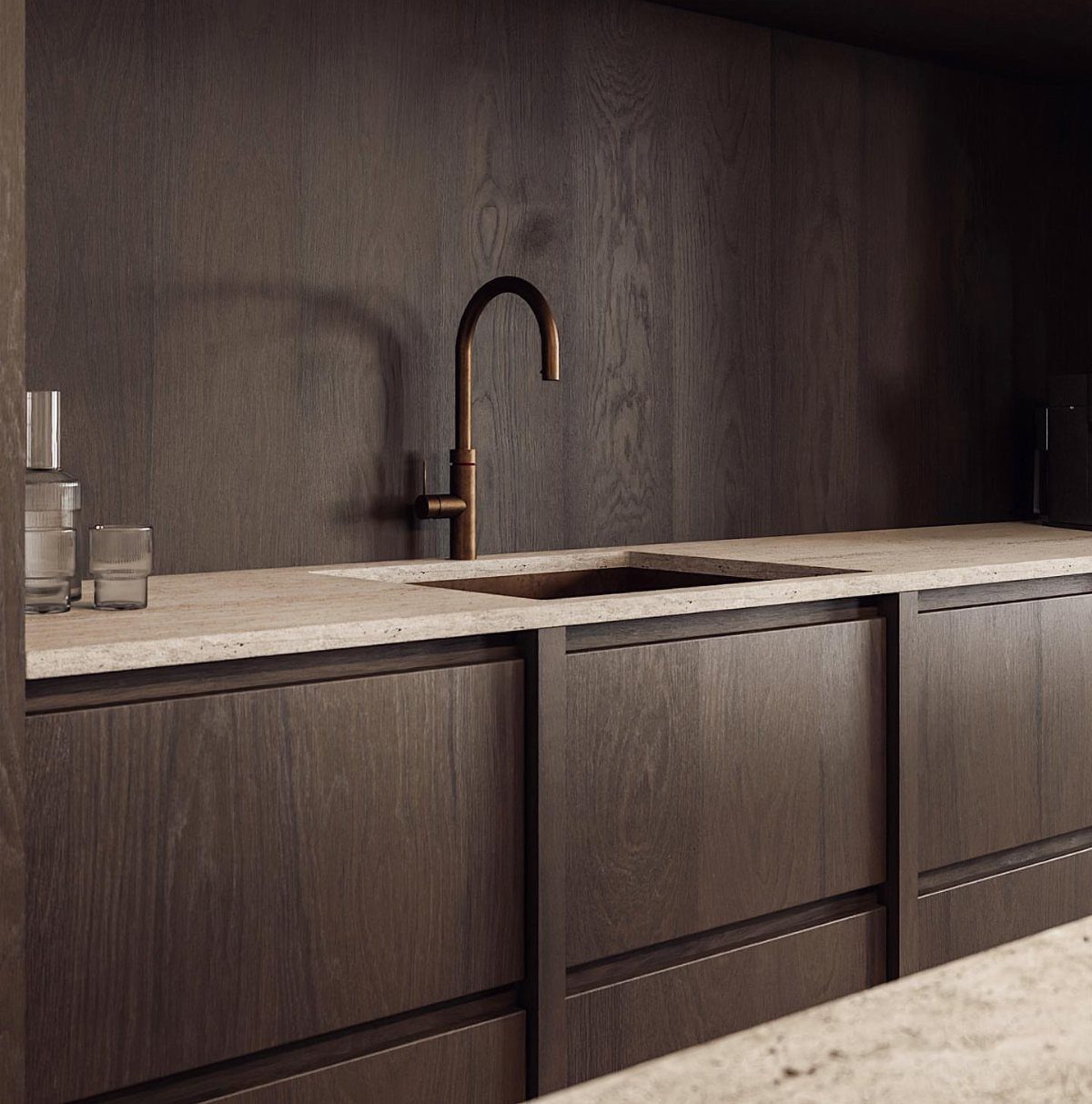
Sandstone counters in light beige or tan bring warmth to walnut cabinets without the shine of marble or the hardness of granite.
The stone reads softer and more textured, which suits kitchens that lean organic or rustic. I like this combination with bronze or oil-rubbed bronze faucets, which pick up the warm tones in both materials.
Sandstone scratches more easily than harder stones, so it’s better suited to kitchens where the counters won’t see heavy knife work or acidic spills. Sealing twice a year keeps the stone from staining.
7. Compact Glass-Front Kitchen
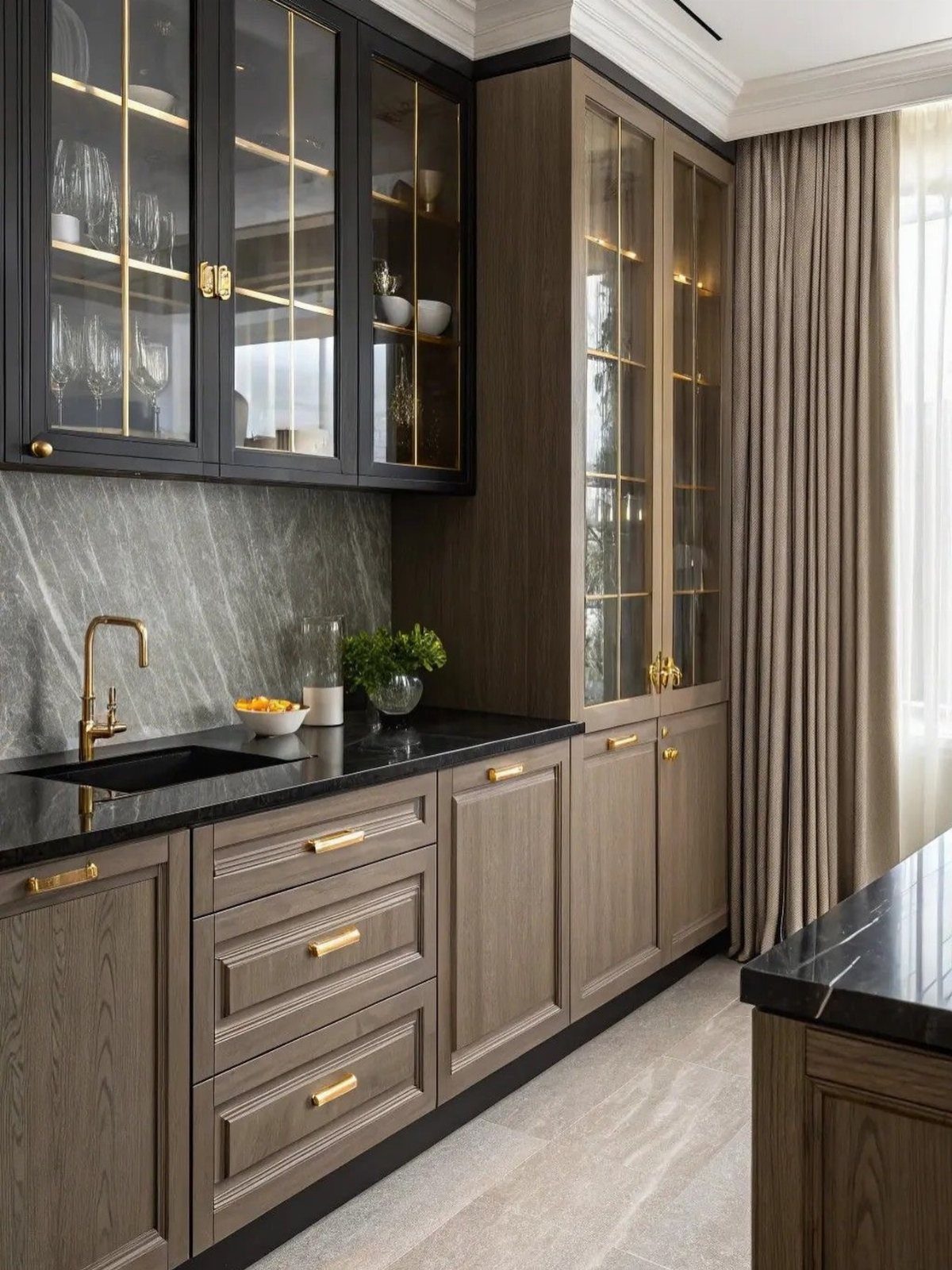
Glass-front uppers let you show off a few pieces without opening every door to find what you need.
In a compact kitchen, mixing them with solid cabinets keeps the space from feeling too busy while giving the room a bit of depth.
I typically put glass fronts on the upper cabinets that flank a range or sink, then run solid doors everywhere else.
Black frames on the glass cabinets tie into black counters and read cleaner than wood frames. If the cabinet interiors aren’t finished, line the backs with a simple panel in white or a color that doesn’t fight the contents.
8. Black Cabinets Walnut Counters
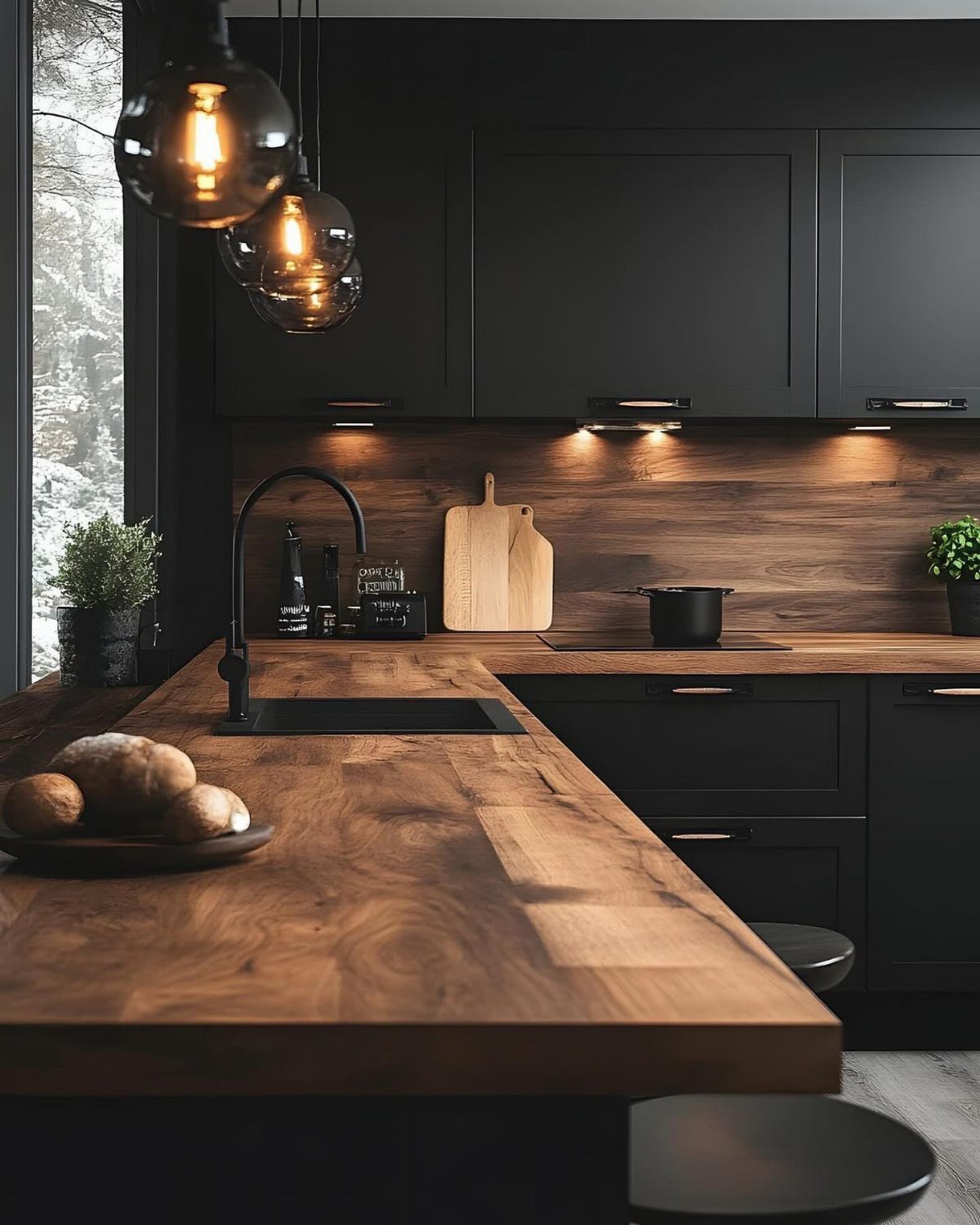
Black cabinets sit heavier in a room, and thick walnut counters bring warmth back without softening the palette too much.
The wood needs to be substantial enough to hold its own against the black, so thicker counters read better than thin slabs.
A walnut backsplash that runs floor to ceiling avoids breaking up the wall with tile or stone. Black faucets and black hardware keep the lines clean.
This combination works best in kitchens with strong natural light. Without it, the black can close the room in.
9. Walnut Cabinets Black Stone
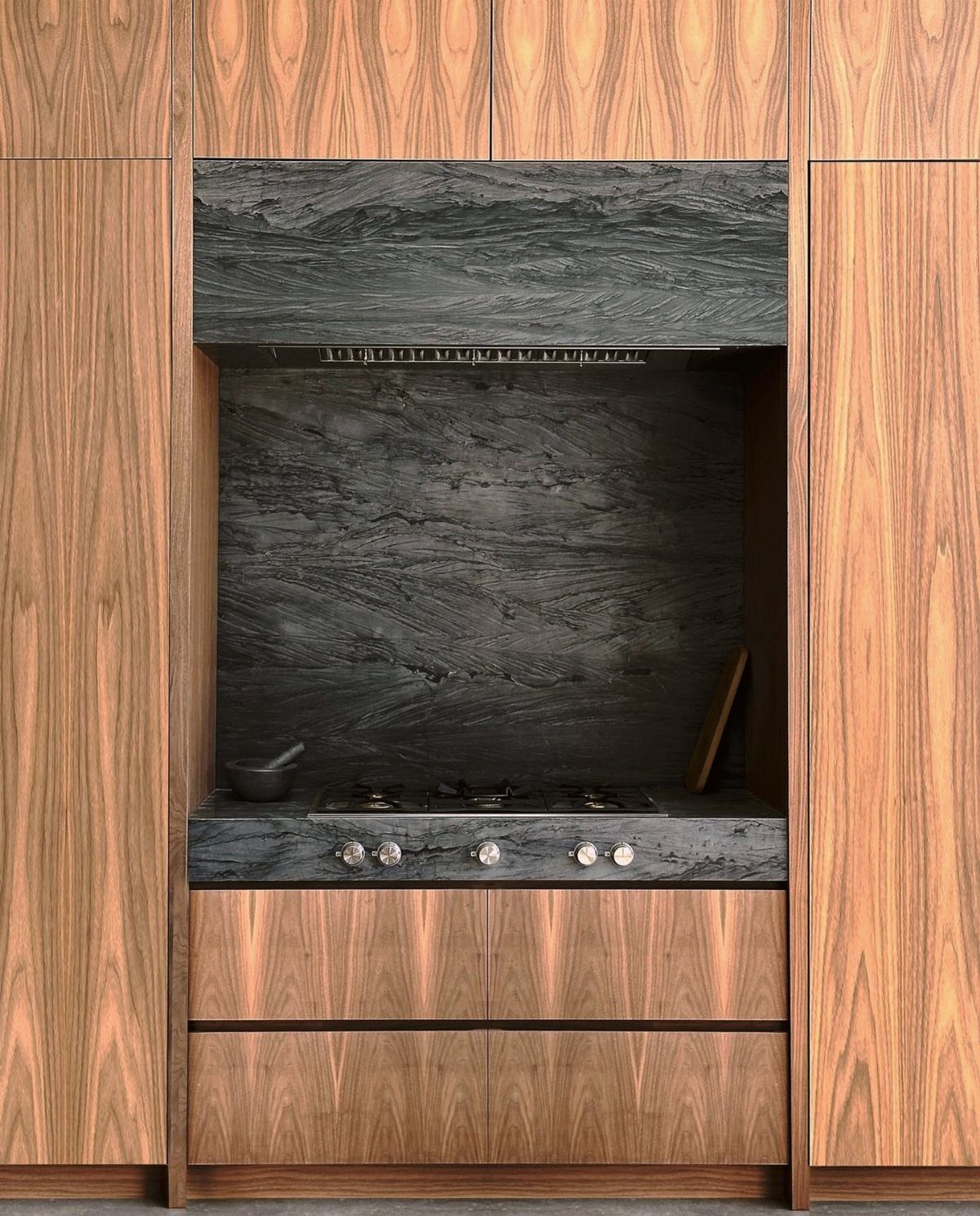
Black stone counters and backsplashes lock walnut cabinets into a tighter, more restrained palette than lighter stone.
The dark surface absorbs light instead of reflecting it, which suits kitchens that lean moody or minimal. I prefer honed or leathered finishes over polished because they soften the contrast without losing the drama.
A black stone backsplash that extends to the ceiling or wraps a vent hood makes the walnut cabinets feel like the warm interruption rather than the dominant feature.
This setup needs good task lighting. Under-cabinet strips or pendants over an island keep the stone from swallowing the room.
10. Black Cabinets Walnut Island
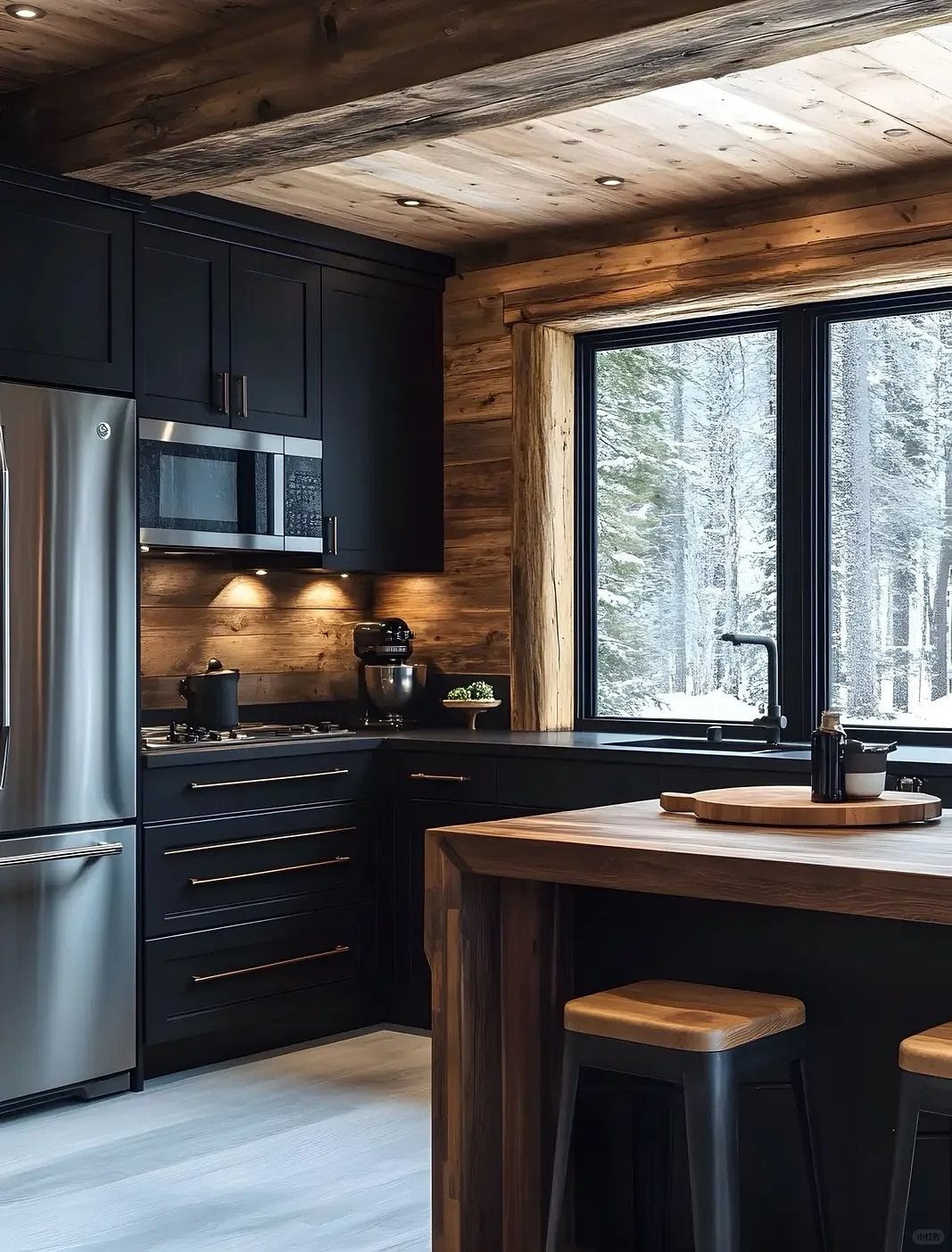
A walnut island brings warmth into a kitchen where black cabinets and dark counters would otherwise dominate.
The island becomes the natural gathering point, and the wood softens the room without changing the overall palette. A walnut countertop on the island makes the piece feel intentional rather than like an afterthought.
In a cabin or rustic setting, the walnut reads even warmer against black cabinets because the surrounding wood tones in walls or ceilings tie the materials together.
If the black feels too stark, a matte finish on the cabinets keeps the contrast from reading too hard.
11. Black Cabinets Live-Edge Walnut
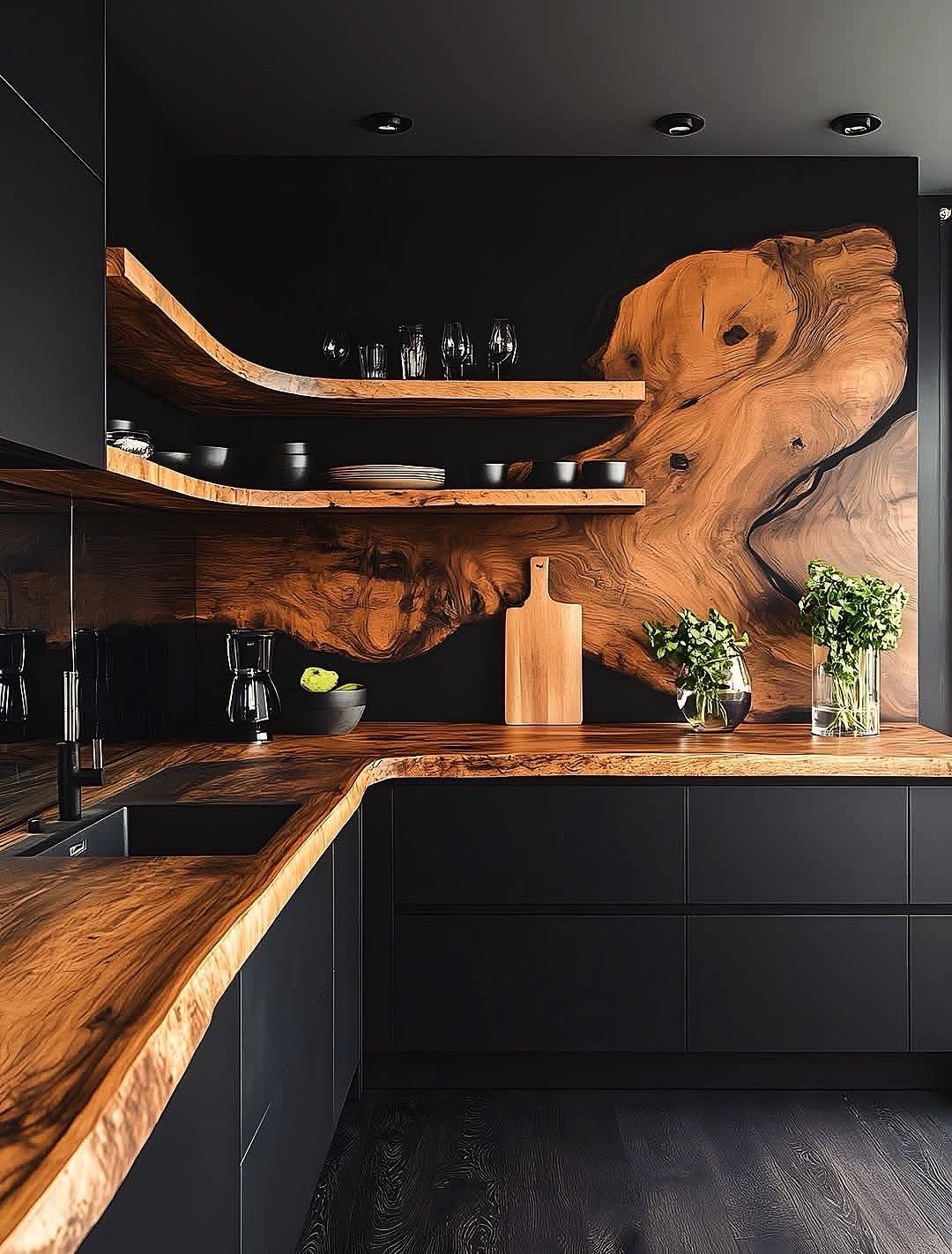
Live-edge walnut shelves and counters bring texture into a kitchen with matte-black cabinets, and the natural edge keeps the wood from feeling too polished or formal. Live-edge pieces bring the warmth of walnut without the uniform look of milled slabs.
A large walnut slab mounted on a black wall works as a focal point and adds dimension to an otherwise flat surface. The irregular edge makes the wood feel deliberate rather than decorative.
Keep other finishes simple. Too many textures or materials in one space competes with the live edge.
12. Black and Walnut Slat Island
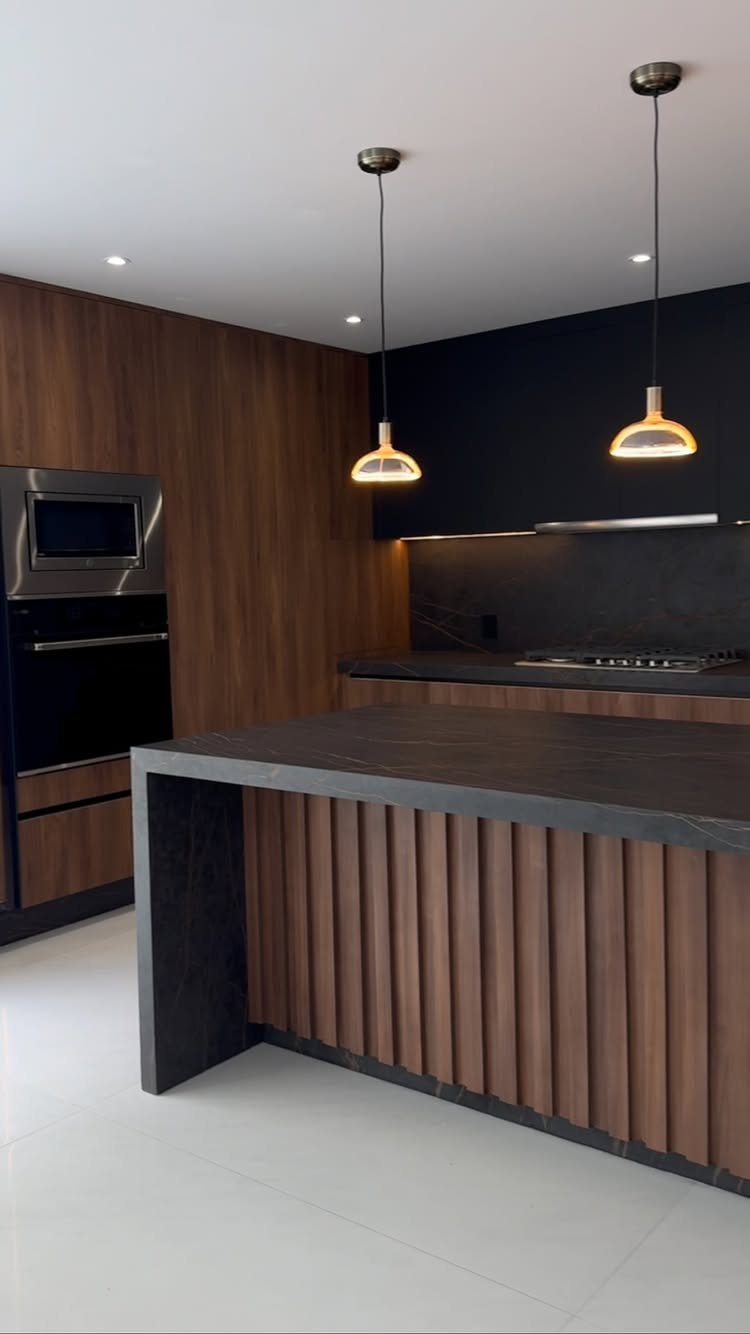
Vertical walnut slats wrap an island and add texture without the bulk of thicker panels or corbels. The slats read lighter than solid walnut sides, which keeps a dark island from feeling too heavy in a room with black walls.
I space the slats evenly and run them floor to counter height. Black or dark gray counters keep the palette tight, and walnut paneling on the walls ties the island back to the cabinetry.
This works best in kitchens with high ceilings. In a low-ceilinged space, the vertical lines can feel cramped.
13. Black and Walnut Brick Kitchen
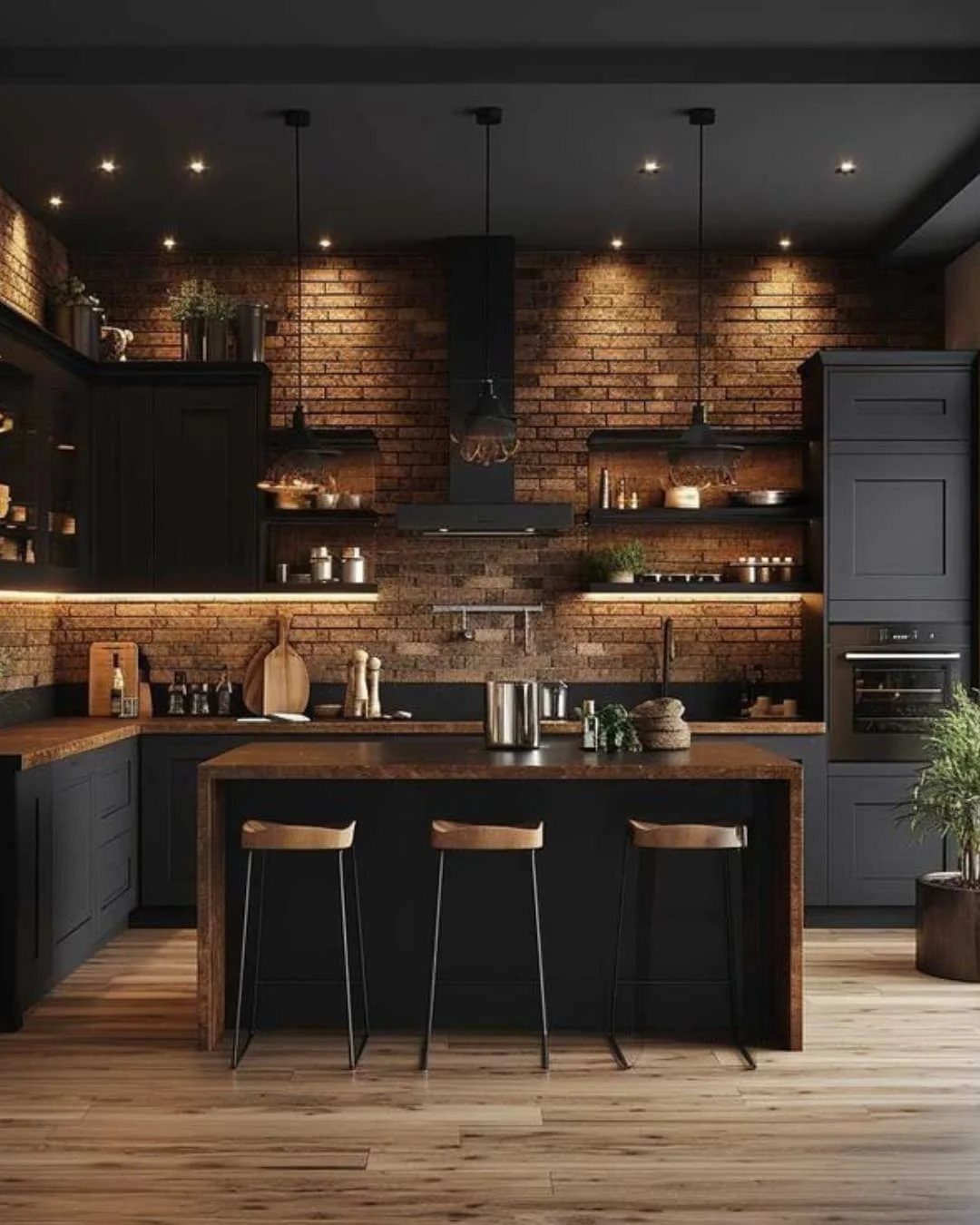
Red brick behind a range or sink adds texture and warmth that counters the weight of black cabinets.
The brick reads rustic without feeling unfinished, especially when other surfaces in the kitchen stay clean and modern. Walnut counters bridge the black and the brick without adding a third competing finish.
I like this combination in older homes where the brick already exists.
Stripping plaster off a chimney wall saves material cost and gives the kitchen a focal point that feels earned. In new construction, thin brick veneer costs less than full-depth brick and installs faster.
Keep grout lines tight and neutral. Wide or whitewashed grout makes the wall feel busy.
Walnut Care and Sunlight
Walnut cabinets need mild cleaners and a soft cloth.
Skip anything abrasive or chemical-heavy, which can dull the finish or damage the wood. A microfiber cloth barely damp works for weekly cleaning, and a wood conditioner or oil every few months keeps the finish from drying out.
Direct sunlight fades walnut over time, pulling the color lighter and washing out the grain. Blinds or curtains on windows that face the cabinets help, especially on south- or west-facing walls where the sun hits hardest.
Indoor humidity swings also stress the wood, so keeping the house steady between heating and cooling seasons prevents cracking or warping.
When the finish wears thin or the color drifts too far, solid walnut or thick veneer can be sanded back and refinished, usually around the 15- to 20-year mark.
Walnut Durability and Aging
Walnut is dense enough to survive the routine abuse a kitchen hands out.
It resists warping better than softer woods, and the grain pattern stays clear even after years of handling. Each cabinet shows natural variation in tone and figure, which keeps the material from looking uniform or manufactured.
The wood develops a richer patina as it ages, picking up a subtle glow that new cabinets lack. That shift happens slowly, and it makes walnut feel more refined over time rather than worn out.
Direct sunlight works against that aging process by lightening the wood instead of darkening it, so keeping UV exposure low preserves the depth walnut is known for.
Walnut Cost and Resale
Walnut costs more than oak, maple or birch because walnut trees grow slower and the wood is in higher demand in the luxury market. That makes it a premium material, and the upfront price reflects it.
You see that cost come back when you sell.
Walnut cabinets pull buyers shopping in the higher price brackets, and kitchens built with walnut tend to recoup a bigger share of their cost than rooms finished with trendy or cheaper materials.
The National Hardwood Lumber Association grades walnut and tracks how it is sourced, which gives buyers confidence in the material’s quality.
If durability and resale value matter more than the initial cost, walnut justifies the price. If budget is the main concern, other hardwoods deliver solid performance at a lower entry point.
Frequently Asked Questions
What color goes best with black walnut?
White counters or backsplashes sharpen walnut’s warmth and let the grain show without competing for attention.
Black fixtures and hardware anchor the palette without adding a third wood tone, and matte finishes read cleaner than polished ones. Cream and muted sage also work when you want warmth without stark contrast.
Are black walnut kitchen cabinets expensive?
The material runs at a premium because walnut grows more slowly than most hardwoods and the finish-grade supply stays tight.
Is black walnut good for kitchen cabinets?
Black walnut is dense enough to resist warping and handles routine kitchen wear without losing clarity in the grain. It’s better than softer woods when durability and aging matter.
What color pulls work best?
Matte-black pulls and handles give walnut cabinets a cleaner edge than brass or stainless steel, reading modern without losing warmth.
Brass or bronze adds refinement when the kitchen leans more polished, and the warm metal picks up tones in the wood. Avoid finishes that shine too much, which compete with the grain.