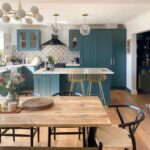
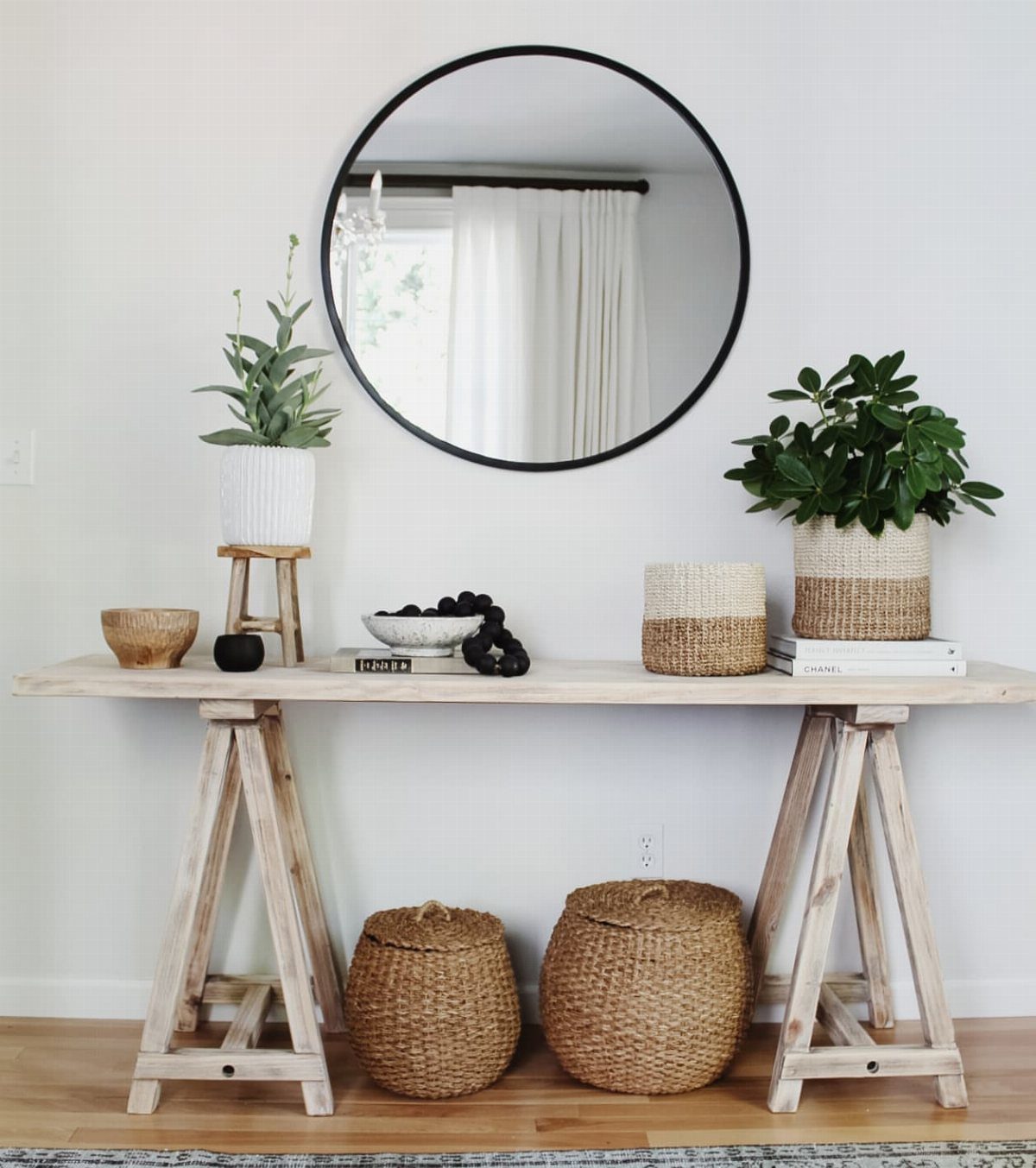
A traditional console with carved legs handles a formal entry, while a modern metal-and-glass piece suits a minimal hallway, and a rustic wood table with visible grain warms up a farmhouse space.
The width of the table decides whether you add stools or ottomans beneath it or leave the floor clear: anything narrower than the hallway itself can take tucked seating, but a tight passage needs the clearance.
1. Greenery and Plants
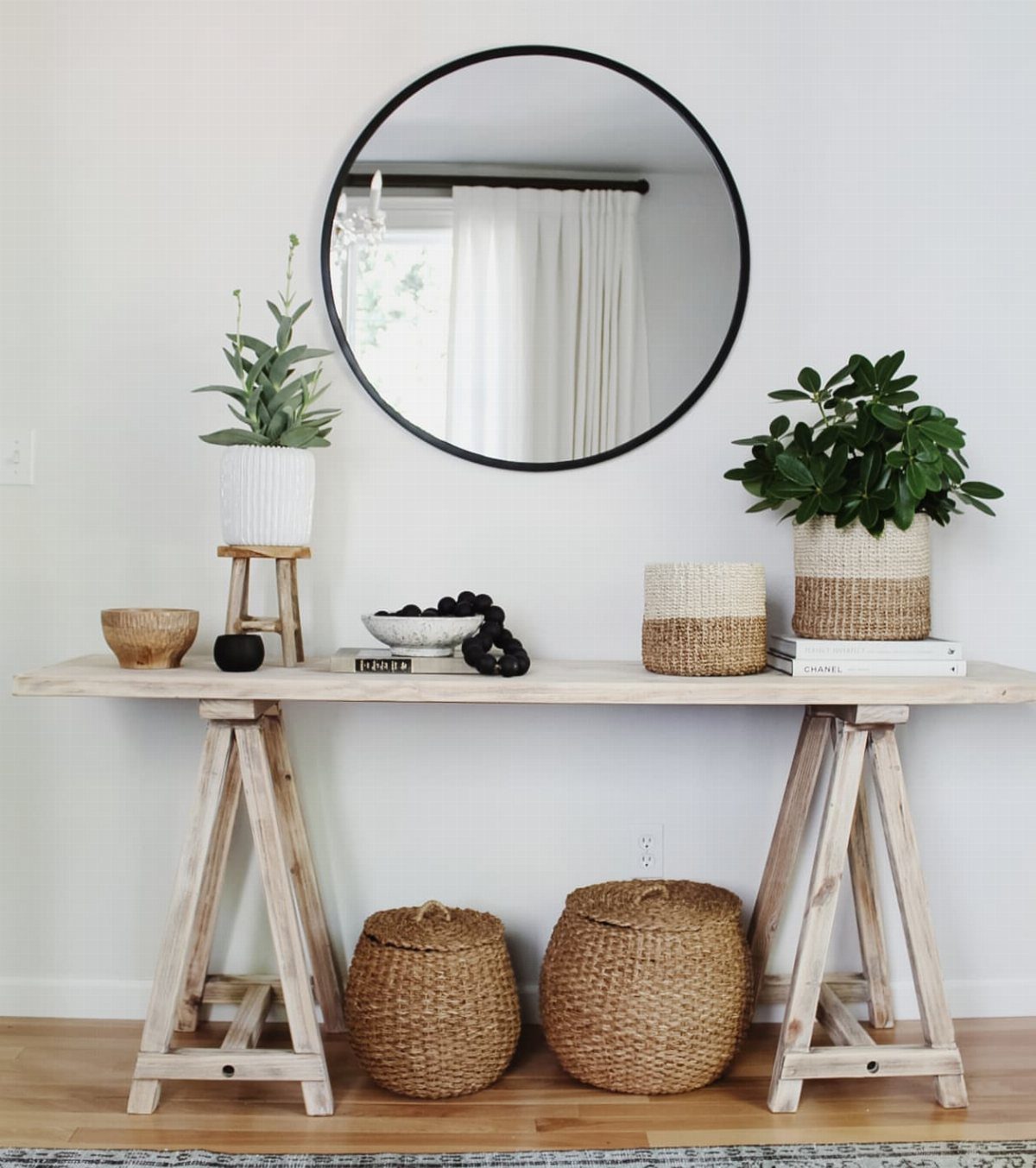
A potted plant or a handful of stems in a vase gives the table something alive without needing much space.
I find that one or two mid-height plants anchor a display better than a scatter of small ones all over the surface.
If the table is near a window, a potted fern or pothos works well.
For low light, I use faux stems that still read as greenery from across the room. Real or not, the shape matters more than the variety.
2. Books for Height
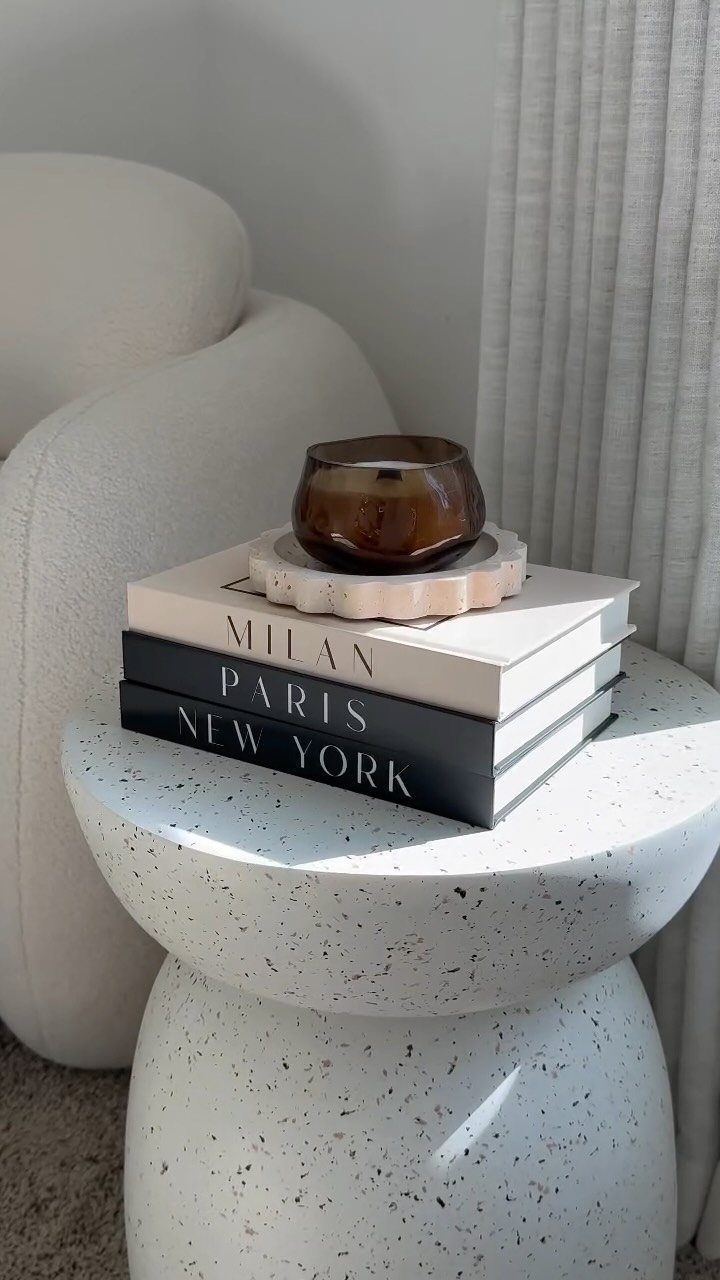
Stacking books under a smaller object lifts it to eye level and fills vertical space without adding another piece of furniture. A small stack of books gets the height right.
I choose books by spine color first, then size. A stack that tapers slightly toward the top looks steadier than one where every book is the same width.
Top the stack with a candle, a small bowl, or a framed photo. The books become the pedestal, and swapping what sits on top changes the whole look without moving the base.
3. Baskets on Lower Shelf
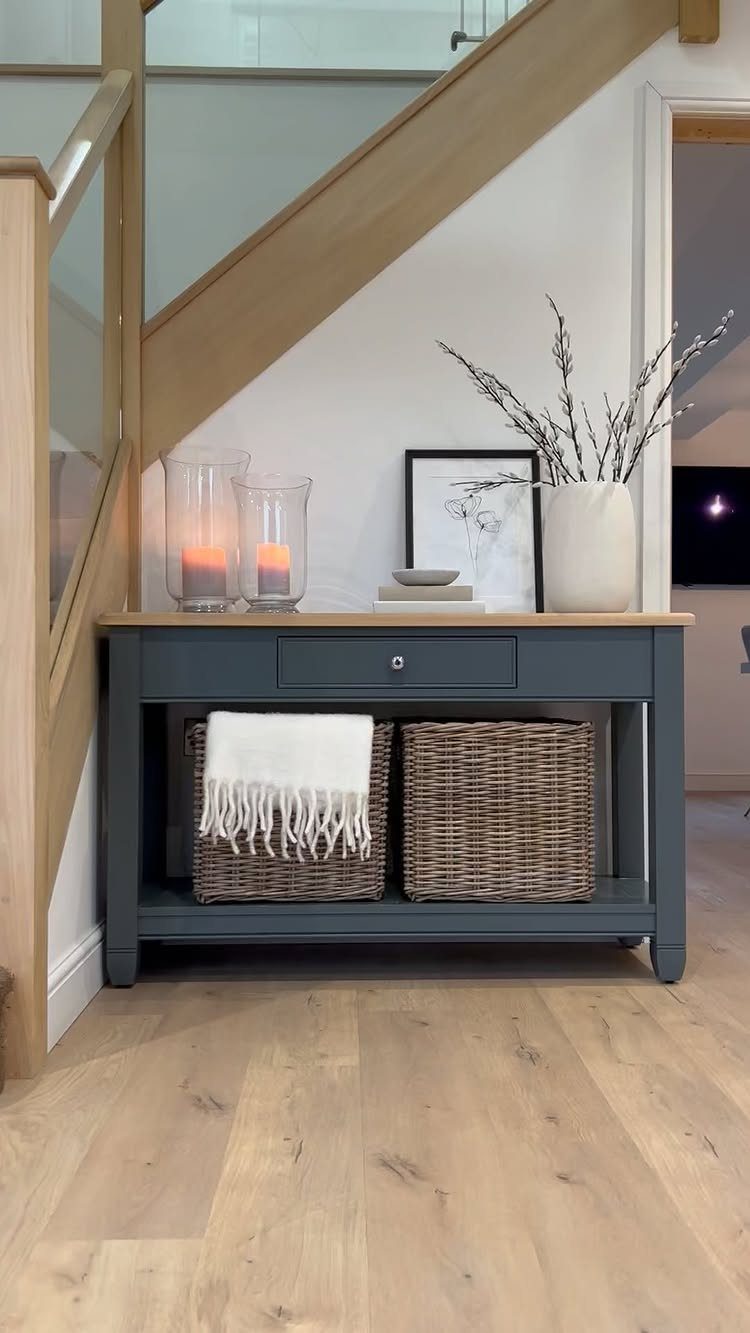
Baskets on the lower shelf hold shoes, mail, or dog leashes while keeping the tabletop clear. I use them when the entryway doubles as a drop zone and the table needs to do more than look good.
2 matching baskets fit most console widths and keep the look symmetrical.
Wicker and rattan suit casual spaces; felt or canvas baskets work in modern rooms. Leave a few inches of clearance on each side so the baskets slide in and out without catching.
4. Neutral and Green Table Decor
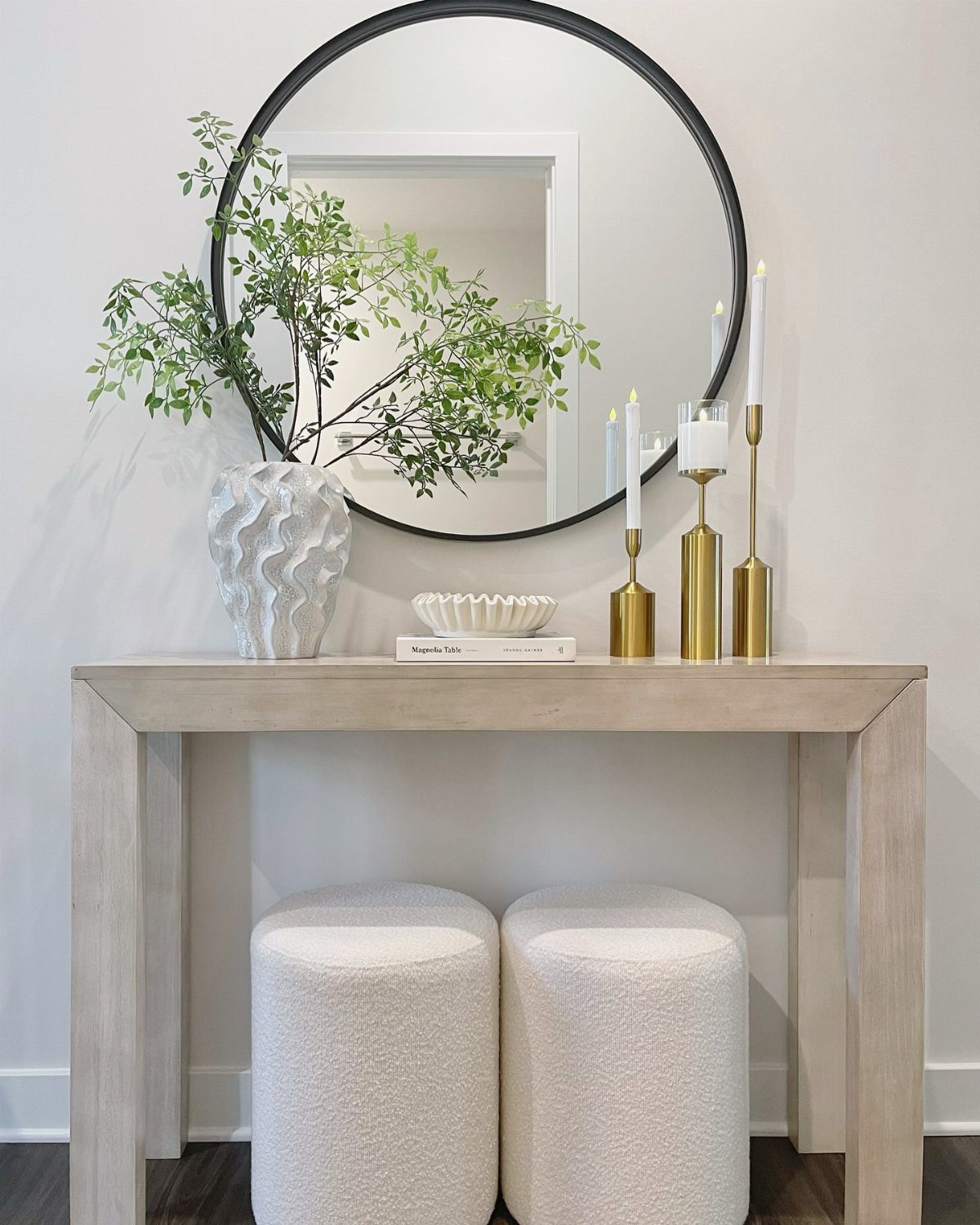
Green branches or stems paired with neutral tones keep the table feeling fresh without adding much color. I reach for this when the room already has a strong palette and the table needs to blend rather than compete.
White or cream vases, natural wood, and metallic accents in gold or brass all work here.
The green can be eucalyptus, olive branches, or even grocery store greens trimmed to fit the vase. Keep the stems tall enough to balance the mirror or art above the table.
5. Simple Vase and Framed Art Table Decor
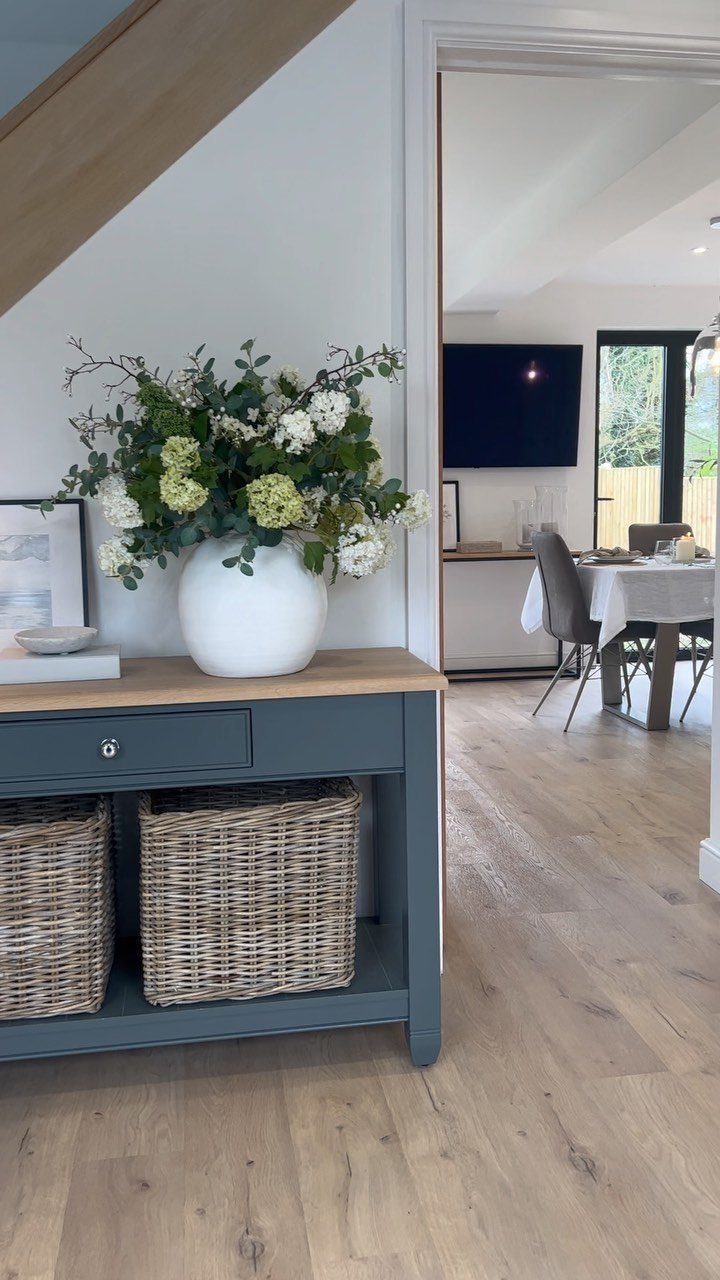
A vase and one piece of framed art give the table a finished look without crowding it. The space feels intentional but still has room to set down keys or a bag.
I place the art off-center and the vase on the opposite side, which feels more balanced than lining both up in the middle.
Fresh or faux flowers both work. If the table has a lower shelf, baskets or folded throws there add function without competing with the top display.
6. Table Lamps
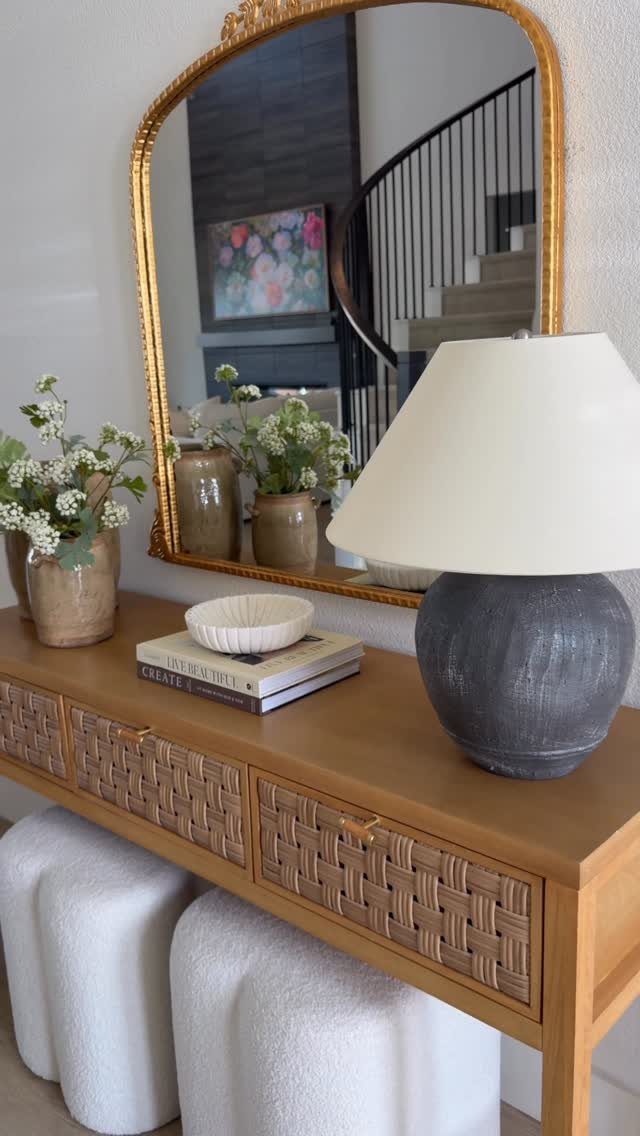
A table lamp adds task lighting near the door and fills the vertical space between the tabletop and whatever hangs above it.
One lamp works when the table sits against a wall; a pair suits a table floating in the center of a room.
I pick a lamp tall enough that the shade sits near the bottom edge of a mirror or art piece. The base should feel substantial but not so wide that it crowds out other items.
If the entryway is the only place to charge a phone or sort mail, a lamp with an outlet in the base is worth looking for.
7. Mirrors
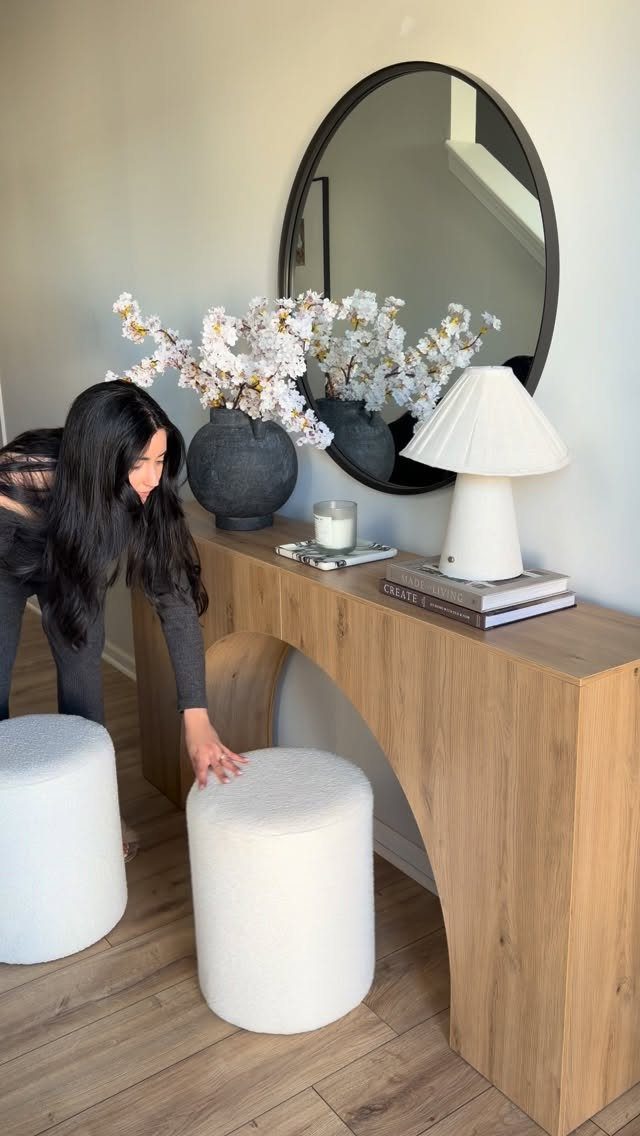
A mirror above the table bounces light back into the room and makes a narrow entry feel wider. Round mirrors soften the lines of a rectangular table; rectangular mirrors match its proportions.
I hang the mirror so its bottom edge sits just above the tabletop, close enough to feel connected without touching.
That leaves room for a lamp or a tall vase without the two competing for space. If the table is narrow, keep the mirror width close to the table width or slightly narrower.
8. Artwork
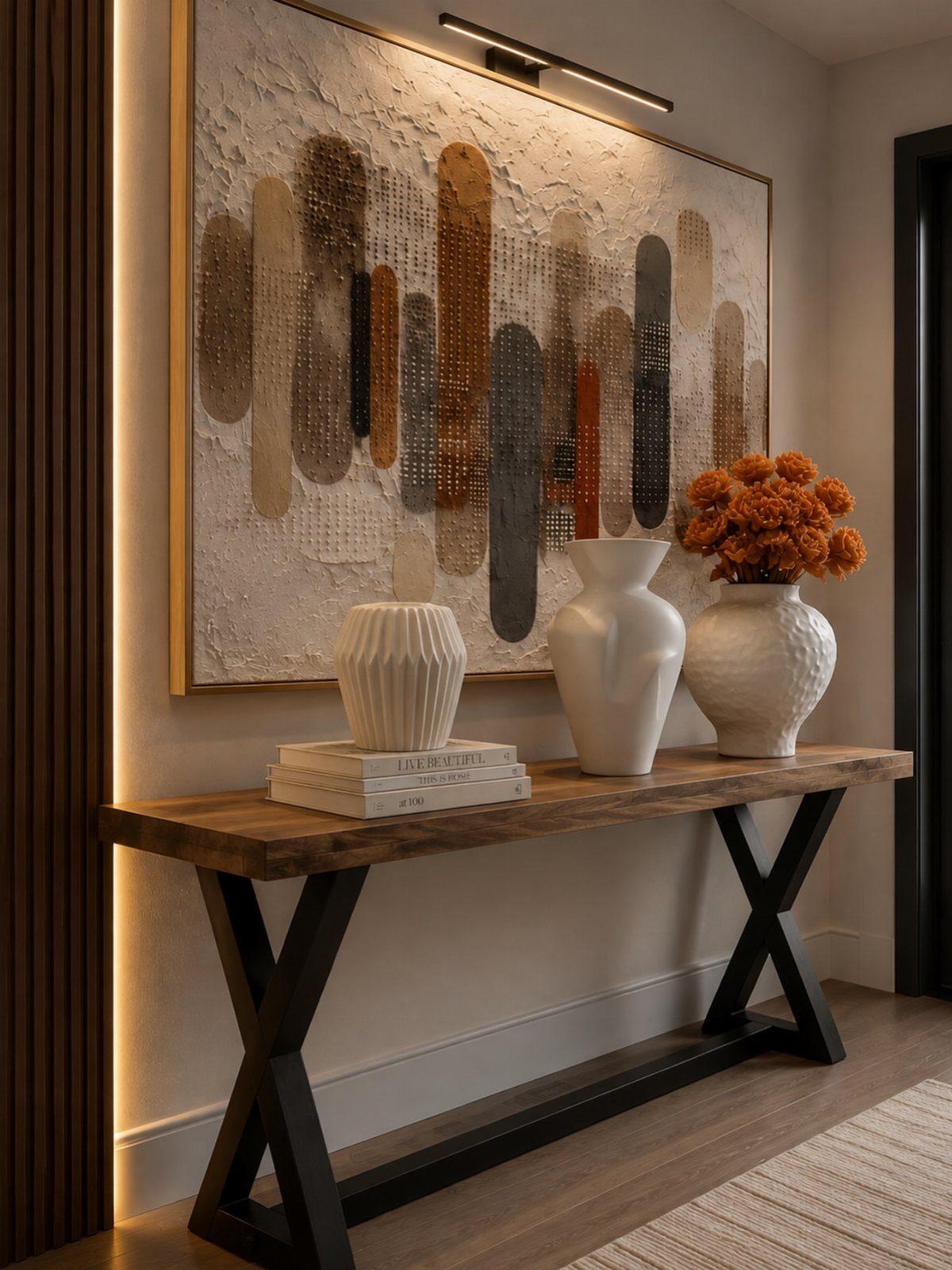
Framed art anchors the table and sets the tone for everything you place below it. A single large piece centers the display; smaller prints work when layered or hung in a pair.
I match the frame finish to the table or to other metal in the room. Black frames suit modern spaces, wood tones warm up neutral walls, and gold works when the room already has brass or warm metallics.
Lean a piece on the table instead of hanging it if you want flexibility to swap art without patching holes.
9. Bowls, Trays and Books
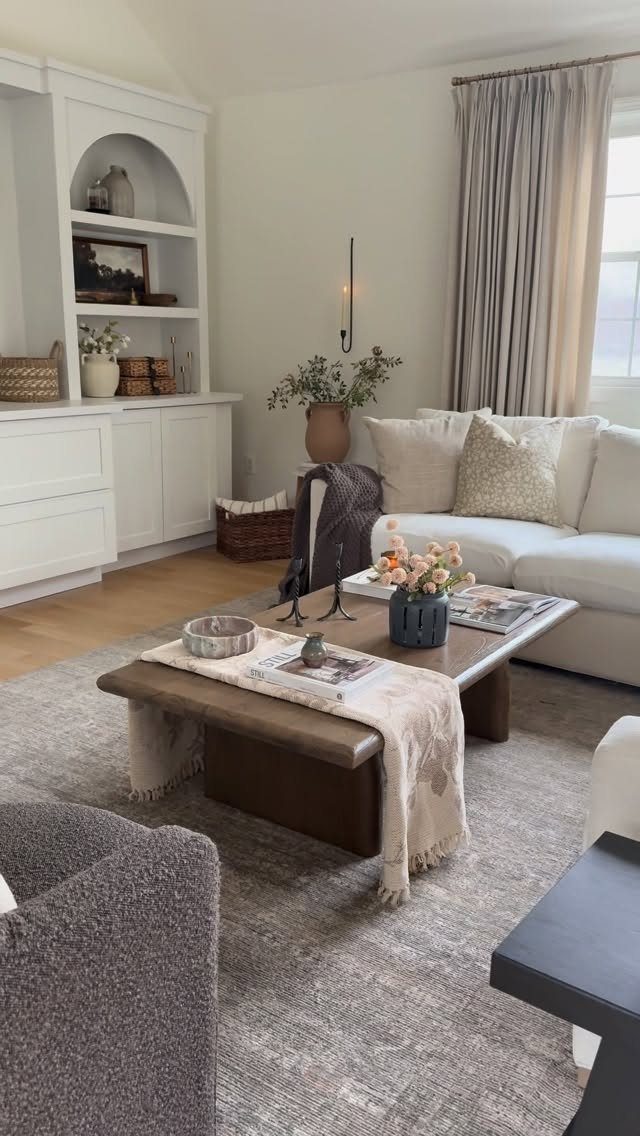
A tray or shallow bowl corrals small items so the table stays tidy even when it holds everyday things. I use them for keys, sunglasses, or mail that needs a spot until it moves somewhere permanent.
Books underneath a tray add height and make the grouping feel finished. Pick a tray that fits the table scale: a small round bowl for a narrow table, a larger rectangular tray when there is room.
Metal, wood, or ceramic all work. The material matters less than keeping the tray low enough that it does not block sight lines across the room.
10. Traditional Console Table
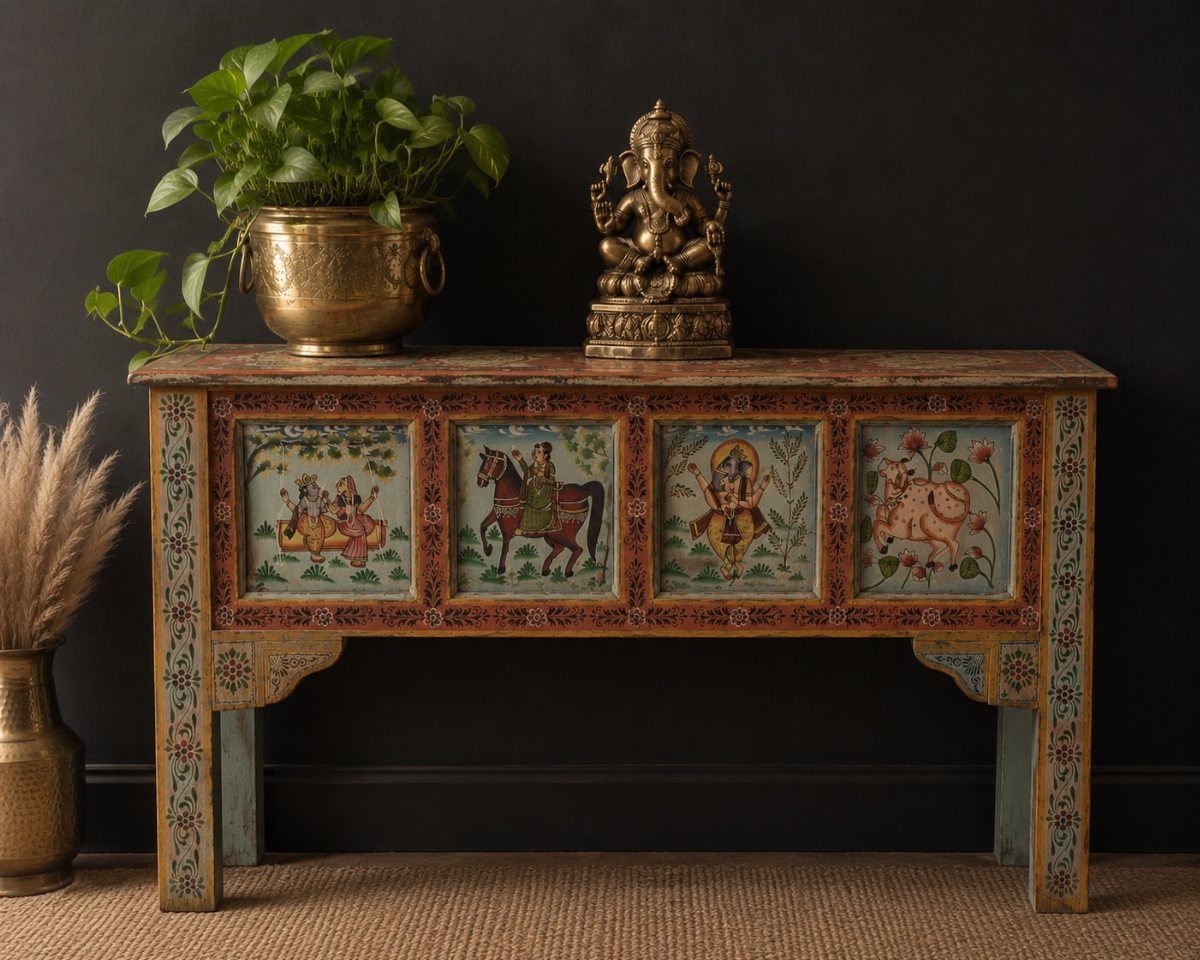
Carved legs, turned details, and dark wood finishes give a traditional table its character. I keep the accessories classic: brass candlesticks, ceramic planters, or framed family photos.
The table itself does most of the work here, so the top stays simple.
One statement piece, like a tall vase or a decorative bowl, is enough. If the carving is heavy, balance it with lighter objects on top rather than adding more weight.
11. Modern Console Table
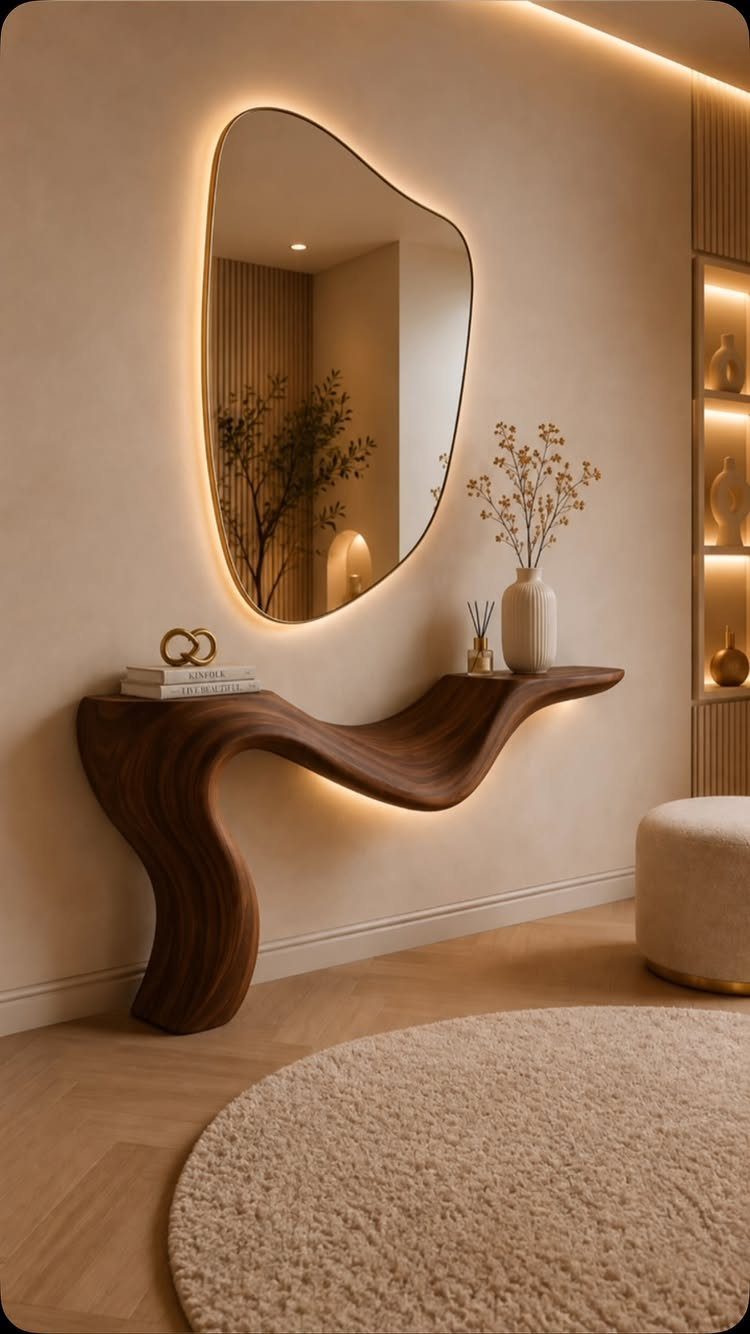
A modern table usually means metal, glass, or lacquered wood with proportions that stay simple. The decor should feel intentional but not fussy.
I pair a modern table with sculptural objects: an asymmetric vase, a single large candle, or a piece of abstract art.
Fewer items work better than a crowded display. If the table has an open shelf below, leave it empty or add one low object that does not interrupt the lines.
12. Rustic Console Table
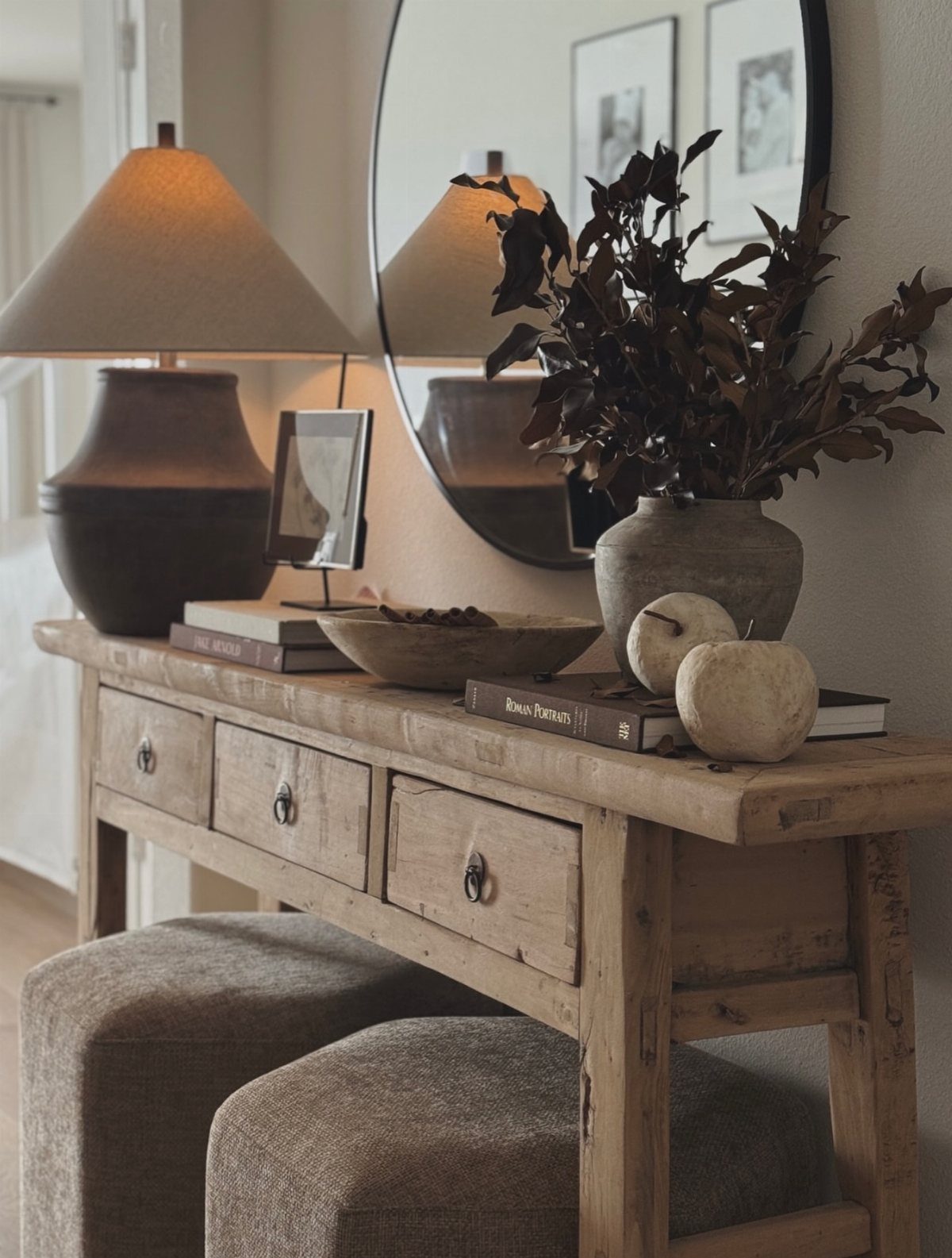
Distressed wood, visible grain, and sturdy proportions give a rustic table its warmth. The finish is usually matte, and the legs are chunky rather than delicate.
I style it with natural materials: linen, ceramic, aged brass, or woven baskets.
A rustic table holds up under layers, so books, a lamp, and a bowl can all sit together without the display feeling too busy. If the table has drawers, they add function without changing the look.
13. Entryway Table with Mirror and Tray
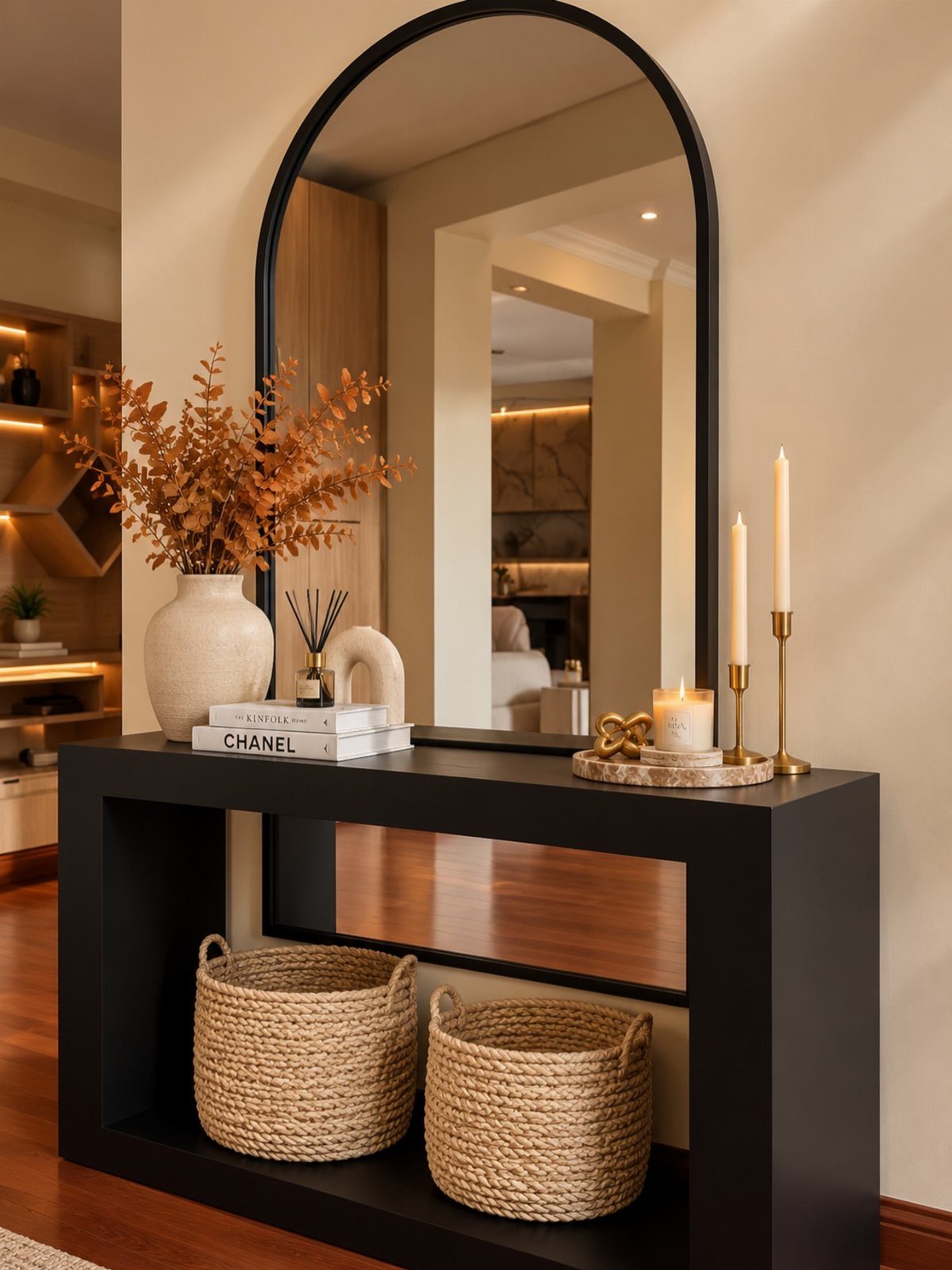
An arched mirror, a tray, and a basket below bring the classic three-level setup into one frame.
The mirror fills the wall, the tray holds candles or small items on top, and the basket on the lower shelf keeps shoes or bags out of sight.
Pick a tray wide enough to hold what you use daily without spilling over the table edge. The mirror shape softens a rectangular table, and the basket should slide in and out easily if you need regular access.
14. Narrow Hallway Table with Mirror
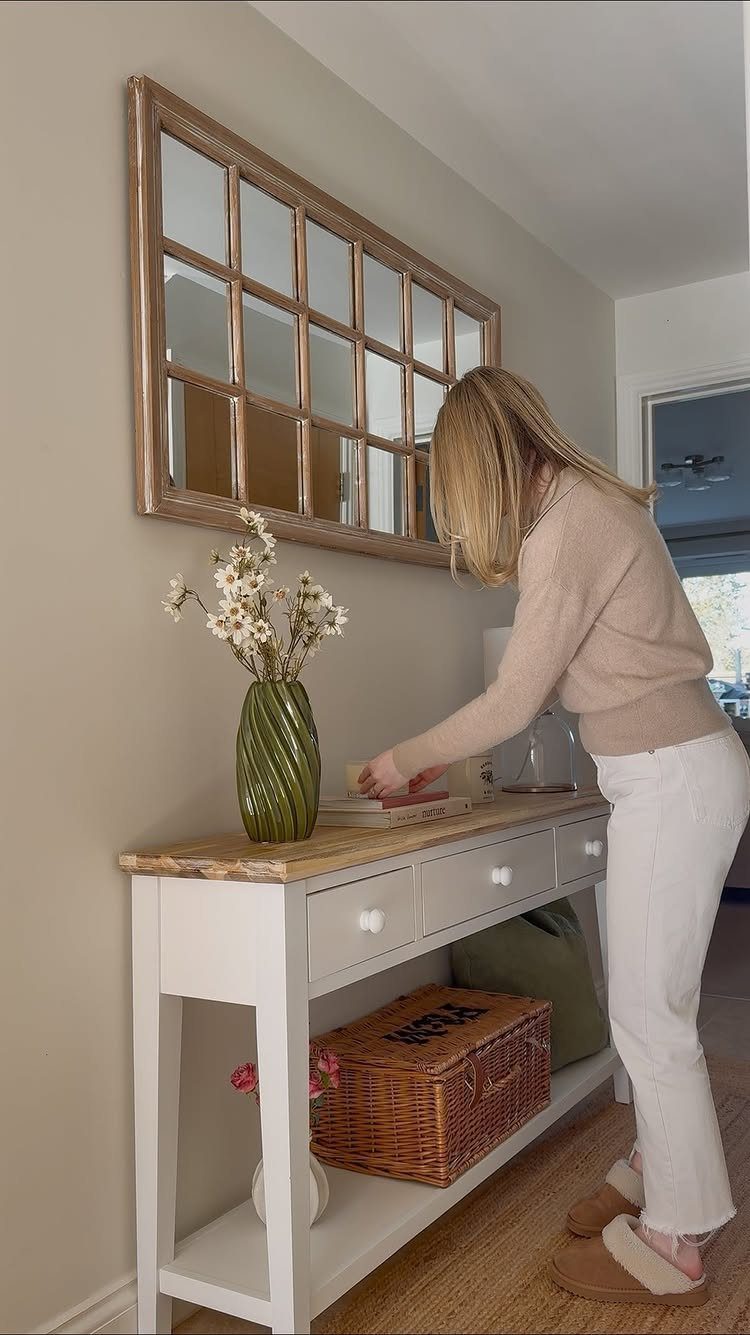
A narrow table fits a hallway without blocking traffic, and a mirror above it opens up the space. The width matters more than the length here: go too deep and a hallway starts to feel tight.
I mount the mirror low enough that it connects to the table visually but high enough that tall people can check their reflection.
A basket or tray on top keeps the display simple and leaves clearance for opening doors or moving past.
15. Ottomans or Stools
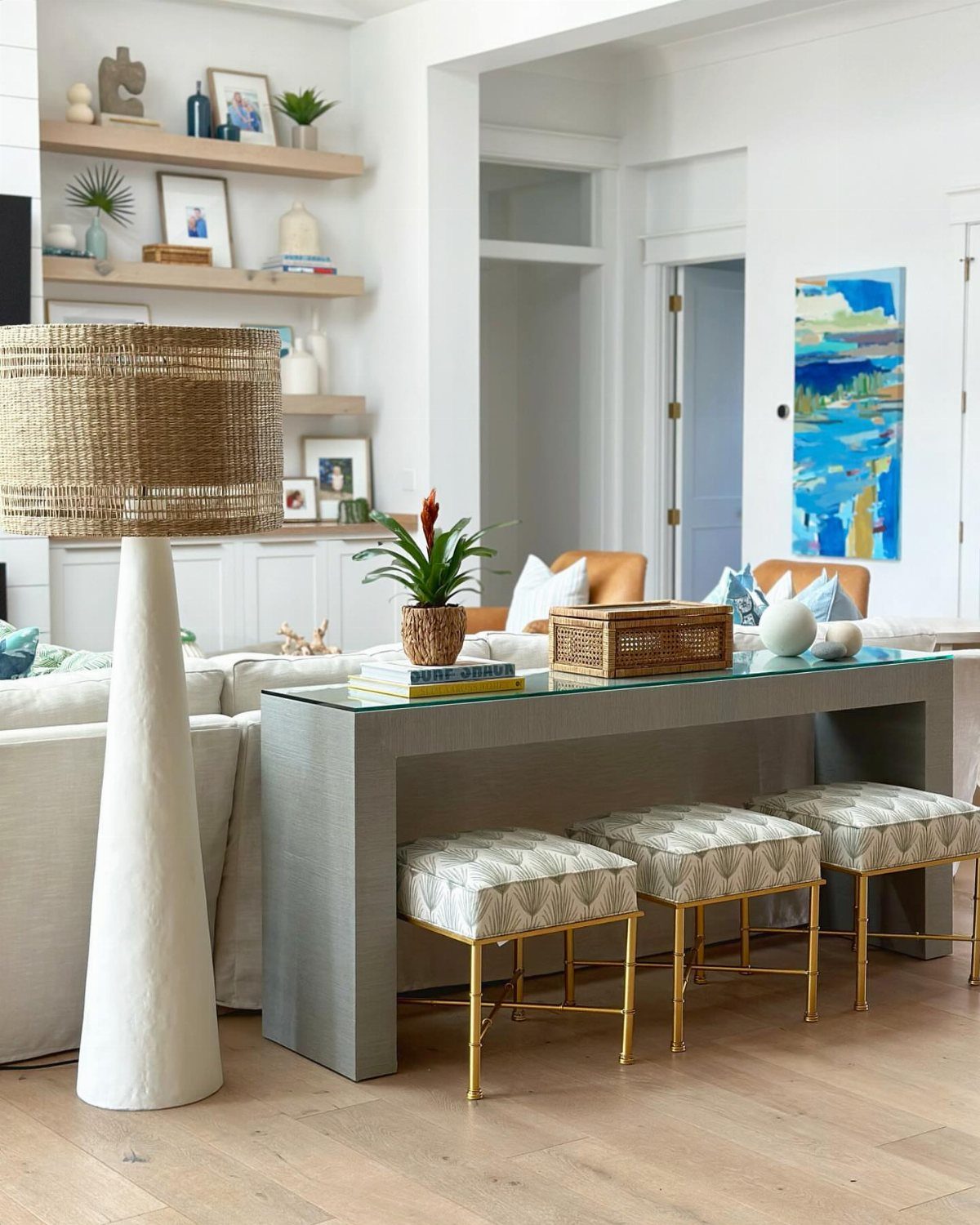
Ottomans or stools tucked beneath the table add seating when you need it and fill empty space when you do not. They work best under tables with enough clearance from the floor to the bottom of the apron.
Pick stools that slide all the way under without catching on the table legs.
Upholstered tops are softer to sit on; wood or metal stools clean faster. If the table has a lower shelf, measure before buying to confirm the stools will fit.
16. Spring Vignette
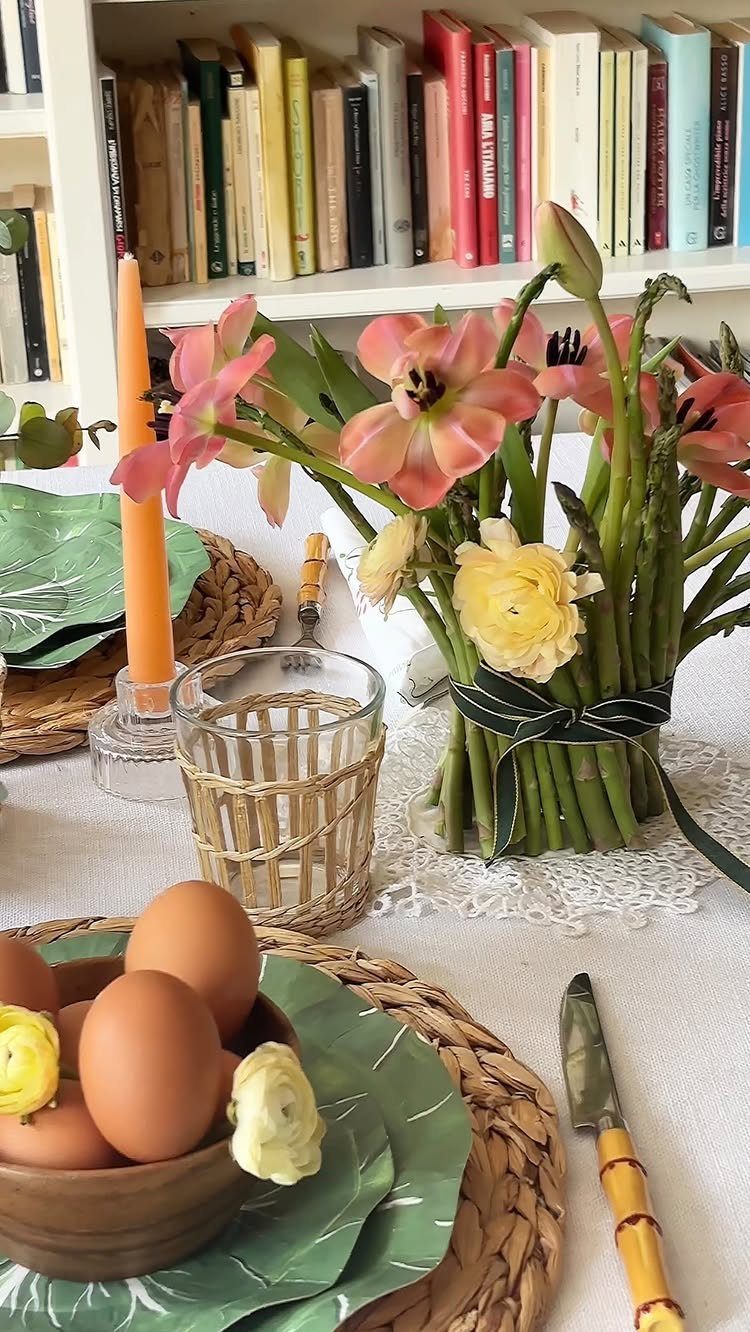
Fresh stems in spring colors give the table a seasonal look without permanent decor. Tulips, daffodils, or branches with new leaves all work, and adding a few natural objects like eggs or lemons ties the arrangement to the season.
I use a mix of heights: taller stems in the vase, shorter items like candles or bowls on the table itself. The arrangement stays interesting for a week or two, then gets replaced with something different when the stems fade.
17. Throws on Lower Shelf
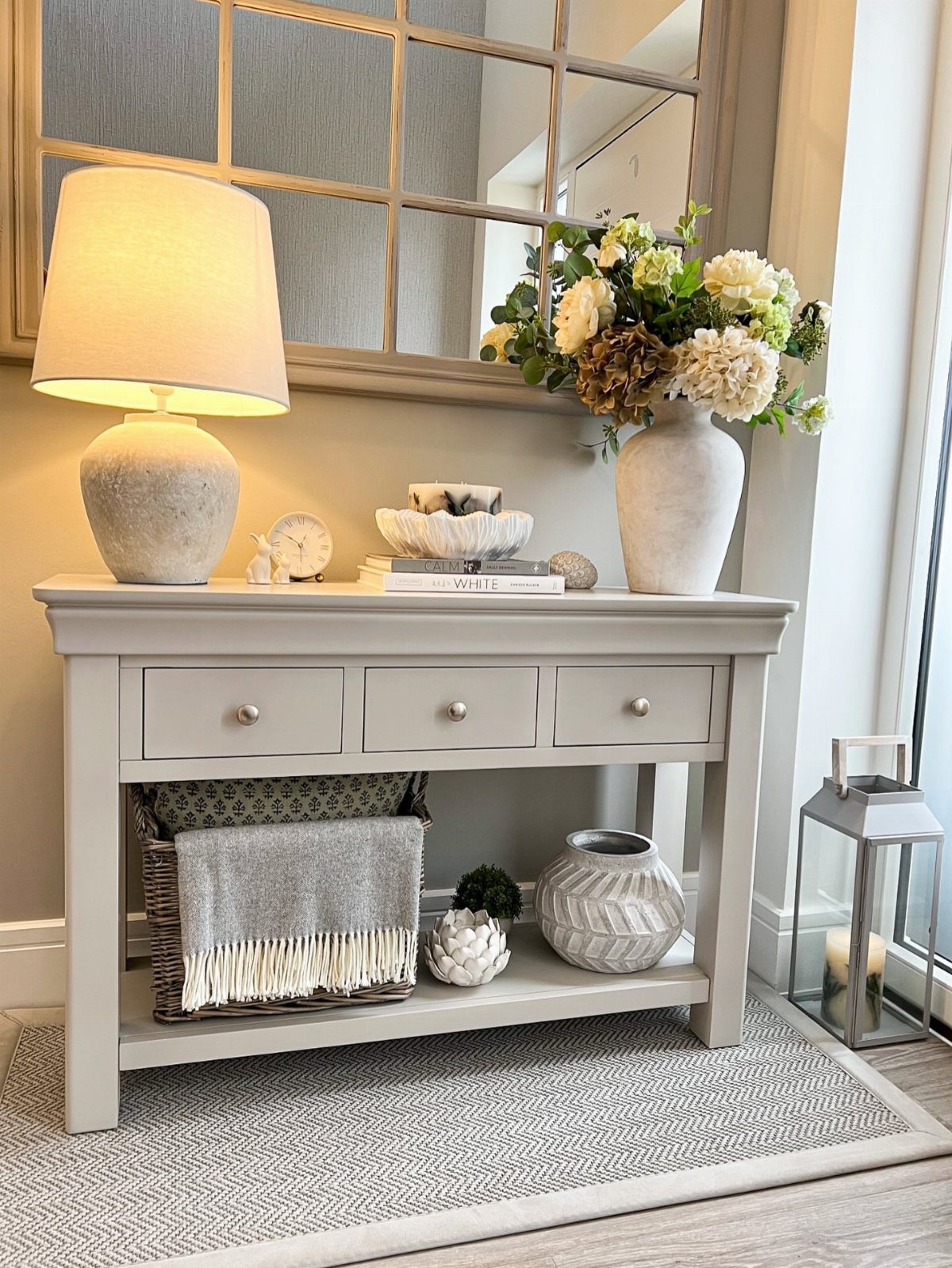
Folded throws on the lower shelf add texture and give you something to grab on the way to the couch.
I fold each throw into a loose rectangle and stack them or tuck one into a basket so it stays tidy.
Linen, cotton, or knit throws all work.
The color should either match the room or contrast just enough to register as intentional. If the shelf is shallow, one throw fits better than a stack, and a basket keeps it from sliding forward.
18. Console Table with Wall Sconces
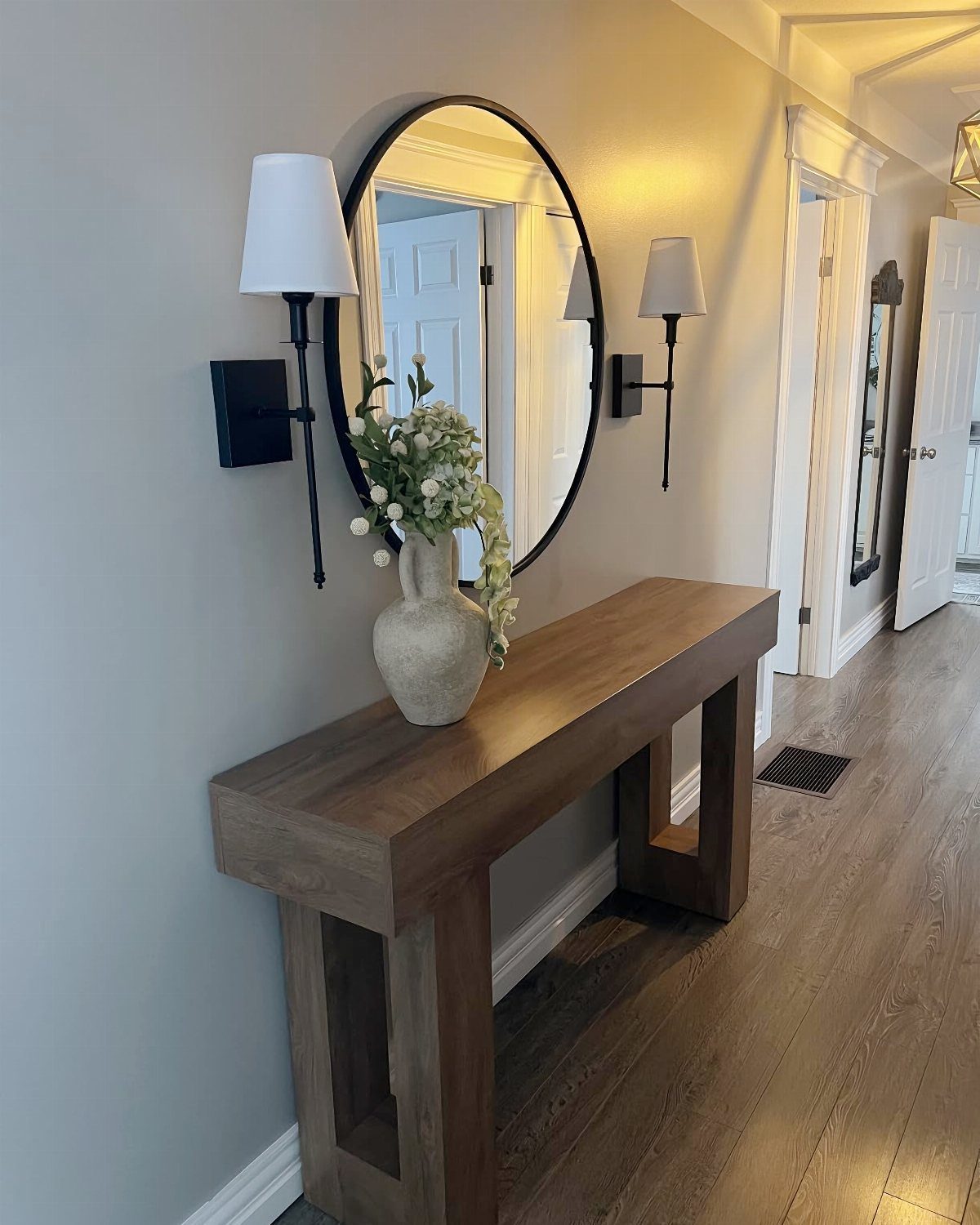
Wall sconces free up table space that a lamp would take and light the area evenly from both sides.
I mount them so the bottom of each shade sits a few inches above the tabletop, close enough to feel connected but high enough that the light spreads across the surface.
Hardwired sconces need an electrician unless there is already a junction box in place. Plug-in sconces work when running a cord along the baseboard is acceptable.
19. Tray with Candle and Lamp
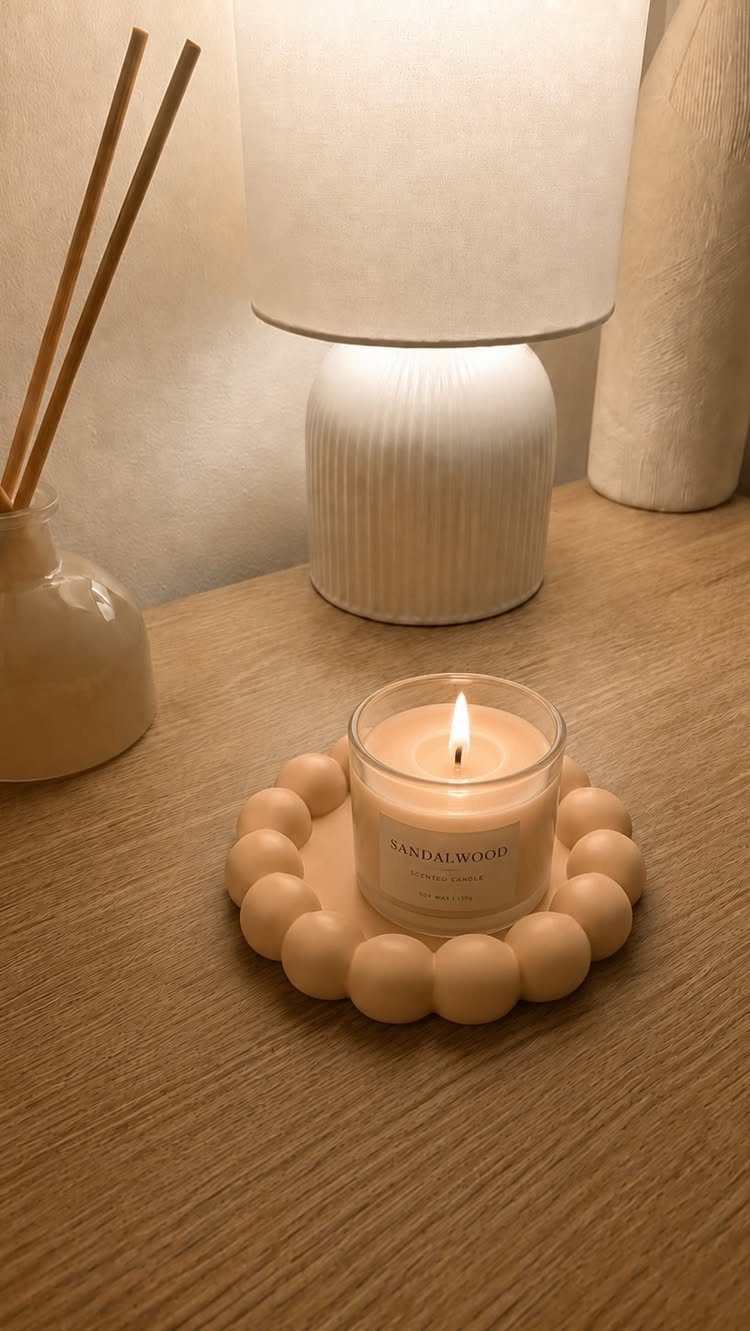
A lit candle on a textured tray paired with a table lamp gives the space soft light and a layered look in a small footprint.
The tray keeps wax drips contained and adds a surface change that breaks up the flat table.
I place the candle and lamp on opposite ends so the light spreads evenly.
If the table is narrow, a small tray works better than a wide one that crowds the lamp base. Diffuser sticks or a small plant between them fills the gap without blocking either light source.