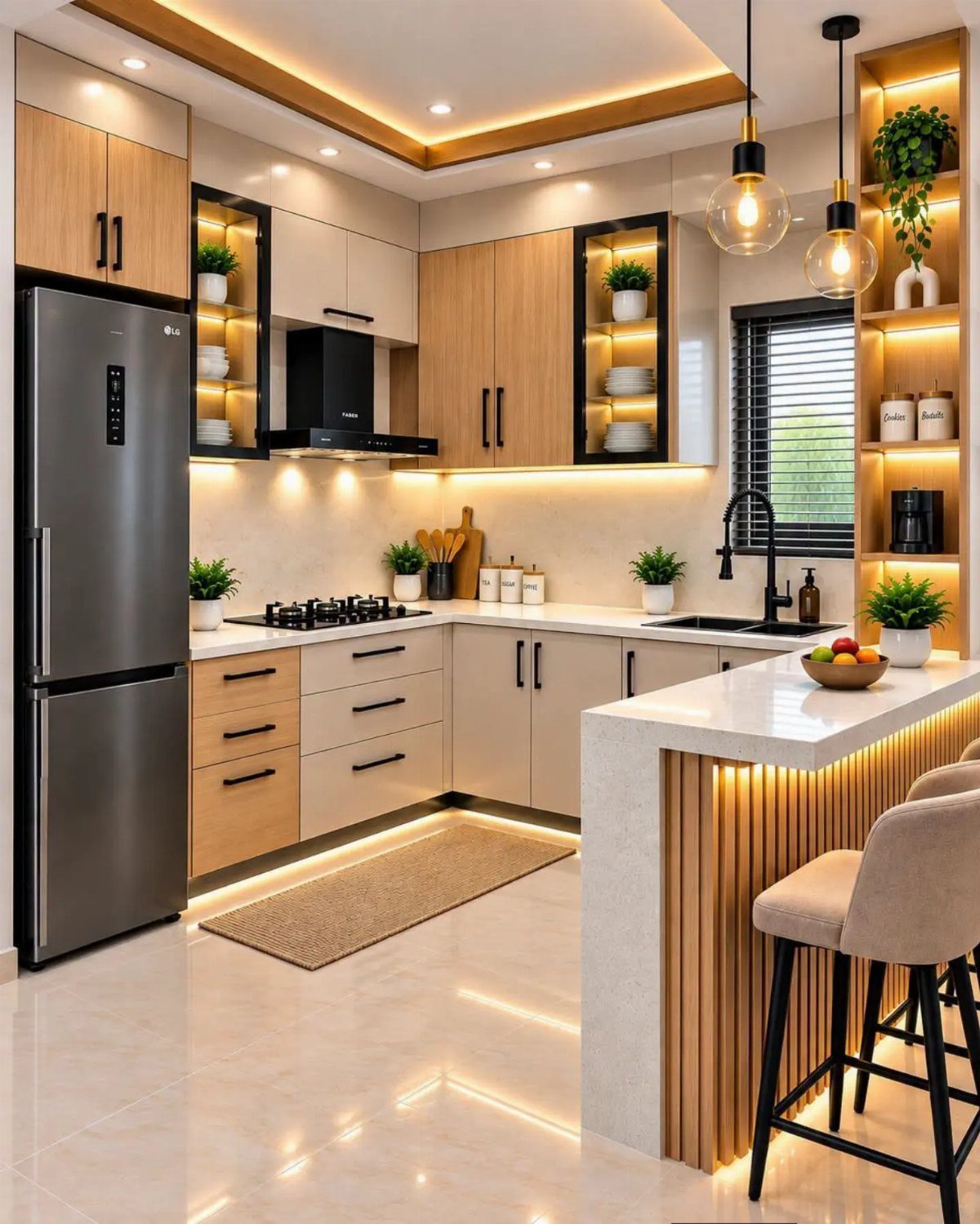
Home kitchen decor spans open shelving and vintage rugs through statement lighting, bold window treatments, character tile, and stone surfaces that match across counters and backsplash.
The choice turns on how much change the space can absorb: removable wallpaper and colorful accents work in rentals, stone surfaces and a decorative range hood suit owned homes where permanence pays off.
1. Open Shelving
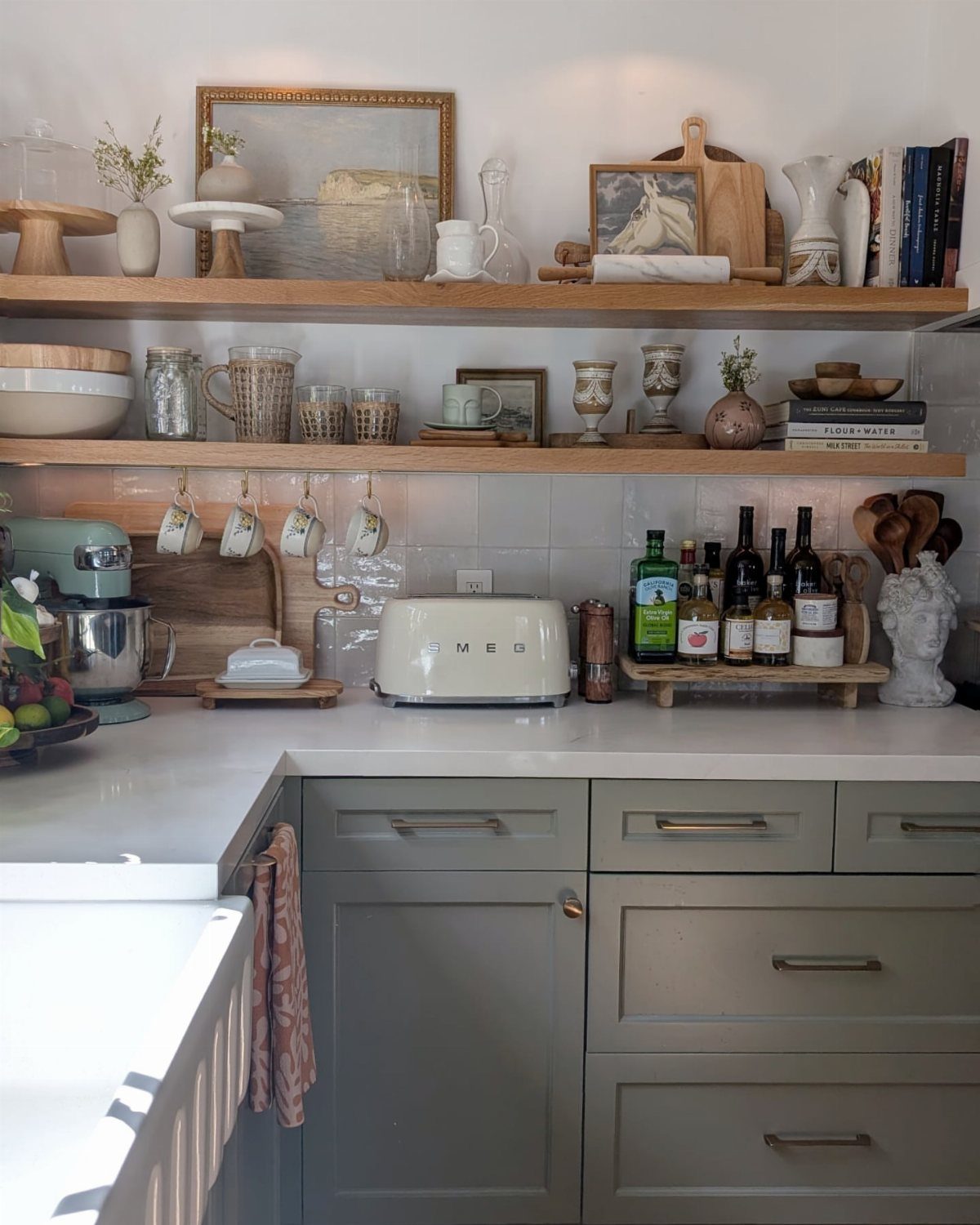
Open shelves put dishes and cookware in view, so the items you keep there do half the decorating. I pick pieces that look just as useful as they are: white bowls, wood cutting boards, glass jars of dry goods.
The swap works when you can keep the shelves tidy without effort, which usually means limiting what goes up to things you reach for every day.
In a narrow kitchen, open shelves give the room breathing space where upper cabinets would close it in. The cost is dust and the need to straighten up more often than you would behind a door.
2. Decorative Plants
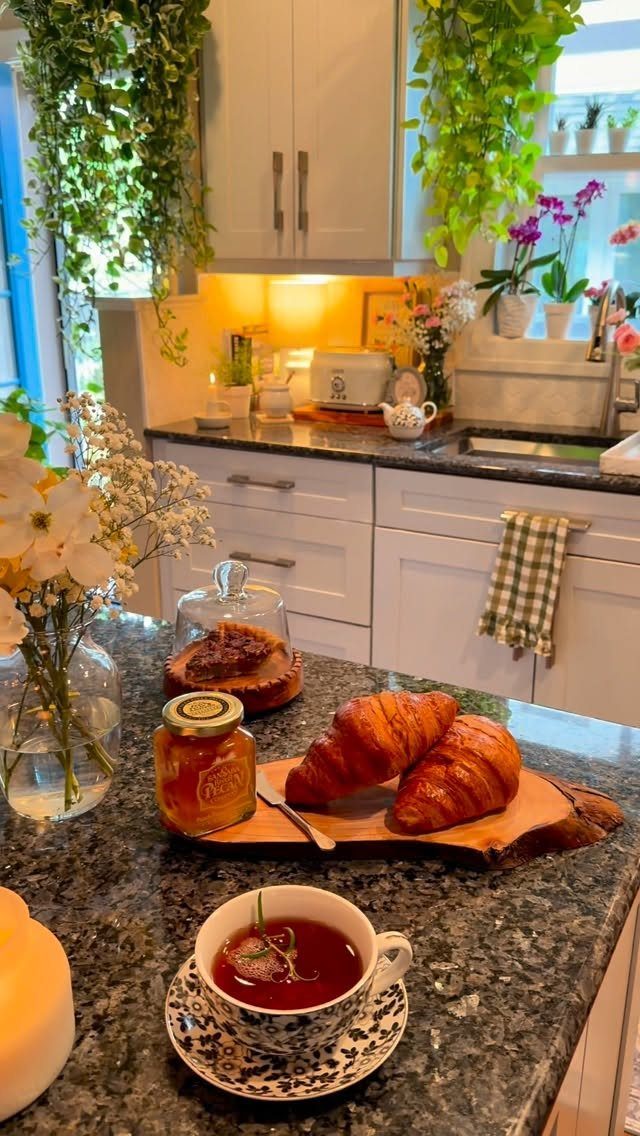
A plant on the counter or sill softens hard surfaces without asking for floor space.
Pothos and trailing philodendron handle kitchen humidity and low light better than most, and they grow far enough to drape down a cabinet face if that is the look you want.
I keep mine in simple terracotta or ceramic pots that do not compete with the room. If counter space is tight, a small shelf or a hanging planter keeps greenery in reach of light while leaving workspace clear.
Water when the soil dries an inch down, and wipe dust off the leaves every few weeks so they can breathe.
3. Statement Lighting
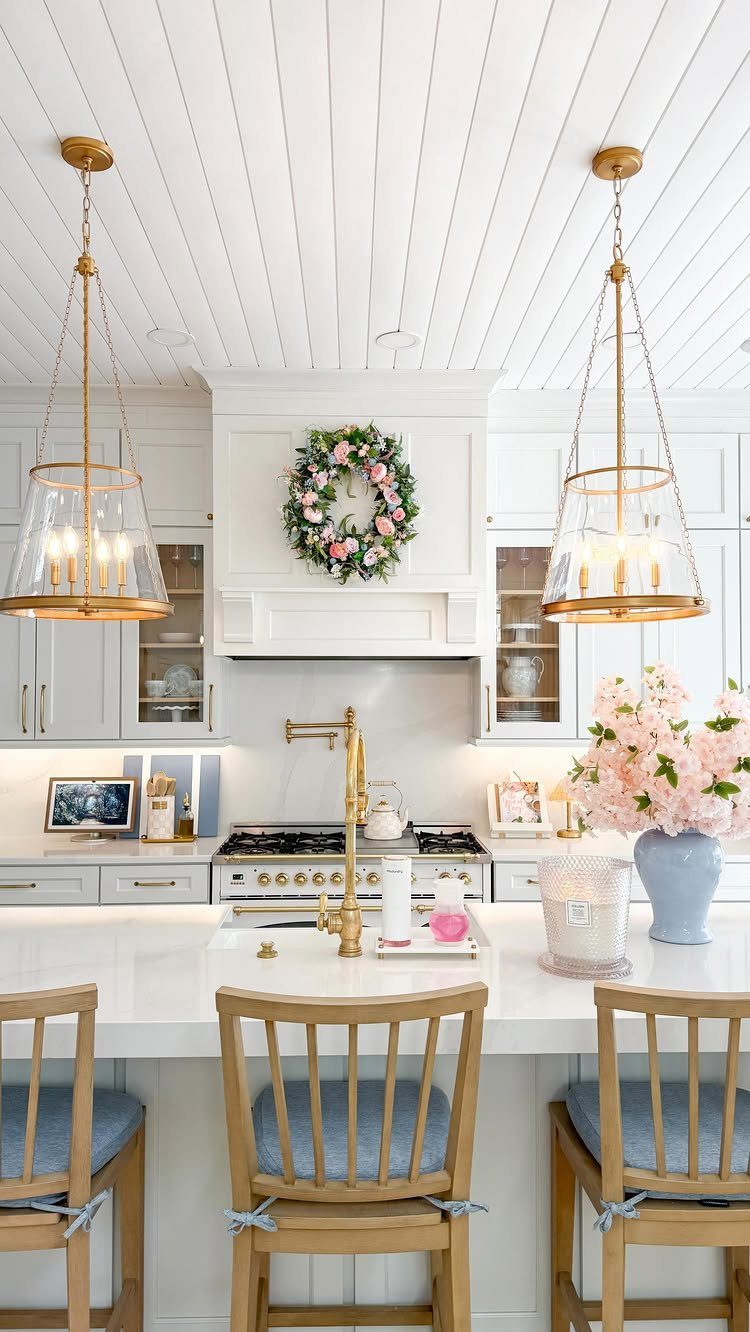
A pendant or chandelier that stands out pulls attention up and gives the room a finished look even when the cabinets are plain.
I choose fixtures based on the island or table size: a single large pendant for a narrow island, a pair for mid-length runs, and three for longer spans. The drop matters as much as the style.
Hang the bottom of the shade low enough to light the surface but high enough that it doesn’t block sight lines across the room. Metal and glass finishes stay easy to clean in a space that gets greasy.
4. Kitchen Artwork
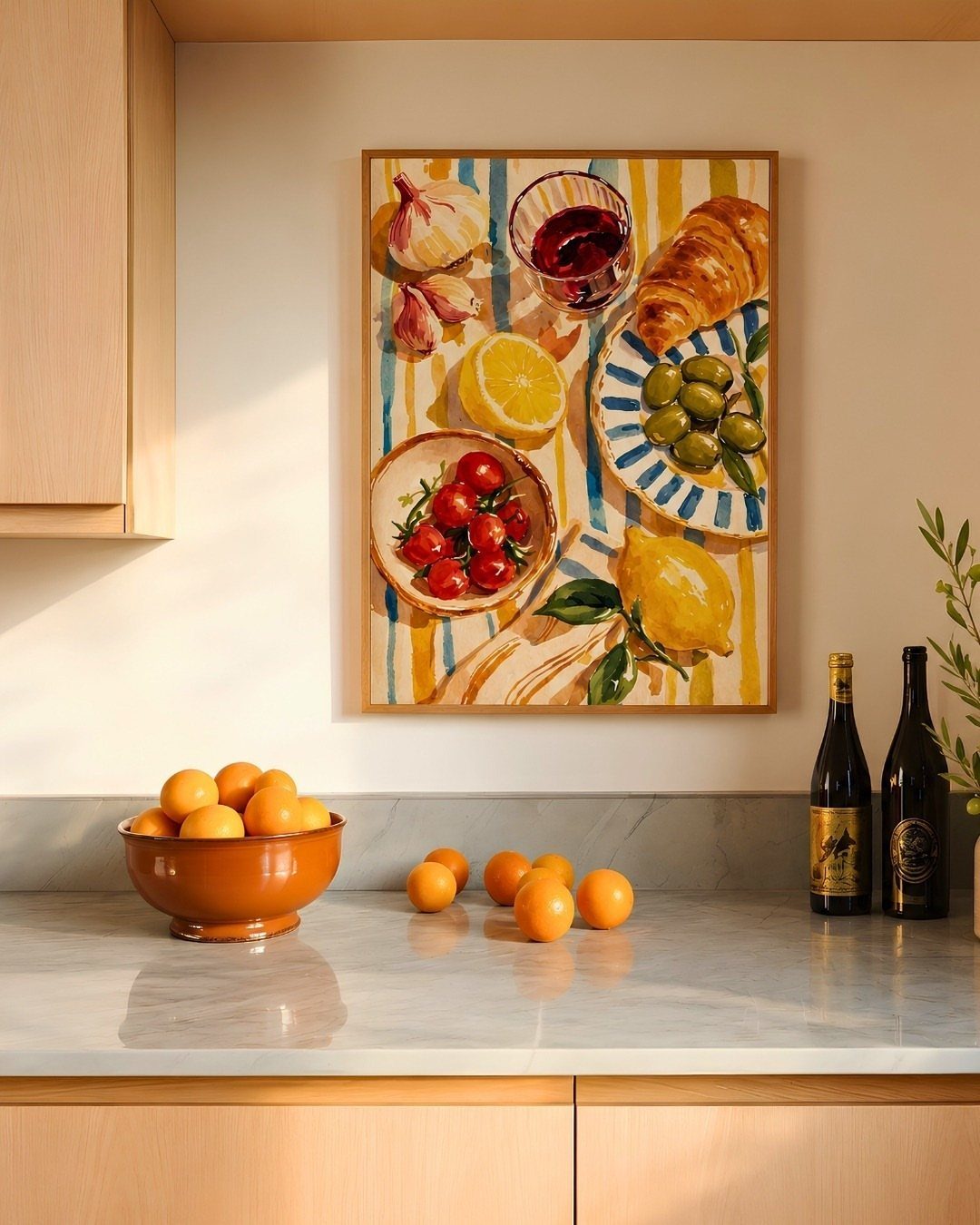
Framed art on a kitchen wall turns cooking space into living space. I look for prints or paintings that can handle moisture and temperature swings, which rules out anything delicate or valuable.
A piece with food, landscape, or abstract shapes fits without trying too hard. The spot that works best is above a sideboard, a stretch of empty wall, or between upper cabinets if they do not run full height.
Skip anything behind the stove unless you are prepared to clean it often. A simple wood or metal frame keeps the focus on the image instead of the border.
5. Colorful Accents
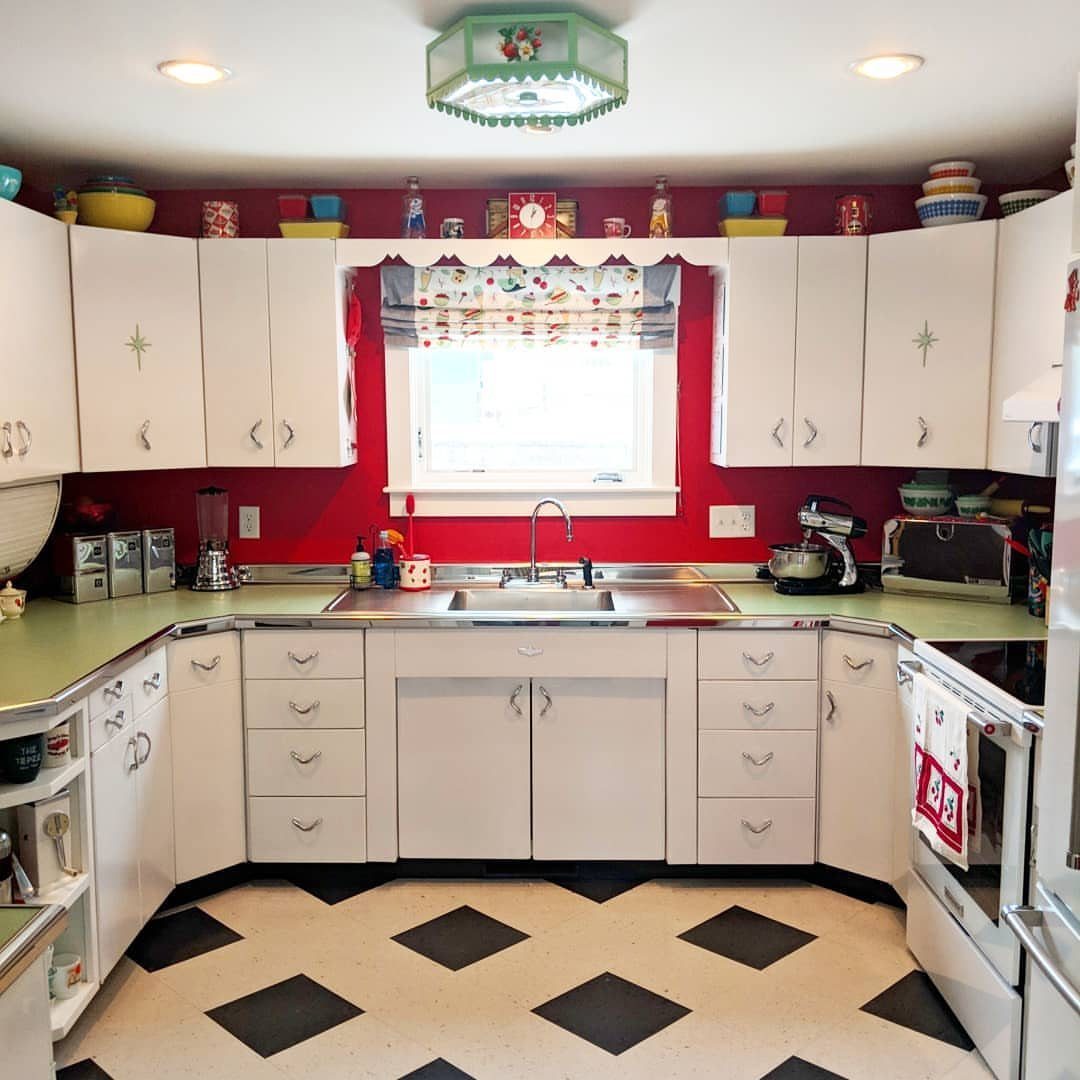
Bright dish towels, bowls, small appliances, or canisters let you test color without repainting or retiling. I swap these out when I get tired of a shade, which happens faster with accessories than it ever does with permanent finishes.
Grouping a few pieces in the same color family works better than scattering single items around the room.
In a kitchen with neutral cabinets and counters, colorful accents add energy without locking you into one palette. Keep the backdrop simple so the pops of color read clearly.
6. Statement Wallpaper
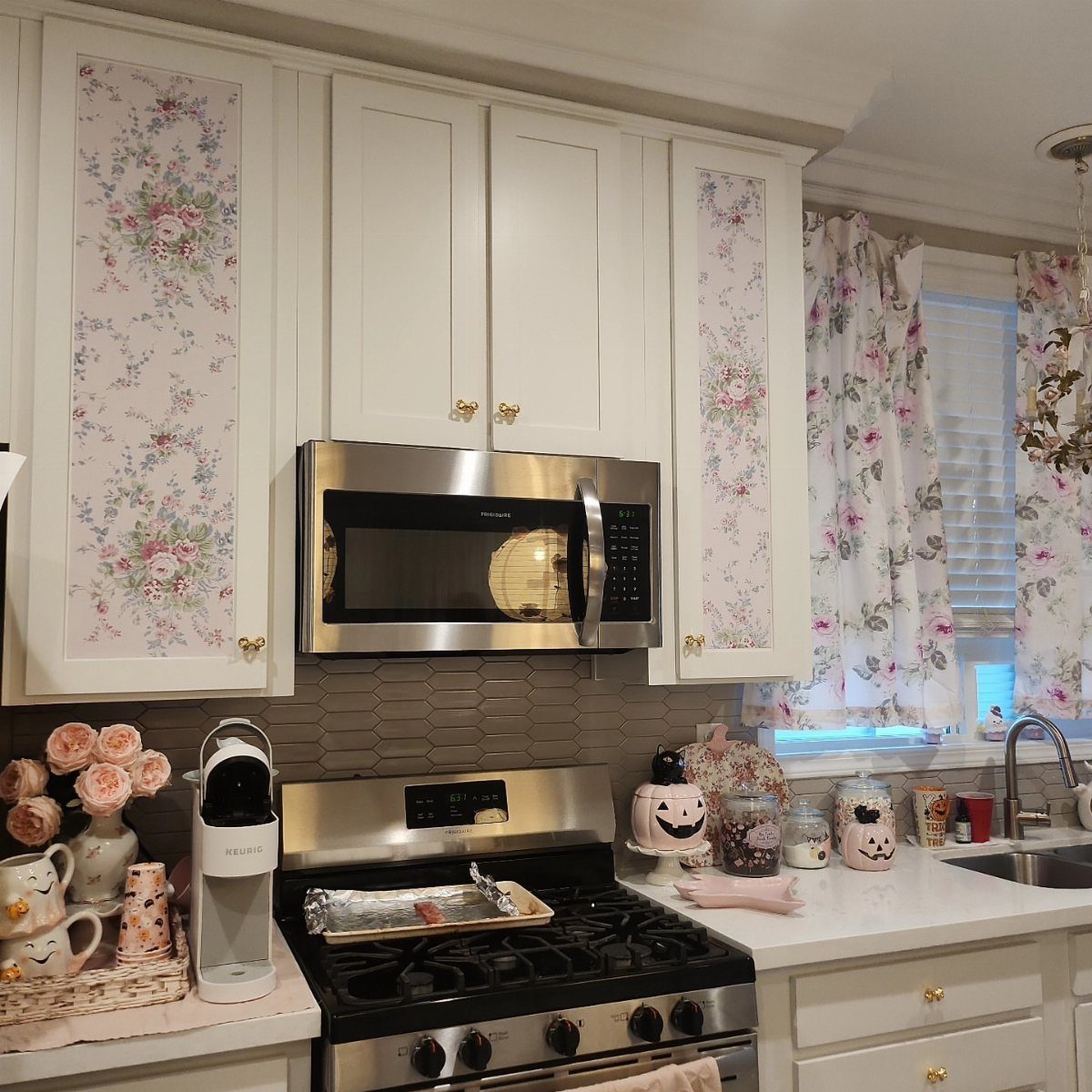
Wallpaper inside cabinet doors, on a single accent wall, or along the backsplash gives pattern where paint would not. I use it in kitchens that need interest but cannot afford a full tile upgrade.
Removable versions make the install faster and let renters take them down without damage. A busy pattern works best in small doses: the back wall of open shelves, the side of an island, or a narrow stretch between counters.
In a kitchen with simple white or wood cabinets, wallpaper adds detail without requiring new fronts.
7. Wooden Touches
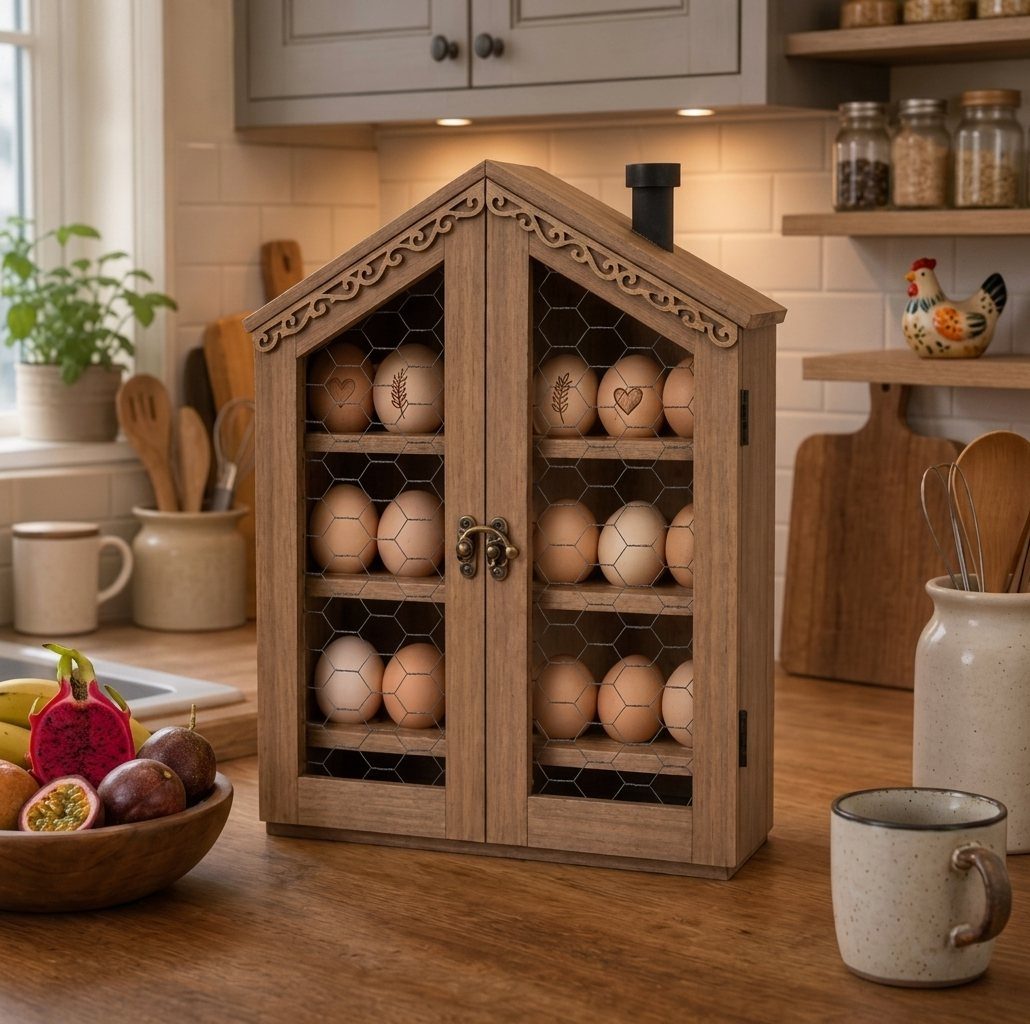
Wood utensils, cutting boards, bowls, and small organizers bring warmth to kitchens built around steel, stone, and tile.
Keeping a few pieces out on the counter or a shelf gives the room a lived-in feel without adding clutter. I look for items that get used, so they earn their place and do not turn into display.
Teak and walnut hold up to moisture better than lighter woods. A wood tray corrals oils and salt near the stove, and a bowl of wooden spoons keeps tools ready without a drawer pull.
8. Decorative Range Hood
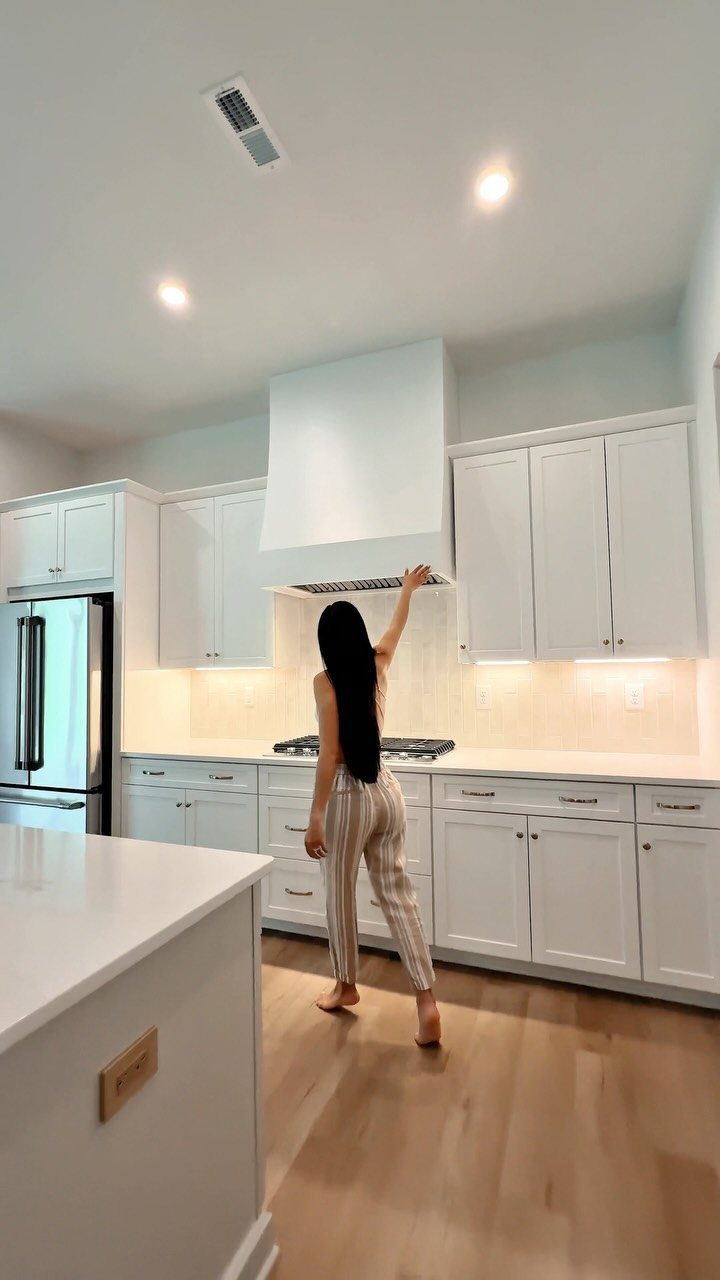
A range hood that reads as architecture instead of an appliance changes the weight of the room.
Smooth plaster, shiplap, or a simple paneled form in white or a matching cabinet color keeps the hood from competing with the rest of the kitchen.
The scale matters: a hood that reaches the ceiling or extends wide past the cooktop gives it presence. This works best in kitchens with simple cabinetry, where the hood can carry detail the rest of the room leaves out.
9. Bold Window Treatments
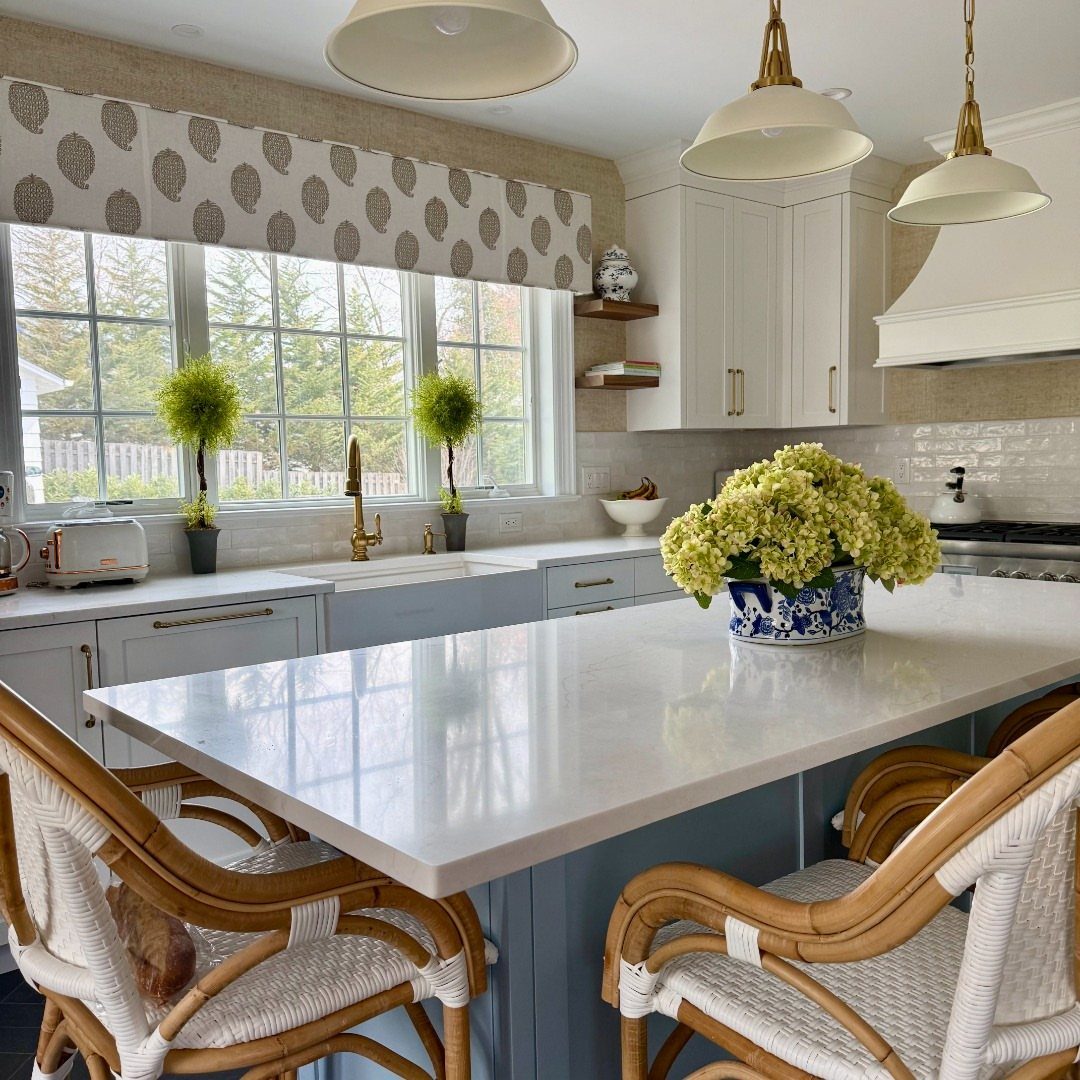
Curtains, roman shades, or a fabric valance soften a window and let you add pattern or color in a room that might otherwise be all hard surfaces.
A short valance keeps the look casual and leaves the sill open for plants or dish soap. If the window sits above a sink, keep the fabric high enough to avoid splashes.
Patterned fabric reads best when the rest of the kitchen stays neutral. Linen and cotton hold up to humidity better than anything too delicate.
10. Vintage Rugs
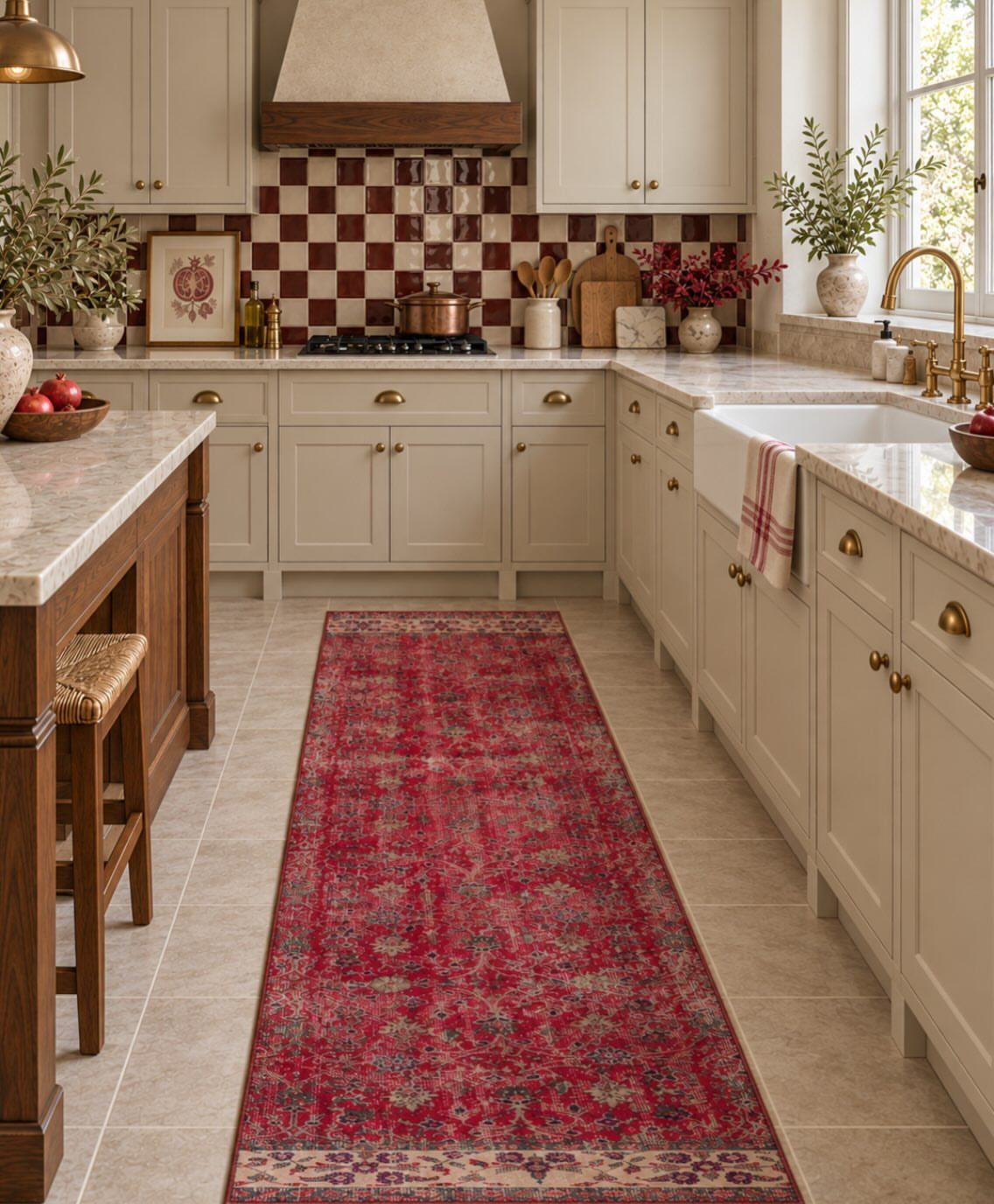
A vintage rug underfoot adds warmth and softens the sound in a kitchen with tile or wood floors.
Older rugs carry faded color and worn-in patterns that feel less precious than something new, which matters in a space where spills happen.
Look for low pile or flatweave styles that sit close to the floor and do not catch on chair legs.
A runner fits in front of the sink or stove, and a wider rug works under a table. Cotton or wool washes easier than silk.
11. Mix Textures
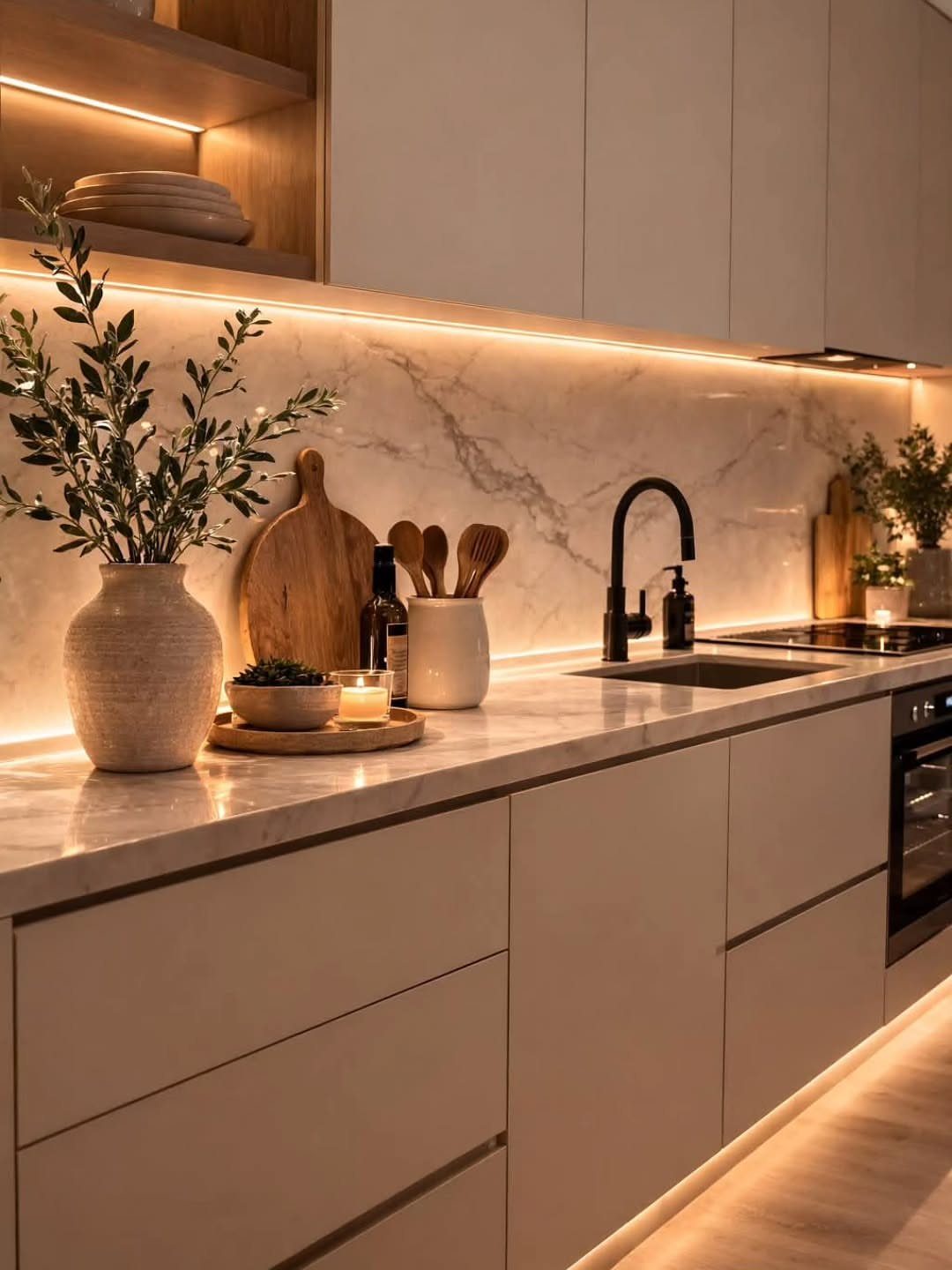
Layering wood, ceramic, woven baskets, and metal keeps a kitchen from reading flat.
A wood board next to a ceramic vase, a woven basket holding dish towels, and a metal tray under bottles all sit together without matching. The variety gives the eye something to move across instead of one smooth surface.
The method holds up best against plain walls and counters. In a tight kitchen, limit yourself to a few surfaces and let them repeat.
12. Personal Vignettes
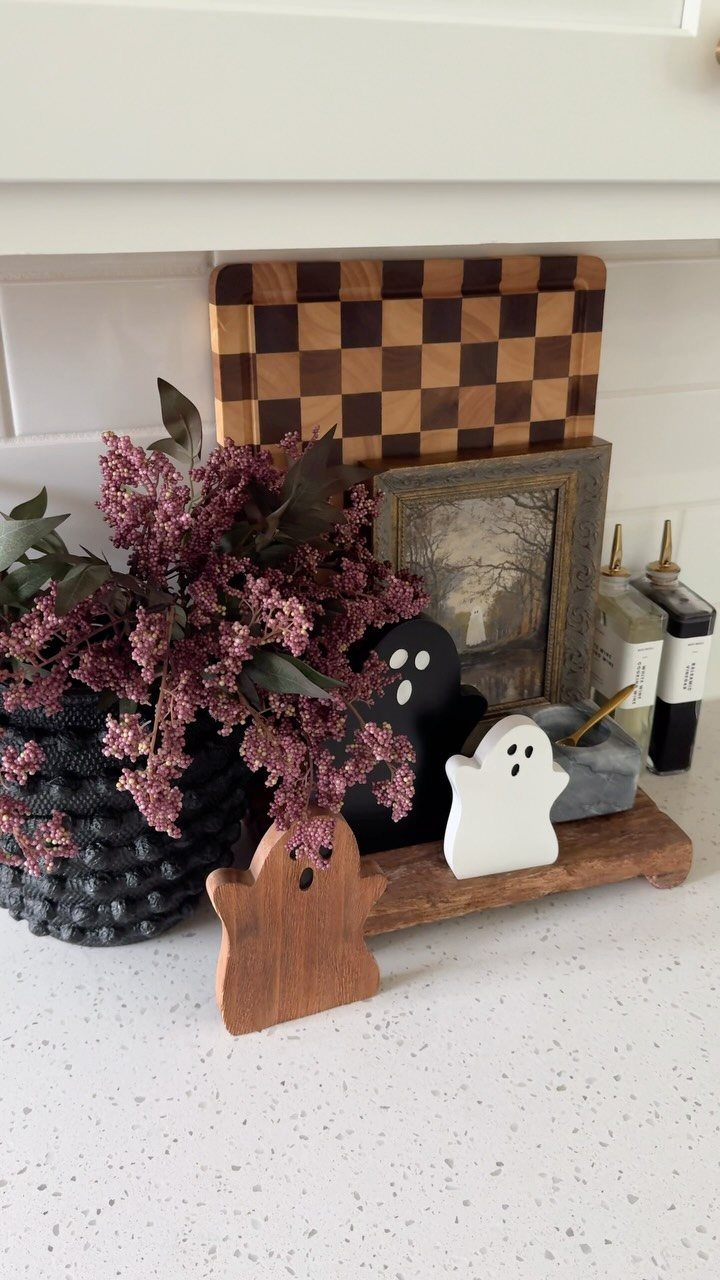
A small corner of the counter set aside for a few chosen objects gives the kitchen personality that cookware alone cannot.
Group a vase, a candle, a small cutting board, or a dish of lemons in a way that looks intentional but not staged.
The spot works best near the end of a counter or next to a backsplash, where it does not interrupt prep space.
Change pieces with the season or when you tire of them. A small group reads faster than a crowd.
13. Stone Surfaces
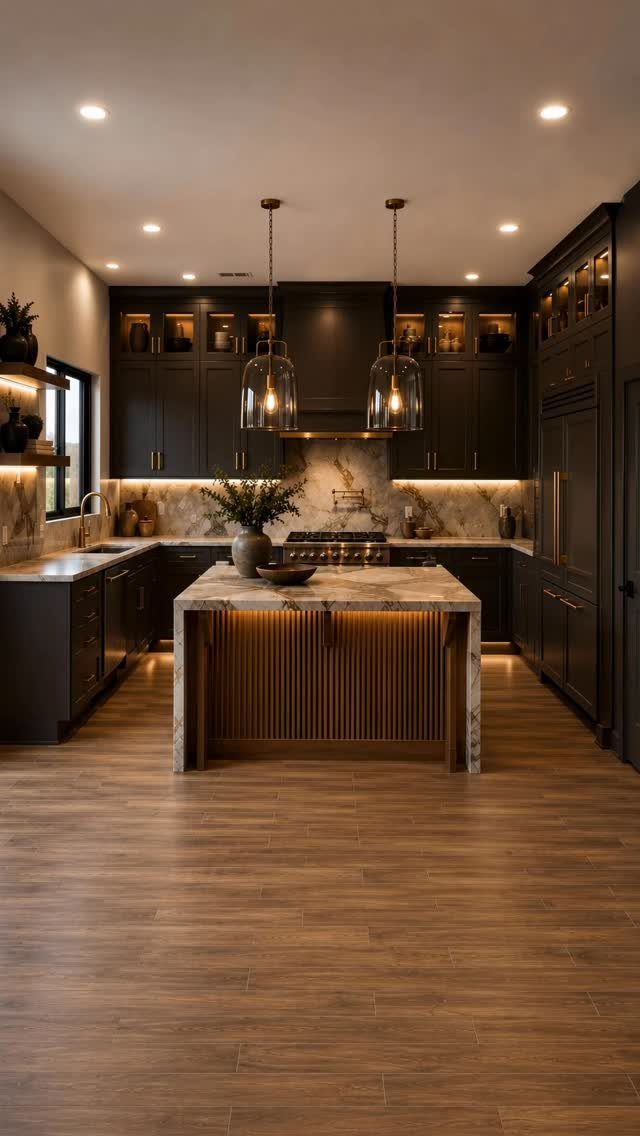
Stone across multiple surfaces ties the kitchen together with one material.
When the island top and backsplash share the same marble or quartzite, the room feels more deliberate and less assembled. The look works best in kitchens with simple cabinet fronts, where the stone carries the detail.
Honed or leathered finishes hide fingerprints and water spots better than polished. Matching slabs costs more than mixing materials, but the result is a kitchen that reads cohesive from the first look.
14. Accent Flooring
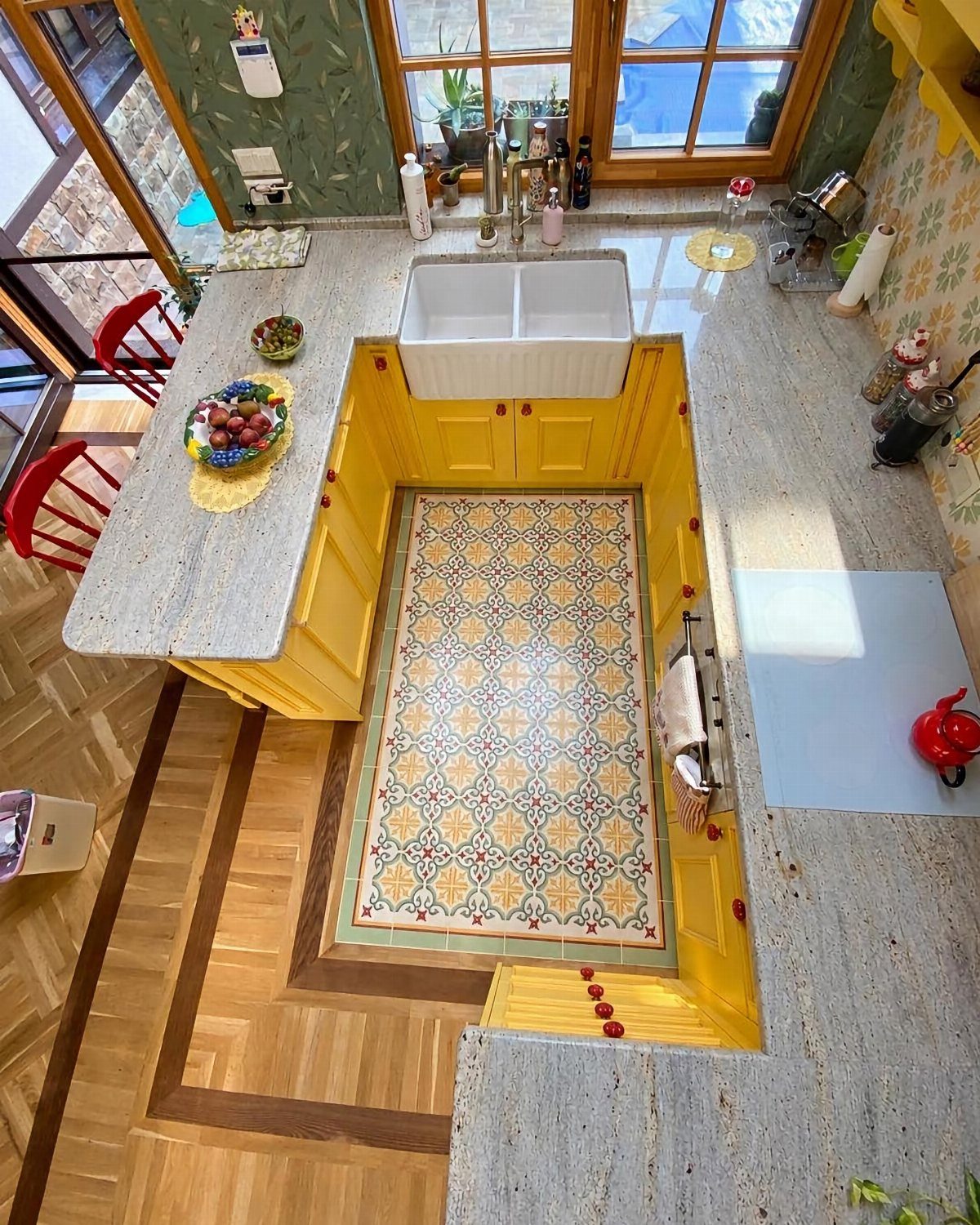
A section of patterned tile set into the floor draws the eye down and breaks up a large expanse of plain flooring.
I see this most often centered under an island or table, where it marks a zone without walls. The inset sits flush with the surrounding floor, so it does not catch on chair legs or create a trip edge.
Cement tile or encaustic patterns hold up to foot traffic and spills. The rest of the floor stays neutral so the accent reads clearly instead of competing with other busy surfaces.
15. Character Tile
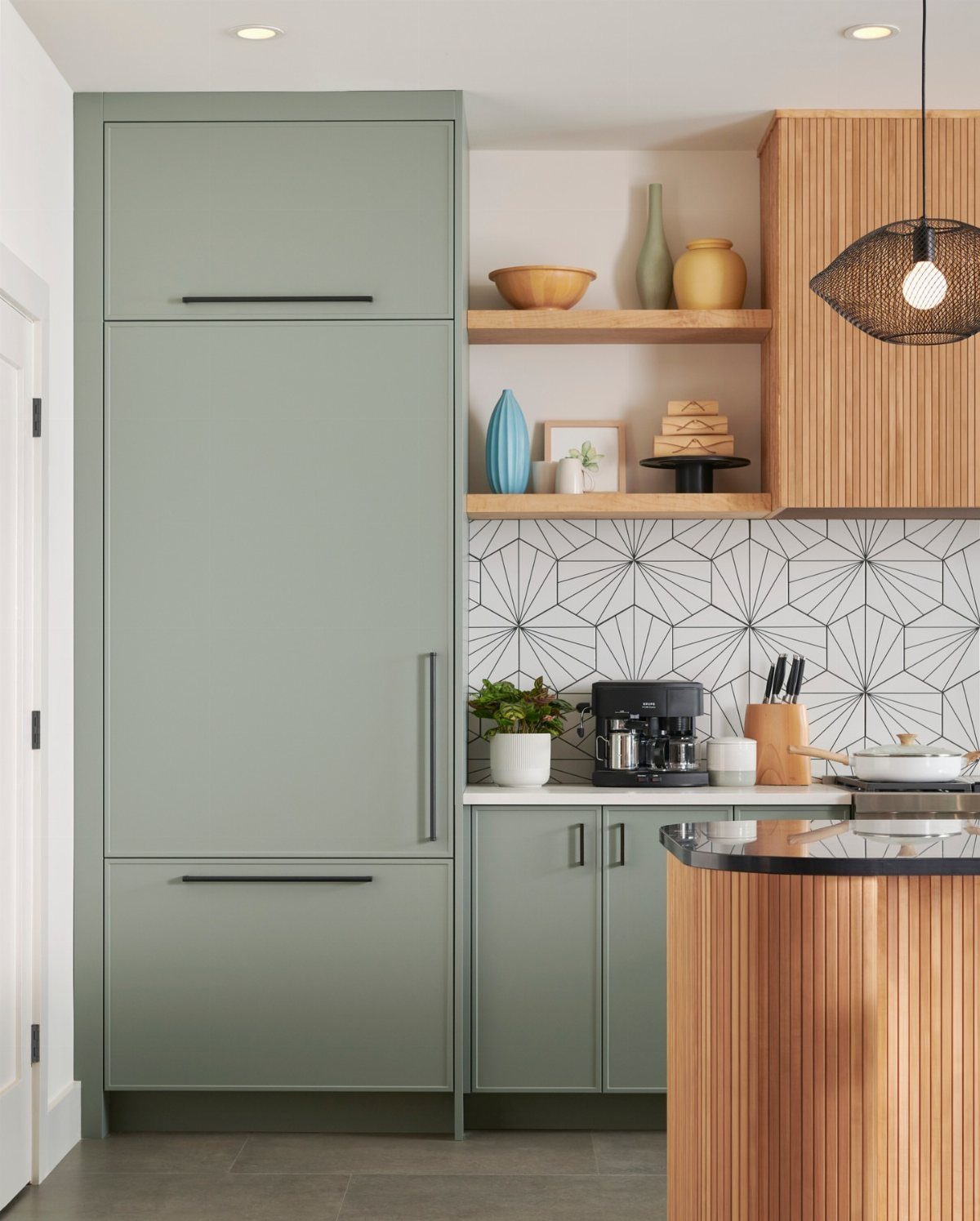
Tile with a strong pattern or hand-painted detail gives a backsplash or floor presence that plain subway tile cannot. Geometric lines, zellige texture, or a bold graphic pulls attention without requiring color if the rest of the kitchen stays quiet.
I use patterned tile in small areas where it can stand out: behind the stove, along one wall, or as a border.
In a rental or temporary kitchen, patterned removable tile offers the same effect with less commitment. Grout lines on busy tile show less dirt when you choose a mid-tone grey instead of white.
16. Natural Light
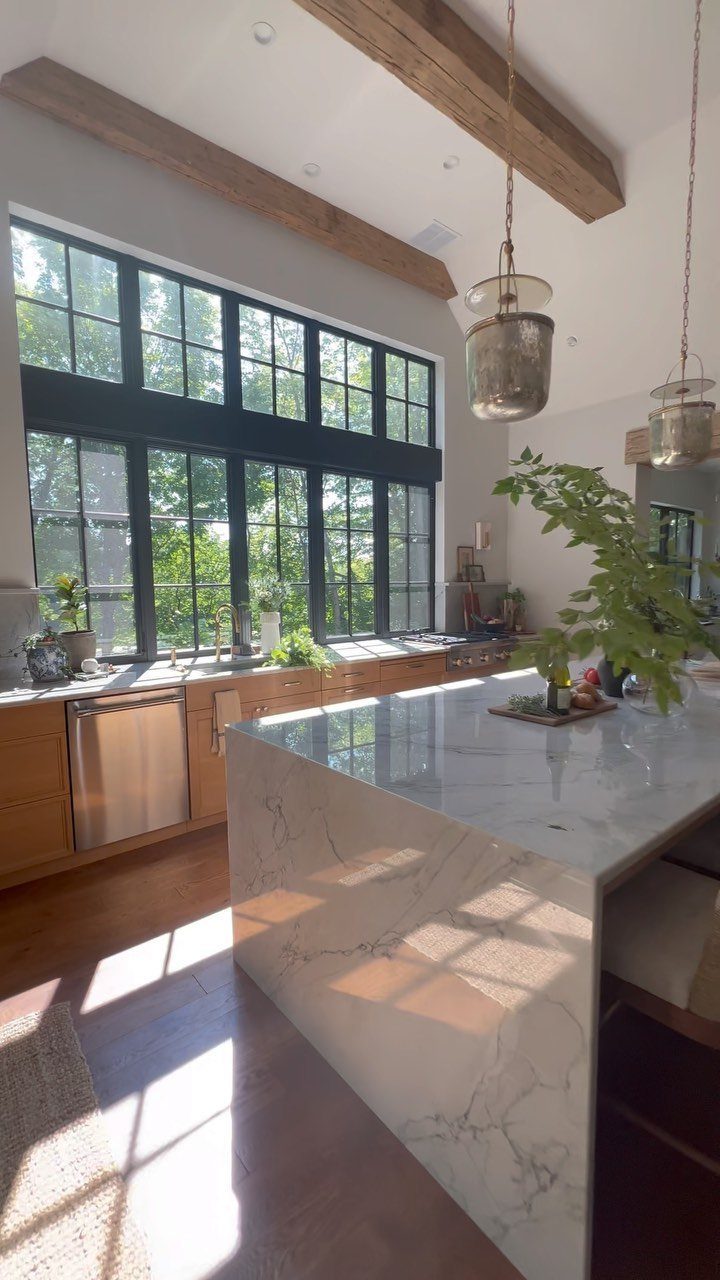
Larger windows or a window placed where it frames a view turns the kitchen into a room you want to spend time in.
Natural light makes colors read true and gives the space depth beyond its walls. A window over the sink or along the main wall lights the work surface without adding fixtures.
If privacy is not a concern, leaving the glass bare keeps the light unfiltered. In a kitchen with limited wall space, a single well-placed window does more than several small ones scattered around.
17. Double-Height Kitchen with Clerestory Windows
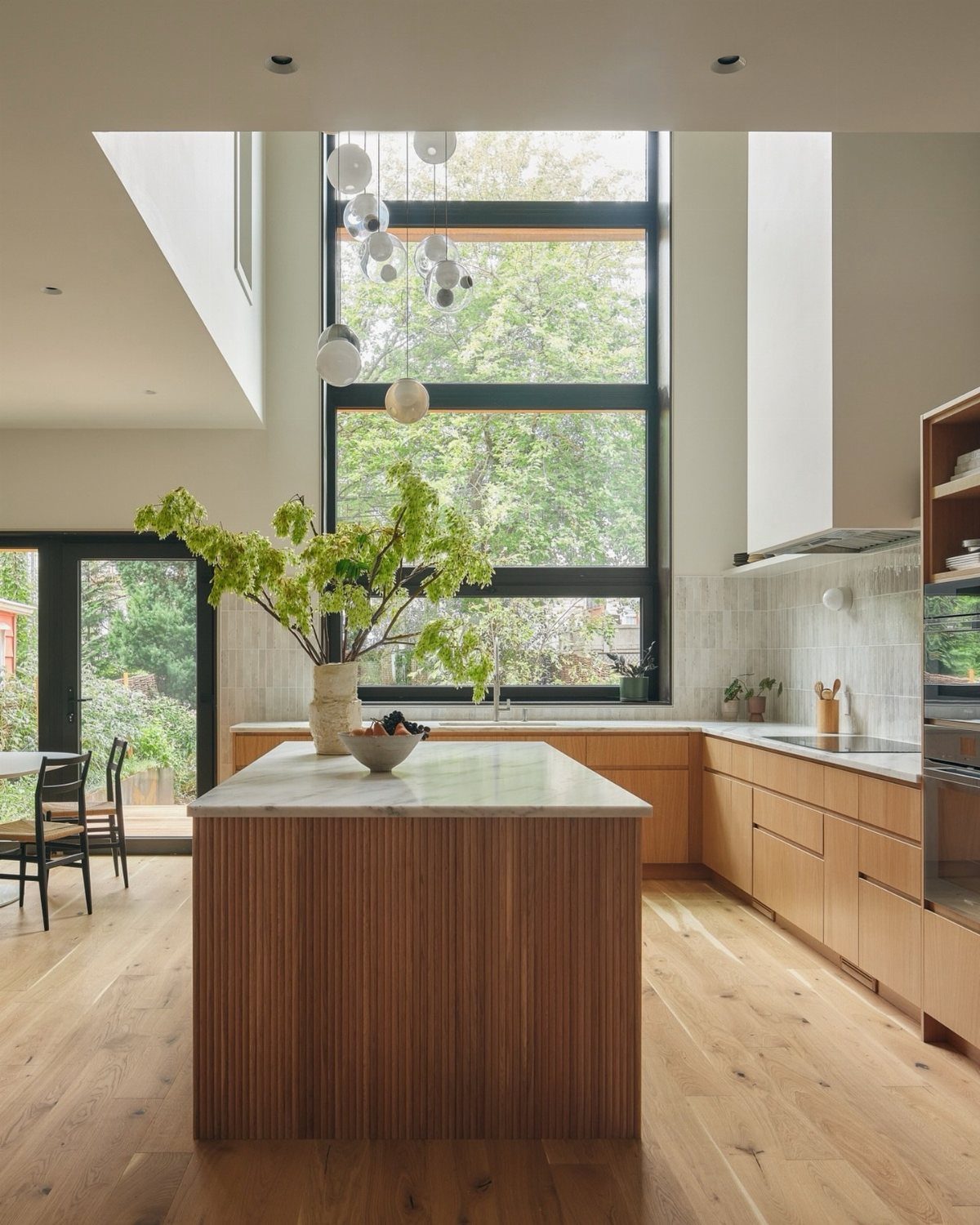
A kitchen with ceiling height that reaches past the standard 9 feet lets you add upper windows that bring in light without losing wall cabinet space below.
The vertical room makes the kitchen feel larger and more open than its footprint suggests. This setup works when the structure allows it, usually in new builds or additions where the roofline can accommodate the extra height.
A tall window at the top floods the room with daylight while the lower walls stay available for storage. The cost is higher framing and more wall to finish, but the result is a kitchen that breathes.
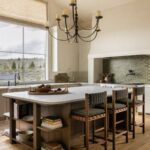
18. White Oak and Calacatta Marble Island
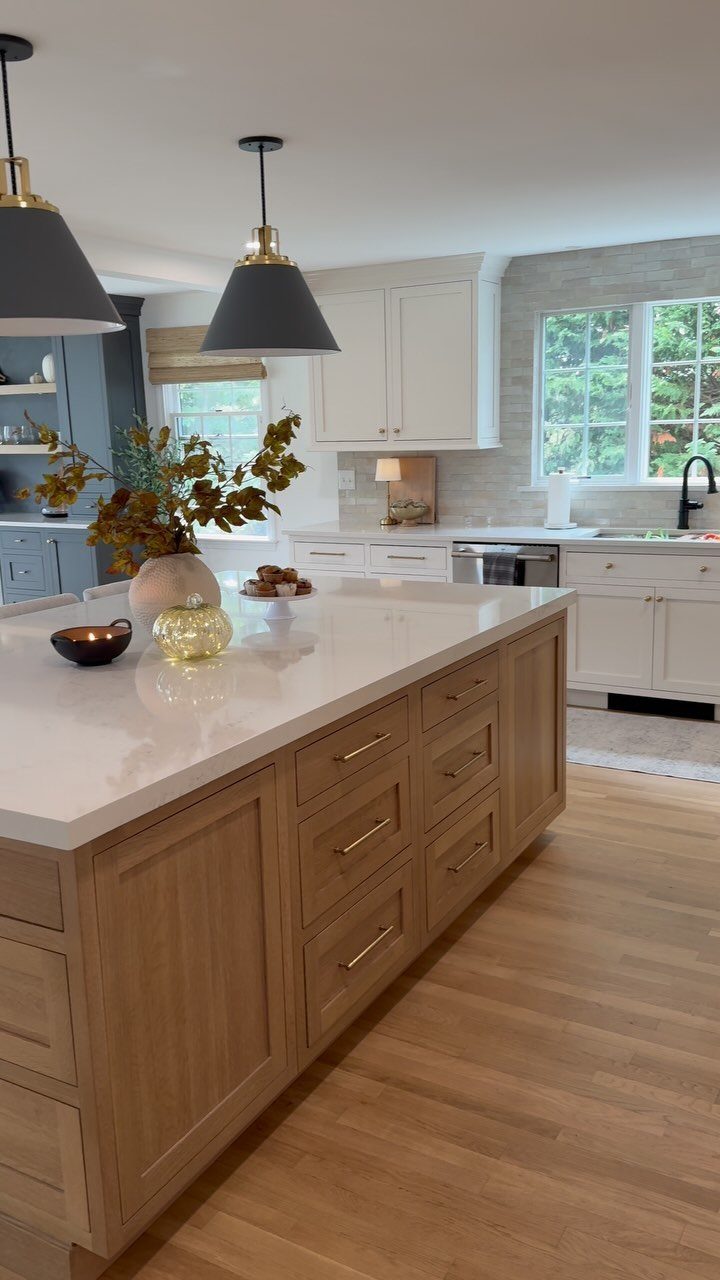
Pairing light oak cabinetry with white marble on the island balances warm wood against cool stone.
The combination works in kitchens where you want contrast without dark finishes. Oak brings grain and texture, marble adds polish and brightness.
This pairing suits spaces with good natural light, where both materials can show their color clearly. If the budget allows only one high-end material, put it on the island top where it gets the most use and the most attention.
19. Kitchen Between Salon and Keeping Room
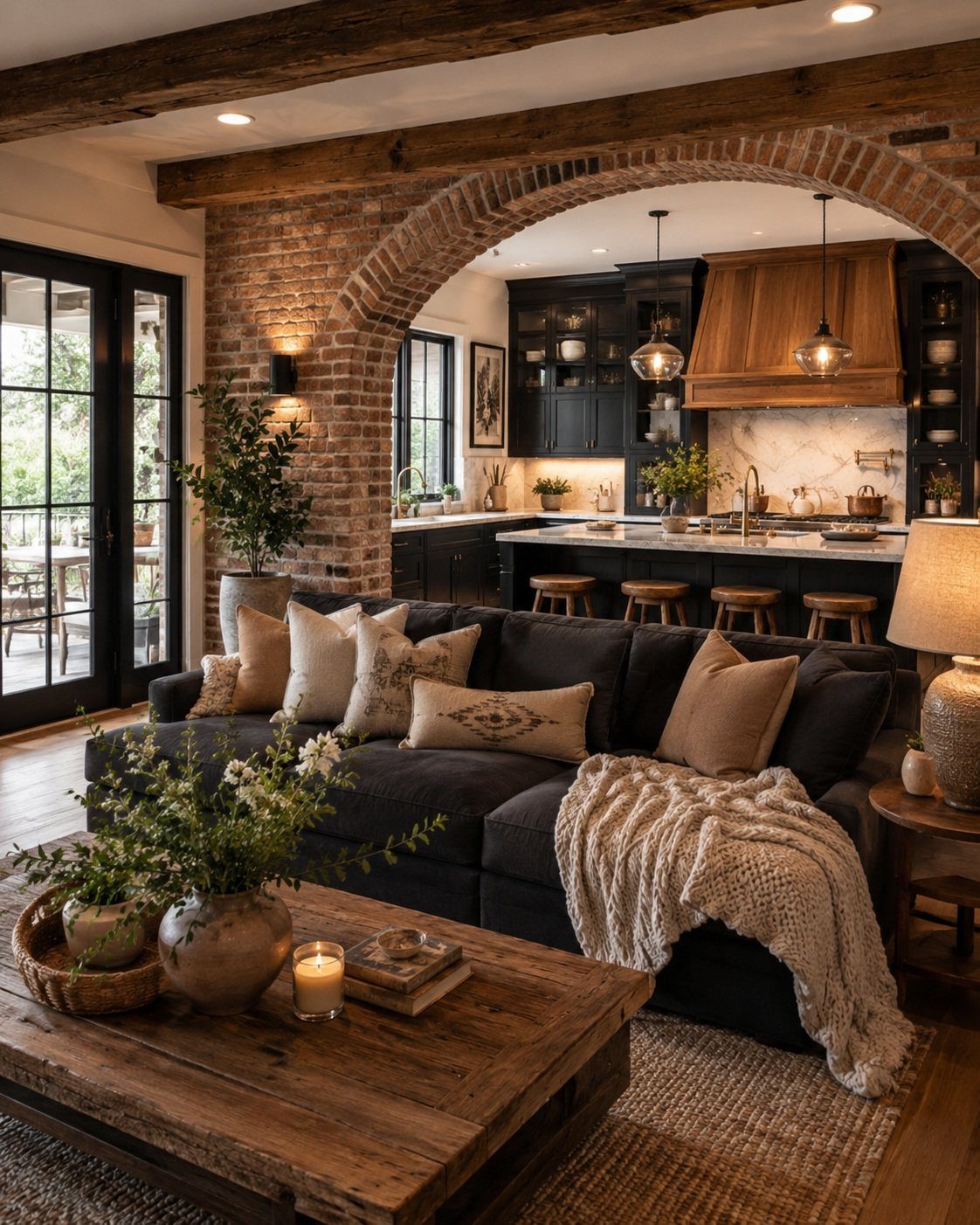
Placing the kitchen between 2 rooms instead of against a back wall keeps the space connected and lets conversation flow without shouting across walls.
The layout works when you can walk through the kitchen to reach the next room, which suits open floor plans or older homes where a parlor and back room already flanked the space.
An archway or wide opening frames the view without closing off the space. In homes where the kitchen has to serve as the pass-through, keep the island clear of clutter so movement stays easy.
20. Wood Cabinet Stain
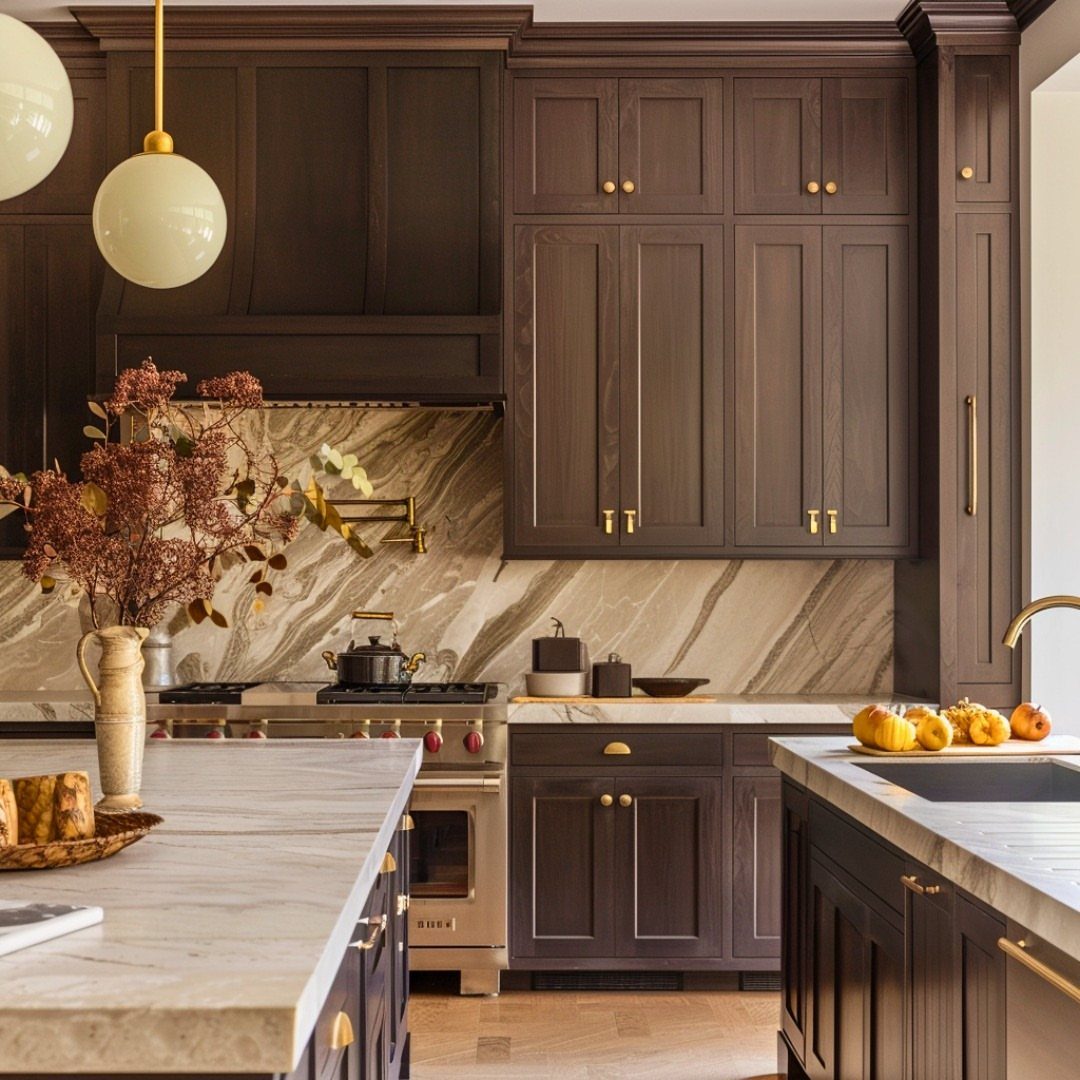
A rich stain on wood cabinets gives the kitchen weight and warmth that paint cannot match.
Dark brown reads formal and grounded, lighter golden tones feel casual. The grain still shows through, which matters more in oak and walnut than maple.
Stain lets you adjust the color without losing the wood character, and you can go darker later if the room changes. In a kitchen with white or light stone counters, a deep stain adds contrast without introducing a new material.
Plan Layout and Flow
The shape of the kitchen sets what works and what fights you. An L-shaped layout gives you 2 walls of counter with open floor between them, which means an island can sit in the middle without blocking movement.
A galley runs counters down 2 facing walls, and anything you add in the center cuts the path in half.
Open-concept kitchens share space with the next room, so the back of an island or a low cabinet becomes the only divider.
Flow matters more than symmetry.
If you cook most nights for yourself or a partner and host occasionally, the layout should serve the daily use first. Walk the path from fridge to sink to stove and make sure nothing forces a detour.
In a galley, that means keeping one side clear enough to pass someone standing at the counter. In an L-shape, it means the island does not sit so close that drawers and cabinet doors hit it when open.
Choose a Cohesive Palette
A palette holds together when you repeat a small set of colors instead of introducing a new one in every corner.
If the cabinets are white and the counters are grey, pick one or two accent colors and use them across dish towels, a rug, artwork, and any decorative pieces. That repetition connects the whole space without making it look matched.
Light colors open up a kitchen with limited natural light or a tight footprint. White walls, pale wood, and soft grey keep the space from closing in.
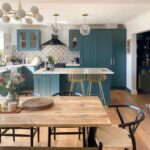
Bold cabinet colors like deep green, navy, or a saturated blue add weight and work best in kitchens with high ceilings or large windows where the color does not overwhelm the room.
The cabinet color sets the tone for everything else.
A rich wood stain in mahogany or walnut brings warmth and formality. Robin’s egg blue or another saturated hue on cabinet fronts makes the kitchen feel intentional and less neutral.
Frequently Asked Questions
How do I design my new kitchen?
Start with the layout and how you move through the space, then pick a small palette and repeat those colors across walls, cabinets, counters, and accents.
The cabinet color decides the mood, and the counters, backsplash, and hardware either reinforce it or fight it. Pay attention to natural light and choose finishes that work with it instead of fighting it.
What kitchen cabinet colors will look outdated in 2026?
Grey cabinets in the cool, flat tone that dominated the last decade are losing ground.
White stays workable because it gives you room to layer other finishes, and bold colors like deep green, navy, and robin’s egg blue read more intentional. Wood stain, especially in walnut and oak, brings warmth that painted finishes cannot match.
What can I do to make my small kitchen look bigger?
Pale finishes reflect light and make the perimeter recede, while open shelving lets the eye travel through instead of stopping at a solid run of uppers.
Keep the counters mostly clear, and use a rug or decorative pieces in small doses instead of scattering them around.
One window over the sink or counter brings in daylight and a view while leaving the rest of the wall free for storage.
What are the best ways to decorate a tiny kitchen?
Pick a few pieces that earn their place by getting used: wood cutting boards, a plant in a simple pot, or a small vignette near the end of the counter.
Open shelves hold everyday dishes and do half the decorating, and a bold backsplash or removable wallpaper adds pattern while leaving the floor clear. Keep lighting simple with one pendant or a pair over the main work area.
What are some ways to save space in small kitchens?
Open shelves and wall-mounted storage keep items in reach without using counter space, and a hanging planter holds greenery near the light.
Limit what sits out on the counter to things you reach for every day, and use vertical storage where you can.
A narrow island or a small table under a window gives you prep surface without blocking movement through the room.
What are some ways to design my kitchen without making it too crowded?
Stick to a tight palette rather than adding a new color with every accessory, and cluster decorative pieces in one or two places instead of spreading them across every surface.
A neutral backdrop lets focal pieces like a rug, dish towels, or framed print stand out. A personal vignette in one spot gives the kitchen character without cluttering the whole counter.
What kinds of kitchen organization tools work best with a modern kitchen design?
Wood trays, ceramic containers, and woven baskets fit into a kitchen with clean lines and stay useful instead of turning into display.
Glass jars of dry goods sit on open shelves and do double duty as storage and decor. Metal organizers and simple terracotta pots keep the look unfussy and let the items themselves carry the style.