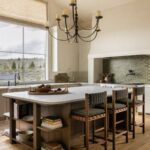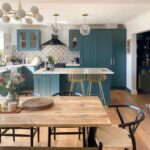
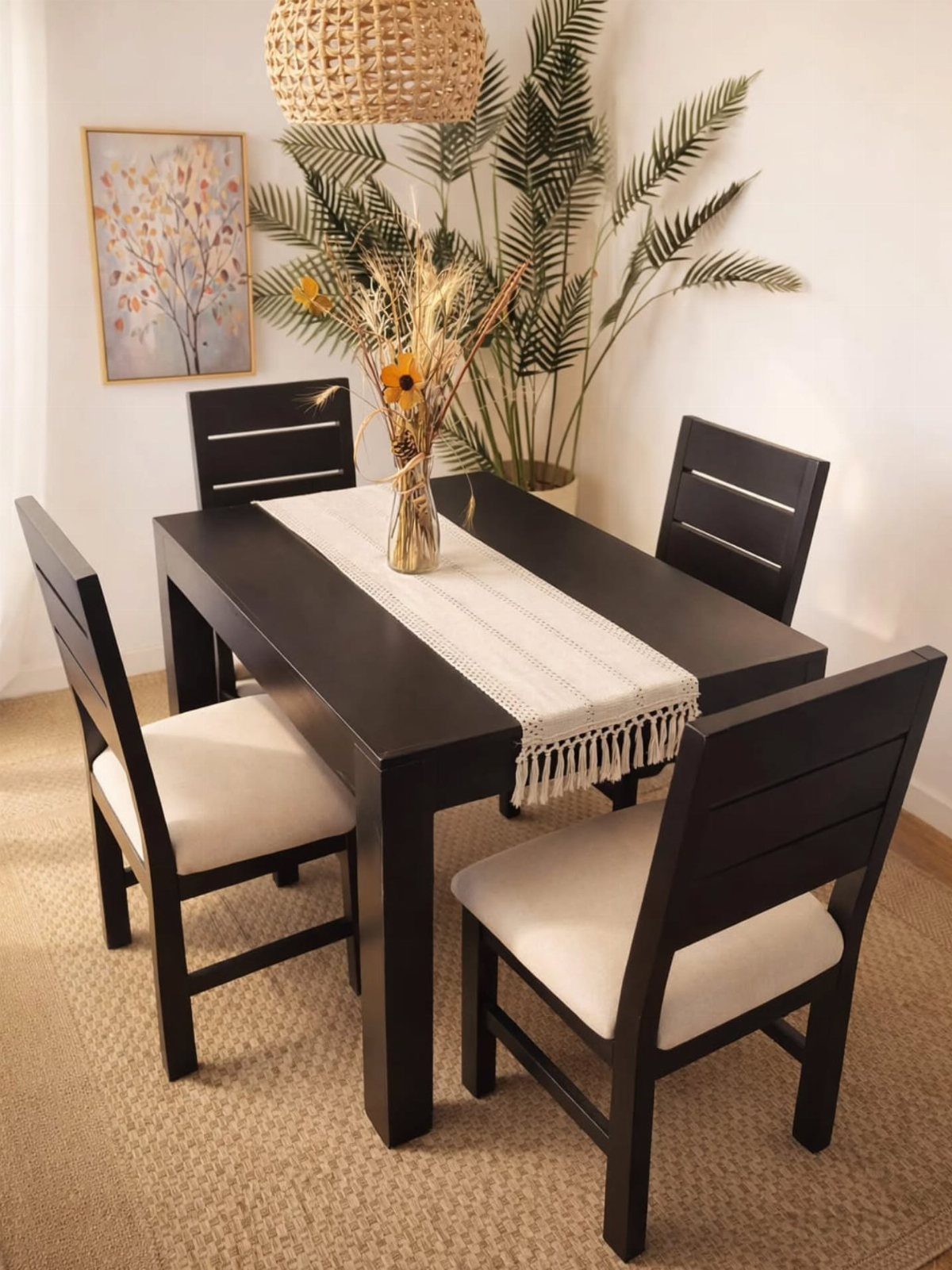
The range in this list covers walnut, cherry, farmhouse plank tops, mid-century tapered legs, live edge slabs, pedestal bases, and trestle frames that work in formal dining rooms or casual breakfast nooks.
The shape and seating capacity decide which one fits: rounds work in small square rooms where a rectangle would block doors, and trestle bases keep legroom clear all the way down both sides without corner legs in the way.
1. Walnut Dining Tables
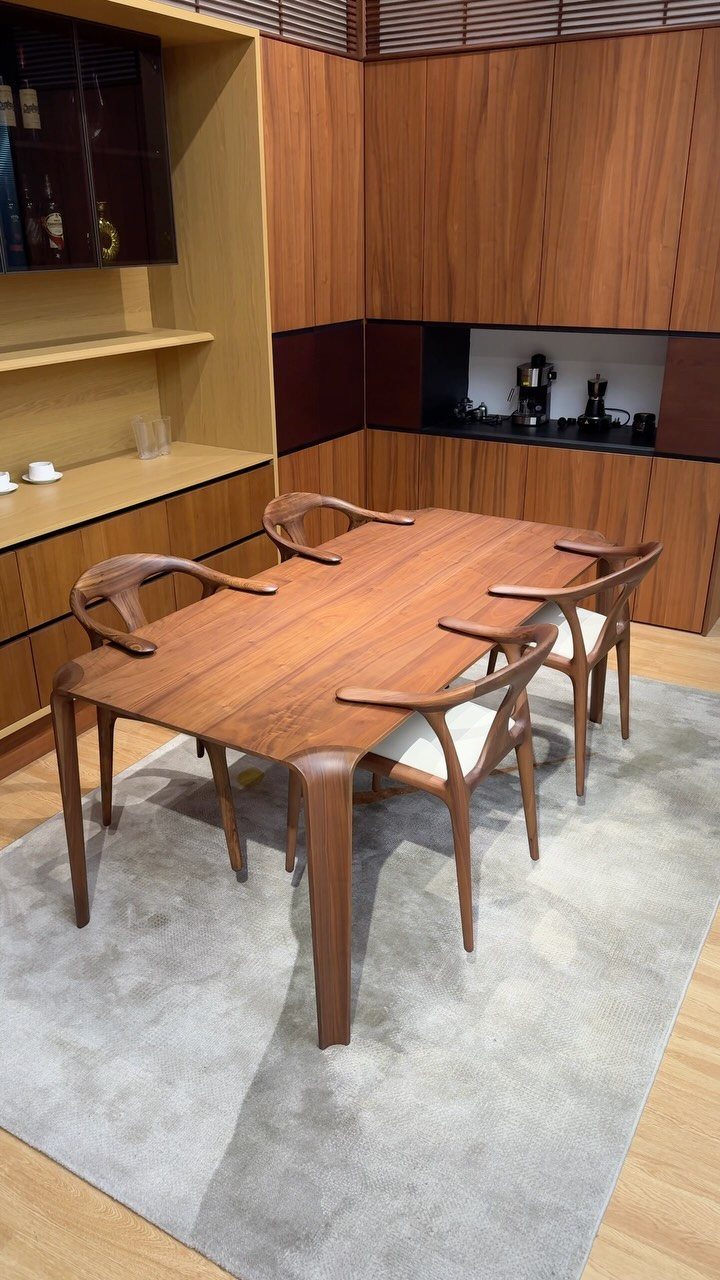
Walnut shows grain that reads as furniture, not décor. The tone sits somewhere between mid-brown and charcoal depending on the cut, and it ages without looking worn.
I like it in homes where the palette skews neutral or industrial, because walnut holds its own next to concrete, steel, or white walls without needing much else in the room.
It works with upholstered chairs for a softer look, or with wood chairs in the same finish for a matched set.
The grain tends to be straighter than oak, so the surface feels calmer. That makes it a good fit if your room already has visual weight.
2. Solid Wood Dining Sets
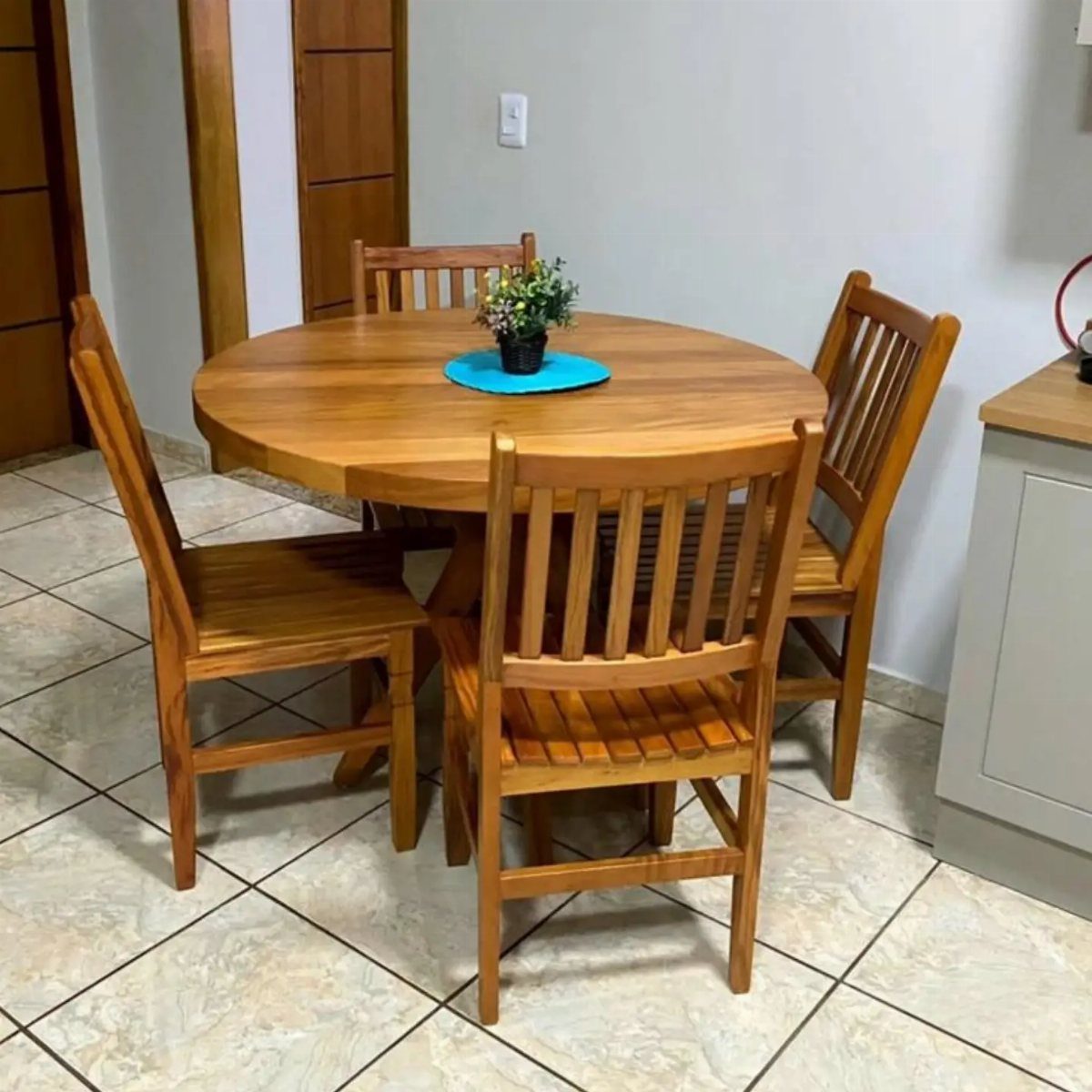
A set that ships as one purchase means the table, chairs, and any bench were designed to work together in proportion and finish. That saves the guesswork of pairing pieces from different lines.
Solid wood holds up to daily use better than veneer or laminate, and small scratches sand out instead of chipping through to particle board.
I’ve had clients keep solid wood sets through moves, refinishes, and decades of dinners, which makes the upfront cost easier to justify.
Most sets seat four to six. If you host larger groups, check whether the maker offers matching chairs sold separately.
3. Round Dining Tables
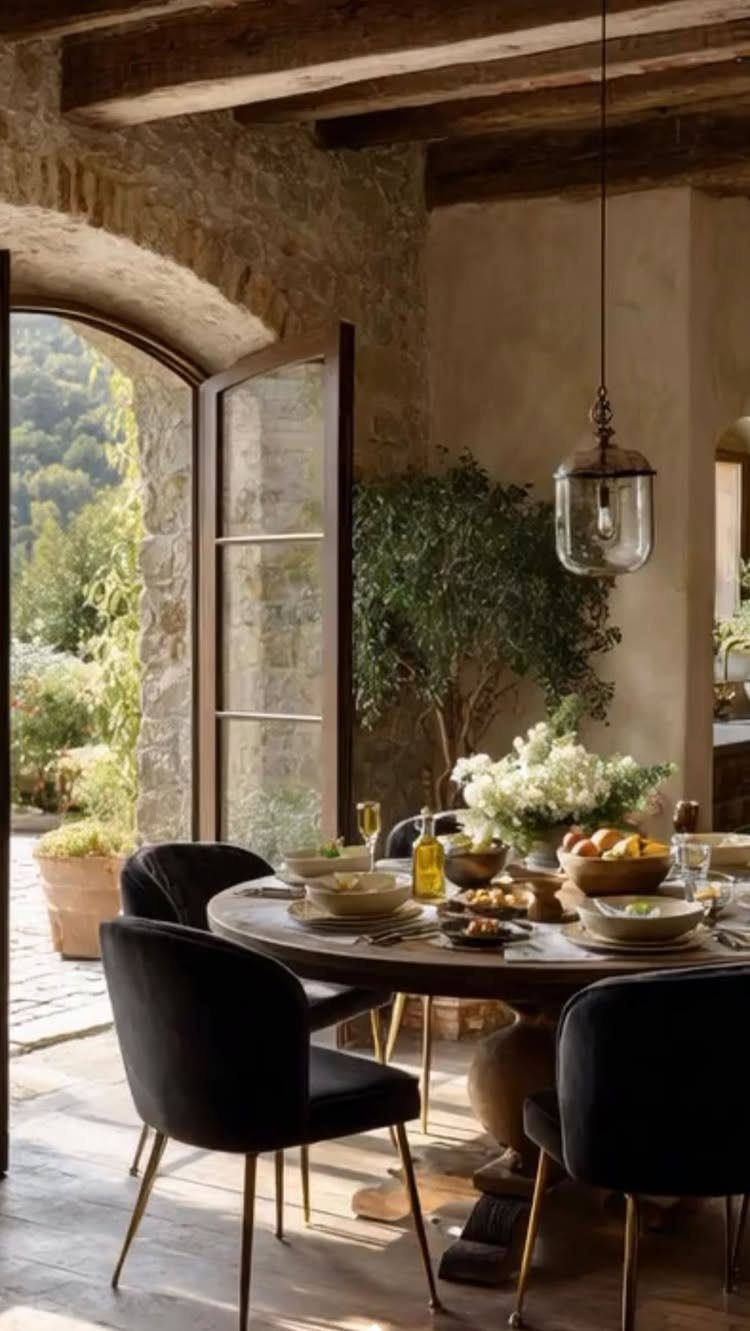
A round table fits more people into a small room because there are no corners to route around. Conversation flows without anyone stuck at the far end.
I recommend this shape for kitchens, breakfast nooks, or square dining rooms where a rectangular table would block doorways or feel too long.
It also works in open-plan layouts where the table sits between zones and you need to move around it from all sides.
Rounds limit how many you can seat. A rectangle gives more usable surface area for the same footprint.
4. Matching Dining Chairs
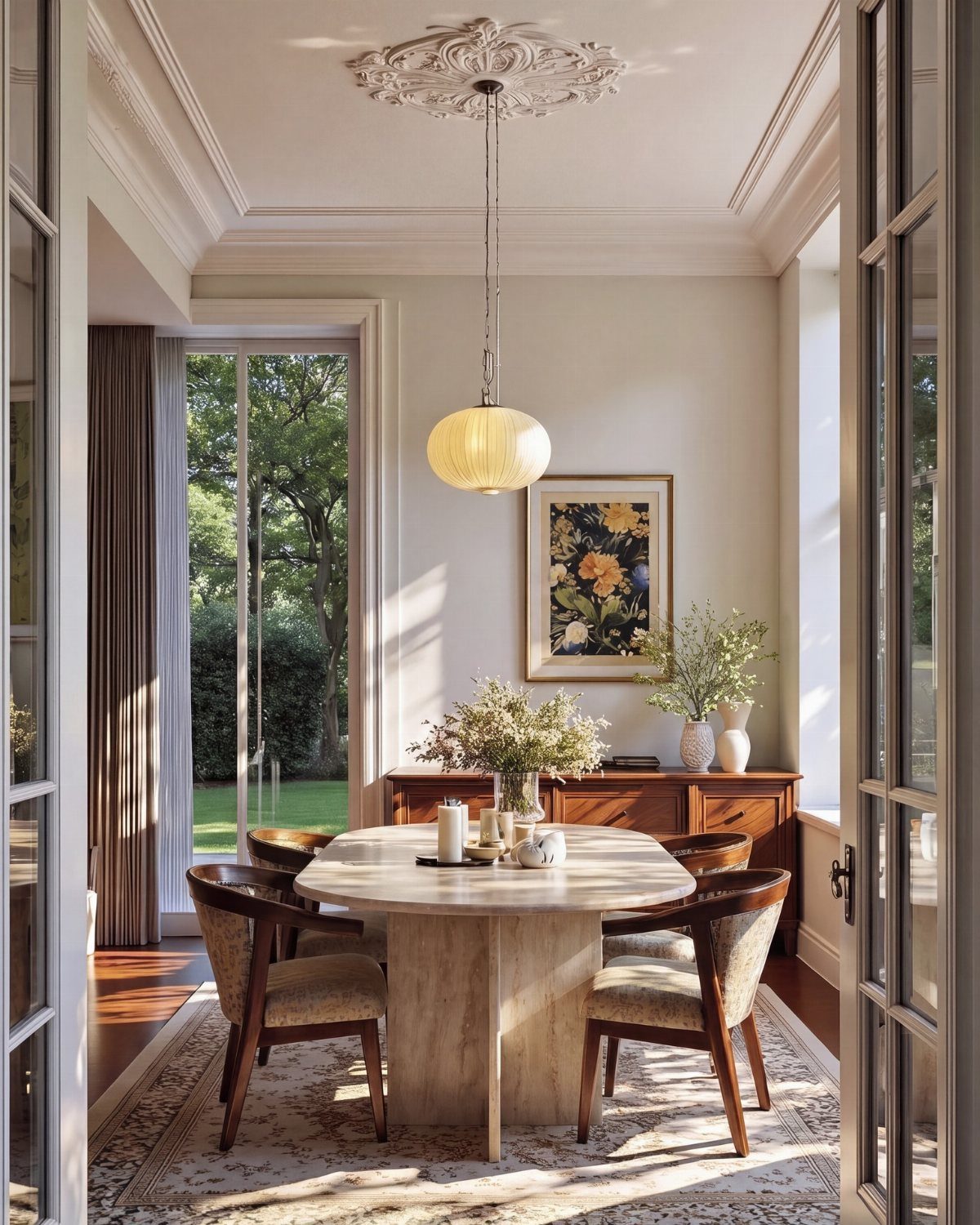
Chairs that match the table in wood tone and leg style keep the set looking intentional instead of pieced together. That consistency matters most in smaller rooms, where mismatched furniture can read as cluttered.
I usually see this done one of two ways: wood chairs with a similar finish to the table, or upholstered seats with wood frames that pick up the table’s legs. The second option adds comfort without losing the visual tie.
If you already own the table and need chairs later, bring a photo of the finish and grain to the showroom. Walnut varies enough between suppliers that a close match is better than hoping for exact.
5. Custom Dining Sets
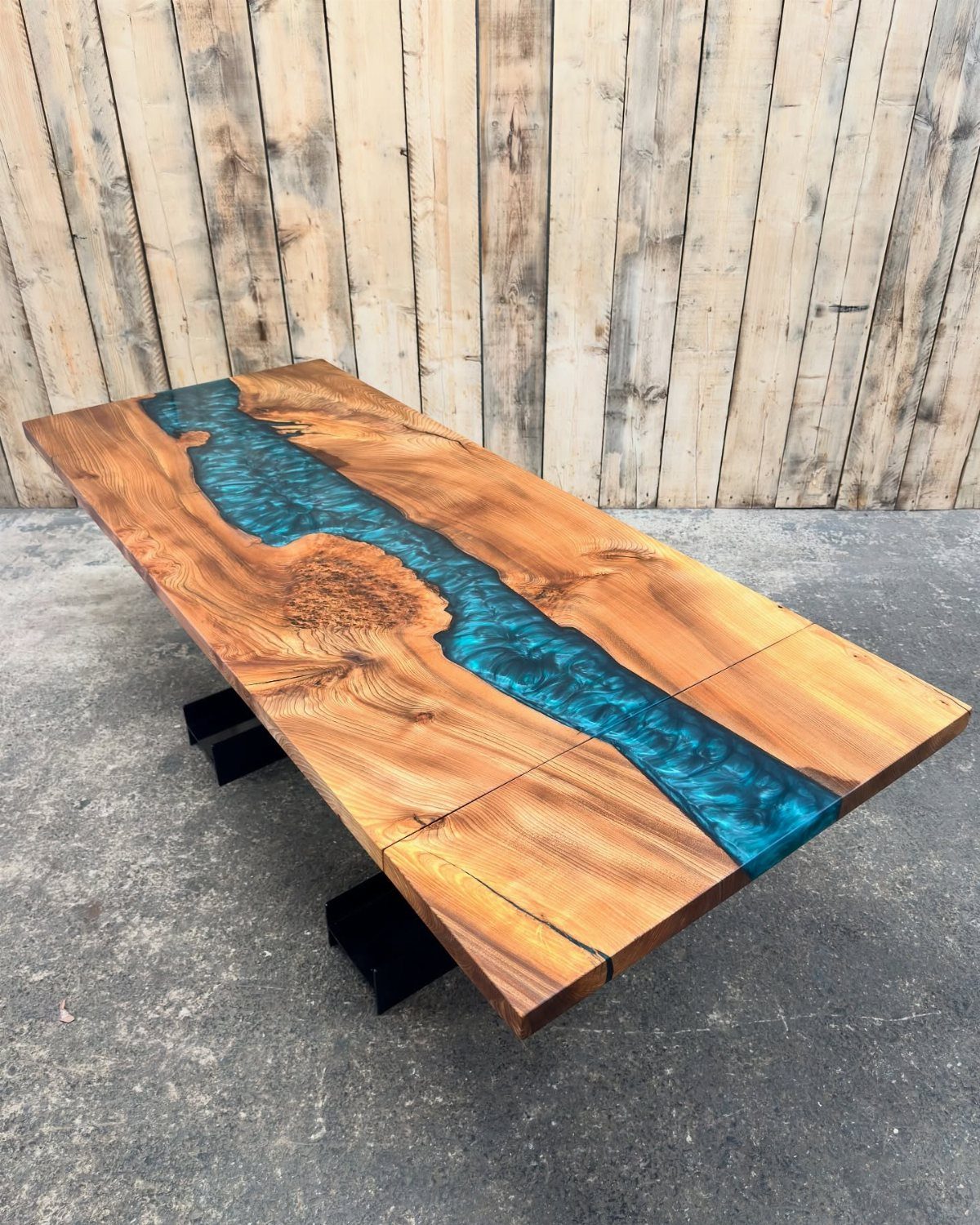
A custom set lets you specify dimensions, wood type, finish, and details like leg style or edge profile. That control is worth it when standard sizes don’t fit your room or when you want a look you can’t find ready-made.
I point clients toward custom when they have an awkward space, need more seating, or want a material like reclaimed wood or a live edge with resin inlay. Pricing depends on the maker and complexity.
The cost is higher than a retail set, but you end up with furniture built to your home instead of furniture you adapted the room around.
6. Dining Benches
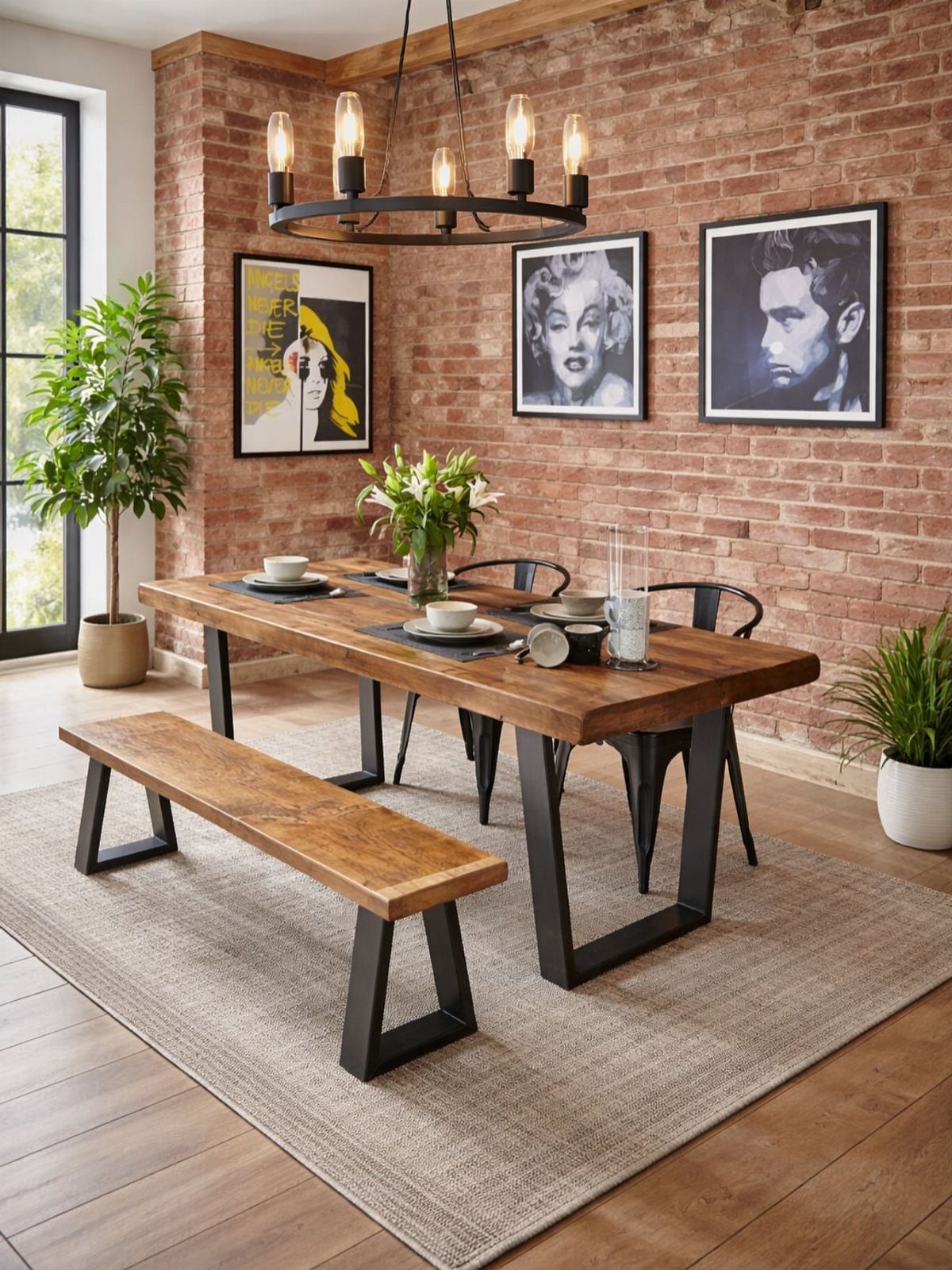
A bench fits more people in the same footprint as chairs, which makes it useful for families or anyone who hosts often. Kids can slide in from either end, and adults fit more comfortably when the table gets crowded.
I like benches on one long side of a rectangular table, with chairs on the other three sides.
That setup keeps the look balanced without committing to bench seating all the way around, which can feel too casual for some rooms.
Benches with backs add comfort but take up more visual space. Backless versions tuck under the table completely when not in use, which helps in tight rooms.
7. Cherry Dining Tables
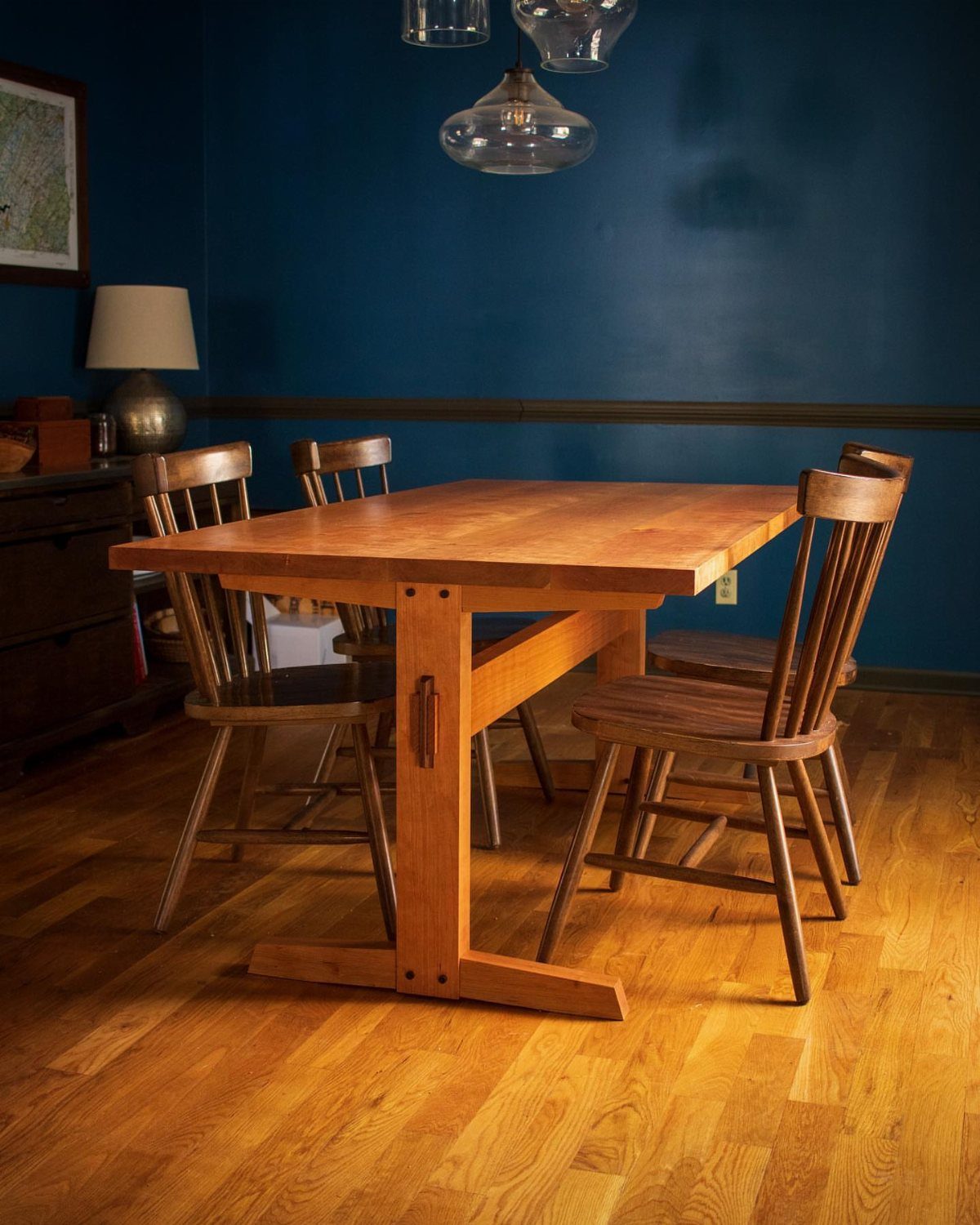
Cherry darkens over time from a pale salmon tone to a deep reddish brown, which gives the table more presence as it ages. That shift happens faster in direct sunlight, so expect variation if part of the surface stays covered.
I like cherry in rooms with warm lighting, where the red undertone feels intentional rather than out of place.
Cream walls or soft gray let the wood stand out, and cherry holds up to daily use without showing wear the way softer woods do.
The grain is finer than oak or walnut, so the surface reads smooth from a distance.
8. Square Dining Tables
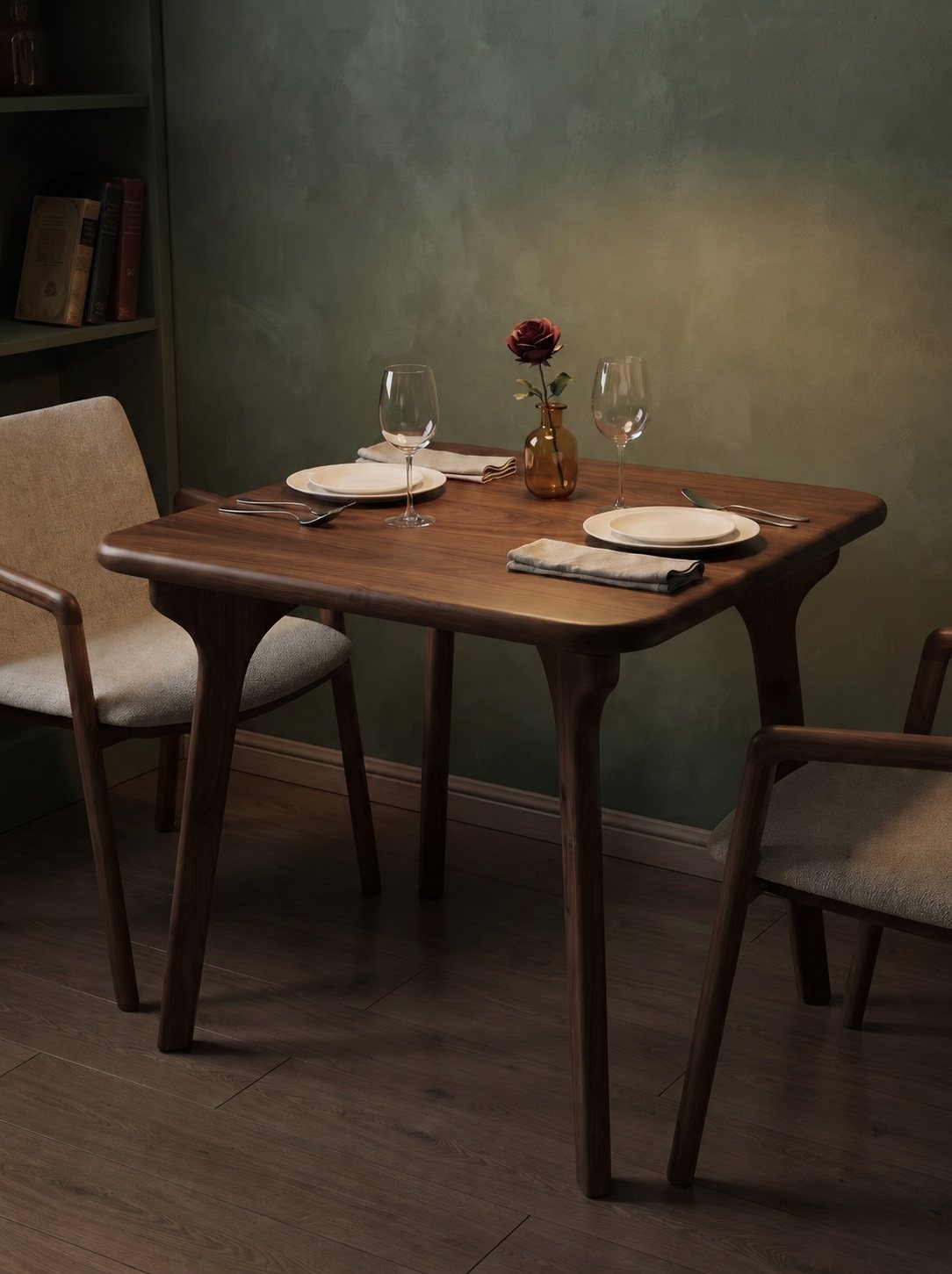
A square table fits flush against a wall when you need the room for something else.
I use this shape in breakfast nooks, small dining rooms, or studio apartments where circulation matters more than seating capacity. A square or nearly square room keeps the proportions balanced, because a long rectangle makes the table look undersized.
If you host larger groups, a square won’t extend the way a rectangle does. Plan for that limit upfront.
9. Oval Dining Tables
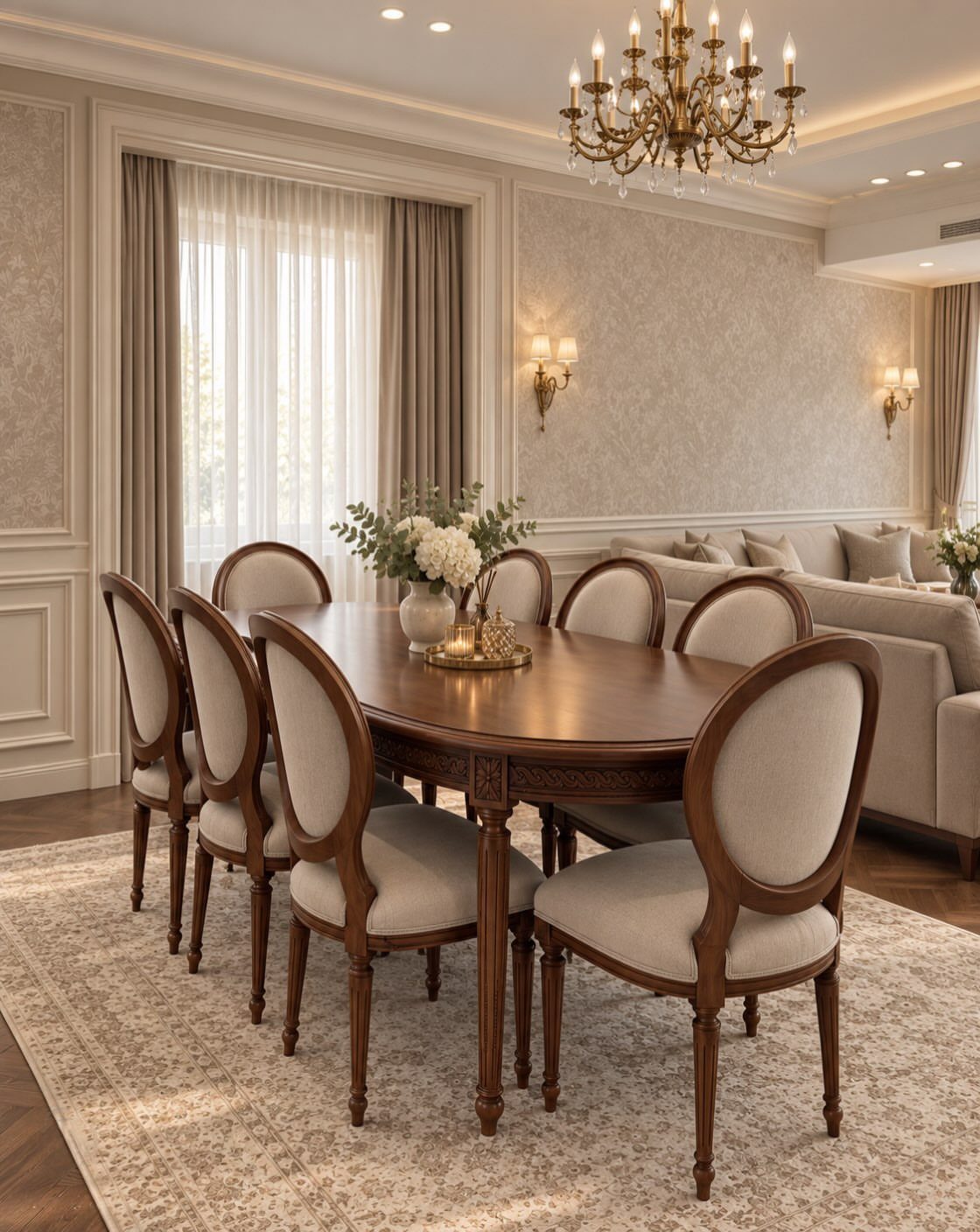
An oval gives you the surface area of a rectangle without sharp corners to navigate around. It seats more people than a round table in the same footprint, and the curved ends soften the look in formal rooms.
I recommend this shape when you need six or more seats but the room feels too traditional for a farmhouse rectangle. It works especially well under a chandelier, because the symmetry holds up from every angle.
Ovals are harder to find in ready-made sets, so expect a longer lead time or a higher price than a standard rectangle.
10. Live Edge Tables
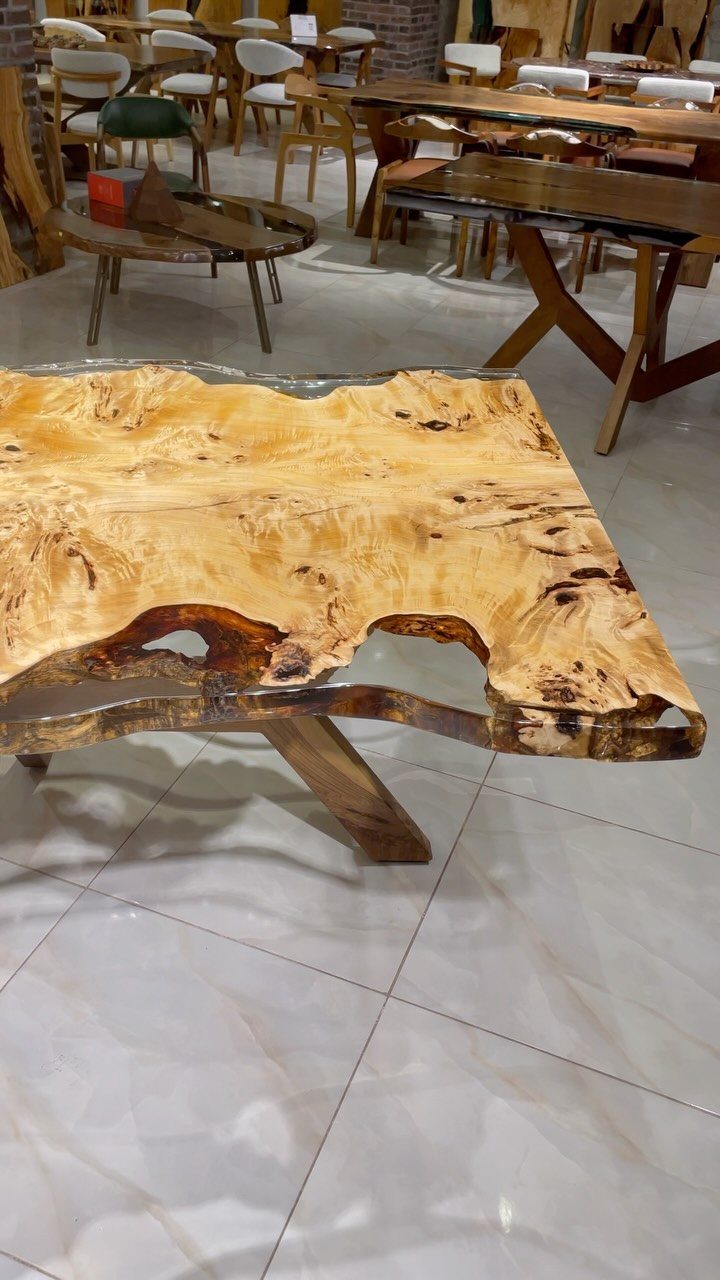
A live edge keeps the natural curve of the tree along one or both sides of the table, with bark removed and the contour left intact.
Most versions I see pair that organic edge with a smooth epoxy fill that levels the surface and highlights the wood grain.
The look works in rooms where the table is the focal point and other furniture stays simple. It reads casual next to farmhouse or industrial pieces, and out of place in traditional dining rooms with formal seating.
Expect a higher price than a standard solid wood table, because each piece is unique and the epoxy work adds labor.
11. Farmhouse Dining Sets
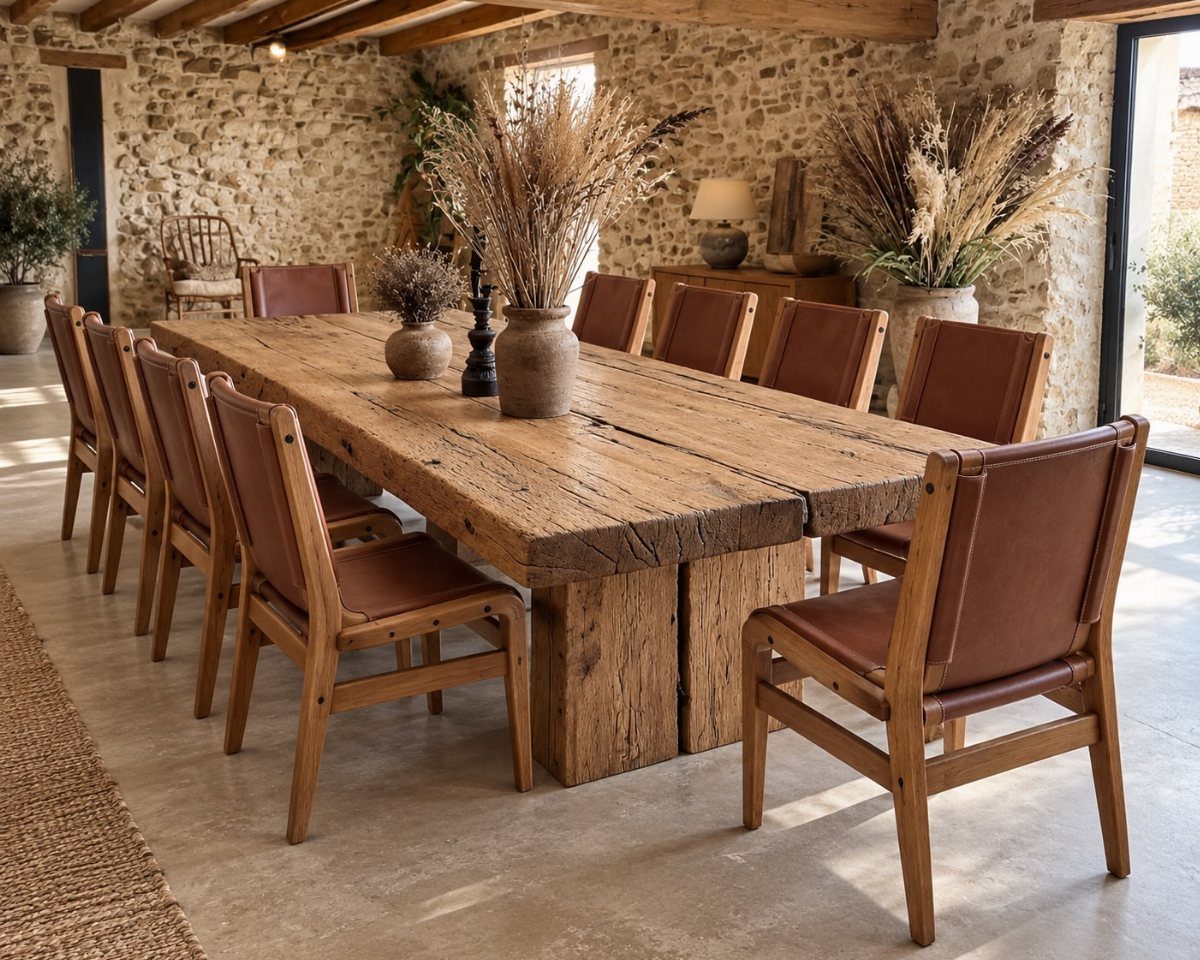
Farmhouse sets typically pair a thick plank top with turned or tapered legs and chairs that mix wood frames with upholstered seats or leather backs.
The style reads rustic without feeling unfinished, and it fits homes where the aesthetic leans traditional or country.
I like this look in rooms with exposed beams, plaster walls, or wide-plank floors, where the weight of the table balances the architecture. It works less well in modern spaces, where the detailing can feel too busy.
Most sets seat six to eight. If your room is small, the chunky proportions can overwhelm the space.
12. Mid-century Modern Sets
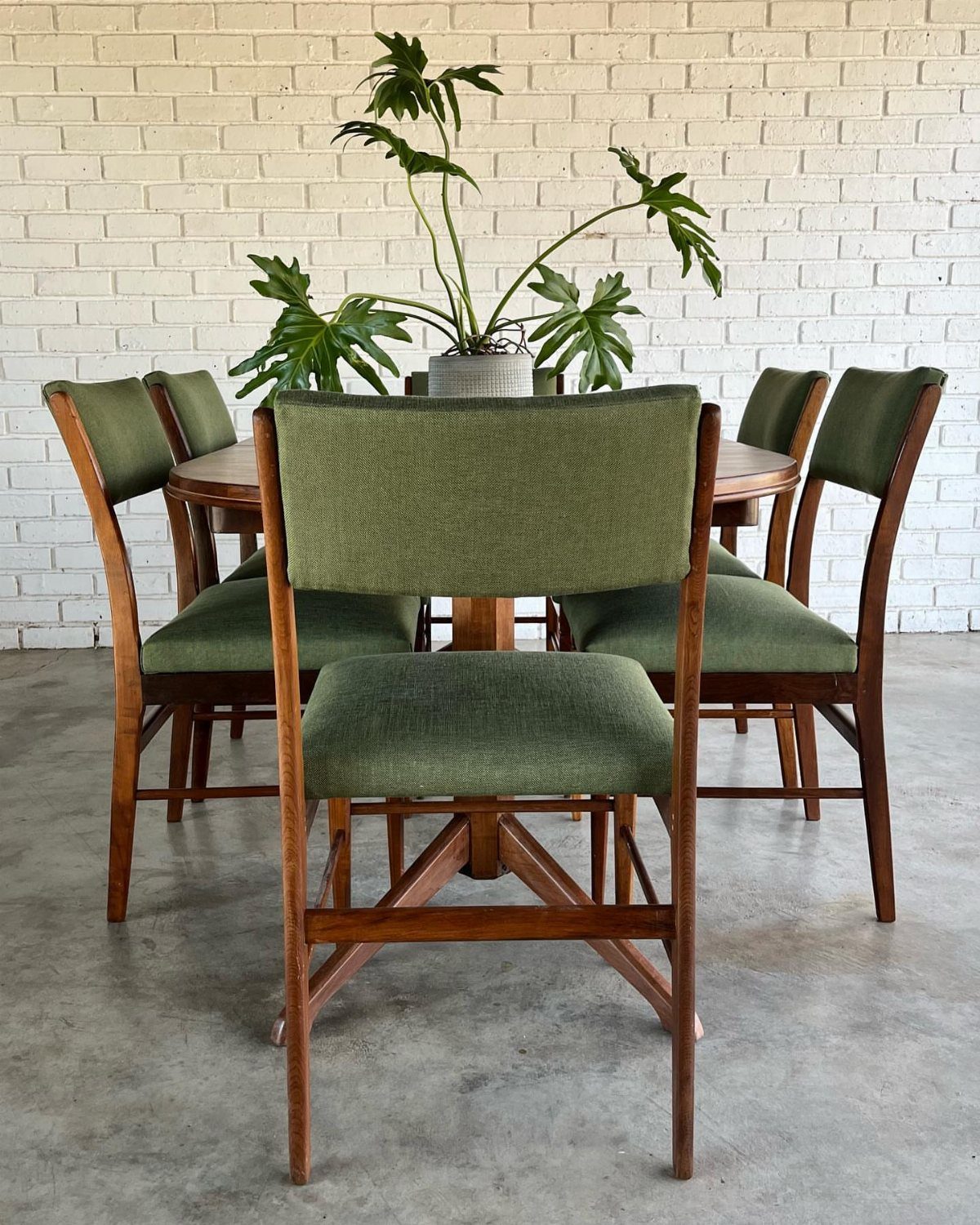
Mid-century sets lean on tapered legs, clean lines, and wood tones that sit in the honey to walnut range. Chairs often have upholstered seats in a solid color, and the overall look stays minimal without reading cold.
This style fits best in open-plan homes or rooms with large windows, where the lighter proportions keep the space feeling airy. Neutral walls and simple lighting let the wood and taper take center stage.
Durability is lower. Tapered legs show wear faster than thicker ones, and upholstered seats stain more easily than solid wood chairs.
13. Dining Room Furniture Sets
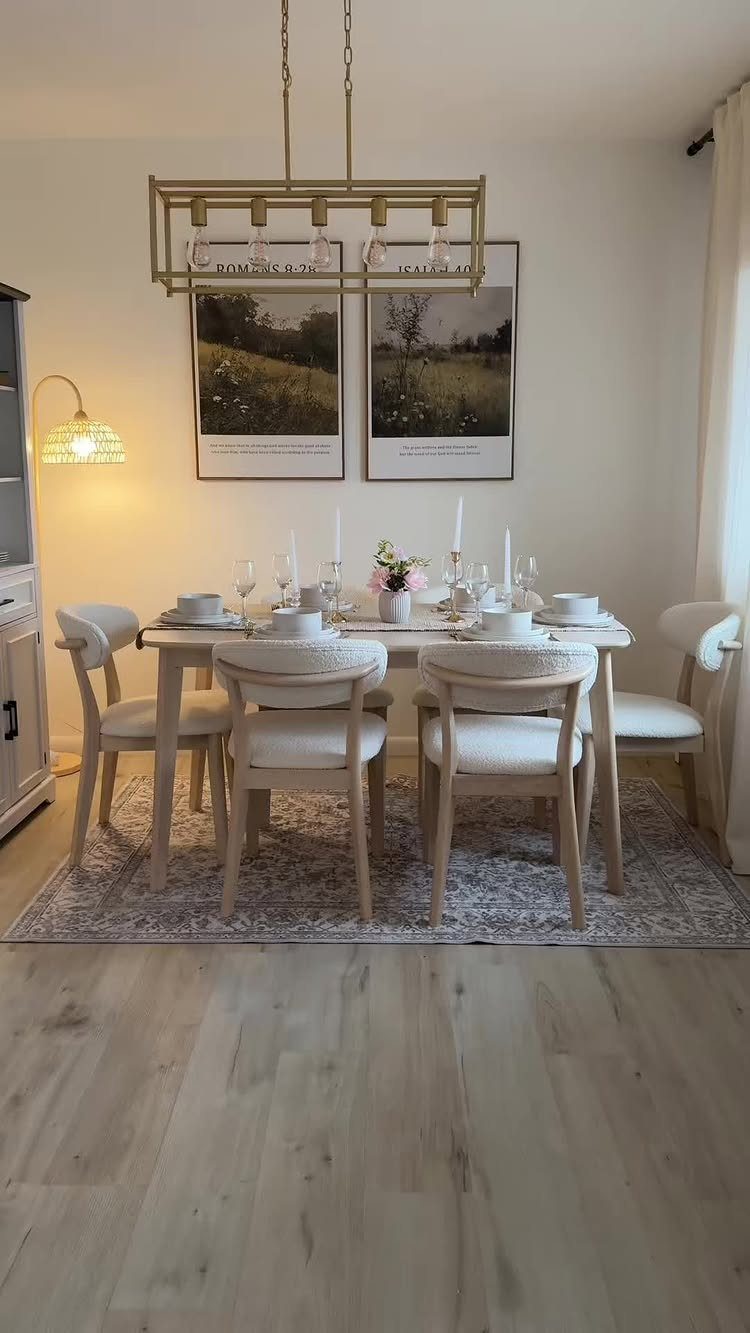
A furniture set built for the dining room usually includes the table, chairs, and sometimes a buffet or hutch in the same finish. That package solves storage and serving in one decision.
I point clients this direction when they need cohesion across more than seating. If you host regularly and need a place for dishes or serving pieces, the buffet matters as much as the chairs.
The upside is a finished room without hunting for pieces that match. The limit is flexibility: if one part wears out or you want to change the look later, replacing a single item without breaking the set becomes harder.
14. Compact Two-person Set
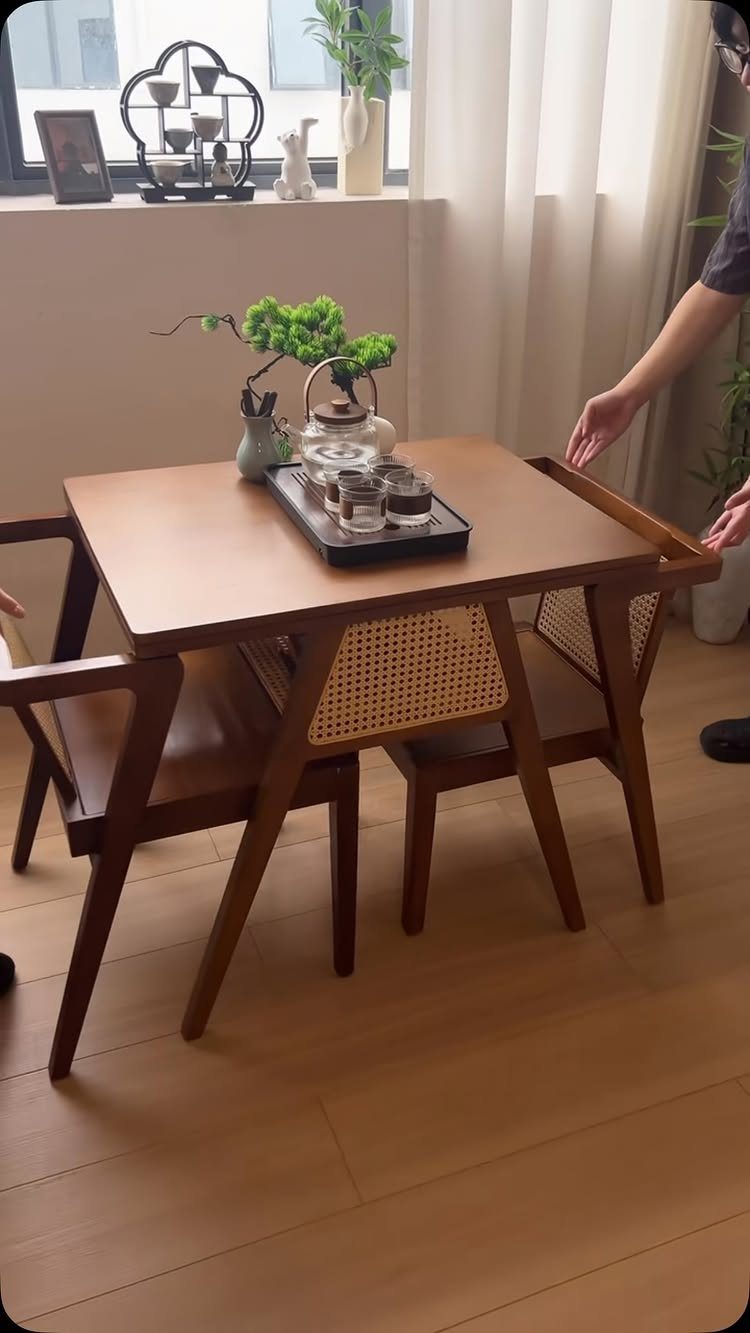
A two-seat set takes up less floor space than a four-top, which makes it the right choice for a studio, galley kitchen, or breakfast nook where every square foot counts.
I use this size when the household is one or two people and guests eat at the counter or the coffee table.
A small square holds coffee, a laptop, or dinner for two without feeling cramped, and the chairs tuck in completely when not in use.
If you host more often than twice a year, plan where the extra seating will come from. A compact set doesn’t flex.
15. Rectangular Table and Chairs
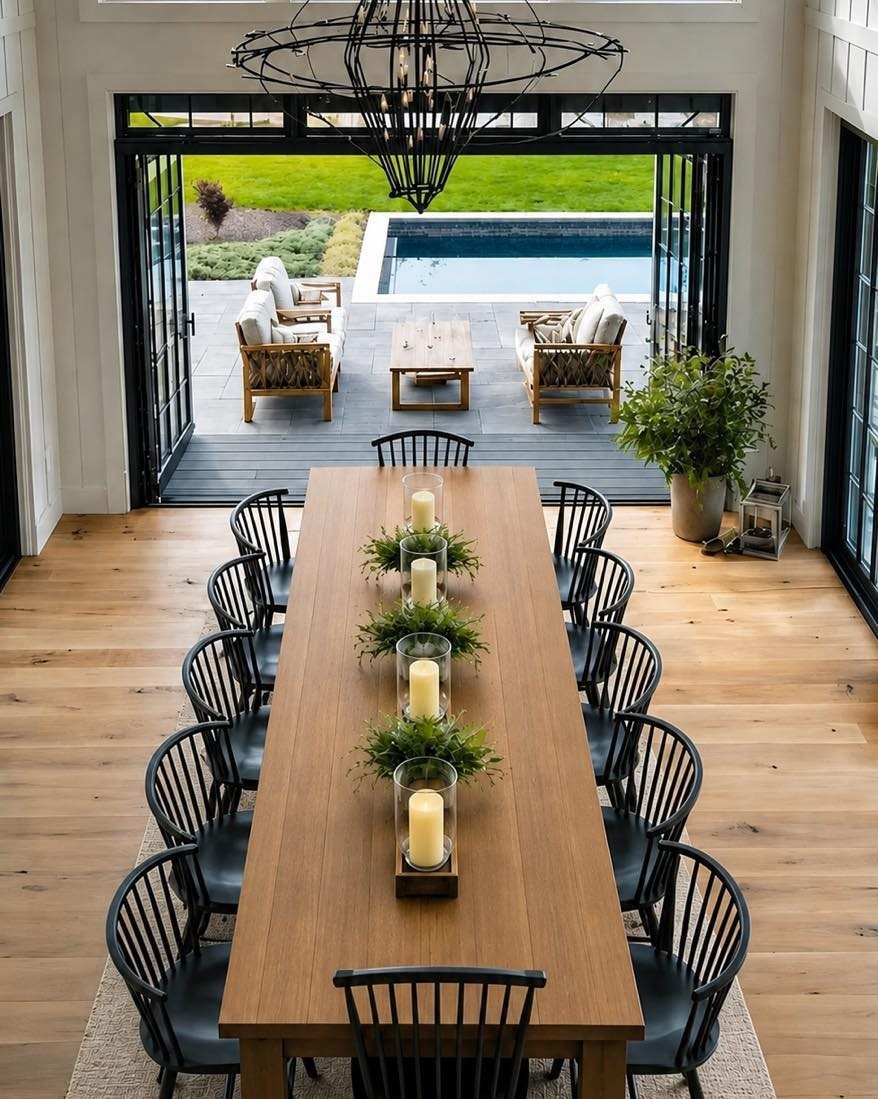
A rectangle seats more people per inch of room than any other shape, and solid wood versions pair with almost any chair style. I’ve specified this combination in narrow dining rooms, open kitchens, and formal spaces, because the proportions adapt.
Chair finish matters more when the table is simple. Match the wood tone for a traditional look, or go with upholstered seats in a contrasting color if the room needs visual interest.
Measure your room first: chairs need clearance on all sides to pull out without hitting walls or furniture.
16. Drop-leaf Dining Table
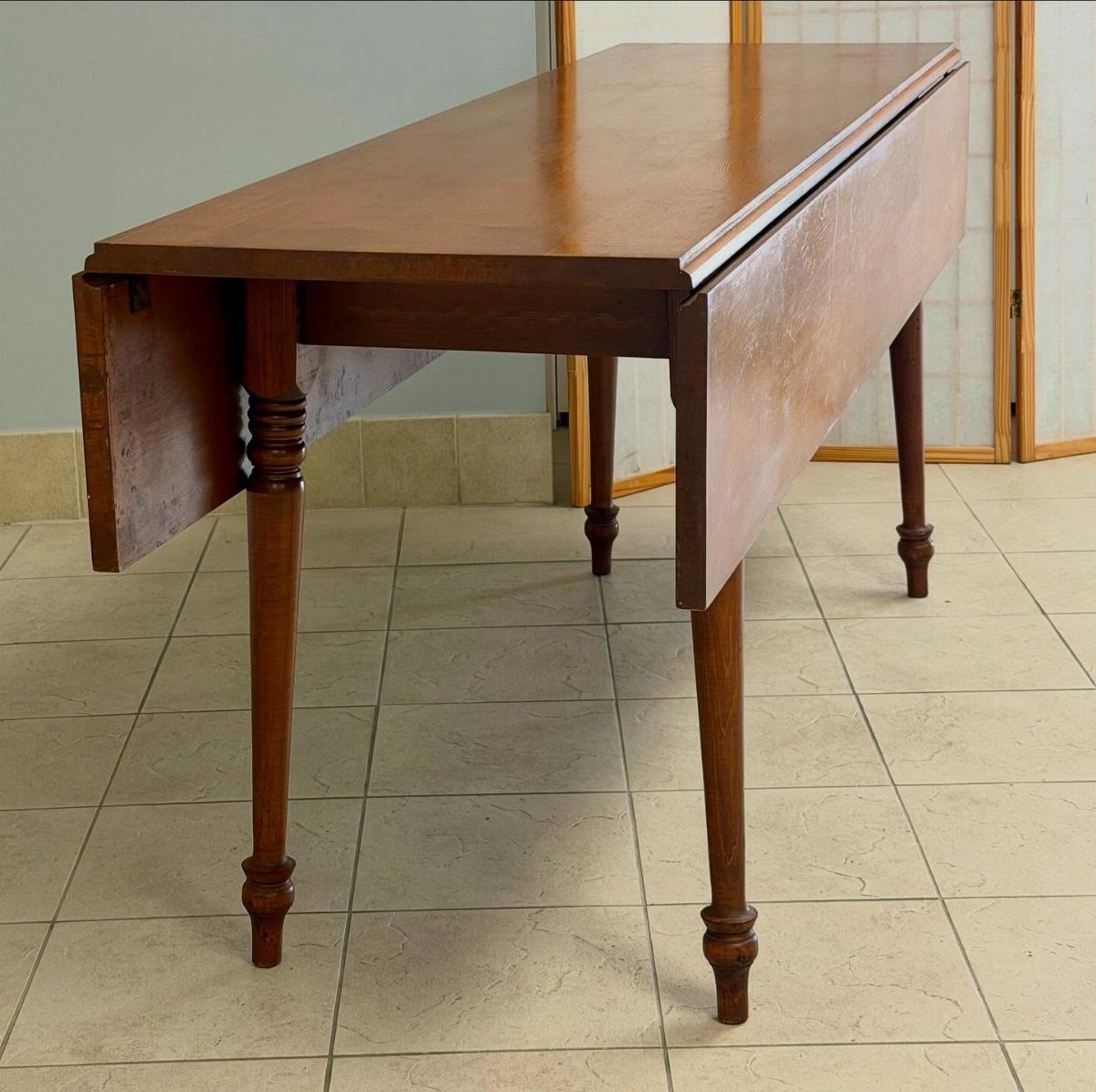
Drop leaves let you fold down one or both sides when the table isn’t in use, which cuts the footprint nearly in half.
That flexibility matters most in small apartments or dual-purpose rooms where the dining area sometimes needs to disappear.
I recommend this setup when you cook and eat alone most days but need seating for four or six a few times a month.
The leaves lock flat when raised, so the extended surface is stable enough for serving dishes and glassware.
Mechanisms wear faster than fixed joints.
Hinges loosen over time, and solid wood leaves are heavy to lift. Check the support brackets before you buy.
17. Counter-height Dining Set
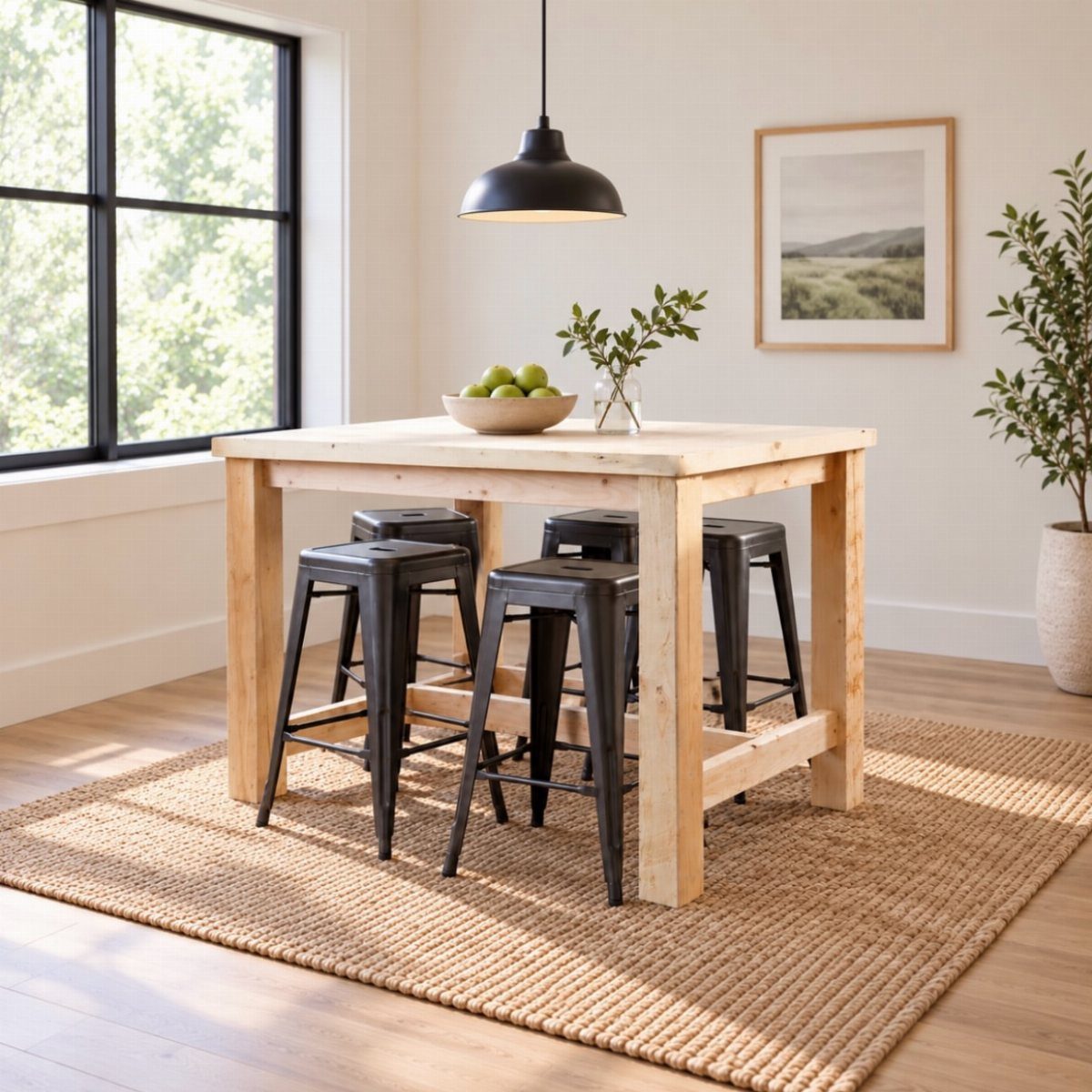
Counter height sits at 36 inches, which is lower than bar height but still changes how the room feels.
I like this option in open kitchens or casual dining areas where the table doubles as a workspace or snack bar during the day.
Stools take up less visual space than chairs with backs, and they slide under the table completely when not in use. That keeps circulation open in tight layouts.
The downside is comfort for long meals. Counter-height seating works better for quick breakfasts or drinks than for long dinners, because most stools lack the back support you get from a standard dining chair.
18. Dining Table with Extra Seating
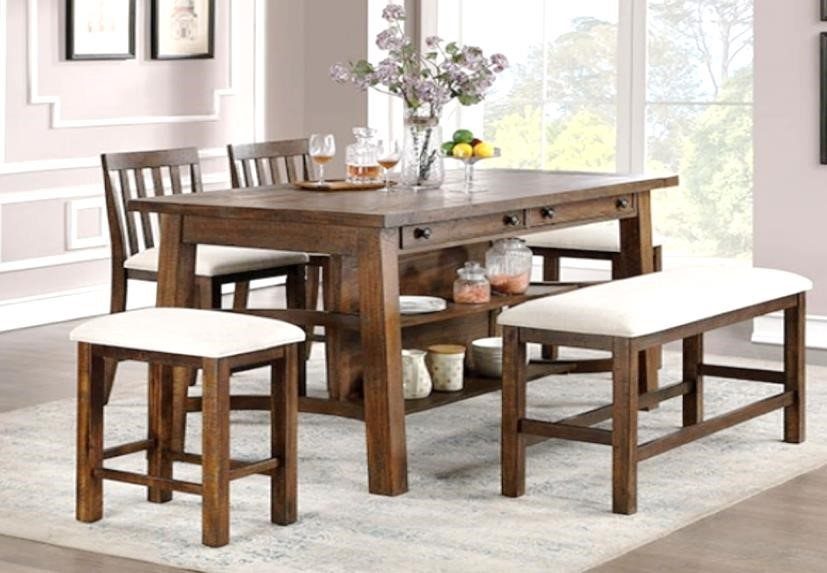
A set with mixed seating gives you options when the guest count changes.
I usually see this done with chairs at the ends and one side, a bench on the other long side, and a stool that can move wherever it’s needed.
The bench fits kids or extra adults without adding more chairs to store, and the stool works as a side table or plant stand when dinner is over.
That versatility matters in homes where the dining room also serves as a workspace or gathering spot.
The mix only works if the pieces match in finish and proportion. Mismatched heights or wood tones make the whole set look unplanned.
19. Trestle-base Dining Table
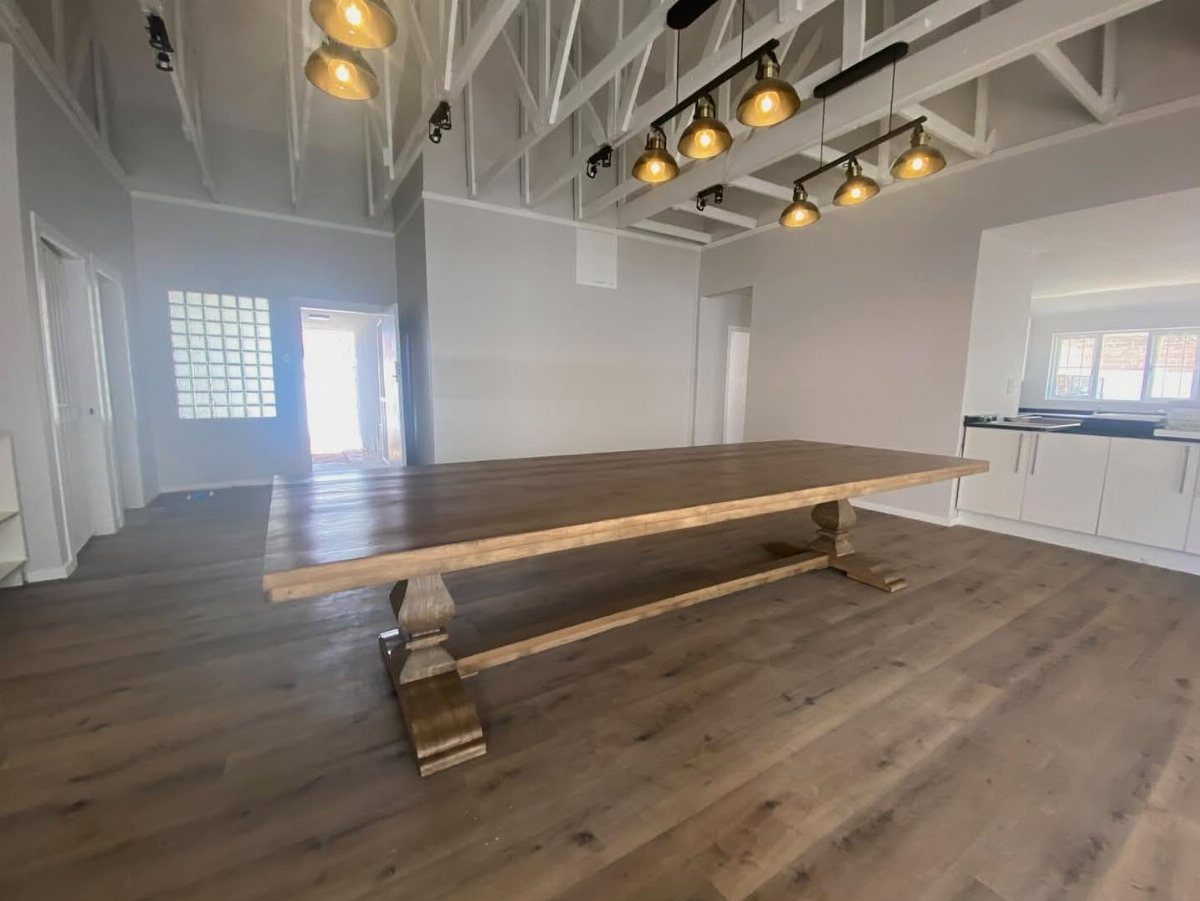
A trestle base runs the length of the table with vertical supports at each end and a crossbeam connecting them, which keeps the floor clear underneath and gives you uninterrupted legroom all the way down both sides.
That matters when you need to fit a full table without anyone straddling a leg.
I like this base in long, narrow rooms where chairs need to fit comfortably on both sides without fighting for space. The open structure also works in modern or industrial interiors, where heavy turned legs would look out of place.
Solid wood trestles hold weight better than metal, but they take up more visual space. If your room is small, the base can make the table feel heavier than it is.
20. Chunky Pedestal Table
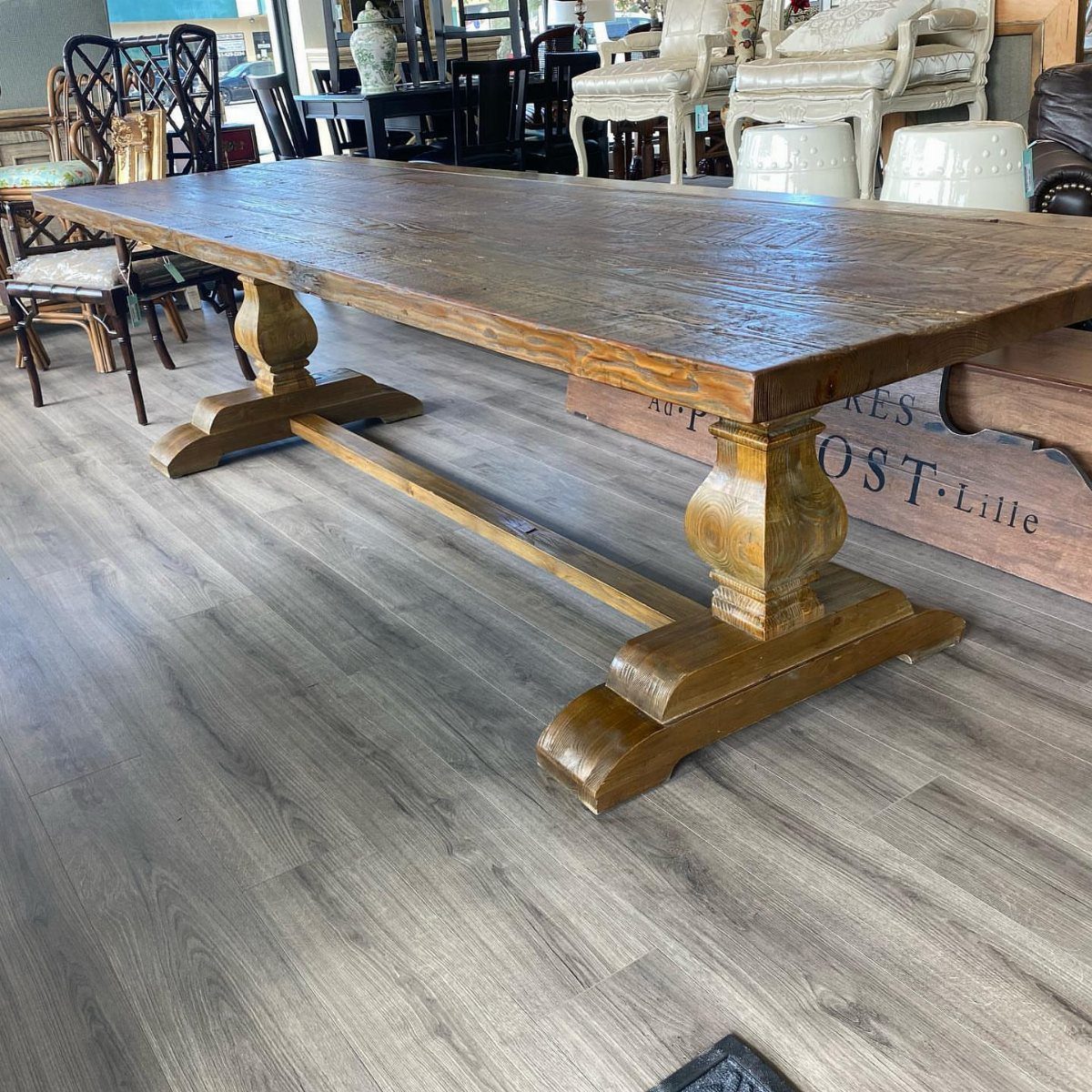
Carved pedestals replace corner legs with thick posts connected by a stretcher, and the thickness of the top balances the weight below.
The result reads formal without tipping into traditional, and the carved detail gives the piece presence in a room where the table is the main furniture.
This style fits dining rooms with high ceilings or architectural trim, where a simpler base would disappear. The stretcher keeps the structure stable without blocking foot traffic.
The carved detail collects dust. Plan to wipe it down weekly if the table sits in a high-traffic area.
Ordering, Delivery, and Assembly
Lead times for solid wood sets run anywhere from a few weeks to several months depending on whether the piece is in stock or made to order.
Custom work and certain hardwoods push the timeline longer, while ready-made inventory can arrive much faster.
Free shipping shows up on qualifying orders from some makers, though the threshold varies. Check what counts as qualifying before you assume it applies to your cart.
Assembly depends on the set.
Most flat-pack options include instructions and hardware, and the process stays manageable if you have basic tools and an afternoon. Fully assembled delivery costs more but saves time, especially with heavy tables or chairs that need precise alignment.
If the delivery window matters because you’re moving or hosting, confirm it in writing before you order.
Sizing and Seating Capacity
Width and seating capacity usually filter together on retail sites, with categories that cover everything from compact two-tops to tables that hold ten.
Those filters help when you know your room dimensions and your typical guest count, but the shape changes how many actually fit.
Tight rooms need less table or a different shape.
A table that seats eight on paper might only hold six comfortably if the legs or base intrude on legroom. Check the base design and where the supports land before you commit to a size that fills the room.
Frequently Asked Questions
What is the average cost of a solid wood dining table?
Pricing varies widely based on wood type, size, and whether the piece is custom or ready-made, with custom sets and certain hardwoods pushing costs higher than standard inventory.
Live edge tables and sets that include buffets or hutches also cost more because of the extra labor and materials involved.
Is solid wood good for a dining table?
Unlike veneer or laminate, solid wood tolerates sanding, so surface damage disappears instead of exposing pressed fiber underneath.
What is the most durable wood for a dining room table?
Hard maple and white oak resist dents and surface wear, though maple shows more color variation over time while oak holds a steadier tone. Oak is another durable choice commonly used in solid wood sets.
What type of wood is best for dining tables?
Cherry fits traditional rooms and warms up over time, while walnut’s cooler grain works in modern or minimal spaces.
Oak, maple, and acacia each offer different color and grain patterns, so the best choice depends on your room’s palette and how formal or casual you want the look to feel.
What are the benefits of choosing a solid wood dining table set?
Buying pieces designed together keeps proportions and finish consistent, and solid construction outlasts laminate when chairs scrape and kids lean back.
How do I care for and maintain a solid wood dining table set?
Wipe down the surface often with a dry or barely damp cloth, and deal with spills before they sit long enough to stain.
Set drinks on coasters and plates on mats, and keep hot pans or sweating glasses off bare wood so you don’t end up with rings or cloudy marks.
What types of wood are commonly used in these dining table sets?
Oak, walnut, maple, cherry, and acacia are the most common, each with different color and grain.
Walnut sits between mid-brown and charcoal with straighter grain, cherry starts pale and darkens to reddish brown, and oak and maple offer their own distinct tones and patterns.
Do solid wood dining table sets come with matching chairs?
Chairs in a set match the table’s wood and leg profile, so the room reads as one piece of furniture instead of a mix.
Some sets also include a bench or buffet in the same finish, and many makers offer matching chairs sold separately if you need extra seating later.
Can I assemble a solid wood dining table set myself?
Assembly involves bolting legs and tightening brackets, and the job fits into one afternoon if you own a screwdriver and an Allen key.
Tables with heft or chairs that need careful leveling go faster with help, though delivery with assembly costs more if you prefer to skip the build.
Can I customize a solid wood dining table set?
Ordering custom means picking the wood, size, finish, and profile yourself, which makes sense when stock options don’t fit the room or match the style you have in mind.
Cost varies with the shop and detail level, and turnaround runs longer than buying off the shelf.