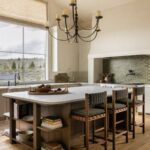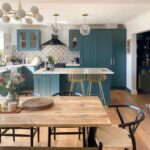

Most rolling islands with seating range from compact bar carts with two stools to full kitchen workstations that seat four, and the difference comes down to how often you actually need to move it.
If the island stays put most of the time, look at storage capacity and counter material before you worry about wheel quality.
If you roll it around daily, a lighter frame and locking wheels on opposite corners keep it from shifting when someone leans on the edge.
1. Rolling Kitchen Island
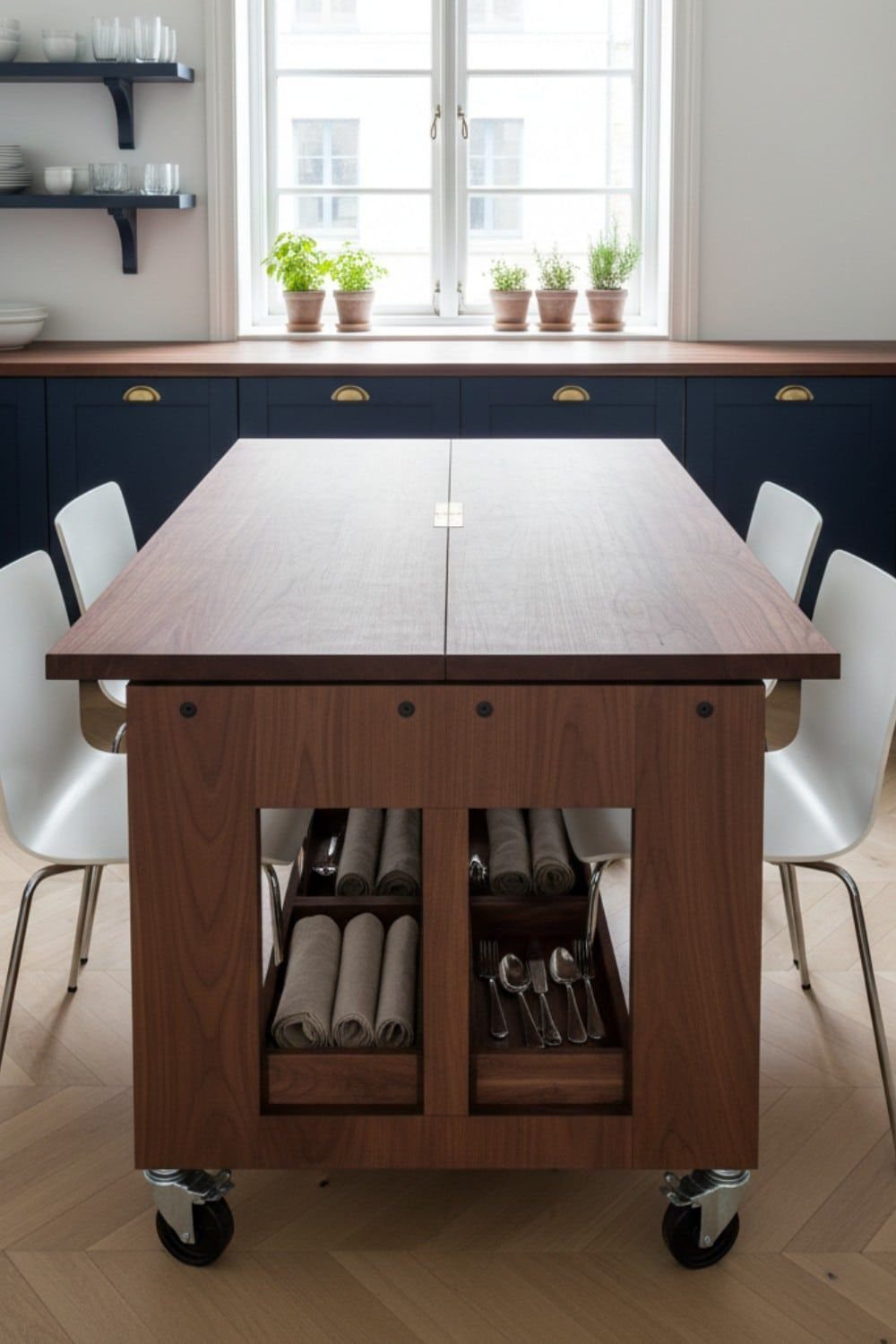
A rolling island gives you prep space, storage, and seating in one piece that you can reposition whenever the room needs it. I move mine near the sink when I’m cooking and push it against the wall when I’m not.
Locking casters matter more than most people think.
The cheaper ones drift under weight, which defeats the point of seating. Look for at least 2 locking wheels on opposite corners, and test the lock before you buy if you can.
A rolling island makes sense when traffic patterns shift with the task. If your layout is fixed and the island never needs to move, you gain nothing from the wheels.
If flexibility is key, a mobile island on casters can be rolled aside to create more floor space or brought into the center when extra seating or prep area is needed.
2. Extendable Kitchen Island
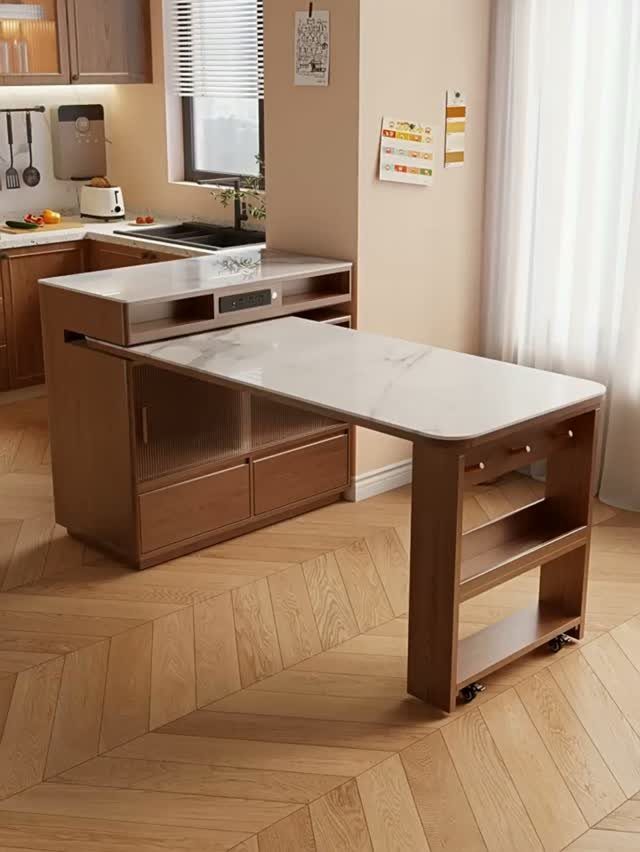
An extendable island stores compact and opens when you need the surface for a project or a meal.
The pull-out section usually matches the main top in height, so it works as prep space or as a spot for guests to sit.
Most versions slide out on tracks or fold up on hinges.
I prefer the slide-out, because it stays stable under pressure and you can leave things on the main surface while you extend it. Hinged versions need you to clear the area first.
Check the extension’s depth before you commit. If it only adds a few inches, that’s enough for plates but not much room to work.
3. Drop-leaf Island
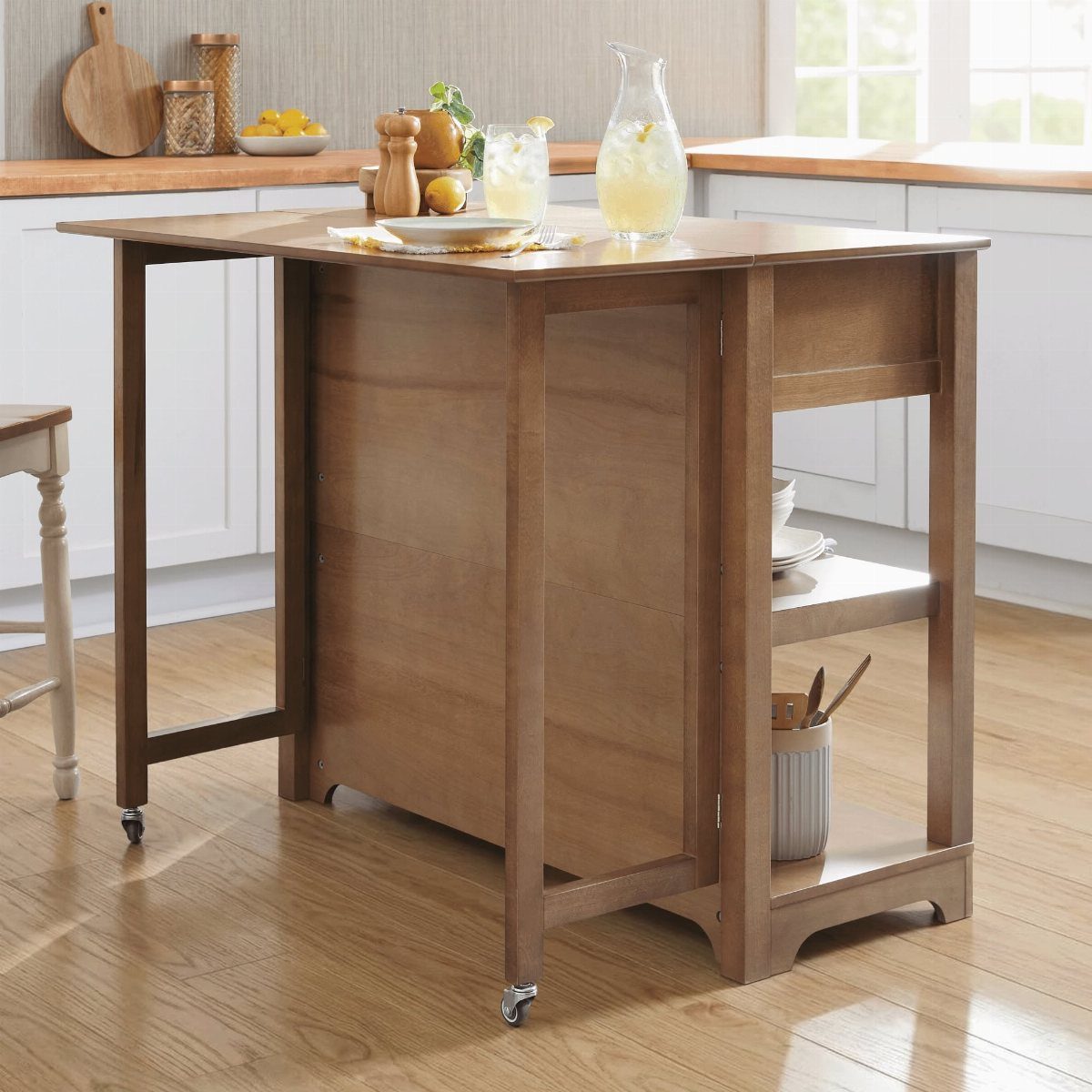
A drop-leaf island keeps one side flat against the wall or cabinet when you don’t need it, then lifts to seat two or three people when you do.
The hinge sits along the edge, and most designs include a support bracket that swings out to hold the leaf level.
I install these in galley kitchens where a fixed overhang would block the walkway. The leaf goes up for breakfast or a quick dinner, then drops back down so you can move through the space without turning sideways.
The wheels let you shift the whole island away from the wall if you need access to storage or outlets behind it.
4. Kitchen Island with Stools
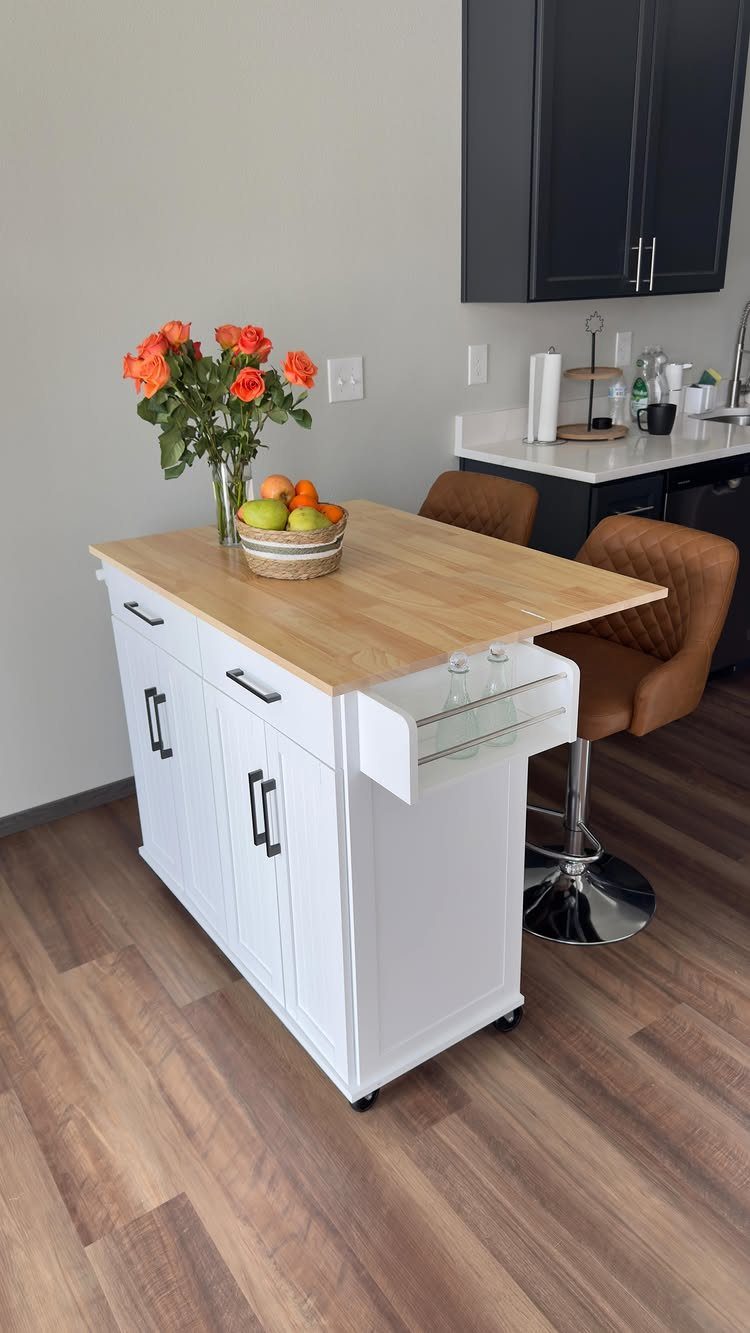
Pairing the island with stools gives you a quick breakfast counter or a place for someone to sit and talk while you cook. The stools tuck under the top when not in use and keep the floor clear.
I look for stools with a low profile and a swivel base. Backless stools slide in tighter, and the swivel makes it easier to get in and out without dragging the seat across the floor.
If the island is on wheels, check that the stools fit underneath even when the island is pushed against a wall or cabinet.
A few inches of clearance makes the difference between storage that works and stools that sit in the corner.
5. Island with Attached Table
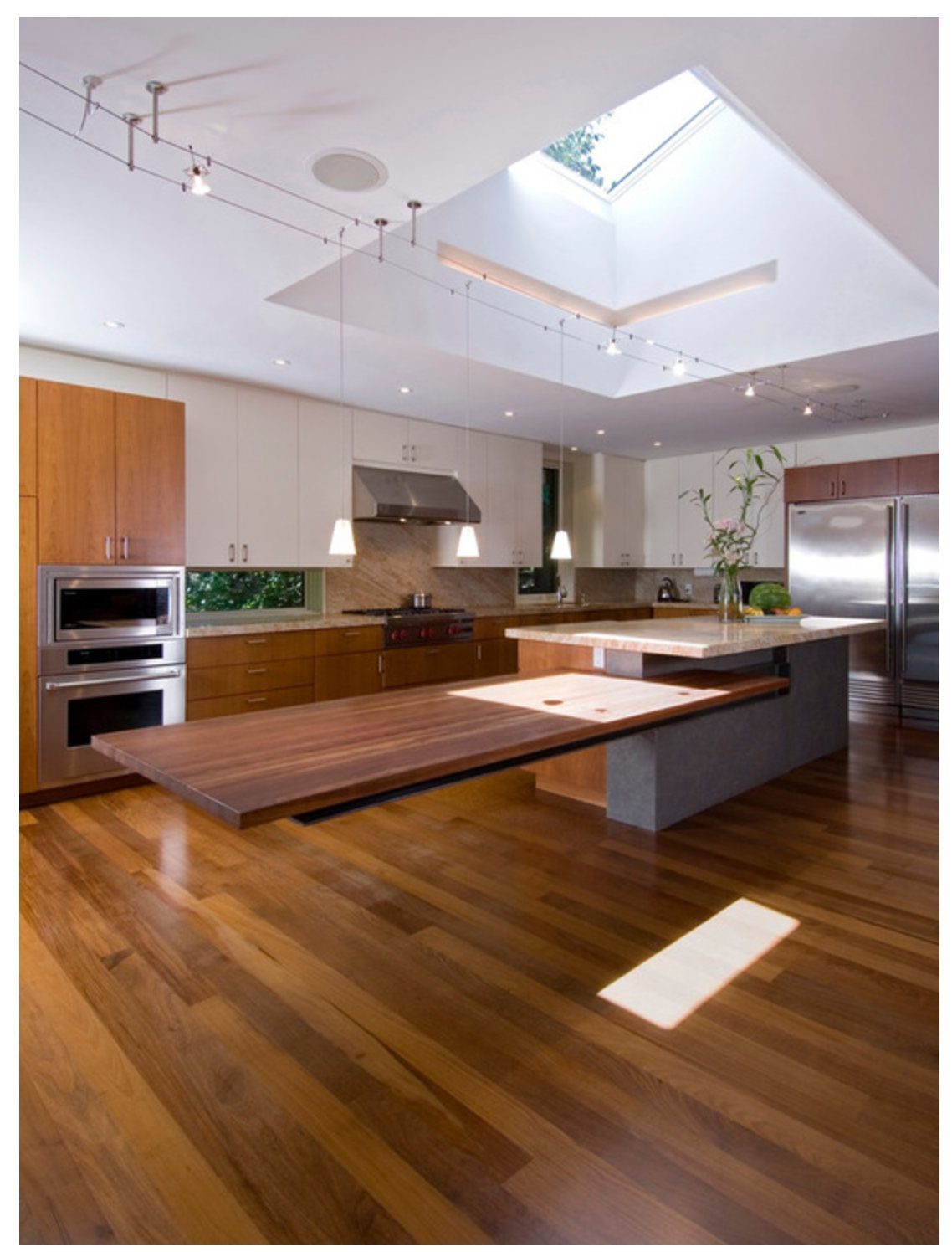
An island with an attached table extends the workspace into a dining surface without needing a second piece of furniture.
The table usually sits at the same height as the island or drops a few inches lower, depending on whether it’s meant for standing prep or seated meals.
I use this setup in open-plan kitchens where the island anchors the cooking zone and the table marks the transition to the dining area. The attached design keeps the 2 functions connected without a visual break.
If the island is moveable, the table adds weight and limits where you can roll it. That tradeoff is fine if you rarely move the island, but it’s worth thinking through before you commit to the configuration.
6. VADHOLMA Kitchen Island
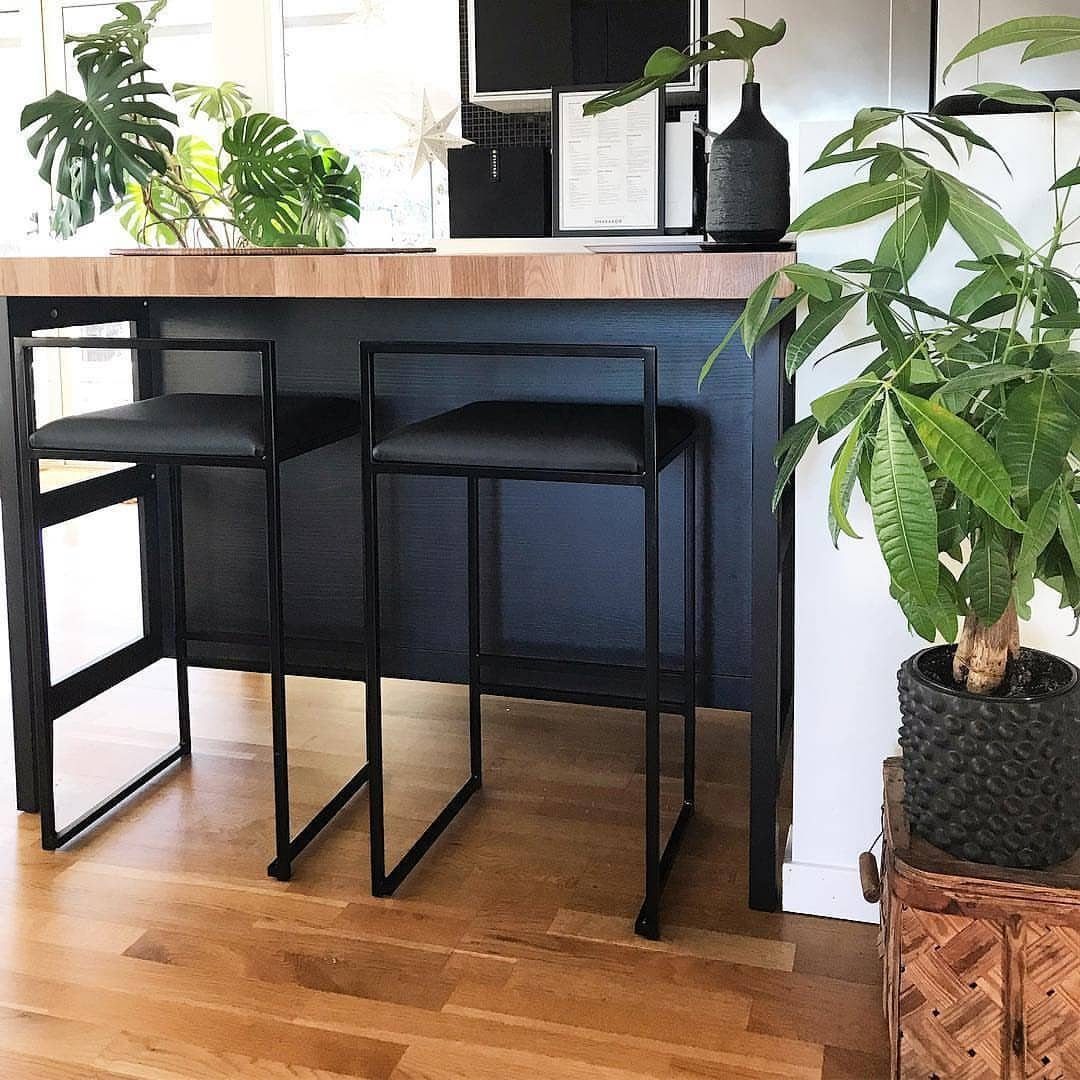
This design combines a butcher-block top, powder-coated steel frame, and open shelving in a format that fits a lot of kitchens without custom work.
The black finish reads industrial without tipping into cold, and the wood top warms it up just enough.
The shelves below hold pots, bowls, or small appliances you want within reach. I stack heavier items on the lower shelf and keep the upper one for things I grab often.
The frame stays open, so everything you store is visible. If that bothers you, this is not the right island.
The stools fit under the overhang on one side, which gives you seating for two without taking up extra floor space. The whole unit is heavy enough that it doesn’t shift easily once you have it in position.
7. Island with Bar Overhang
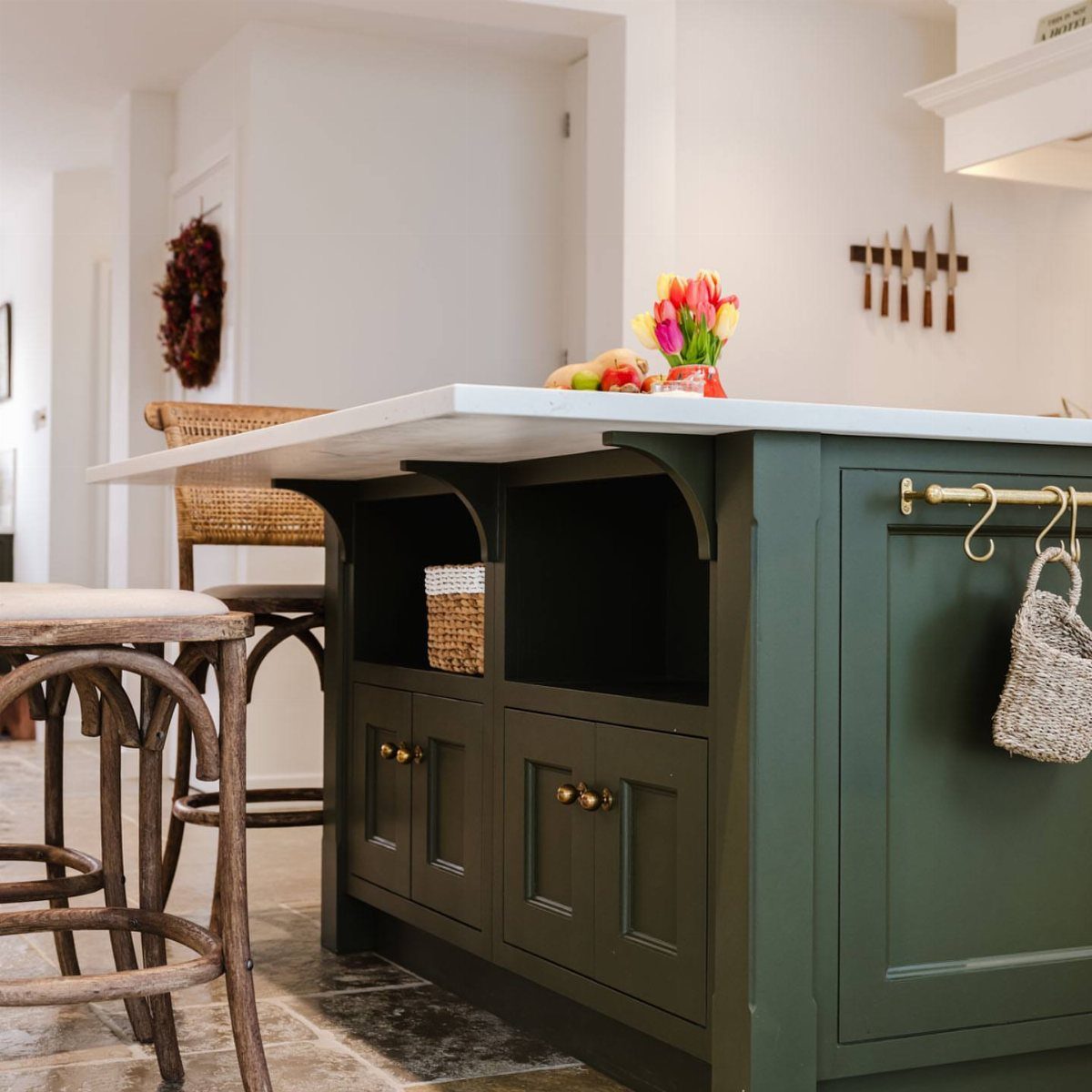
An overhang on one side of the island gives you room to pull up stools without needing a separate dining table.
I set the overhang at 12 inches minimum so knees clear the cabinet face, and 15 inches if the stools have arms or the island is tall.
An overhang against a wall or in a corner puts the open side where people gather, facing the room.
If the island sits in the middle of the floor, you lose storage on that side for seating you might not use every day.
Most rolling islands with an overhang are lighter on the cabinet side to offset the cantilevered top. Lock the wheels before anyone sits, because stools pull hard when weight shifts.
8. Marble-top Island
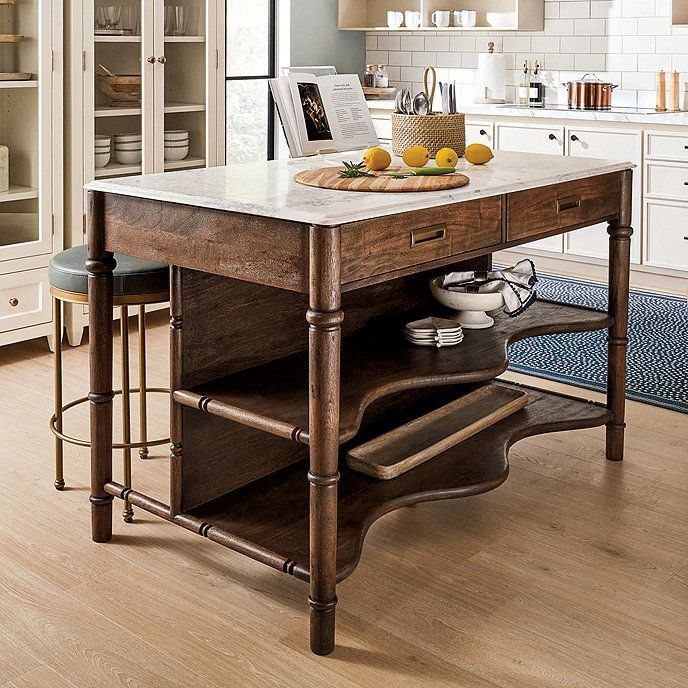
A marble top brings weight and a finished look to a rolling island that wood alone doesn’t give. The stone stays cool, which helps with pastry work, and the surface cleans up well between tasks.
Real marble stains if you leave wine or lemon juice on it, so I wipe spills fast and seal it twice a year.
If that sounds like too much upkeep, a marble-patterned laminate gives you the look with none of the maintenance.
The top adds enough weight that the island is harder to roll, even with good casters. I keep mine in one spot most of the time and treat the wheels as a once-in-a-while option.
9. C-shaped Rolling Table Extension
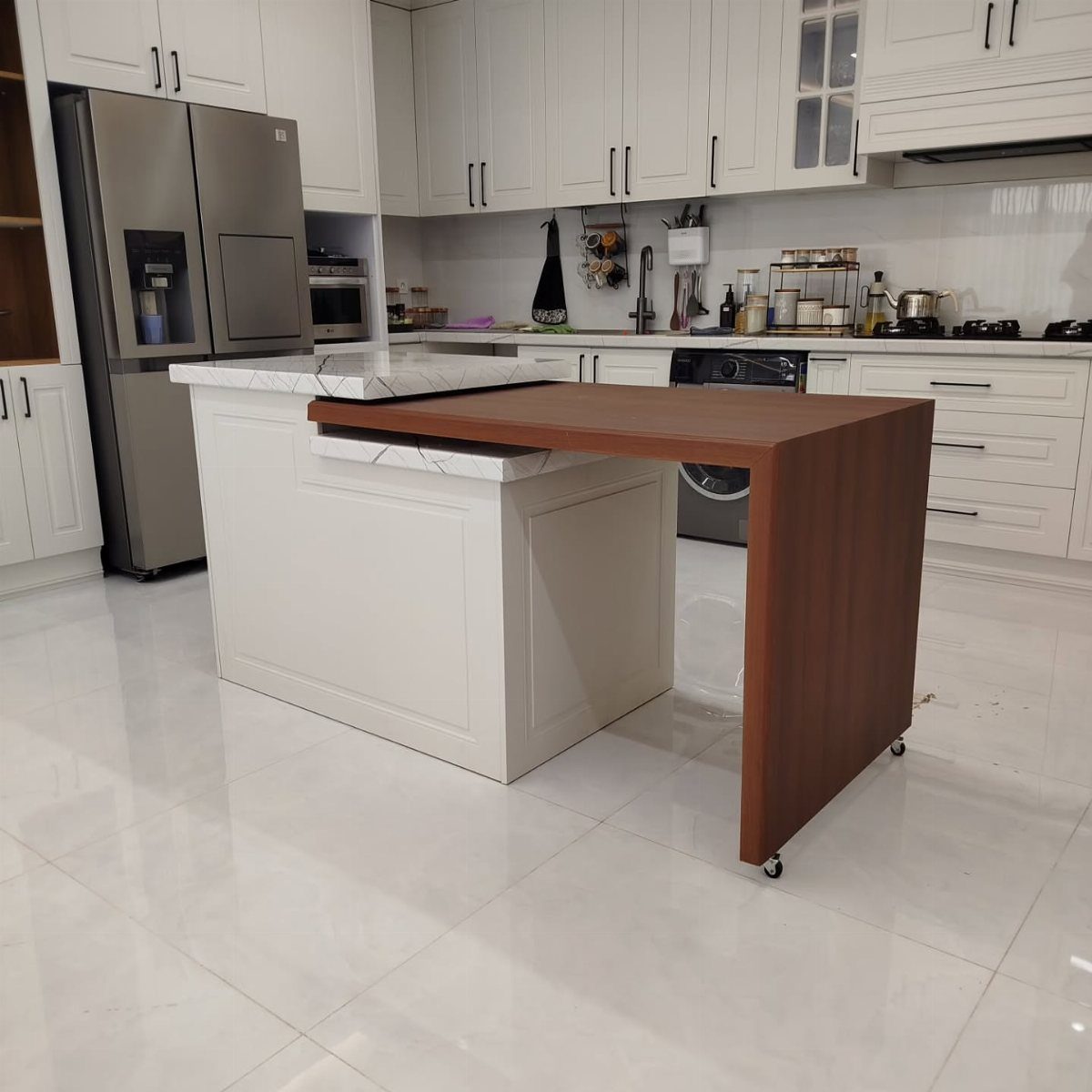
The C-shape lets the table slide partway over the island so the surfaces sit close without blocking access to the main top.
I use this when I need a spot for someone to sit and eat while I’m still working at the island.
The table rolls independently, which gives you more flexibility than a fixed extension. You can tuck it against the island for a meal, then roll it to another spot when you need floor space.
Most C-shaped tables sit a few inches lower than the island, so they work better as eating surfaces than as extra prep space. If you need the two at the same height, this setup doesn’t deliver.
10. Pull-out Table Island
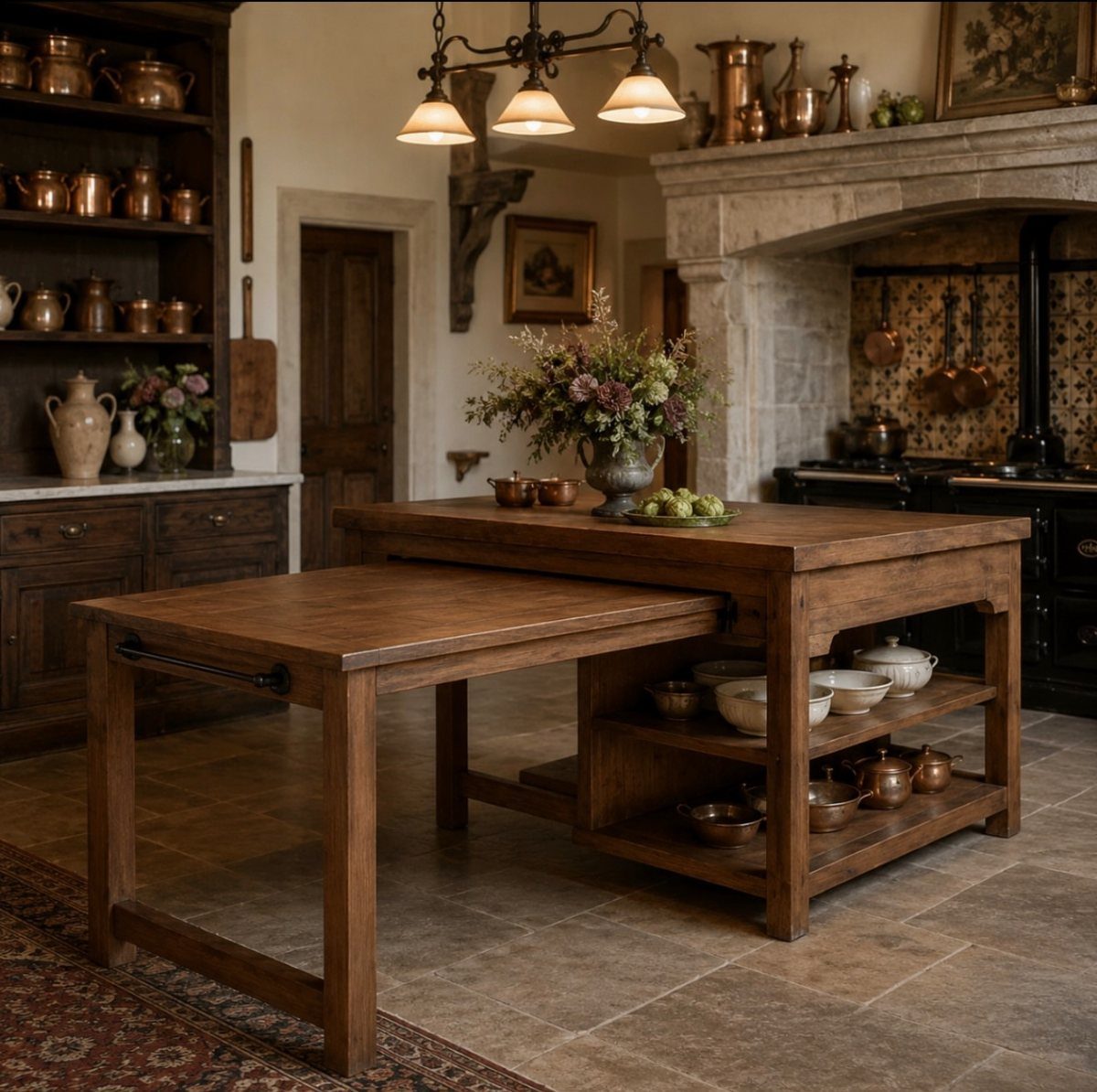
The pull-out table slides from inside the island and locks at full extension, giving you a dining surface that disappears when you’re done.
I’ve seen this in older kitchens where the island was built heavy and the table mechanism was engineered to hold weight without sagging.
The slide-out design saves floor space by keeping the table inside the island until you pull it forward. The mechanism claims storage inside the island, so you give up a drawer or a shelf.
If the island is on wheels, the pull-out table can shift the center of gravity enough to tip the whole unit.
Most versions I’ve seen are either fixed in place or heavy enough that the wheels are only for occasional repositioning.
11. Blue Rolling Island with Chairs
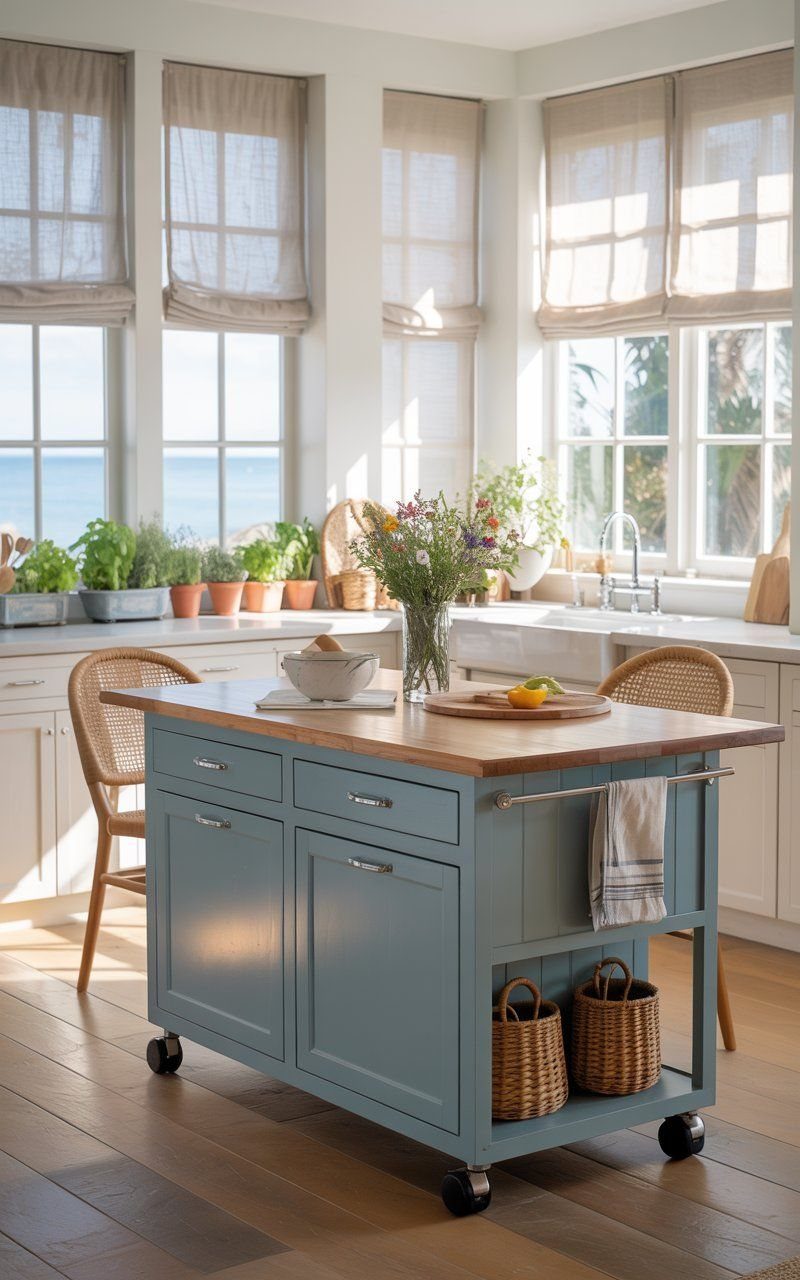
A painted island brings color to the room without locking the whole kitchen into one finish, and blue ages better than shades that look current one year and tired the next.
The wood top warms the finish and gives you a surface you can cut on if you need to.
I prefer chairs to stools here because the back gives you somewhere to lean during a longer meal, and woven seats stay comfortable without cushions.
The wheels let you reposition the island when you’re cleaning or rearranging, but the chairs add width, so you need a few extra inches of clearance on each side to roll it without catching furniture.
Frequently Asked Questions
What is a movable kitchen island called?
The usual names are rolling island or kitchen cart.
The name refers to the casters that let you reposition it when the room layout changes. Some versions lock in place for stability during prep work or seating.
What do you call an island with seating?
An island with seating is often called a breakfast bar when it has an overhang for stools, or simply a kitchen island with seating.
The overhang needs at least 12 inches of clearance so knees don’t hit the cabinet face. Designs vary from fixed stools that tuck under the top to separate chairs that pull up alongside.
What are some moveable kitchen islands with seating available?
One Ikea option pairs a butcher-block top with a steel frame and fits stools under one side. Rolling islands with drop leaves fold up for seating when needed, then drop flat to open the walkway.
Extendable versions slide out a dining surface that stores inside the island when not in use. Each type balances portability with how much weight the casters can hold once someone sits down.