White stoneware ranges from glossy rimmed plates that contain sauces to coupe styles that maximize surface, with textures like beading, speckling, scallops and ribs that add detail without pattern.
The choice comes down to how you use the table: rimmed plates contain sauces better than coupes, glossy glazes wipe clean faster than textured finishes, and irregular shapes like scallops or ruffles take more vertical cabinet space than uniform rounds.
1. White Stoneware Dinnerware
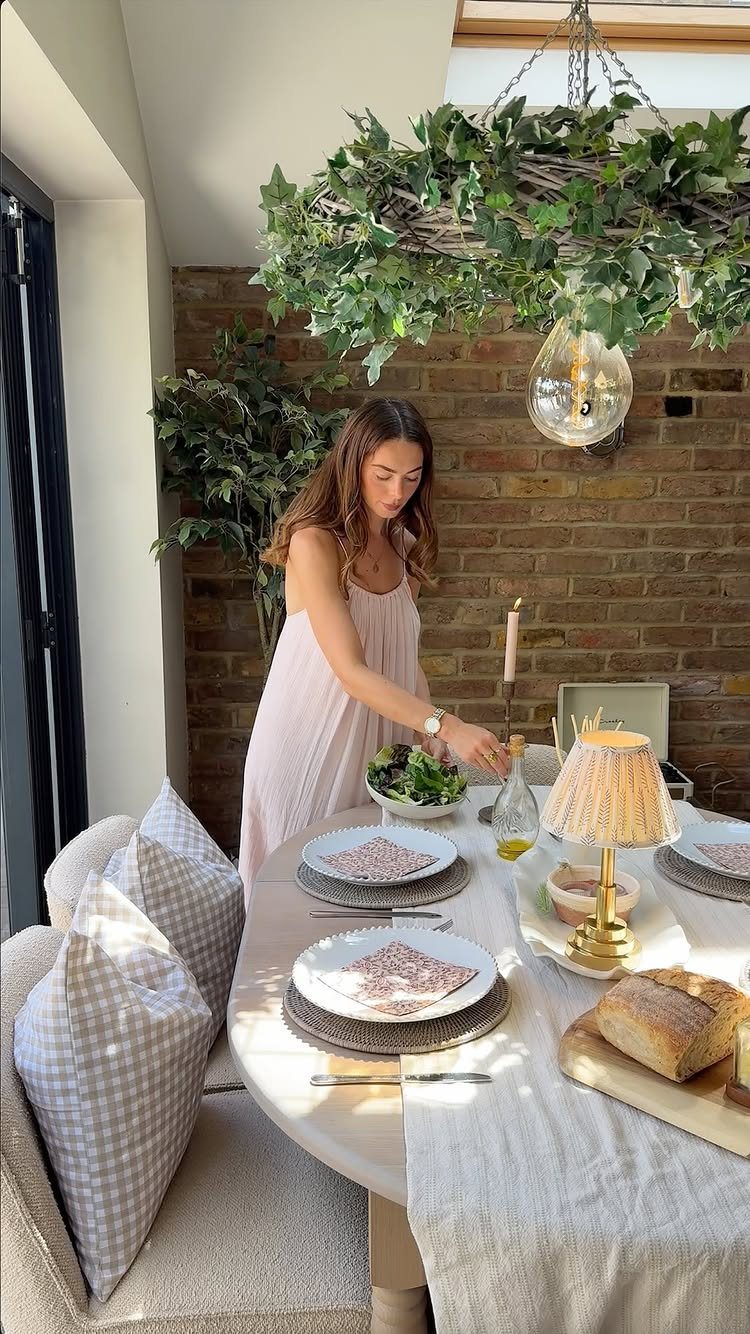
White stoneware sits between porcelain and earthenware in durability, and it holds up well through daily use and the dishwasher.
The neutral tone works with most table settings, whether you want a casual breakfast table or a set meal for guests.
Stoneware is thicker than porcelain, which means it feels more substantial in the hand but takes up more space when stacked. If your cabinets are shallow or packed already, measure the depth before you commit to a full set.
2. Glossy Finish
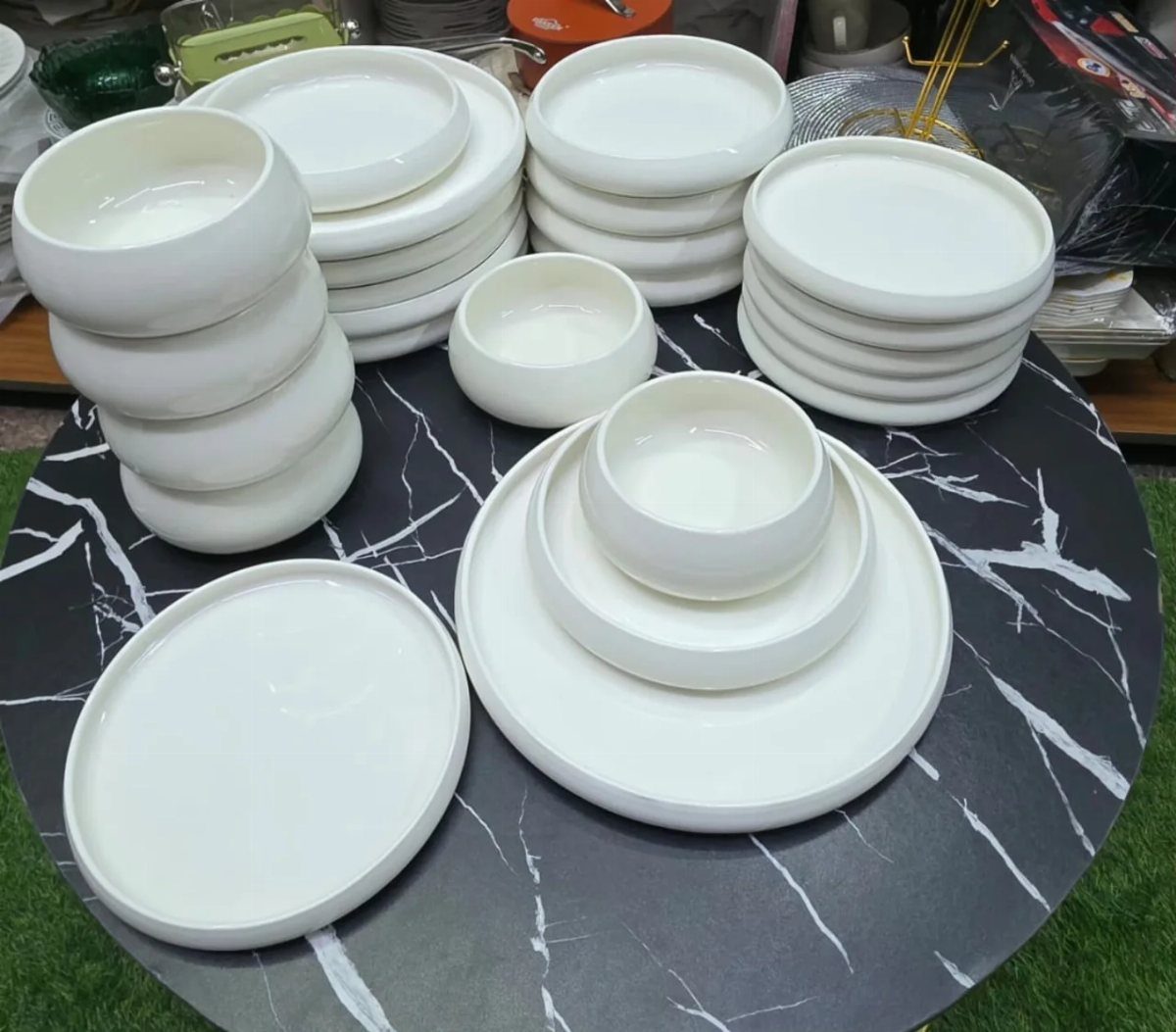
A glossy glaze gives stoneware a smooth, reflective finish that reads more formal than matte. The surface shows scratches from cutlery over time, but the shine also hides minor surface texture and makes stains easier to wipe away.
Glossy finishes work best when you want dishes that look polished without much upkeep. The reflective surface shows water spots unless you dry each piece by hand.
3. Rimmed Plates
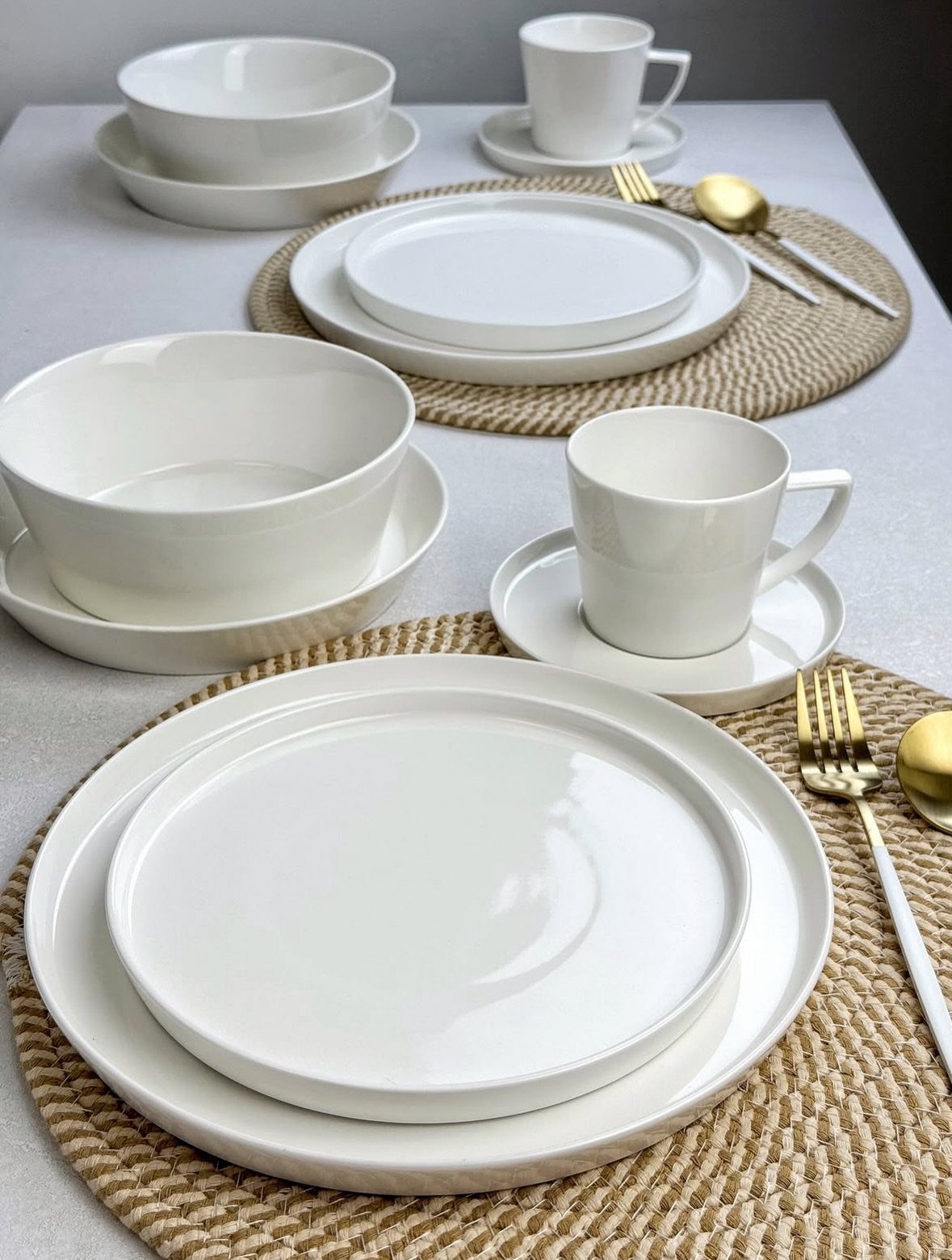
Rimmed plates have a raised edge that frames the center of the plate. The border helps contain sauces and makes the plate easier to carry without tipping food off the edge.
That same rim means less usable surface area in the center, so a rimmed plate holds less than a coupe of equal diameter.
I prefer rimmed plates for everyday meals where food sits loosely on the plate. If you plate carefully or serve flat dishes like pizza or sandwiches, the rim adds nothing useful.
4. Coupe Plates
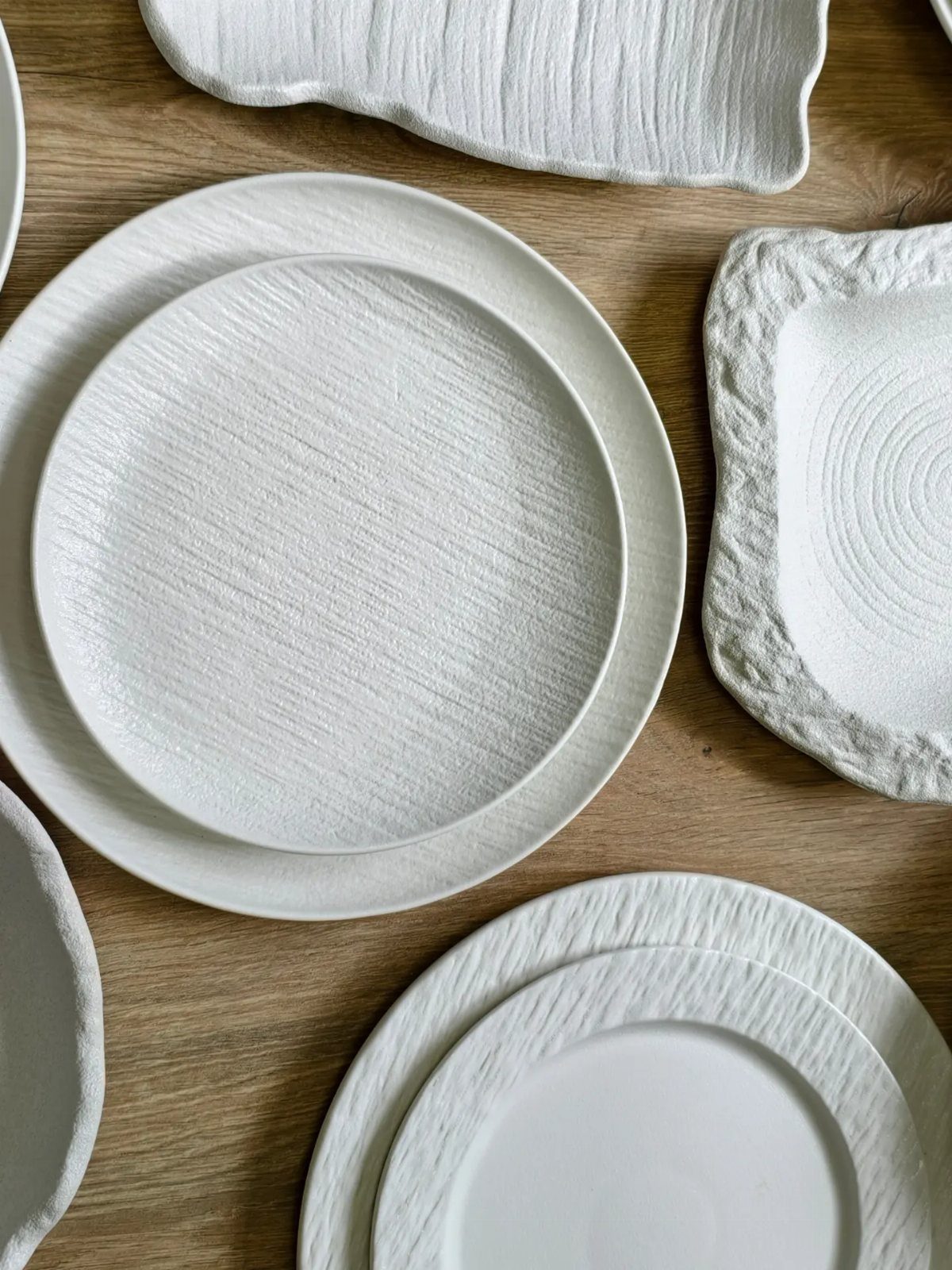
Coupe plates have no rim, just a smooth curve from edge to center. The shape gives you more usable surface on the plate, and it makes stacking easier because there is no lip catching on the next plate down.
The downside is that liquids and loose food slide more easily. I use coupe plates for plated meals and dry dishes, but not for pasta or anything with a runny sauce unless I keep portions controlled.
5. Textured Designs
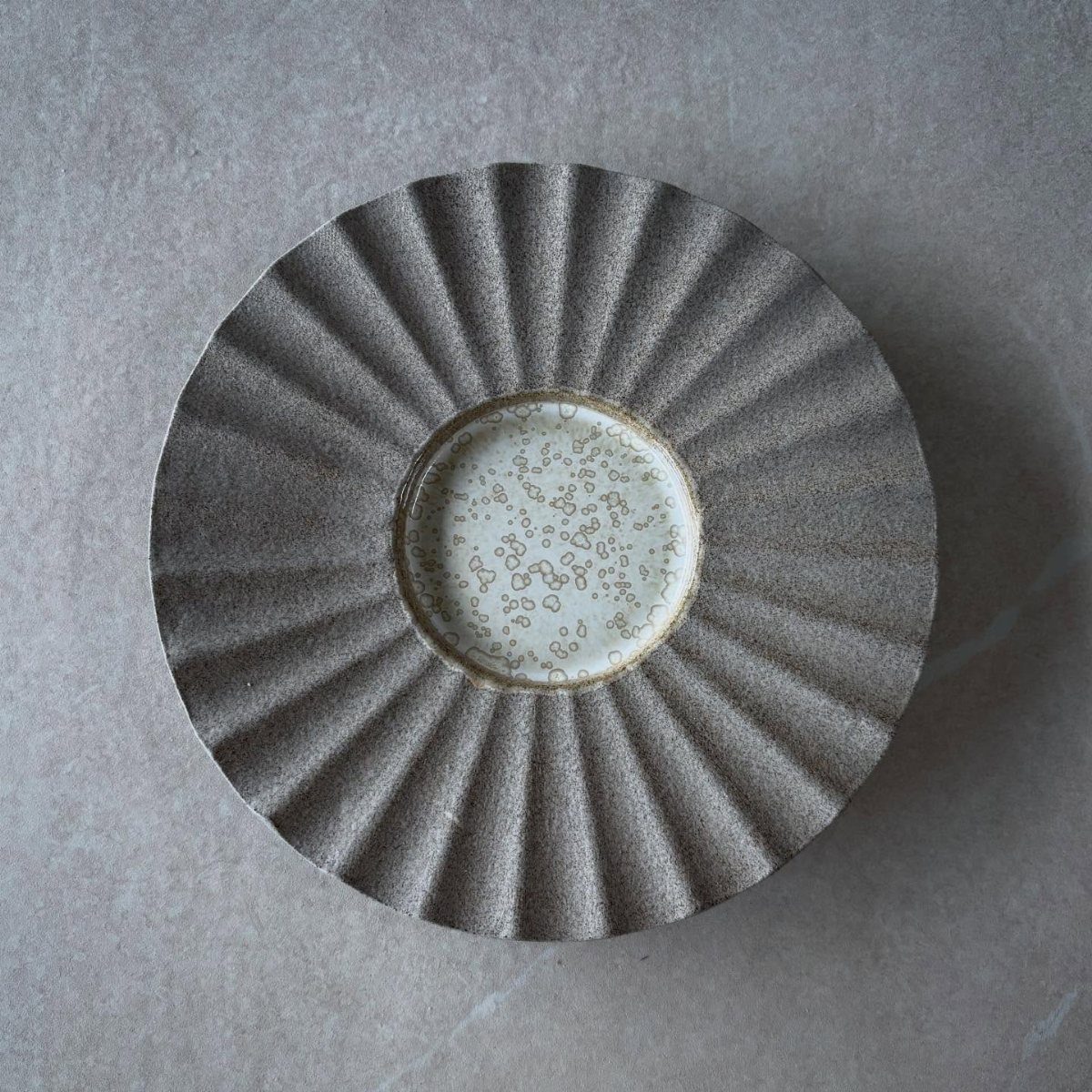
Texture on stoneware can be raised ribs, fluting, or a hammered finish pressed into the surface. The detail adds visual interest without color or pattern, and it hides small chips better than a smooth surface.
Textured plates are harder to stack tightly, and food can settle into grooves if you let dishes sit. I rinse textured pieces soon after meals to avoid scrubbing later.
6. Serving Pieces
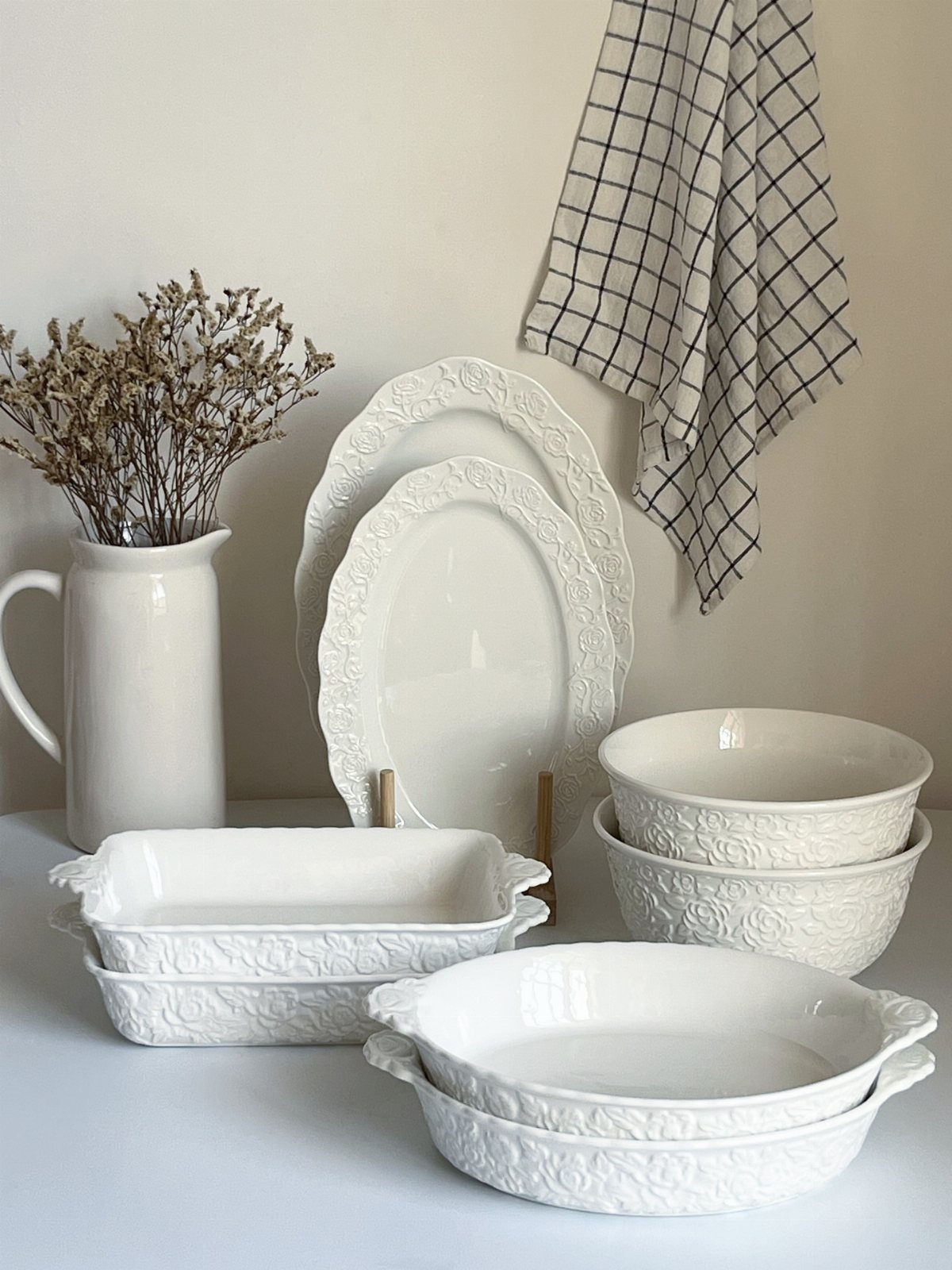
Serving platters, bowls, and pitchers in the same stoneware finish turn a dinnerware set into a full table setup.
Coordinating pieces make the table look more pulled together, and they give you options for serving family-style or plating at the table.
They cost more.
Serving pieces add up quickly, and most sets do not include them. I buy core dinnerware first, then add serving pieces one or two at a time as I find sales or open stock options.
7. Natural Forms
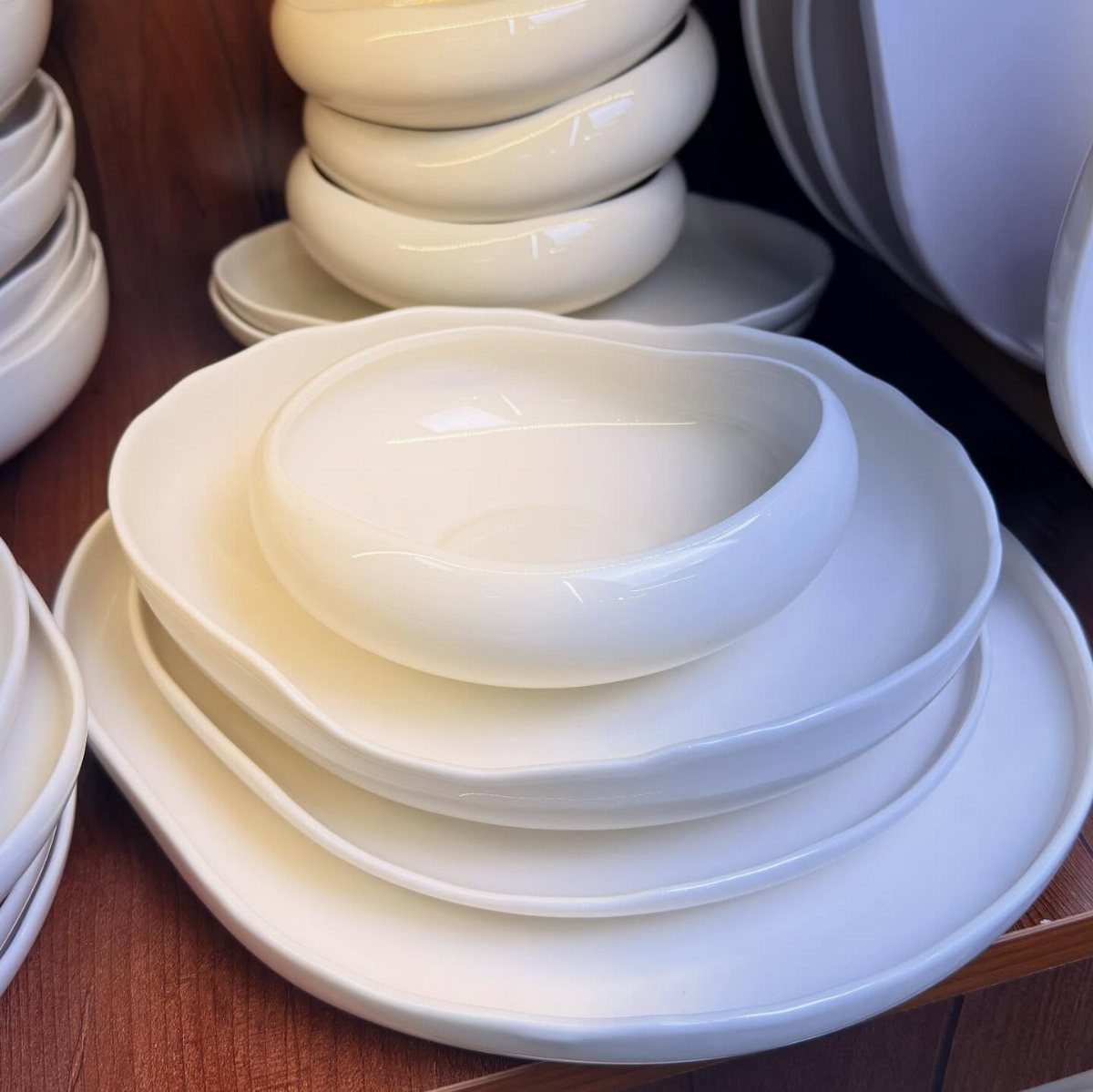
Irregular edges and asymmetrical shapes give stoneware a handmade look even when the pieces came from a mold. The uneven form softens a table setting without adding pattern or color, and it complements rustic linens or wood surfaces.
Stacking irregular pieces takes more vertical space than uniform rounds because the edges do not nest cleanly. If cabinet height is tight, check the stacked height before you buy a full set.
8. White Dishes with Fine Linens
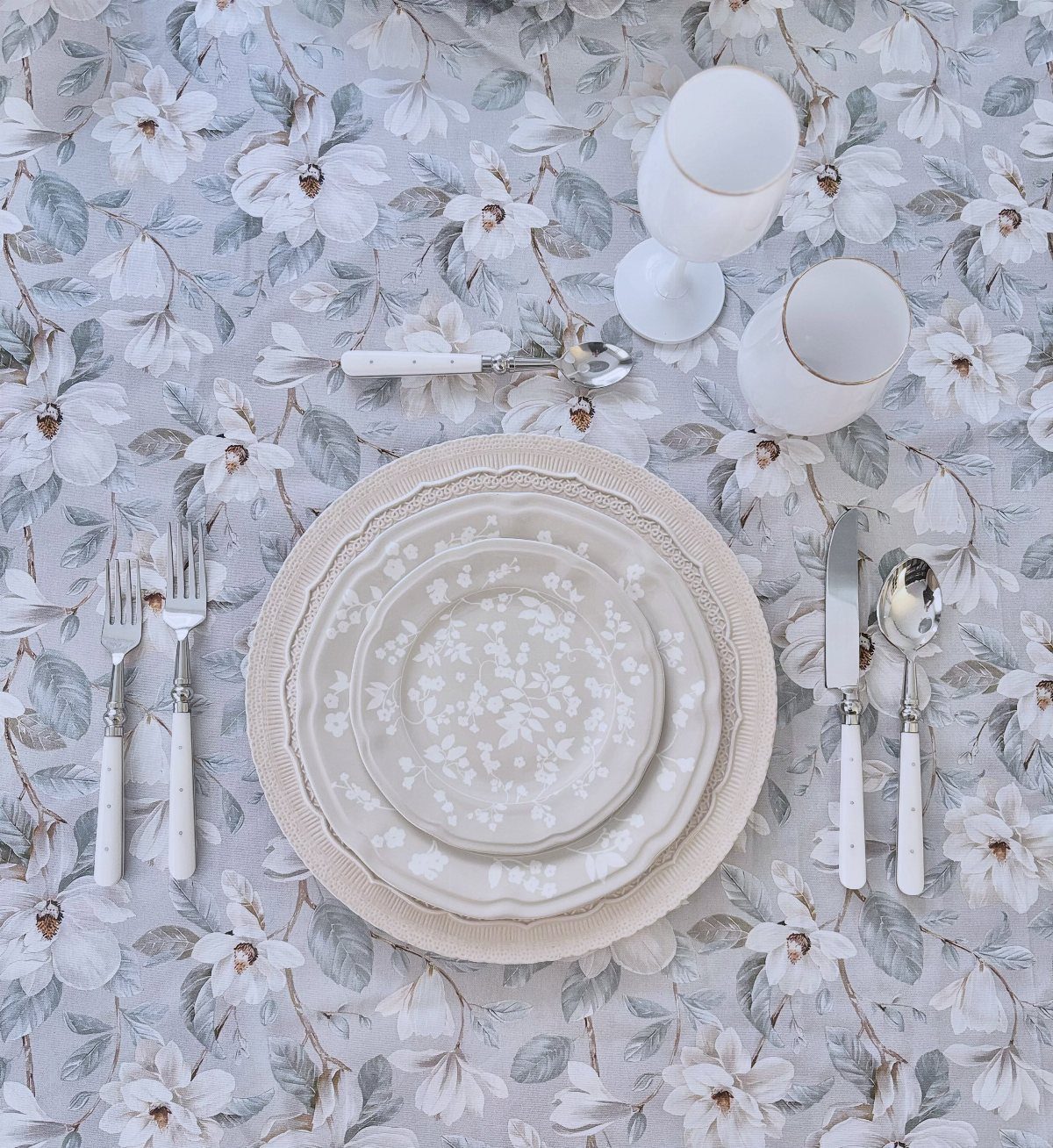
White stoneware acts as a neutral foundation that lets patterned linens or a printed tablecloth take the lead. The plain surface keeps the table from feeling too busy when you want to use fabric with detail.
This approach needs enough contrast in the linen or cloth to show against the white. Pale-on-pale combinations can flatten out under typical indoor lighting.
9. Rounded Dinnerware Shapes
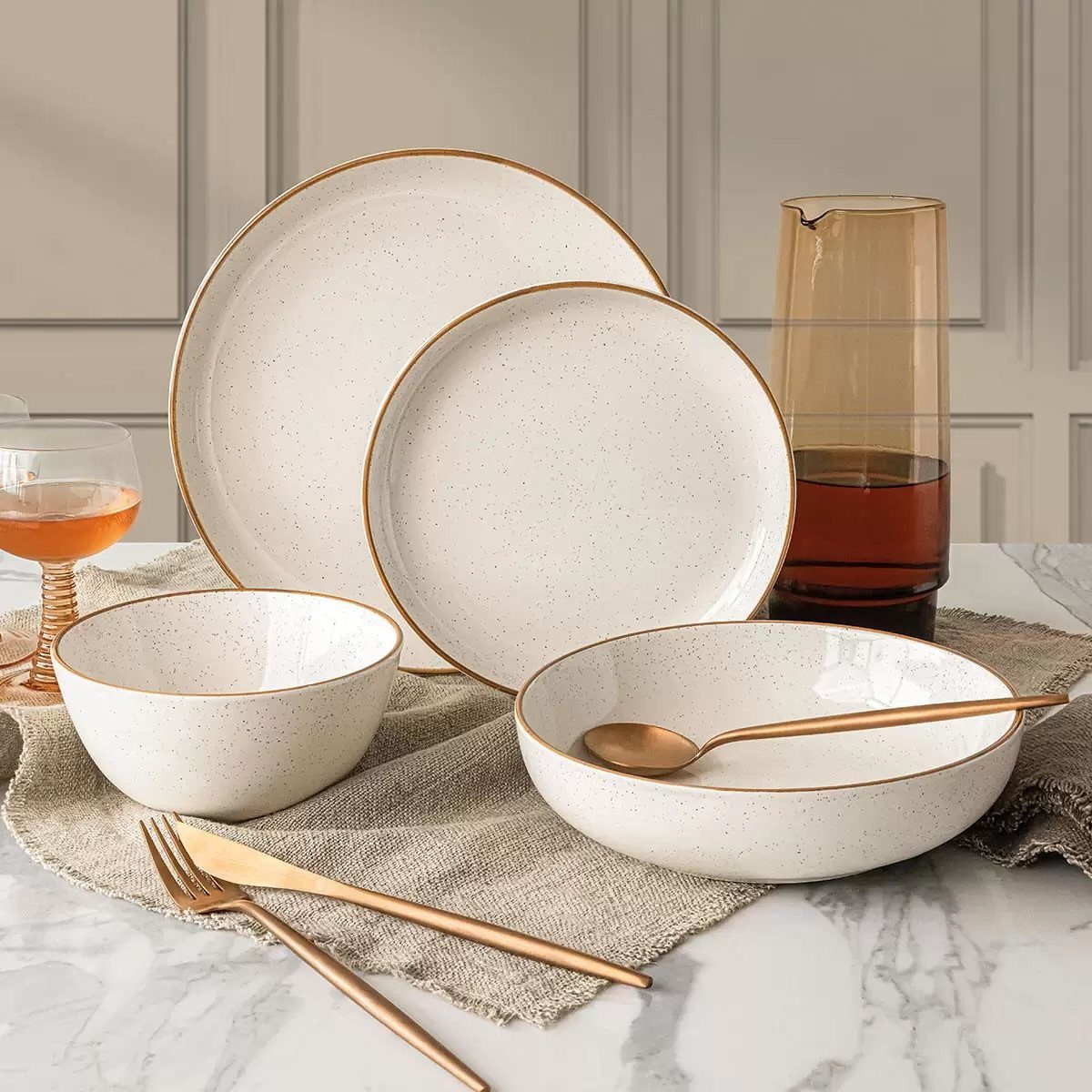
Rounded plates and bowls feel approachable and forgiving. The soft shape is easier to handle than angular dinnerware, and chips are less visible on a curved edge than on a sharp corner.
Rounded dinnerware takes up slightly more space on the table because the curves overhang the footprint, so measure your table width before choosing larger plates if the table seats more than four.
10. Stoneware Dinnerware Set
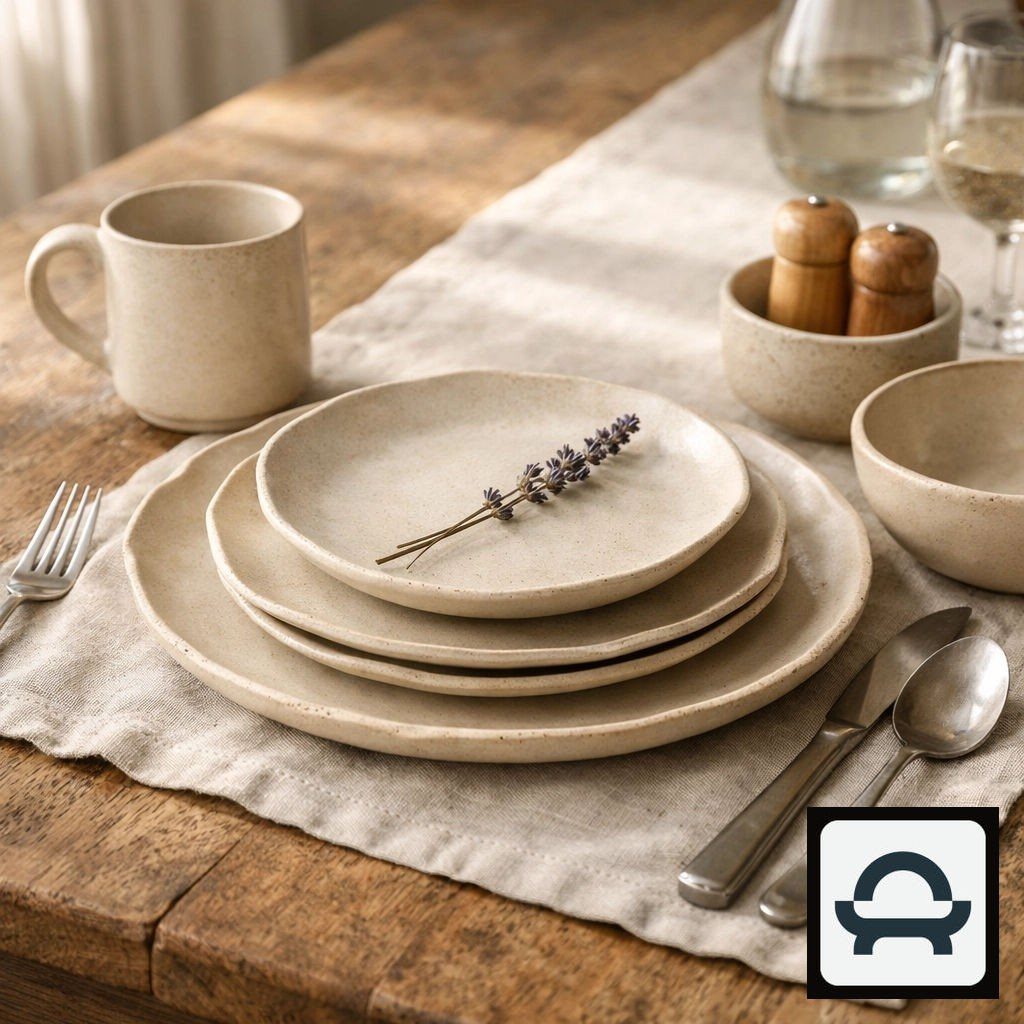
A stoneware set gives you matching plates, bowls, and mugs in one purchase, which simplifies the decision when you need a complete table setup.
The coordinated pieces keep the table looking finished, even when you mix in serving bowls or plates from other sets.
Most sets are sold in service for 4, 6, or 8. If you entertain often, buy the larger count from the start rather than adding place settings later, because manufacturers discontinue patterns and exact shades shift between production runs.
11. Beaded Border
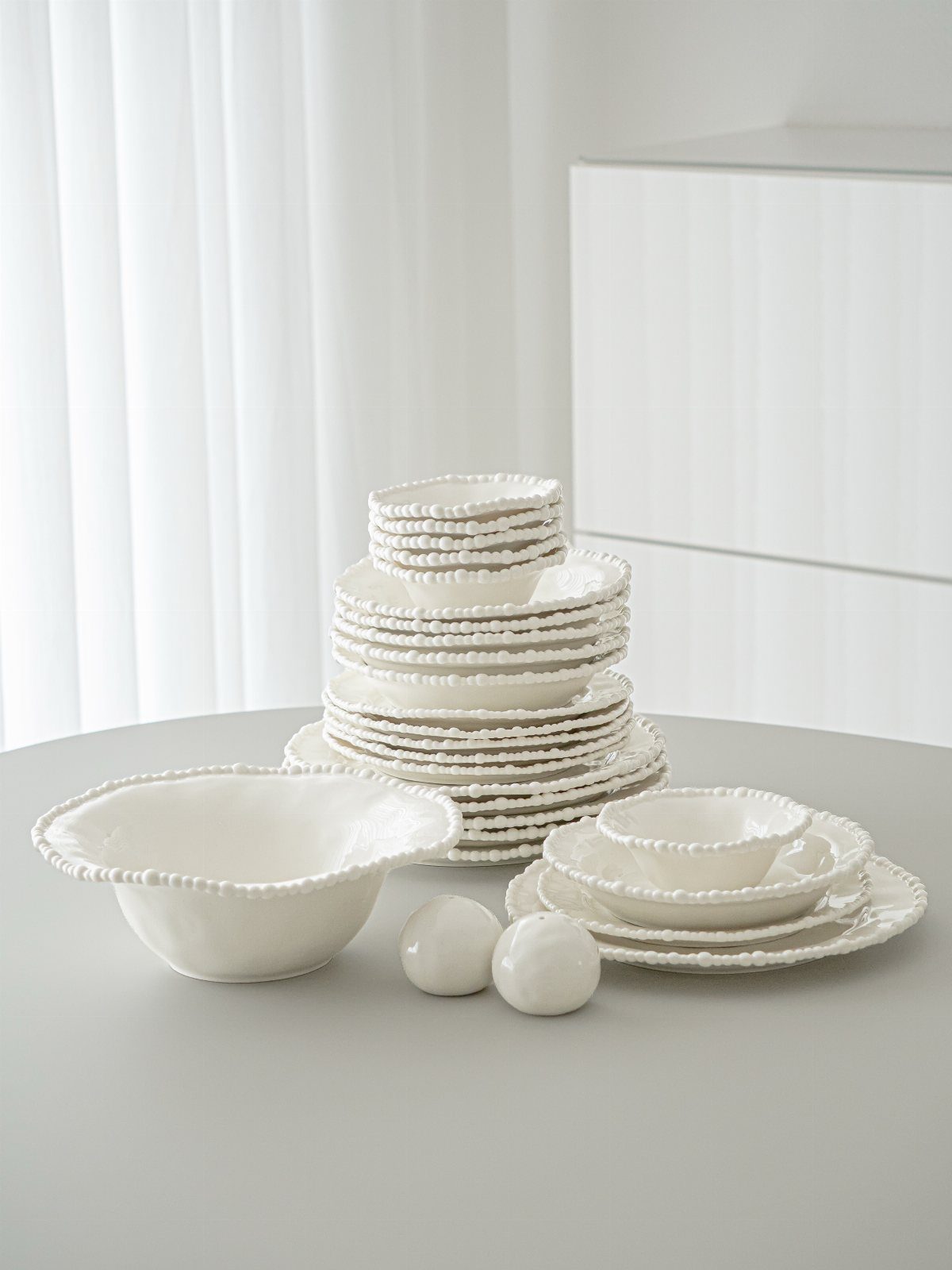
A beaded edge adds dimension to a plain white plate without the weight of a wide rim. The small raised dots catch light and create a finished look that reads slightly more formal than smooth stoneware.
The beading collects residue in the grooves between the dots, so these plates need a quick scrub or a pass with a brush after soaking. I rinse them soon after meals rather than letting food dry in the detail.
12. Speckled Stoneware
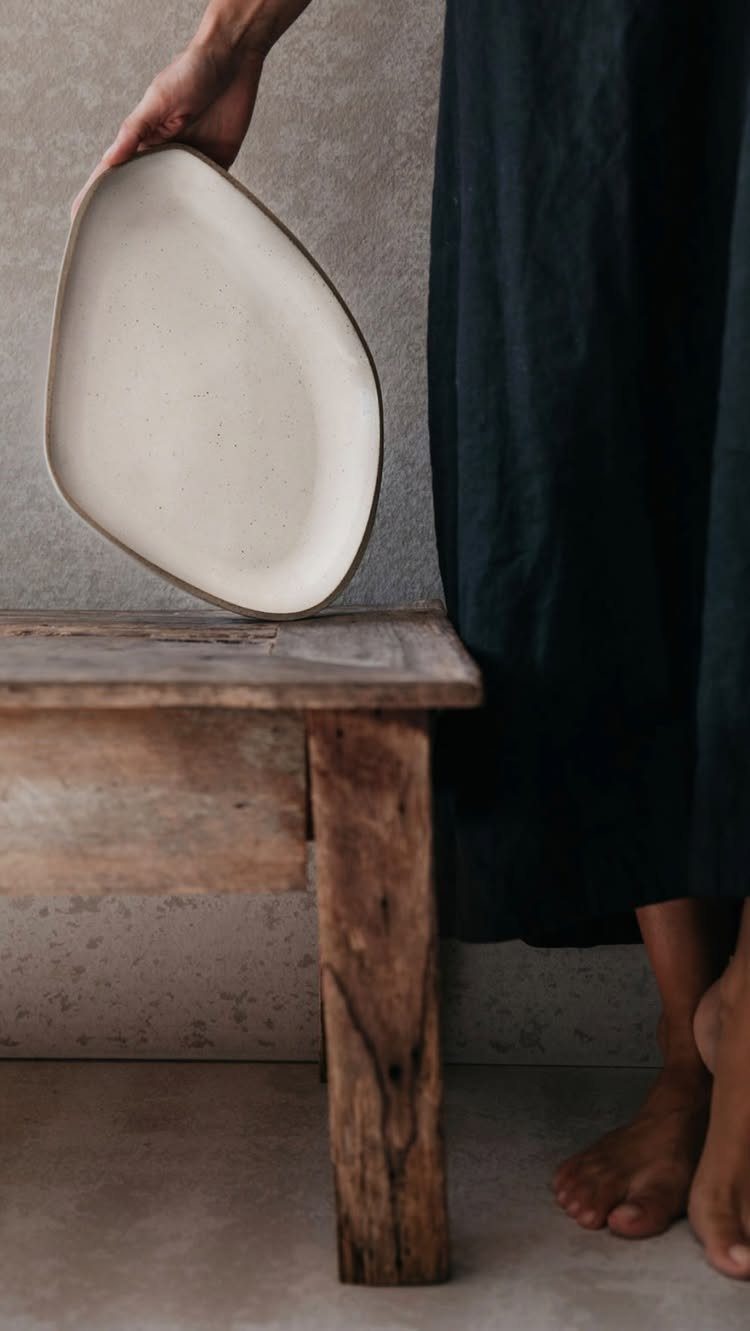
Fine dark speckles in the glaze give white stoneware a softer, less clinical look. The speckled finish hides small stains better than pure white, and it suits a table setting that leans casual or earthy.
Handmade stoneware with this finish costs more per piece than factory-molded options, but the irregular shape and speckled surface read as intentional rather than mass-produced.
13. Scalloped Stoneware
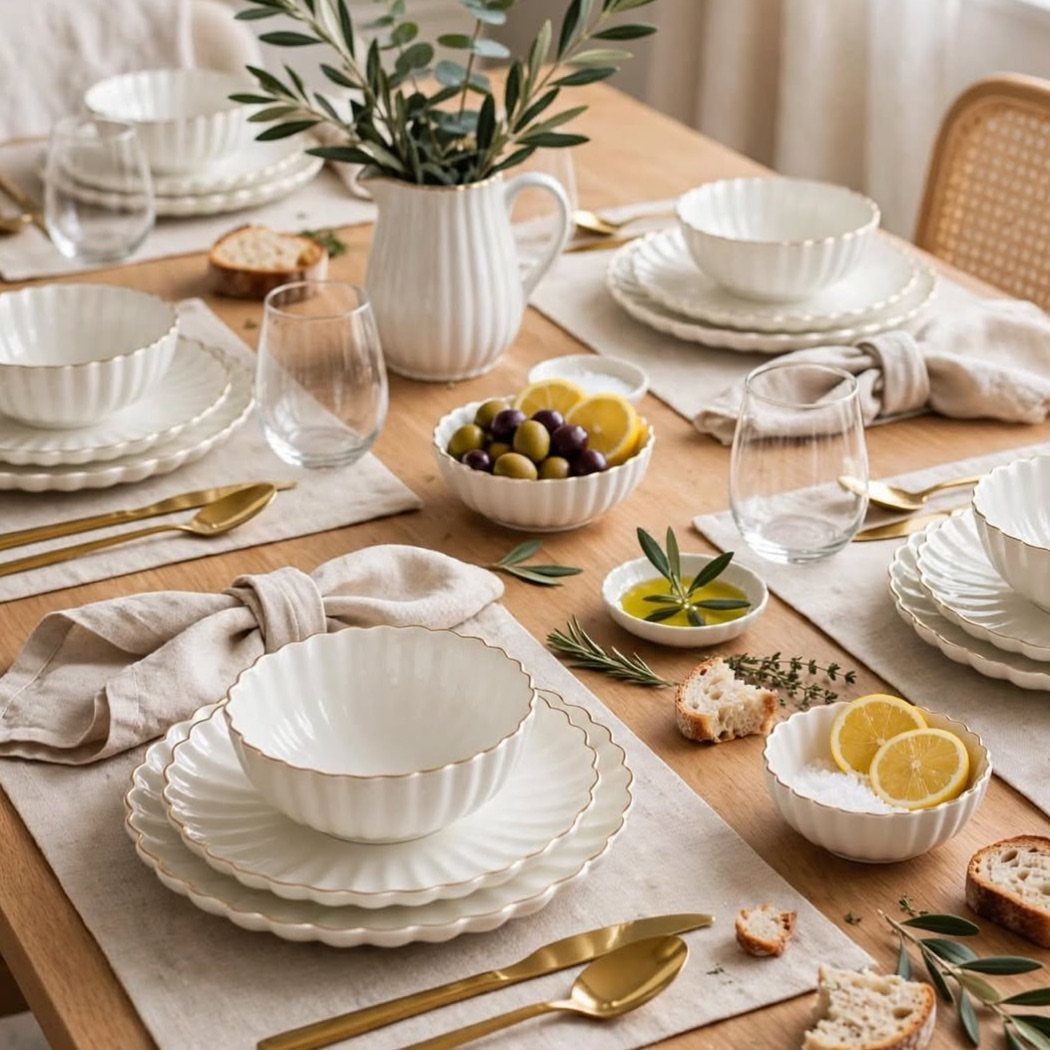
Scalloped edges soften the look of plain white stoneware without adding pattern. The curves give each piece a finished, deliberate shape that suits both casual meals and more formal table settings.
Scalloped plates stack less tightly than smooth rounds because the curves add width. If you store dishes in a narrow cabinet, measure the diameter at the widest point of the scallop before you buy a full set.
14. Handpainted Stoneware
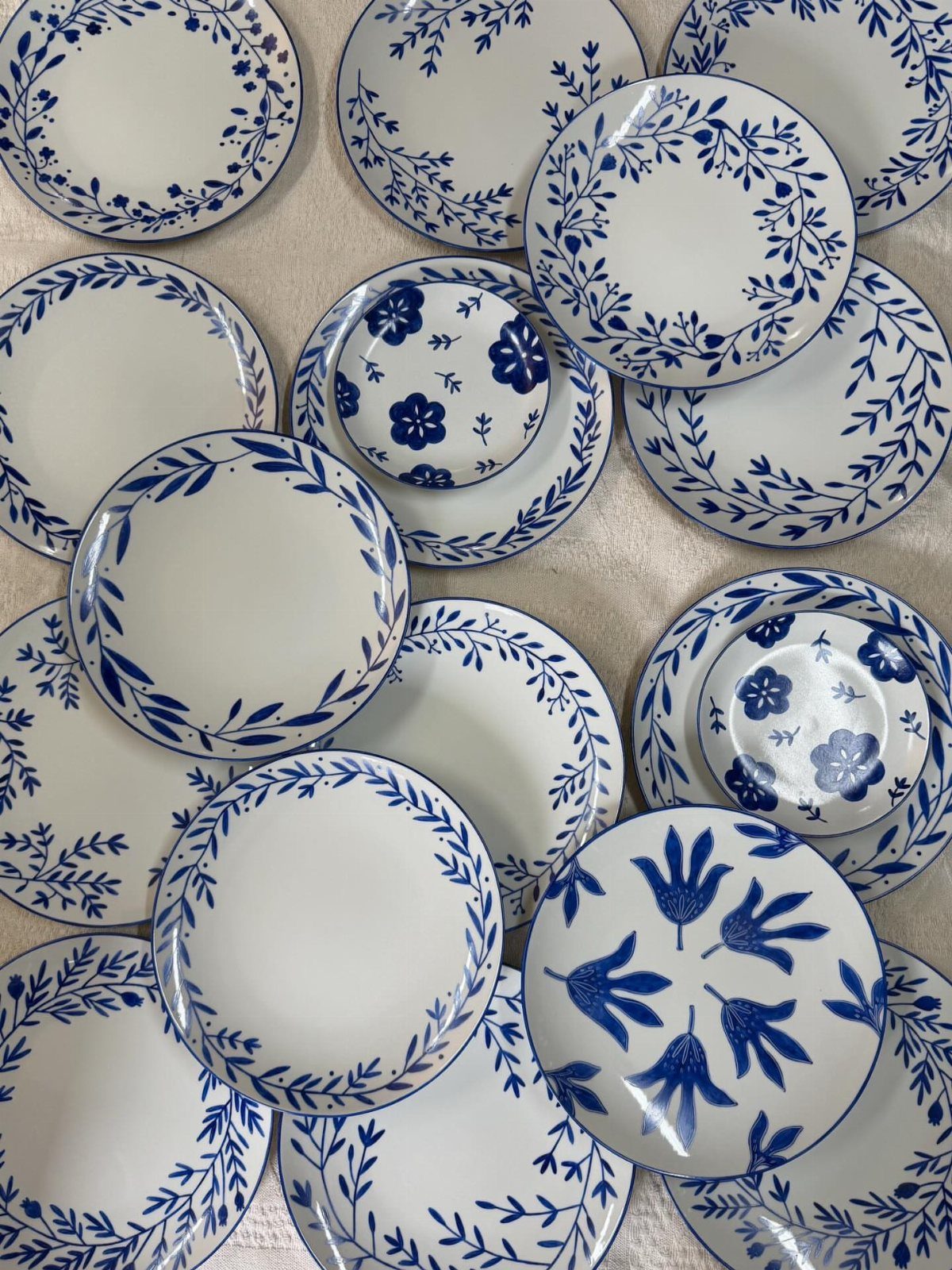
Blue floral patterns painted by hand onto white stoneware give each piece slight variation in line weight and placement. The imperfect repetition reads as intentional craft rather than factory printing.
Handpainted stoneware costs more per piece than printed designs, and the painted surface can fade or chip if scrubbed too hard. I hand-wash these pieces and keep them out of the dishwasher to protect the painted detail.
15. Organic White Porcelain
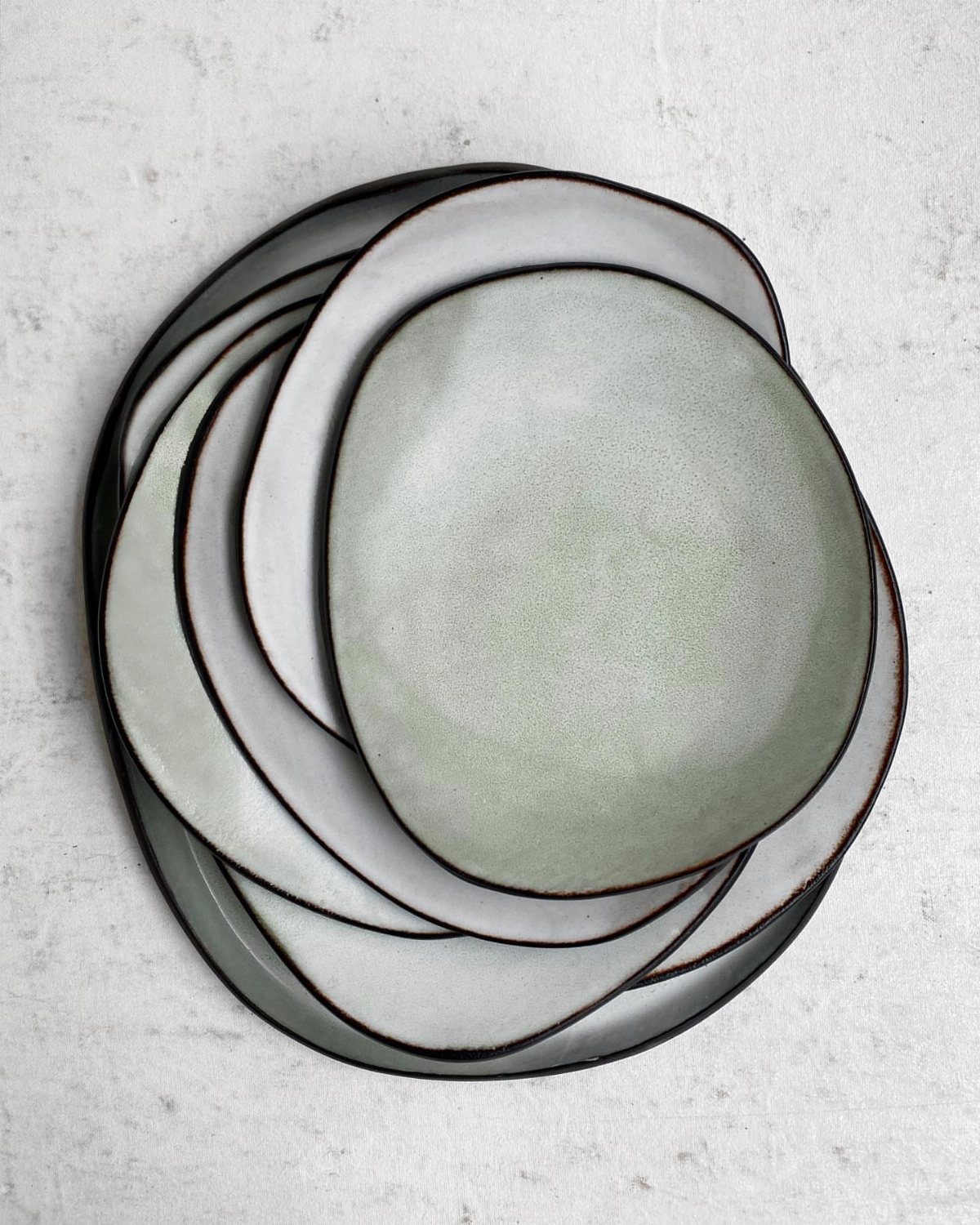
Irregular shapes with edges that shift slightly from round give porcelain a less uniform, more handmade appearance. The off-white tone and organic form suit a table setting that leans rustic or natural.
These pieces do not stack as neatly as perfect circles, and the uneven edges overhang each other. If vertical cabinet space is limited, the loose stack will take up more height than you expect.
16. Stoneware on Open Shelving
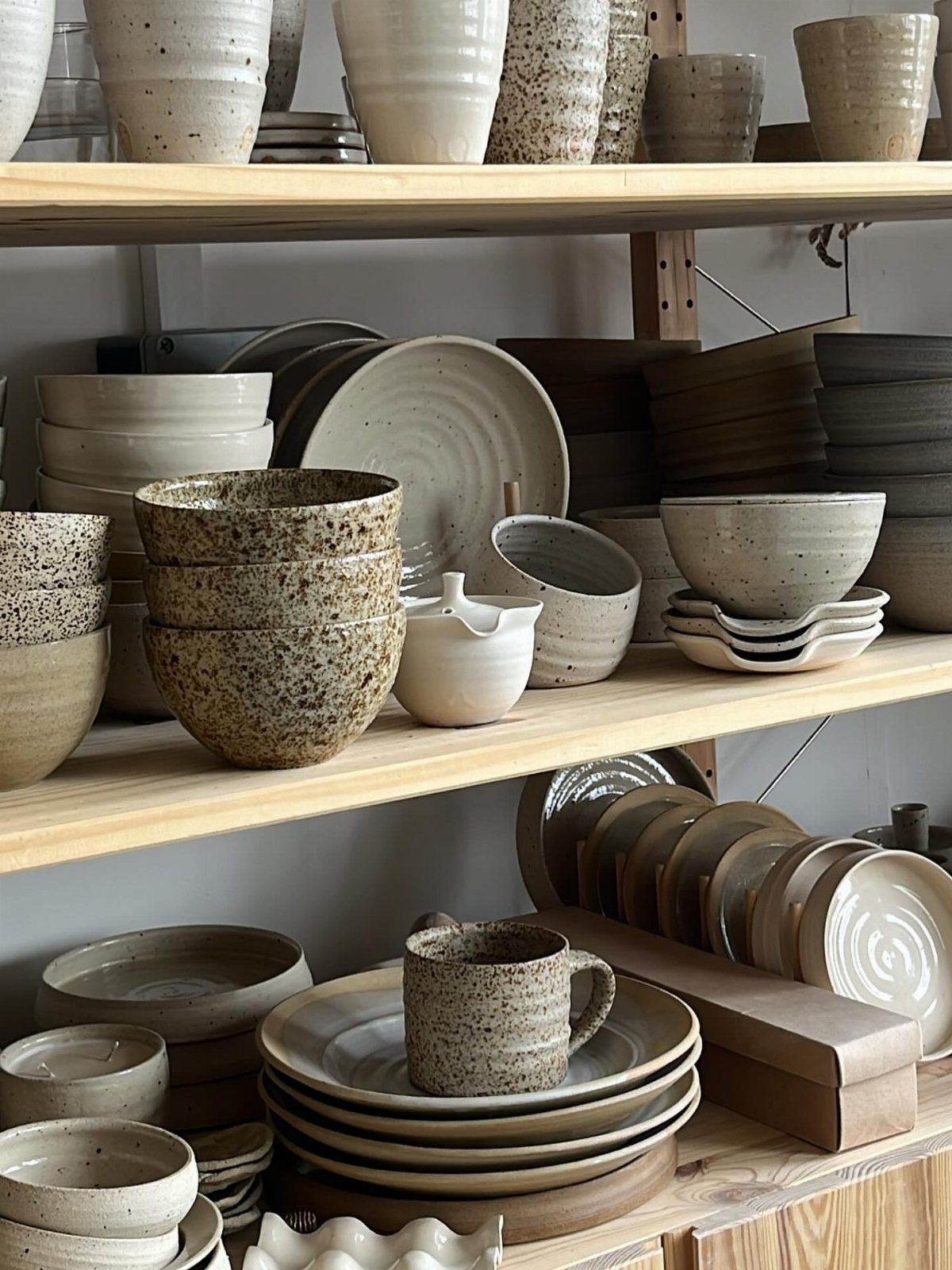
Open shelving turns stoneware storage into display. The clean white or speckled finish shows well against wood or painted shelves, and the visible stacks make it easy to grab what you need without opening a cabinet door.
Dust settles on open dishes faster than it does behind closed doors. I rinse pieces before use if they have been sitting for more than a few days.
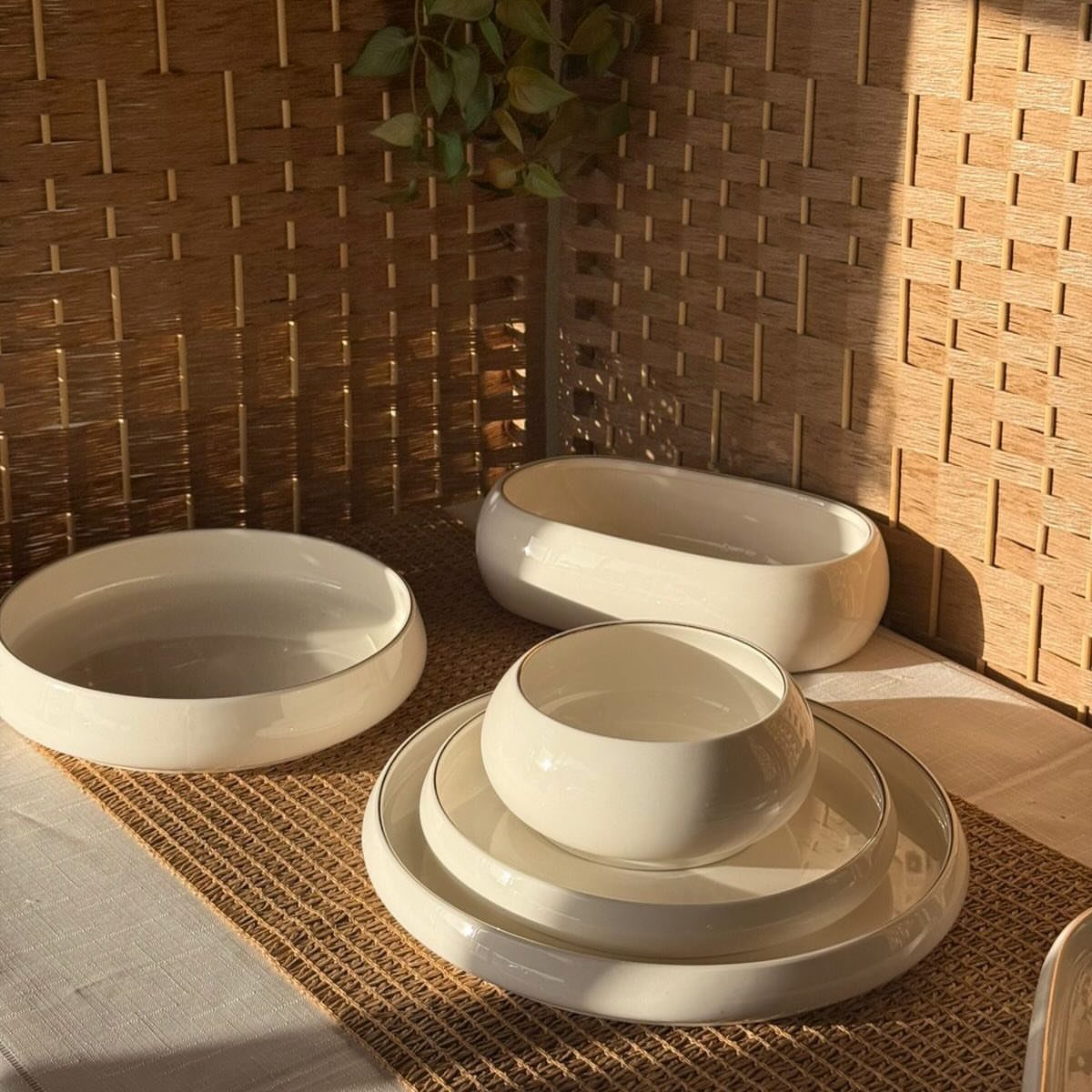
17. White Stoneware Plate Stacks
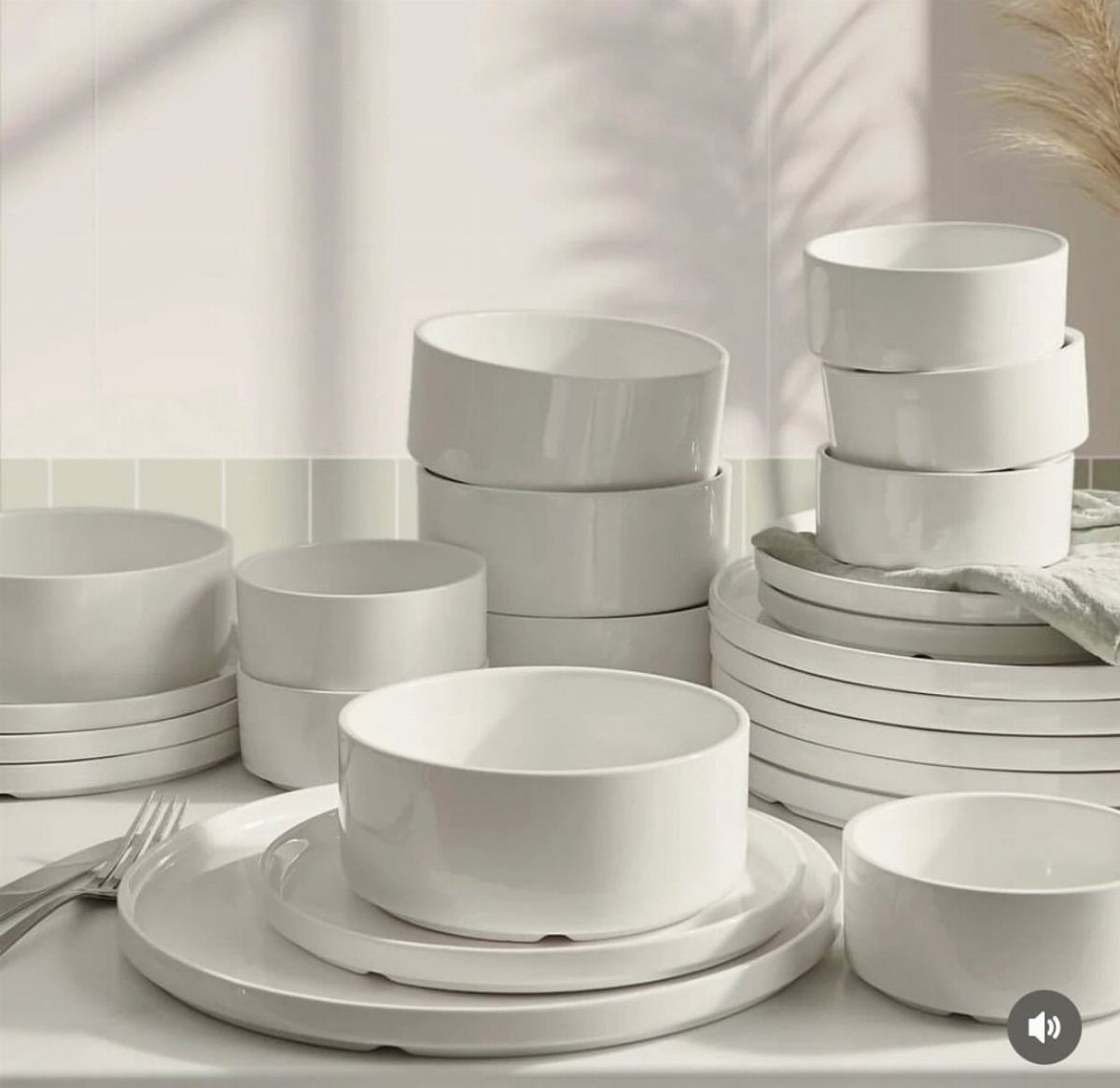
Stacking bowls and plates together in one tight group keeps the display simple and shows the shape of each piece. The uniform white surface and the repetition of form create a calm, minimal look.
This only works if the pieces are clean and the stack is stable. I keep stacks on a flat surface away from the edge of the counter, and I limit height to avoid tipping.
18. White Stoneware Assortment
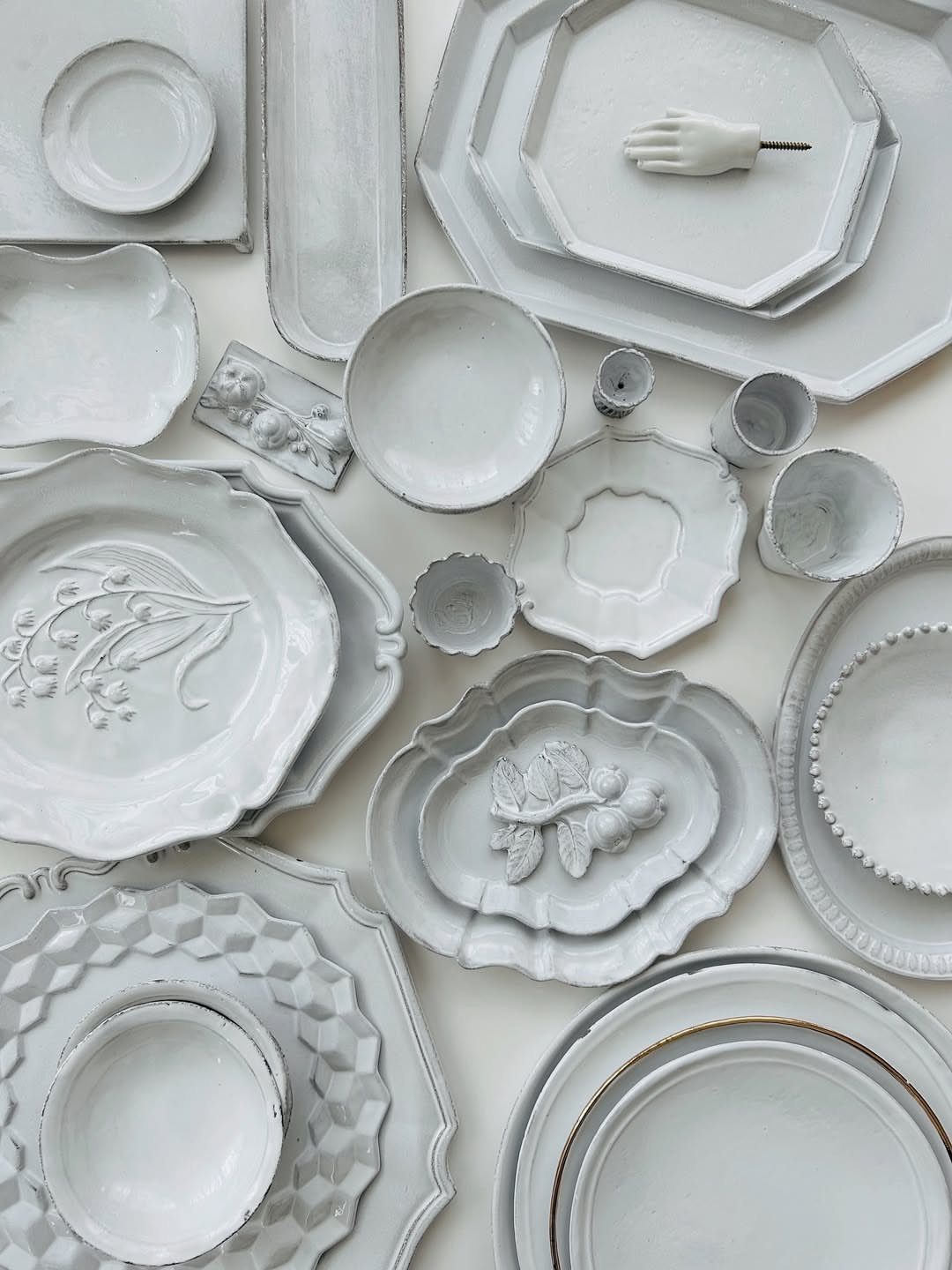
Mixing plate sizes, bowl depths, and platter shapes in the same white finish gives you flexibility for different meals without losing visual cohesion.
The varied collection lets you choose the right piece for each dish rather than forcing everything onto identical rounds.
Mismatched shapes take more cabinet space than a uniform set because they do not nest predictably. I measure shelf depth and height before adding pieces that differ widely in size or form.
19. White Stoneware Set
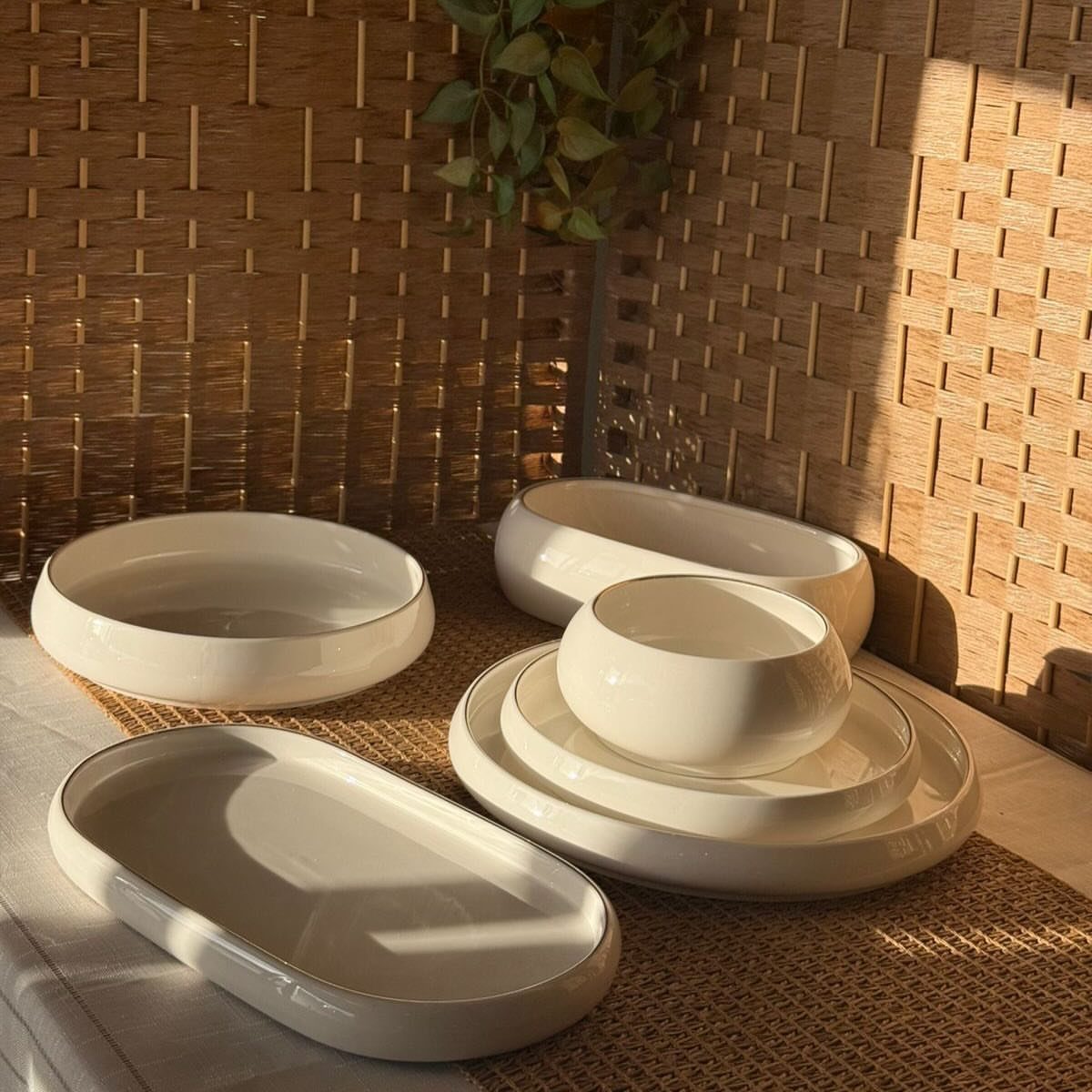
A full set of bowls, plates, and serving pieces in white stoneware covers meals for the whole household without switching between patterns or finishes. The uniform color lets you mix sizes freely without disrupting the table.
If you host regularly, buy enough place settings to seat your typical number plus two. Replacing a single bowl after the pattern changes is harder than adding extras now.
20. Black-interior Stoneware
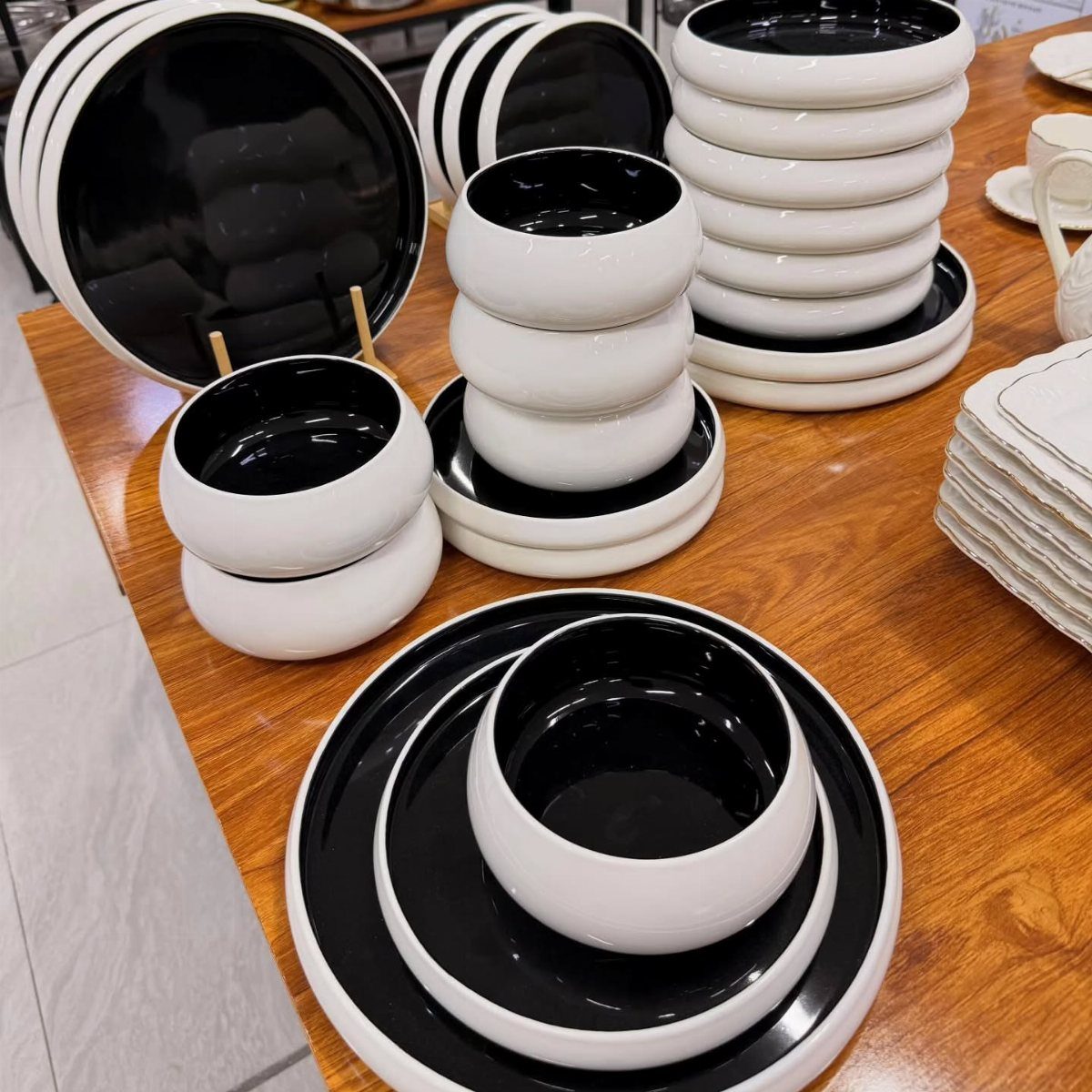
White stoneware with black interiors flips the usual contrast: the outside stays neutral, but the plate center provides a dark backdrop that makes light-colored food stand out. Rice, pasta, and pale sauces show more clearly against black than against white.
The two-tone look suits a modern table better than a traditional one. I pair these with simple flatware and avoid patterned linens, because the contrast already creates visual weight.
21. Stoneware Bakeware
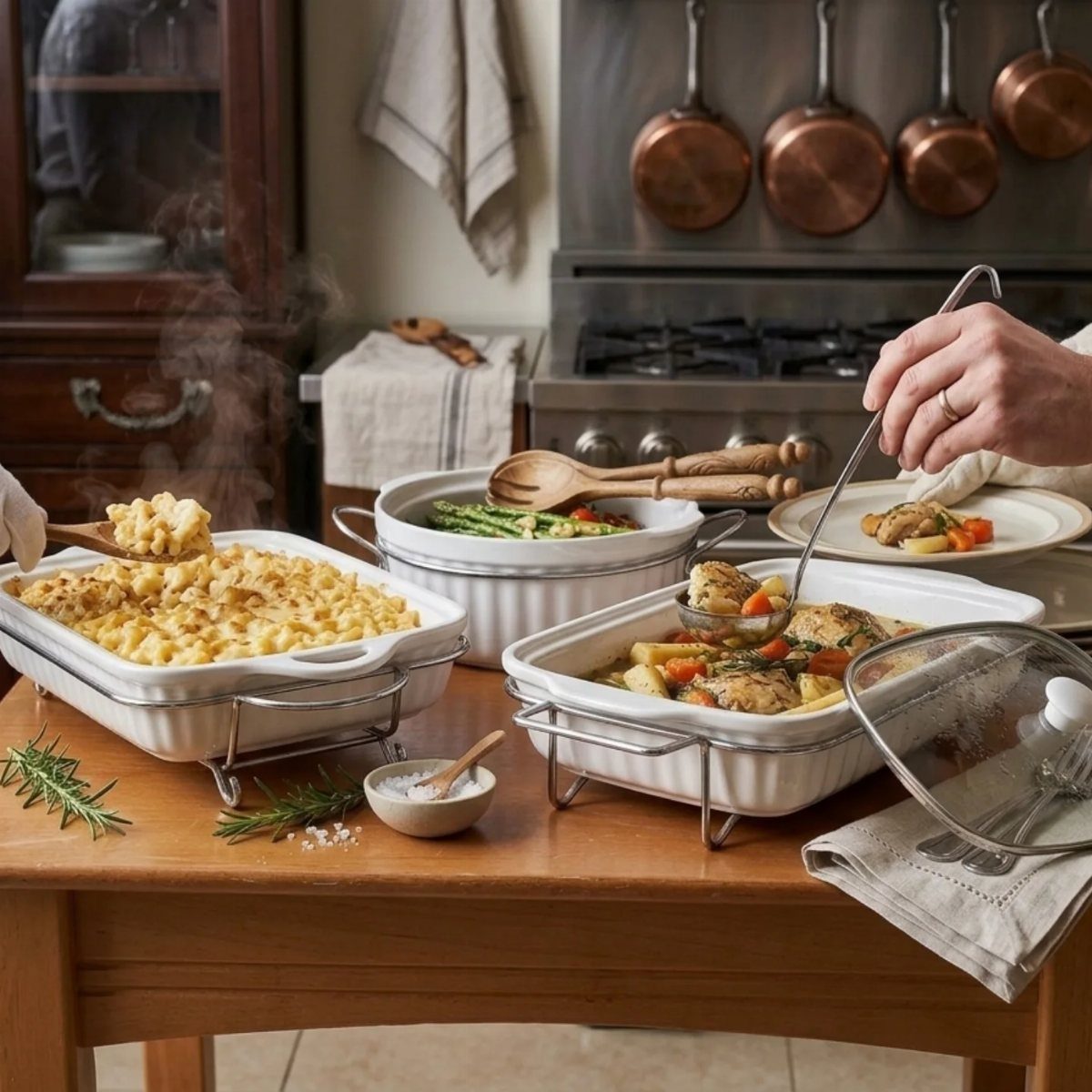
Stoneware baking dishes move straight from the oven to the table without transferring food to a serving piece. The white finish looks deliberate rather than utilitarian, and most stoneware holds heat longer than metal pans.
I keep at least two sizes: a shallow rectangular dish for casseroles and a deeper round one for baked pasta or roasted vegetables. Glass lids sold separately let you store leftovers in the same dish.
22. Ribbed Stoneware
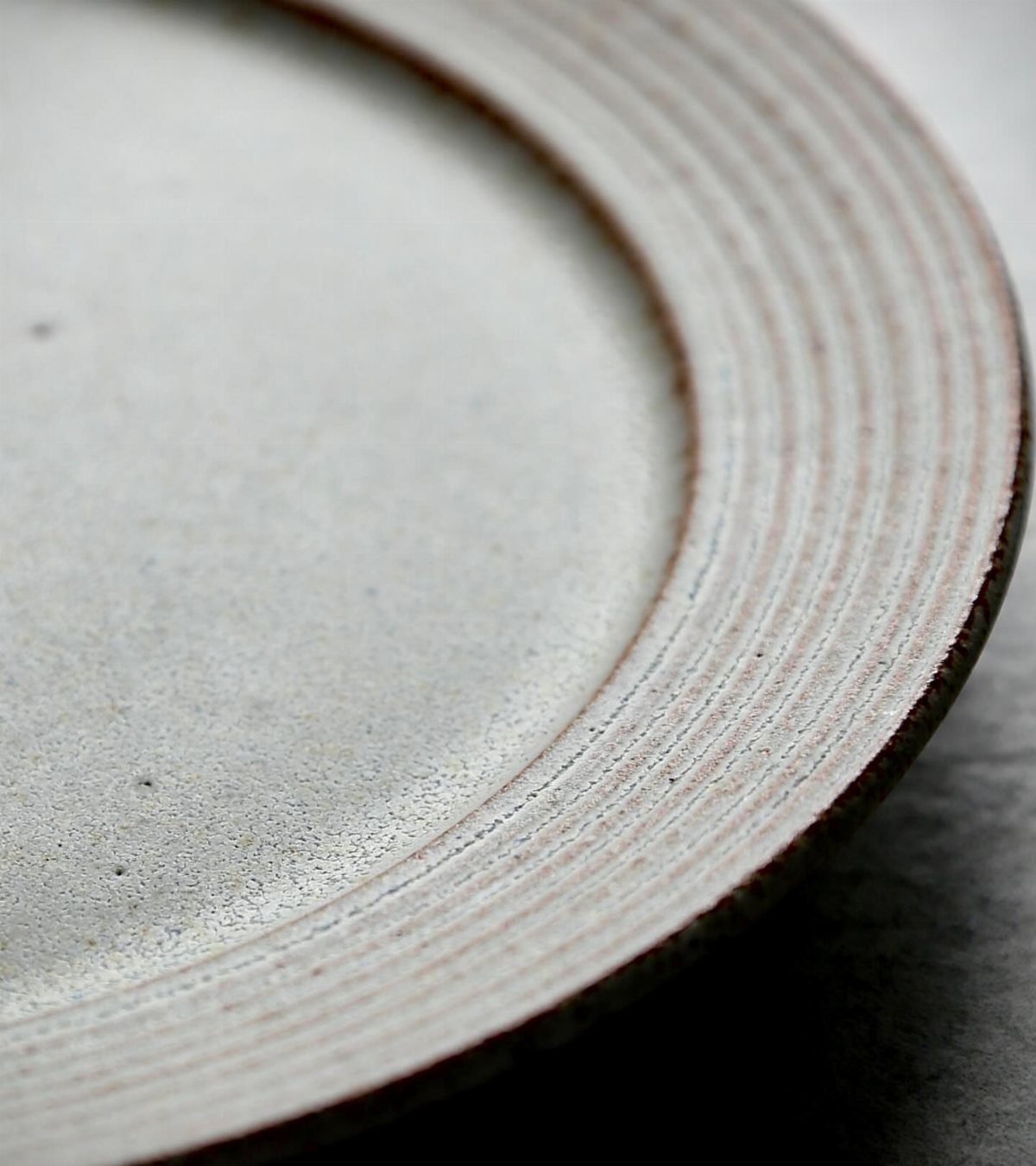
Concentric ridges pressed into the rim add tactile detail without color or glaze variation. The raised rings give the plate a finished edge and break up the flat white surface.
Ridges collect food debris more than smooth plates do, so I rinse these soon after meals. The texture does hide minor chips better than a plain rim.
23. Ruffled-edge Stoneware
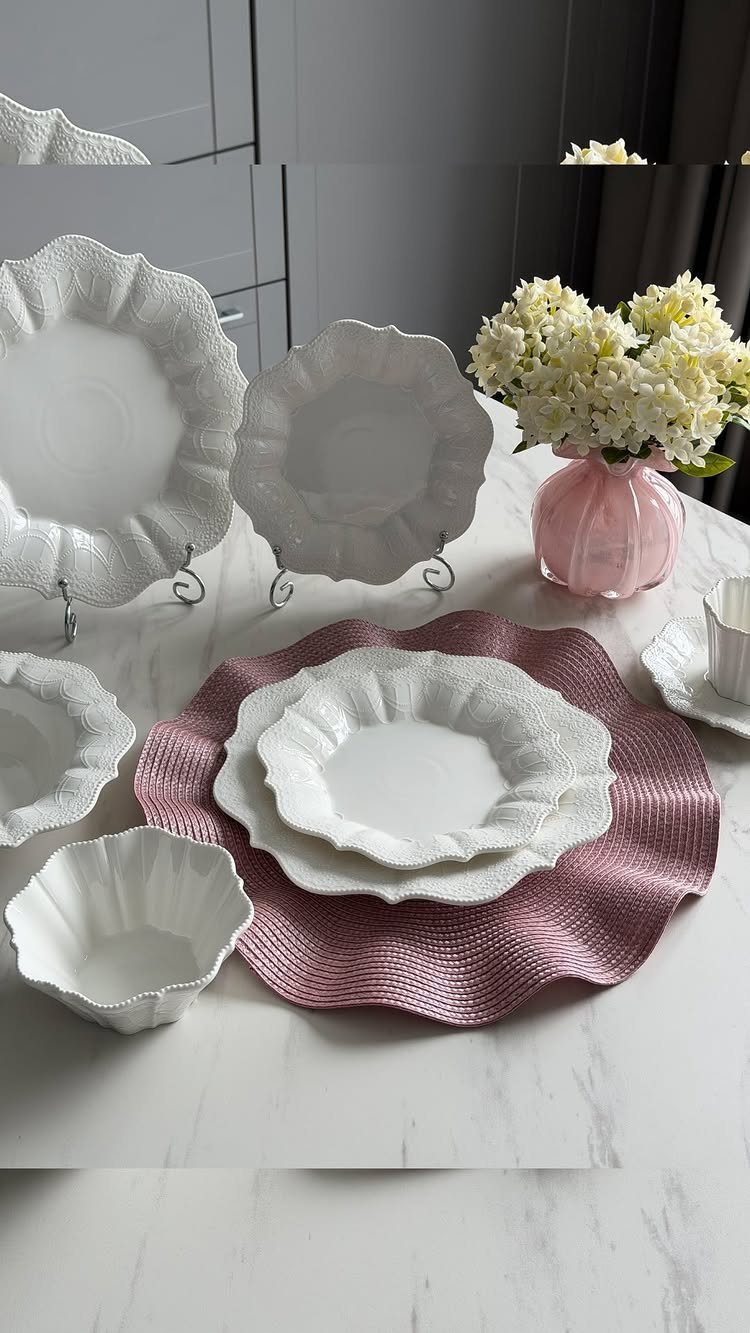
Ruffled edges soften the geometry of round plates and bowls without the formality of a beaded border. The irregular curve makes plain white stoneware feel more decorative, and the shape works with both casual and dressed-up table settings.
Ruffled pieces take up more horizontal space than smooth rounds because the waves extend past the functional diameter. Measure your table width before you choose a size.
Care Instructions and Materials
Check the product care instructions before you put white stoneware in the microwave, dishwasher, or oven. Many modern sets are built for all three, but decorative finishes, metallic accents, or handpainted details can change what the piece tolerates.
Stoneware as a material handles heat well, but the glaze and any applied decoration set the real limits.
A glossy white plate without added detail usually goes in the dishwasher and microwave without trouble. A piece with gold trim, a painted border, or an unusual reactive glaze may need hand washing or may crack under rapid temperature changes.
If the manufacturer does not list care details, treat the piece as hand-wash only and keep it out of the microwave until you confirm otherwise. Replacing a broken dish costs less than guessing wrong.
Frequently Asked Questions
What is the difference between ceramic and stoneware dishes?
Stoneware goes into the kiln at higher heat than earthenware, which gives it a tighter body and better resistance to chips and cracks.
Why choose white stoneware dinnerware?
White stoneware combines durability with a neutral tone that works with most table settings, from casual breakfasts to formal dinners. The thicker material feels substantial and holds up through daily use better than earthenware.
Is stoneware cheap?
Stoneware costs more than basic earthenware but less than high-end porcelain. Handmade or handpainted stoneware pieces cost more per item than factory-molded options.