
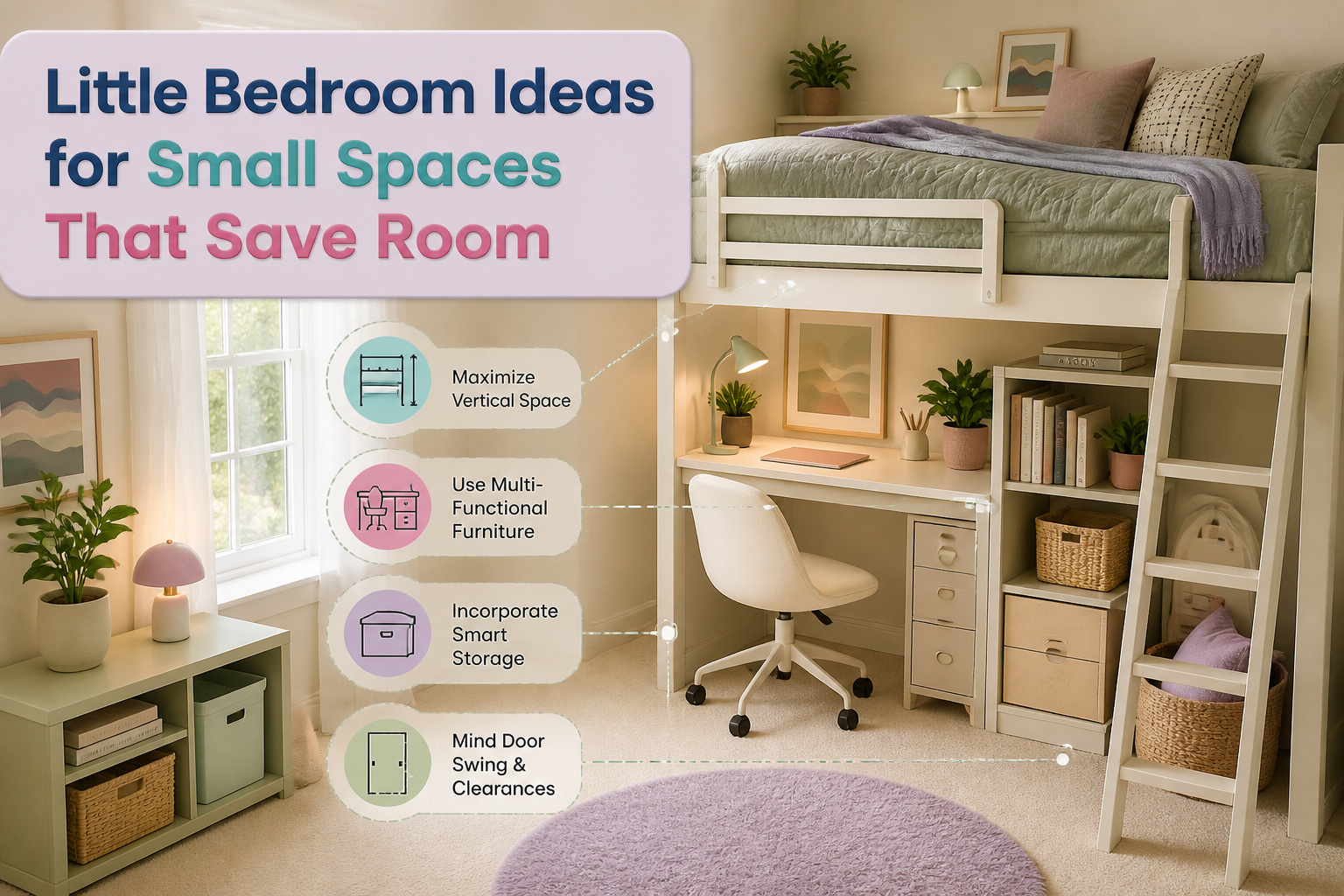
Small bedrooms demand different solutions depending on budget and whether you own or rent, but the single factor that ruins most plans is measuring after you buy. A 6-inch under-bed drawer means nothing if your frame sits 5 inches off the floor, and a 32-inch ottoman blocks a 32-inch door if you forget the swing arc. The Maribo Storage Ottoman and the Iris drawer both fail the same way: right dimensions, wrong room.
1. Plan Your Layout First
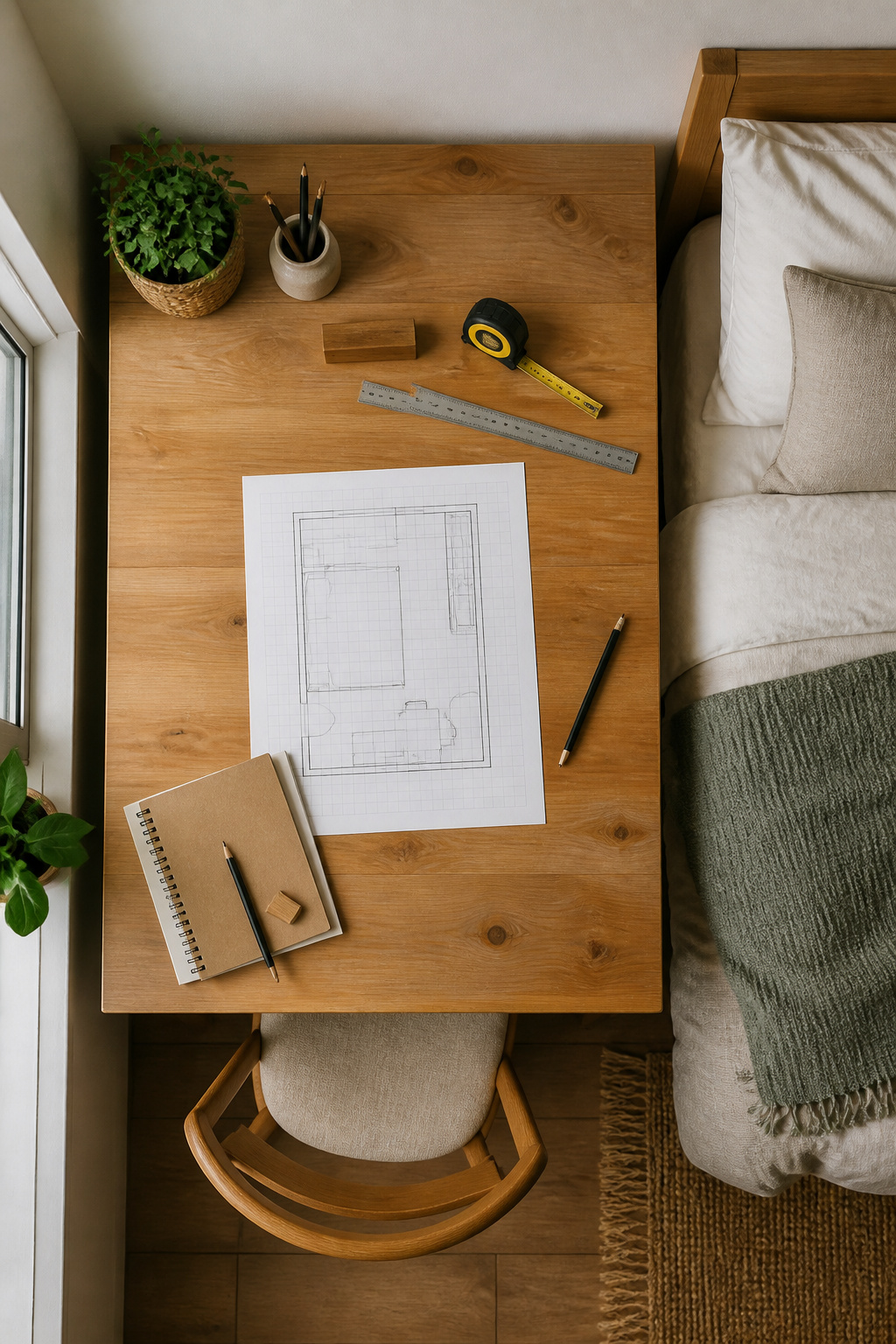
Most small bedrooms fail because the furniture goes in the same spot by habit, usually the wall facing the door, and nobody checks whether something better fits. Measure the room and sketch a floor plan before you buy anything. A tape measure and graph paper, or a free app, costs nothing and saves you from discovering your new nightstand blocks the closet door.
The Iris Under Bed Drawer is about 6 inches tall and 30 inches deep. Those numbers matter because they show what actually fits where. A drawer that deep needs clearance to pull out, and 6 inches of height under your bed frame is not guaranteed. Sketch it in first, or you are planning storage you cannot use.
2. Use Vertical Space
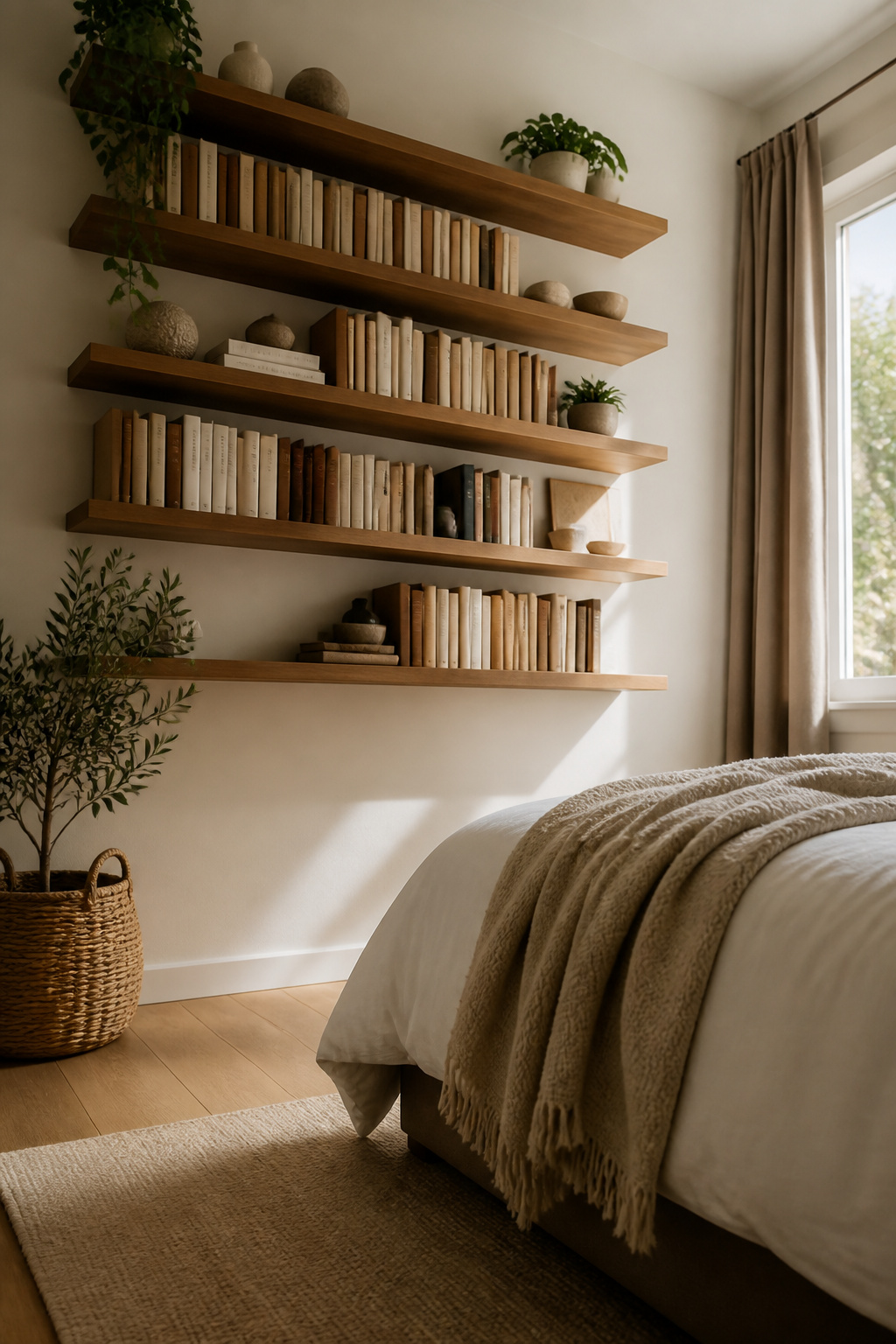
Wall-mounted shelves and tall bookcases pull the eye upward and keep floor space open for the things that actually need it. The Container Store makes a 5-foot floating bookshelf that claims only as much floor space as one photo album but holds roughly 50 titles depending on thickness. Assembly means screwing a long steel spine into a heavy metal base and slotting in ten shelves; one of mine arrived bent at a wonky angle, and straightening it took my full body weight against the floor.
In my rental, I wanted that height without drilling dozens of holes I’d have to patch later. A French cleat solved it: one bracket screws to the wall at stud points you find with a stud finder, the mating bracket attaches to the shelf, and the whole unit locks together by its own weight. When I move out, I fill four small screw holes instead of a ripped-out drywall disaster, and the security deposit stays mine.
3. Multipurpose Furniture
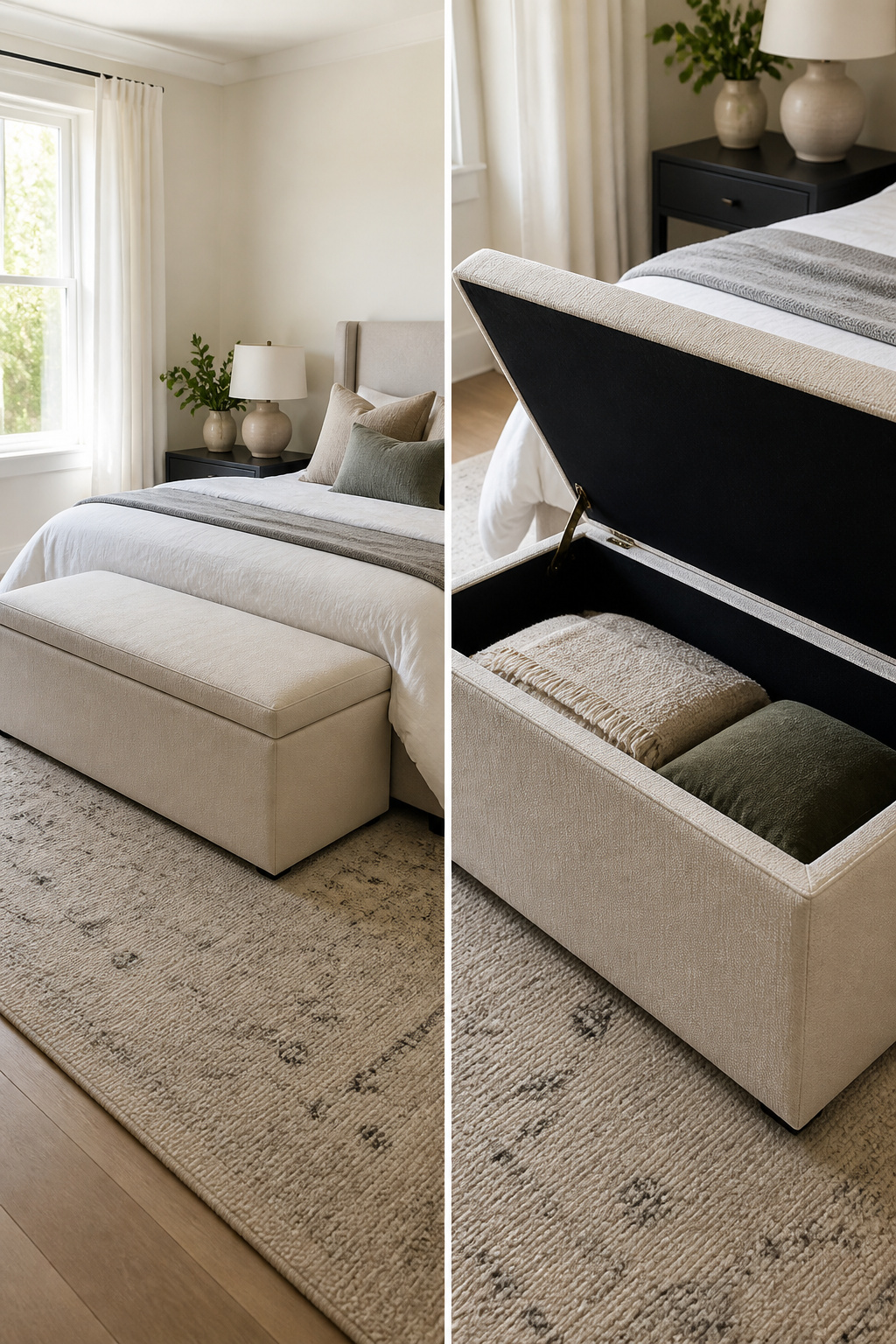
The first multipurpose piece I would buy again is the Maribo Storage Ottoman from Article, which comes in a medium at 18.5 by 32 by 15.5 inches and a large at 18.5 by 48 by 15.5 inches. The lid hinges forward, so it still opens when pushed against a wall, and the foam padding is thick enough that you actually want to sit on it. I would put the medium at the foot of a bed and store spare bedding inside, or slide the large under a window for seating and hidden storage.
Beds with drawers underneath remove the need for a separate dresser, which matters when floor space is tight. A desk that doubles as a nightstand works the same way: one piece instead of two, with the bonus that you get a workspace without adding another surface to walk around. The tradeoff is that the desk surface stays cleaner than a dedicated nightstand would need to, since you are working there too.
For a lower entry point, the IKEA Domsten stool runs $30 and functions as both seating and a small side table. It does not store anything, but it proves the principle: one object doing two jobs keeps the room from filling up. If I were furnishing a small bedroom from nothing, I would rather spend less on a few double-duty pieces than buy single-purpose furniture and run out of floor.
4. Under-Bed Storage
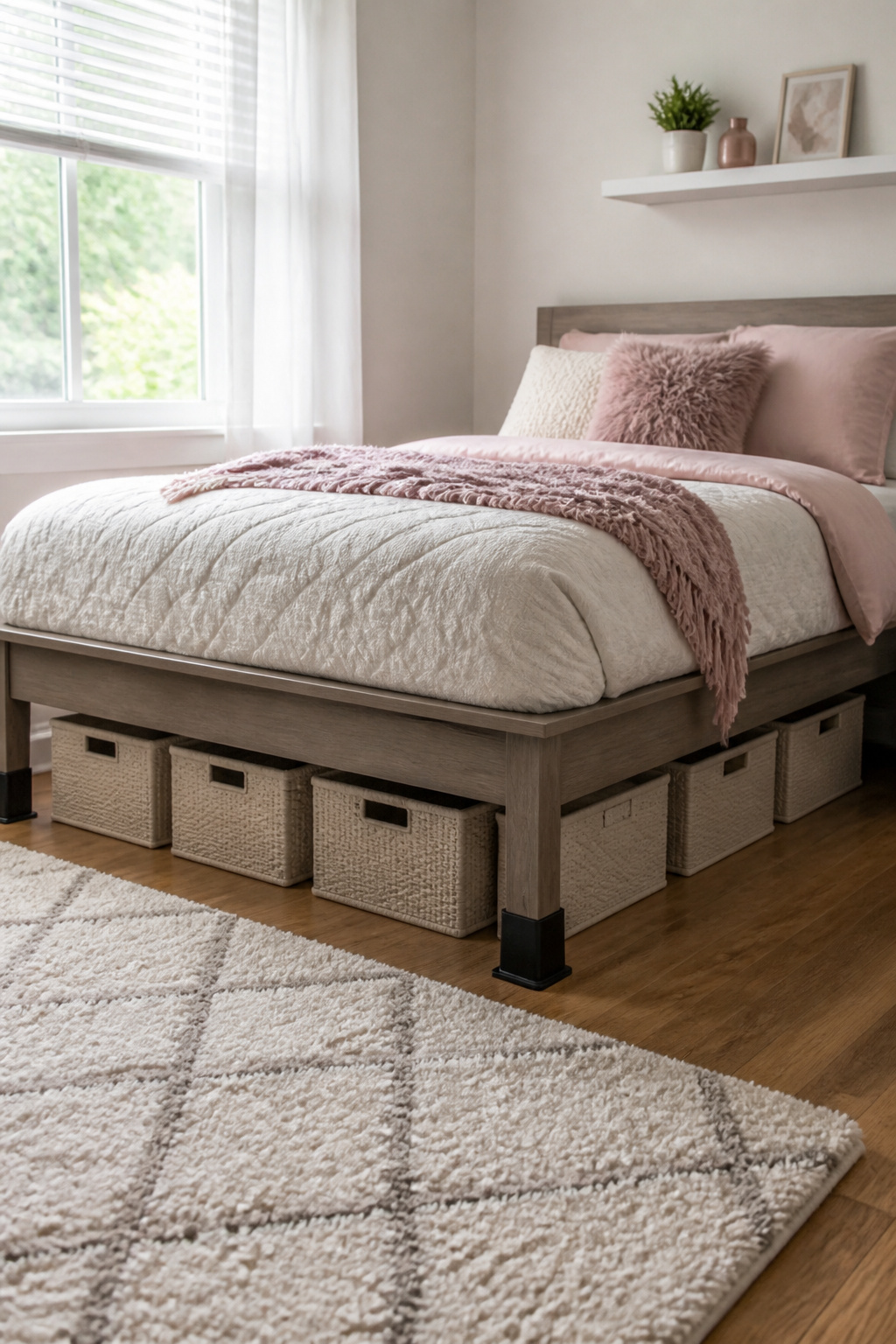
Most beds leave a gap of about six inches between the frame and the floor, which sounds like storage space until you try sliding a bin under and it catches on the lip. Bed risers change the math, lifting the frame enough to fit rolling drawers or flat bins without fighting the baseboard. I spent years in a studio apartment where the only closet was the width of a refrigerator, and the space under the bed became the linen closet, the shoe rack, and the off-season clothes archive.
The Room & Board Hudson Bed solves this with four built-in drawers that extend nearly two feet, but at $2,799 it is priced for a forever home, not a rental you might leave in eighteen months. For about $30 in risers plus another $40 in IKEA bins, you get roughly eighty percent of the usable storage. The Malm bed with its own drawers runs $369, which splits the difference, though assembly requires an extra set of hands and the drawers slide loose enough that a determined cat can pry them open. For daily access, rolling bins you pull out yourself beat a hinge-top ottoman; lifting the mattress every morning gets old by Wednesday.
5. Built-In Storage
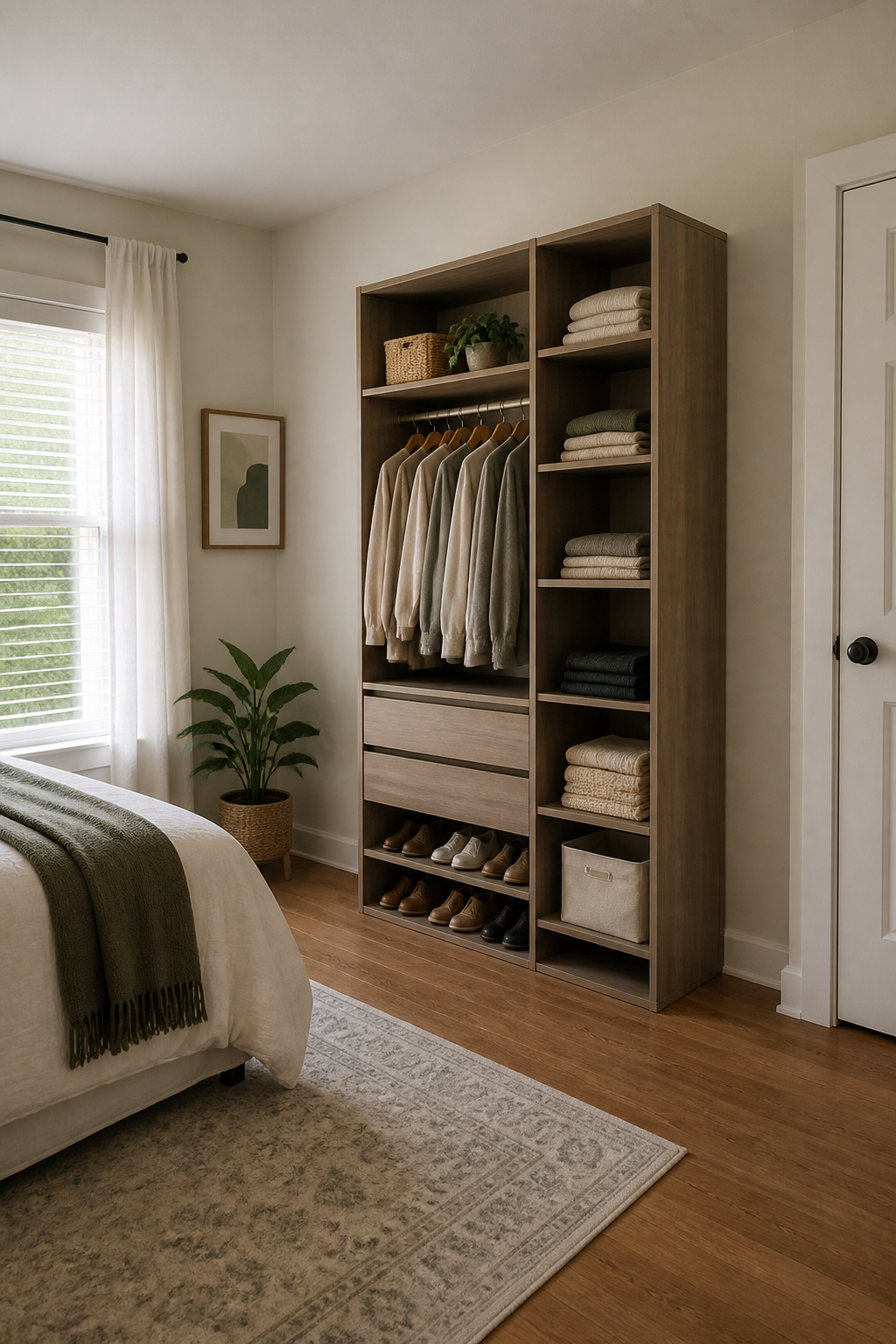
The closet in my last rental came with one rod and a shelf overhead, and for months I treated that as the full story. Then I actually measured: four feet of air sat between the rod and the ceiling, doing nothing but collecting dust. A stackable wire system from the home center cost about sixty dollars, took twenty minutes to install, and suddenly the same footprint held shoes, folded jeans, and offseason jackets without a single hole in the drywall.
Built-in storage only works if it reads as part of the architecture, not an afterthought. In an owned home, a window seat with drawers beneath the cushion is worth the carpentry; it turns a dead zone into linen storage that looks intentional. Recessed wall niches between studs cost even less, maybe thirty dollars in drywall compound and trim, and they hold a phone charger, a book, a glass of water without nightstands crowding the floor plan.
Renters have to fake the same effect. Freestanding closet systems that mount with tension rods or a few screws into existing trim can mirror built-in looks. The trick is choosing units with finished sides and face frames so they do not read as wire shelving when the door is open.
"Under-bed storage is such valuable real estate… don’t let the space beneath it go to waste."
What that means in practice: every built-in you cannot have, you replace with a boundary that feels fixed. A window seat becomes a storage bench against the wall. A niche becomes a shallow cabinet hung at mattress height. The eye wants to see mass where the wall meets the bed; give it that, and the room quits feeling like a furniture warehouse.
6. Light Colors and Mirrors
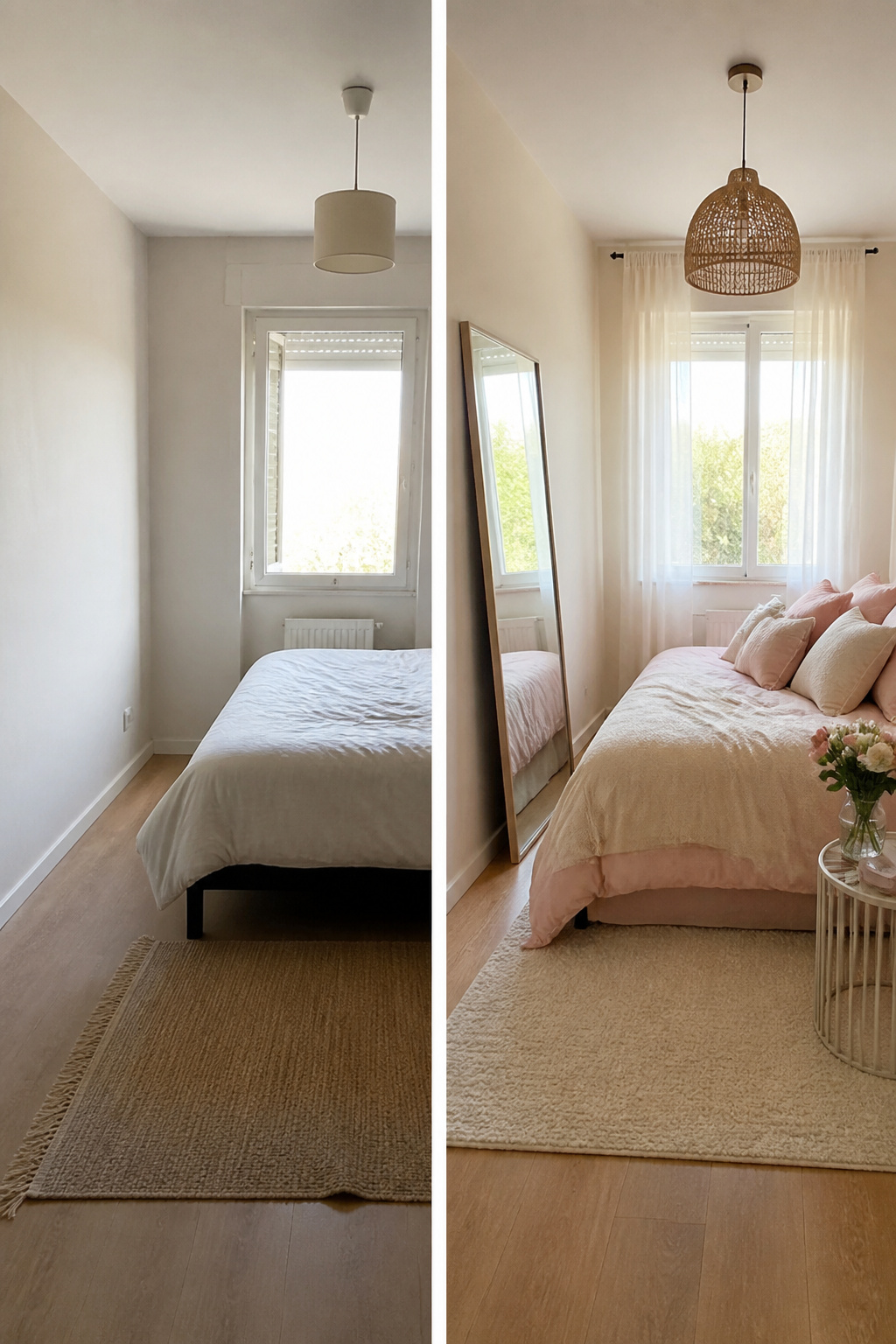
Light shades like white, beige, and pastels reflect more light, which makes a small bedroom feel airy rather than boxed in. The trick is choosing a palette with enough warmth that the room does not go sterile. Three combinations hold up in practice: warm white with sand and terracotta, cool white with sage and soft gray, or cream with dusty rose and brass. Each keeps the walls open while giving the eye somewhere to land.
Mirrors do the heavy lifting after paint. A large mirror placed opposite or adjacent to a window bounces natural light back into the room and creates the illusion of more space. I hung one too high in my last apartment, angled toward the ceiling fixture instead of the window, and the light died at the wall. The mirror should catch what you want to see more of, not just fill a blank spot. Another time I placed a mirror directly across from the bed, which woke me at dawn with reflected glare. Adjacent placement solved it; the light still traveled, but I could sleep past sunrise.
7. Floating Furniture
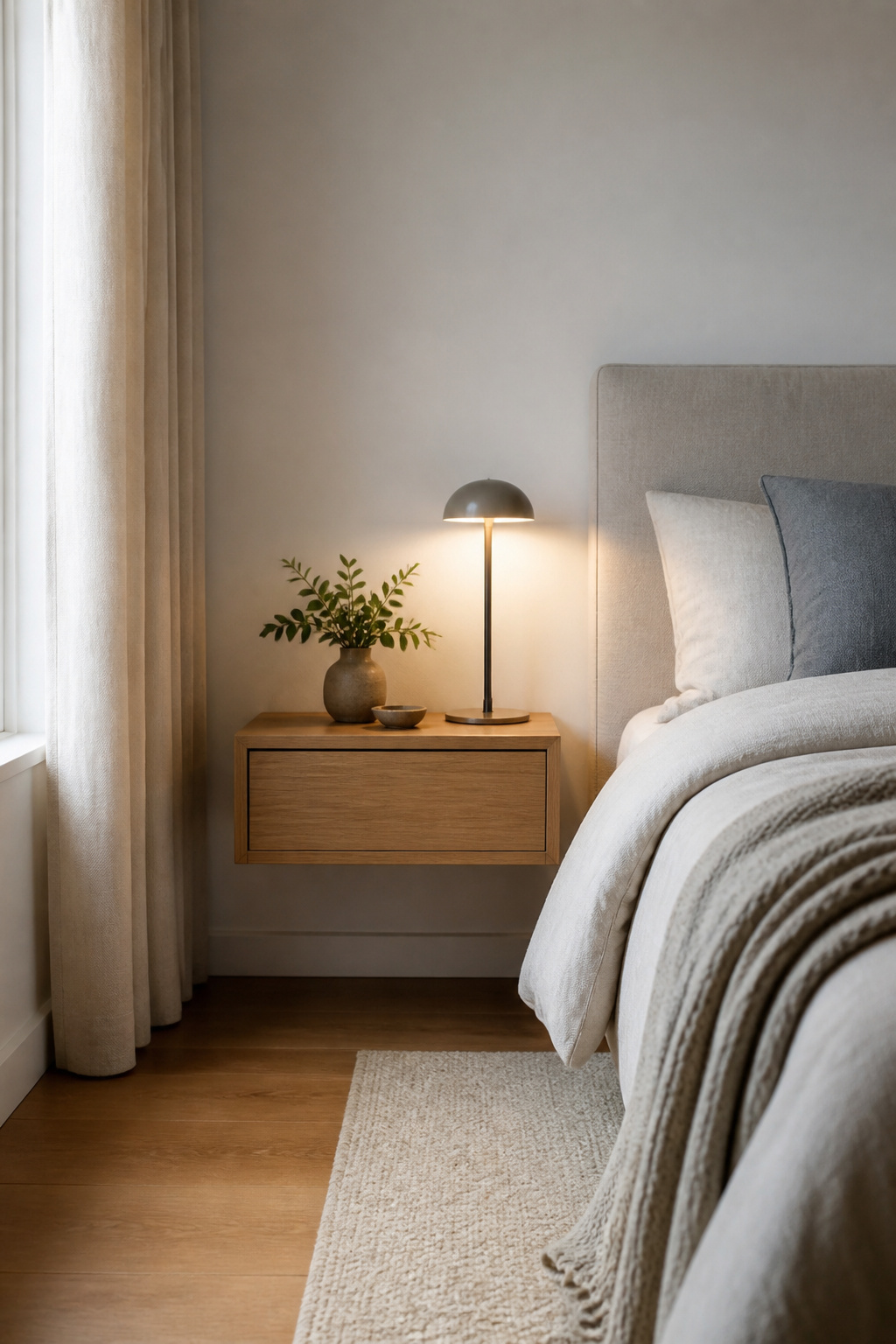
Wall-mounted furniture keeps the floor visible, and that visible floor is what makes a little bedroom read as a room instead of a closet. A floating nightstand or desk leaves the area underneath open, which lightens the silhouette and, in my reading through dozens of these setups, makes cleaning simpler since there is no base to vacuum around.
The Kartell Componibili nightstand achieves nearly the same effect without a single screw into drywall. At 12 inches in diameter, the slim cylinder slips into corners where a standard nightstand would block the path, and the stacked cubbies hide clutter behind curved sliding doors. The piece launched in 1967 and still lands in roundups for a reason: it reads as furniture, not as storage equipment, and it can move with you if the lease ends.
Renters weighing the two options face a real choice. Wall-mounted pieces demand anchors, patching later, and a stud finder; the Componibili demands floor space of only a foot across and roughly $290. For a weekend project with a few hundred dollars in play, the freestanding route skips the hardware store run entirely.
8. Slim Furniture
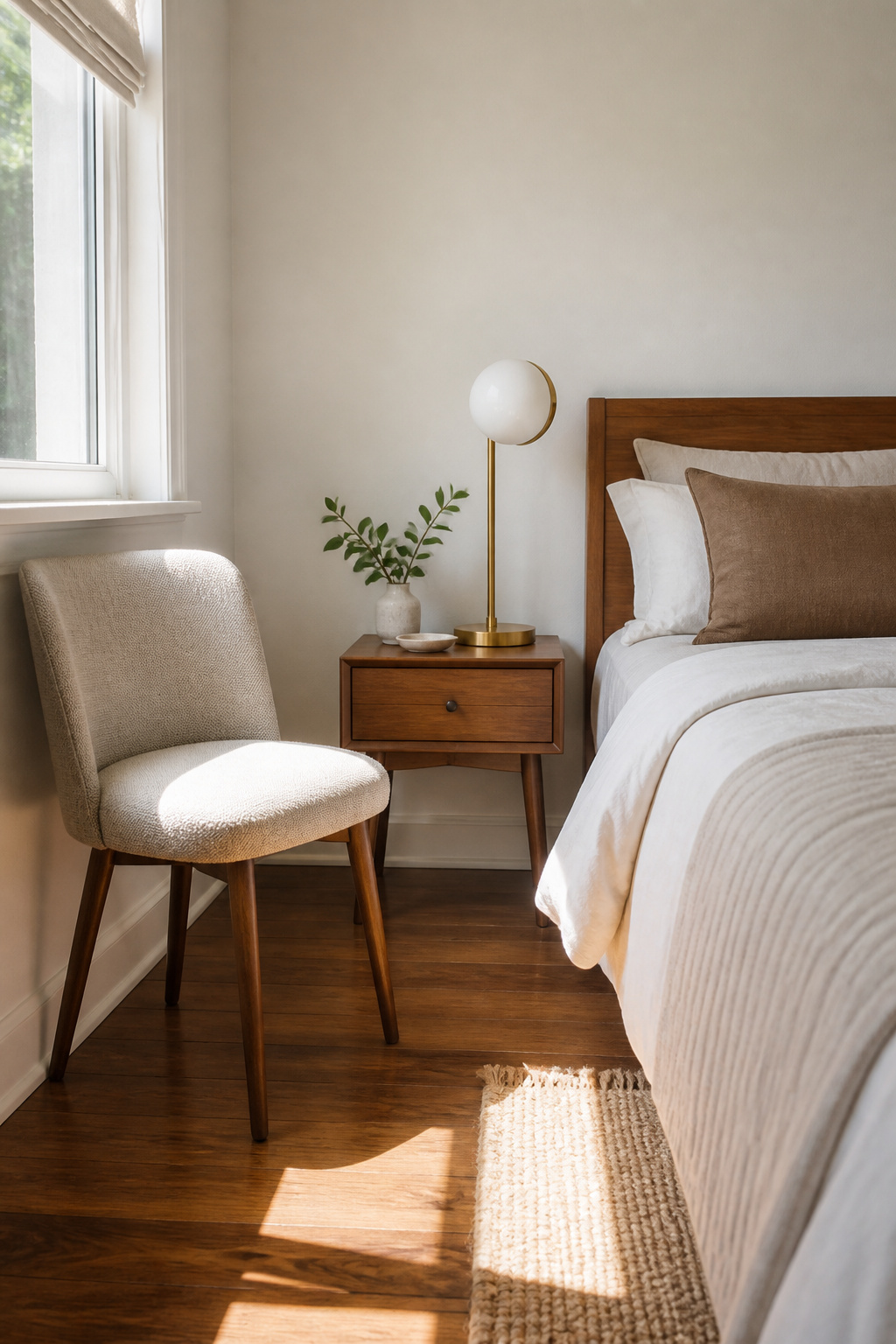
Narrow-legged chairs and thin-profile headboards earn their keep in a little bedroom because the floor visible underneath them reads as usable space. A piece under 18 inches deep against a wall leaves room to move without the squeeze of bulkier profiles. Mid-century and Scandi lines tend to get there first, but the principle matters more than the label: the lighter the visual weight, the larger the room feels.
Even small items add up fast on a narrow surface. The Yarra-Decor Bedside Table Lamp with USB Port carries a base just 4.7 inches in diameter, which leaves actual room on a typical nightstand for the glasses, book, and water bottle a person actually uses. It also charges devices through the base, though you will need to hold the lamp steady while plugging in.
I learned the hard way that tape measures do not forgive. A 22-inch nightstand will not fit a 19-inch gap, and that 3-inch difference is not persuadable. The gap itself was only there because a previous tenant had bolted a shelf bracket into the stud; removing it would have meant patching plaster I did not own. I ended up with a stack of books on the floor for two months before finding a 16-inch replacement. The lamp, at least, transferred over without issue.
9. Layered Lighting
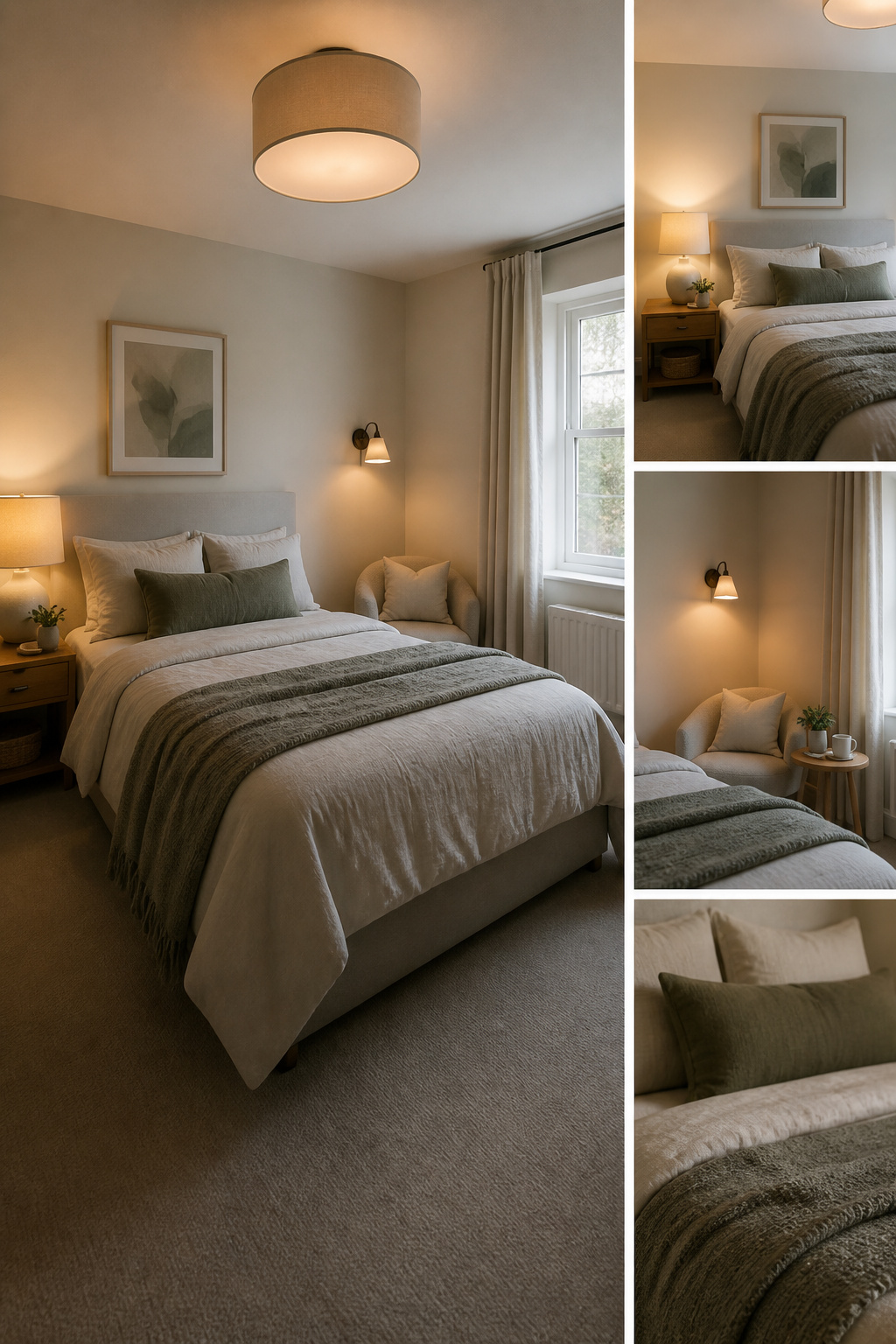
A single overhead bulb in my last bedroom stayed on for six months because I kept telling myself the wiring was too much hassle for a rental. The room never felt finished, and reading in bed meant either squinting or angling a phone flashlight like a teenager. Layered lighting fixes what one fixture cannot, and it does not require an electrician.
Overhead light alone flattens every corner into the same dim envelope. What works in a little bedroom is three sources: something overhead for general visibility, something at face height for tasks, and something soft that bounces off a wall or ceiling so the space quits feeling like a closet.
The Poplight sconce sits at about $100 and mounts with screws or adhesive tape, no hardwiring needed. A built-in level keeps the angle right, and the app handles dimming and scheduling. I would have bought two in 2019 if they had existed. For renters, that is the threshold where the project survives a Saturday and the security deposit survives move-out.
10. Create Zones
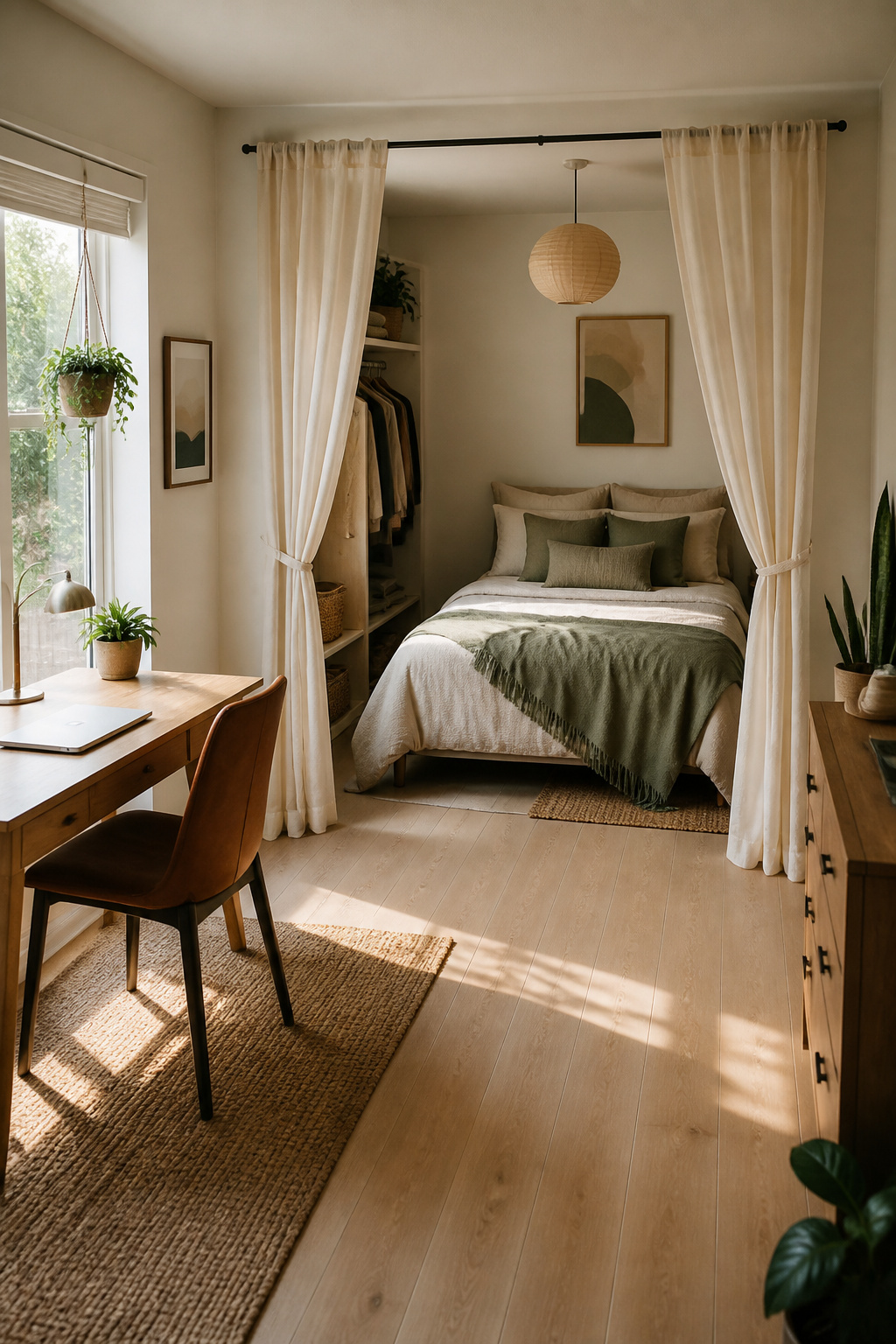
A 10-by-12 bedroom forces every square foot to work, and the first thing that quits working is the open floor plan. Sleep, dressing, and work bleed into each other until the room feels smaller than its walls. A floor-to-ceiling curtain rod around the bed cost me $40 and gave me back a dressing zone I did not have before.
The rod mounts to the ceiling at the foot and one side of the bed. I hung plain cotton panels, nothing heavier than what you would use for a window, and they draw back in the morning like any curtain. The effect is the same partition a canopy bed provides, the kind designer Rebecca Gardner used with pink linen and tassel trim in her Manhattan apartment, but the rod leaves when I leave. No four-poster frame to wrestle up the stairs.
Rugs do the same work lower down. A small rug under the desk chair separates work from sleep without asking permission from a landlord. Furniture placement finishes it: the back of a low dresser facing the bed reads as a wall you can walk behind. Three zones, no construction, and the room still feels like one room because the edges are soft, not framed.
11. Soft Textiles
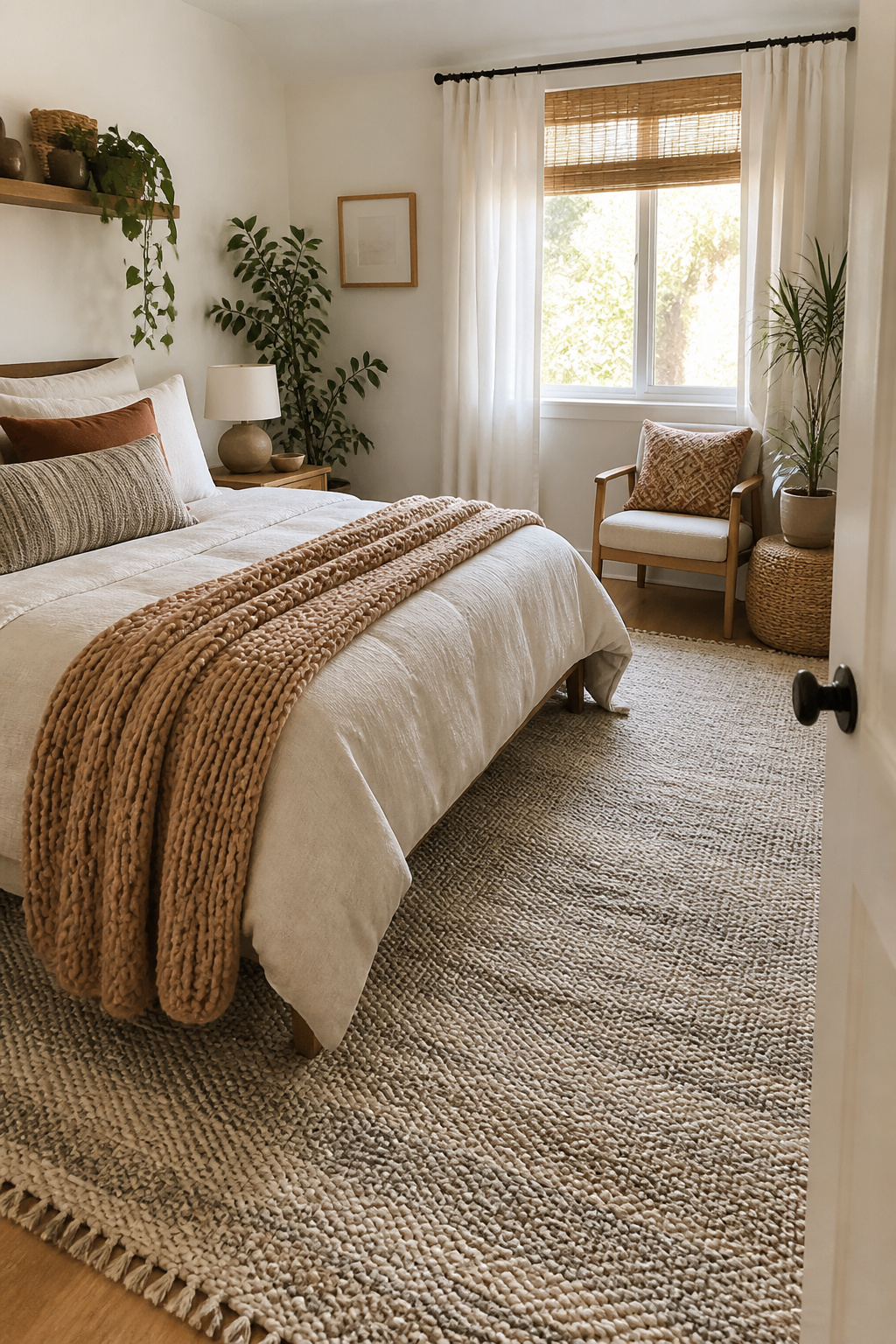
Textiles do the heavy lifting in a small bedroom because they change how the space feels without taking up a single inch of floor plan. A flat-woven cotton rug under the bed adds warmth that paint alone cannot manage, and a nubby throw at the foot of the mattress gives the eye something to rest on besides wall color.
I learned the rug lesson the hard way. The first one I bought was a 5-by-7 for a room that measures roughly 8 by 10, and the result looked like a postage stamp floating in the middle of the floor. An 8-by-10 rug, run under the bottom two-thirds of the bed so it extends past the sides and foot, anchors the room properly. The larger size sounds backwards for a small space, but the continuous plane of texture reads as more floor, not less.
Pattern competes for attention where every surface is visible at once. Texture replaces it cleanly: a slubby linen cushion, a knitted throw in a solid tone, a rug with a low pile and subtle variation in weave. These read as depth, not clutter, and they survive the visual sweep your eye takes across a tight room.
12. Minimalist Decor
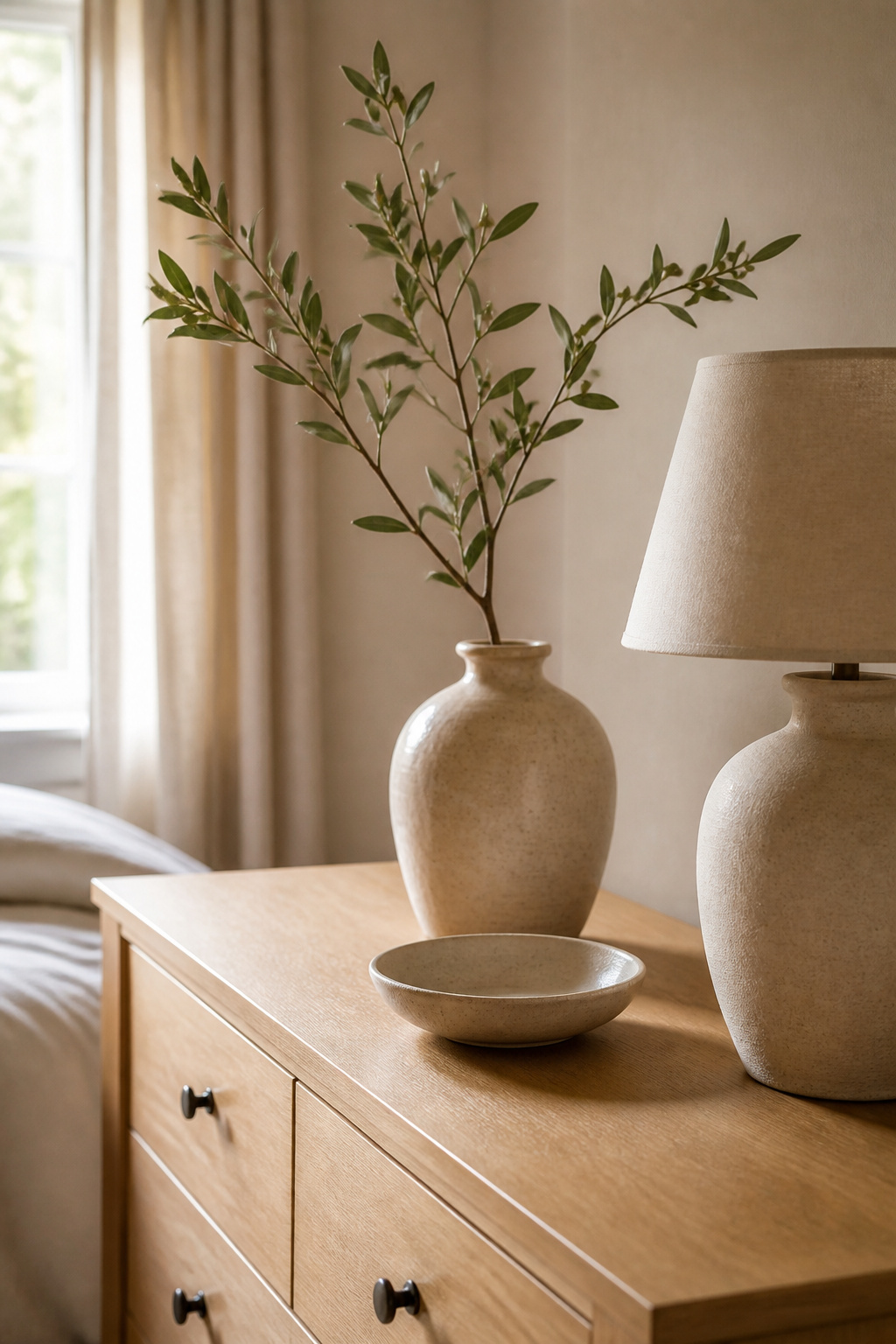
A dresser top crowded with twelve objects reads as junk no matter how nice each piece is. Fewer, larger pieces carry more weight than a cluster of small ones, and the rule of three keeps surfaces from sliding back into clutter. I cut my own dresser down to four: a wide ceramic dish for earrings and change, one framed print leaned against the wall, a single branching stem in a heavy vase, and the lamp that was already there. The surface looked emptier at first, but by the next morning the eye had room to actually notice each thing. The print, which had vanished before among competing frames, suddenly held the wall. The dish read as intentional sculpture instead of lost storage. One move that helped was treating the trio as a single unit: the lamp and print anchored the two back corners, the dish and vase sat forward in a loose triangle, and nothing crossed the front third of the dresser where I actually needed space to set down a phone or a coffee cup. For renters especially, this costs nothing and takes twenty minutes, though the hard part is accepting that the fourth-favorite trinket probably belongs in a drawer.
13. A Pop of Color
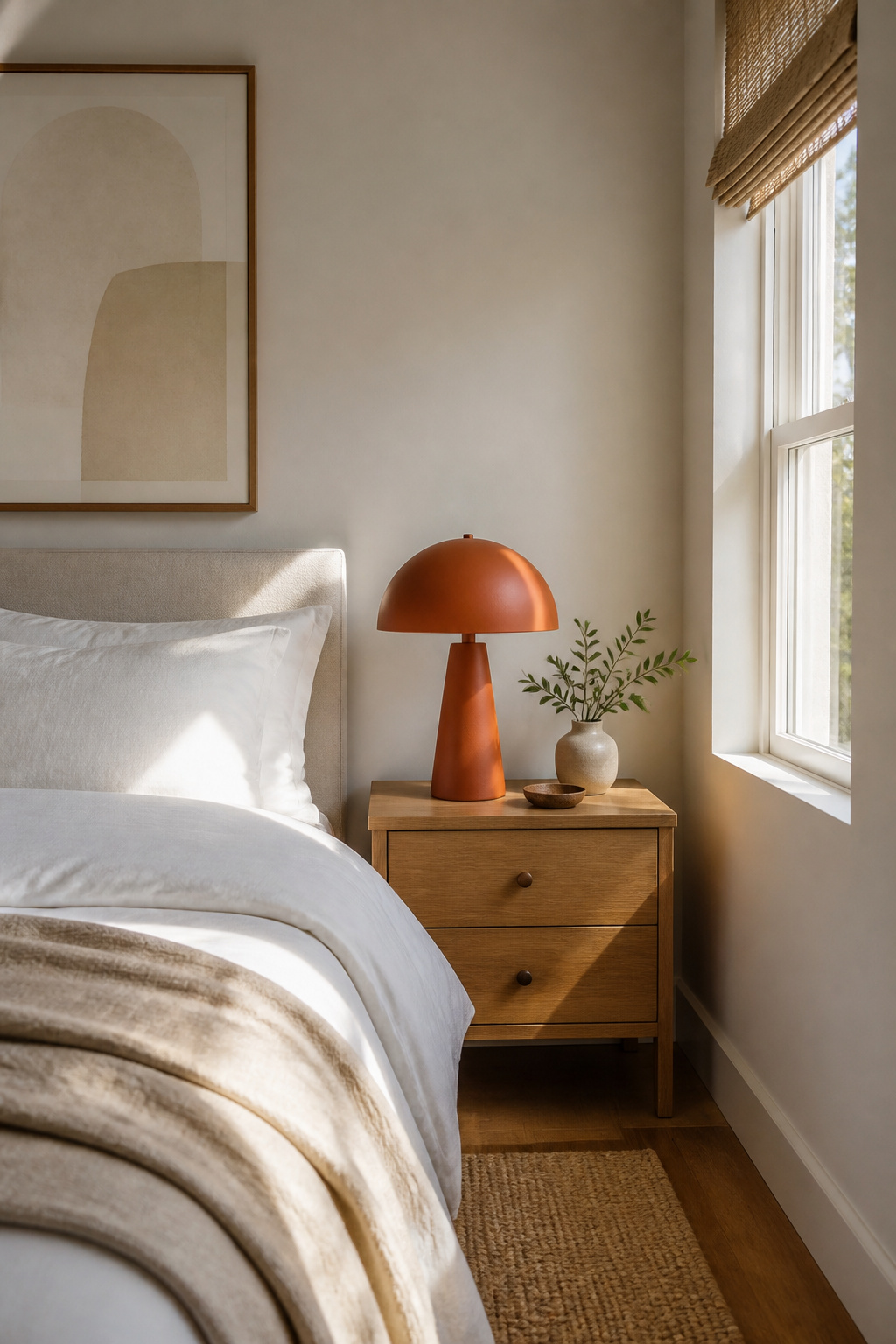
A saturated accent against a neutral ground reads as intention, not clutter, because your eye has one place to land. In my last rental I painted the wall behind the bed a deep teal, thinking the color would make the room feel designed. Instead it became a dark cave that shrank the already tight space; the saturation needed a frame or a purpose, and the wall had neither. The terracotta lamp base on my nightstand now does the same job better. It sits against white bedding and pale walls, so the color registers as an object someone chose rather than a surface that closed in. One bold piece beats a bold wall in rooms under 120 square feet. Paint draws the boundaries; a lamp, a chair, or a rust-colored throw draws the interest. If you rent, this also travels with you. The lamp cost less than two gallons of quality paint and left no patch to fight over with the landlord.
14. Natural Elements
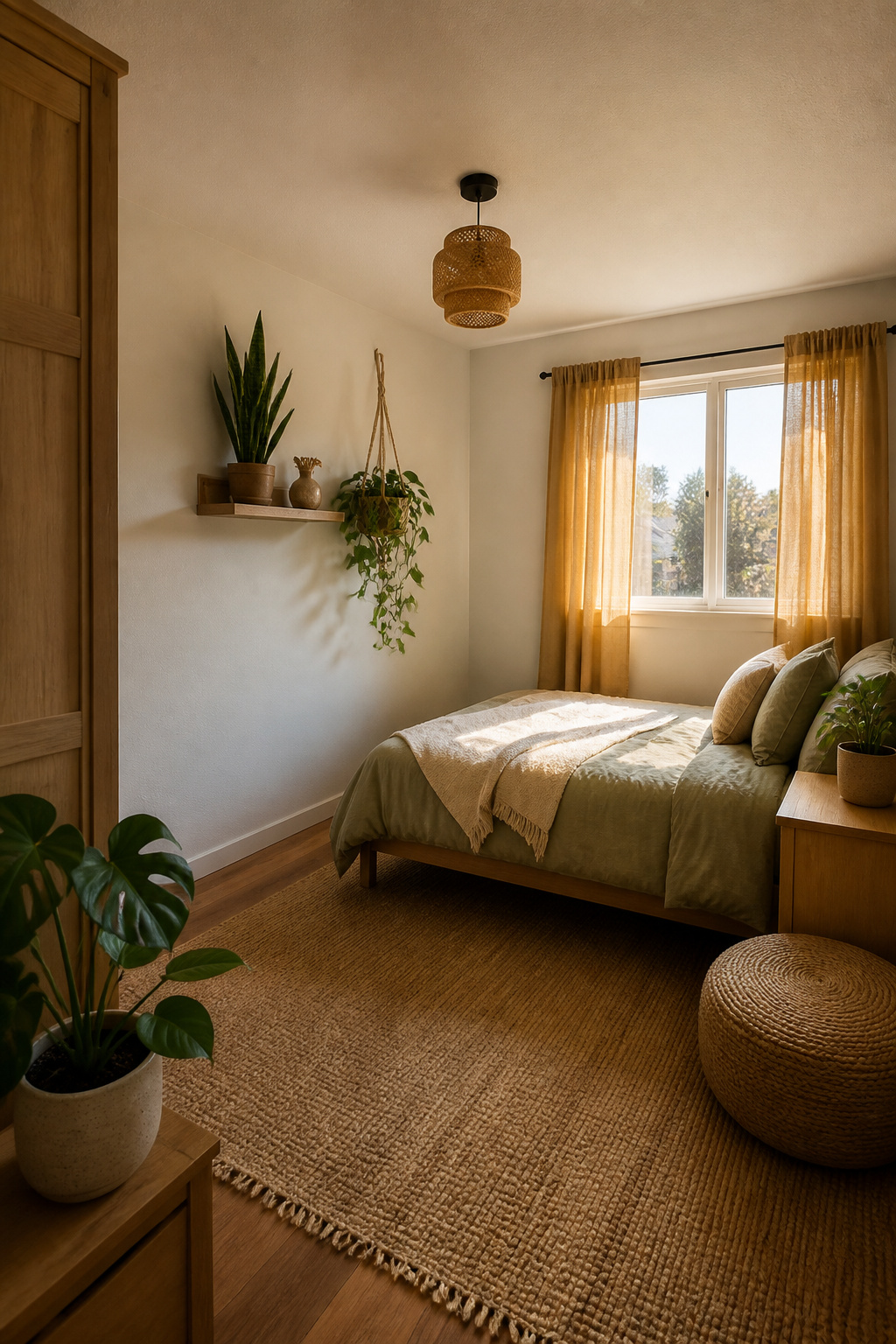
A snake plant and a pothos are the only greenery I have kept alive for more than a year, mostly because both survive being ignored for two or three weeks at a stretch. The snake plant sits on a narrow wall-mounted shelf above the bed frame, high enough to catch indirect light from the window without eating nightstand space. The pothos hangs in a macrame holder screwed into the ceiling corner, trailing down past eye level so the leaves read as a soft screen rather than clutter on a surface.
Wood tones work the same way in a little bedroom: a single oak or walnut piece, even just a stool or a picture ledge, breaks up painted walls without demanding the visual weight of a full wood bed frame. I learned that the hard way after installing a pine floating shelf that looked orange and apologetic against white walls until I stained it with a cooler walnut finish.
Natural fibers add texture where square footage is tight. A jute or sisal rug underfoot reads warmer than synthetic pile, and a cotton-linen curtain that actually moves in a draft makes a room feel inhabited rather than staged. The limit is one textural layer per zone: jute on the floor, linen at the window, woven basket on the shelf. Two in the same sightline starts looking like a catalog spread, and three reads as a pile of laundry waiting to happen.
15. Personal Touches
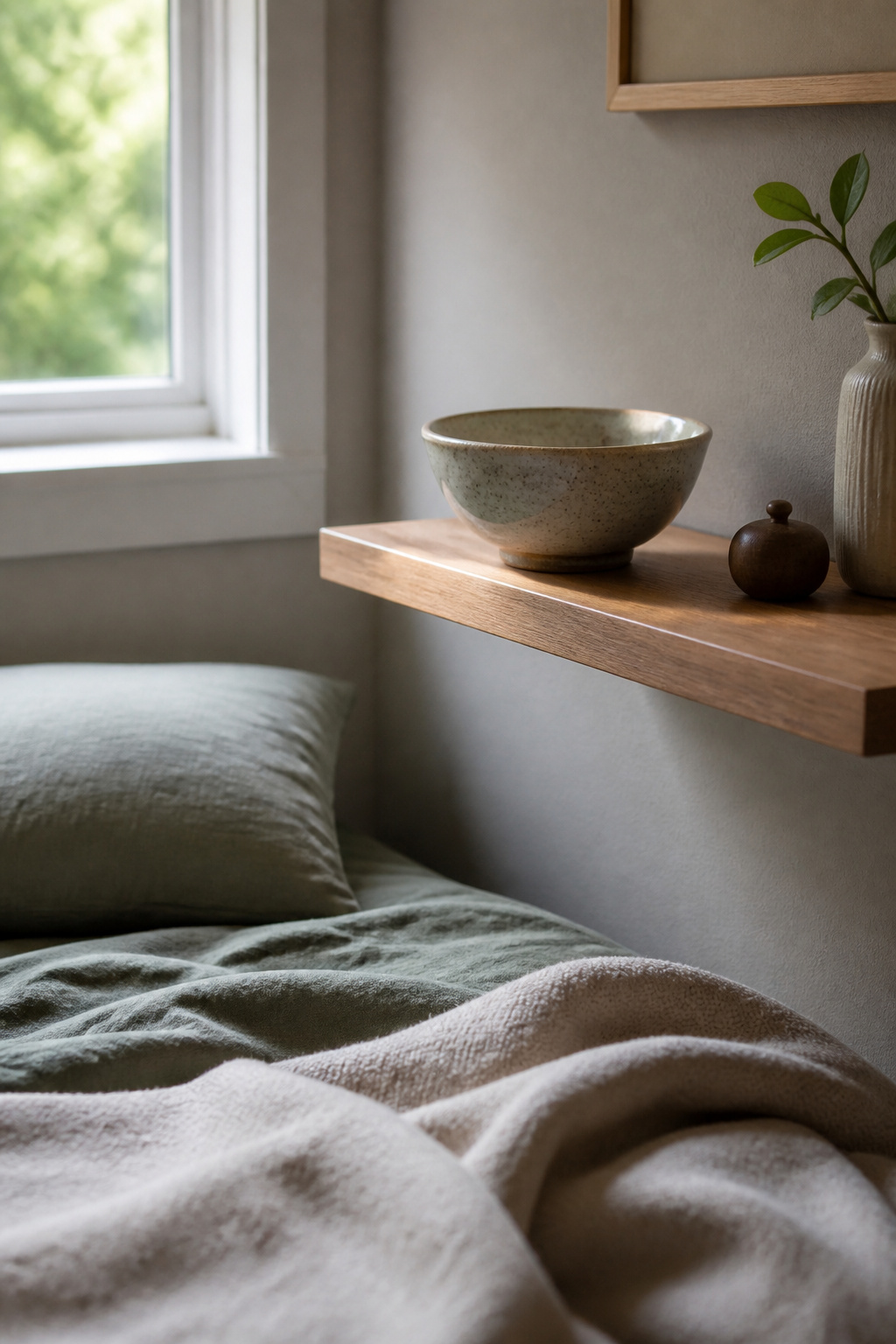
A ceramic bowl from my grandmother sits on the single floating shelf I installed above the bed. In a 120-square-foot bedroom, that shelf is the only surface that gets to hold something purely because I like looking at it. Everything else earns its keep: the nightstand stores reading glasses, the narrow ledge by the door catches keys. The bowl made it through three rounds of "does this spark joy or just collect dust" before I found its angle, turned slightly so the glazed side catches morning light and the chipped base faces the wall.
One personal item, well lit, beats a cluster every time. Two bowls and the shelf becomes a junk drawer standing upright. Three and you have started a collection, which in a little bedroom is just clutter with a story attached.
The line between inhabited and messy shifts with square footage. In my old place, twice the size, I kept a whole dresser top for framed photos and a vase. Here, the photos live inside the bowl, faces up, so I see them when I lift the lid. The vase was repurposed in the kitchen for wooden spoons. Personality in a small space has to multitask the way furniture does: the bowl holds both memory and spare charging cables. When the lid comes off to grab a cord, the photo stack is the greeting, not the mess.
What Natural Light Actually Does
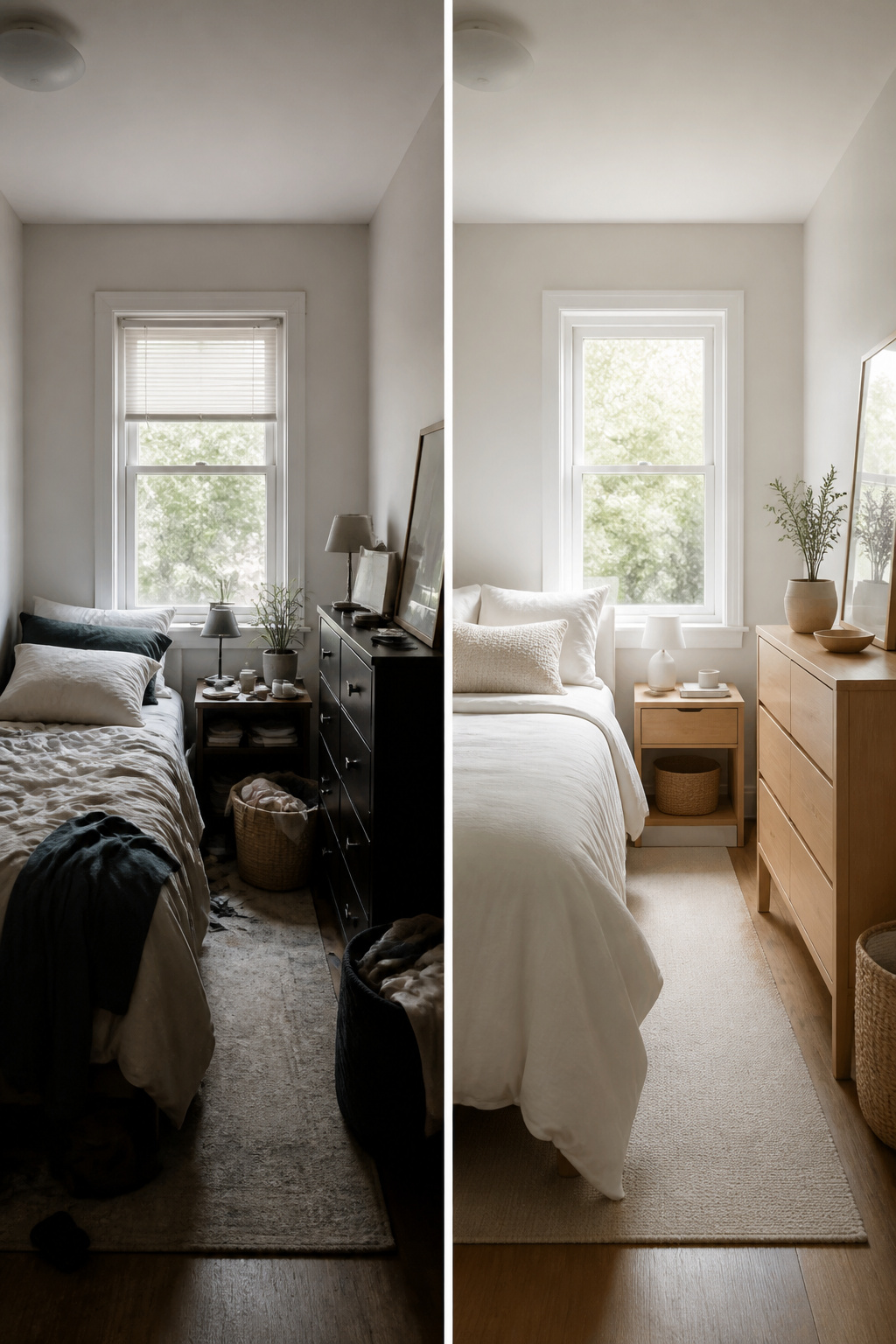
Daylight changes how large a bedroom feels more than almost anything you can buy. In a small room, the light that reaches the wall opposite the window is what keeps the space from feeling like a closet. Without it, even pale paint goes flat and mirrors just bounce shadows around.
Sheer curtains soften the light but keep it moving across the room all morning. Blinds, even tilted open, break the light into stripes that pool on the floor and leave the corners dim. After switching from blinds to sheers in a north-facing bedroom, the whole wall seemed to lift. The trade is privacy after dark, which is where a layered shade helps.
The direction matters as much as the window size. A southern exposure gave me warm light from late morning through afternoon; the same room faced a brick wall two years later and the difference was immediate. The wall-facing room needed lighter flooring and more reflective surfaces just to feel equivalent, not special. Sheer curtains over a south window do what paint and mirrors cannot fix on their own.
Furniture That Fails
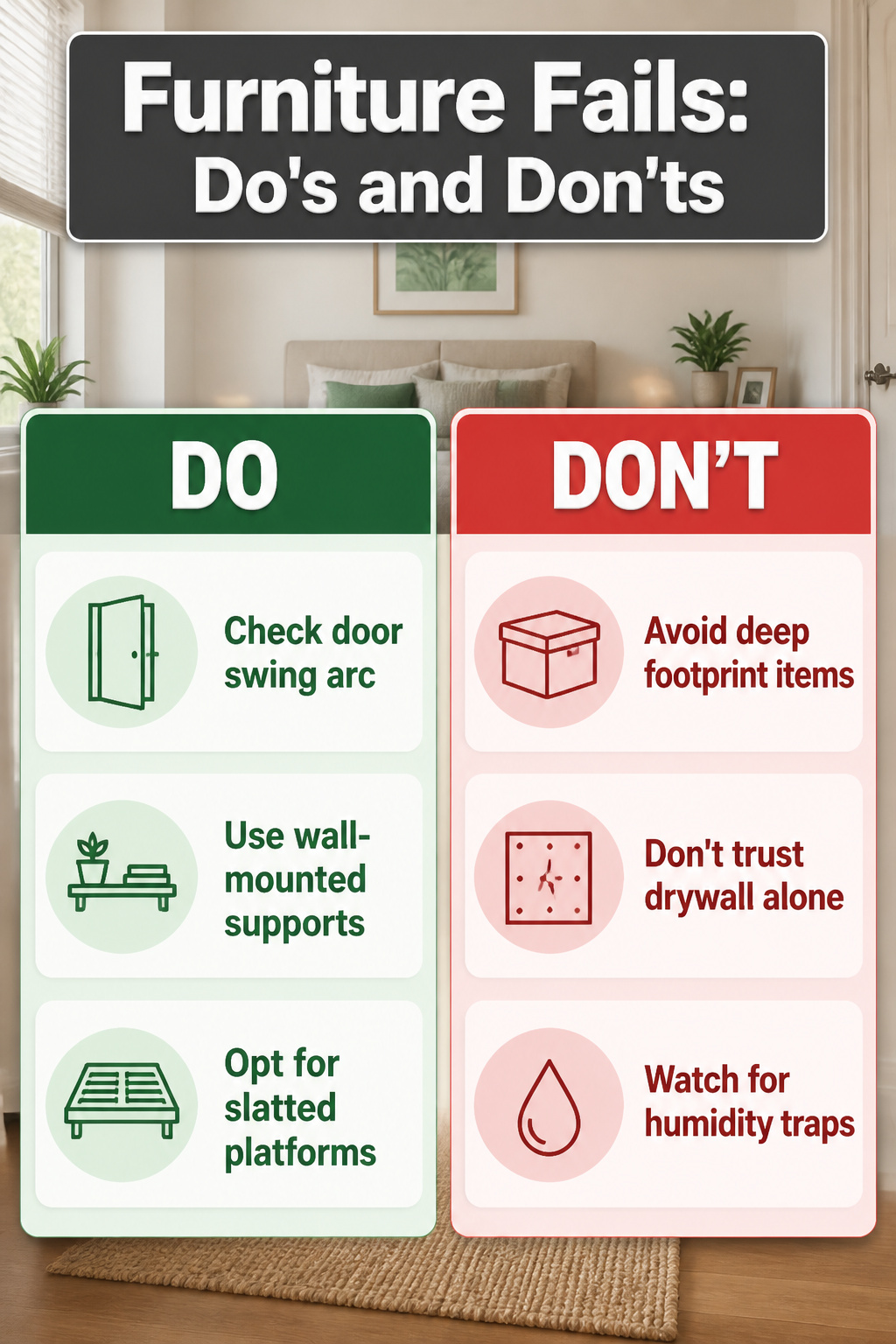
A storage ottoman sounds like a small-bedroom win until the lid hits the doorframe every time you swing it open. The medium Maribo runs 18.5 by 32 by 15.5 inches, and that 32-inch depth can block a standard 32-inch door if you place it where the arc needs room. Check the door swing arc before you buy anything with a footprint over 24 inches deep. I learned this the hard way with a bench that technically fit the wall but turned the doorway into an obstacle course.
Floating shelves fail when people trust drywall alone. The sources all recommend wall-mounted nightstands and desks to free floor space, but none mention that a hollow-core door frame or a stud-spaced wall without blocking will let a shelf pull out under the weight of a lamp and a paperback. If you are mounting where there is no stud, toggle bolts rated for the actual load or a plywood backer screwed to multiple studs is the minimum, not the premium option.
Platform beds with solid sides trap humidity against exterior walls, especially in older construction with no vapor barrier. The storage gain looks clean, but a mattress sitting on a solid deck with three sides enclosed can breed mold in climates where summer nights stay above 70 degrees. Slatted platforms or at least drilled ventilation holes in the deck fix this, and the fix costs nothing at purchase but everything if you discover it after the mattress smells musty.
Three Budgets, Three Rooms
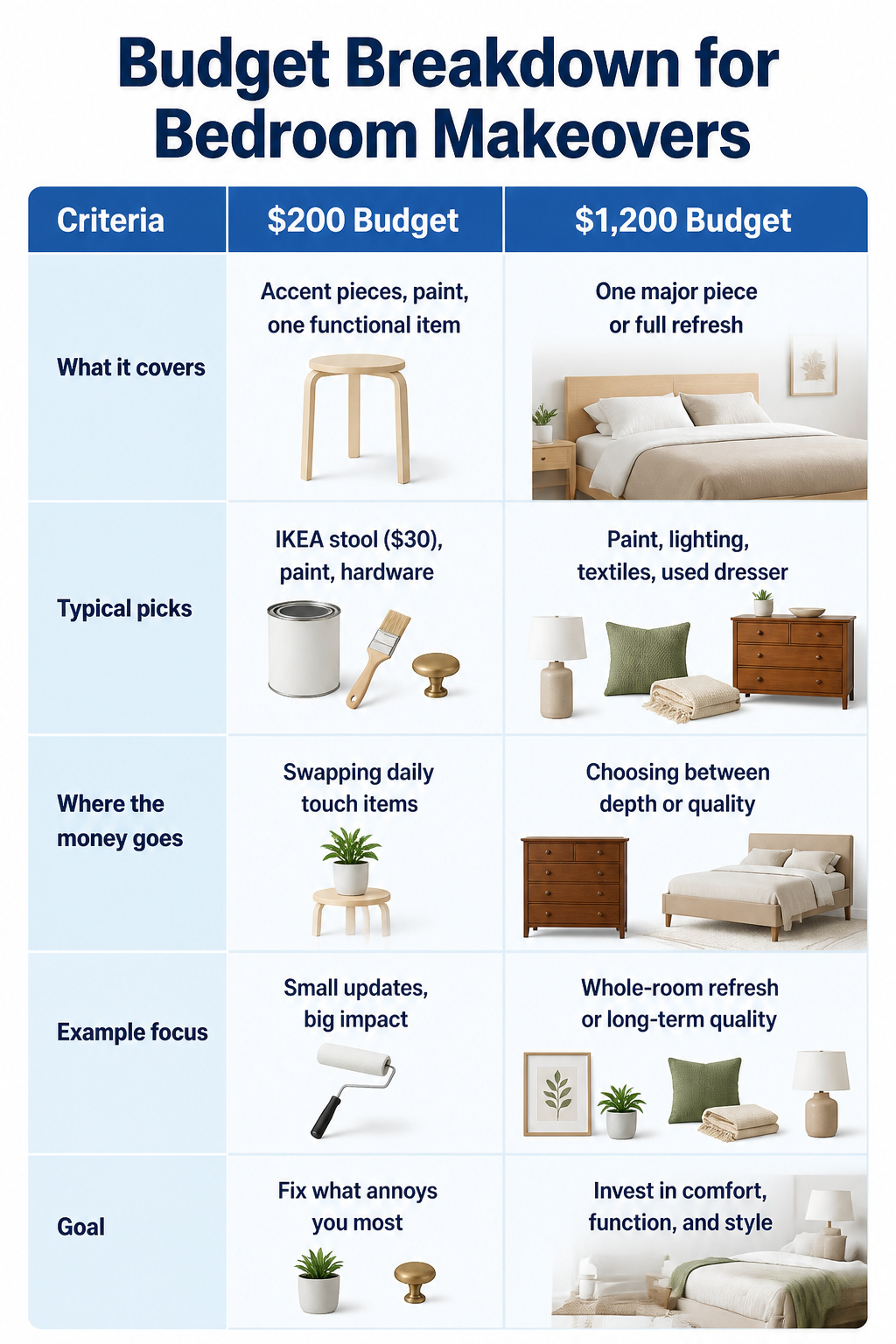
A $200 refresh for a small bedroom gets you a few pieces that punch above their weight. The IKEA Domsten stool runs $30 and works as a seat, nightstand, or plant stand; at that price you can grab two and still have room for paint and a new light. At $600 you are adding storage and better light: a Poplight at $100 gives you wall-mounted task lighting without losing floor space, and the rest covers a flat-pack bed frame with drawers or a compact desk. The jump to $1,200 is where you either buy one big piece or rethink the whole room. The Room & Board Hudson bed costs $2,799, so even at this tier you are not buying it; you are deciding whether to save toward that level of solid-hardwood storage or spread the money across paint, lighting, textiles, and a used dresser. Most small bedrooms I have worked on land in that middle band: enough to fix what annoys you most, not enough to ignore the budget.
| Budget | What it covers | Typical picks | Where the money goes |
|---|---|---|---|
| $200 | Accent pieces, paint, one functional item | IKEA Domsten stool ($30), paint, hardware | Swapping the things you touch every day |
| $600 | Targeted upgrade: light + storage + surface | Poplight ($100), flat-pack storage bed or desk, textiles | Fixing the two biggest layout problems |
| $1,200 | One major piece or full refresh across categories | Paint, lighting, textiles, used dresser; or saving toward hardwood storage | Choosing between depth now or quality later |
Frequently Asked Questions
How can I maximize storage in a small bedroom?
Use vertical storage solutions like shelves and wall-mounted units, incorporate built-in storage where possible, and utilize under-bed storage with risers or bins to keep the room organized. A free app and tape measure help you sketch a floor plan before buying anything, so you do not end up with drawers that block closet doors.
What type of furniture is best for a small bedroom?
Opt for multipurpose and slim furniture that does not take up too much space. Pieces with built-in storage or those that can be easily moved work best; a storage ottoman that opens when pushed against a wall, a bed with drawers underneath, or a desk that doubles as a nightstand each replace two single-purpose items.
How can I make my small bedroom feel cozy?
Incorporate warm lighting and personal touches to create a comfortable atmosphere. Soft textiles like a properly sized rug, a nubby throw, and layered lighting from multiple sources fix what one overhead bulb flattens, while one well-lit personal item beats a cluster that turns into clutter.


