A white vanity works in bathrooms that run traditional, modern, or spa-leaning, and the differences show up in hardware finish, countertop material, and cabinet profile rather than the base color itself.
The choice comes down to how much contrast the room needs and whether storage sits in drawers, open shelving, or baskets tucked below.
A floating vanity opens up visible floor space and simplifies cleaning, but it loses the enclosed storage a floor-standing cabinet would provide.
Matte black hardware reads graphic and modern, while gold or brass fixtures lean traditional without looking dated, and each pulls the white vanity in a different direction depending on what else the room carries.
1. White Vanity with Metallic Fixtures
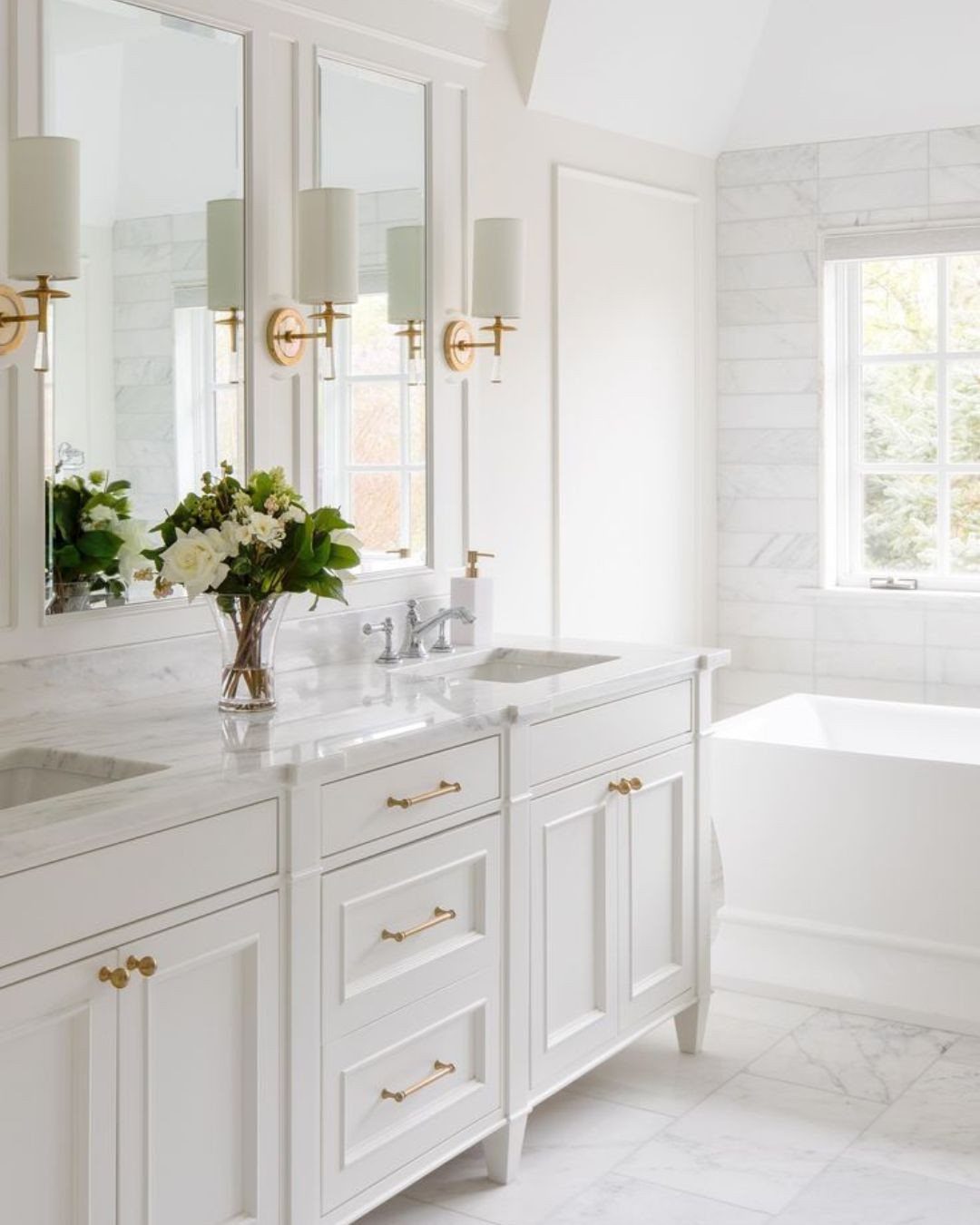
Gold or brass fixtures lift a white vanity from neutral to finished. The warm metal reads traditional without reading outdated, and the contrast keeps the white from disappearing into white walls or white tile.
I see this combination hold up better than chrome when the bathroom gets a lot of use.
Chrome shows water spots fast, and gold hides them longer. If the finish is lacquered, the maintenance is about the same.
The choice that makes the biggest difference is keeping all the metal in the room consistent.
If the faucet is brushed gold, the drawer pulls, towel bar, and light fixtures should match. Mixing metals can work, but it takes more attention to balance, and in a small bathroom the mismatched look usually just reads unfinished.
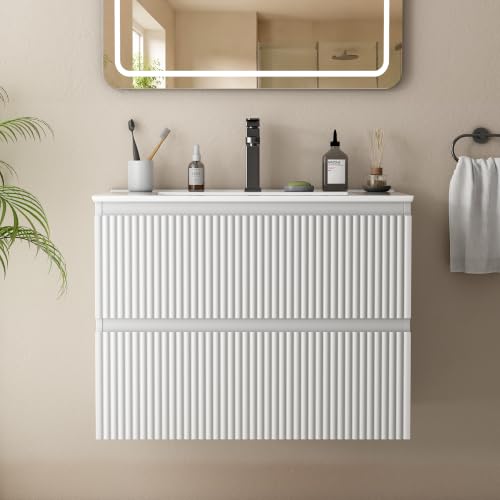
【Modern Fluted Floating Design】Elevate your bathroom with our wall mounted floating bathroom vanity. The sleek fluted front design adds a modern contemporary touch, while the wall-mounted installation saves valuable floor space and makes cleaning underneath effortless. Perfect for small bathrooms, powder rooms, and apartments

Floating Design Creates More Open Space: The wall-mounted design keeps the floor visible, making bathrooms feel larger while allowing easier cleaning underneath. Ideal for apartments, guest bathrooms, and modern homes
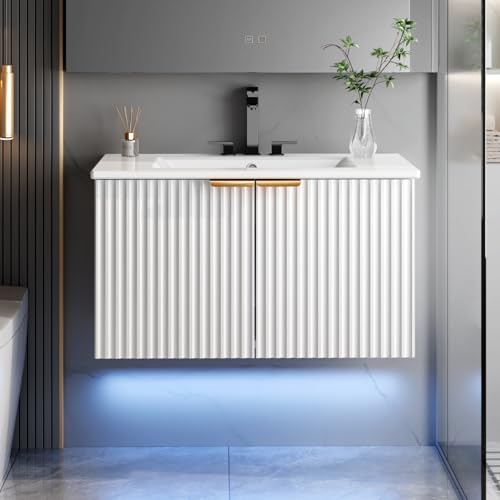
Sleek Floating Bathroom Vanity Design: The ELEVACHIC 30" floating bathroom cabinet complements any style of bathroom. It features a crisp white color with a wave carving design for a simple, modern aesthetic. The wall-mounted structure saves floor space and is easy to maintain and clean stains underneath the cabinet while adding a contemporary charm.
2. Shaker-style Vanity
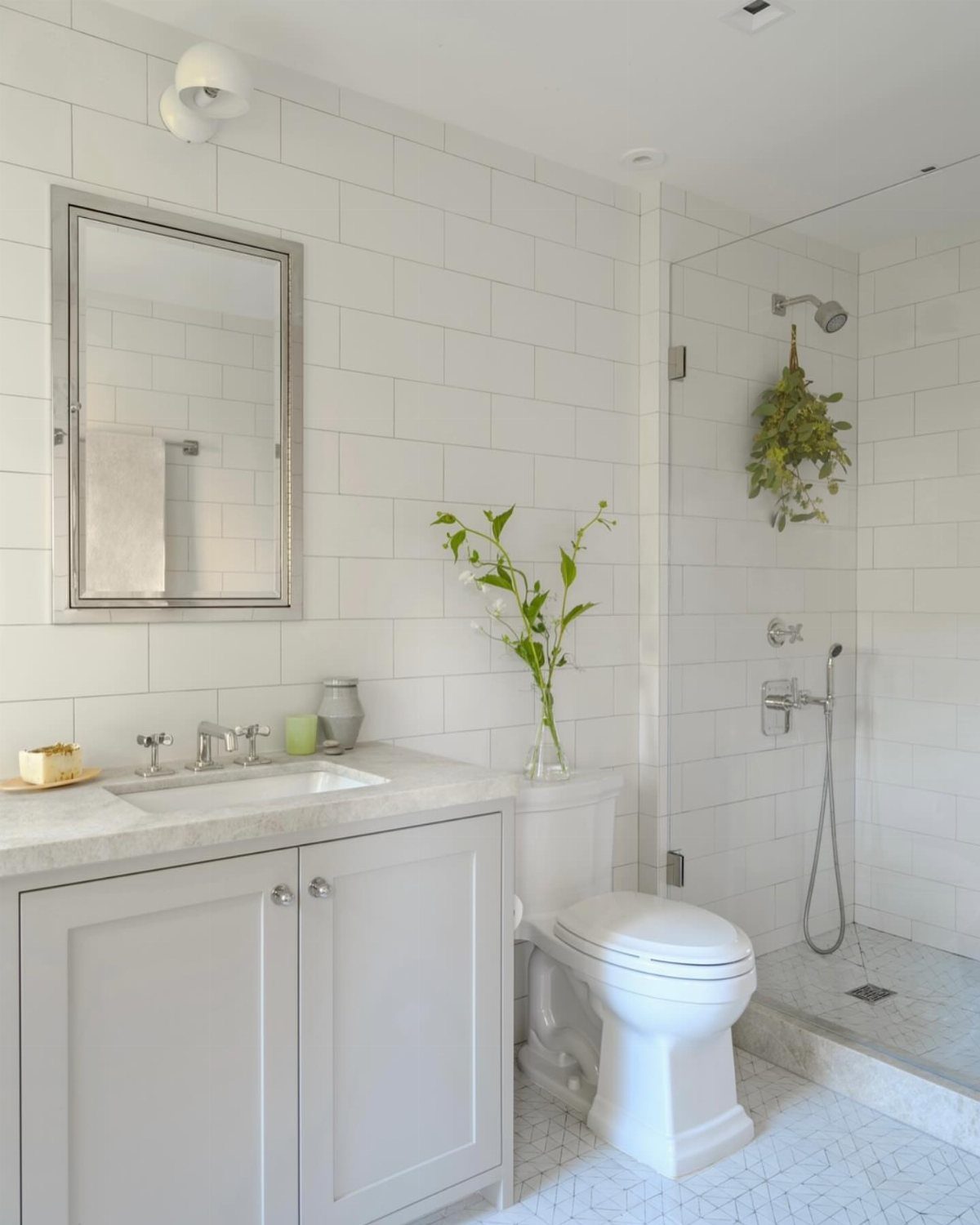
Recessed panel detailing gives a white vanity a classic profile that can work in traditional or contemporary settings.
The style comes from cabinet construction, not applied trim, so it holds up to moisture and daily contact better than a flat front with decorative overlay.
In a small bathroom, a Shaker vanity reads substantial without adding visual weight the way a carved or heavily detailed piece would. The simple frame-and-panel construction keeps the lines clean, and the white finish reflects light instead of absorbing it.
If storage is tight, look for a model with a drawer above the cabinet doors.
That top drawer is where most people keep the items they reach for daily, and having it at waist height instead of down low makes morning routines faster.

Eye-friendly Milk Glass Shade - Our bathroom light features a milk-white glass shade that provides a gentle, diffused lighting effect. By minimizing direct glare, this bathroom light fixtures enhances eye comfort and protects your eyes from harsh light, creating a more relaxing environment for a bath experience. Its classic and simple design complements various home decors, making this vanity light suitable for coastal, modern, rustic farmhouse, and many other styles

Crafted from German Krupp brushed stainless steel, these white kitchen cabinet handles and bathroom cabinet pulls are CNC-machined with ±0.01mm precision for perfect alignment. The 3-inch hole center fits most cabinet door handles and dresser drawer pulls, ensuring no wobble and no gaps.

Sleek Modern Style – Designed for both modern and farmhouse interiors, this two-light vanity light delivers clean, contemporary appeal. The matte-black metal frame and thick frosted glass shades create an elevated look, making it an ideal choice for stylish bathroom light fixtures and bathroom vanity light upgrades.
3. Double-bowl Vanity
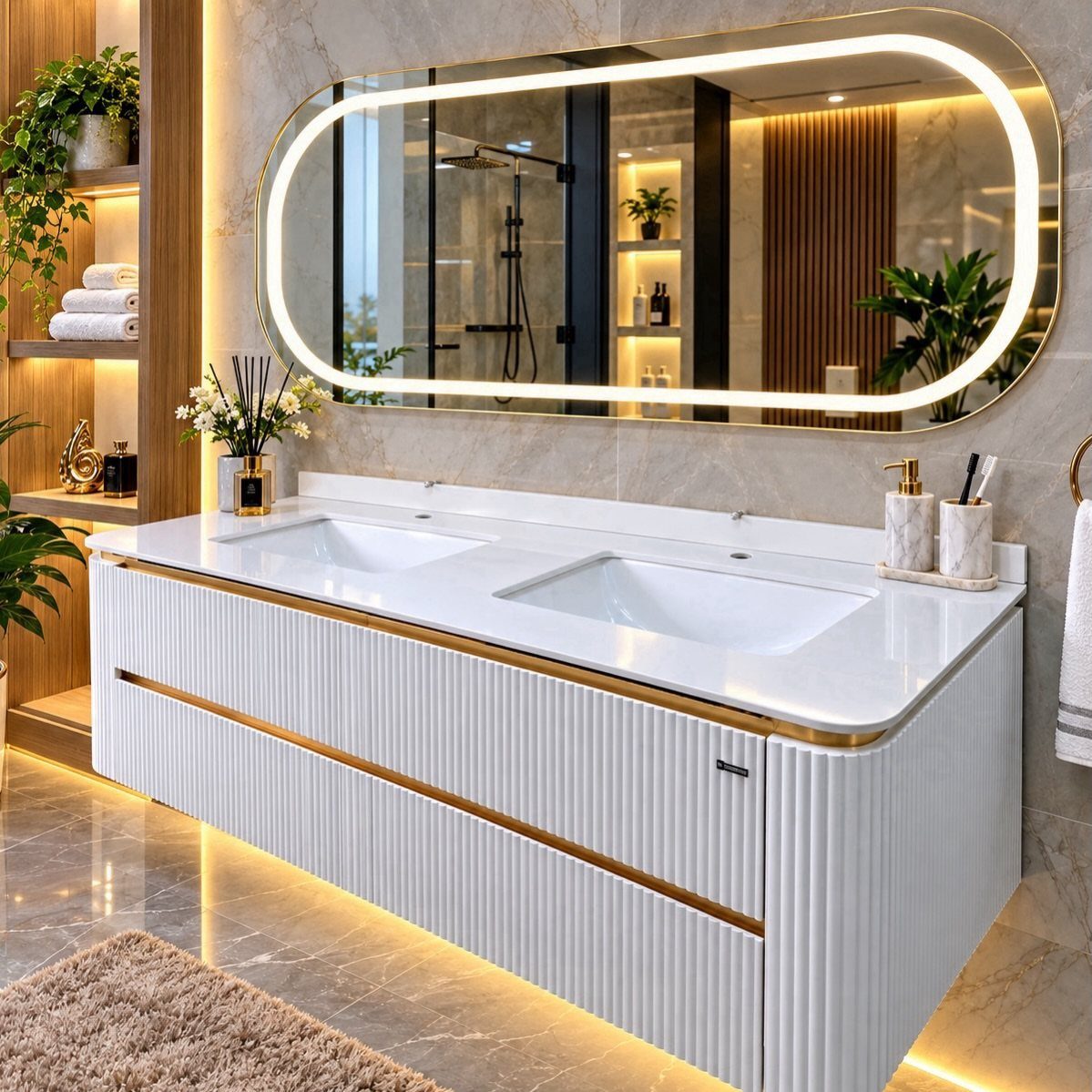
2 basins provide separate washing space in a larger or shared bathroom. The layout works best when the vanity runs long enough to give each person counter room without feeling crowded.
In my experience, the double-bowl setup is worth the space only if both of you are at the sink most mornings. If not, a single wide basin with more counter and storage usually serves better.
A floating vanity opens up floor space, which makes the room feel bigger and sweeps much easier.
That said, you lose the enclosed storage a base cabinet would give, so this option suits bathrooms where wall cabinets or a separate linen closet can carry the load.

Space-Saving Bathroom Organizer - Forbena bathroom countertop organizer can make everything organized and neat in your bathroom. The bathroom counter organizer can hold toothbrush, hand soap, cotton balls, and other toiletries in the bathroom.

Eco Friendly and Durable:Made of premium ABS material,sturdy enough to hold up to 10KG without deformation,easy to hold items like perfume, jewelry, and soap; serving as a practical perfume tray, jewelry tray, and reliable soap tray,key tray,toilet tray,and kitchen tray

Large Capacity for Tall Bottles: Four tiers with 2 drawers and 2 open shelves (12.44" L × 7.91" W × 15.4" H) fit tall skincare bottles, perfumes, and cosmetics, keeping your countertop neat and your daily routine stress-free with this makeup organizer
4. Floating White Vanity
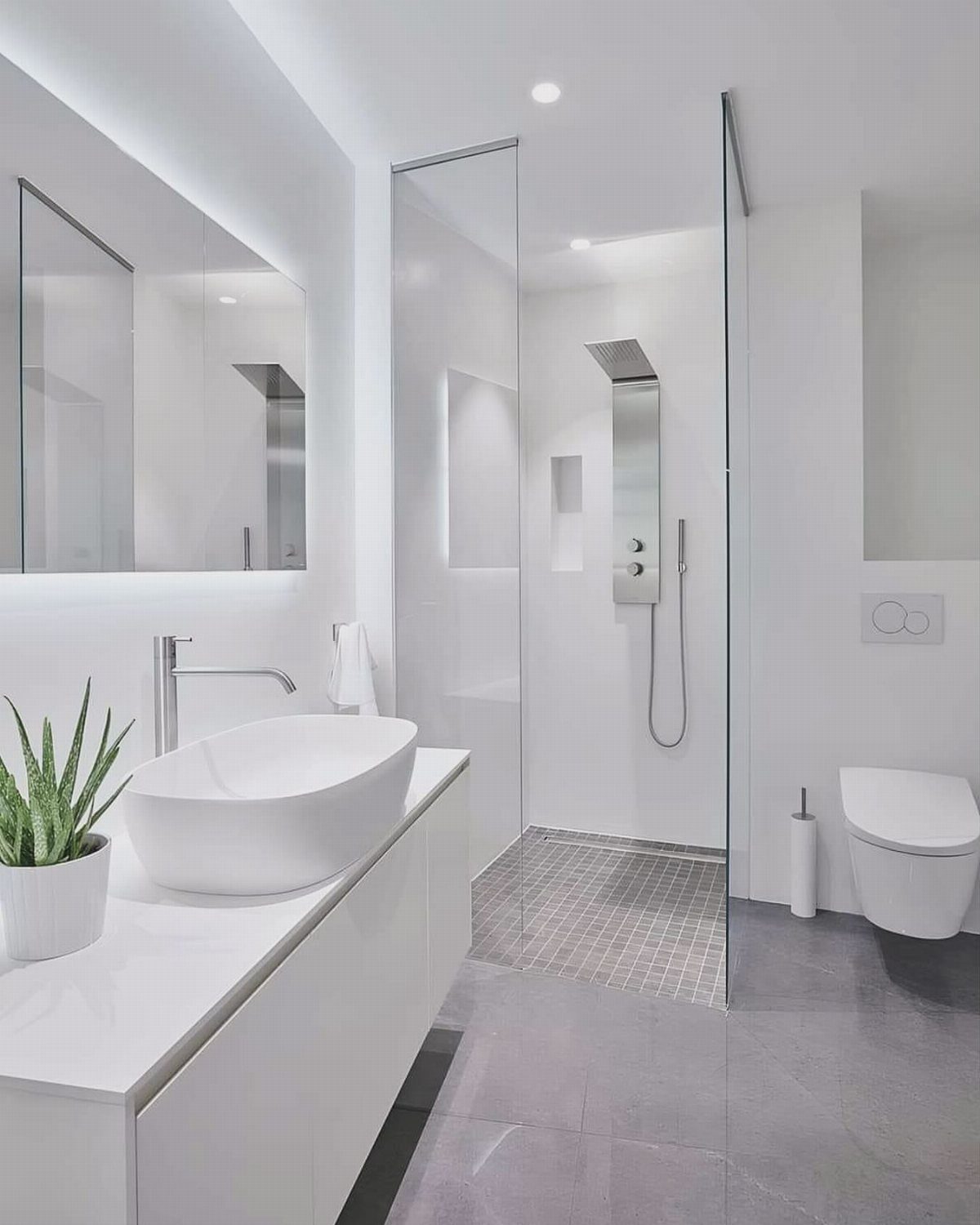
A wall-mounted vanity opens up the visible floor and gives the bathroom a more contemporary look. The space underneath makes the room feel larger and simplifies cleaning, which matters in a small bathroom where every square foot counts.
The installation requires solid blocking inside the wall, not just drywall anchors, because the vanity has to carry the weight of the countertop, basin, and everything stored inside without sagging or pulling away.
If the wall is already open during a remodel, adding the blocking is straightforward. If not, expect to patch and repaint a section of drywall.
Storage is the tradeoff. A floating vanity typically offers one or two drawers, and you lose the cabinet space a floor-standing model would provide below.
That setup works fine in a powder room or a bathroom with a separate linen closet, but it can feel tight in a family bath where storage is already limited.

17.3-inch vanity light: Fits 24” and 30” standard bathroom mirrors—the top single-sink vanity sizes in homes. Well-proportioned and never too small or oversized, it delivers balanced, full coverage for your entire vanity area


【Eye-Comforting Milky White Frosted Glass Shades】Tired of squinting under blinding vanity lights? Our vanity lights feature high-quality, milky white frosted glass lampshades that diffuse light evenly and eliminate harsh glare, creating a gentle, eye-caring illumination.
5. Matte Black Hardware
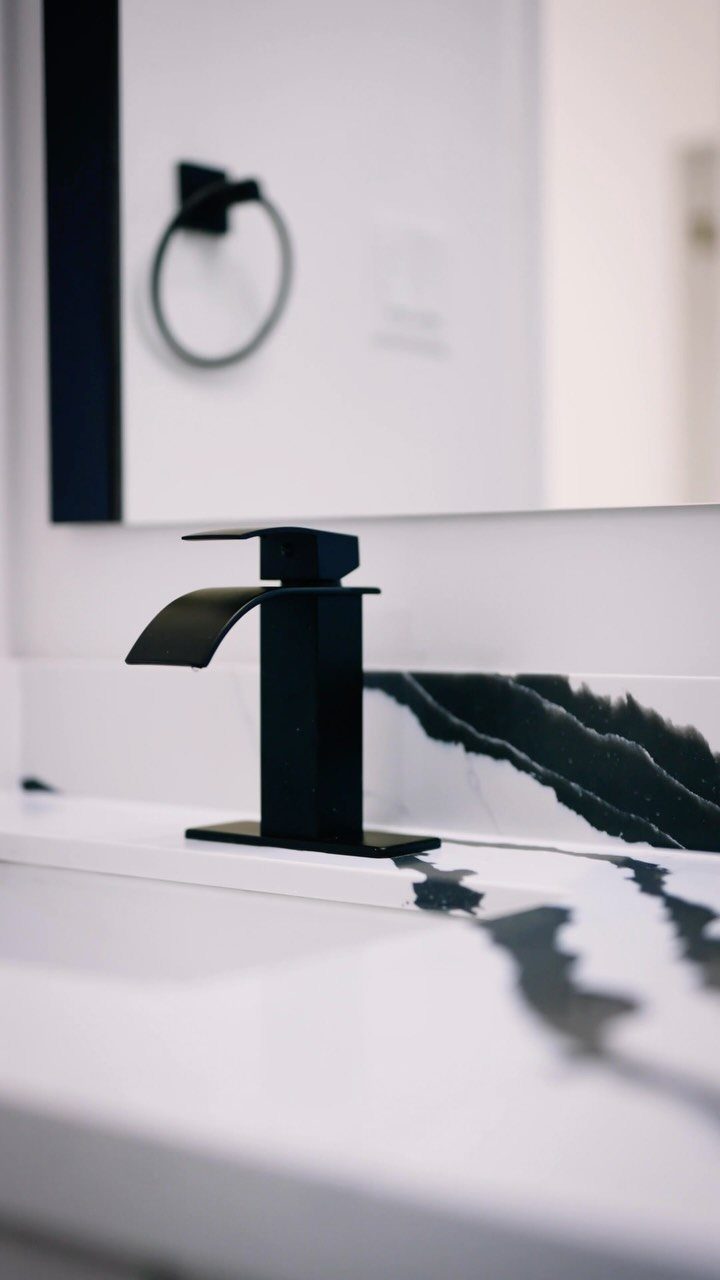
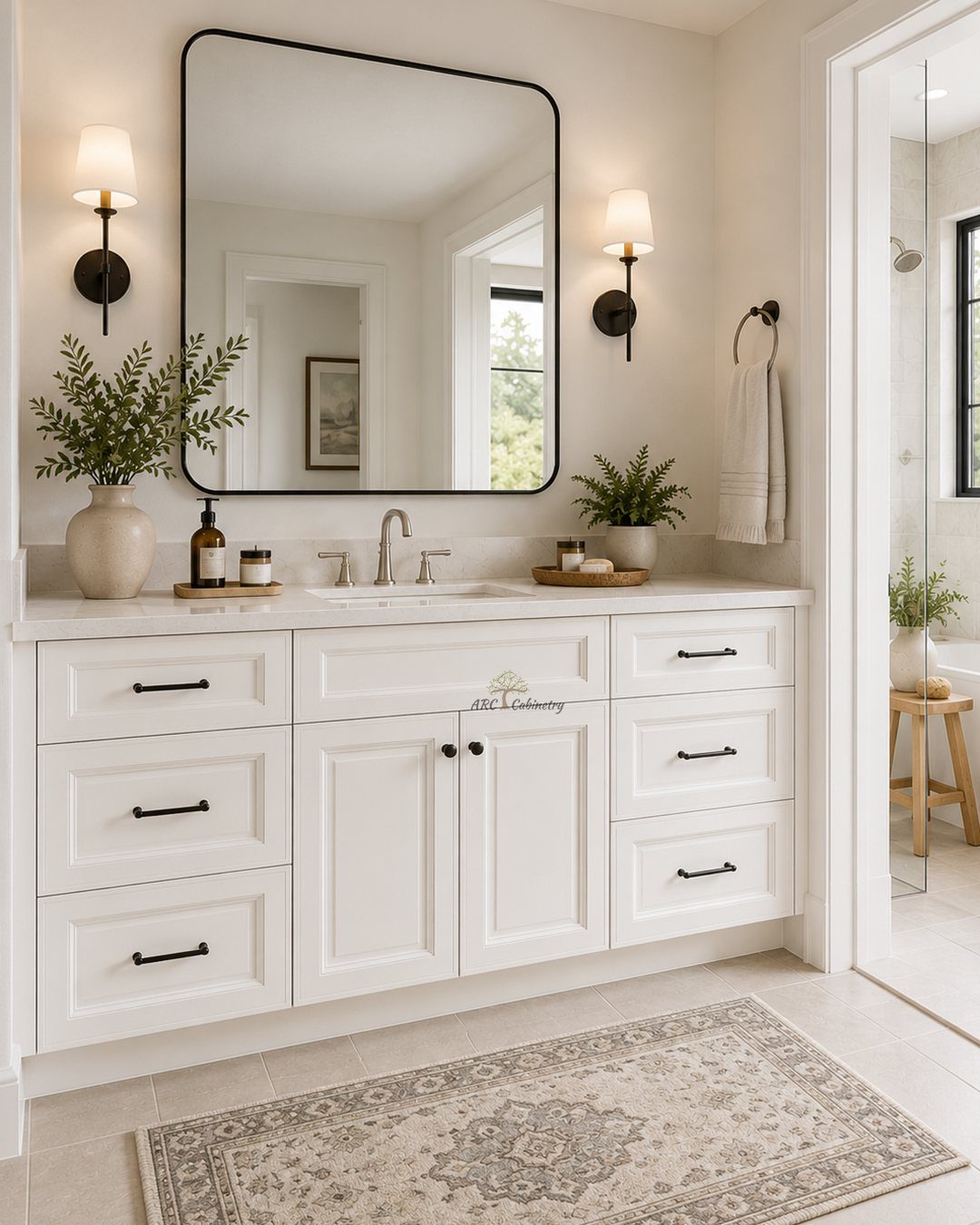
Black hardware pulls focus against white cabinets and reads cleanest in modern or minimal bathrooms.
The look is crisp when the lines are simple and the finish is truly matte, not satin or semi-gloss, which softens the edge and dilutes the graphic effect.
In practice, matte black hides fingerprints better than polished chrome but shows water spots and soap residue just as fast.
Daily wiping keeps it looking intentional instead of neglected, so this choice works best in a bathroom that gets regular attention or one where the vanity sits outside the splash zone.
I usually pair black hardware with other black elements in the room: a mirror frame, a towel bar, or a light fixture.
If the black stays isolated to just the faucet, it can read like an afterthought instead of a deliberate choice.

【Multifunction Countertop Organizer】This Bathroom Organizer is a multi-purpose organizer designed to help you organize all your daily products in one convenient place. Such as lotion, body washes, perfumes, spices, and a wide range of small items, making it the perfect storage solution for your home.
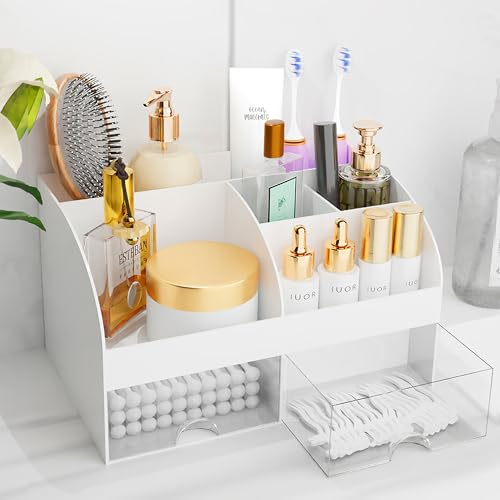
Multiple Storage Spaces: 8.3in*5.6in*4.8in Small body with large capacity, great cosmetic storage countertop assistant contains 6 Sections and 2 drawers, different compartments allow you to place items according to your needs, transparent drawers allow you to quickly find what you need, easy to place and take, the perfect match can let you all the makeup accessories are neatly stored

【Space-Saving Bathroom Organizers and Storage】Our bathroom countertop storage shelf adopts open design which makes things be at your fingertips,you can take easily your item easily from the bathroom vanity organizer.Featuring 2-tier corner shelves, It perfect for store and organize creams, hair spray, makeup, perfumes and other cosmetics, keeping your space organized and doesn't take up too much countertop space
6. Spa-inspired Bathroom
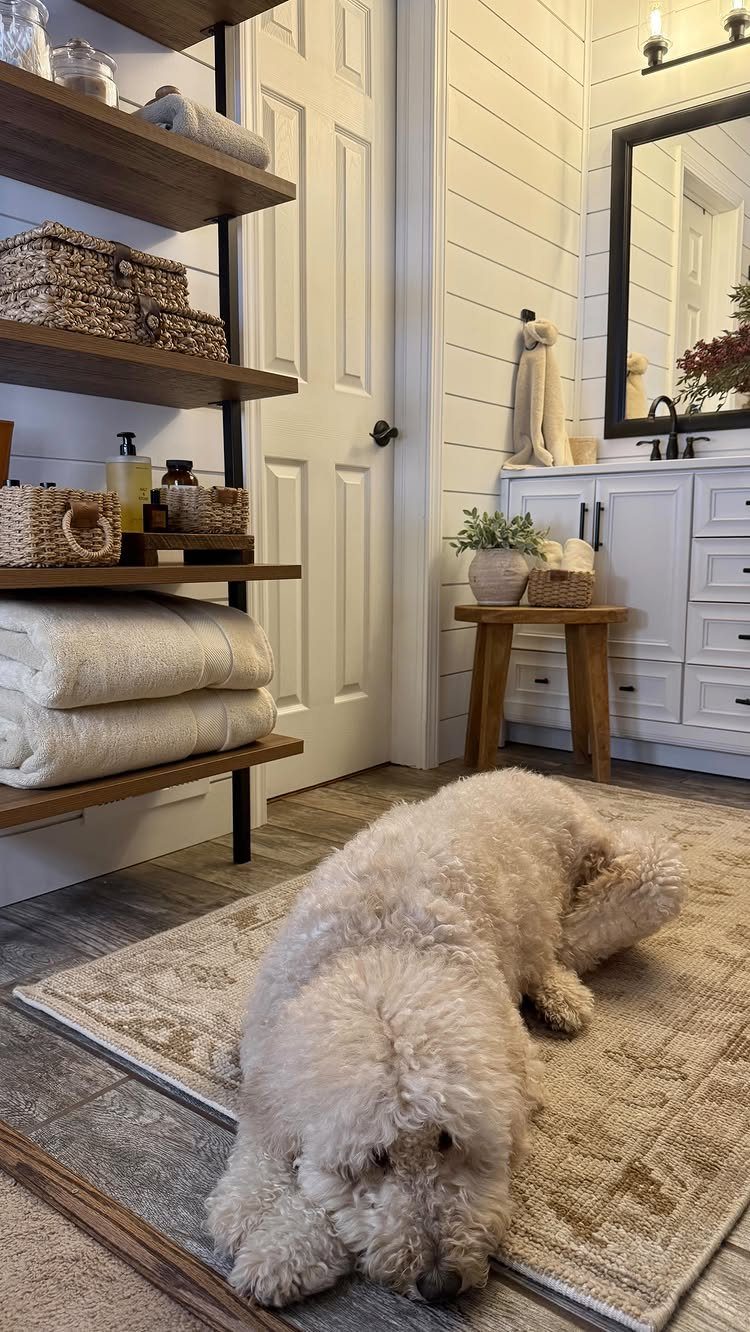
A white vanity anchors a calm, resort-like bathroom.
The neutral base lets other materials carry the warmth: wood shelving, woven baskets, plants, or soft textiles. The effect depends on keeping surfaces clear and the palette tight, usually white, wood tones, and one or two natural textures.
In a spa setup, storage often moves to open shelves or baskets instead of closed cabinets. That approach looks clean when you limit what goes on display to folded towels, a few glass jars, and maybe a plant.
If the bathroom is shared or sees heavy daily use, the open storage can quickly turn cluttered, and the spa feeling disappears.
The white vanity itself should be simple in profile. Flat fronts or minimal detailing read more serene than ornate hardware or heavy trim, which pulls the room back toward traditional instead of restful.
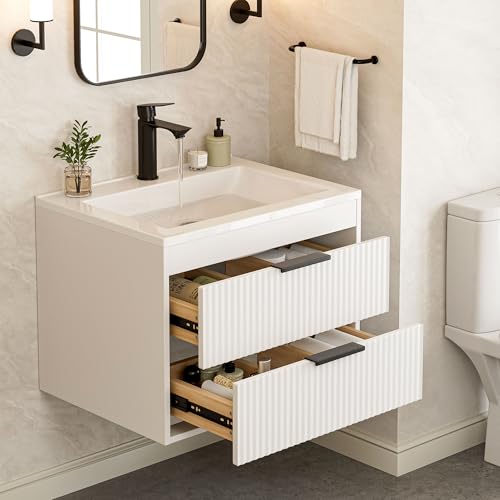
Stylish Design and Ample Storage: This modern style bathroom vanity adheres to minimalist aesthetics with clean lines. Paired with black handles, it exudes a sense of fashion. Equipped with two spacious drawers, it’s convenient for storing various bathroom essentials like skincare products and toiletries, helping you create a tidy and organized bathroom space

【MODERN FLUTED WAVE DESIGN】 This 24 inch wall mounted bathroom vanity features an elegant fluted wave pattern that adds a touch of modern sophistication to any bathroom. Available in crisp white and sleek black, it effortlessly complements various decor styles from minimalist to contemporary, making it a stylish focal point in your space.
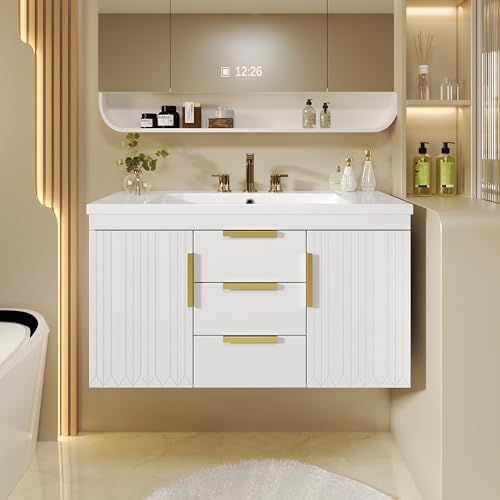
Timeless Elegance with Premium Craftsmanship: Available in sleek black or crisp white, this floating bathroom vanities combines modern and classic styles. The simple line carvings add contemporary flair, while the high-quality materials and meticulous craftsmanship ensure durability and long-lasting beauty.
7. Gray Stone Countertop
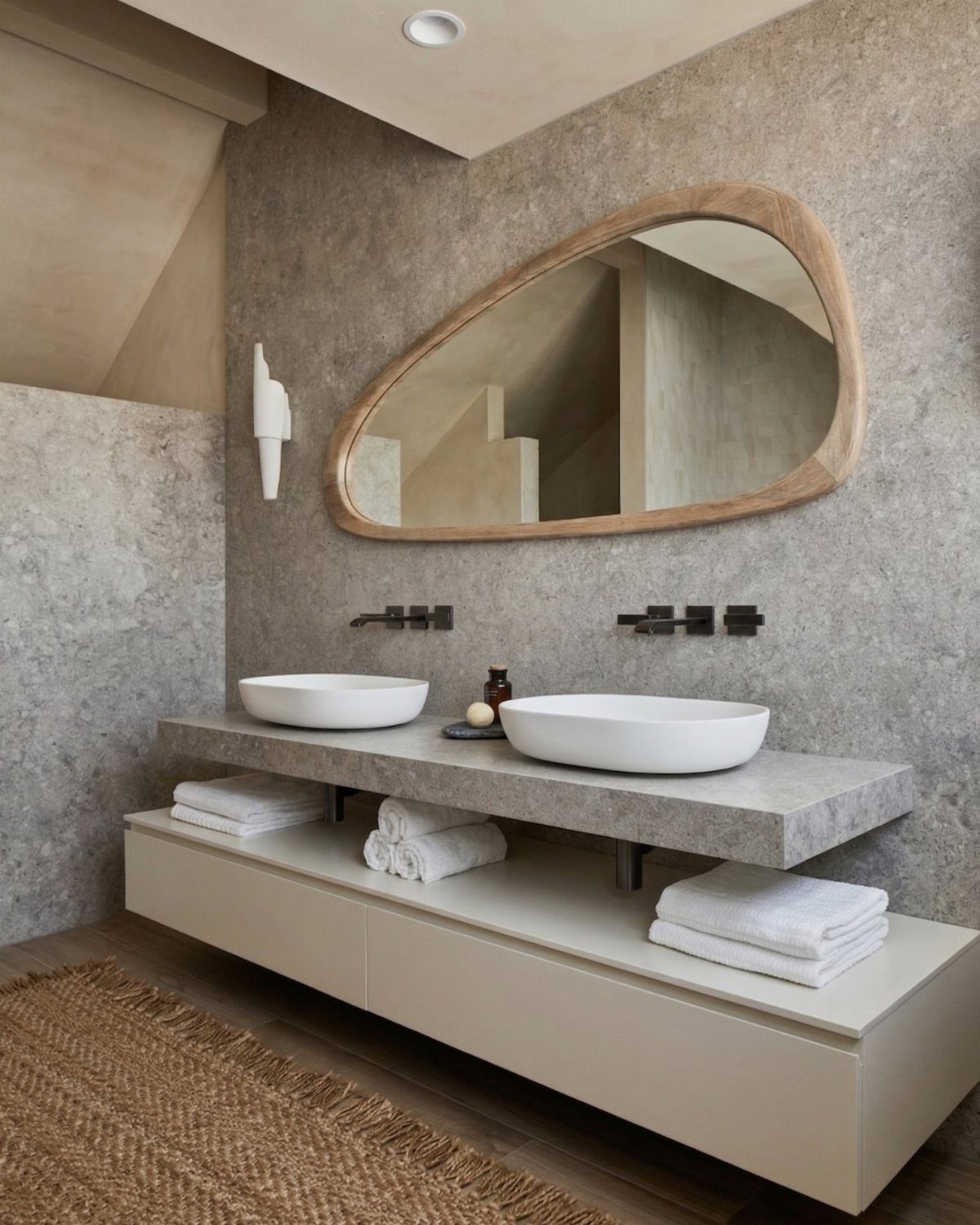
A gray stone countertop brings weight and contrast to a white vanity in a way white-on-white never will. The darker surface grounds the fixture and makes the white cabinet read crisp instead of washed out.
Engineered quartz in gray or charcoal tones resists water, stains, and daily wear in a bathroom more reliably than natural stone.
It resists water, doesn’t need sealing, and the color stays consistent across the slab. Natural stone can stain from soap, toothpaste, or anything acidic left sitting on the surface.
If the vanity is floating and the countertop runs thick, the overhang adds presence without adding bulk below. A thinner profile works fine on a floor-standing vanity, where the cabinet itself already carries visual weight.


Transitional style cabinet knob combines classic and contemporary elements to create a versatile style perfect for cabinets, drawers or furniture and has an overall diameter of 1-3/8 inches

【Upgraded Matte Black Finish】The vanity lighting fixtures feature a sleek matte black finish lamp body accompanied by milky white frosted glass shades. The upgraded finish not only adds an elegant touch but also includes a scratch and tarnish-resistant coating, ensuring that the black bathroom light maintains its pristine appearance over time. This exquisite bathroom vanity light is suitable for various decoration styles, making it the perfect choice to enhance your home lighting.
8. Framed Mirror Above White Vanity
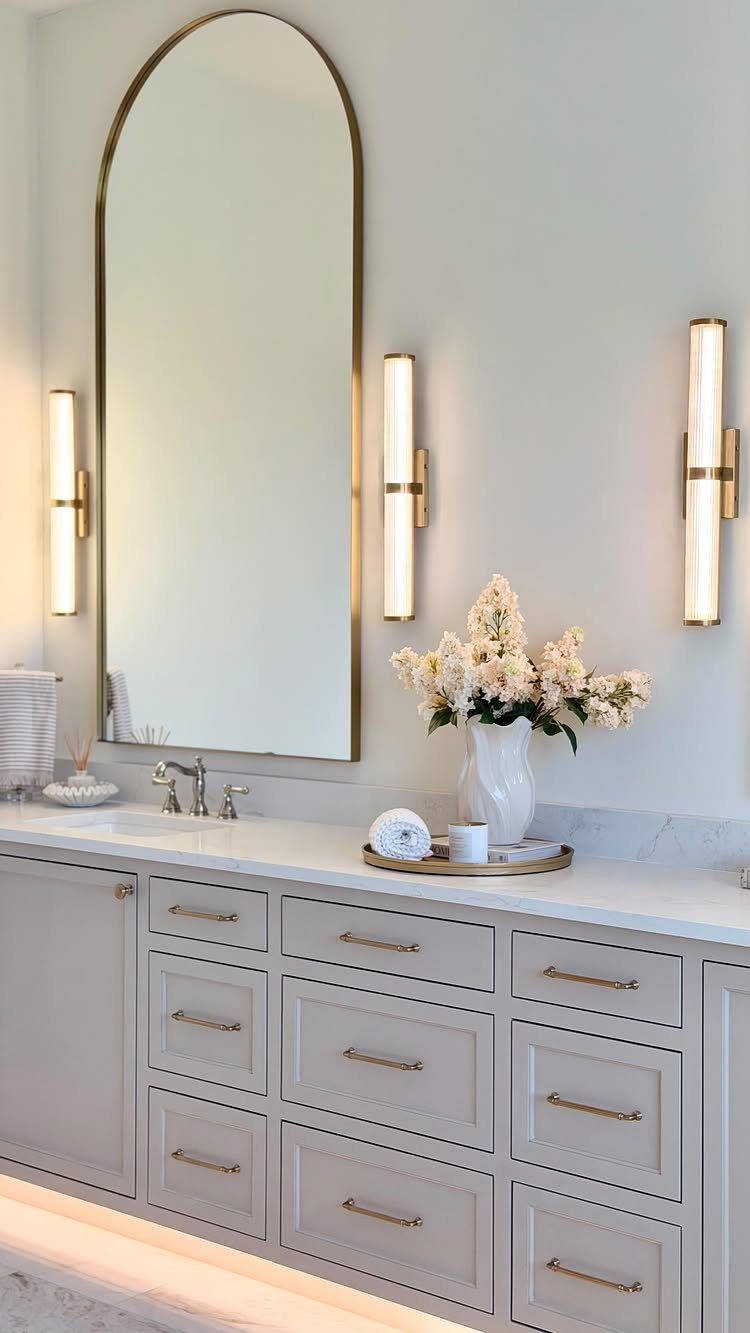
A framed mirror anchors the wall above a white vanity and gives the room a more finished, traditional feel.
The frame acts as a border that separates the mirror from the wall, which keeps the vanity from blending into a white or neutral backdrop.
Gold or brass frames pair well with both warm white vanities and cooler gray tones.
Black frames suit cooler whites and work better in modern or transitional spaces. Wood frames bring warmth but can read rustic fast if the grain is too heavy or the finish too distressed.
An arched frame softens the look without losing the traditional character. A rectangular frame reads more formal and suits a symmetrical layout with sconces on either side.

PERFECT SIZE AND COLOR: Color: White; This large tray outside size: 12.1"x4"x1.1",set of 1; Perfect vanity sink tray, ceramic tray for soap bottles,bathroom organizer,tray for kitchen counter organizer

【Strong Absorbent & Quick-Drying】This stone drying tray is made from natural diatomaceous earth. Its tiny pores are absorbent, allowing water to evaporate quickly and keeping the sink dry. It is safe and durable. Use this instant drying water absorbing stone tray to keep your kitchen sink and bathroom countertops clean.
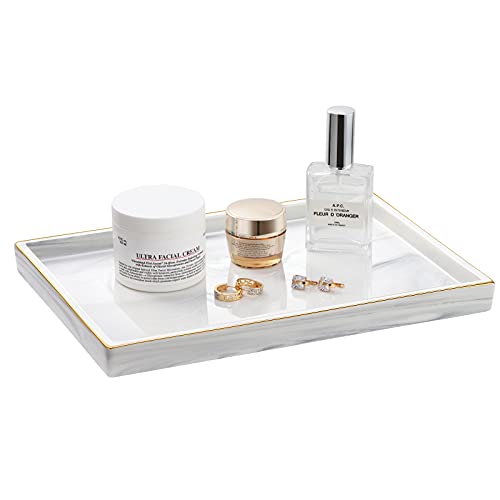
Great Size: The ceramic bathroom vanity tray measures 30*20*2.5 cm, 11.81*7.87*0.98 inch, which is a suitable size for countertop storage and organization in the office, bathroom or living room.
9. Shaving Cabinet with Integrated Lighting
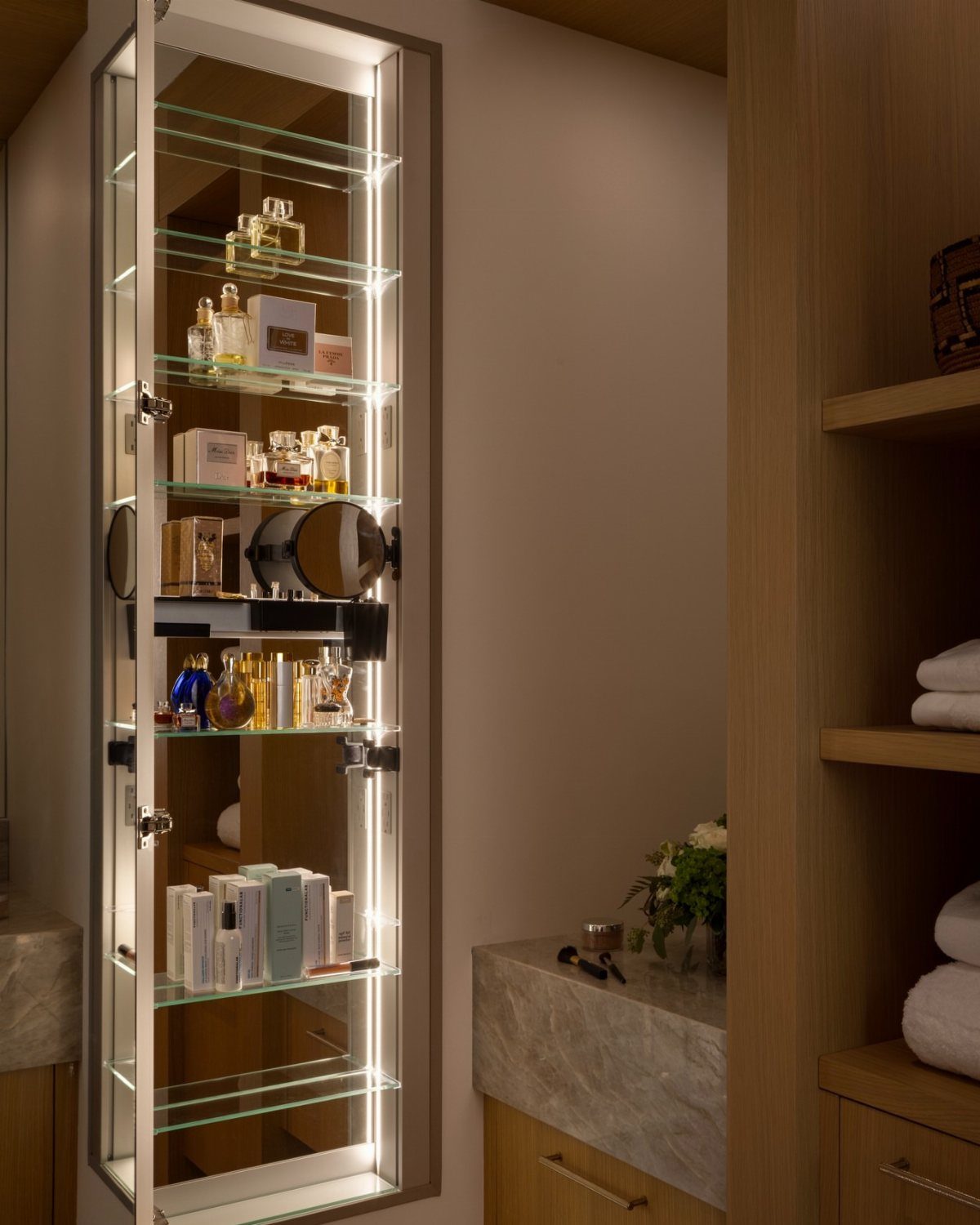
A recessed shaving cabinet with built-in lighting gives functional storage and ambient glow in one compact fixture.
The light strips sit inside or around the shelves, so the cabinet becomes a small lit display when open and a flat mirrored surface when closed.
This setup works best in a bathroom where counter space is limited and daily-use items need a home that isn’t visible all the time.
The recessed install requires wall depth between studs, so it’s easier to plan during a remodel than to retrofit into finished walls.
The lighting is typically LED strip, which stays cool and uses little power. If the cabinet shares the wall with plumbing, coordinate the placement early to avoid conflicts.
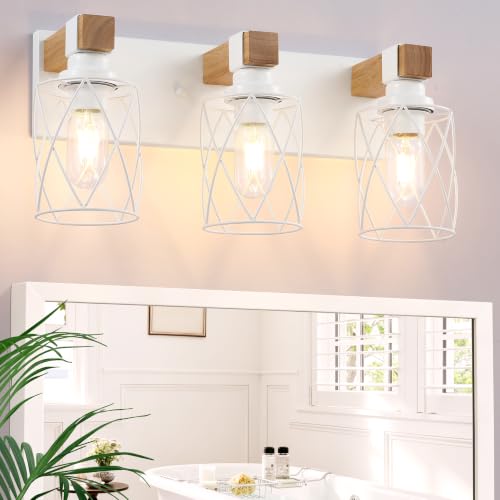
3-Light farmhouse bathroom light fixtures: Rustic solid wood blocks and white solid metal cages deliver timeless farmhouse charm, with soft light filtering through the geometric metal frame to create layered light and shadow for a warm home ambiance. Equipped with a 16.9-inch wide integrated white backplate that lays flat against walls for a neat appearance, it perfectly upgrades the aesthetic of your washroom mirror area

Durable Construction: The bathroom light sconces are made of sturdy metal and can get through years of usage without getting oxidation and color fading. Matching with high-quality clear glass shades, our bathroom vanity lights will illuminate an omnidrectional light in your room

Perfect Size for Vanities: This 25-inch fixture fits 24"–40" mirrors perfectly. It is ideal for bathrooms, restrooms, mirror cabinets, and sink areas—great for washing, applying makeup, and shaving.
10. Single-basin White Vanity
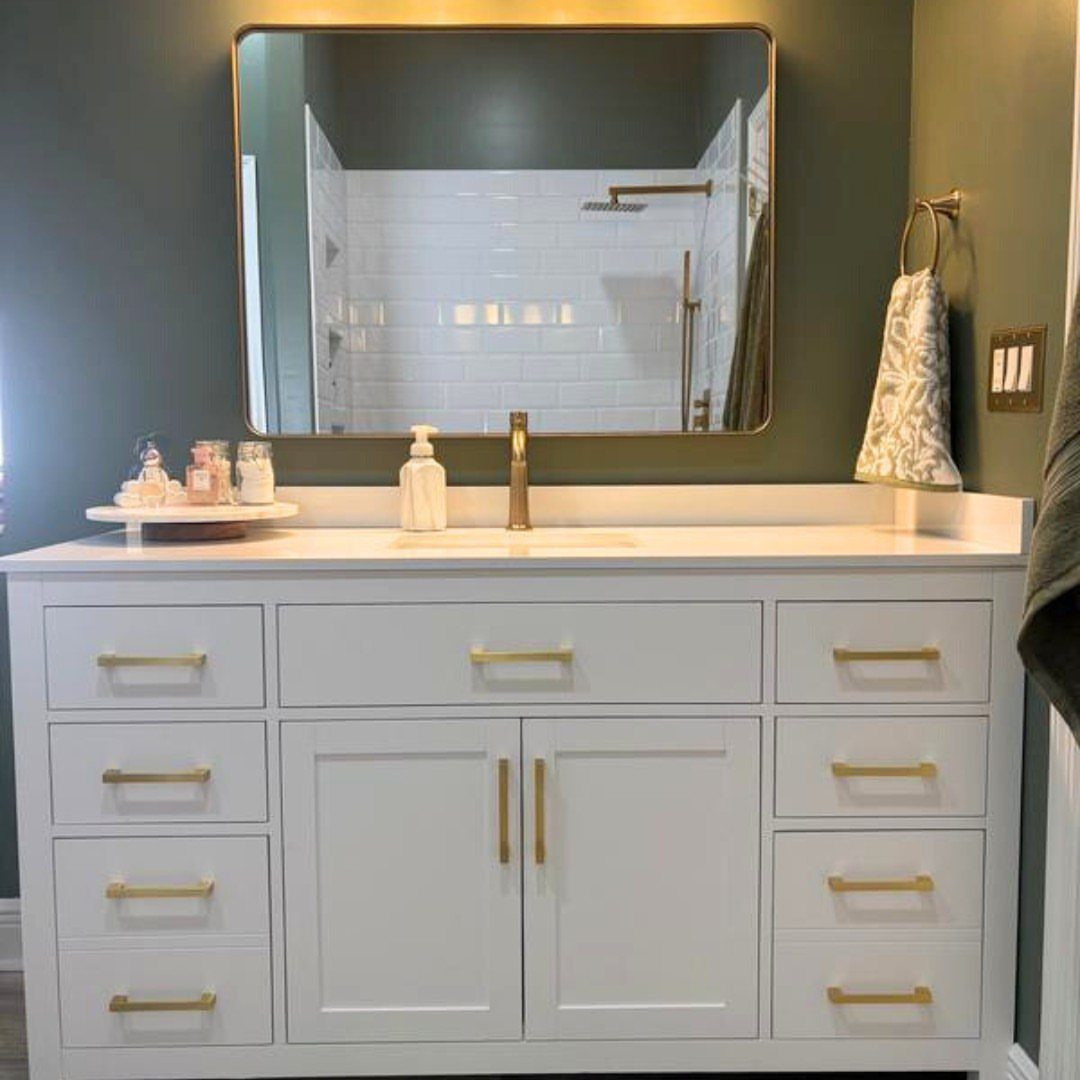
One basin gives a smaller bathroom more counter space and better proportion than trying to fit two sinks into a vanity that’s too short to hold them comfortably.
The single-bowl layout leaves room on either side for daily items, and the vanity doesn’t feel cramped or overloaded.
In a bathroom used by one person, or where only one is at the sink most mornings, the second basin doesn’t earn its space.
Drawers make it easier to organize small items without stacking or digging.

Elegant and Versatile: The classic floral design in blue and white makes this bathroom vanity tray both timeless and on-trend. Use it in any room to elevate your décor.

4 Sizes of Drawer Organizer: Our 25 PCS drawer organizer set includes 4 different sizes: 8.8" x 5.5" x 1.9" (3 pcs), 8.7" x 2.7" x 1.9" (6 pcs), 5.9" x 2.7" x 1.9" (8 pcs), and 2.7" x 2.7" x 1.9" (8 pcs). Whether used as a desk drawer organizer, bathroom drawer organizer, or kitchen drawer organizer, they can be freely combined to perfectly meet your storage needs.

Streamline Your Space: This 4 Compartment Organizer simplifies your daily routines in various settings. In the bathroom or on your vanity, it keeps makeup brushes, cosmetics, and even toiletries like cotton buds and pads neatly organized. It serves as a makeup brush holder organizer, and toiletry organizer, making it the ultimate makeup vanity organizer. In the office, have your essential supplies readily available. It is also a desktop makeup organizer, keeping your workspace tidy and chic.
11. Flat-front White Vanity
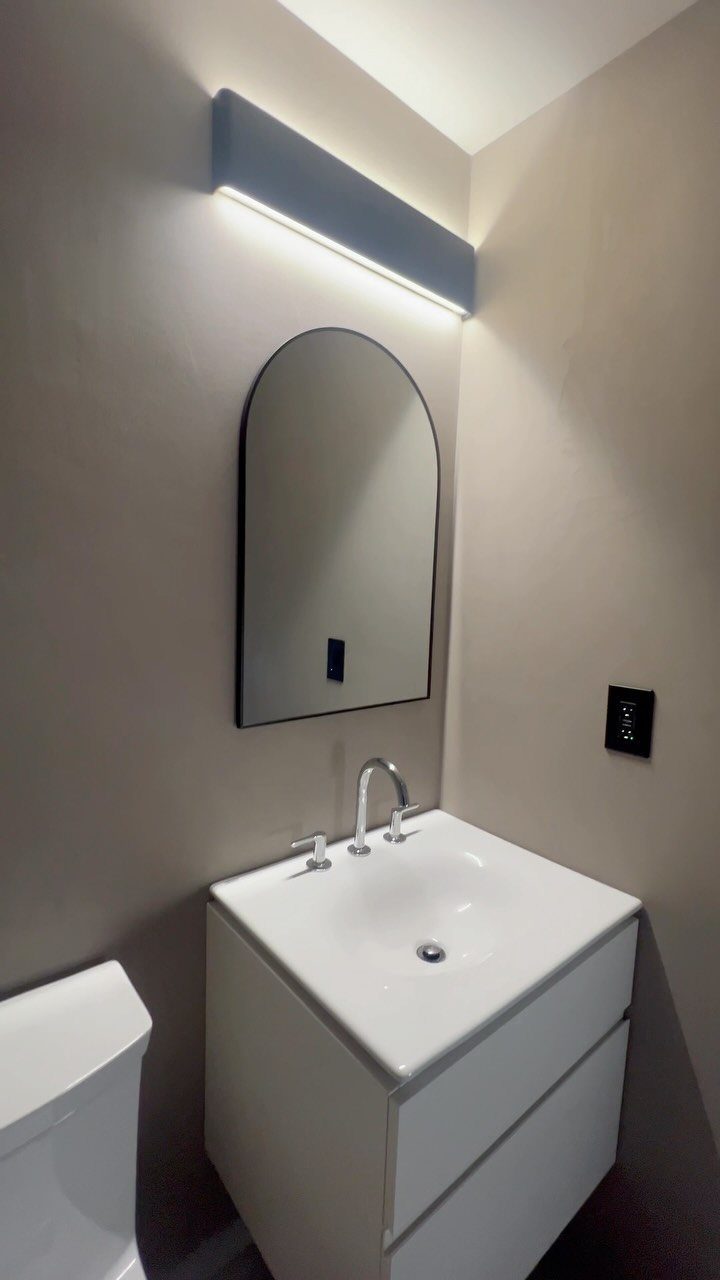
Flat cabinet fronts read contemporary and uncluttered, which suits a minimal bathroom where the vanity should stay quiet. The smooth surface reflects light evenly and doesn’t create the shadow lines that recessed panels or applied trim would add.
This style shows imperfections more than a detailed front does.
Fingerprints, water spots, and surface scratches are visible on a flat painted finish, so the vanity needs regular wiping to stay looking deliberate. Matte or satin paint hides wear better than high-gloss, which magnifies every mark.
If the vanity has an integrated sink, the clean lines continue from cabinet to basin without a seam or lip. That simplifies cleaning and gives the fixture a built-in look.
12. Fluted White Vanity Fronts
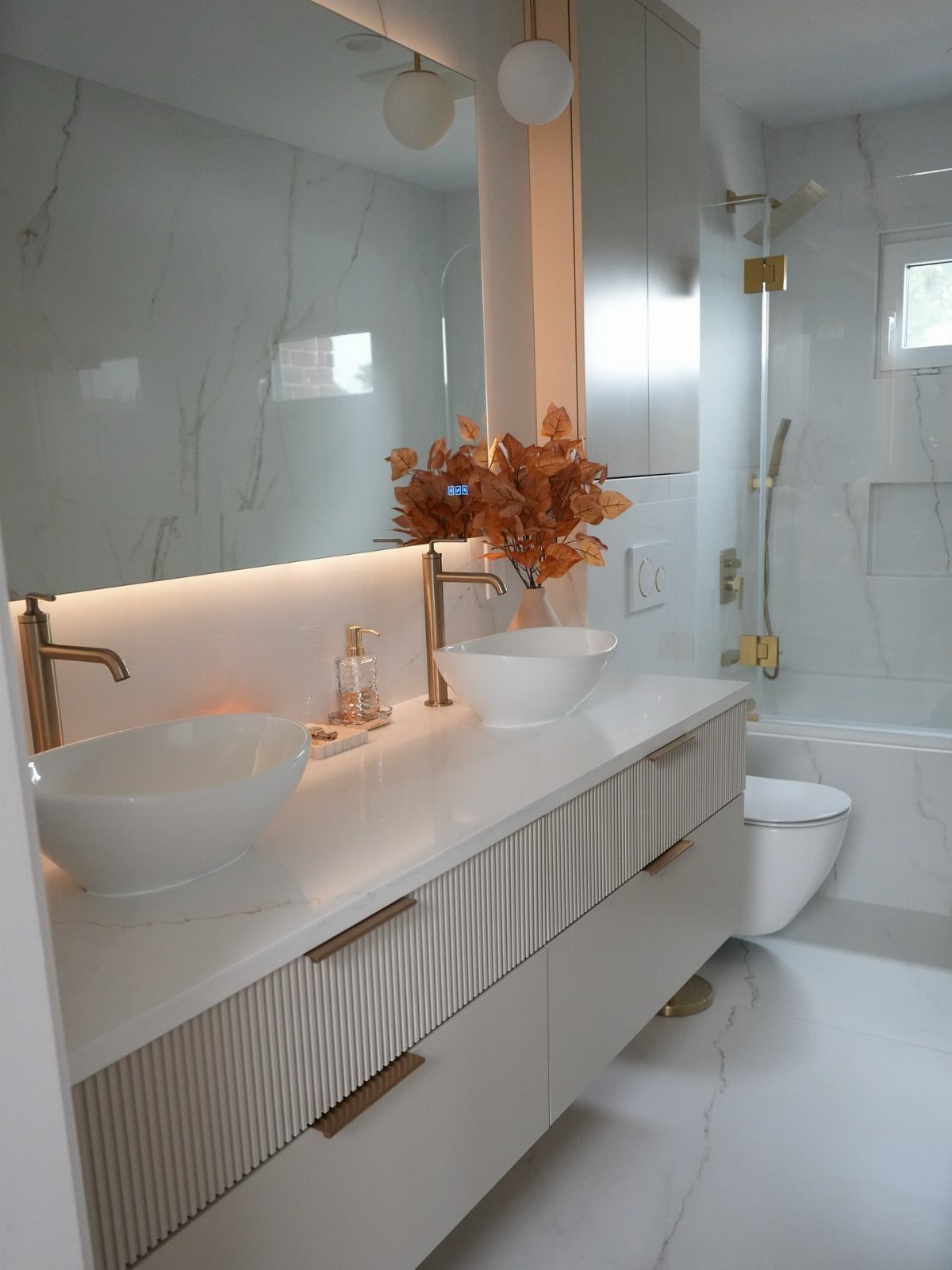
Vertical grooves cut into the drawer and door fronts add texture without breaking the clean lines of a white vanity.
The fluting catches light and creates shadow, which gives the cabinet more presence than a flat front without adding ornament or hardware detail.
This look suits coastal and transitional styles, where the profile needs interest but shouldn’t feel heavy or traditional. The vertical grooves make the vanity face read taller, which helps a small bathroom feel less cramped.
Fluted fronts show water spots and soap buildup faster than smooth surfaces because the grooves collect residue. A quick wipe after use keeps them looking intentional instead of neglected.
13. White Vanity with White Top
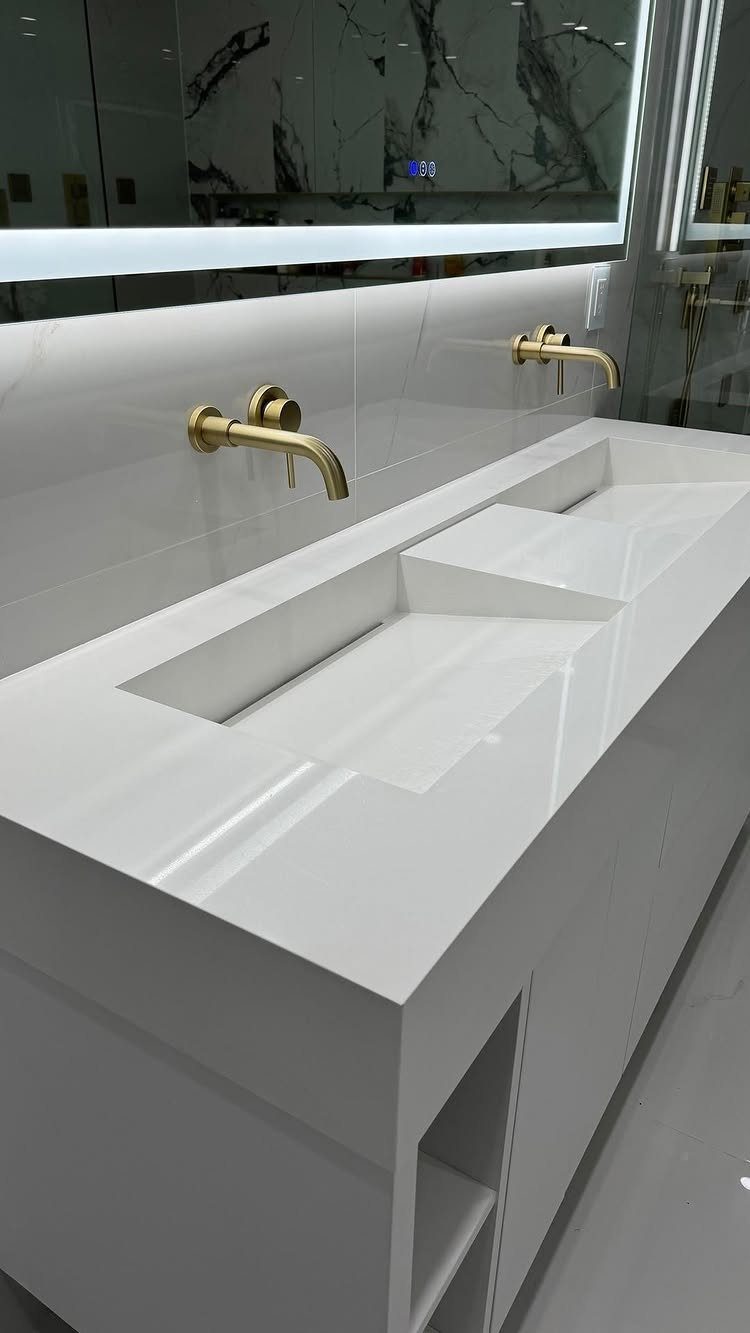
Matching the countertop to the cabinet keeps the vanity visually quiet, which works when the room already carries pattern or color elsewhere. The white-on-white approach lets tile, paint, or fixtures take focus without the vanity interrupting.
Engineered quartz in pure white or warm white tones resists bathroom moisture and daily wear better than solid surface or laminate.
The material doesn’t stain from soap or toothpaste, and it reads as one continuous piece when the sink is integrated instead of dropped in.
If the rest of the bathroom runs neutral or monochrome, the all-white vanity can flatten out without enough contrast. A darker floor, black hardware, or a framed mirror keeps the fixture from disappearing into the wall.
14. White Marble Bathroom with White Vanity
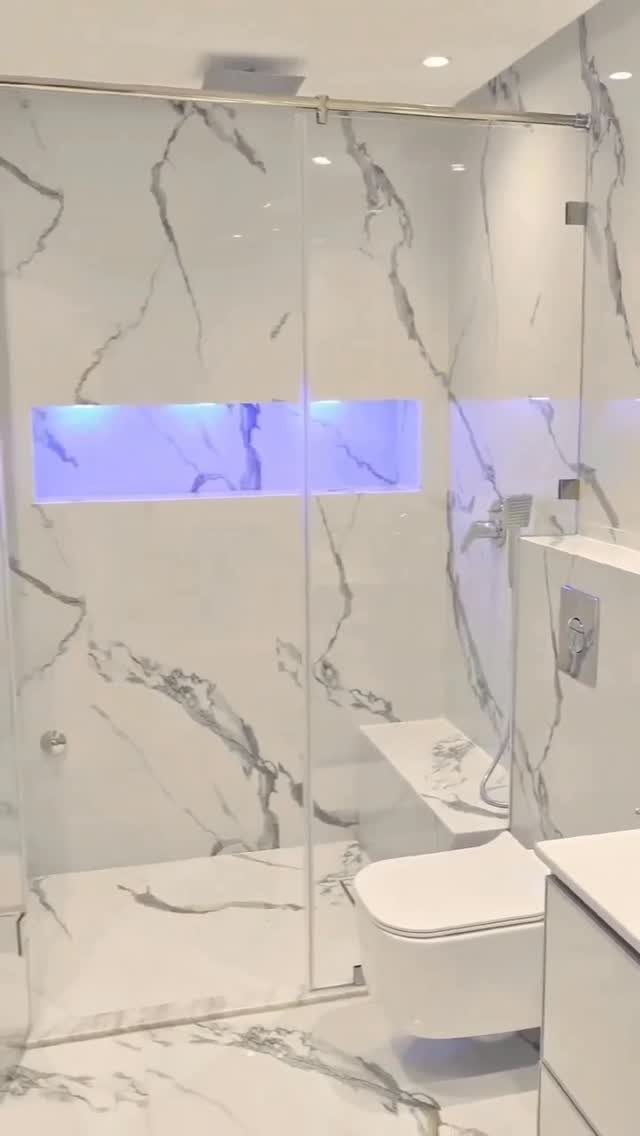
White marble carries through walls, floor, and vanity in a bathroom where every surface reflects the same cool, polished look.
The stone reads formal and cohesive when it covers that much area, but the finish needs regular attention to stay looking deliberate.
Marble stains from soap, toothpaste, and anything acidic. In a high-traffic bathroom, the vanity top will need regular sealing, and daily wiping keeps water spots from etching the surface.
Glass shower walls keep the room feeling open and let the marble run uninterrupted from one end to the other. A recessed niche with LED lighting adds storage without breaking up the stone.
15. Pink Marble Countertop Vanity
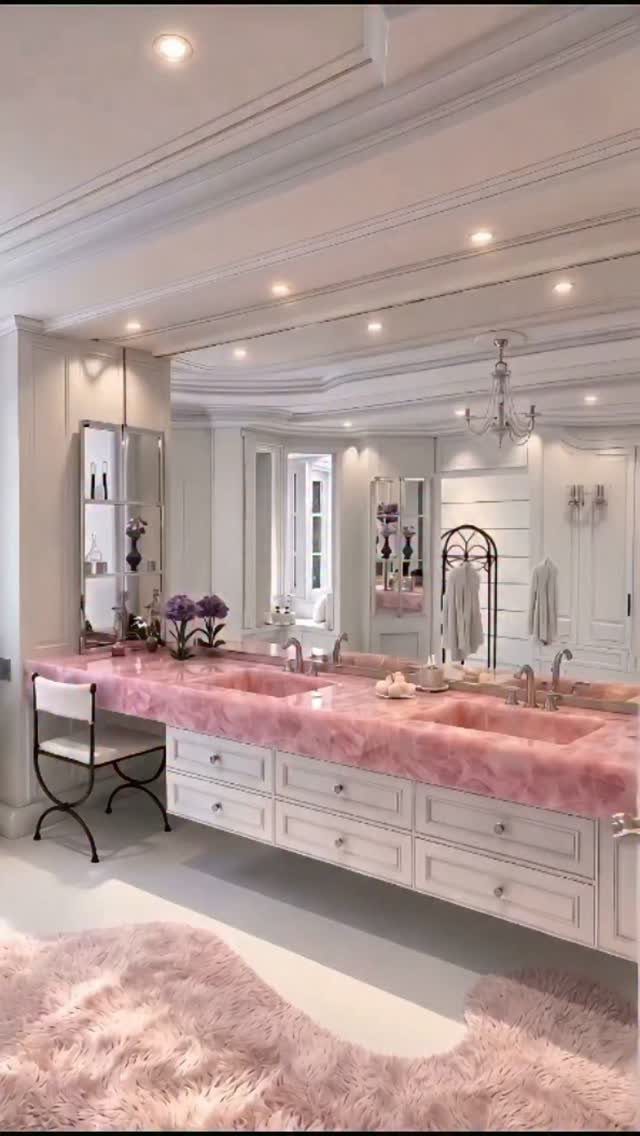
Pink marble brings warmth and pattern to a white vanity without adding color anywhere else in the room.
The veining runs soft and blush-toned, which suits a bathroom with good natural light where the stone can shift tone through the day.
Natural pink marble costs more than engineered quartz and requires sealing to resist water and soap buildup. The color and pattern vary across slabs, so the countertop you get won’t match a sample exactly.
Integrated sinks cut into the same slab eliminate seams and give the vanity a clean, continuous surface. The long drawer layout below maximizes storage in a shared bathroom where counter space stays clear.
16. White Vanity with Woven Baskets
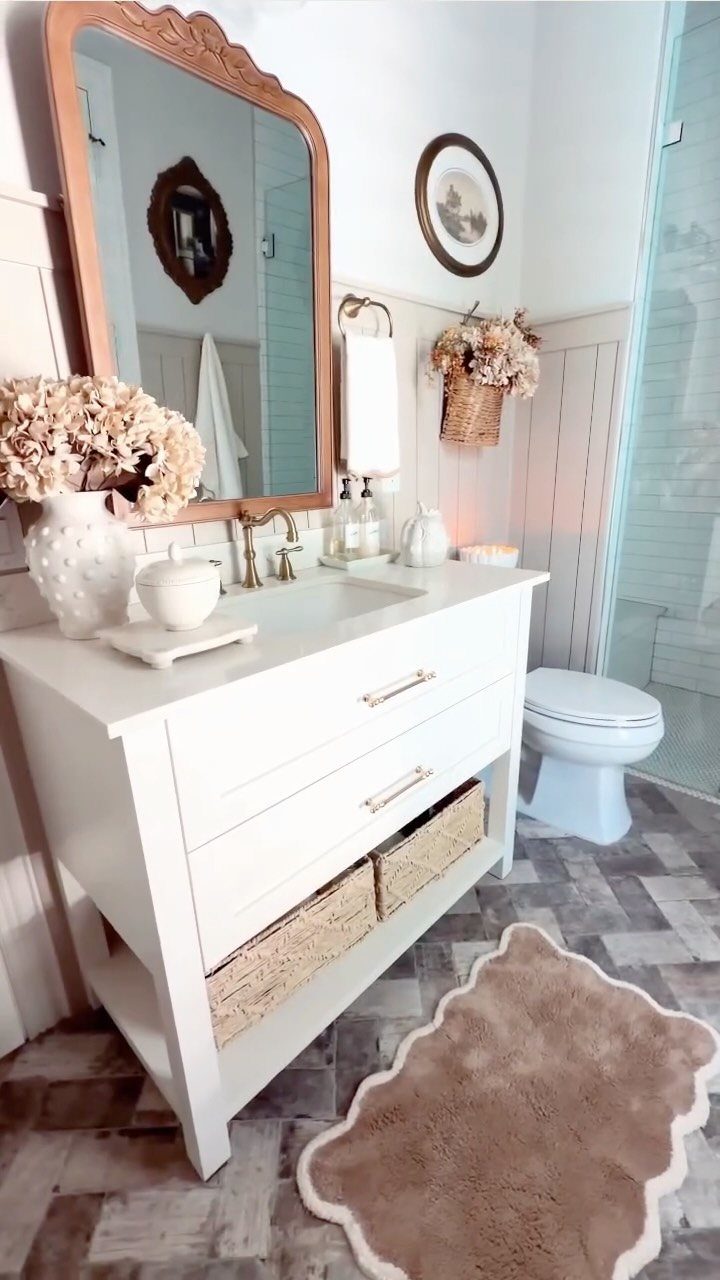
Woven baskets in open cubbies below the vanity give storage that stays accessible and looks softer than closed cabinet doors.
The texture brings warmth to an all-white bathroom, and the baskets can be pulled out and carried when you need to restock or clean.
This setup works best when the items going into the baskets are already contained: rolled towels, small bins for hair tools, or toiletries grouped by type. If loose items pile up, the open storage reads cluttered fast.
Drawers above the baskets hold daily-use items at waist height, where they’re easier to reach than anything stored low or in a deep cabinet.
Gold hardware and an ornate mirror lean traditional, which softens the clean lines of a flat-front white vanity.
17. White Vanity with Vessel Sink
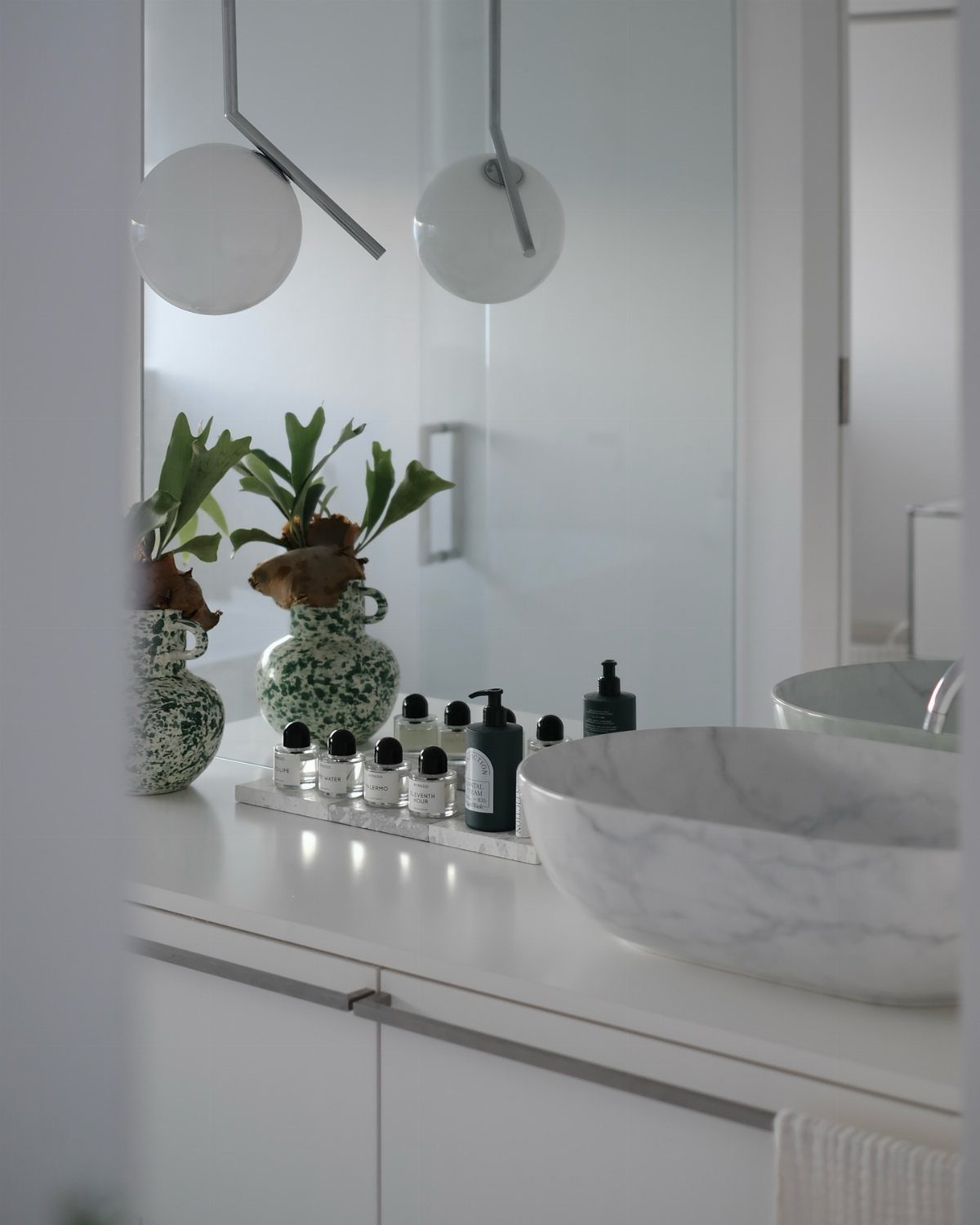
A vessel sink sits on top of the countertop instead of dropping in, which gives the vanity a sculptural profile and raises the basin higher than a standard undermount.
The look reads modern and works in a bathroom where the sink can stand out instead of staying quiet.
The raised basin means the faucet needs to be taller to clear the rim, and wall-mounted or tall deck-mount fixtures suit this setup better than standard spouts.
Water splashes more with a vessel sink because the basin sits above the counter, so keeping the surround dry takes more attention.
Marble or stone vessel sinks pair well with a simple white vanity, where the texture and weight of the basin carry the interest.
Pendant lights above add ambient glow and reflect in the mirror, which keeps the vanity feeling open even in a small bathroom.
18. White Vanity with Built-in Shelving
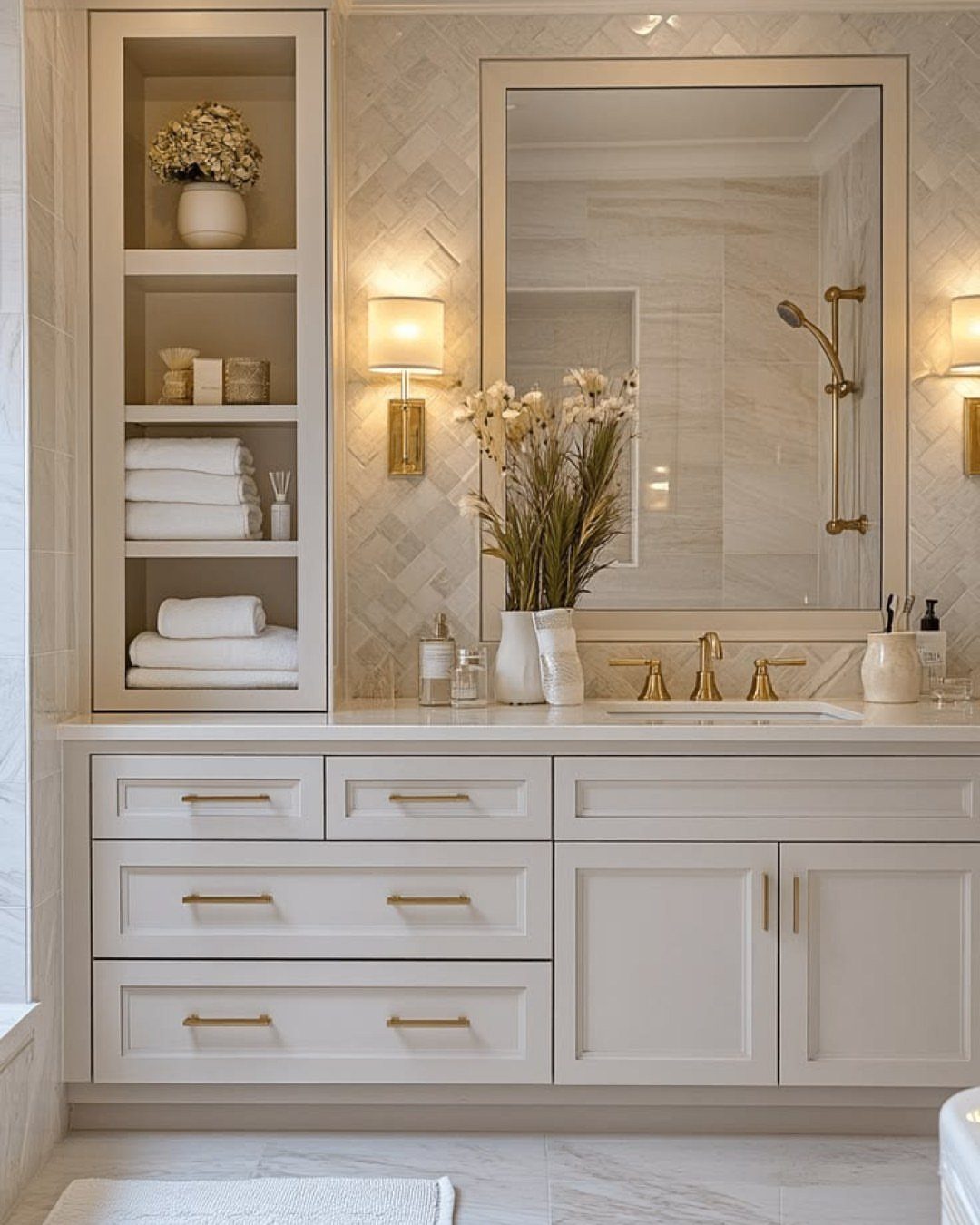
Built-in shelving next to the vanity adds vertical storage in a bathroom where floor space is limited and wall height can carry the load.
The shelving runs floor to ceiling, which gives room for folded towels, baskets, or decor without crowding the vanity itself.
Matching the shelving unit to the vanity finish keeps the two pieces reading as one fixture instead of separate furniture.
White painted wood or laminate works well when the vanity is also white, and the unified look makes the bathroom feel more finished and less assembled.
Gold or brass hardware on the vanity pulls warmth into a white-on-white room, and matching the sconces to the drawer pulls keeps the metal finishes consistent.
Open shelves show everything stored on them, so this setup suits a bathroom where what goes on display can stay tidy and limited to a few folded items.
19. Separate Matching White Vanities
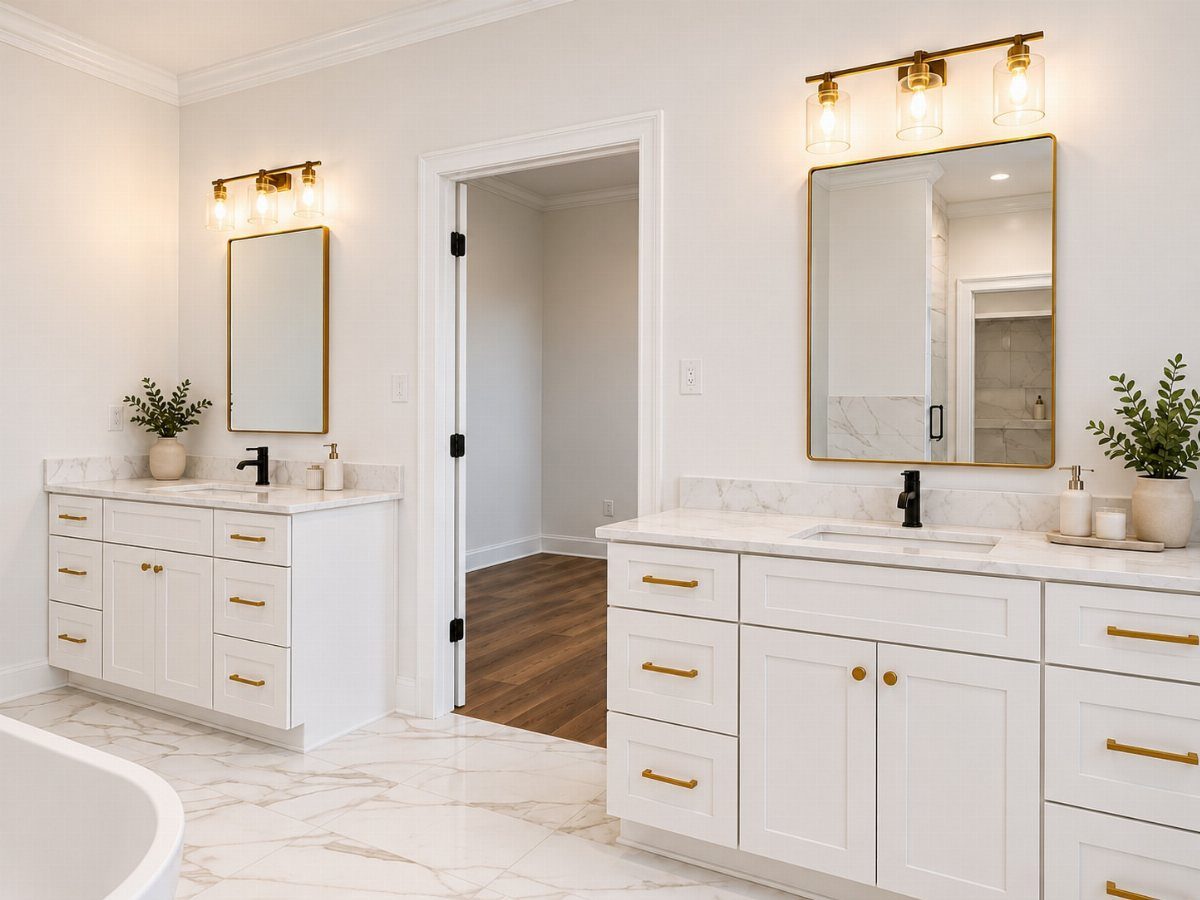
Two separate vanities give each person their own basin, storage, and counter space without forcing everything into one long run.
The setup suits a shared bathroom where both users need room to spread out and where morning routines happen at the same time.
Matching the 2 units in finish, hardware, and countertop keeps the room feeling cohesive instead of assembled from unrelated pieces.
The identical mirrors and gold pulls reinforce the symmetry, which reads formal and deliberate in a bathroom with enough wall length to place the vanities apart.
If the bathroom is narrow, this layout takes more floor space than a double-bowl vanity would.
The gap between units can hold a freestanding tub or a tall cabinet, or it can stay open as circulation space when the room runs small.
20. White Vanity Beside Blue Tile
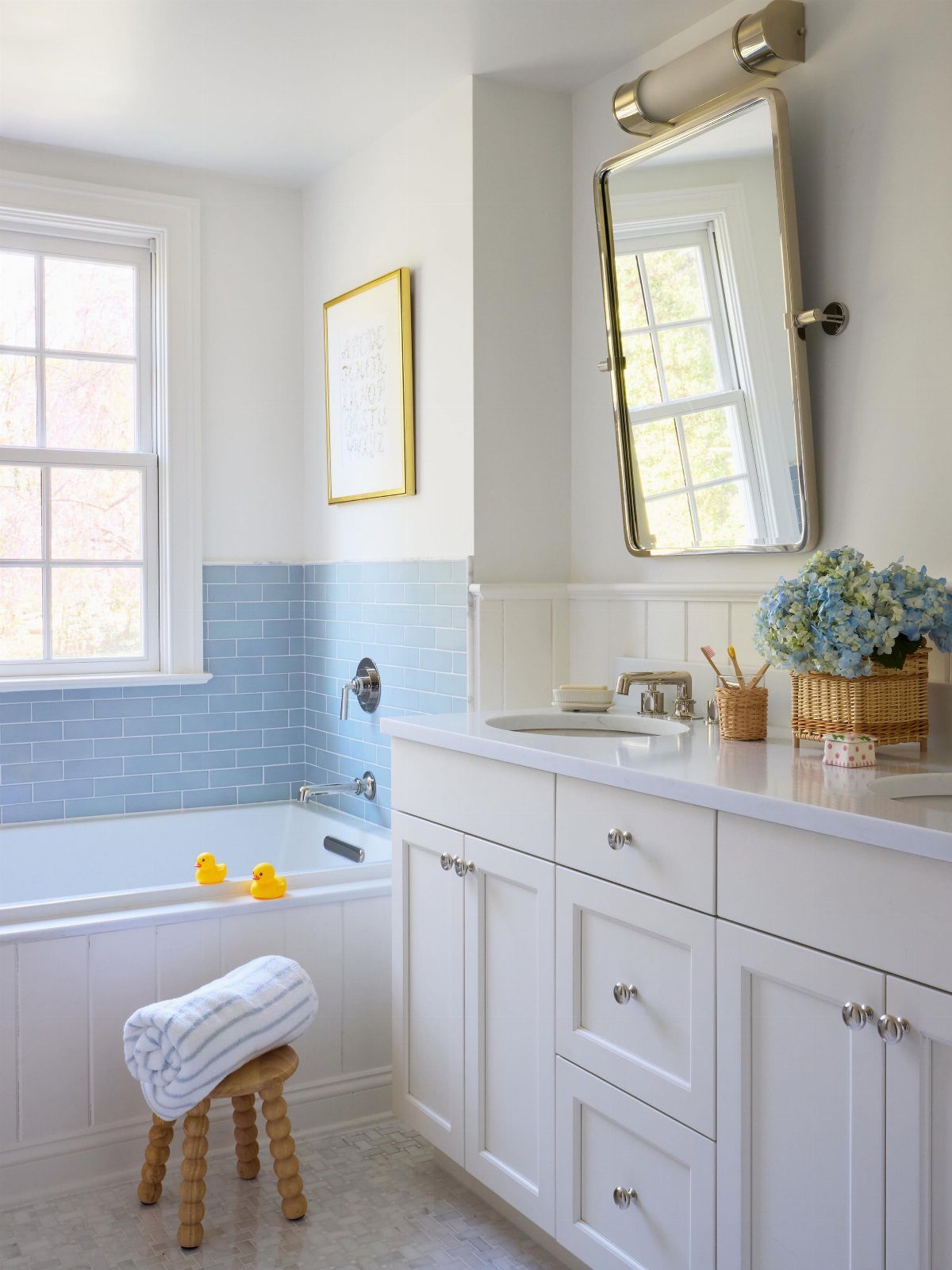
Placing a white vanity next to a tiled tub surround lets the 2 fixtures sit close without blending together when the tile adds color.
The soft blue tile here gives the tub its own zone while the white vanity stays neutral and quiet against the rest of the room.
This layout works in a bathroom where the tub and vanity share one wall and where floor space is limited.
The white countertop keeps the vanity from competing with the tile, and the clean lines suit a simple, functional bathroom where the color sits in one place instead of covering every surface.
Frequently Asked Questions
Is a white bathroom vanity a good idea?
A white vanity works across traditional, contemporary, and minimal bathrooms because it stays neutral and lets other materials carry the character. The cabinet doesn’t compete with tile, hardware, or countertops the way a bold color would.
What is the most timeless color for a bathroom vanity?
White stays neutral across decades and design shifts because it works as a background instead of a statement.
The cabinet can pair with traditional details like recessed panels and brass hardware or stay flat and minimal with integrated sinks and no visible trim. Either direction reads finished without locking the room into one period or trend.
Is an all-white bathroom hard to keep clean?
White surfaces show water spots, soap residue, and buildup quickly, which means you see the problem early instead of letting it sit.
Daily wiping keeps a white vanity looking intentional, and engineered quartz countertops resist staining better than natural stone. A softer sheen absorbs light unevenly and forgives daily use, while gloss surfaces broadcast every fingerprint and splash.
Does white make a small bathroom look bigger?
White reflects light and keeps the vanity from adding visual weight, which helps a small bathroom feel more open.
When you wall-mount the vanity and keep the top in the same white family, the whole fixture recedes and lets pattern or color elsewhere do the work.
The effect works best when the rest of the room includes enough contrast to keep the vanity from disappearing into the wall.