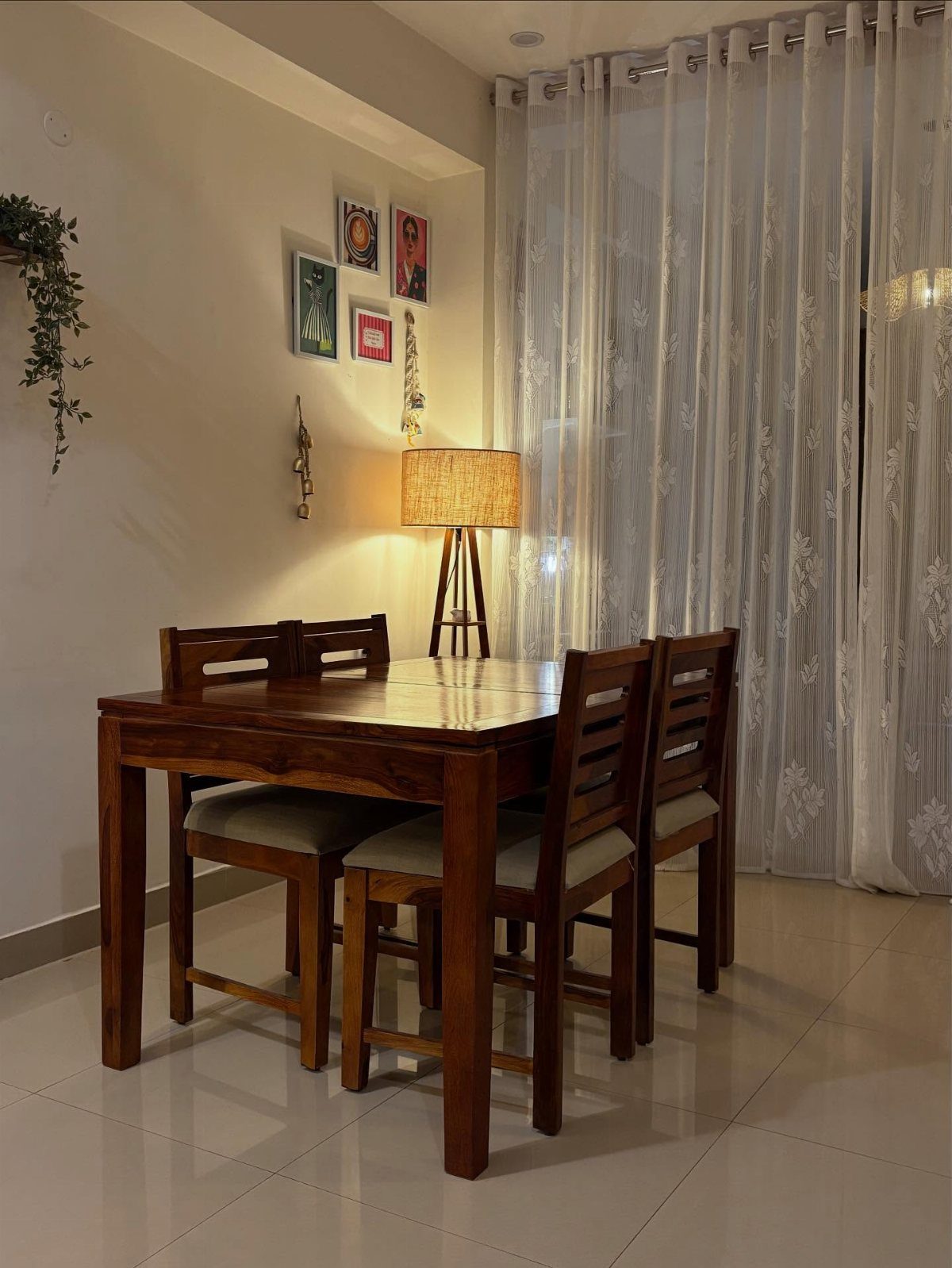
Shape comes first because the room decides what fits, then material because the surface decides how the table ages.
Wood shows wear visibly, marble stains from acidic liquids, and glass needs frequent cleaning. A pedestal base frees up legroom, and a sculptural support brings weight to the floor when the rest of the room reads plain.
1. Rectangular Dining Tables
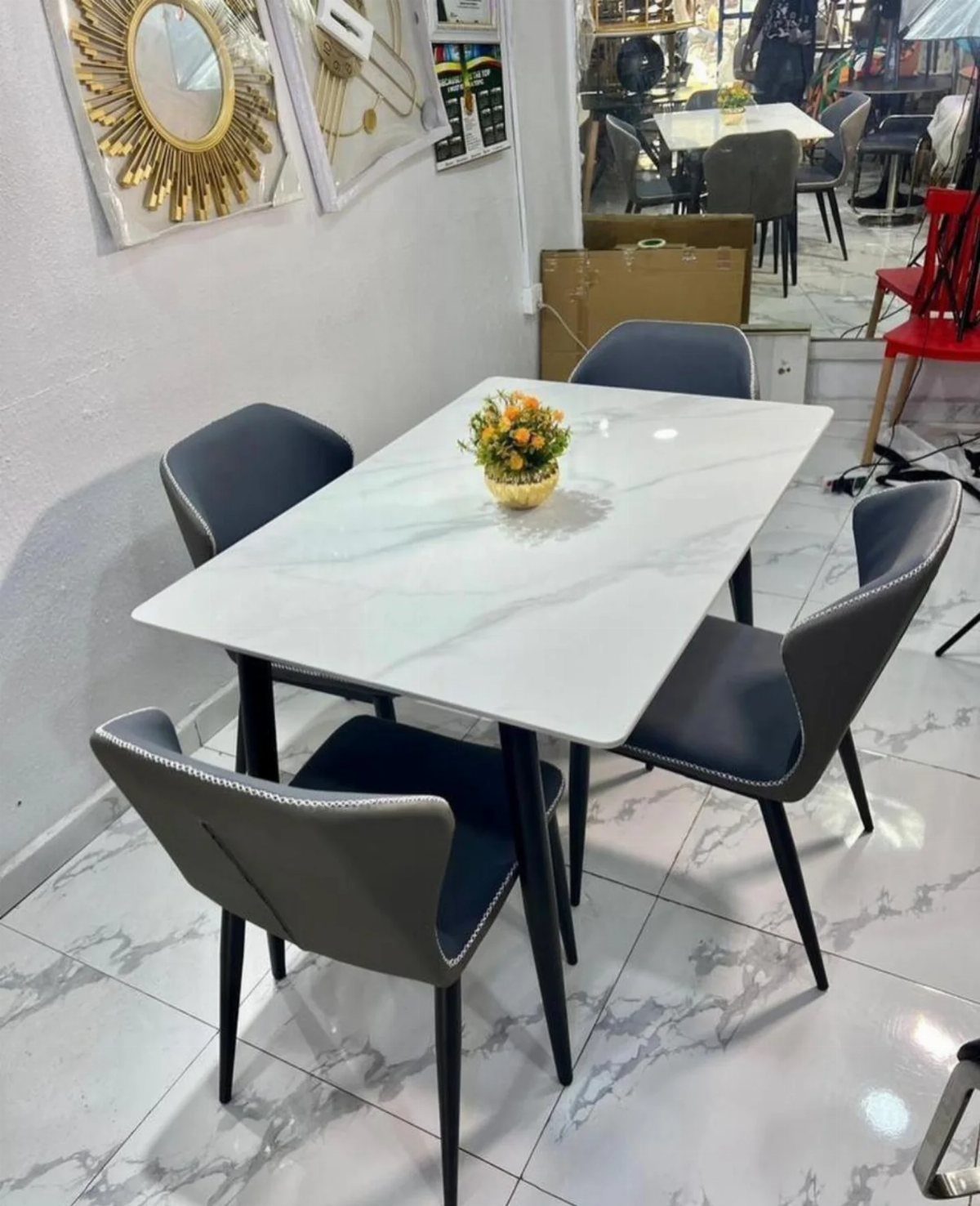
Straight edges suit longer rooms and provide seating along both long sides.
A rectangular table makes sense when the dining area sits in a narrow open plan or when you need a longer run of seating without the table taking over the room.
The proportion matters more than size alone. A table that’s too wide for the room leaves tight clearance along the sides, and one that’s too narrow reads lost.
I leave enough walkway around the table so chairs can pull out and someone can pass behind without turning sideways.
2. Round Dining Tables
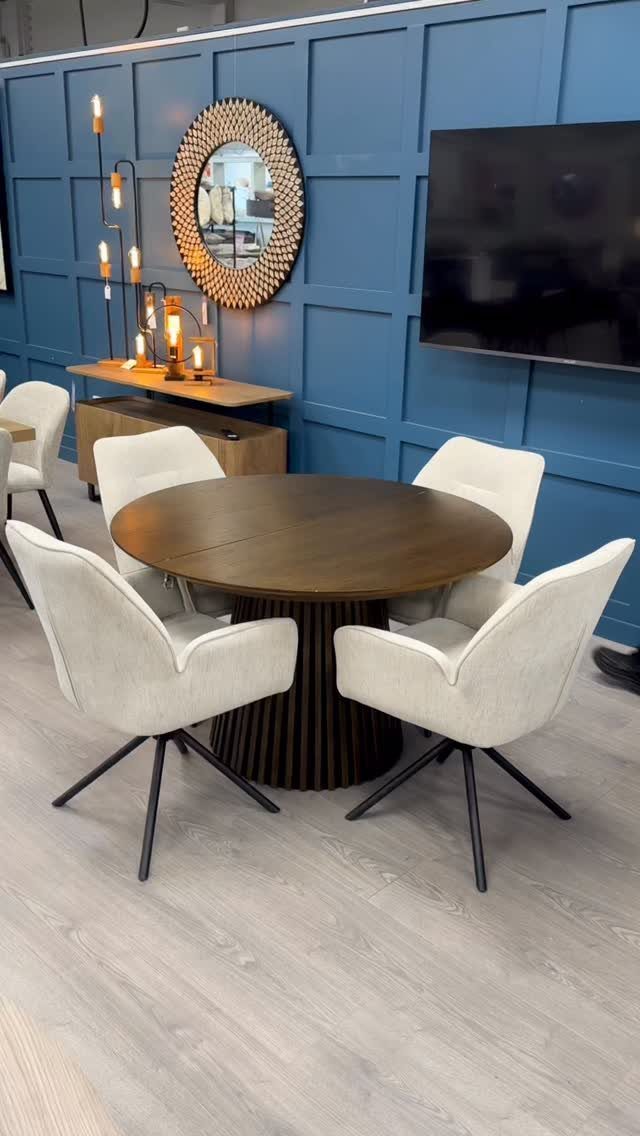
A corner-free shape can help circulation in smaller or square dining areas. I use a round table when the room doesn’t have one obvious long axis or when seating needs to feel even around the perimeter.
The diameter decides how many people fit comfortably. Once a round table gets very large, people at opposite ends stop hearing each other easily.
Round tables seat fewer people than a rectangle with the same footprint, but they let traffic move around them more smoothly.
3. Oval Dining Tables
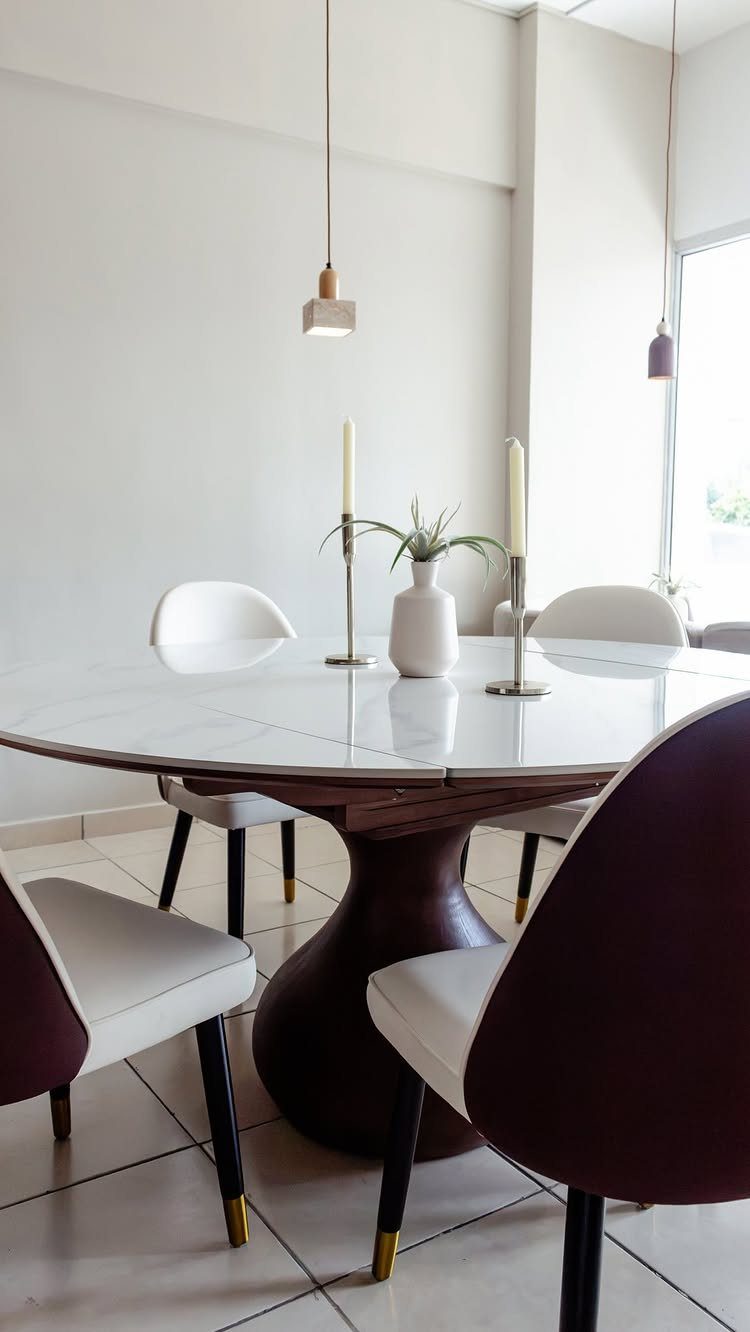
Rounded ends combine a longer seating surface with a softer outline. I choose an oval when the room shape calls for a longer table but corners would interrupt the flow or make the table feel too rigid.
An oval suits a narrow space where you want a longer seating run without the visual weight of a full rectangle. The curved ends also reduce the chance of catching a hip on a sharp corner in tight quarters.
4. Pedestal and Sculptural Bases
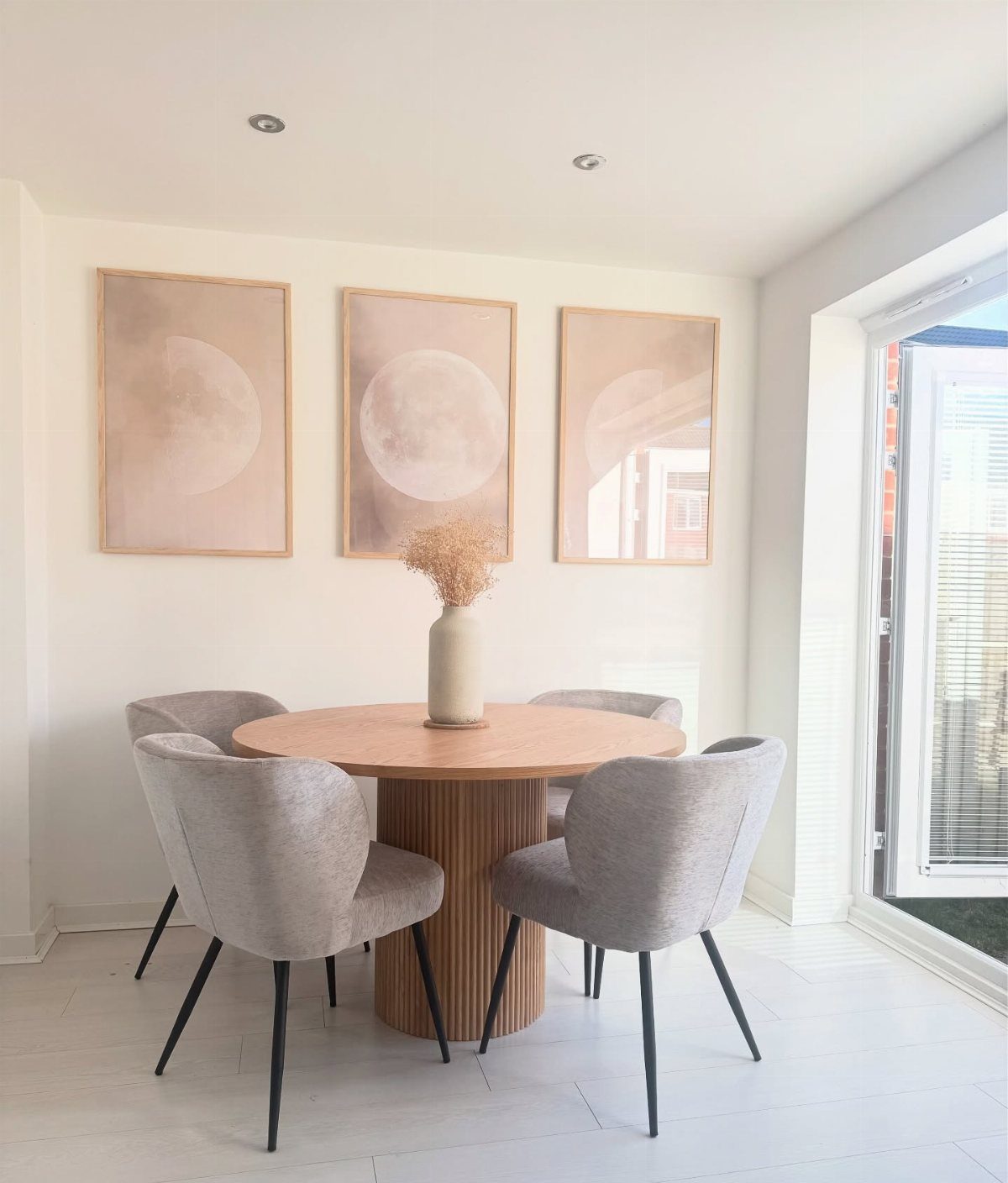
The base affects chair space and can shape the table’s visual presence. A pedestal or sculptural base frees up legroom at the perimeter, which matters when you’re seating more people than a four-leg table would comfortably hold.
I use a pedestal base when the table needs to flex between four and six seats without anyone straddling a leg. The downside is stability: a single center column needs weight or good anchoring, especially under a larger top.
A fluted or turned base adds detail while keeping the floor clear underneath, and it looks more finished than a plain column.
5. Wood Dining Tables
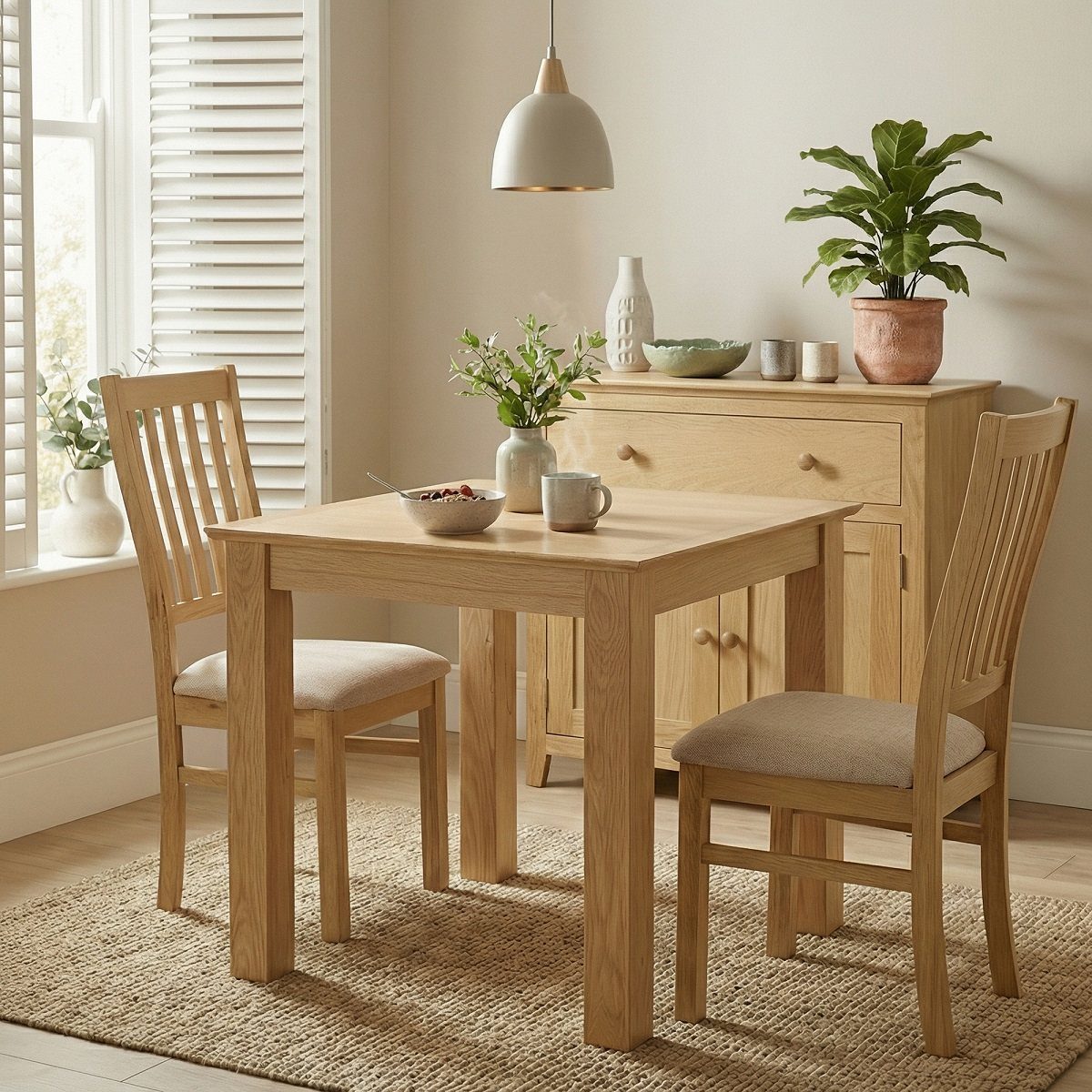
Wood shows grain, takes finish in different ways, and ages visibly. I choose a wood table when the dining area needs warmth or when other materials in the room already lean cold.
Light wood keeps a small room feeling open and pairs well with white or pale walls. Darker finishes add contrast but require more natural light to keep the space from feeling dim.
A wood table scratches and dents over time, which some clients want and others don’t. If the table will see daily use with young children, a distressed or oiled finish hides wear better than a high-gloss lacquer.
6. Solid Wood Dining Tables
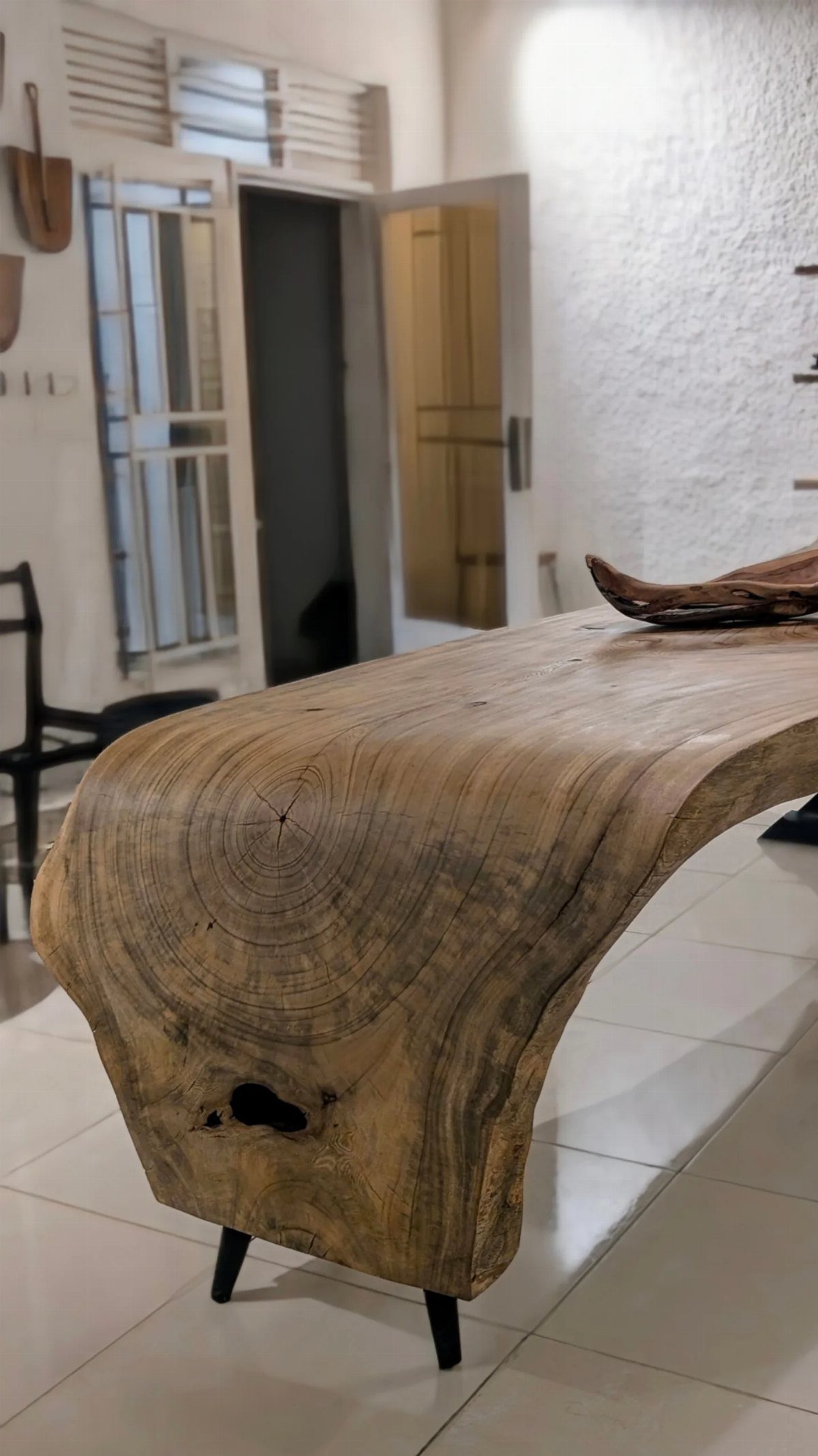
Solid wood is a distinct material choice within the table selection. A solid wood table shows the full thickness of the material at the edge, which gives it more visual weight than a veneered top.
I choose solid wood when durability matters more than keeping the budget low. Solid construction handles refinishing, and a damaged surface can be sanded and resealed without exposing a substrate layer.
The downside is movement: solid wood expands and contracts with humidity, so the joinery and finish have to give it room.
7. Glass-Top Dining Tables
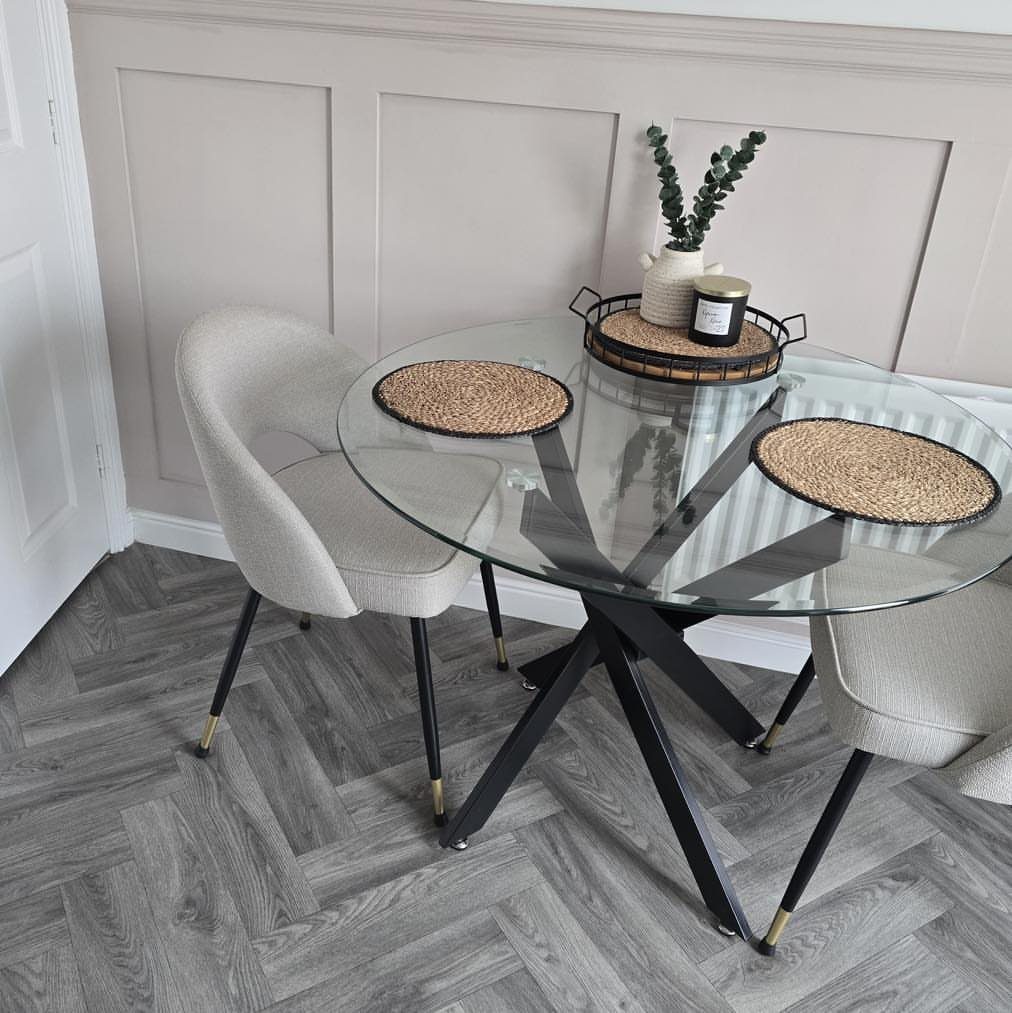
A transparent top lightens the visual weight of the table and lets the base become the main design element.
I choose glass when the dining area is small or when the room already has strong color or pattern that would compete with a wood grain.
Glass shows everything underneath it, so the floor finish and the base both need to look finished. Tempered glass is standard for dining tables because it resists breakage better than standard glass, but it still needs care around hard impacts.
The surface shows smudges and water spots easily, which means more frequent cleaning than wood or stone.
8. Marble Dining Tables
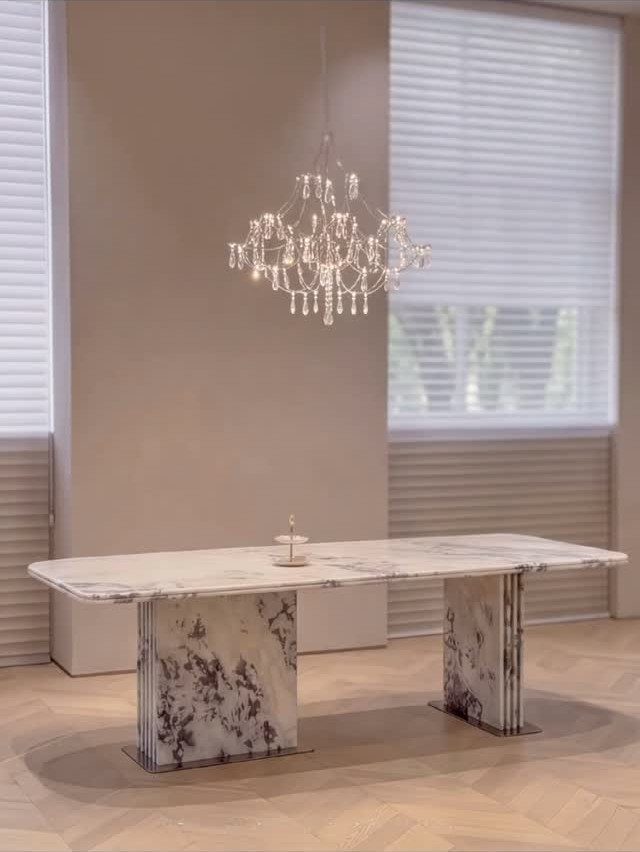
Veining and color shifts make each marble top different. I choose marble when the dining area can handle a heavier table and when the client wants a surface that reads formal without needing much other decoration.
Marble stains and etches from acidic liquids, so it needs sealing and quick cleanup. A honed finish hides minor marks better than a high polish, but both need maintenance.
The material adds weight, which affects how the table moves and what kind of base can support it. A thick slab looks substantial but limits flexibility if the room layout needs to change.
9. Live-Edge Slab Tables
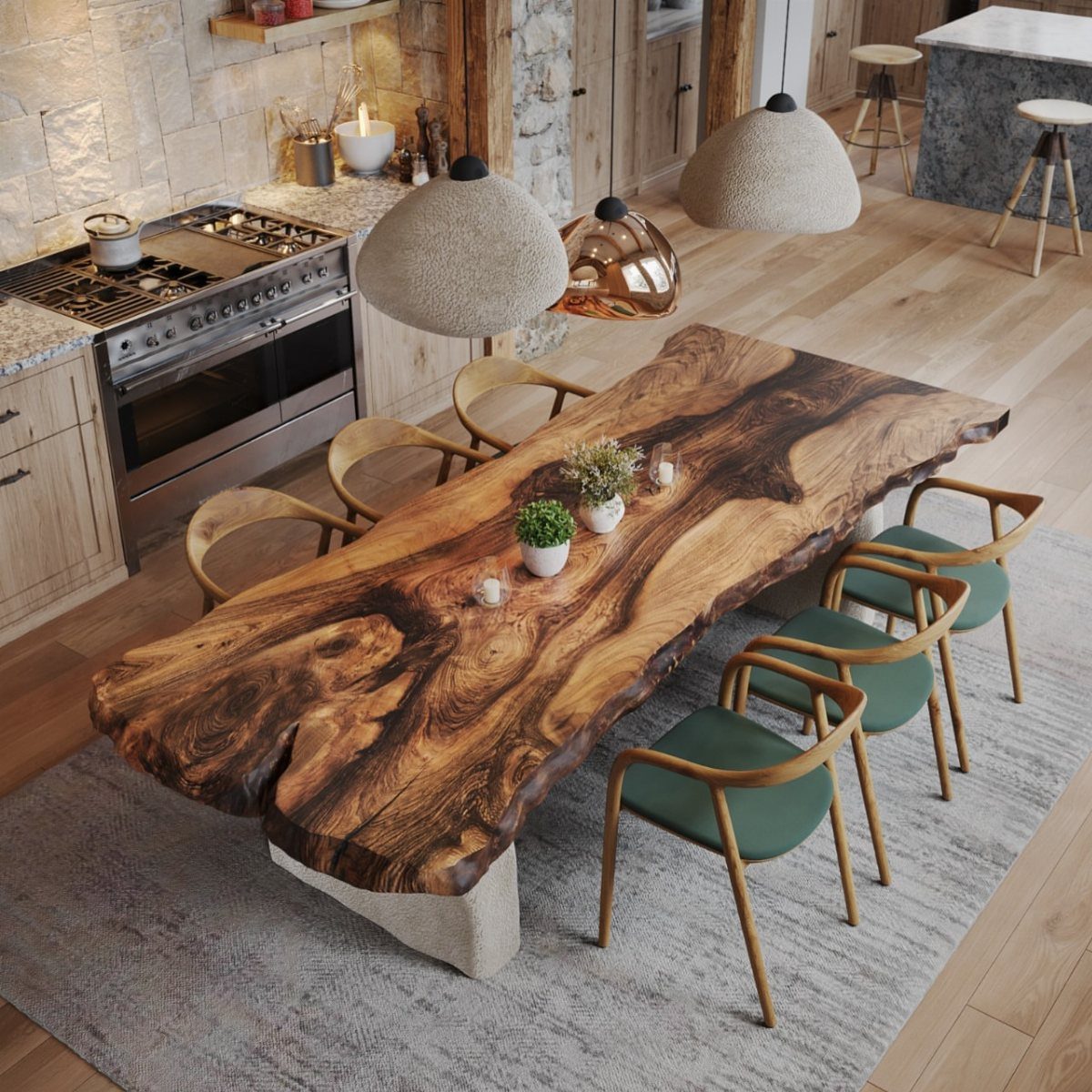
The natural edge preserves the shape of the log, so no 2 tables match exactly. I choose a live-edge slab when the dining area leans rustic or when the client wants a centerpiece that carries texture and irregularity.
The unfinished edge means the width varies along the length, which affects how many chairs fit comfortably. Some slabs taper enough that one end seats two and the other barely fits one.
A thick slab needs a sturdy base, and the weight makes moving the table difficult. The wood still moves with humidity, so gaps can open at the joinery over time.
10. Wood Tables with Metal Legs
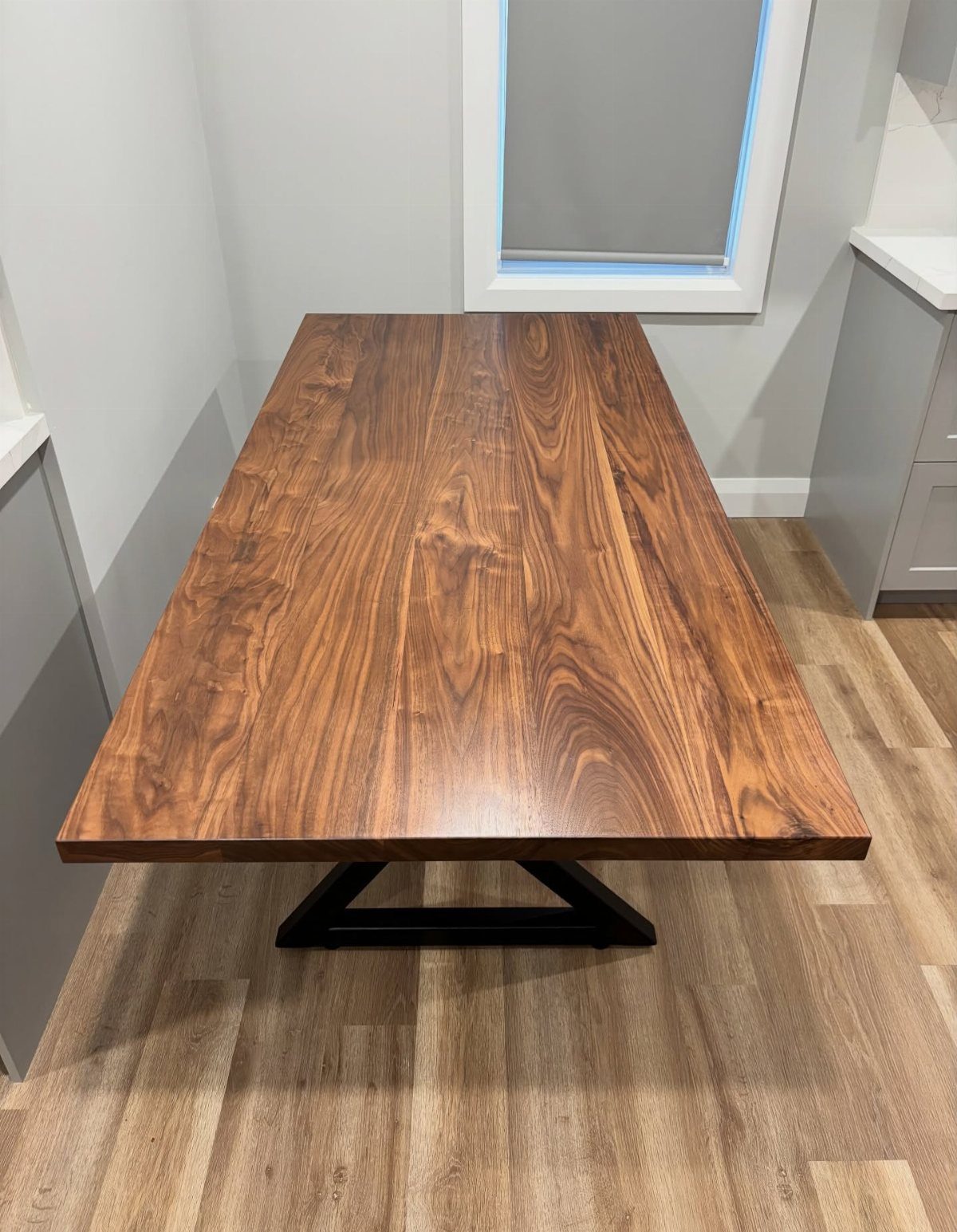
Metal legs reduce visual bulk and keep the focus on the wood grain. I use this pairing when the dining area calls for warmth from the top but needs a lighter look overall.
Black metal works with most wood tones, but raw steel or brass legs change the feel considerably. The metal finish should match other hardware in the room if the space is small.
Powder-coated legs resist scratches better than painted metal, and welded joints hold more weight than bolted ones. The metal base also lets the table sit lower without sacrificing legroom.
11. Dark Table with Colorful Chairs
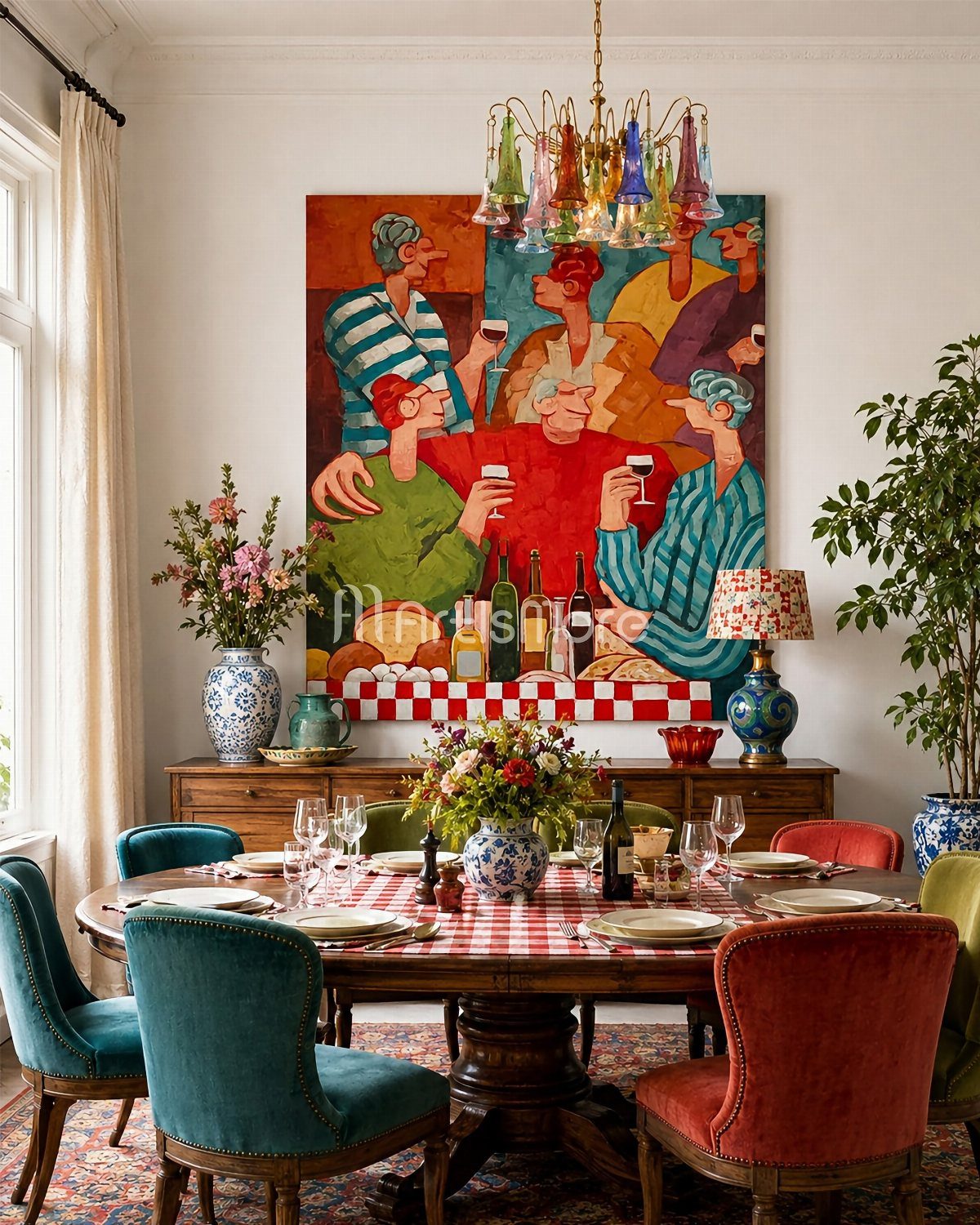
Bold seating color can shift the whole room when the table itself stays neutral.
Velvet holds dye well and looks rich, but it shows wear and stains faster than leather or performance fabric. Mixing two or three colors keeps the look intentional instead of mismatched.
The table finish should stay simple so the chairs can do the work. A high-contrast pairing only works when walls, floors, and surrounding pieces have enough plain surface to let the color breathe.