
A coffee station can sit on a dresser, tuck into a cabinet, or run the width of a built-in counter with a sink, and the right setup depends on how much space you have and whether it needs to serve one person or several.
If the machine stays in one room and mornings are quiet, a cart or repurposed dresser works.
If the station needs to handle tea and cocoa alongside coffee, or if multiple people use it at once, a setup with a sink or beverage cooler and enough counter for an espresso machine, grinder, and kettle makes the flow smoother.
Floating shelves hold mugs and jars without cabinets, and cabinet doors hide the whole setup when it’s not in use.
1. Tiny but Mighty Coffee Bar
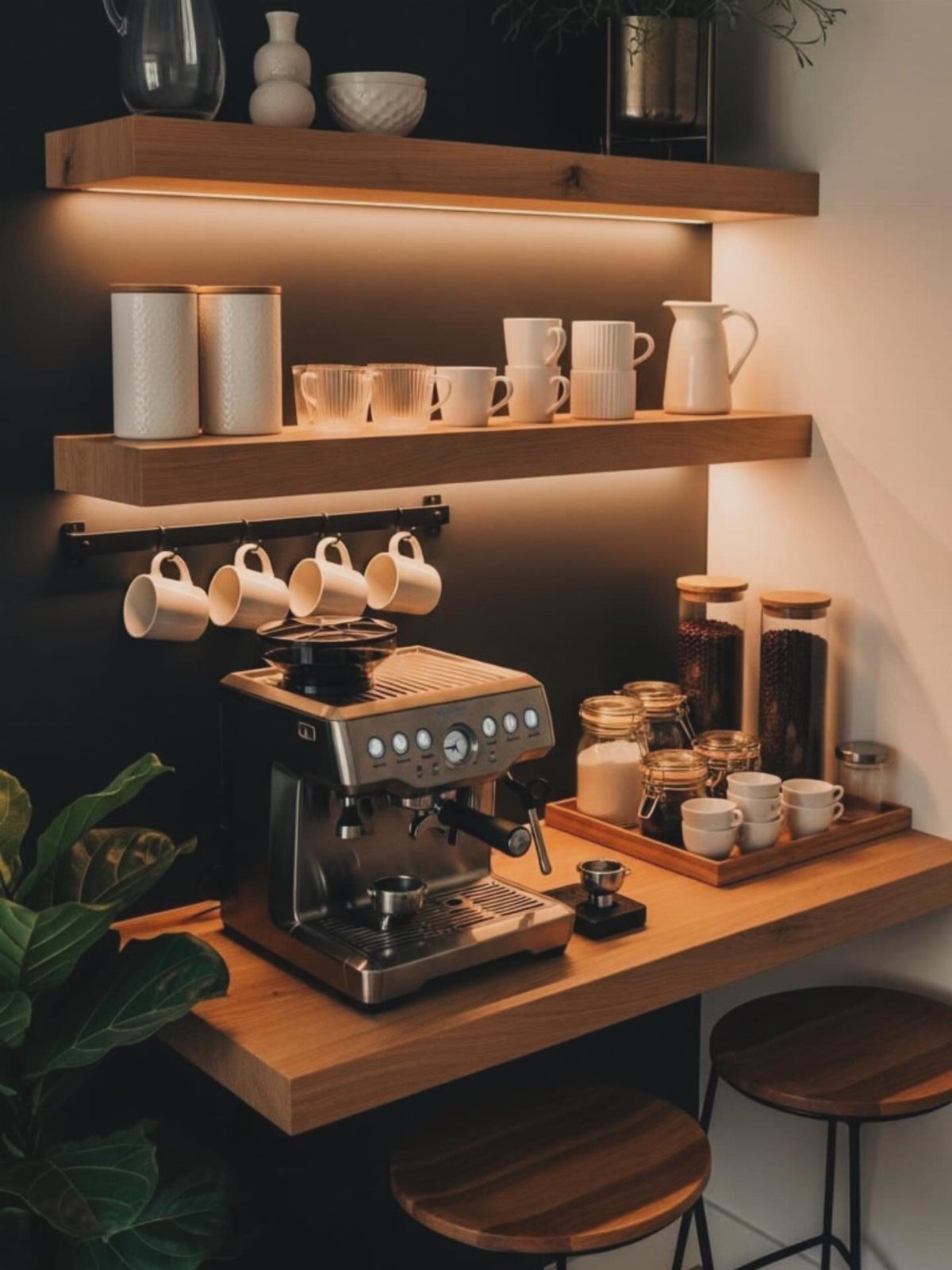
A narrow stretch of counter or a slim console is enough when the footprint is tight.
If you’re working with less than 24 inches of width, mount storage overhead instead of beside the machine. A single shelf holds more than you’d think, and hooks underneath double as mug storage and stay out of the drawer or cabinet.
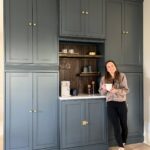
2. Incognito Coffee Bar
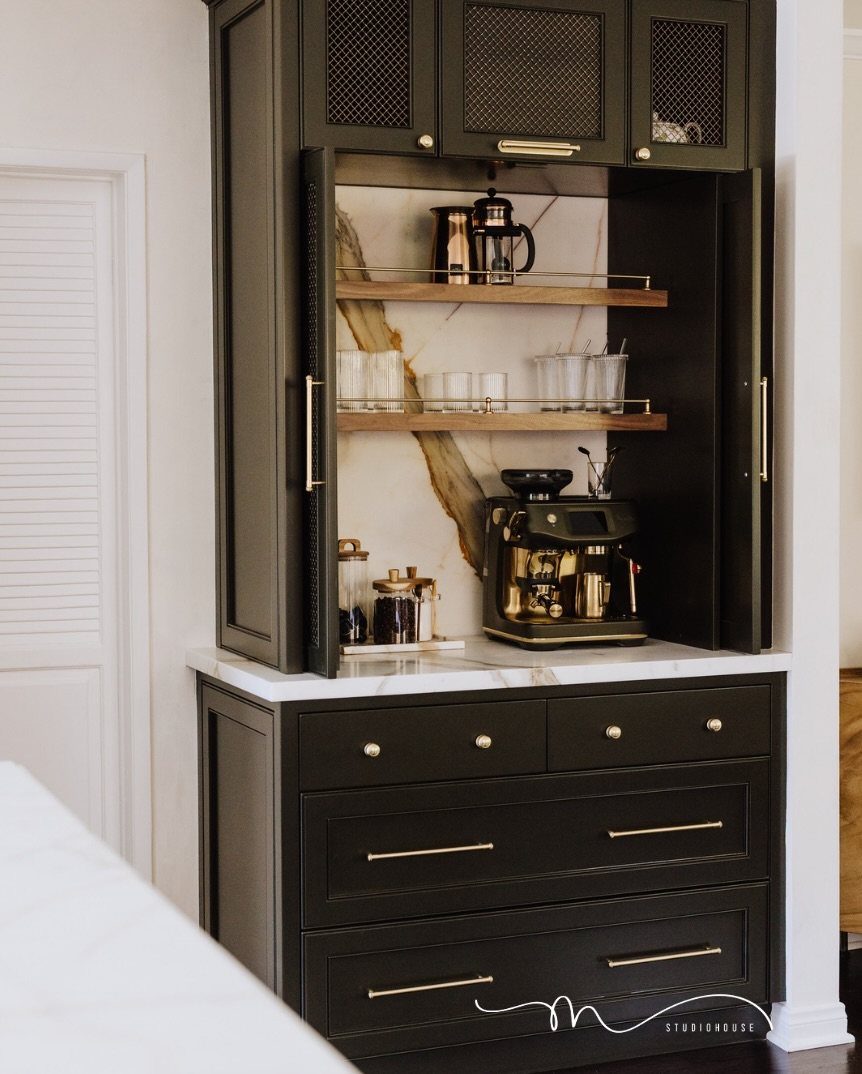
Cabinet doors turn a coffee bar into a closet when you’re done using it. A coffee maker and accessories tuck behind painted wood panels, so the kitchen reads as clean storage instead of an appliance counter.
This pays off most when the cabinet already has electrical run to it or sits close to an outlet you can reach without running cord across the door opening.
If you’re retrofitting a pantry or linen cabinet, plan for ventilation if the machine produces steam.
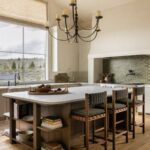
3. Coffee Bar Meets Sink
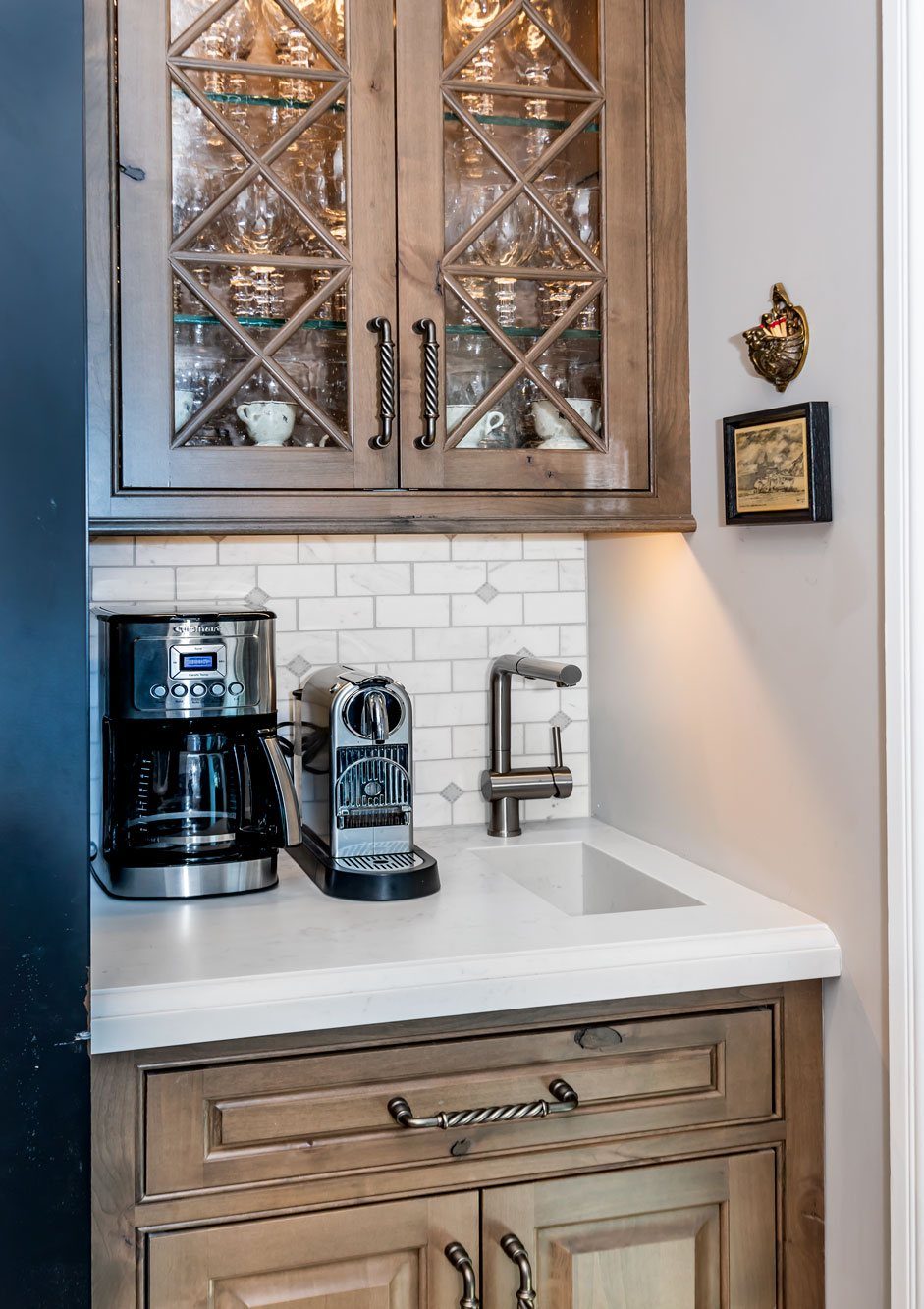
A small bar sink next to the coffee maker cuts out the trip to the main sink for water and cleanup.
A single-bowl undermount sink sits low enough to leave clearance for a full-size drip brewer and a pod machine on the same counter.
If you’re adding a sink to an existing coffee station, the rough-in needs drain and supply lines within a few feet of the spot.
The sink itself can be small, but I’d go at least large enough to rinse a French press or carafe.
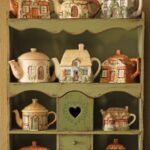
4. Retro Cabinet Coffee Bar
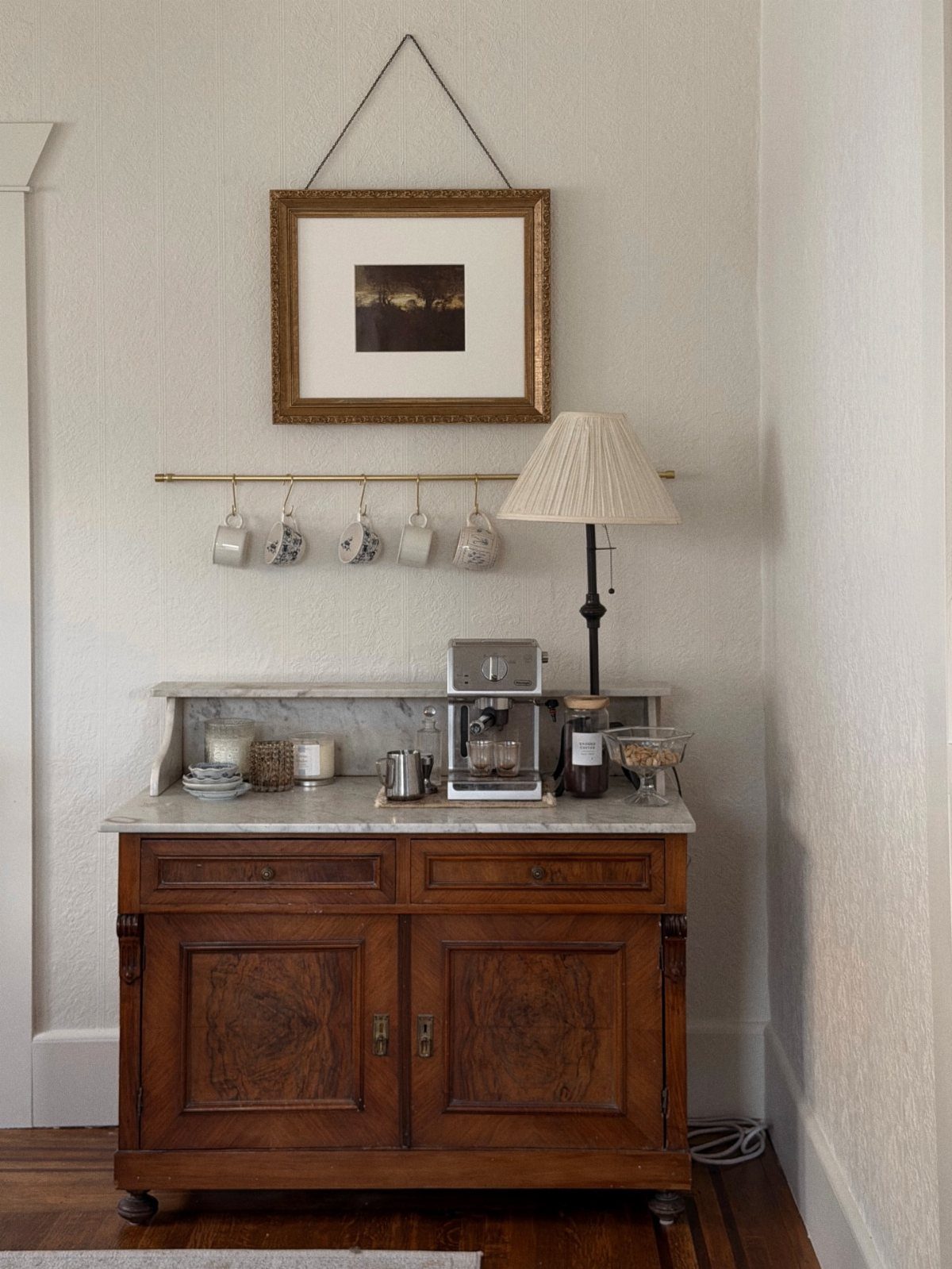
A vintage cabinet with a solid top gives you coffee prep and storage in one piece of furniture, which is useful when counter space is already spoken for.
Look for a cabinet with enough depth so the machine sits stable and you have a few inches of clearance behind it. If the top isn’t water-resistant, add a small tray under the machine to catch drips.
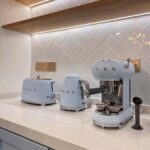
5. Coffee Bar with Tile Backsplash
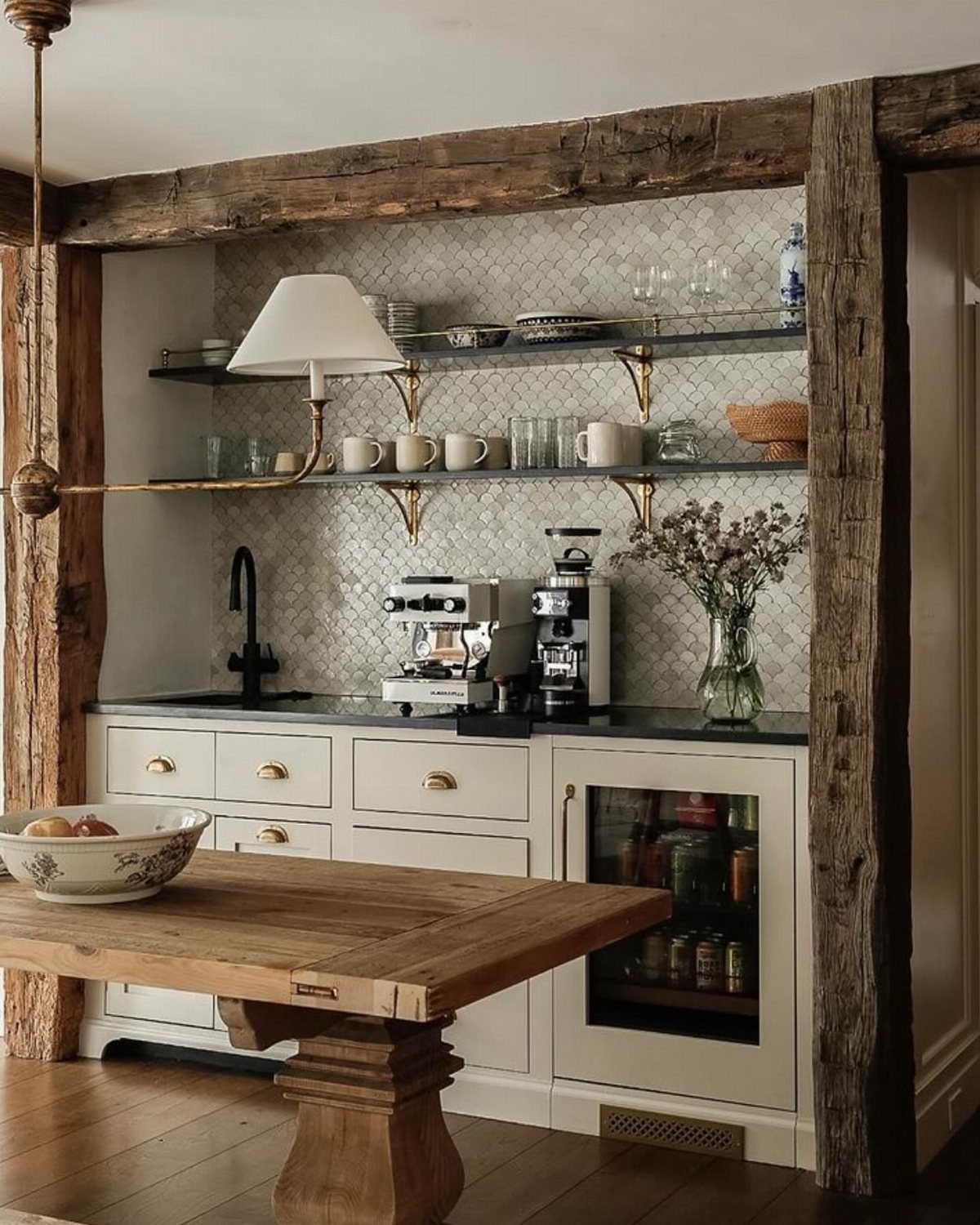
A backsplash frames the coffee bar as a deliberate station instead of leftover counter space.
White subway tile runs from the counter to the bottom of the upper cabinets and ties the coffee area to the rest of the kitchen without adding a loud pattern.
If you’re tiling a small section, consider running the backsplash only behind the machine and shelves rather than across the full wall. That keeps material and labor down while still giving the station a finished edge.
6. Eggshell Coffee Bar
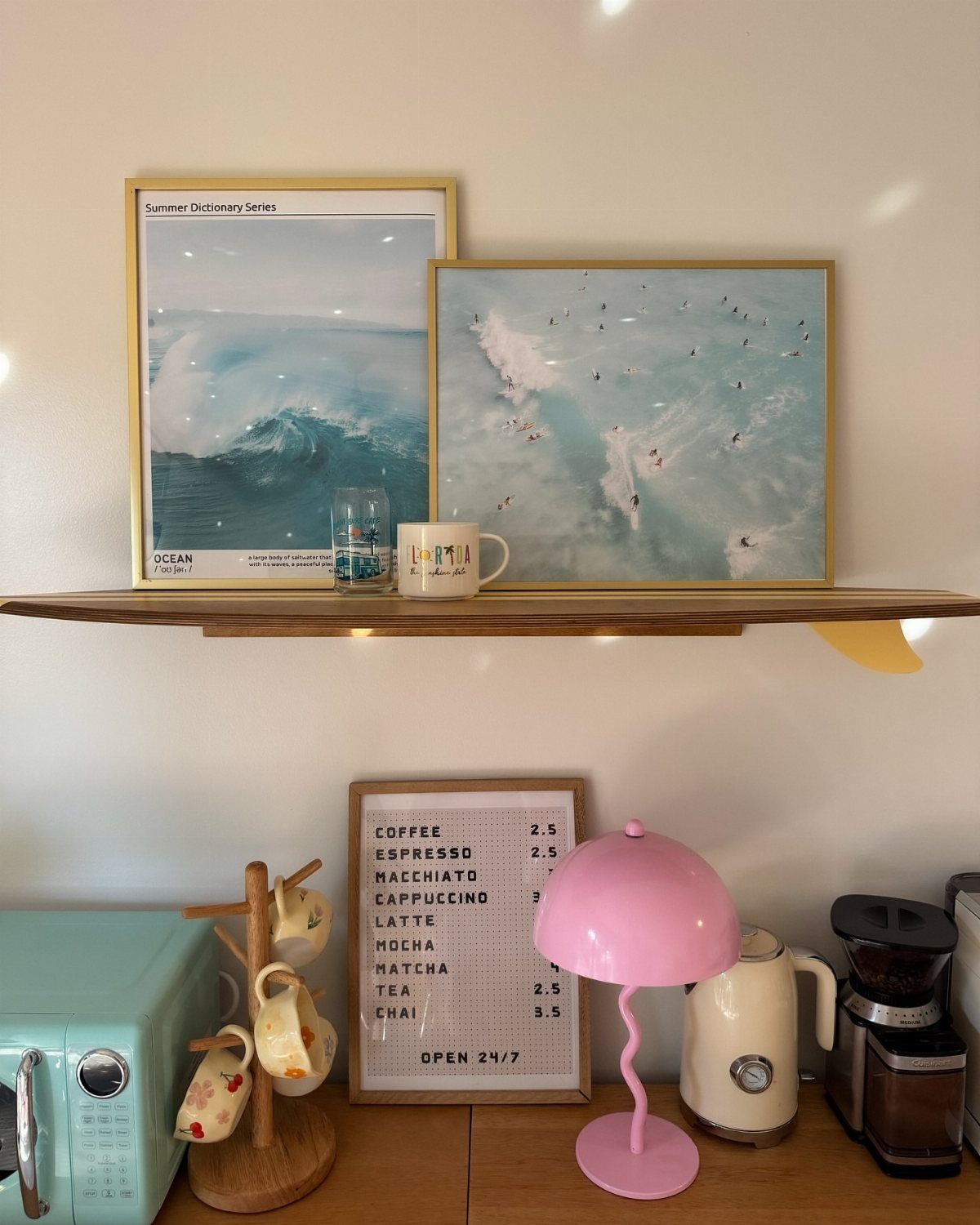
A soft neutral palette keeps a coffee station from feeling too industrial, which is easy to do when espresso machines and grinders take up most of the visible space.
Light wood, pale walls, and a pink lamp balance the black appliances without forcing a theme.
If you want warmth without bold color, try a wood tray under the machine, linen hand towels on a rail, or a row of ceramic canisters instead of plastic.
Small shifts in texture go further than big color moves when the goal is calm, not contrast.
7. Bedroom-Based Coffee Bar
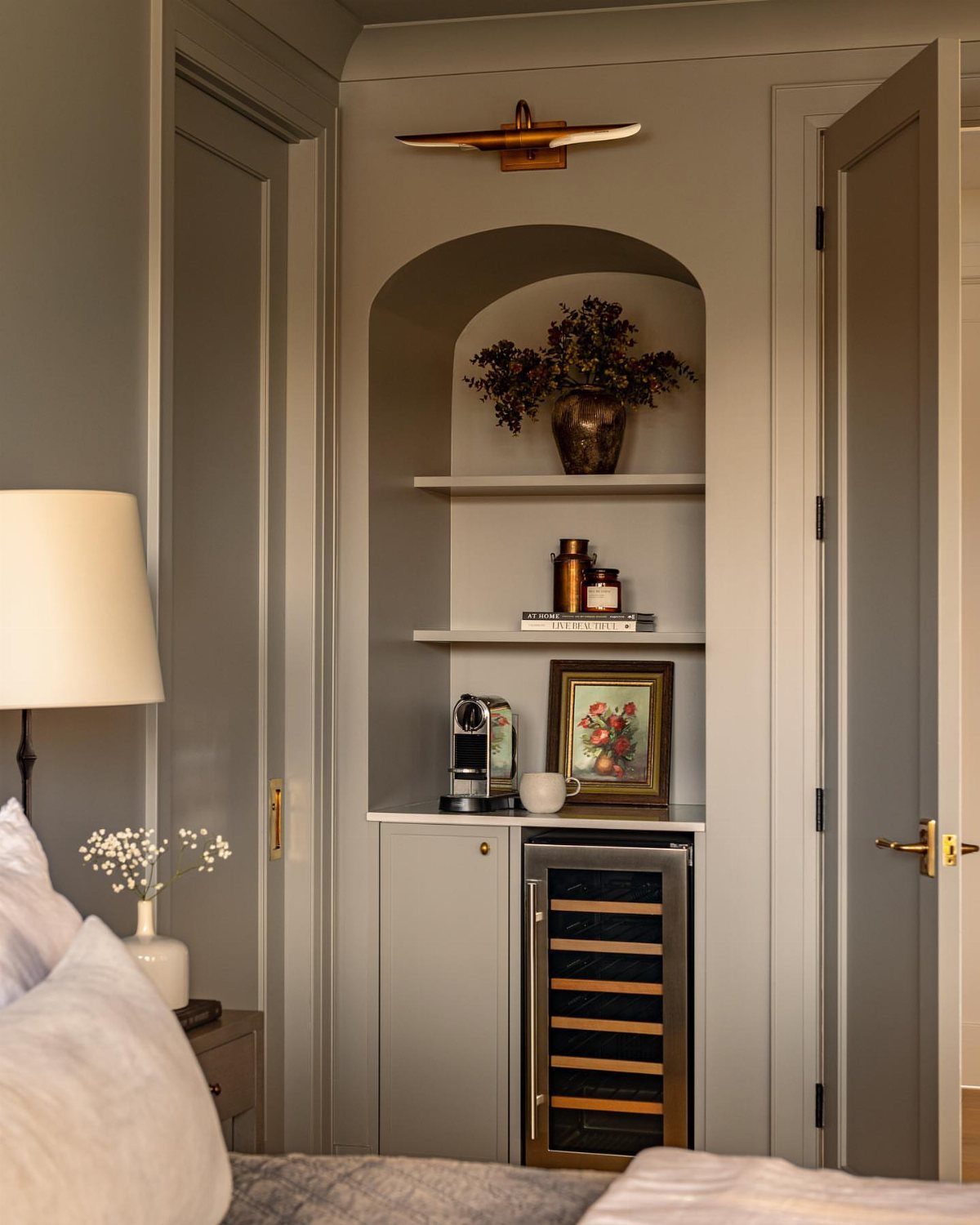
A built-in station in the bedroom means coffee before you leave the room. This setup works best in a primary suite or guest room where morning noise needs to stay contained.
If you’re planning one, place it away from the bed side if the machine runs loud. A small wine fridge or beverage cooler underneath keeps milk cold without a trip to the kitchen.
8. Cabinet Coffee Station
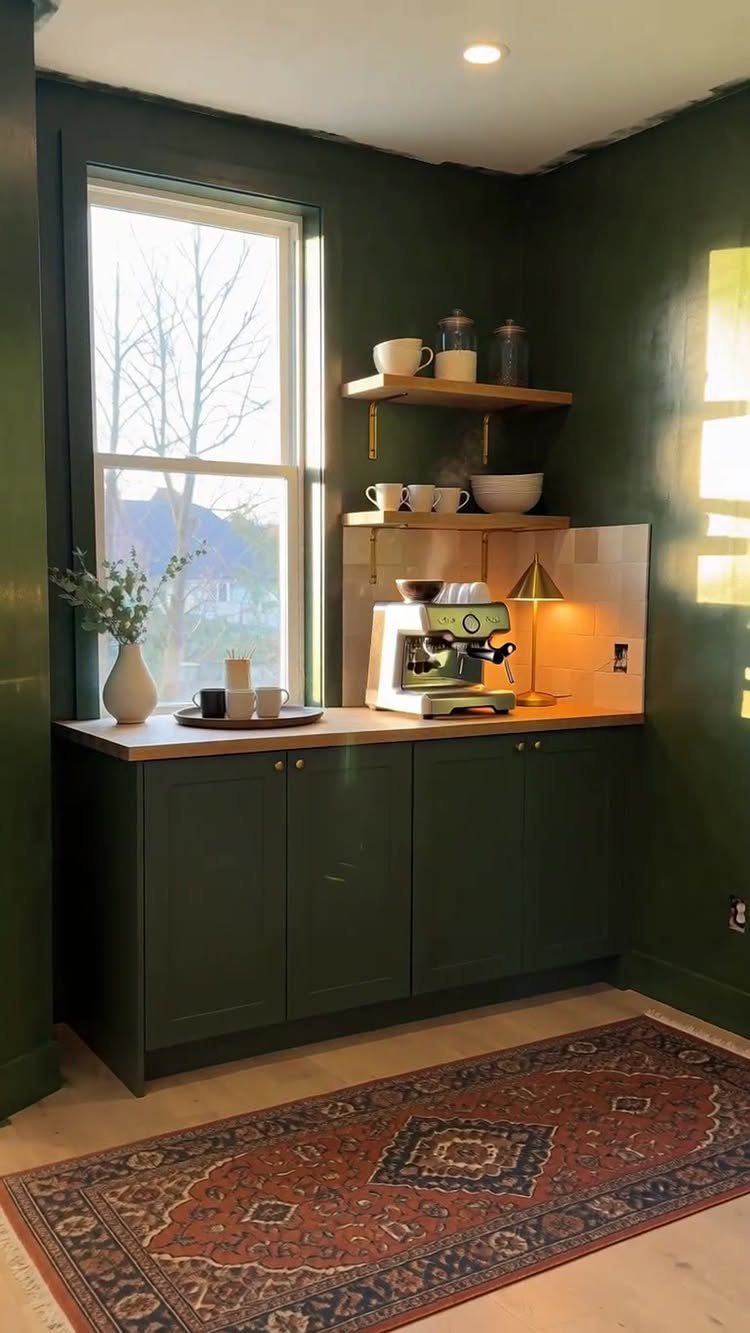
A narrow countertop with open shelving above keeps the footprint small, which works well when you don’t want the station taking over a corner of the room.
A cabinet this size can hold an espresso machine, a grinder, cups, and backup supplies without crowding.
If you’re building one in, keep the cabinet deep enough so the machine door or steam wand clears the front edge.
9. Rolling Coffee Cart
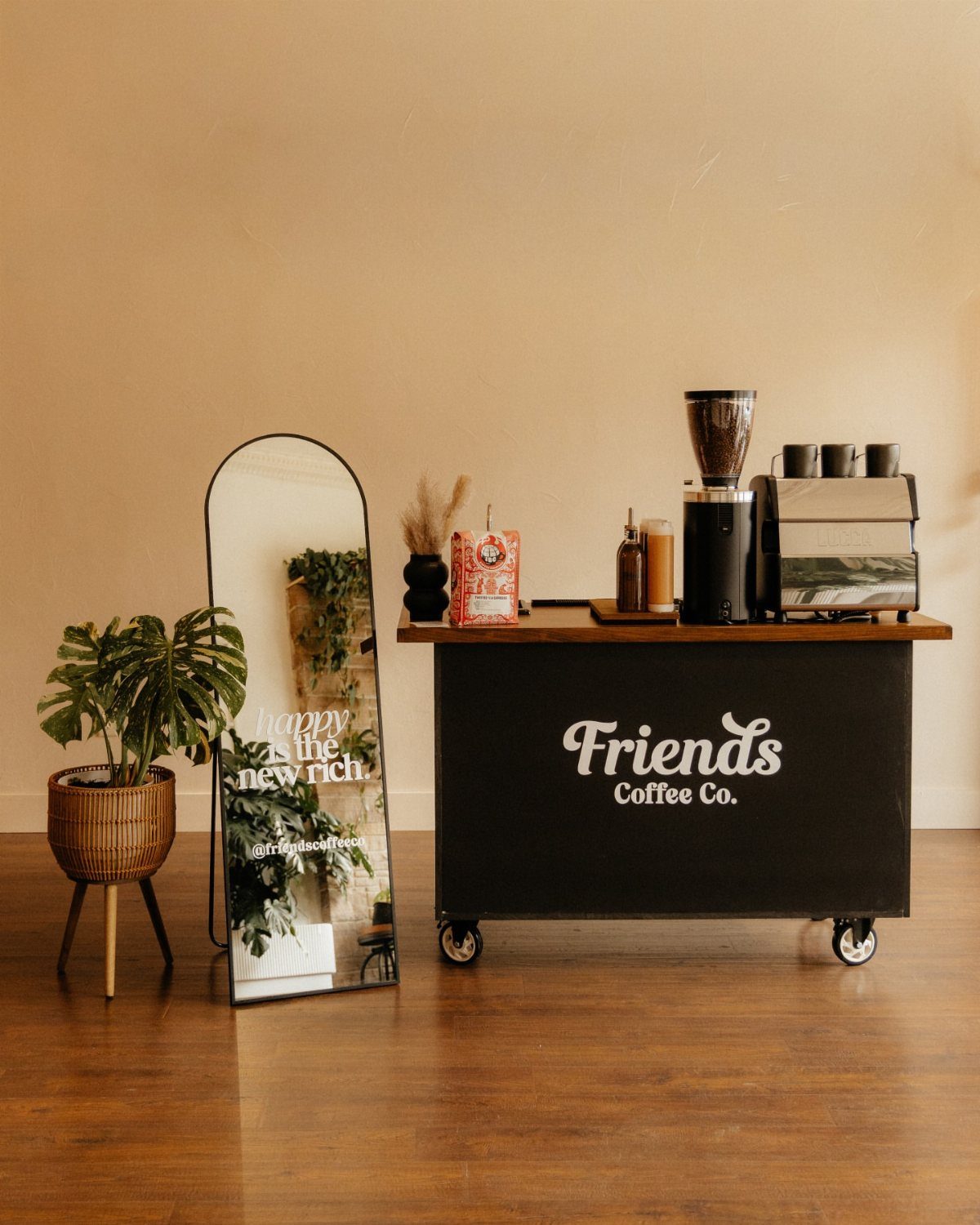
A rolling cart gives you a coffee station that moves to the patio, dining room, or wherever guests gather. A wood top holds heat better than metal and gives you a stable surface for an espresso machine or grinder.
Look for a cart with locking wheels if the floor isn’t perfectly level. The cart should be tall enough so you’re not bending to pull a shot.
10. Coffee, Tea, and Cocoa Station
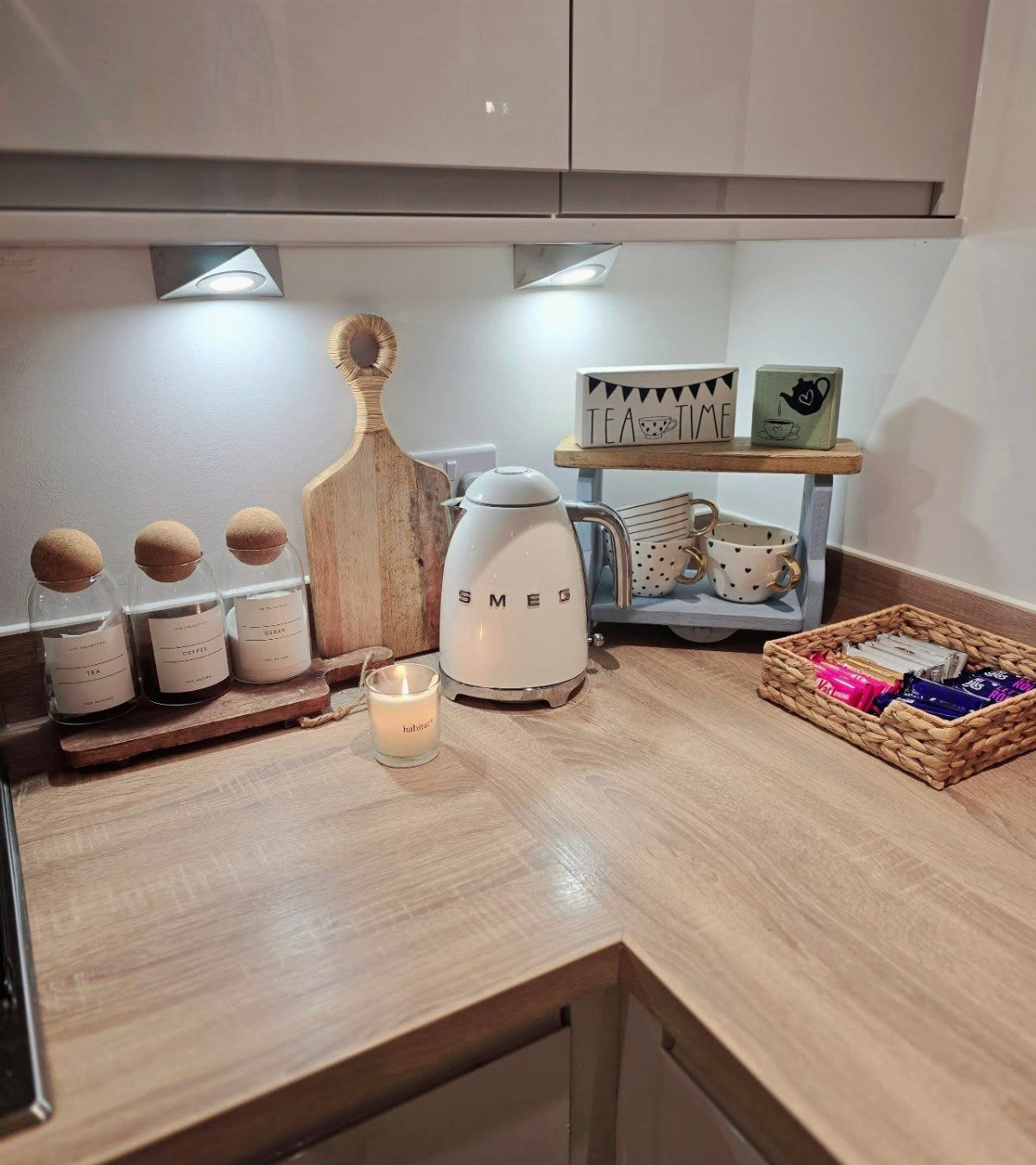
One station for coffee, tea, and cocoa saves counter space and keeps everything a guest might want in one spot.
An electric kettle heats water faster than a stovetop and sits low enough to leave room for jars and mugs on the same counter.
Label the jars if you’re hosting often. A basket or bin corrals cocoa packets and tea bags so they don’t scatter across the counter between uses.
11. Wooden Shelf Coffee Station
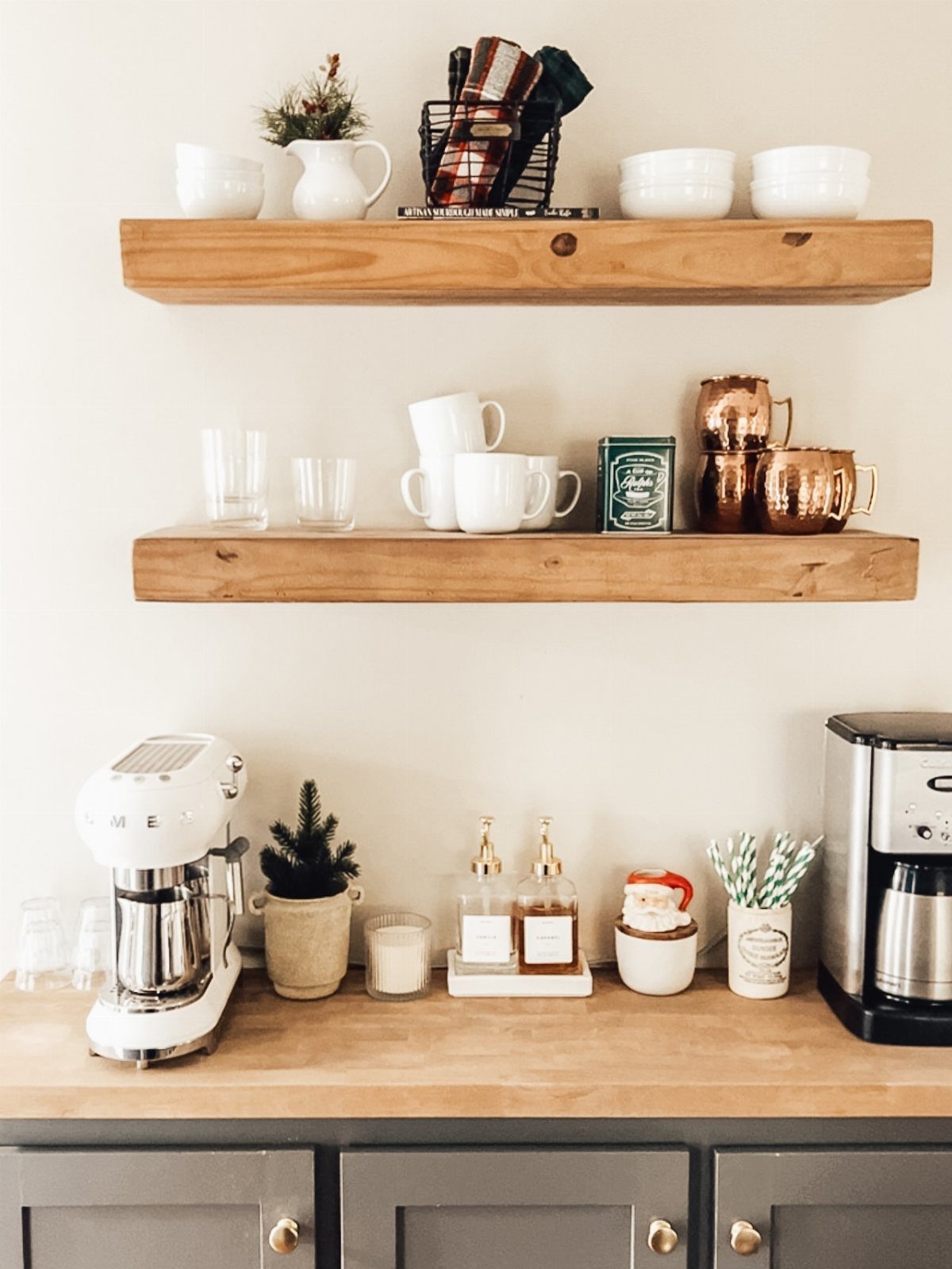
Floating shelves above a coffee maker and espresso machine give you mug storage without cabinets. 2 shelves are usually enough for daily mugs and a few decorative pieces, and the open layout keeps everything in reach.
Mount the shelves high enough above the machine so steam doesn’t damage anything stored above. If the wall is drywall, use anchors rated for the combined weight of the shelves, mugs, and anything else you plan to load on them.
12. Pink Dresser Coffee Station
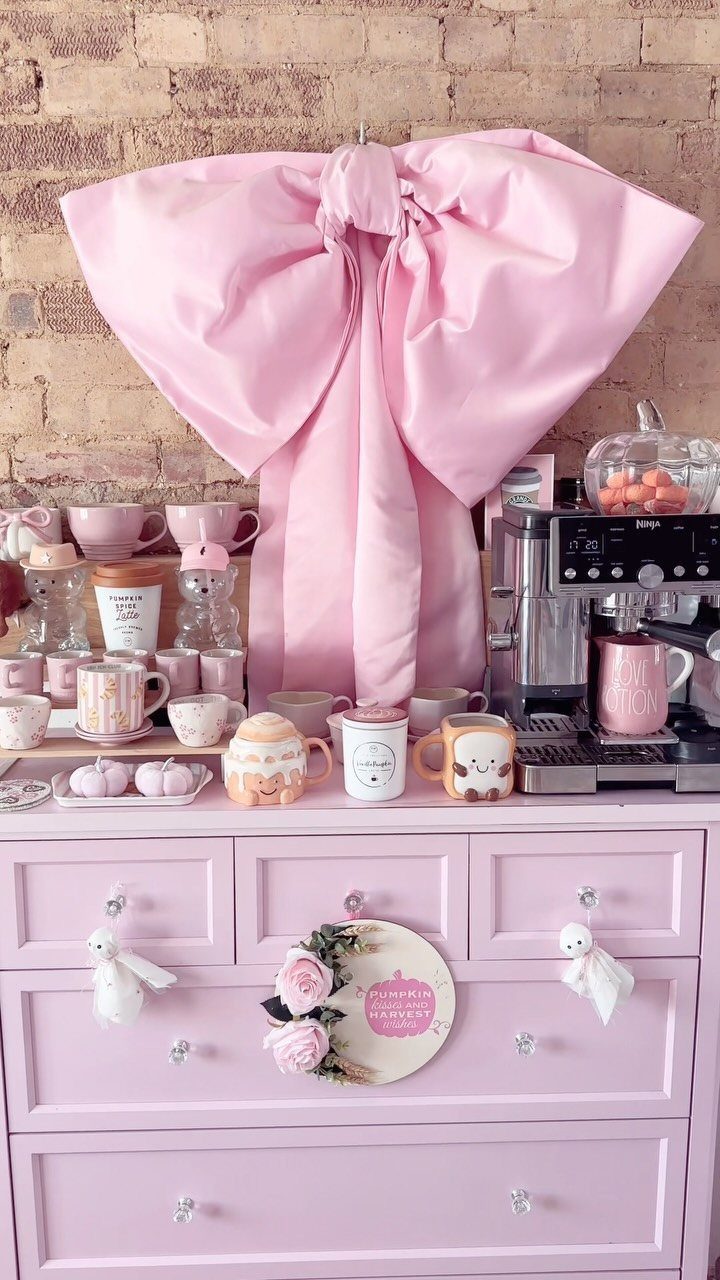
A dresser with a solid top can double as a coffee station when you need storage and surface in one piece. A painted finish in a soft color keeps the setup from reading as purely functional.
Check that the top is level and stable before putting a machine on it. If the dresser has deep drawers, use them for backup coffee, filters, or extra mugs instead of letting them sit empty.
13. Pink Cabinet Coffee Station
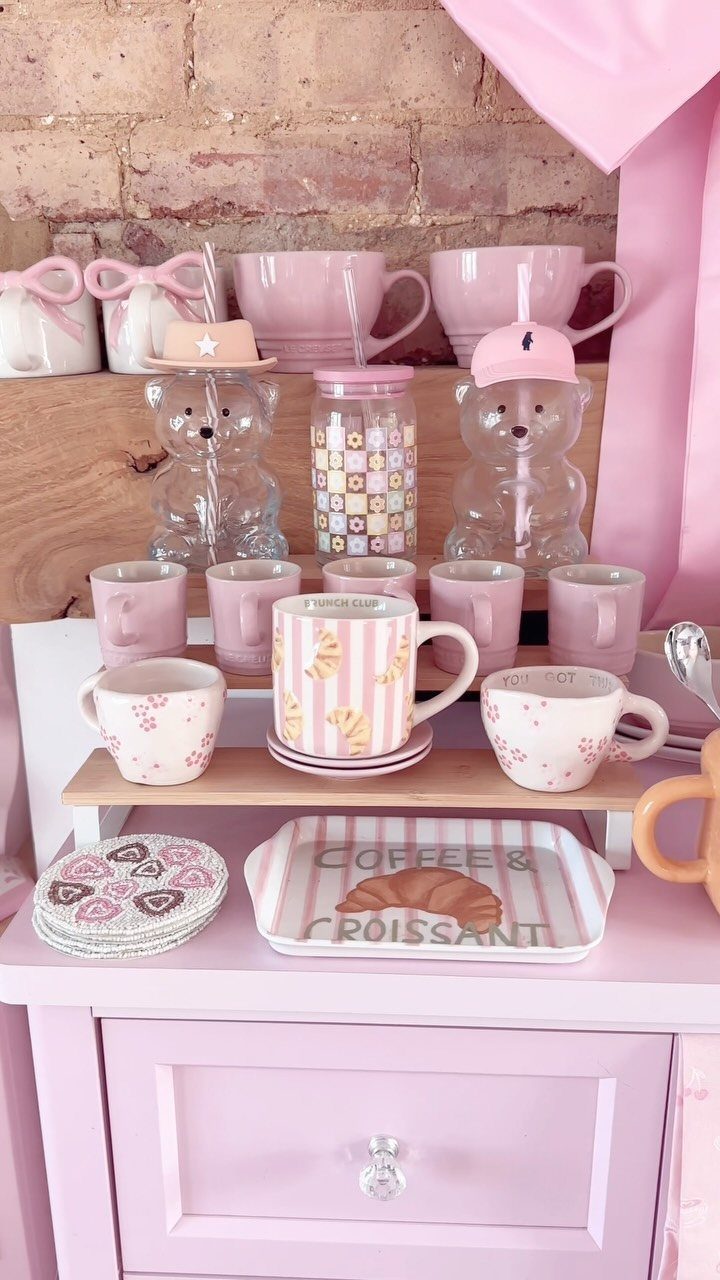
A painted cabinet in a single color pulls a coffee display together when the pieces on it share that tone. Pink mugs and novelty glasses sit on pink wood, which reads as deliberate instead of accidental matching.
If you’re painting a cabinet for this, use a semi-gloss or satin finish so the surface wipes clean when coffee drips. A brick wall behind adds texture without competing for attention.
14. Pink Coffee Nook
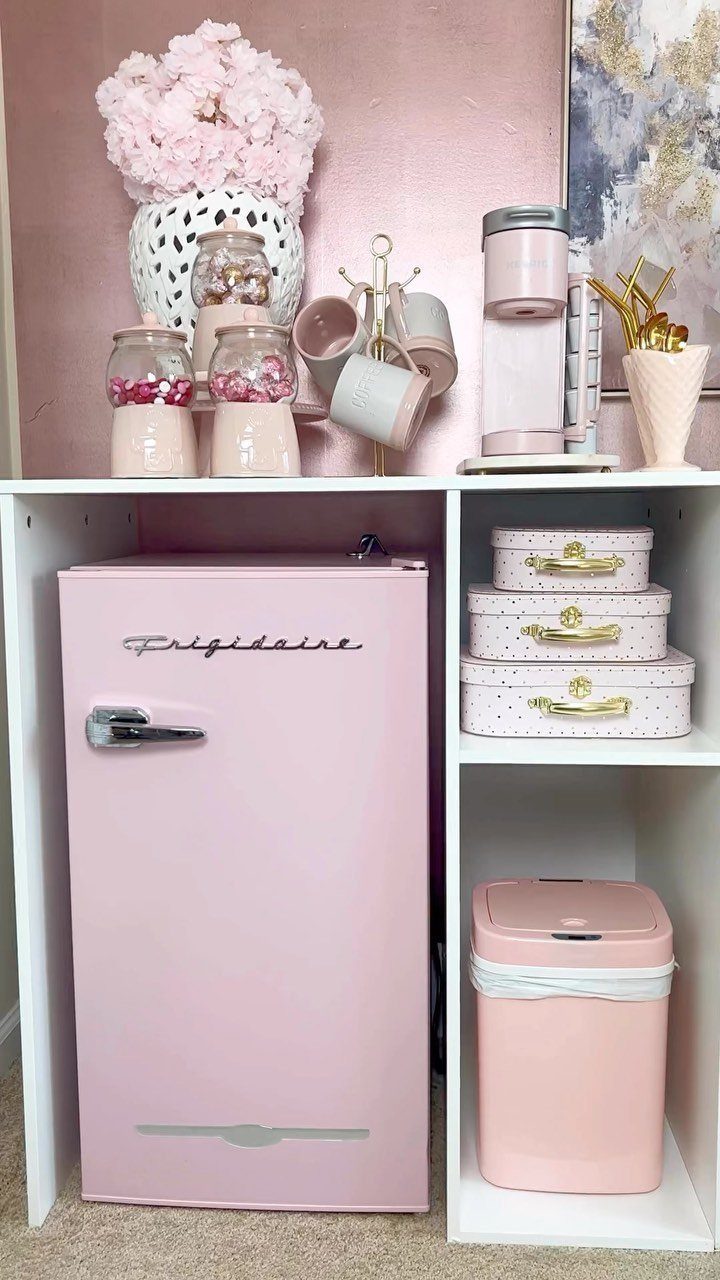
Shelving above a compact refrigerator keeps coffee supplies and milk in one vertical column. A coffee maker, jars, and mugs sit on 2 shelves, and the fridge below stores cream in a corner the kitchen doesn’t need.
Match the appliance color to the rest of the setup if you’re buying new. A mini fridge pulls low wattage, so you can run it and a coffee maker on the same outlet in most homes.
15. Marble Coffee Station
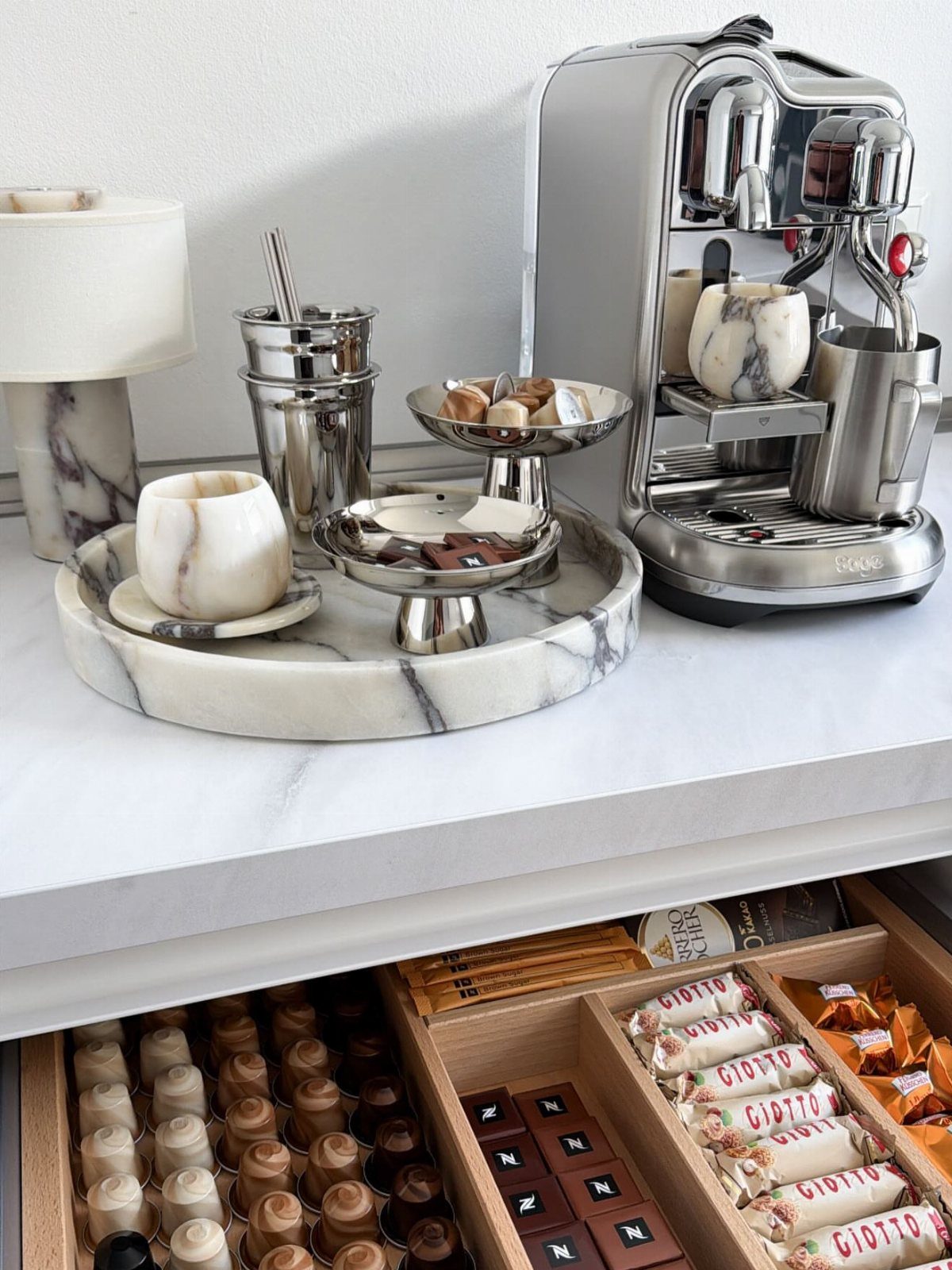
Marble countertop and matching cups give a coffee station a polished look without extra decoration. A shallow drawer below holds pods and chocolates so the counter stays clear between uses.
If you’re organizing pods in a drawer, use small bins or dividers to keep them from sliding around. Marble scratches easier than quartz, so put a tray under the machine if you move it often.
16. Built-In Beverage Station
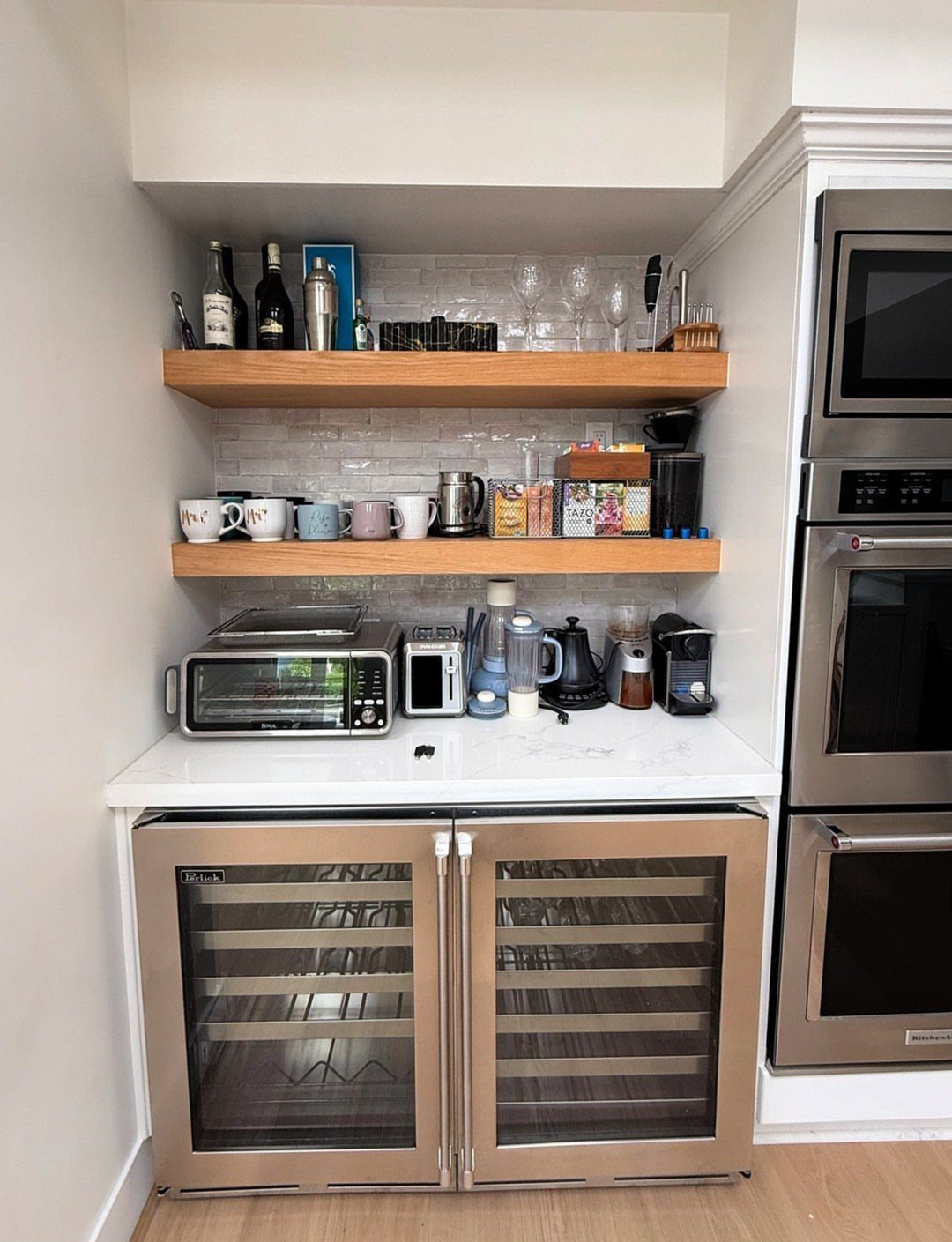
Built-in counters turn a beverage station into permanent kitchen architecture. A toaster oven and coffee makers share a counter with floating shelves above, and a wine cooler below adds cold storage without a full refrigerator footprint.
This setup works best in a kitchen remodel or new build where you can run electrical and plumbing to the spot.
If you’re adding a cooler, check the vent clearance the model needs so it doesn’t overheat in an enclosed base.
Frequently Asked Questions
What is a home coffee station?
A home coffee station is a dedicated area for preparing coffee and storing the supplies that go with it.
It can be as small as a single shelf with a machine or as large as a built-in counter with a sink and cooler. The size depends on your space and how much you use it.
Why should I set up a coffee bar at home?
A coffee bar keeps everything for your morning routine in one spot, which saves time and makes restocking obvious when supplies run low.
When you have guests, they can serve themselves without asking where things are. If you set one up for the holidays, it becomes something people look forward to.
How much counter space do I need for a coffee station?
A foot or two of counter does the job when you keep the layout tight.
A 24-inch square holds a machine, mugs, and supplies without feeling crowded. If you use shelves above or a drawer below, you can fit more in the same footprint.
What are some budget-friendly ways to create a coffee bar without remodeling my kitchen?
Start with a coffee maker and the mugs you already own, then add one or two extras after you see what the setup needs.
Use jars, bins, or baskets you have on hand to organize supplies. Buying slowly keeps you from spending on things that turn out to be unnecessary.
Where should I put a home coffee station?
A countertop works for a simple daily setup or a seasonal display.
A cabinet keeps a larger station hidden when you’re not using it, which clears off the counter. A rolling cart is useful for parties or holidays because you can move it to another room when guests need it.
What should I include in a coffee bar?
Start with your coffee maker, mugs, coffee or tea, and any supplies like filters or stirrers.
Add a small bin for cleanup, a tray or organizer to group items, and a few extras like syrups or a frother if you use them. If you want seasonal decor, a vase or small accent keeps it simple.
What organizing supplies work best for a home coffee station?
A riser or tray lifts items in the back so you can see them without moving everything in front.
Small bins or canisters group supplies by type, and a turntable or pullout drawer makes it easier to reach things at the back. Clear containers work well for anything decorative; baskets or wood boxes hide less attractive items.
How do I set up a station that includes coffee, tea, and cocoa?
Put the machines at the front where you can reach them easily, then use a riser behind them for tea bags, cocoa, and syrups.
If you’re offering a lot of options, you’ll need more space, so store a small quantity of each item on the station and keep backstock nearby.
What’s the best way to organize mugs and pods?
Group mugs on a vertical rack, a lazy Susan, or stacked on a tray so they stay neat. Keep each type of supply in one spot instead of scattering it across the station.
Should I add decor to my coffee station?
A few small touches make the station feel finished without cluttering it. A seasonal towel on the counter or hanging from a basket handle brings in color and doubles as cleanup.
A small vase with flowers or greenery fills the background, and swapping mugs or adding festive to-go cups for the season keeps it fresh.