
A bar in a home can fit under a staircase wedge, roll on a cart, or claim a whole room with lounge seating, and the spread runs from a tray on a sideboard to built-ins with plumbing and refrigeration.
The decision comes down to where you put it, how much room you have, and whether the design should stay fixed or roll when you need it.
An under-counter mini fridge and a dedicated ice maker keep drinks cold and cubes ready without interrupting the bar surface.
1. Under-Stairs Bar
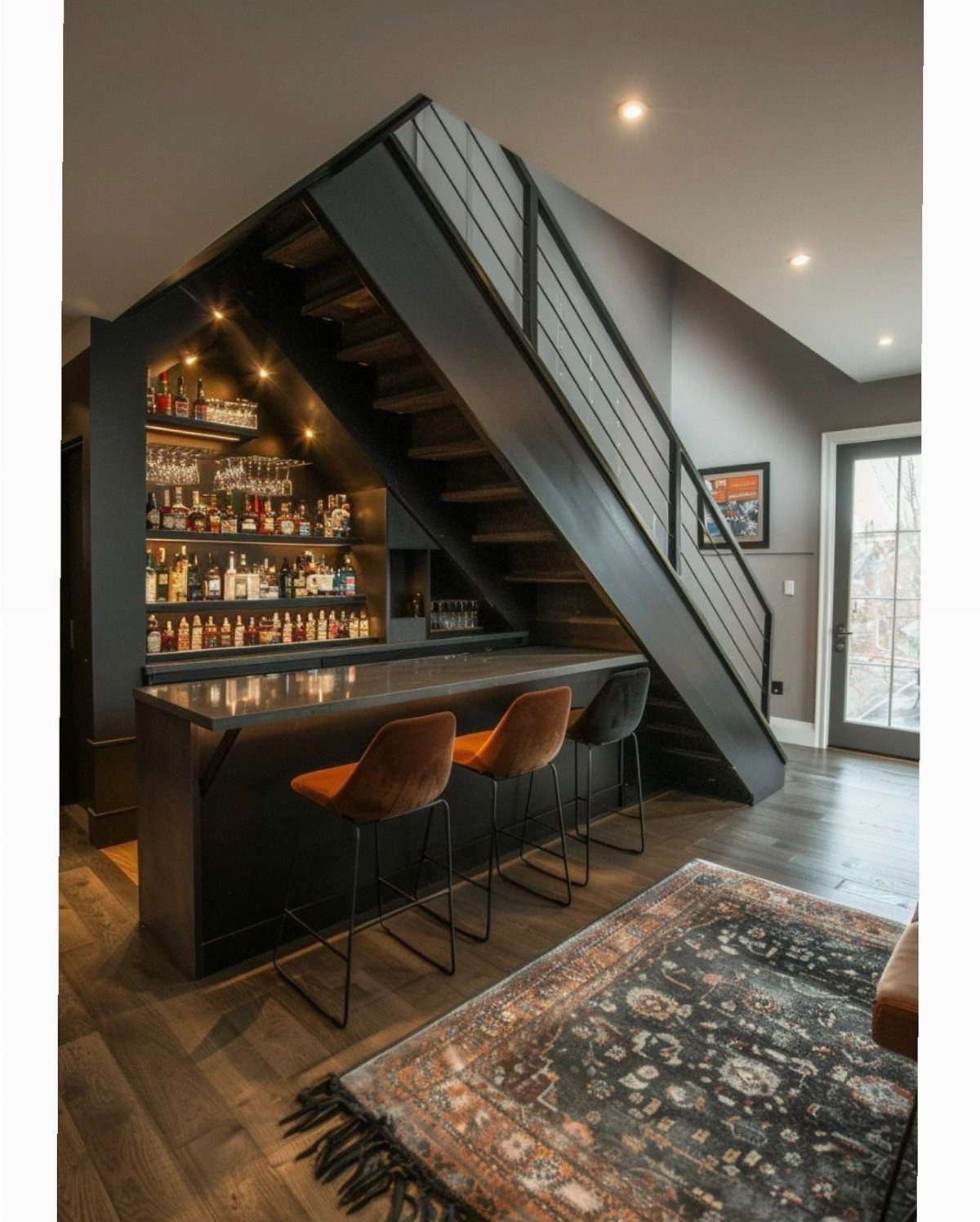
Stairs that run open beneath them leave a wedge of floor where a small bar fits cleanly, and nothing else loses space.
I’ve seen this work especially well in homes where the main living space is tight but the staircase sits near where people gather.
The depth usually narrows as you move back, so built-in shelving makes better use of that taper than freestanding furniture.
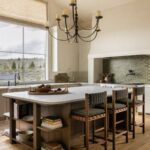
A countertop along the front edge gives you prep space, and stools pulled up to it turn the setup into a casual spot to sit with a drink.
If the stairs are enclosed, opening up that wall is structural work, but when they’re already open, the framing is straightforward.
2. Bar Cart
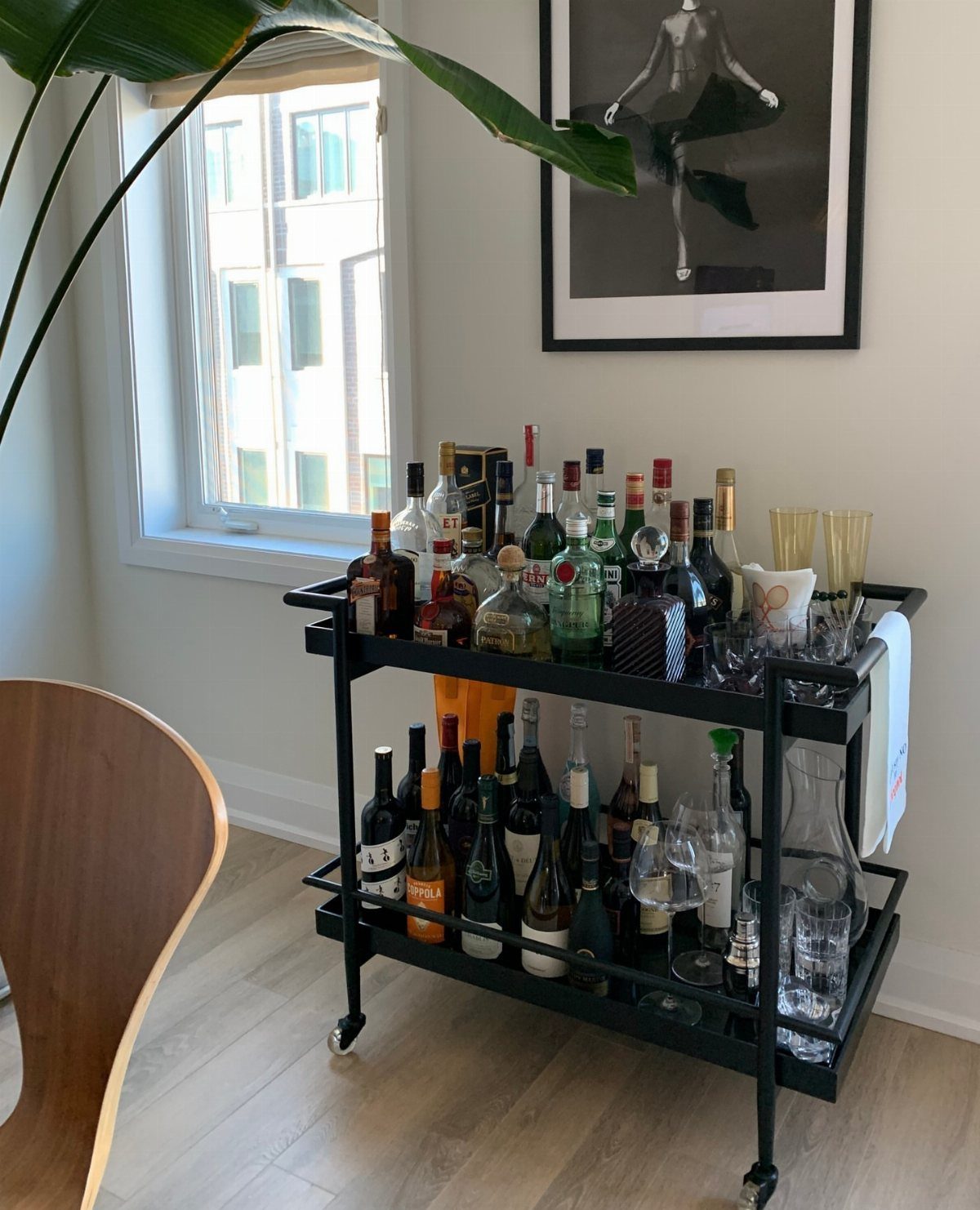
A cart on casters holds bottles, glassware, and a small ice bucket, and you can roll it wherever drinks are happening. I use this when space is limited or when a fixed bar would block circulation in a narrow room.
Metal frames with two or three tiers work best because they stay stable when loaded and wipe down easily.
Wood shelves add warmth but show water rings faster. Stock the top tier with what you pour most often, the middle with glassware, and the bottom with backup bottles or a small bin for bar tools.
When the party moves outside or into another room, the cart goes with it.
3. Coffee Station
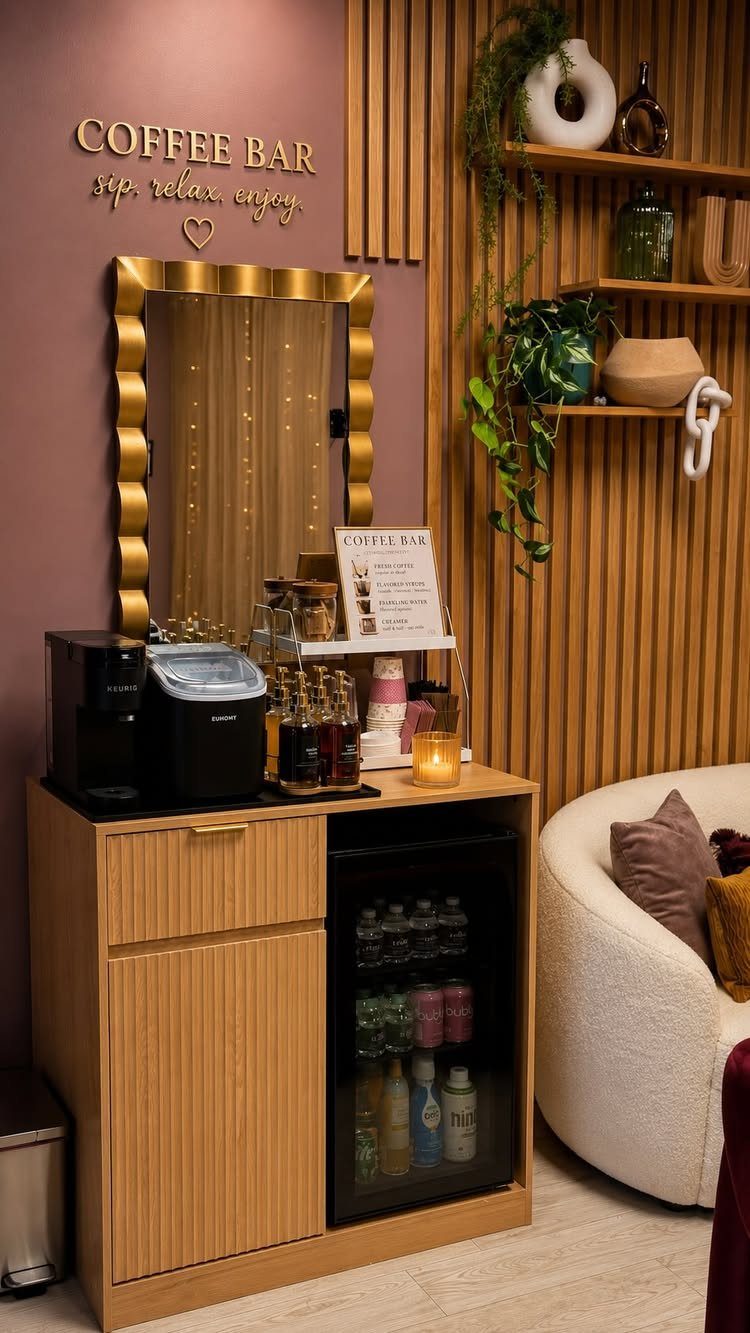
A bar setup that holds coffee gear instead of liquor keeps the machine, mugs, and syrups in one place and off the kitchen counter.
I’ve done this in homes where counter space is scarce and the client wanted a dedicated spot for morning drinks.
A base cabinet with a shelf above or beside it gives you room for a brewer, a grinder, and storage for beans and filters.
A small fridge underneath holds milk or creamer. If you’re keeping both coffee and cocktail supplies, split the shelves so each has its own zone.
The setup looks intentional when the finishes match the rest of the room, and it keeps the coffee routine from spreading across the kitchen.
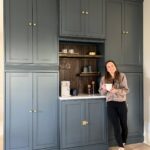
Instead, outfit your drinks station with something for all ages. In this space, BRNS Design included a coffee machine, soft drinks, and mixers to ensure every member of the household can participate in happy hour.
4. Showcase Bar
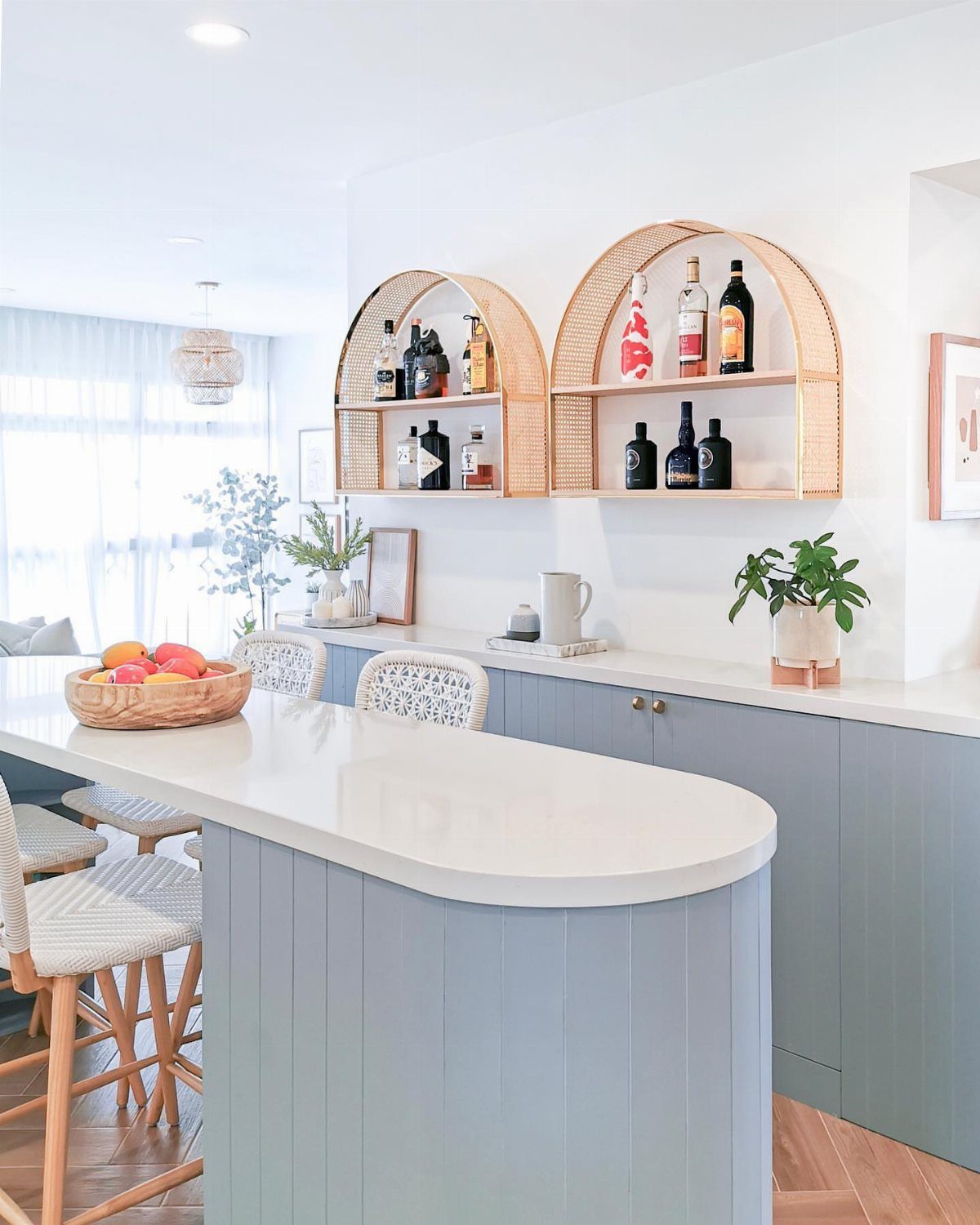
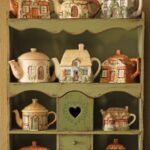
Open shelving turns bottles and glassware into the look instead of hiding them behind cabinet doors. I recommend this when the collection itself is part of the style and the room has enough space that the display doesn’t feel cluttered.
Arched or geometric shelves add shape, but simple floating shelves work just as well if they’re deep enough to hold bottles upright. Group glassware on one shelf and spirits on another so the arrangement stays clean.
Dust settles on open shelves, so this setup demands more upkeep than closed cabinets. If the bar sits in a high-traffic area or near the kitchen, closed lower cabinets with open shelves above balance display with practical storage.
5. Beach-Style Bar
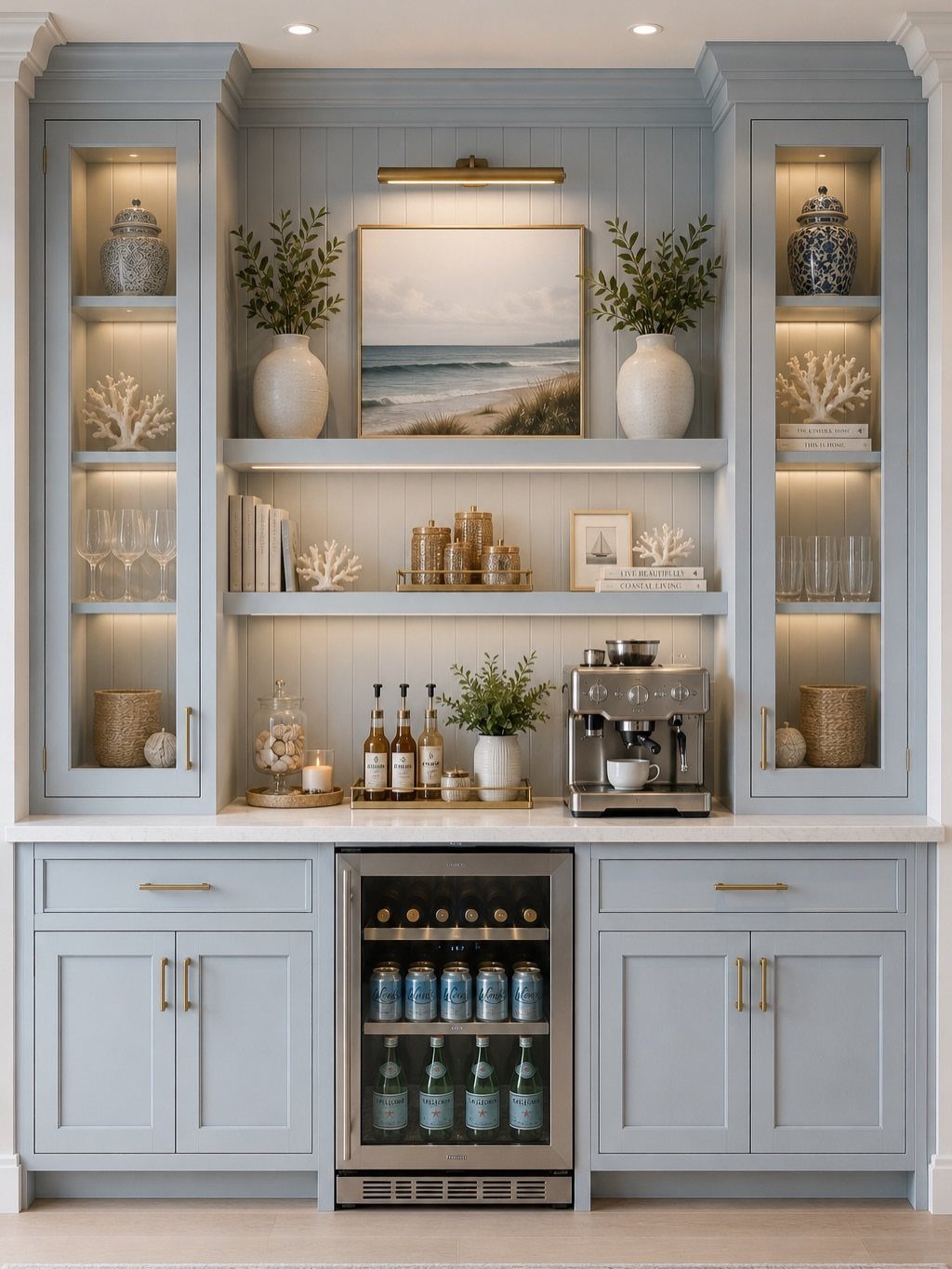
Light colors, natural textures, and a relaxed layout give a bar the feel of a beach house without needing an ocean nearby.
I like this in homes where the rest of the space leans casual and coastal details already show up in the decor.
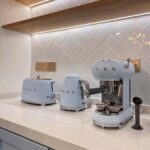
Pale blue or white cabinetry keeps the look airy, and open shelving or rattan accents bring in texture without weight.
A beverage fridge and a small countertop appliance, like an espresso machine, make the bar functional for more than just cocktails.
Coral or driftwood details tie the theme together, but go light on them so the space doesn’t tip into heavy decoration. This style needs good natural light to keep the pale finishes from reading flat.
6. Modern City Bar
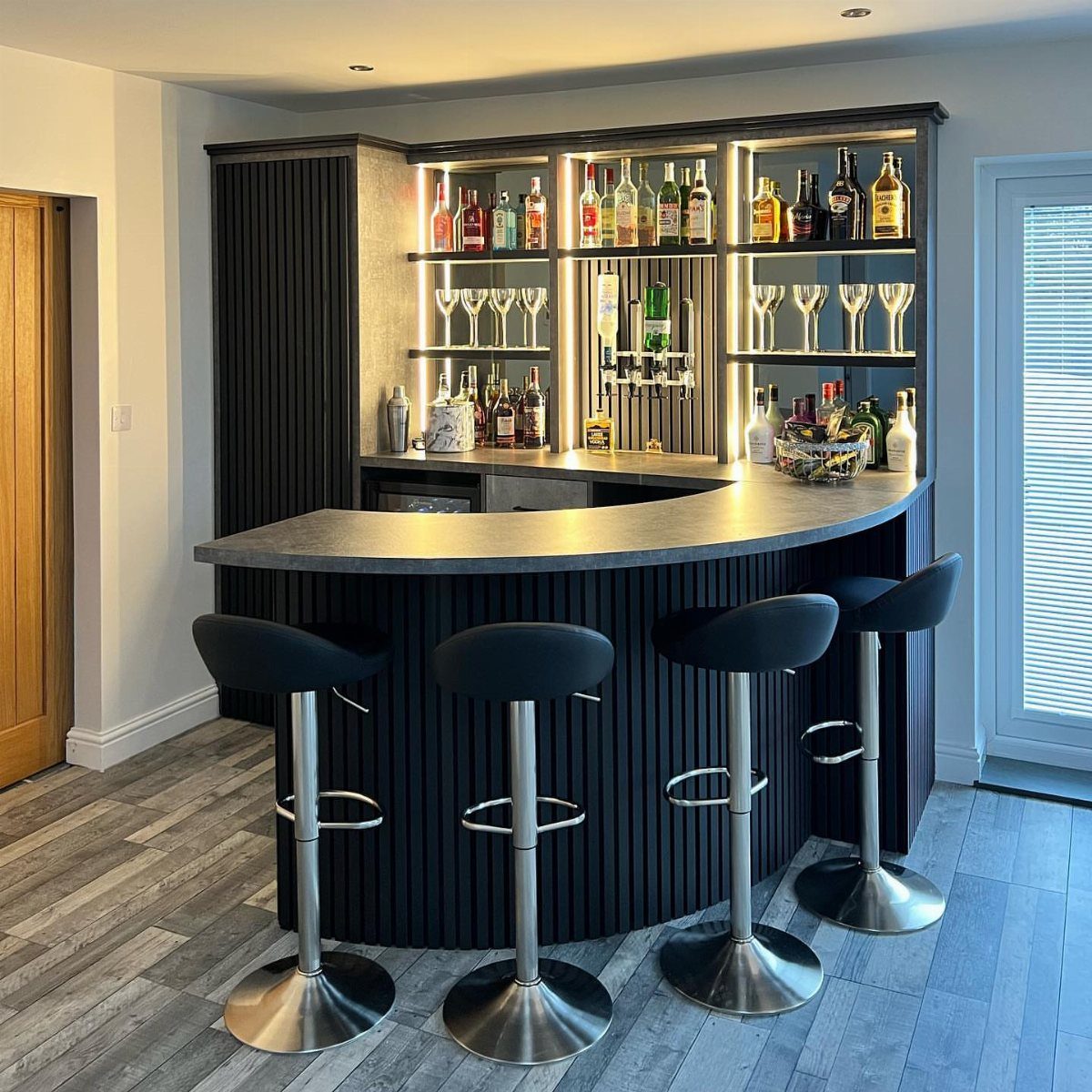
A sleek bar with clean lines and integrated lighting fits homes where the aesthetic leans modern and polished. This approach suits city apartments and new builds where the design avoids rustic or traditional details.
Curved fronts or ribbed panels add dimension without clutter, and backlit shelving highlights bottles while keeping the look streamlined. Dark wood or matte finishes ground the space, and low-profile stools tuck under the counter when not in use.
Built-in elements and custom lighting cost more and take longer to install. If you’re renting or want flexibility, a freestanding bar with similar finishes gives you most of what you see and no permanent work.
7. Wood Bar
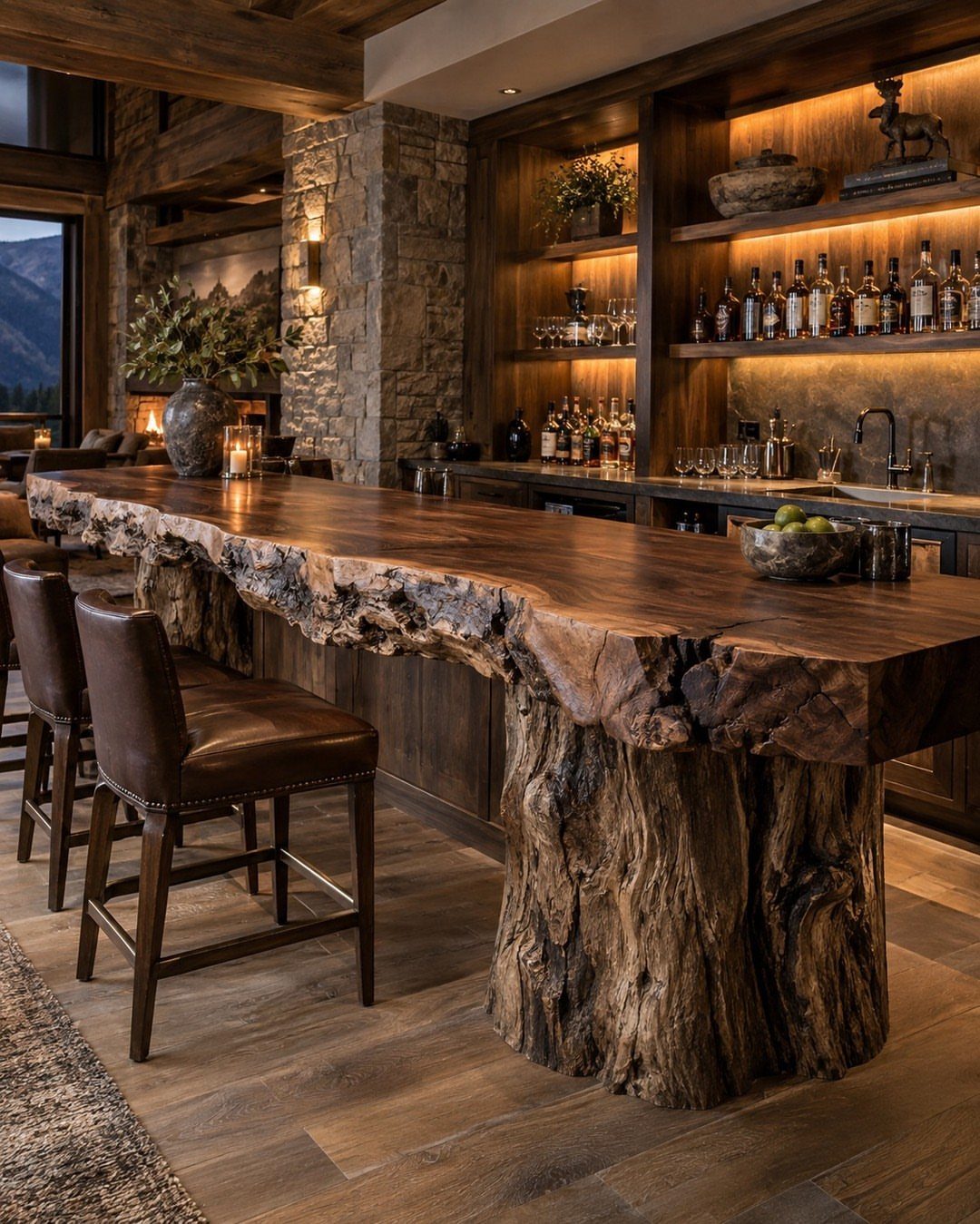
Live-edge wood keeps the bar feeling like part of the outdoors brought in, and when the grain is visible and the edge is rough, the material does most of the decorating.
I lean toward this when the rest of the house already uses natural finishes and you want the bar to fit without adding a different style.
Pair it with stools that have warm leather or wood seats so the seating matches the tone. If the base is a stump or thick slab, check that the floor can support the weight before you install it.
8. Small-Space Bar
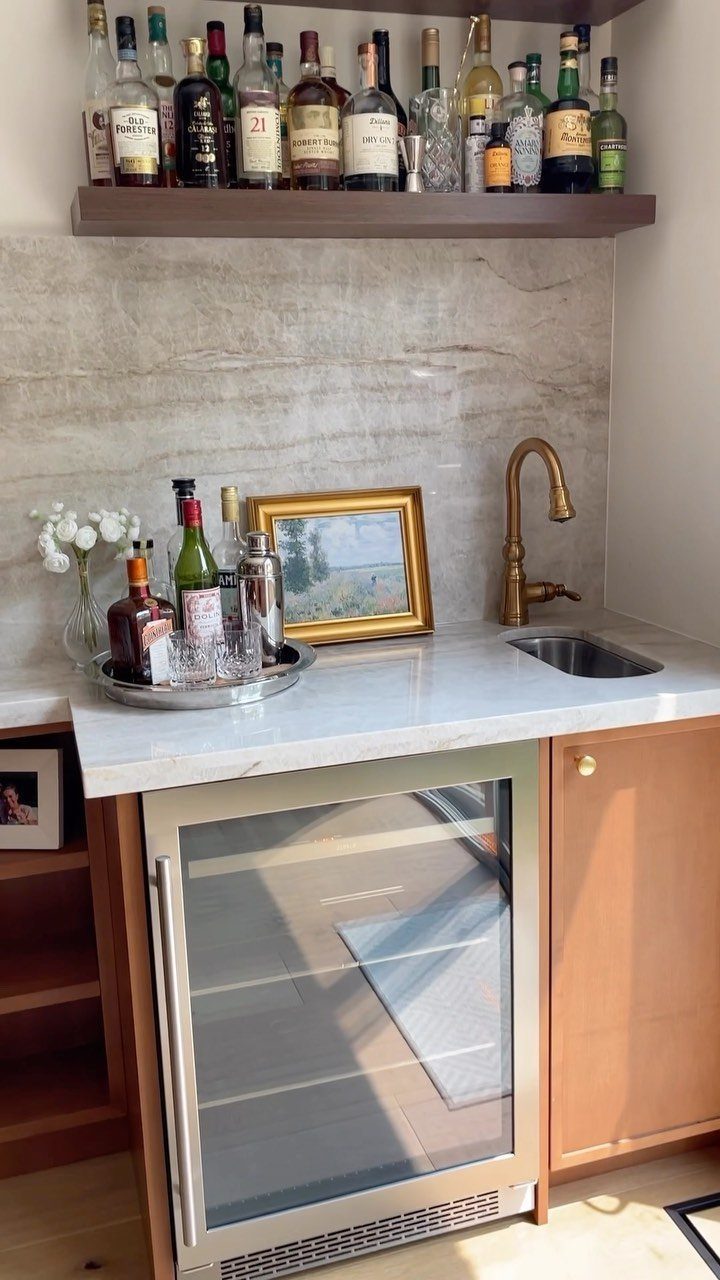
A narrow strip of counter with a small cooler underneath and a single floating shelf above keeps bottles and glassware organized without claiming much of a wall.
I use this in apartments or condos where a full bar would block walkways or take up space the room needs for other furniture.
A marble or stone countertop adds permanency, and a gold or brass faucet pulls the finish toward something polished.
Stock the shelf with what you pour regularly and tuck backup bottles in a nearby cabinet. If you mount the shelf yourself, use wall anchors rated for the bottle weight plus half again more.
9. Industrial Metal Bar
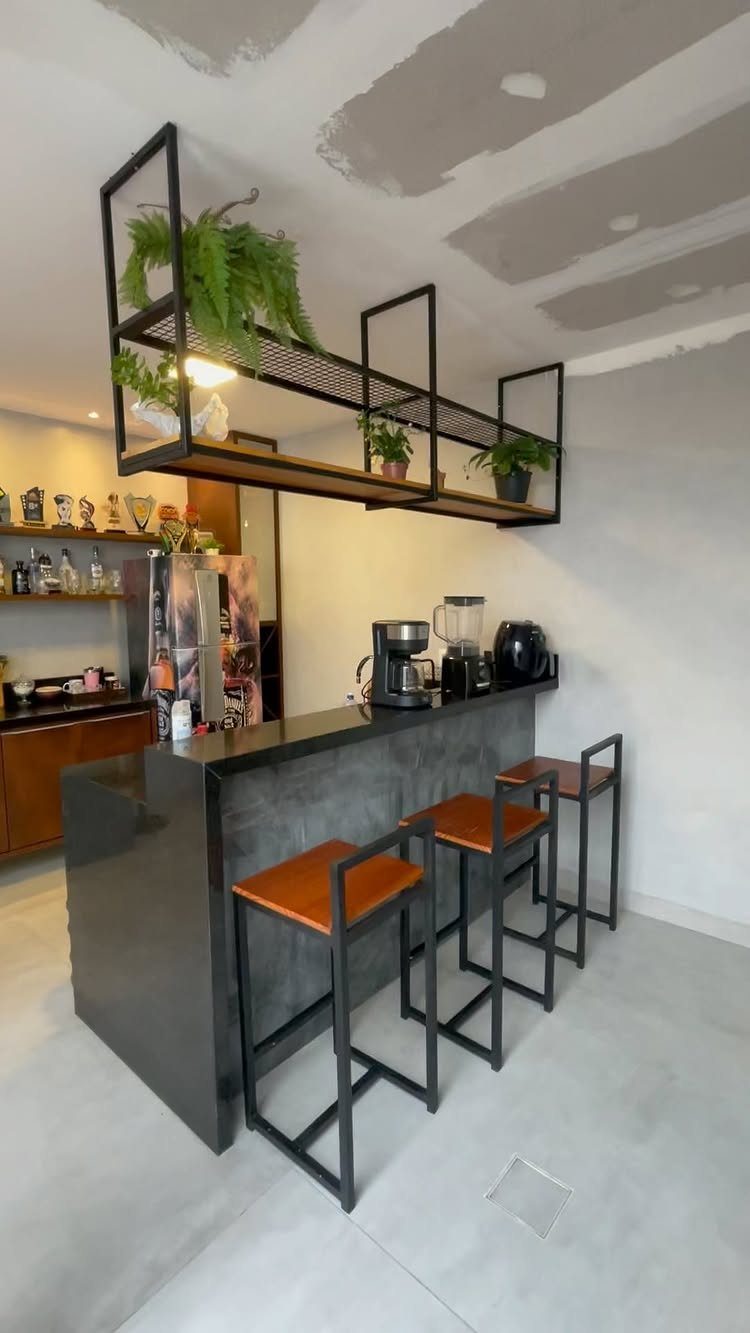
Metal shelving and exposed hardware give this bar the look of a warehouse or loft, and the finish reads industrial even in a house that isn’t.
I recommend it when the space already has concrete, brick, or open ceilings and you want the bar to feel part of that aesthetic.
Black or gunmetal frames stay true to the style, and pairing them with reclaimed wood keeps the metal from feeling too cold.
If you’re building this yourself, welded steel frames cost more but hold weight better than bolted tube racks. Plants soften the hard edges without changing the tone.
10. Simple Drinks Station
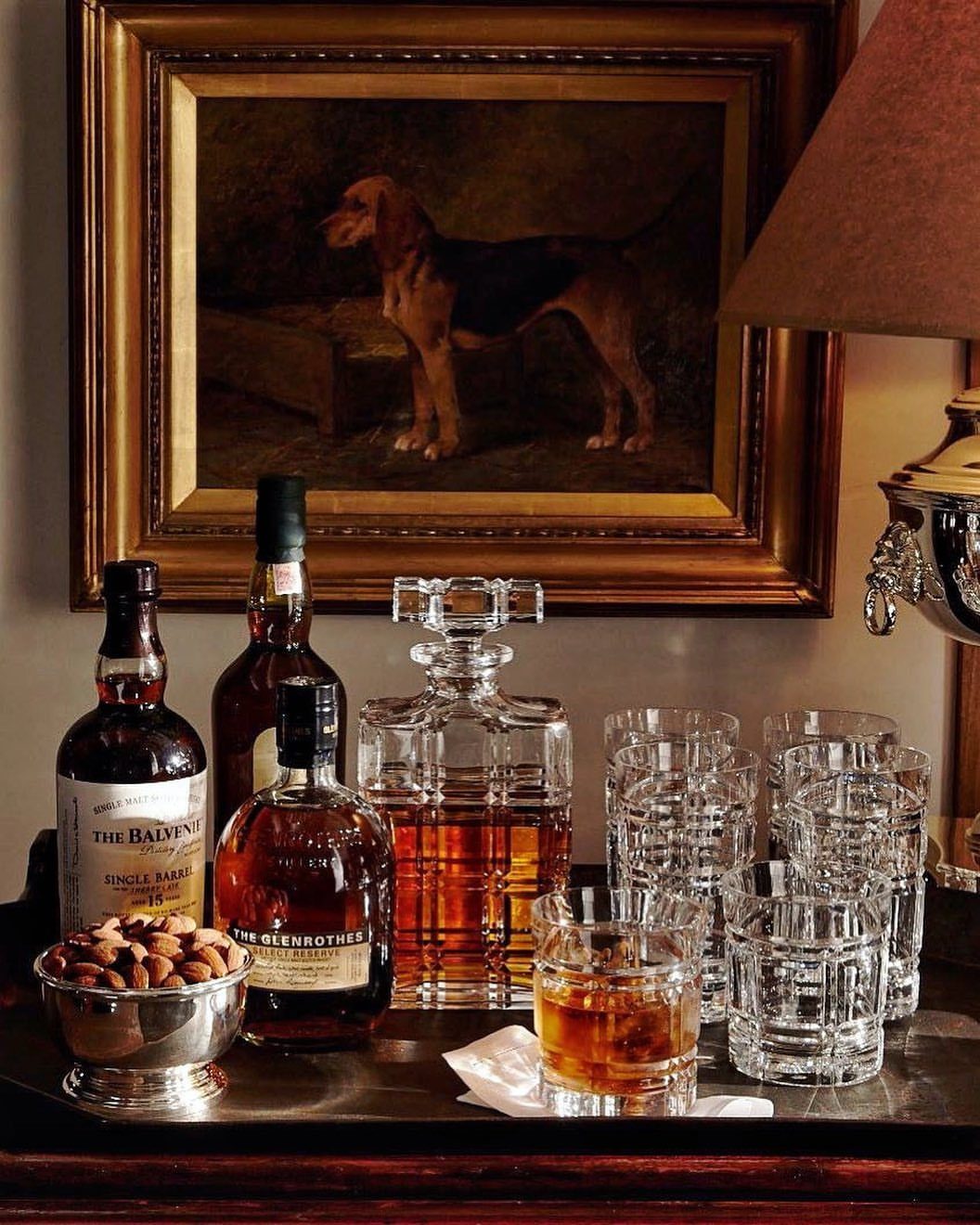
A tray with three or four bottles, a decanter, and a few glasses sits on a console table, sideboard, or even a dresser, and the whole setup moves if the room needs to flex.
I reach for this when a client wants drinks available but doesn’t want to sacrifice floor space or wall depth for a built-in.
Crystal glassware and quality bottles make the tray look intentional instead of temporary.
If the surface sits in sunlight, move the bottles to avoid fading the labels. Swap the tray seasonally or add a small vase to keep it from reading static.
11. English Snug
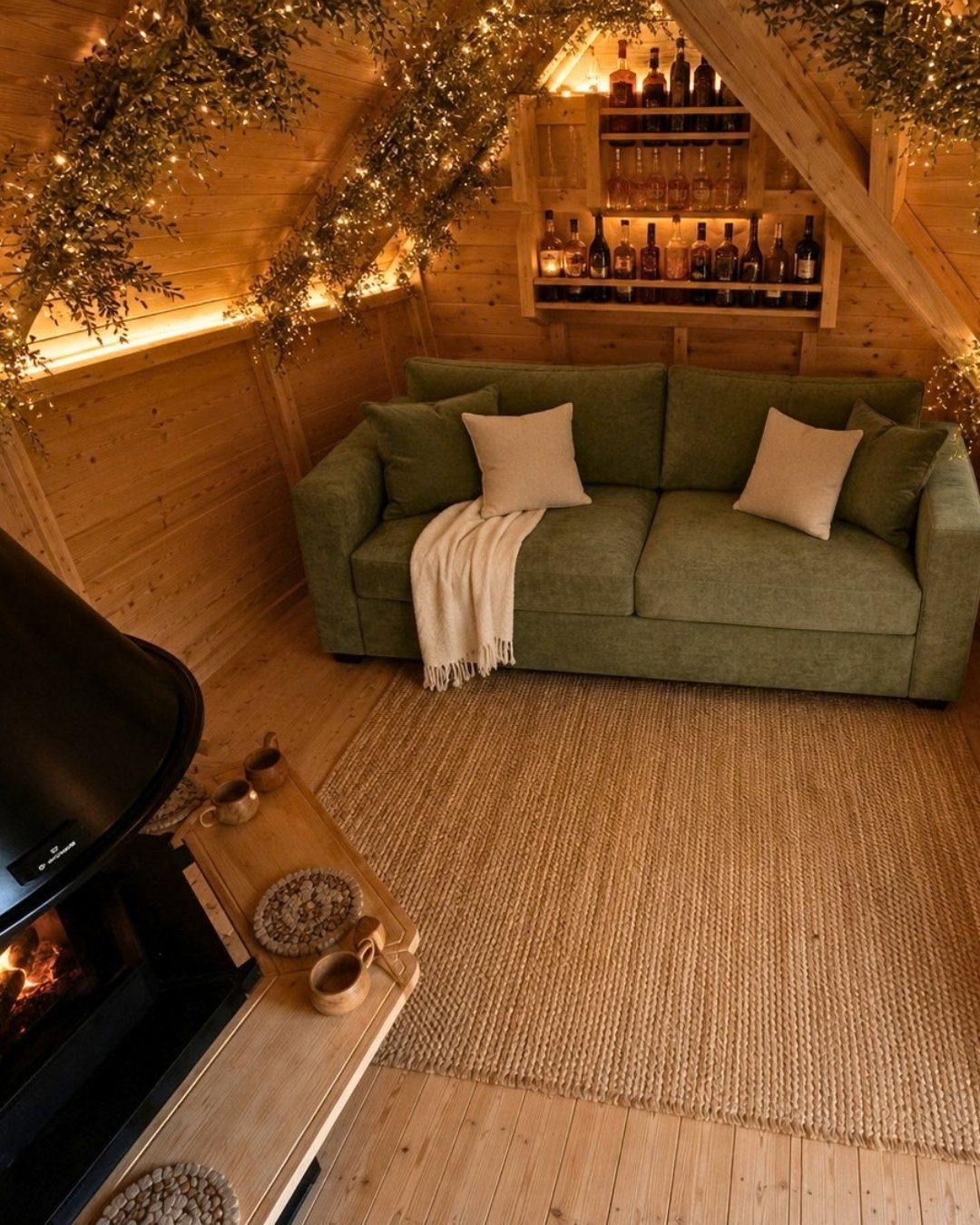
A small room with seating and a built-in bar feels like a private retreat, especially if the space is just large enough for a few people to sit comfortably.
I’ve seen this done in finished attics, basement corners, and converted closets where the tight quarters add to the coziness instead of fighting it.
Wood paneling and low lighting give it that enclosed feeling that actually reads as cozy.
If the ceiling slopes, keep shelving low so bottles stay within reach. A fireplace or wood stove turns the snug into a winter spot, but ventilation matters more in a small, enclosed room.
12. Luxe Lounge Bar
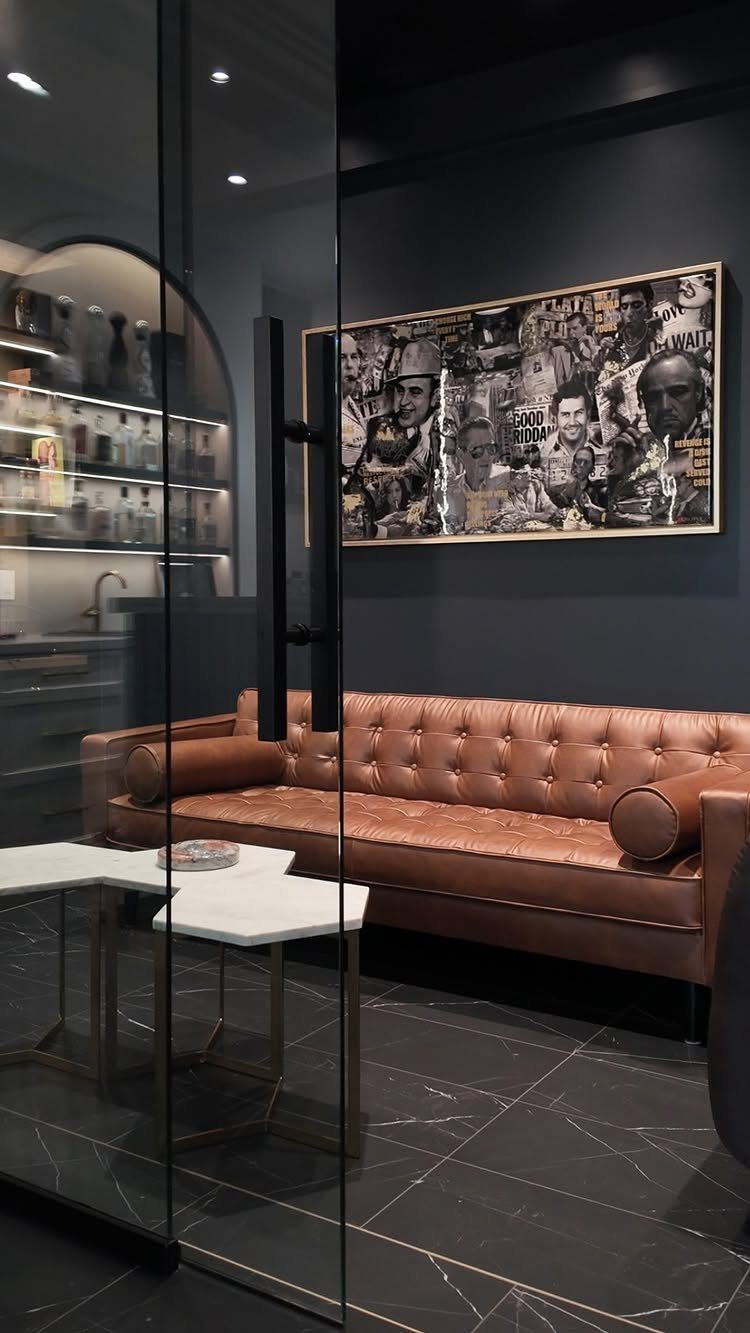
Lounge seating in front of a bar turns the space into somewhere you sit and stay instead of just mixing drinks.
This setup suits larger homes where a room can be dedicated to entertaining and the bar doesn’t need to serve double duty as a breakfast counter or coffee station.
Tufted leather and low tables anchor the seating area, and placing the bar behind or beside the lounge keeps it accessible without dominating the room.
If the bar sits behind glass or a partition, it reads more formal. Dark walls and dim lighting push the mood toward evening, so add task lighting over the bar itself if you’re preparing drinks there.
13. Reflective Backsplash
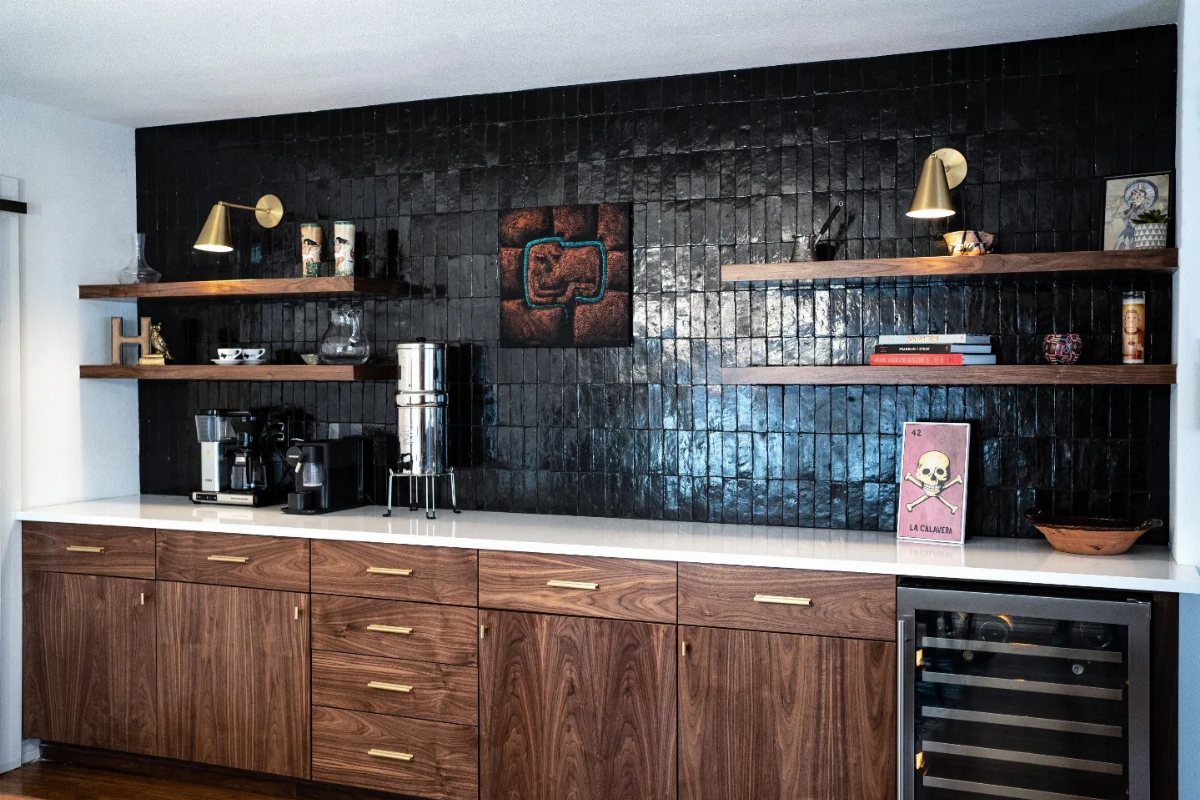
A glossy or mirrored surface behind the bar bounces light and makes the wall feel deeper than it is, which helps in a small room where the bar sits against a flat surface.
Black glass tile or high-gloss ceramic adds texture without pattern, and the reflection picks up bottles and glassware without turning the wall into a literal mirror.
Wipe it down often because water spots and fingerprints show immediately on a reflective finish. If you’re tiling it yourself, use spacers and level each row as you go so the reflection stays clean.
Bar Equipment and Refrigeration
A mini fridge fits under the counter or slides into a cabinet bay without claiming bar surface, and most hold enough for a party’s worth of bottles plus mixer cans.
If you stock wine regularly, a wine cooler keeps reds and whites at serving temperature, and sizes range from compact units that hold 6 bottles to fridge-height models that store a full collection.
An ice maker saves the freezer run and keeps cubes coming without refilling trays.
Pair it with a small sink if plumbing allows, because rinsing glassware and dumping melted ice at the bar instead of walking to the kitchen keeps the flow smooth when you’re serving more than a few drinks.
Counter material takes spills and glass impacts every time the bar sees use.
Marble and granite handle moisture and stay cool, which matters when you’re muddling or shaking drinks directly on the surface. A wood slab brings warmth but needs sealing against liquid, and even sealed wood shows wear faster than stone.
Lighting and Atmosphere
Exposed bulbs or small quirky lamps add character, and the fixtures themselves become part of the look when the bar sits in view.
LED strips tucked beneath the counter edge or along the back of shelving add a layer of ambient glow that picks up glassware and bottle labels without harsh overhead light.
Backlighting behind bottles highlights the display, and frame lighting around mirrors or artwork keeps the bar area defined when the rest of the room dims.
Warm tones in orange or red make the space feel inviting and relaxed, while blues and purples read modern and cool.
Neon adds a deliberate bar atmosphere, but keep it on a dimmer or separate switch so the brightness doesn’t lock the room into one mood.
Placement and Planning
Place the bar near where people gather so serving drinks doesn’t pull you out of the room.
A spot between the living room and kitchen keeps the bar accessible without turning it into the center of circulation, and a basement location works when entertaining happens downstairs or when upper floors don’t have the space.
Measure the wall before you order cabinets or shelving, and account for door swings, outlets, and light switches so nothing blocks access once the bar is installed.
Traffic flow matters more than symmetry. If the bar sits in a hallway or narrow room, keep the depth shallow enough that someone can walk behind a seated guest without turning sideways.
Plan for plumbing if you want a sink, and check that electrical capacity supports a fridge, lighting, and any small appliances before you add them all to one circuit.
Frequently Asked Questions
What is a home mini bar?
A home mini bar is a dedicated spot for storing and serving drinks, built into a basement, living area, kitchen, or other room where people gather.
It can range from a simple tray on a console table to a full setup with shelving, a countertop, seating, and a mini fridge.
A home mini bar is a compact setup that holds your bottles, glassware, and bar tools in one place, usually in a corner, closet conversion, or narrow wall run.
Is it possible to create a bar in a studio apartment without making it feel cramped?
Yes, if you keep the footprint narrow and use vertical storage. A bar cart on casters or a slim console with a single floating shelf holds what you need without blocking walkways.
Any suggestions for illuminating small bars?
Layer the lighting so the bar stays functional without harsh overhead glare.
Are there safety issues to consider when storing alcohol at home?
Secure bottles on shelves so they cannot tip, and store glassware where it will not fall if something shifts.
If children are in the house, keep alcohol in a lockable cabinet or on shelves high enough that they cannot reach it.
A reflective backsplash or open shelving means bottles are visible, which helps you keep track of what is stored there.
What finishes are best suited for compact spaces?
Light colors and reflective surfaces keep a small bar from feeling closed in. Dark finishes ground the space but need enough lighting to avoid reading flat, so pair them with backlighting or task lighting over the counter.
Where can I find design standards for bar counters and seating heights?
Bar counters are typically built at 42 inches high, and the stools that pair with them have seats around 30 inches off the floor.
If you are building a bar yourself, measure the distance from the floor to the underside of the counter and subtract 12 inches to find the stool seat height.
The NKBA publishes guidelines for kitchen and bar dimensions if you want authoritative figures.
Can I style a DIY bar to enhance home attractiveness if I decide to sell?
Yes, if you keep it clean and avoid personal clutter. A bar that holds only what it needs and fits the style of the rest of the room reads as a feature rather than a hobby project.
Multifunctional setups, like a coffee station that doubles as a cocktail bar, show flexibility and appeal to buyers who might use the space differently.