

A living room TV wall can run anywhere from a $12 LED strip to a $2,000 art-display screen, and the deciding factor is usually whether you own the wall or just the lease. The $75 DIY sliding panel that hides the television entirely is worthless if you cannot mount the track to studs, just as the recessed niche that flattens the screen into the plaster needs six inches of depth your landlord almost certainly will not let you chase. The same wall that looks built-in with picture-rail molding and a painted frame reads as an afterthought when the cables pool on the floor because you could not chase them through the drywall. Knowing your constraints before you pick a style keeps the project from becoming garage shelving, which is where my first barn-door cover ended up after the track sagged out of level in under a month.
1. Surround It with Art
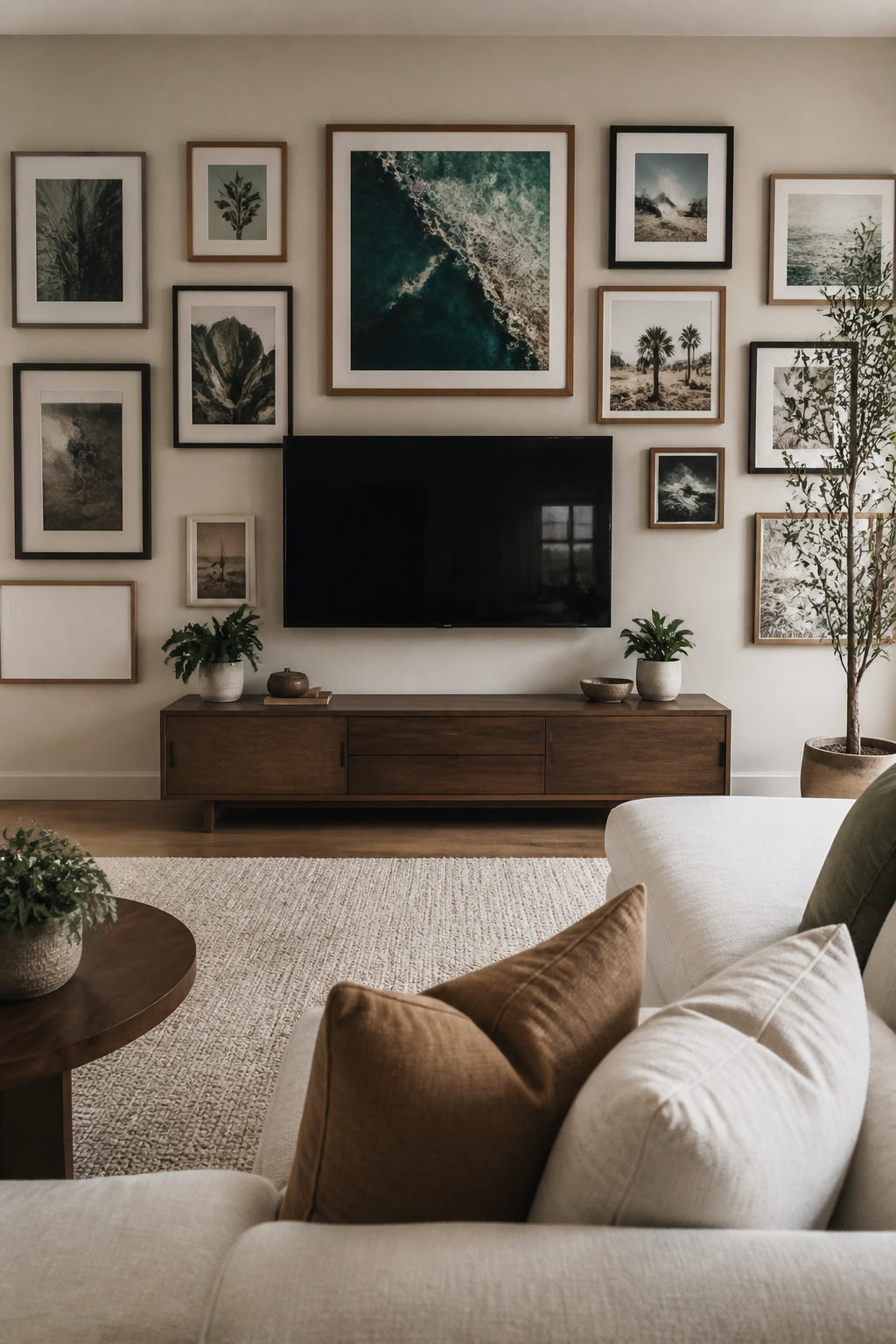
A television left alone on a wall pulls every eye toward the black rectangle, but the screen should take up no more than one-sixth of the wall’s width and height so it reads as one object among several. In my own living room, that rule meant stepping down from the 65-inch set I had planned to a screen that fit the 10-foot wall without swallowing it.
Building the arrangement around the TV takes the pressure off any single piece. I hung one larger print above the screen, then placed smaller framed photographs to each side at uneven intervals. The odd number of pieces, three on one side and two on the other, keeps the eye moving rather than locking onto the television.
The frames do not need to match. Mixing wood tones and metal finishes works especially well in spaces that already layer different periods or textures. What matters is that the television sits inside the grid rather than floating apart from it. When the set is off, the wall still holds together as a composition; when it is on, the surrounding art softens the dominance of the screen without disappearing entirely.
2. Lean In with Joinery
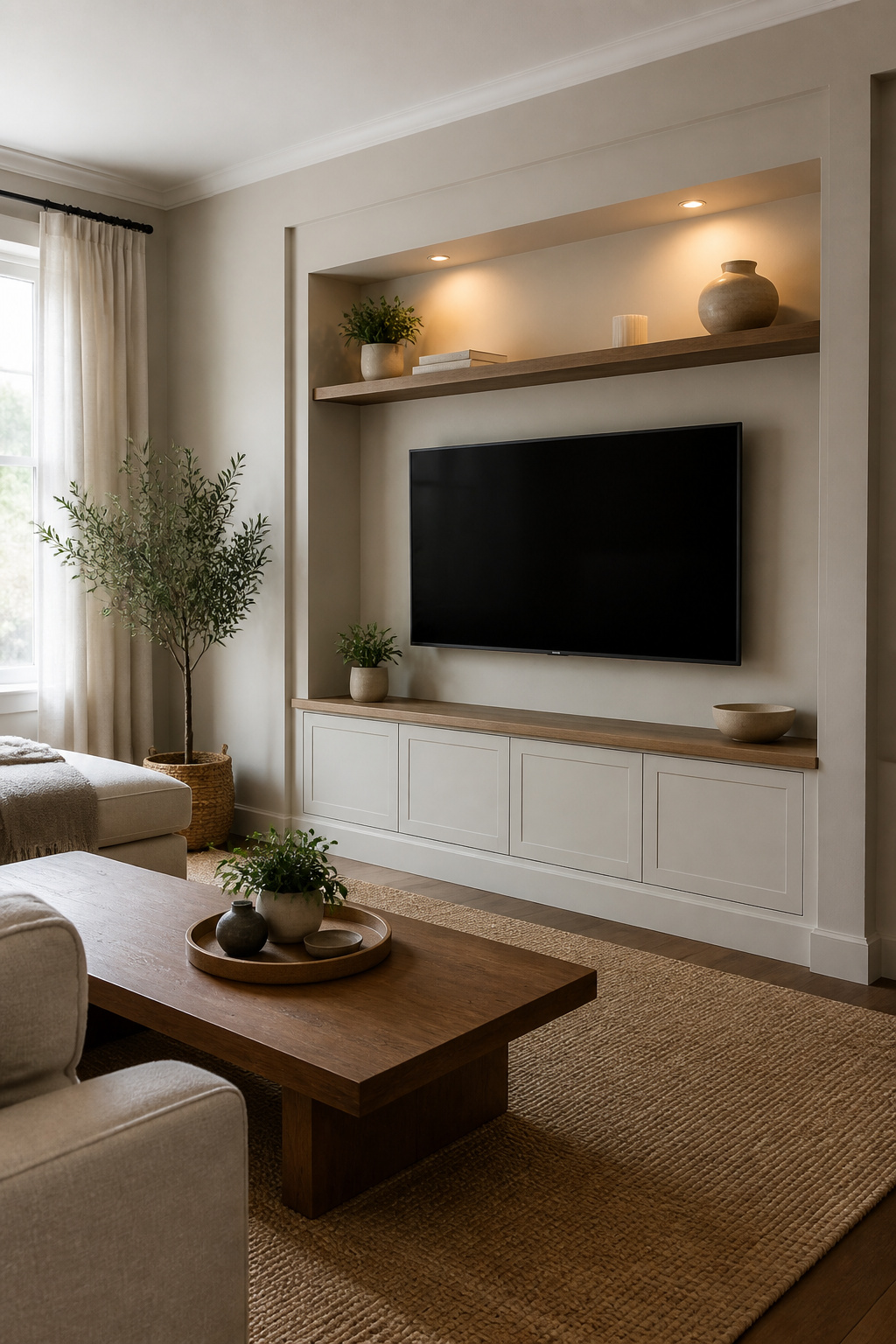
Picture rail and a couple of slim ledges turned my flat-screen from a black rectangle into something that looks intentional. I spent about $45 on pine molding and another $12 on finish nails and wood filler, then cut everything to frame the TV like a shallow doorway. The actual nailing took maybe two hours, though I lost another hour fixing the one piece I measured crooked. The ledge sits two inches below the screen and catches the eye before the cables do, which matters more than the frame itself in a rental where I can’t chase wires through the wall. A coat of the wall paint on the trim makes it read as architecture, not add-on. I skipped crown molding at the top; it would have looked like costume jewelry on an eight-foot ceiling.
3. A DIY Solution to Hide the TV
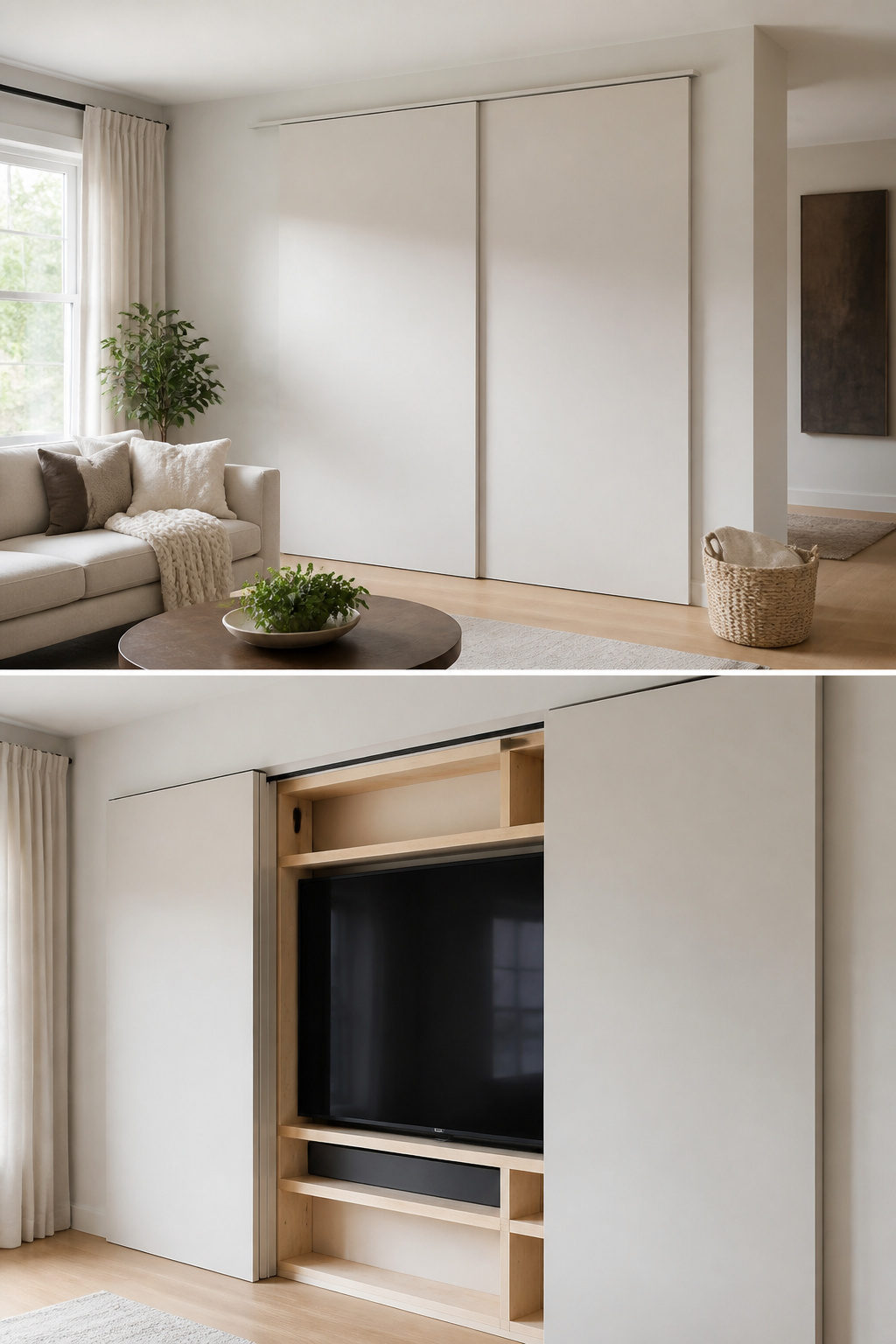
Sliding panels that close over the screen cost less than most people expect. A basic DIY concealment starts around $75 if you build the track from hardware-store lumber and skip the decorative molding. Hinged artwork mounted on a French-cleat system takes up almost no wall depth, which matters when the sofa sits close. Shutter-style boards, the kind that fold back on themselves, work best for TVs under 55 inches; anything larger and the folded stack blocks the adjacent wall.
My first attempt was a barn-door style cover on a single overhead track. The door looked great in the garage. Hung, though, the weight pulled the track out of level within a month, and the bottom edge scraped the baseboard every time I opened it. I had used a light hollow-core panel but still underestimated how much a 4-foot span sags. A center stop or a floor guide would have helped, but I never installed one. That project came down and became garage shelving. Now I stick to hardware rated for double the actual weight, or I split the cover into two smaller panels that each carry less load.
4. Disguise It with Paint
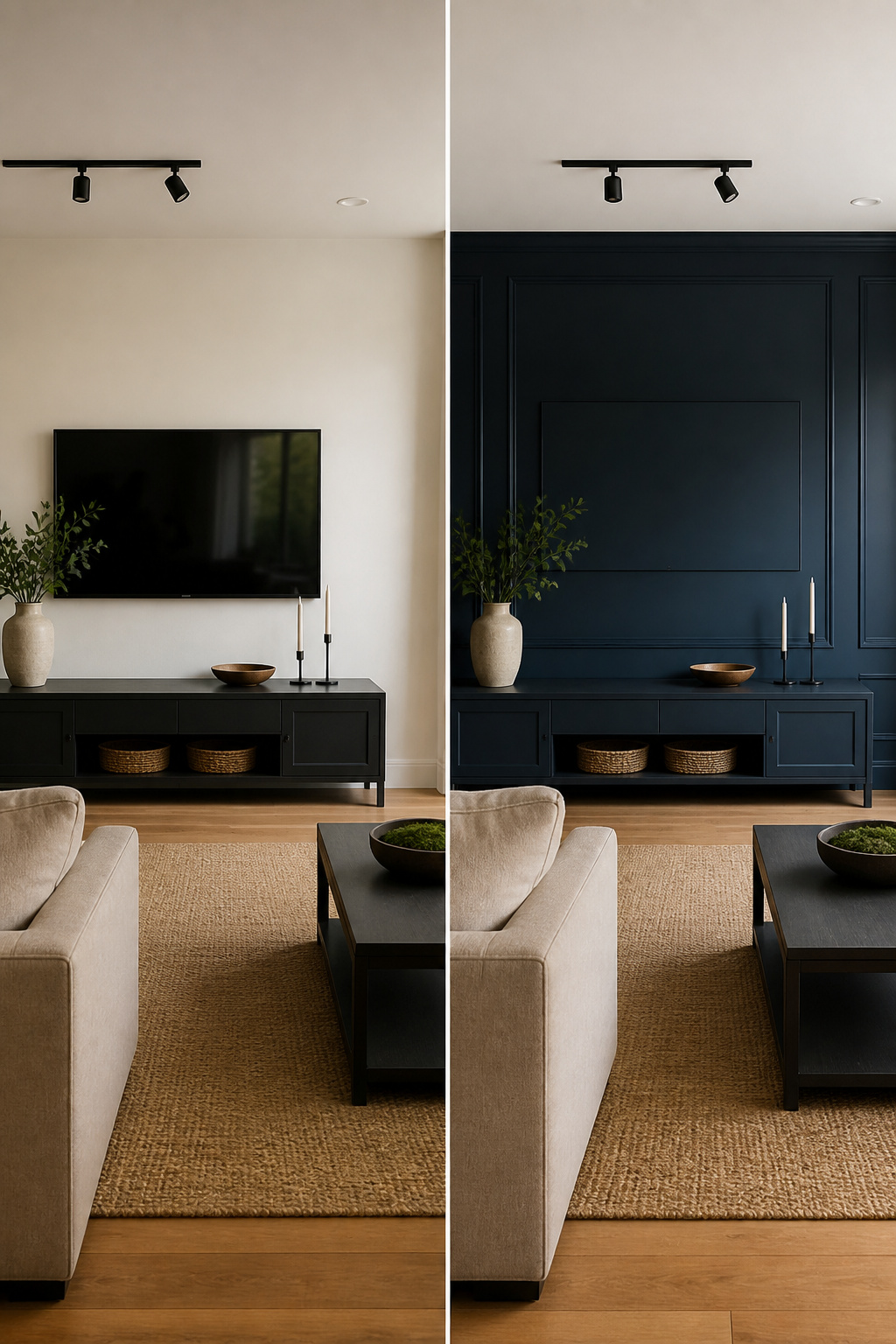
Dark paint behind the TV makes the bezel disappear in a way lighter colors never manage. The screen reads as a void rather than an object hanging on the wall, especially at night when reflections die against the surface.
I learned the hard way that gray is a trap. The first shade I tried, a mid-tone I hoped would read as soft charcoal, pulled purple once the sun went down. Something in the undertone shifted with the living room lamps, and instead of the TV fading into the wall, the whole setup looked bruised. I repainted the next weekend in a true deep navy, and the difference was immediate. The frame vanished, the wall gained depth, and the room felt cozier without shrinking.
Painting the entire wall one color works too, though the effect is quieter. A single tone lets the screen sit as one element in a balanced whole rather than the thing that broke up the wall. For renters, this is the easier move: one saturated wall, no alcove required, full deposit return when you prime over it.
Frog tape is non-negotiable if you stop the color at a clean line rather than wrapping the whole surface. The edge is what people see first.
5. Embrace Awkward Corners
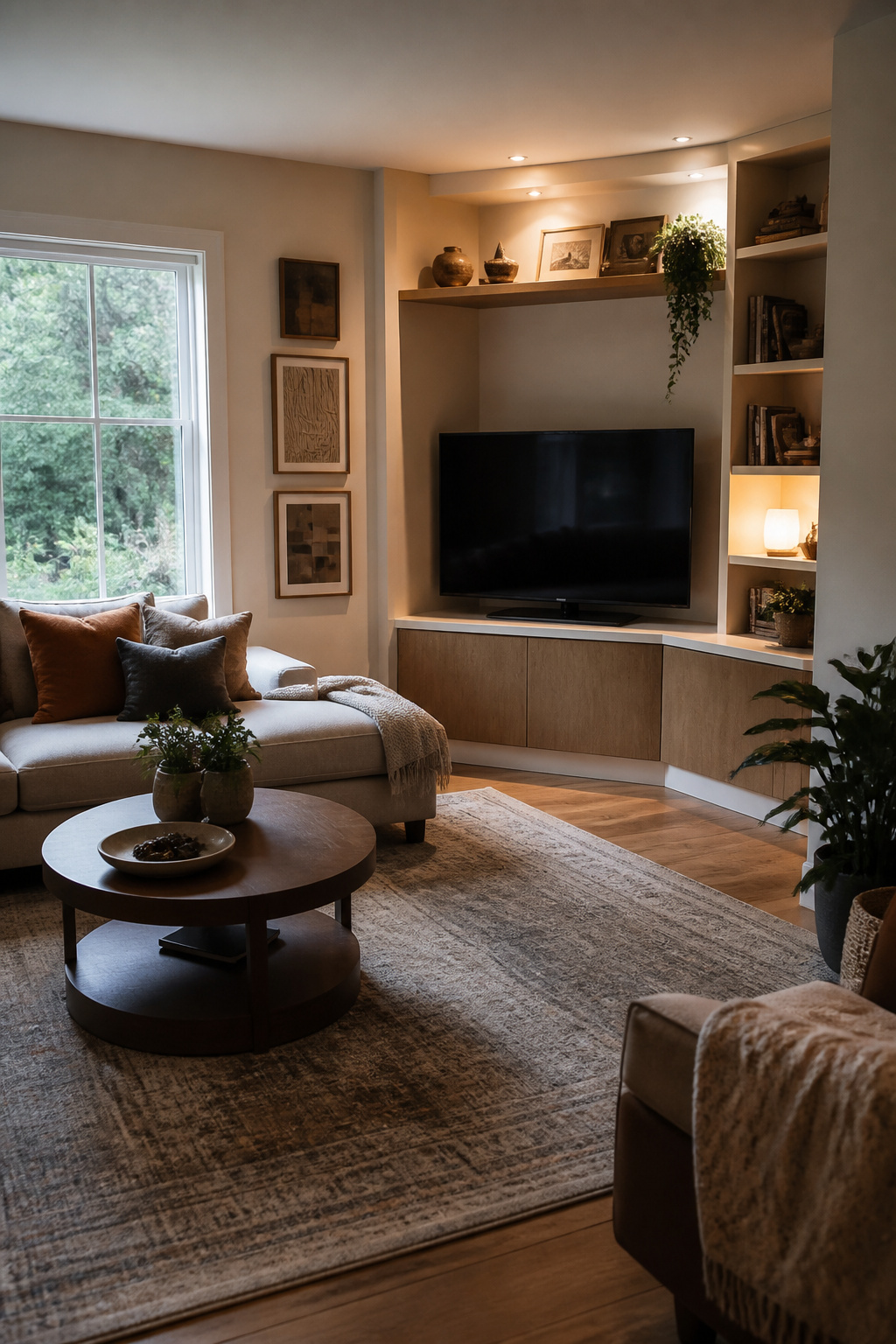
Some living rooms leave you no straight wall to work with, and the corner starts looking like the only place the TV can go. The mistake is planting it at an angle with a standard mount so the screen fights the room the whole time you are watching. A swivel mount or an angled console turns that same corner into a deliberate choice instead of a compromise.
I have watched friends try to hide a corner setup by pushing the sofa straight at it anyway, and the sight lines never quite work. The swivel mount lets the screen pull out and face the seating directly, then push back flat when you are done. If you rent and cannot drill into studs, an angled console does almost the same job: the legs or base sit against both walls, and the top points the screen toward the middle of the room.
The bigger risk is the corner looking orphaned. Built-in shelving wrapping the angle fixes that, turning the TV into one object in a larger composition of books and whatever else you already own. Open shelves above the screen keep the wall busy enough that the television stops reading as the main event. Plants or small pots on those shelves add the kind of texture that makes the arrangement feel collected over time, not installed in one Saturday. The corner stops being where the TV ended up and starts being a spot you actually planned.
6. Back with Panelling
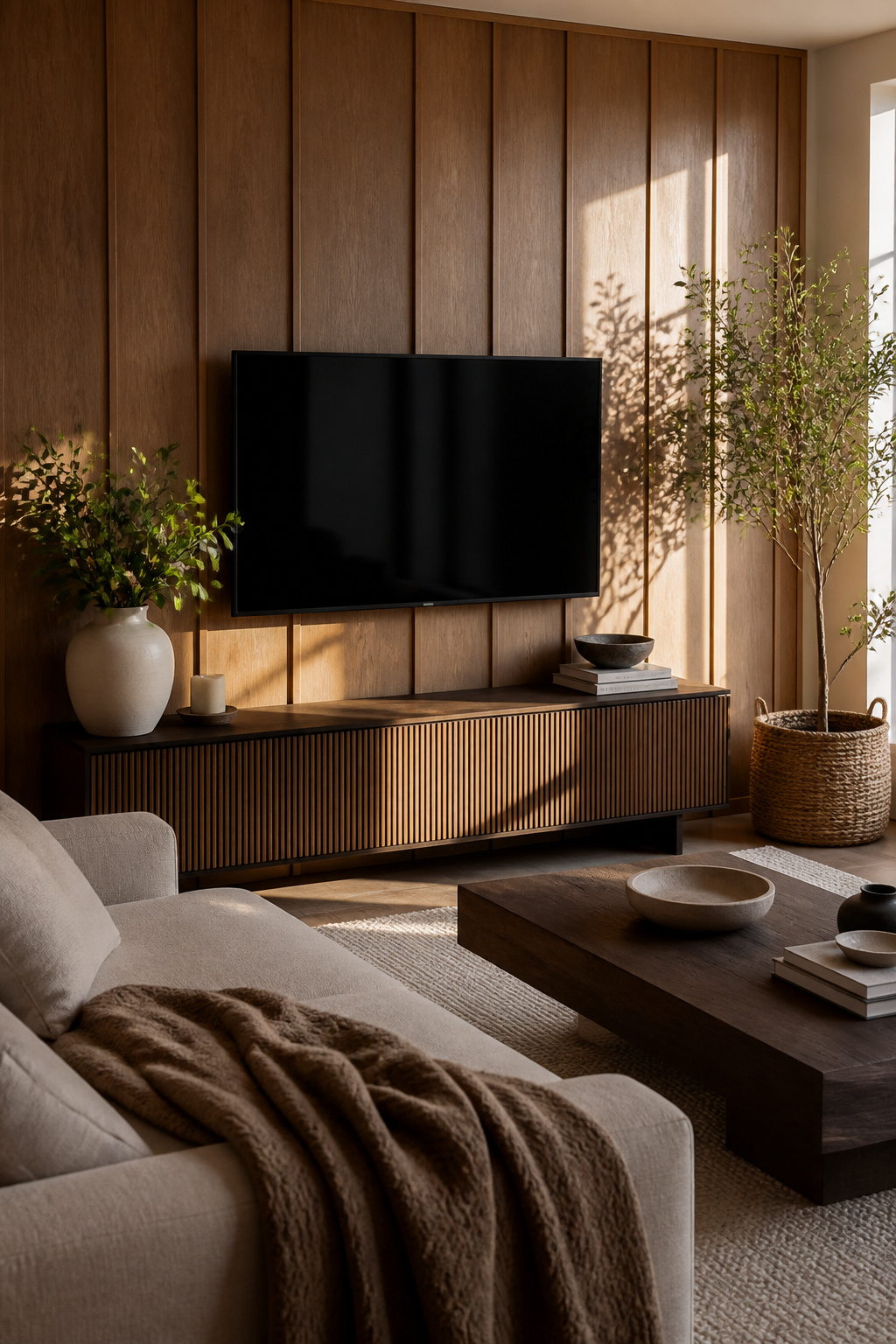
Board-and-batten, shiplap, or flat panels behind the TV add texture through shadow lines that break up an otherwise blank wall. Vertical slats in oak, walnut, or pine read Scandinavian when evenly spaced; vary the spacing and the same material turns modern. A clear coat protects the wood without glossing over the grain.
Materials for a 10-by-8-foot run typically run $150 to $400 depending on whether you use MDF or solid stock. The mistake that turns this weekend project into a two-weekend fix is installing panels flush to the wall without planning cable paths first. In-wall power kits and cable raceways need space behind the boards, and retrofitting that channel after the adhesive sets means pulling everything down. Plan outlets and low-voltage routes before the first board goes up, and keep power cords separate from HDMI and speaker wire.
7. Tuck It into an Alcove
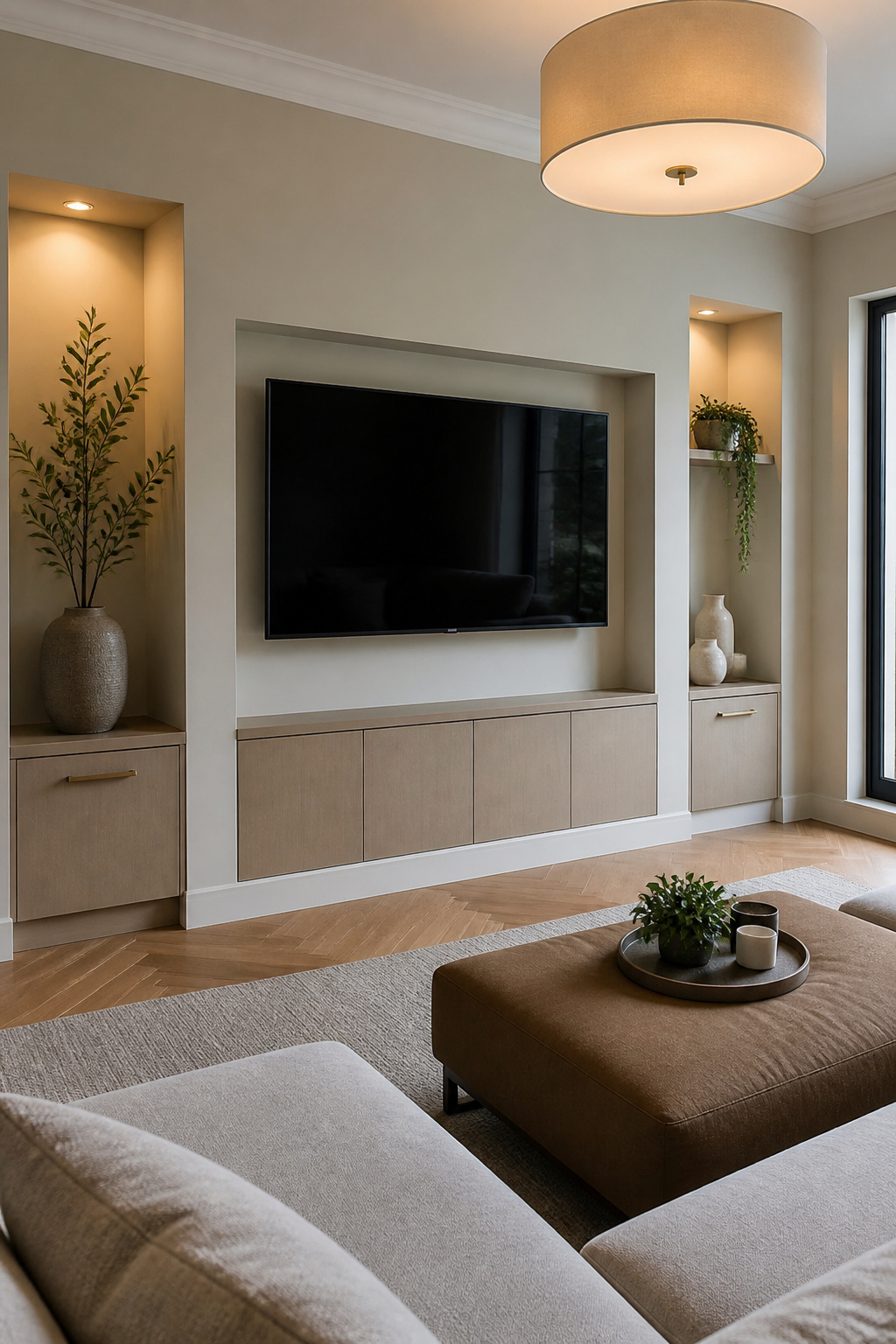
An alcove recesses the TV into the wall plane itself, which flattens the silhouette and gives the room back a few inches of floor space. In my last rental the chimney breast left two shallow niches on either side; the one on the left was exactly the right depth for a 55-inch screen, and painting the alcove interior the same color as the wall made the television drop back visually instead of pushing forward as a black rectangle.
The catch is heat. Enclosed alcoves need airflow around the electronics, and sealing a TV into a tight cabinet shortens its life. I learned this after my cable box started shutting down during summer evenings; the alcove had no natural convection path, and the equipment was cooking itself. I added a small 40mm vent fan mounted to the rear panel, drawing air from the room and exhausting it upward through a slot I cut in the shelf above. The fan runs on 5V USB power from the television itself, so it starts and stops with the screen.
Side cabinets can fake the alcove look where no recess exists. Build or buy two shallow storage units and leave a gap between them sized to your screen; paint all three surfaces the same color and the eye reads the center as recessed even when it is not. Ventilation matters less with open sides, though cable management becomes the harder problem then.
8. Invest in a Picture TV
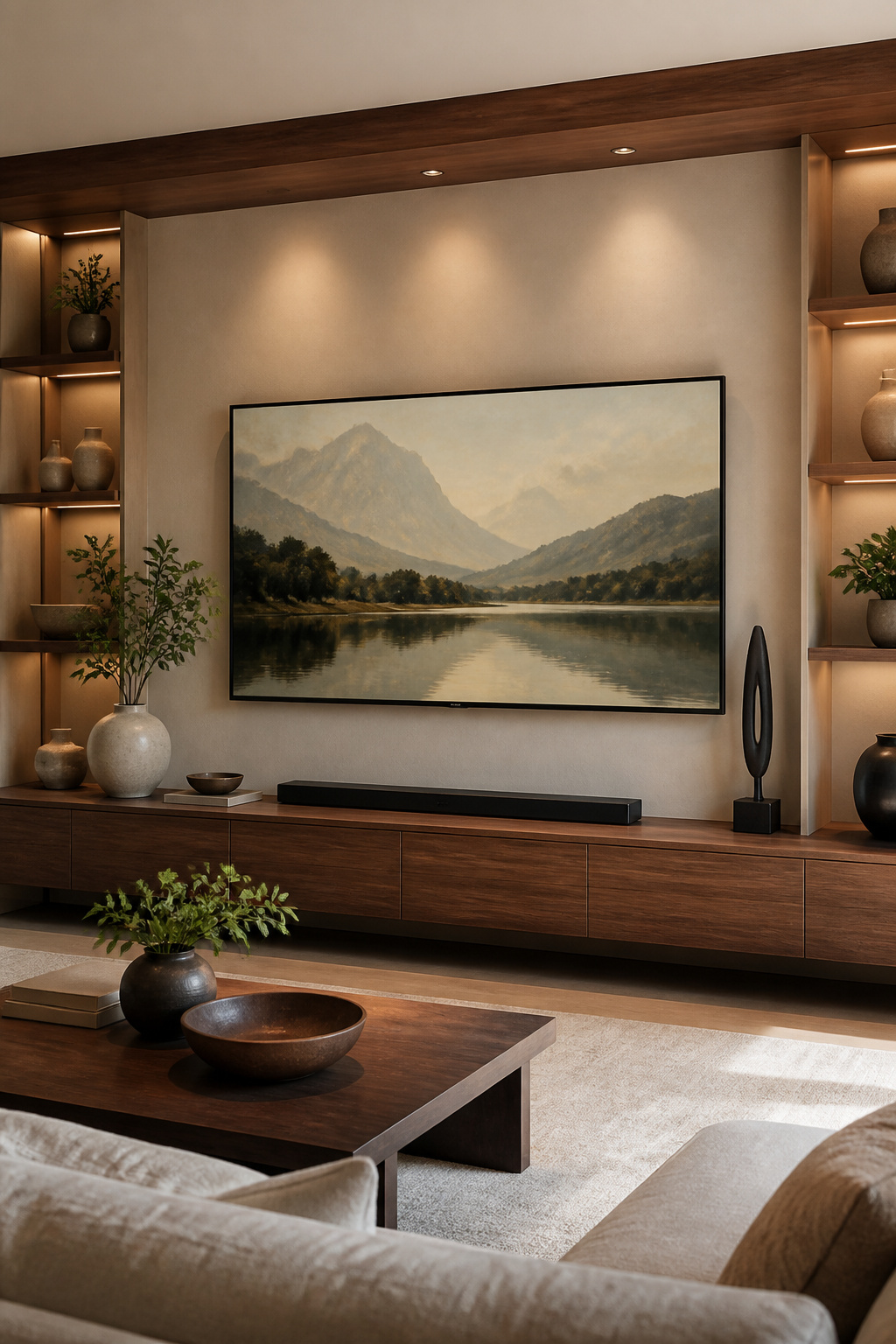
A Samsung Frame TV or similar art-display screen runs roughly double the price of a standard 4K set in the same size, and that gap alone can swallow most of a sub-$1,000 wall budget before you have hung a single thing around it. I spent a long evening toggling between product pages and art-mode demo videos, trying to decide whether the matte finish and motion-sensor wake-up would still feel special month six, or whether I would stop noticing and resent the premium.
The art itself is the quieter cost. The built-in library carries a subscription, and the free tier looks like free clip art. Uploading your own files works, but getting the color temperature to match the room light takes more fiddling than the marketing suggests. For a renter who might move in two years, the hardware premium is hard to justify against spending that same money on paint, shelving, and a decent standard TV that simply turns off black. The art mode is genuinely pleasant, especially in a narrow living room where every wall faces the seating. It just belongs in a larger budget, or in a house where you will stay long enough to amortize the cost.
9. Make It the Center of Attention
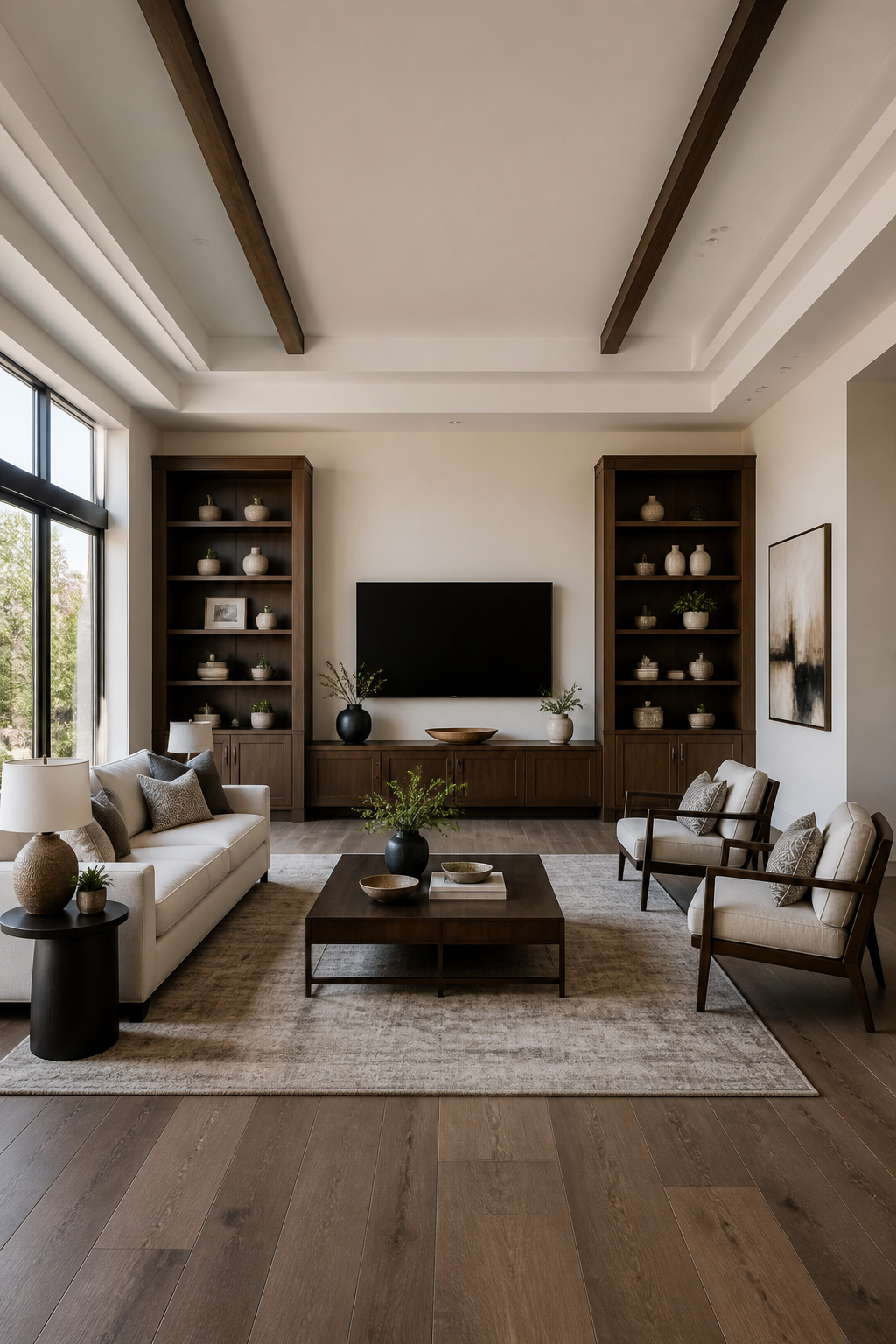
A symmetrical layout built around the screen works best when the wall itself is the obvious focal point: fireplace centered, windows balanced, doorway dead ahead. In a long rectangular room, two sofas facing each other across a central coffee table with the TV on the narrow end creates natural sightlines that pull everyone toward the same spot. Square rooms fight this harder; the eye wanders to four competing corners, and anchoring one wall can leave the opposite half feeling stranded.
The trick is committing fully. A single off-center chair or an asymmetrical side table breaks the spell and the TV reverts to looking like a black hole hung too high. I have measured twice for a pair of matching bookcases flanking a 55-inch screen, only to realize the wall sconces were six inches off from each other. That small drift turned the whole wall lopsided.
Keep the TV at seated eye level, roughly 42 inches from floor to screen center, and build outward in matching pairs: cabinet, lamp, plant. In a rental, two identical freestanding units bracketing the mount give you the effect without construction. The arrangement reads as intentional even when the furniture came from three different stores.
10. Let It Blend In
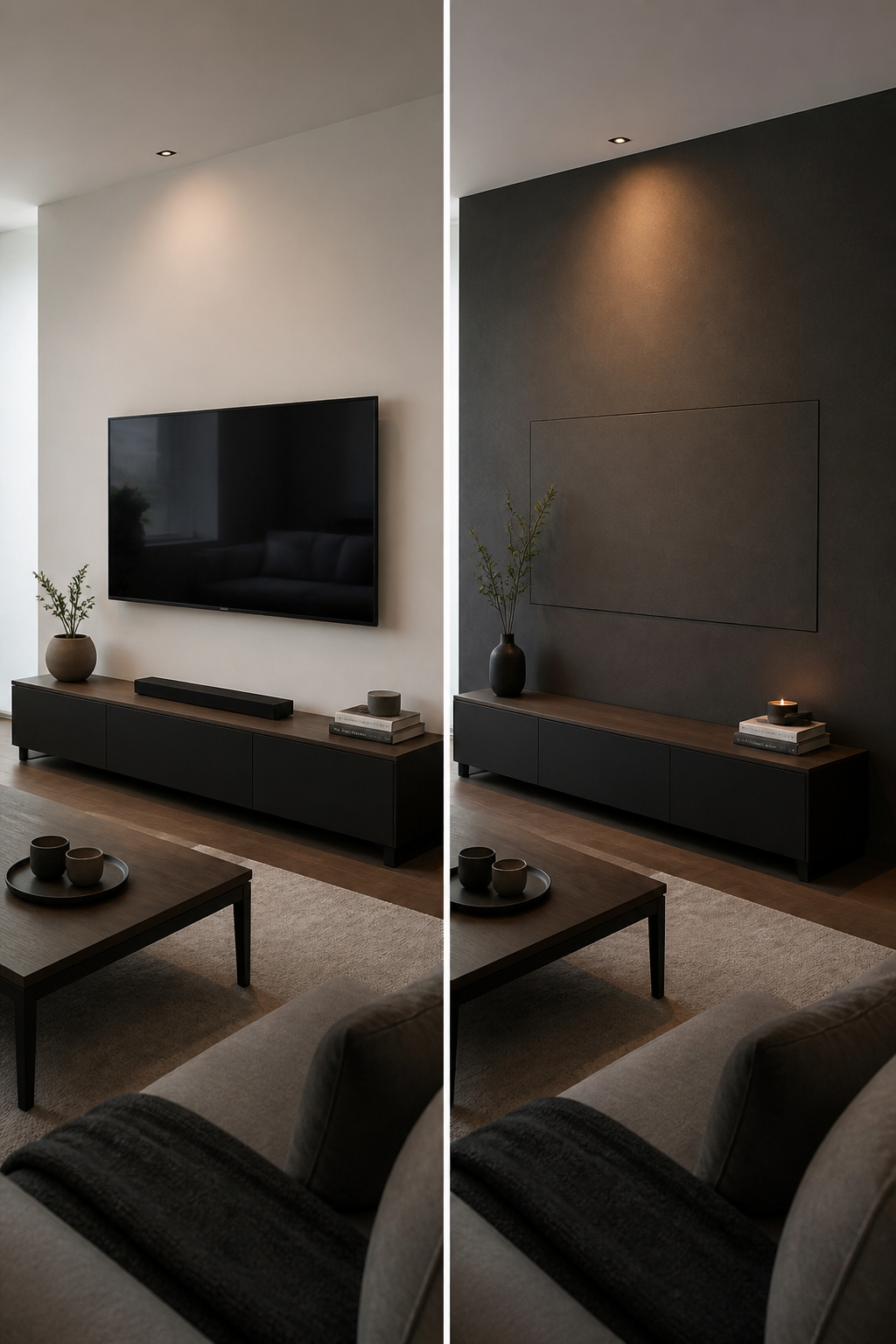
The black bezel on most televisions reads as a hole punched in the wall, which is exactly why matching the wall color to the bezel works. A dark charcoal or soft black paint behind the screen lets the frame dissolve at the edges, and a low-profile mount pulled tight to the wall removes the shadow gap that would otherwise outline it. The area around the set stays quiet, maybe a single ceramic object or a small stack of books, so the eye does not keep landing there when the screen is off.
This is the opposite of treating the television as the room’s anchor. The "center of attention" approach demands symmetry, built-in lighting, deliberate framing; it costs more and it commits the wall. Blending wins when the architecture already has something to say, like the two-tone alcoves that let a television sit as just one element of a balanced whole, or when the room is small enough that any competing focal point would feel crowded. I have seen renters paint a TV wall the weekend they move in and return the security deposit without a second thought, which is not something you can say for recessed millwork or a full media build.
11. Add a Recess
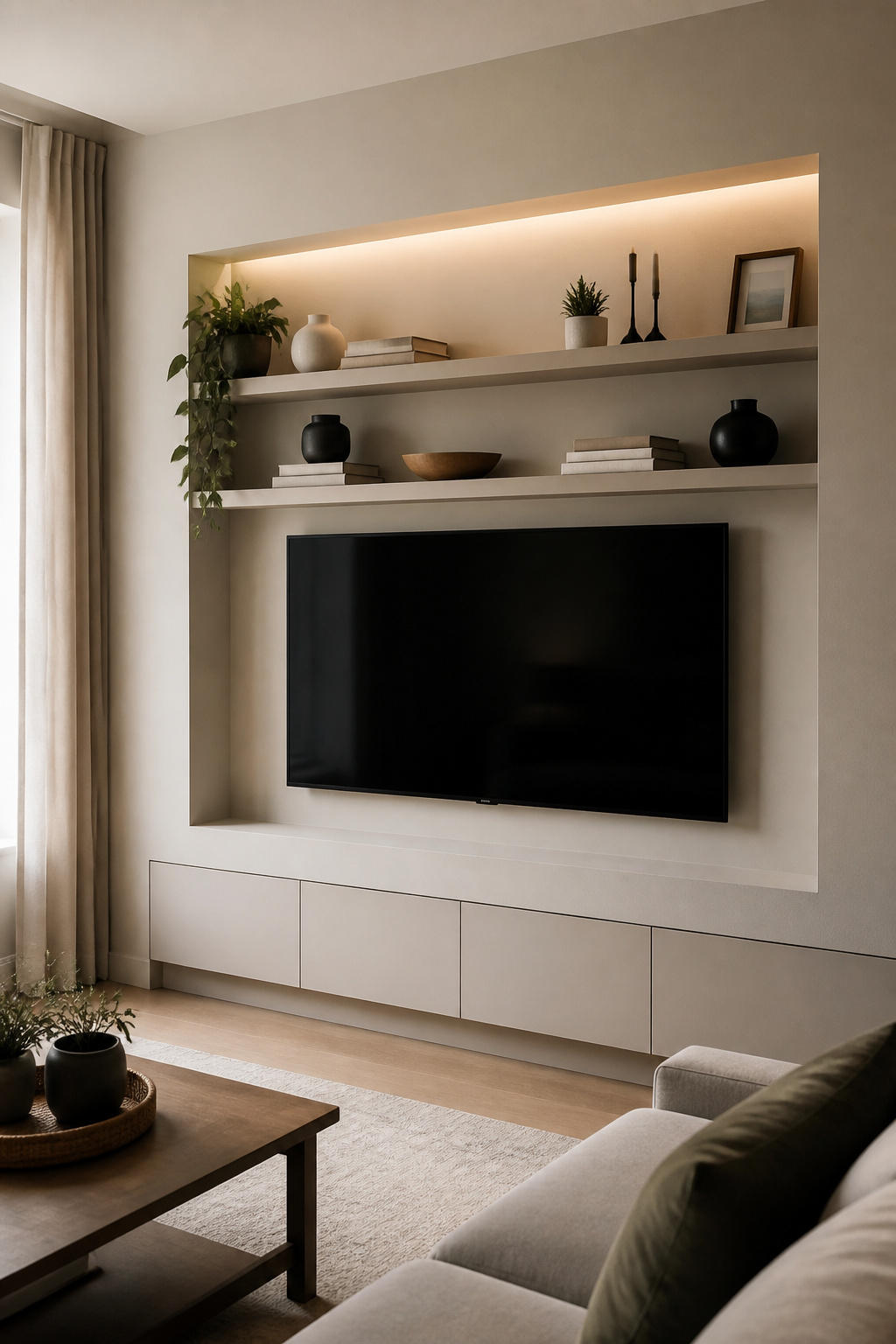
A recessed niche sets the TV flush with the wall surface so the screen reads as an opening rather than an object hung on top. The framing needs at least six inches of depth to swallow both the mount and the cable bundle behind the set; my first attempt stopped at four, and the bracket poked proud of the drywall by nearly an inch.
House Beautiful got it exactly right on why this works:
Recessing the television into the wall rather than mounting it proud of the surface makes a considerable difference — the screen sits in shadow, framed by the surrounding plaster, and loses much of the visual insistence.
That shadow line is what you are paying for with the extra carpentry. For viewing height, the center of the screen should land 40–42 inches from the floor, measured to seated eye level. In a shallow recess you will end up tilting the mount or letting the cords show, and neither reads as built-in.
12. Pile on the Decor
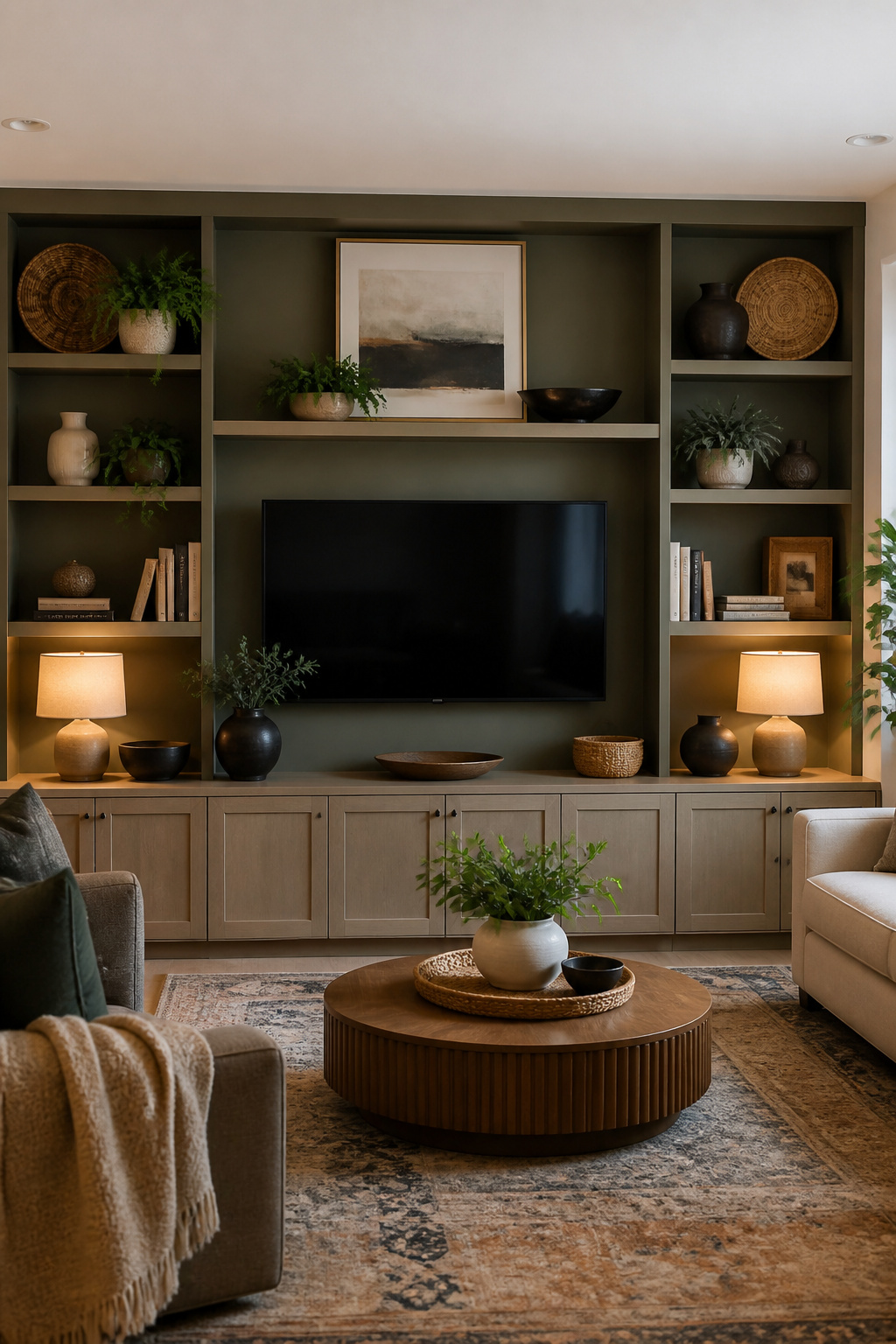
A TV wall that works reads like a styled shelf arrangement that happens to include a screen, not the other way around. The mistake most people make is treating the television as the starting point and clustering objects around it as an afterthought. What you actually need is an underlying structure: symmetry, a repeated material, or a clear vertical rhythm that holds the composition together even when the objects themselves are varied.
Books, small plants, and collected items can flank the screen and soften its boxiness. One approach is to treat the whole wall as a single composition, with the television as one element among several. XL artwork hung above the TV gives the eye somewhere else to land, while smaller framed pieces to either side integrate the screen into what reads as a considered arrangement rather than a tech installation.
The risk is clutter without that backbone. Built-in or custom shelving around the TV creates the framework: you place objects within bays or columns, and the structure does the organizing for you. Without it, you are relying on instinct alone, and instinct tends to accumulate rather than arrange. If the shelf layout does not look balanced with the TV turned off, the objects are not doing their job.
Hanging plants, small pots, or wooden elements add life and texture, especially if you are drawn to a more natural or relaxed feeling. The freshness is welcome, but placement matters. Too close to the screen and they compete; too scattered and the wall loses coherence. The goal is a deliberate arrangement where the television disappears into the whole, not a collection of nice things fighting for attention.
13. Mirror It
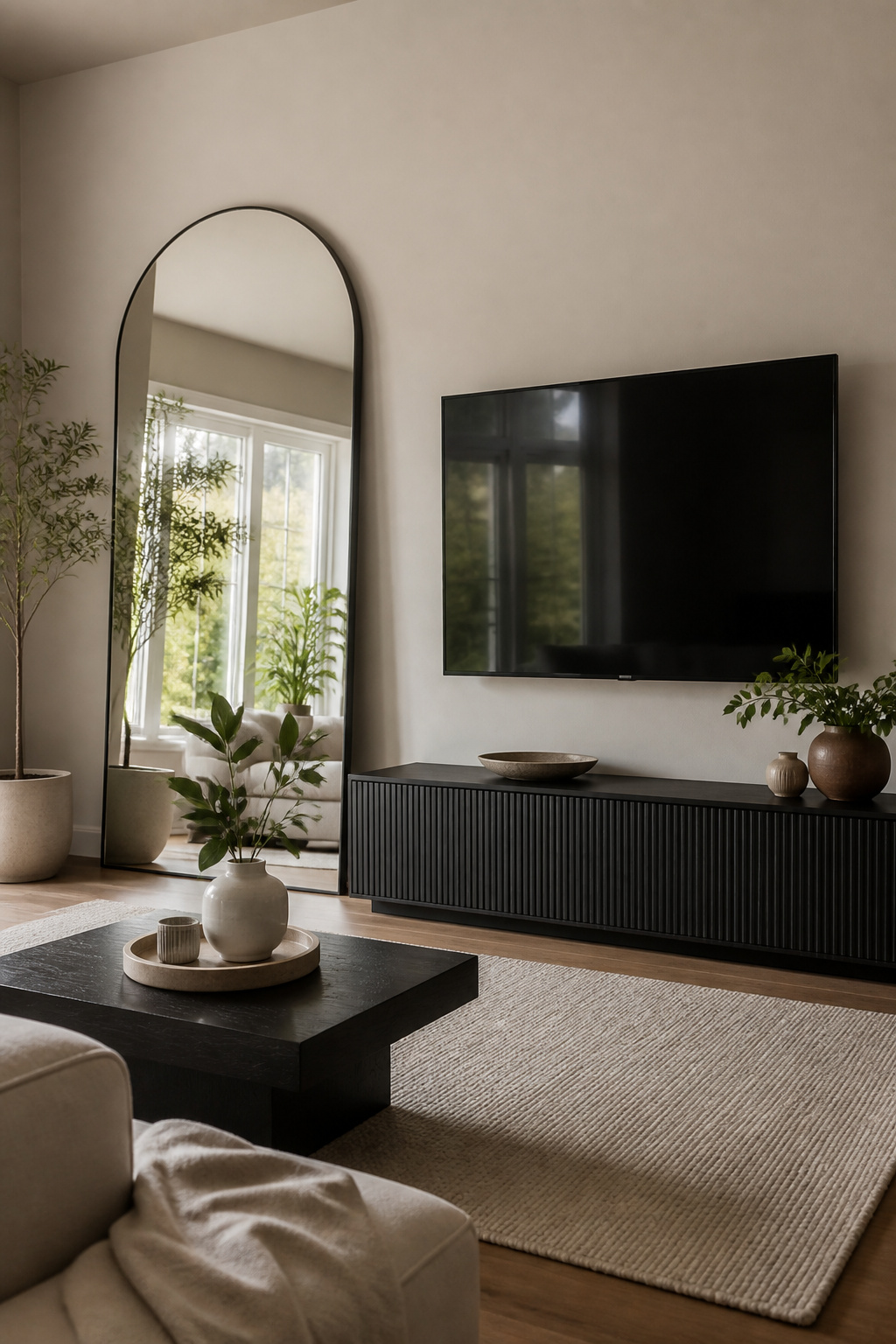
A mirror hung beside or just above the TV bounces window light across the wall and tricks the eye into reading the whole surface as wider than it is. The effect works best when the mirror catches light from the side, not head-on. I learned the hard way that hanging one directly opposite a window turns the afternoon sun into a spotlight that washes out the screen no matter how you angle the set. If your layout forces that placement, a matte anti-glare film on the TV or a shade on the window saves the idea; otherwise, shift the mirror to an adjacent wall and let it do its job without fighting the picture quality.
14. Frame with Floating Furniture
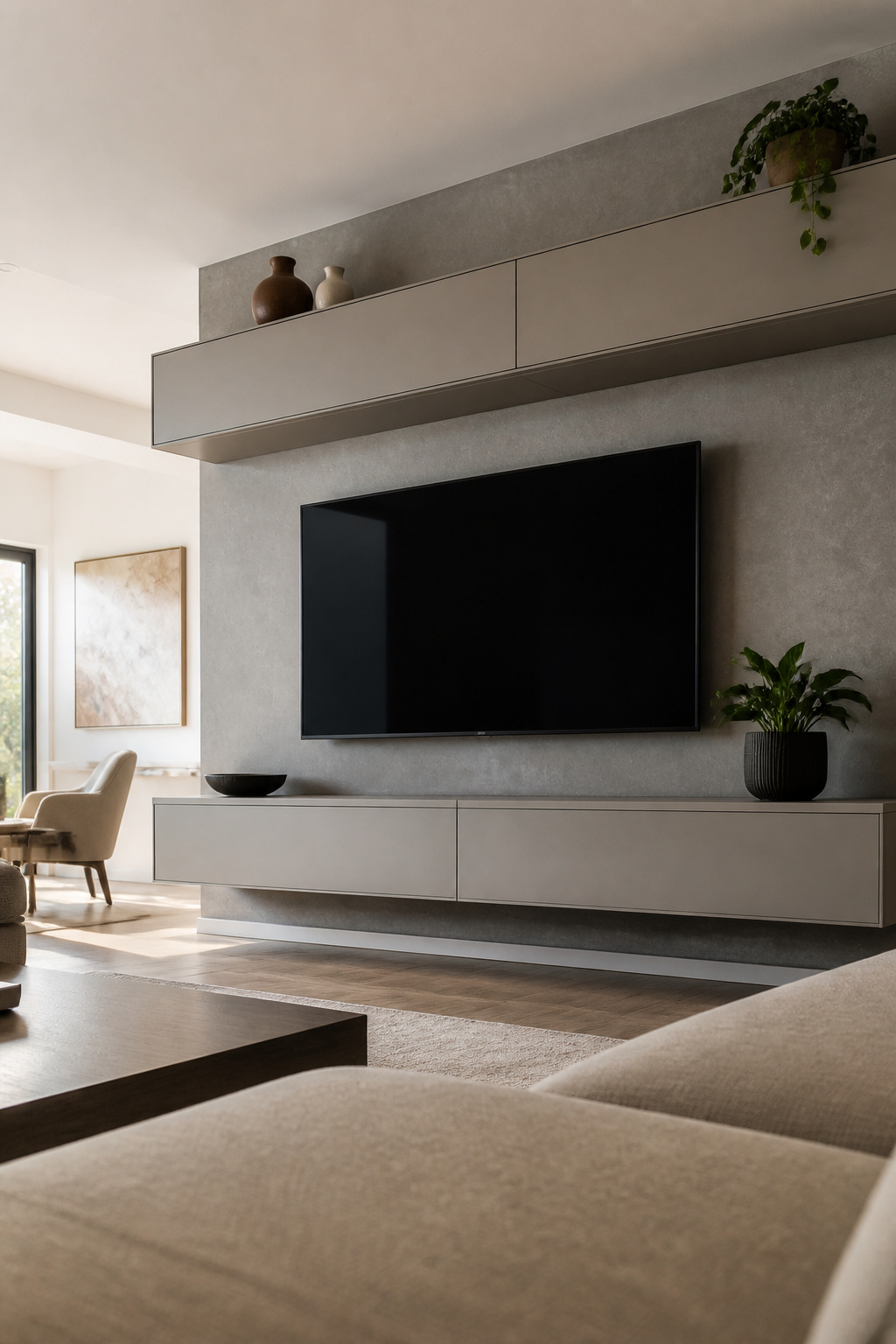
Wall-mounted consoles look clean because the floor stays open, but the bracket math catches people off guard. My 72-inch console seemed fine on two heavy-duty brackets until I loaded it with books and a receiver and watched the center bow over a month. Four brackets, spaced to hit actual studs, fixed the sag. Stud finders lie on lathe and plaster or when a pipe runs close, so I always confirm by finding the next stud over and measuring back 16 inches. Weight ratings on the package assume you hit solid wood, not the drywall anchor the last owner left behind. A 72-inch shelf needs four brackets, not two, even if the hardware claims otherwise. Floating shelves beside the TV work the same way: keep the load light, check the limit, and mark the stud centers in pencil before you drill.
15. Use LED Lighting
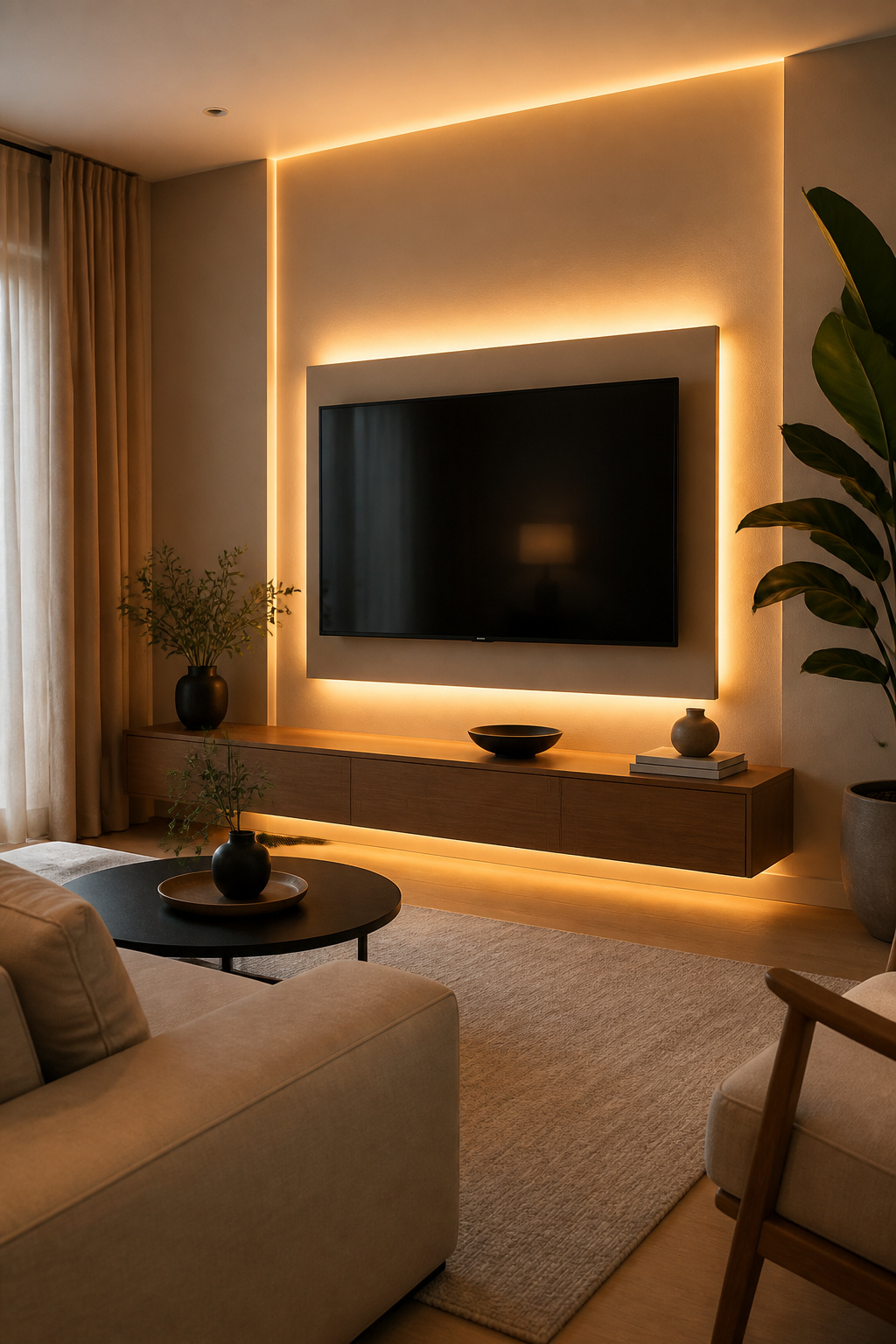
The LED strip behind my television was a $12 impulse buy that turned out to matter more than the wall color I spent a week choosing. Bias lighting, a soft glow cast behind the screen, keeps the pupil from working overtime in a dark room; without it, a bright display against blackness triggers the strain that leaves you rubbing your eyes after one episode turns into three.
USB-powered strips plug into the television’s own port and switch on automatically, which removes both the outlet hunt and the forgotten-remote problem. Color temperature is the decision that shapes the room. A warm 2700K reads like candlelight and pairs with the dimmed sconces both designers prefer to overhead fixtures; cooler temperatures fight the screen’s own blue cast but can feel clinical after dark.
What sold me on keeping it was the secondary effect. The wall behind the set, previously a flat void, gains depth from that soft rim of light. In a friend’s setup, backlit veining in stone paneling turned the television into something that looked considered rather than tolerated. The strip itself does not announce itself as a feature; it simply makes the wall feel finished and the viewing easier on the body.
16. Incorporate Built-In Furniture
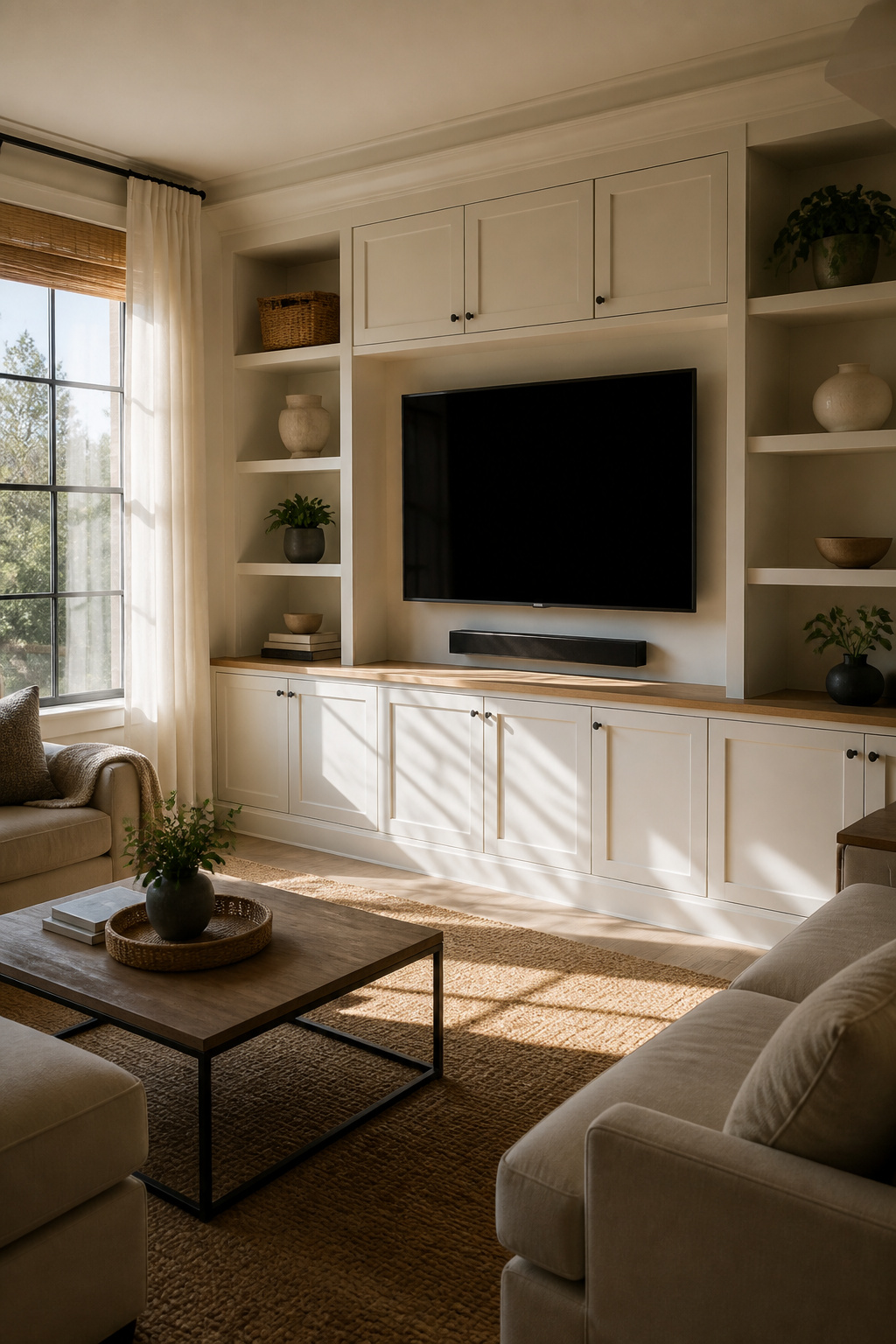
Built-in shelving around the TV turns the screen into something that belongs to the wall instead of something hung on it. The upper section stays open for books, small objects, or a bit of greenery; the lower section hides remotes, consoles, and the cables that otherwise collect on the floor. Doors or drawers at the base also ground the whole unit visually, so the television does not feel like it is floating.
Depth matters more than width. Components need room to breathe, and heat from the TV or a media box needs somewhere to go. A cabinet sealed tight around electronics will shorten their life, so ventilation gaps are not optional. The proportion of the unit to the room is the other judgment call: a twelve-foot wall in a small apartment can handle a full built-in, but the same unit in a studio would eat the space. Measure the wall, then picture the sofa in front of what is left. If the seating feels pinched, shrink the cabinet or lose the side towers and keep only the low console.
17. Use Textured Materials
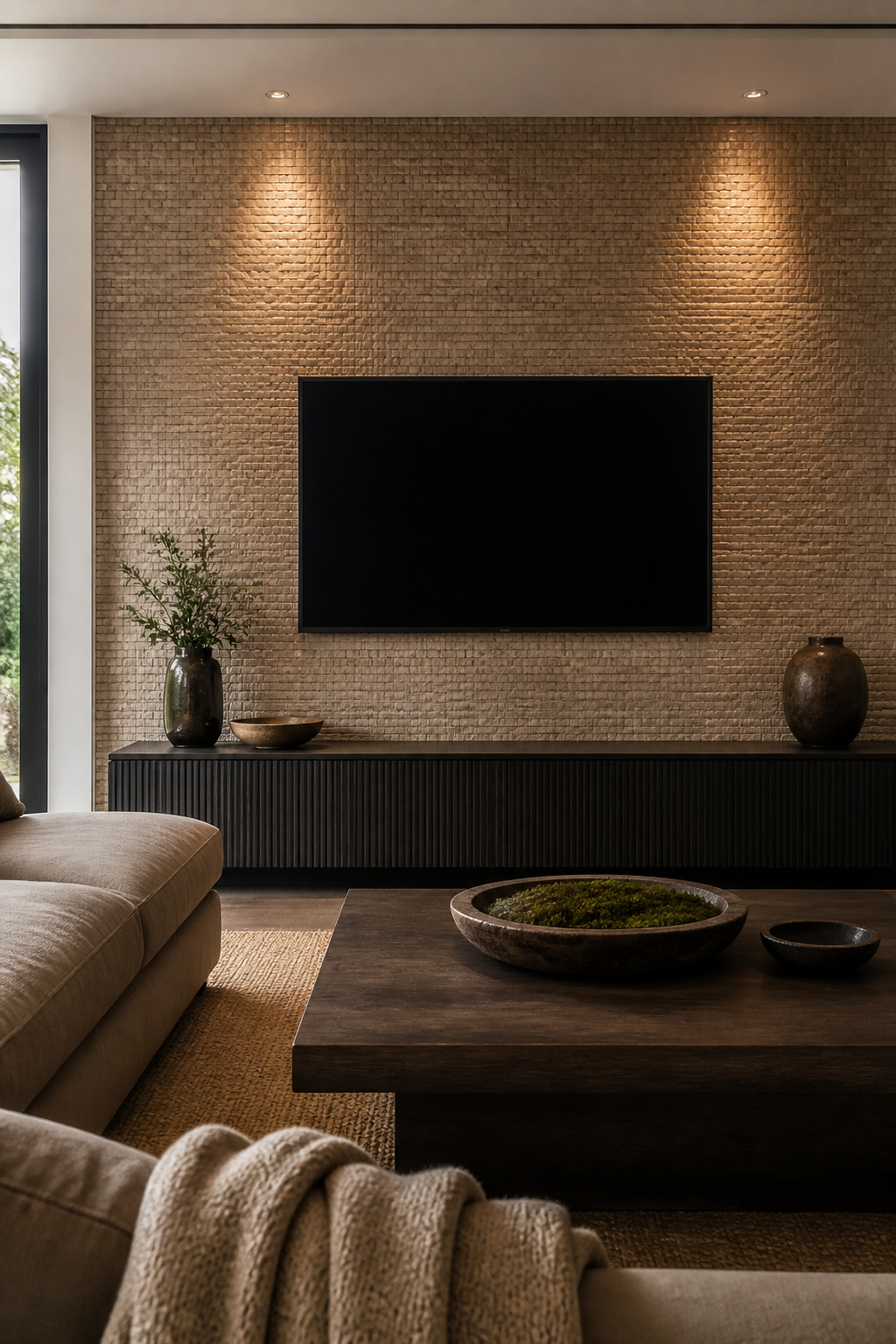
A flat black screen on a flat white wall reads like a hole punched in the room. Grasscloth wallpaper fixes that by giving the eye something to land on first.
I spent about $180 on a double roll of unpasted grasscloth for the TV wall in my last apartment. The material comes in 36-inch widths, and the seam had to fall either dead center behind the television or off to one side where it would show. I moved the TV mount six inches left of the stud center so the seam would hide behind the bracket instead of flanking it. The texture still reads as continuous from the sofa because grasscloth’s irregular weave breaks up light enough to disguise the joint.
Wood slats run the same play with more labor. Vertical oak or walnut strips spaced evenly read Scandinavian; vary the gaps and the same material turns modern. A clear coat over raw wood keeps fingerprints from staining the grain.
Fabric panels or padded leather tiles do the softening work that hard walls refuse. They cut sound reflections too, which matters in a narrow living room where the TV sits at one end and the sofa at the other. Neutral fabrics keep the look quiet; a deep color makes the wall the statement the screen is not.
18. Create a Gallery Wall
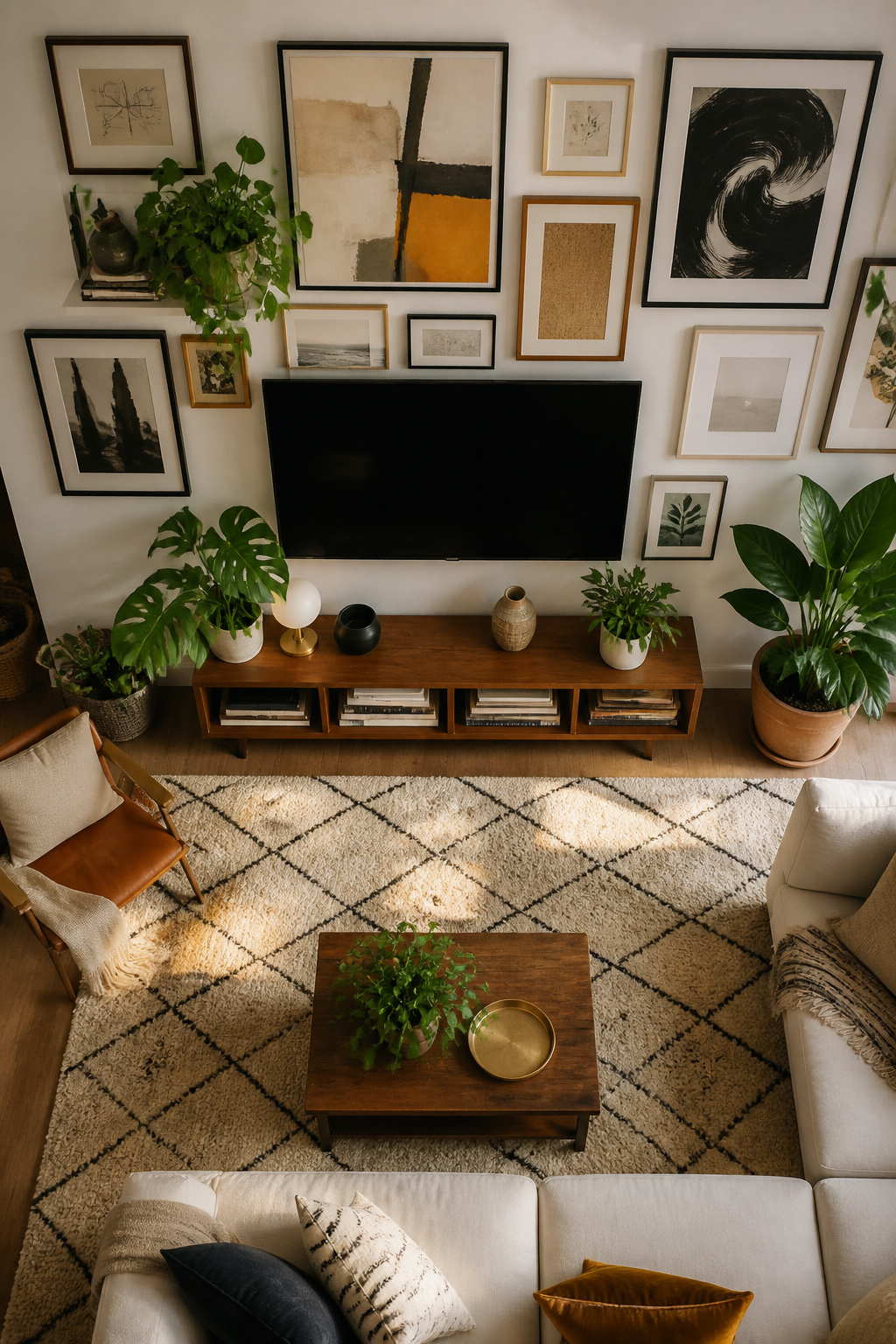
A gallery wall treats the black rectangle as just another frame, not the thing everything else has to orbit. The trick is making the mismatch look intentional: frames in different sizes and finishes, but tied together by color or subject so the wall reads as one composition rather than a TV with stragglers.
I lay every piece out on the floor first, usually on a bedsheet so nothing slides. The TV sits in its spot, and I build around it with prints and photos the same way I’d fill any other wall, no special deference to the screen. What matters is the spacing between pieces, not symmetry. An eclectic mix works here because the eye expects variety; the TV disappears into it.
For the hanging itself, I stopped using nails years ago. A picture rail or horizontal ledge above or below the TV lets me swap pieces seasonally without new holes, which matters in a rental. Even with hooks, I stick to systems that allow adjustment. The ability to slide a frame an inch left without drilling again saves more time than the upfront cost of the rail. When the TV is off, the wall still holds interest; when it’s on, the surrounding frames keep it from dominating the room.
19. Use Natural Elements
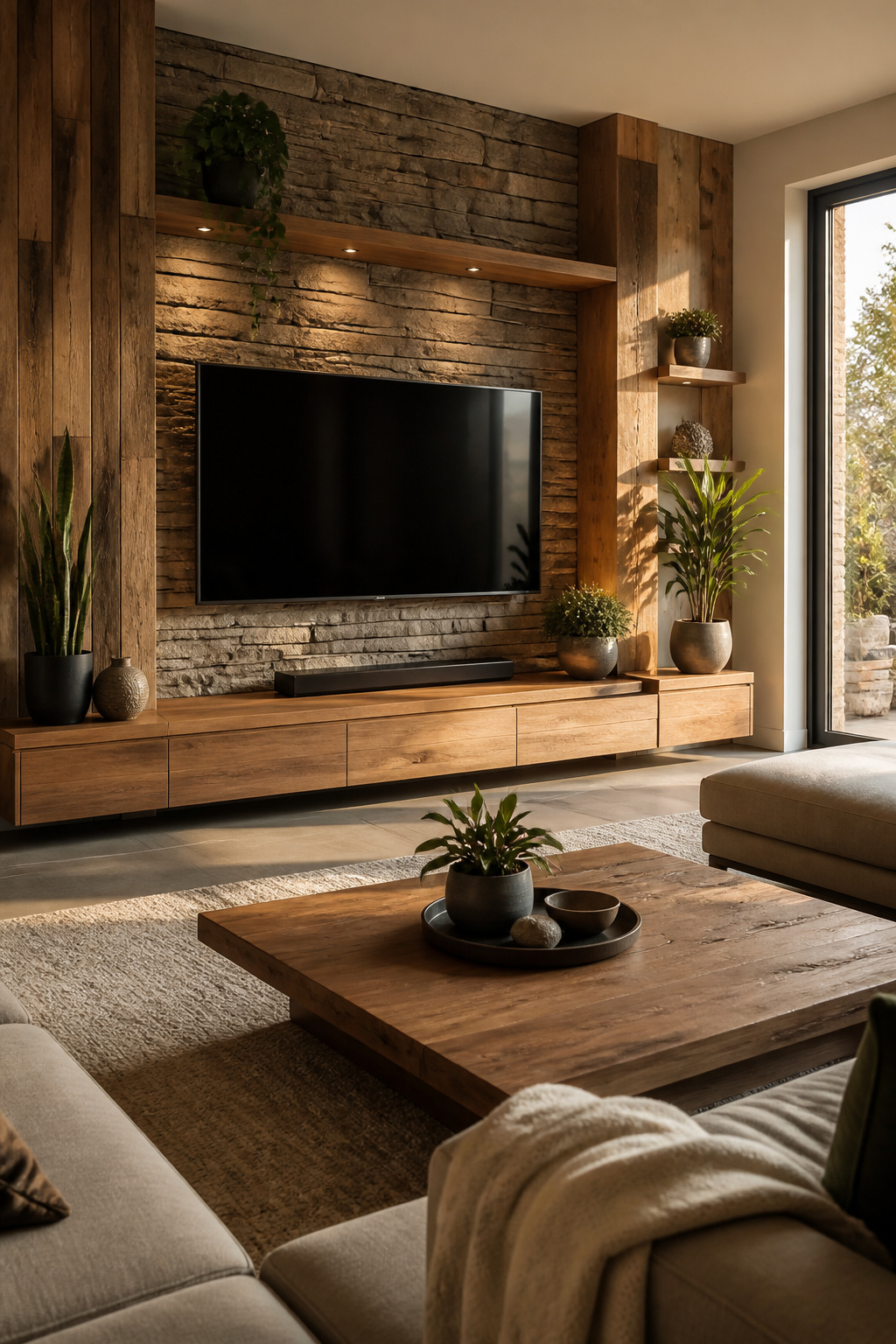
Raw wood, stone, brick, and living plants all do the same thing on a TV wall: they soften the hard edge of a black screen with something that grew or weathered on its own. The choice is real versus faux, and that choice costs either money or time.
I like slatted wood panels for a weekend project. Oak, walnut, or pine run vertically or horizontally, and the spacing itself becomes the design: even gaps read Scandinavian, varied gaps read modern. A clear coat seals the grain without hiding it. Stone or brick veneer works the same way, though the lightweight faux panels are what most renters can actually install without structural worry. The rough texture against the smooth glass is the whole point.
Living plants need more honesty than most posts give them. A heat-emitting screen dries the air directly behind and above it, so a living wall there wants species that tolerate low humidity and irregular light, or it becomes a maintenance trap fast. Succulents on open shelving nearby, or a single trailing pothos hung to one side, give the same organic hit without the irrigation headache. Kelly Draper’s white brick with built-in shelves gets this balance right: the material does the work, and a few well-placed objects finish it.
Faux stone panels run lighter and cheaper than real masonry, but read flat up close — budget for texture you will actually touch, or keep the panels to areas seen from six feet away.
20. Minimalist Approach
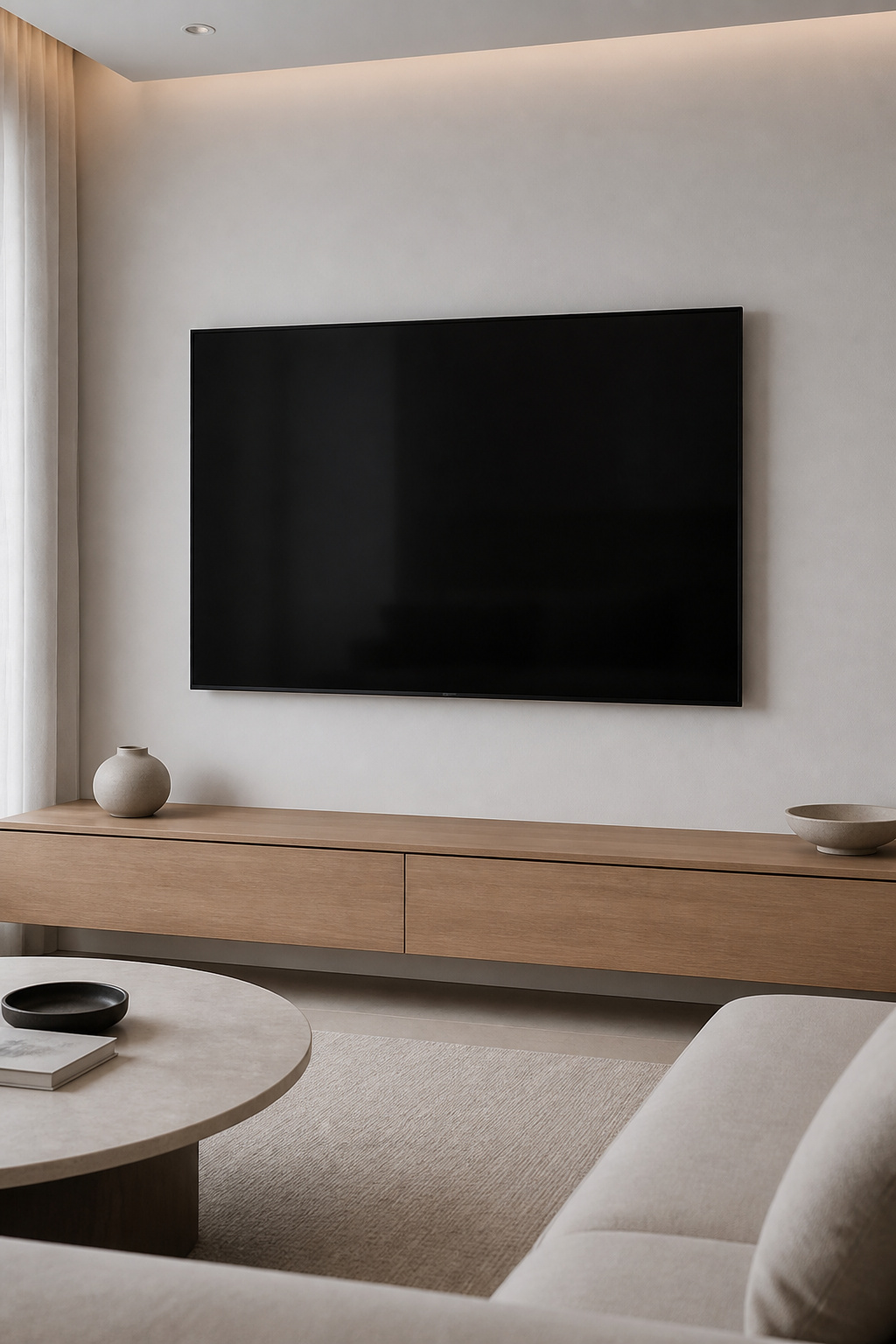
A wall with only a TV and a single cable path sounds like the easiest option until you actually try to build it. Every mark, every slight bow in the drywall, every shadow from an uneven mount shows up immediately. The discipline is in the prep: the wall has to be flat, the paint has to be even, and the stud placement has to land exactly where the mount needs it.
In-wall power kits and cable raceways keep the cords hidden, but plan the outlet locations early. Running power cords through the same channels as low-voltage cables is a mistake that can introduce noise or create a code issue depending on your local requirements. The clean look also costs more than people expect. A recessed mount that sits flush, the electrician’s time for a new outlet behind the screen, and patching old holes all add up. A busier treatment, with shelves or panels, forgives imperfections that a bare wall exposes.
Frequently Asked Questions
How can I make my TV wall look good?
Surround the screen with art so it takes up no more than one-sixth of the wall’s width and height, build a shallow frame of picture rail or molding around it, or paint the wall behind it a deep color like navy so the bezel disappears. Each approach treats the television as one object in a larger composition rather than letting the black rectangle dominate.
Where’s best to place a TV?
Keep it out of high-traffic areas where people walking past will block the view, and avoid direct sunlight that washes out color and sharpness. In awkward rooms, a swivel mount or angled console lets a corner placement face the seating directly instead of fighting the room.
What is the best height to mount a TV?
The center of the screen should sit 40–42 inches from the floor, measured to seated eye level. Mounting higher strains the neck over time; a tilting mount can angle the picture downward if the room layout forces a slightly raised position.


