

Small space storage ideas in 2026 run from $15 magnetic knife racks to $165 rolling carts, and the piece that fits your space depends on whether you can drill a hole or roll something away. The $26 over-door organizer outperformed the cart on dollar-for-dollar storage in one two-apartment test simply because it used space that was already empty, not floor space that had to be kept clear.
1. Utilize Vertical Space
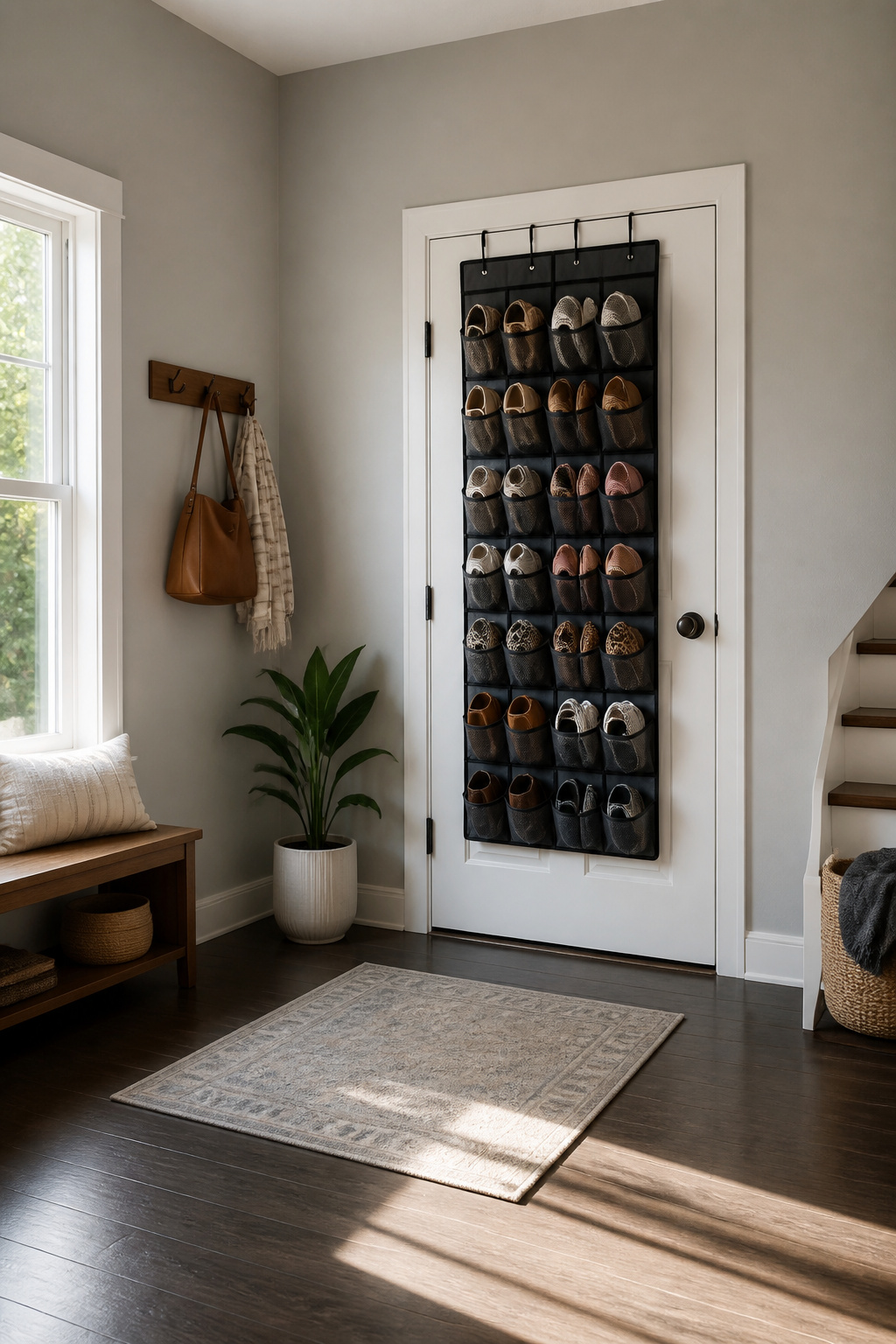
Wall-mounted shelves eat up zero floor space, which is the whole game in a studio or a cramped first apartment. I learned that the hard way after my first bookshelf blocked a doorway I needed open for a laundry path. Pegboards work the same trick in kitchens, holding utensils where cabinets run out, and over-the-door racks turn the back of every door into usable real estate.
The Target Brightroom Over the Door 26 Shelf Mesh Shoe Organizer runs $26 and fits a standard swinging door. Its mesh cubbies hold 26 or more pairs up to a women’s size 11, but the structure matters more than the count. Cheap organizers sag and look like regret; this one keeps its shape enough that you can actually see what’s inside each slot. I used one in a closet for rolled tees and leggings when drawer space disappeared, and the same idea transfers to entryways for scarves or a kitchen door for snacks and cleaning cloths.
The back of a door is a hidden trove of storage space, especially in a small dwelling.
What that means practically: the storage you need is probably already on your walls and doors, not in another piece of furniture you’d have to walk around.
2. Buy Furniture That Doubles as Storage
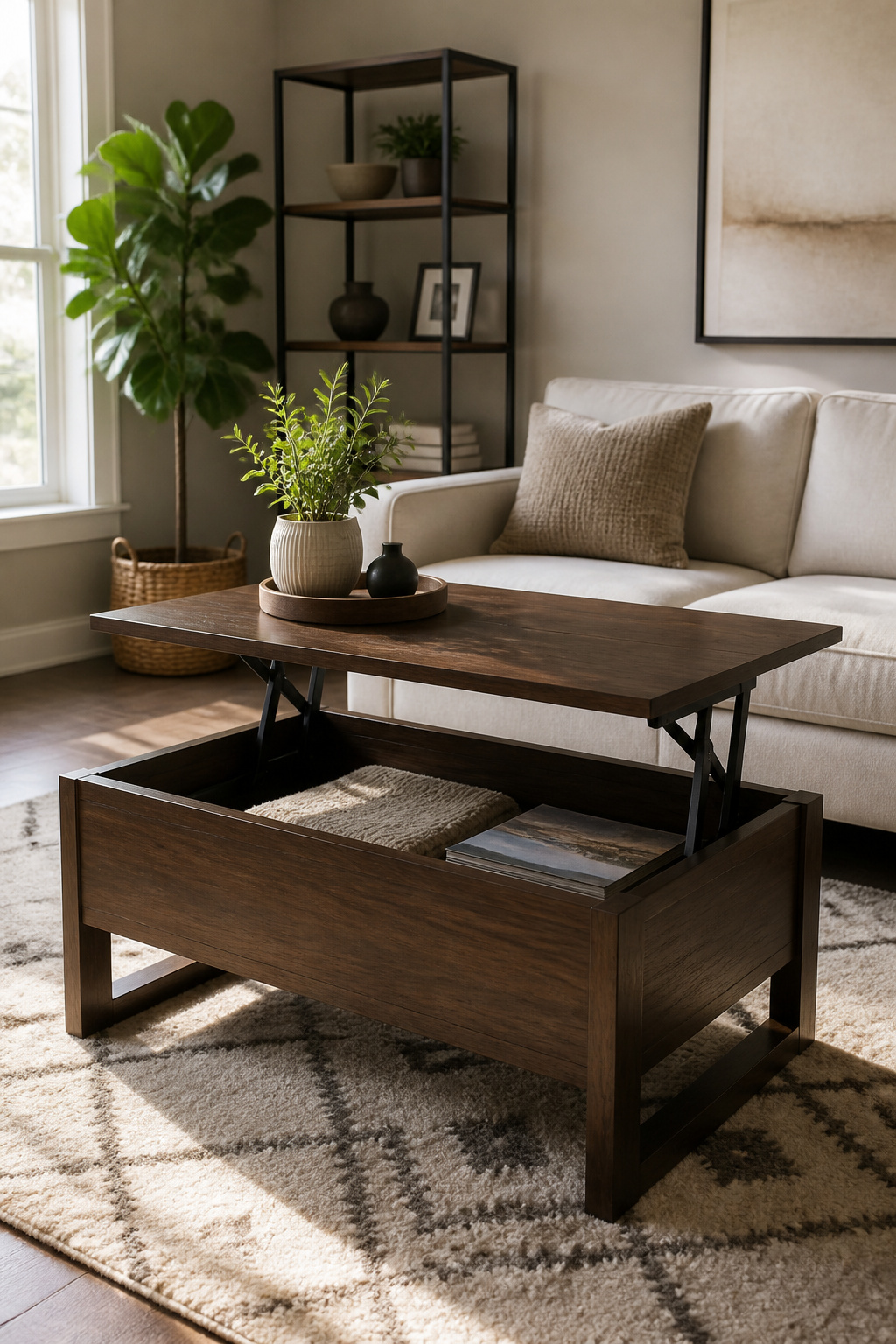
Storage that hides inside furniture works best when the piece still functions like furniture first. I learned that the hard way with a storage ottoman that opened from the top. It held blankets fine, but the lid needed clearing every time, so it became a shelf for magazines I never moved. A front-opening ottoman or one with a hinged side would have stayed useful.
Beds with drawers underneath solve the same problem more cleanly. The drawer slides out without disturbing what sits on top, which matters more than the extra cubic feet a lift-up platform provides. In a studio, that drawer space handles out-of-season clothing so the closet stays current.
Coffee tables with lower shelves or lift-tops follow the same rule: the storage has to stay reachable without re-staging the room. The IKEA Ställ shoe cabinet, which holds 12 pairs, works because it is only 6¾ inches deep. It sits against a wall like a shallow console, not a piece of furniture you walk around. I nearly ordered the slimmer Bissa instead, which fits about eight pairs, but the Ställ’s depth still leaves walkway clear in a narrow entry. The Bissa needs wall anchoring with drywall anchors, and in a rental, that is one more hole to patch. Keep the profile under seven inches deep for hallway use, or the cabinet becomes the obstacle it was meant to solve.
3. Hang Hooks
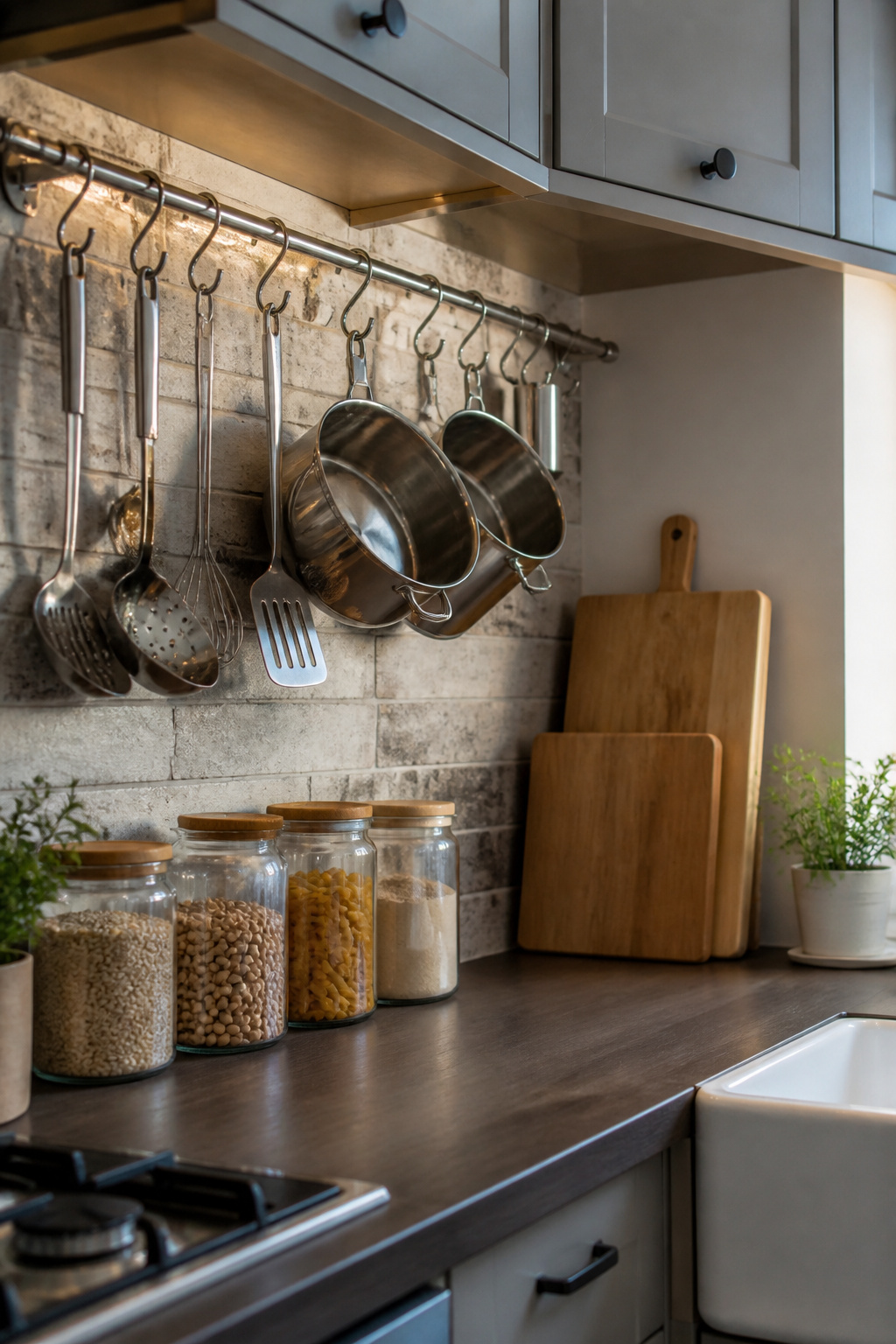
Hooks are the first thing I reach for when a room starts to feel cramped, and the first thing I usually install wrong. A row of adhesive hooks behind my bathroom door lasted about three weeks before the humidity peeled them off in the middle of the night. Metal over-the-door hooks, the kind that slip over the door itself, cost only a few dollars more and have held four years of damp towels without complaint.
In the kitchen, a single metal bar with S-hooks changed how I store bulky utensils and pans. The bar itself is the storage; the hooks just make it reachable. I tried the same approach with pegboard in a rental once, drilled six holes I had to patch later, and learned that adhesive hooks or over-door hardware spare the security deposit.
Entryways without coat closets are where hooks earn their keep. Over-the-door hooks on the front door handle daily coats; wall-mounted hooks by the stairwell hold skis or a bike during the off-season. The key difference is weight. A heavy parkar needs a hook anchored in stud or solid door backing; a lightweight reusable grocery bag does fine on adhesive.
4. Put Storage Containers Everywhere
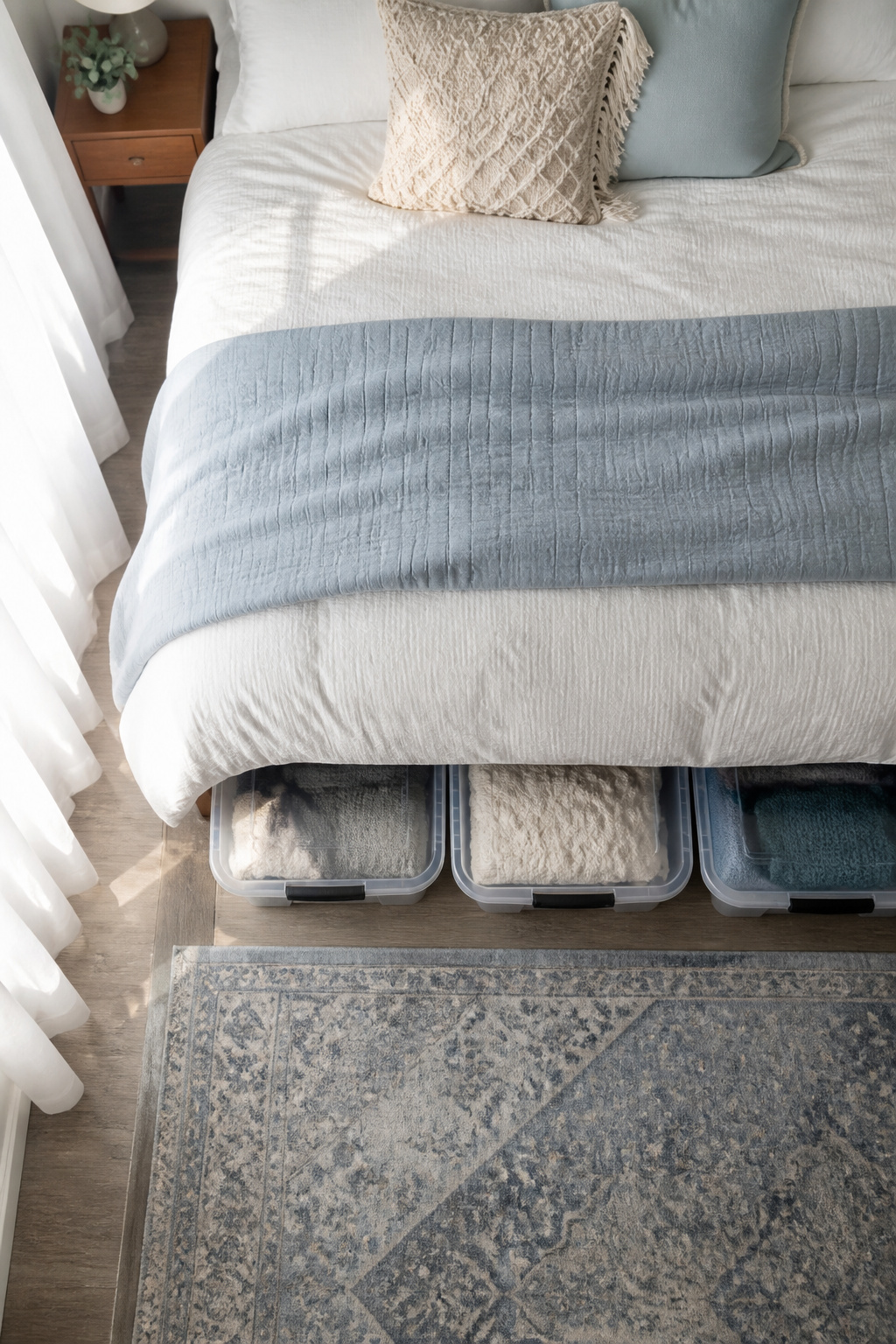
Under-bed space sits empty in most bedrooms because the wrong containers make it annoying to use. The long plastic-lidded bins with handles or wheels solve that; $15 to $25 at Target or Walmart gets you the kind that slides out on carpet without tearing your fingertips. I have watched cheaper snap-lid versions crack at the corners after two seasons of sweaters, so the slightly stiffer polypropylene pays for itself.
IKEA’s Smart cubes work if you need to build a whole system under a platform frame, and their modular sizing means you can reconfigure when you move. Wicker baskets look better if the bed skirt rides up, but they collect dust and sag with anything heavier than spare linens. Wooden crates split along the grain in dry winter air.
Higher up, the top closet shelf is dead space until you add see-through bins. You forget what you own when the container is opaque, and that defeats the point. StorageWorks makes closet bins that stack without collapsing into each other, though I would skip anything fabric-sided for the highest shelf; the sides bow when you pull them down at an angle.
The IKEA Perjohan storage bench (under $100, less than a foot deep) works the same trick in the entryway: shoes inside, seat on top, no extra floor space burned. The cut-out handle matters more than it looks; you will move it to vacuum.
5. Make Use of Magnets
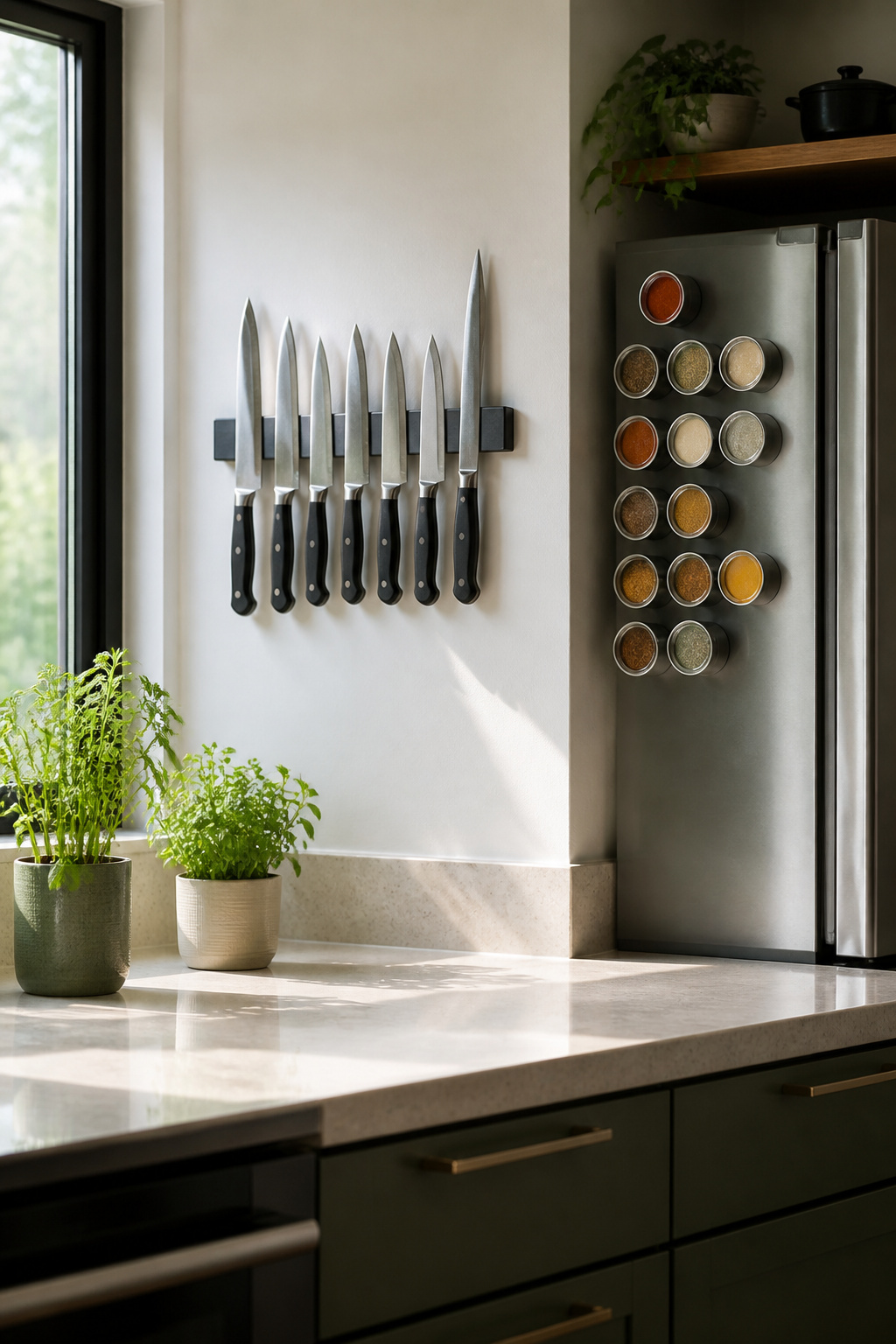
Metal walls and appliance sides are storage most renters never claim. The HULTARP Magnetic Knife Rack runs $15 at IKEA and mounts without drilling, which matters when your lease forbids holes. I have seen it hold more than knives; a row of small metal spice tins, the kind with clear lids, turns the side of a fridge into a shallow pantry that costs less than a single cabinet pull.
Kitchens are the obvious place, yet the same logic works anywhere a magnet grips. A magnetic paper-towel holder with hooks, like the Yamazaki Home model at $55, can anchor to a washer or file cabinet if the surface is ferrous. The test is simple: a refrigerator magnet either sticks or slides. If it slides, do not trust weight to it.
What fails is the cheap stuff. Decorative magnetic hooks from the dollar store look promising but shear off under anything heavier than a dish towel. Thin magnetic strips meant for craft projects lose adhesion in humidity. I have learned to check the weight rating before trusting a magnetic basket with glass spice jars; the cleanup costs more than the hardware saved.
6. Create Instant Kitchen Storage
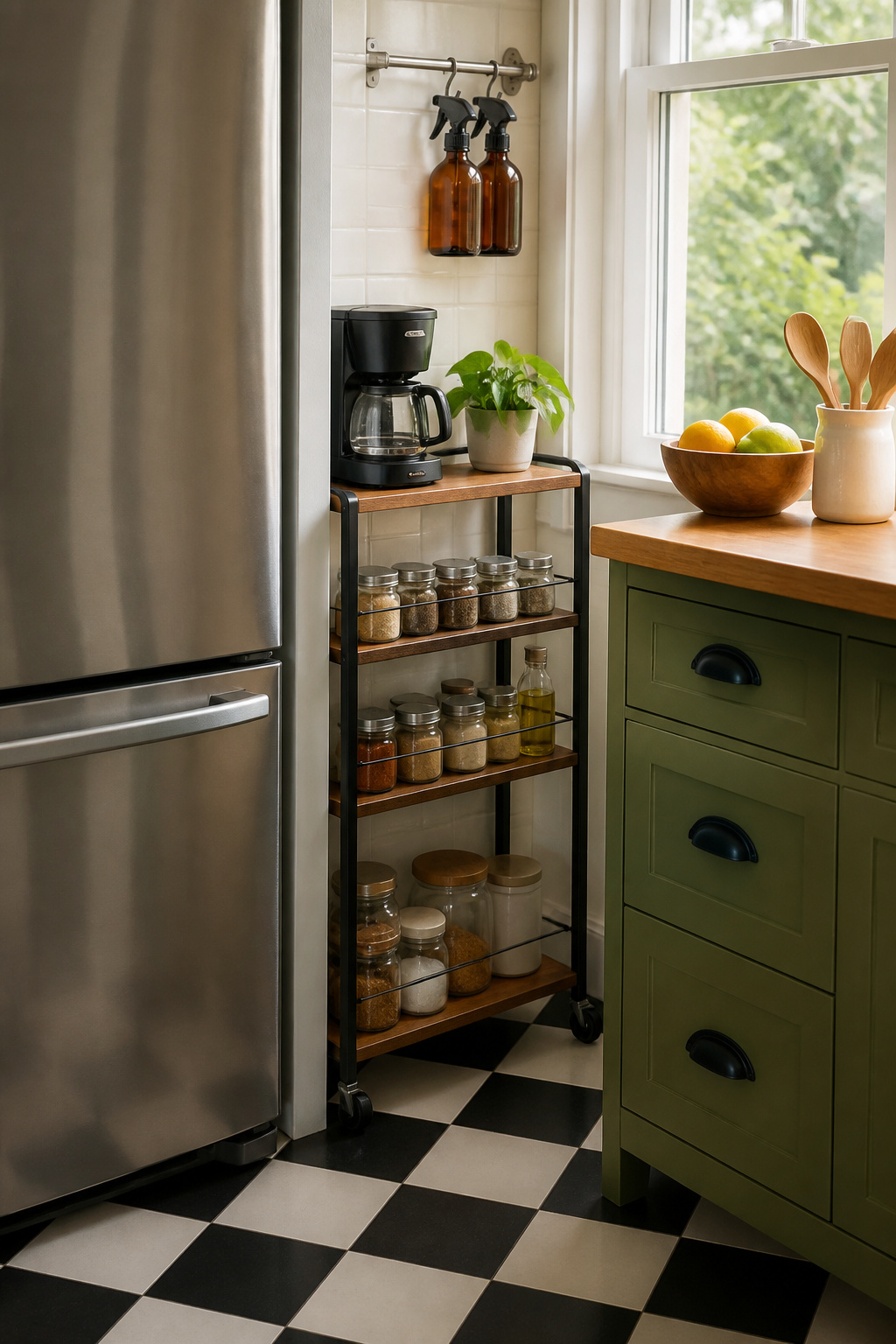
The narrow gap beside a fridge or between a counter and wall usually ends up collecting a dust bunny and a broom handle. A slim rolling cart turns that dead zone into pantry overflow for spices, cutting boards, or the coffee supplies that clutter counters every morning. The Yamazaki Home Tower Rolling Storage Cart runs $165 and squeezes into gaps as slim as 5 inches, though the 11-pound weight limit means it is better for lightweight goods than a stack of cast-iron pans. I have parked cheaper wire carts in the same spots first, and they wobbled enough that I worried about scratching paint every time I rolled them out for flour or oil. Tension rods inside cabinets cost far less and do more than hold dish towels: run one vertically inside a deep cabinet and hook spray bottles by their triggers, or stack two horizontally to create a shelf for lids that otherwise avalanche from piles. Cabinet organizers with tiered steps for cans or pull-out baskets for pots earn their price only if you measure the interior first; a half-inch too wide and the door will not close, which is the kind of detail you notice at 10 p.m. on a Sunday, not in the store aisle.
7. Get Storage on Wheels
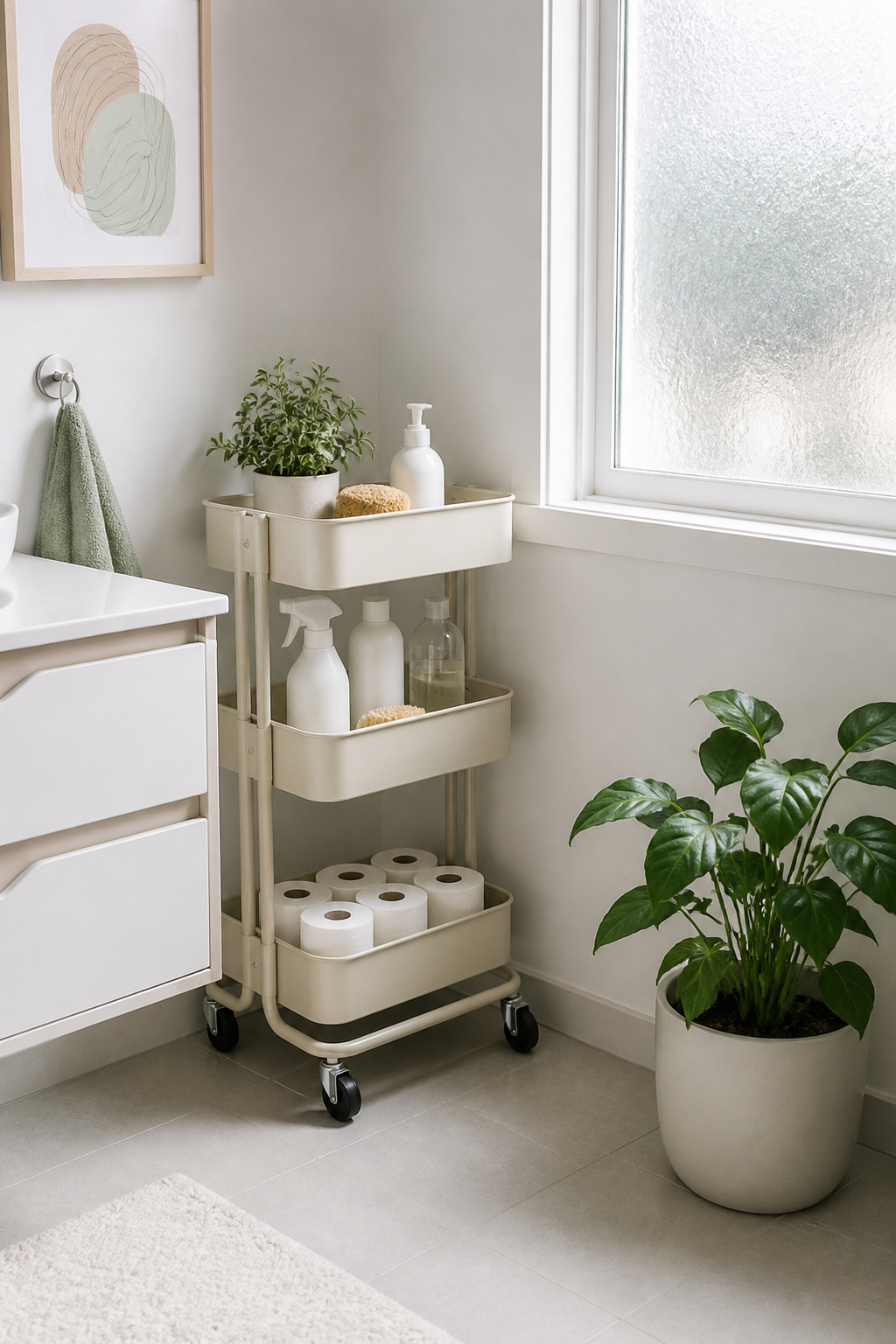
Rolling storage earns its floor space by going where nothing fixed can. The Yamazaki Tower Rolling Storage Cart squeezes into a 5-inch gap, which puts it between a toilet and vanity, beside a fridge, or in the dead zone between closet wall and door frame. It carries toilet paper, cleaning bottles, or pantry overflow, though the 11-pound limit means loading it with cast-iron cookware is a quick way to break both cart and mood.
Purpose-built pieces like the Yamazaki run about $165, which stings until you price the alternative. Adding casters to furniture you already own costs less upfront, but the math only works if the piece sits at a useful height and the base can take hardware without splitting. A low bookshelf on wheels becomes a rolling pantry; a nightstand on casters becomes a mobile project cart. The tradeoff is stability: rickety secondhand frames wobble where the welded steel cart does not.
For renters, rolling storage has a second life. Slide it into a closet when company comes, roll it to the next apartment, park it in a hallway that would never pass a fixed install. The cart that holds sponges and sprays in this year’s kitchen becomes the bathroom caddy next year if the layout changes.
8. Use the Space Above Your Toilet
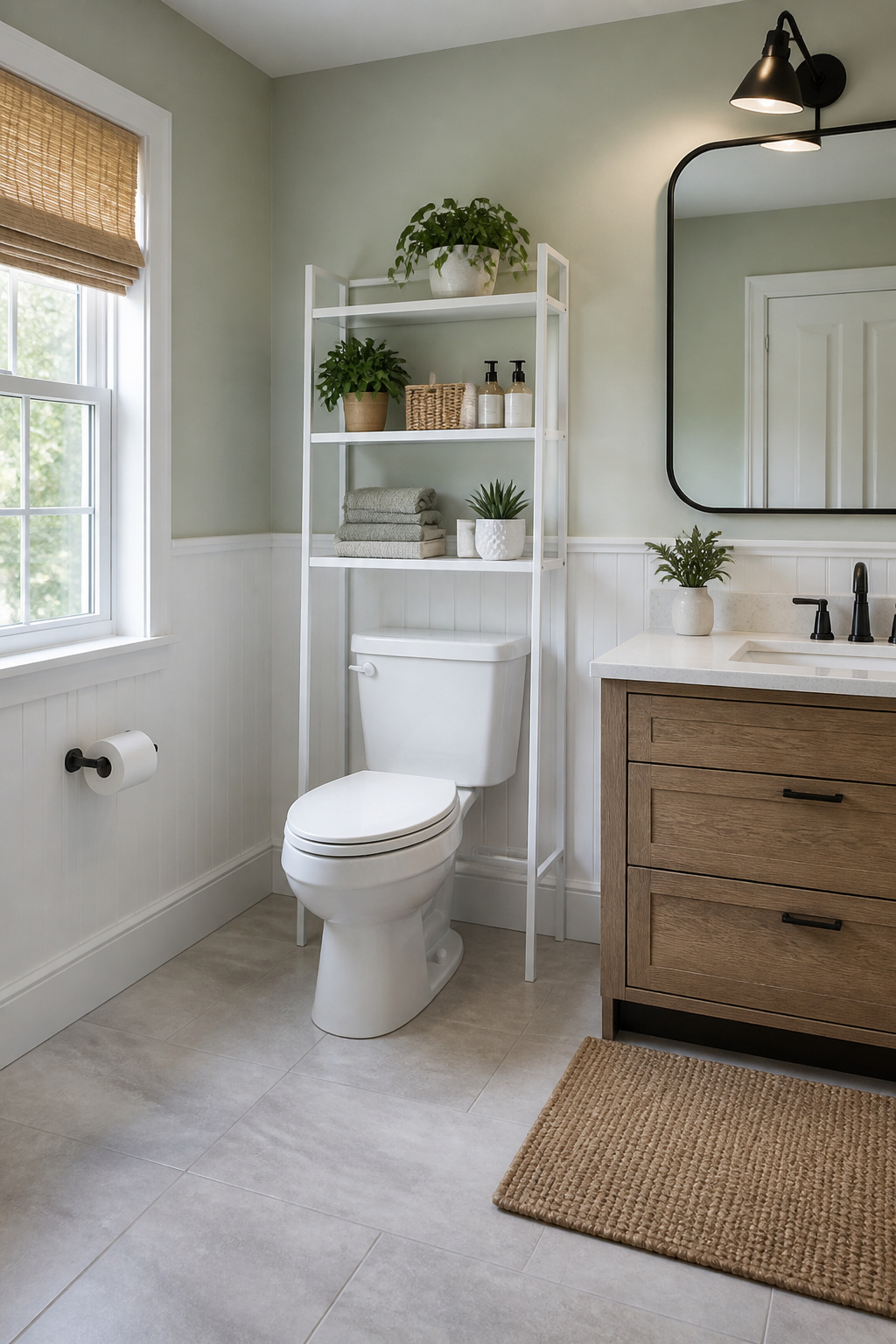
The space above a toilet is usually about 24 inches of blank wall that most renters just stare at while brushing their teeth. A freestanding over-toilet unit, the kind with two legs that straddle the tank, tends to fit standard 30-inch rough-ins without drama, but the clearance between the shelf bottom and the tank lid matters more than the product photos suggest. Anything under 8 inches leaves no room to lift the lid for cleaning or repairs, and you will lift it eventually.
Metal frames with powder coating looked promising in the store, yet the lower bars on mine started spotting inside a year from the steam and splatter of a shower five feet away. Wood veneer swell at the edges was worse, so the replacement was a coated wire rack with a full 10-inch gap and legs that sit slightly forward of the tank, not flush against the wall. That forward stance costs two inches of floor space but keeps the shelf dry enough to hold extra toilet paper and a small basket without rust rings or warping.
9. Think Outside the Box with Storage
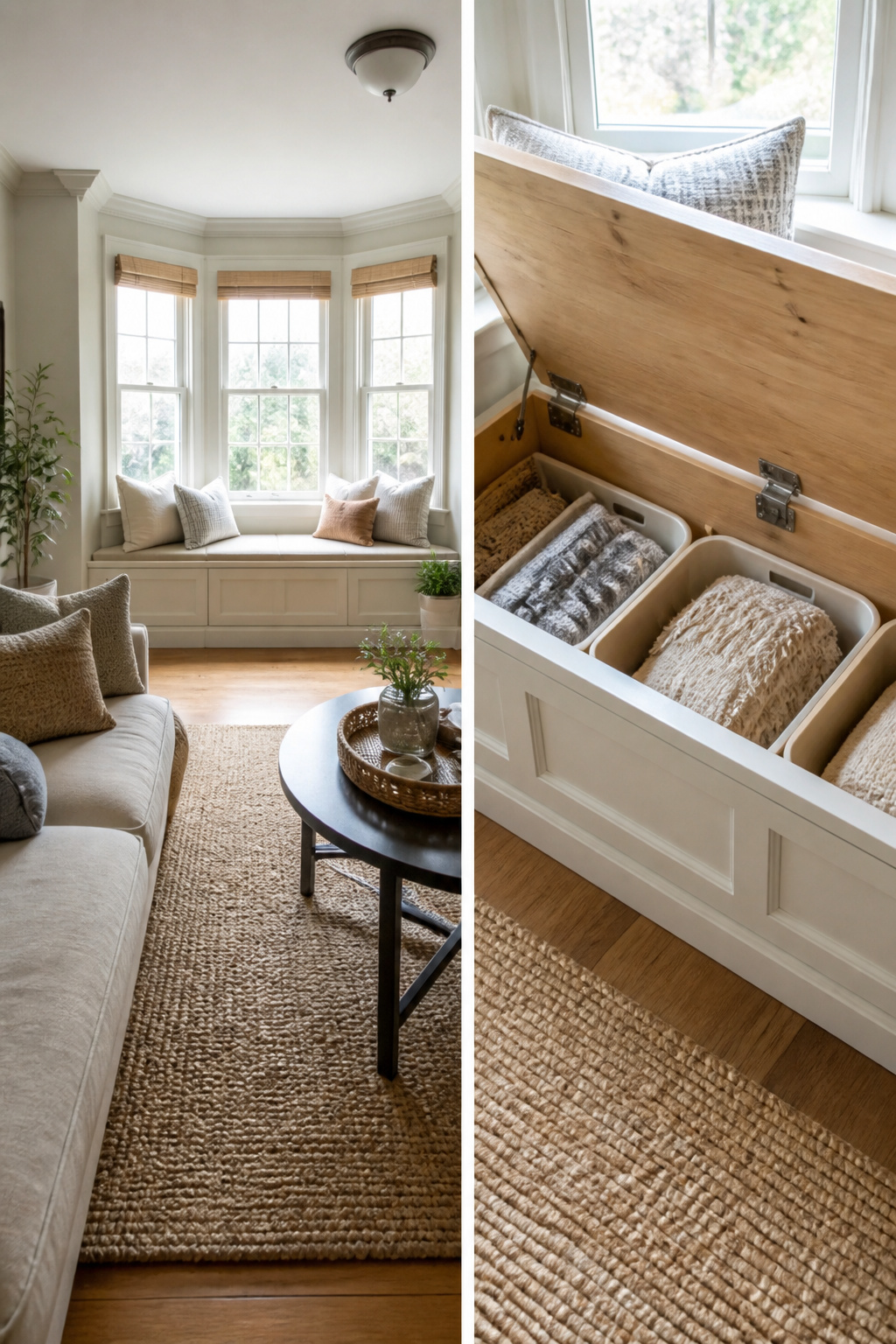
The space under a window seat is dead until you cut into it. In my last rental, the bay window had six inches of clearance above the baseboard. I built a hinged lid with a piano hinge from the hardware store and dropped two plywood bins inside. The bins held linens, winter gloves, and the vacuum attachments that never fit anywhere else. Total cost was under $80, and the landlord never noticed the screw holes in the trim.
Stairwells work the same way if you own or have a forgiving lease. The triangular void under each step can be a drawer, but more often it is a false-front panel that pops off to reveal a cavity deep enough for shoes, tool boxes, or the pet supplies that clutter hallways. A friend in a Brooklyn brownstone did this with lipped pine boards and magnetic catches. The treads looked original because she stained the new wood to match the old, and the 11-pound weight limit on slim rolling carts, something to keep in mind, did not apply to her fixed boxes at all.
For gaps narrower than five inches, the rolling storage carts that fit those slivers between a toilet and vanity do the same work between a fridge and wall, or beside a stacked washer. They are rated light, so do not load them with cast-iron or bulk liquids. Toilet paper, cleaning sprays, and the mail you will sort later are what they are built for.
10. Store Things in Vacuum Bags
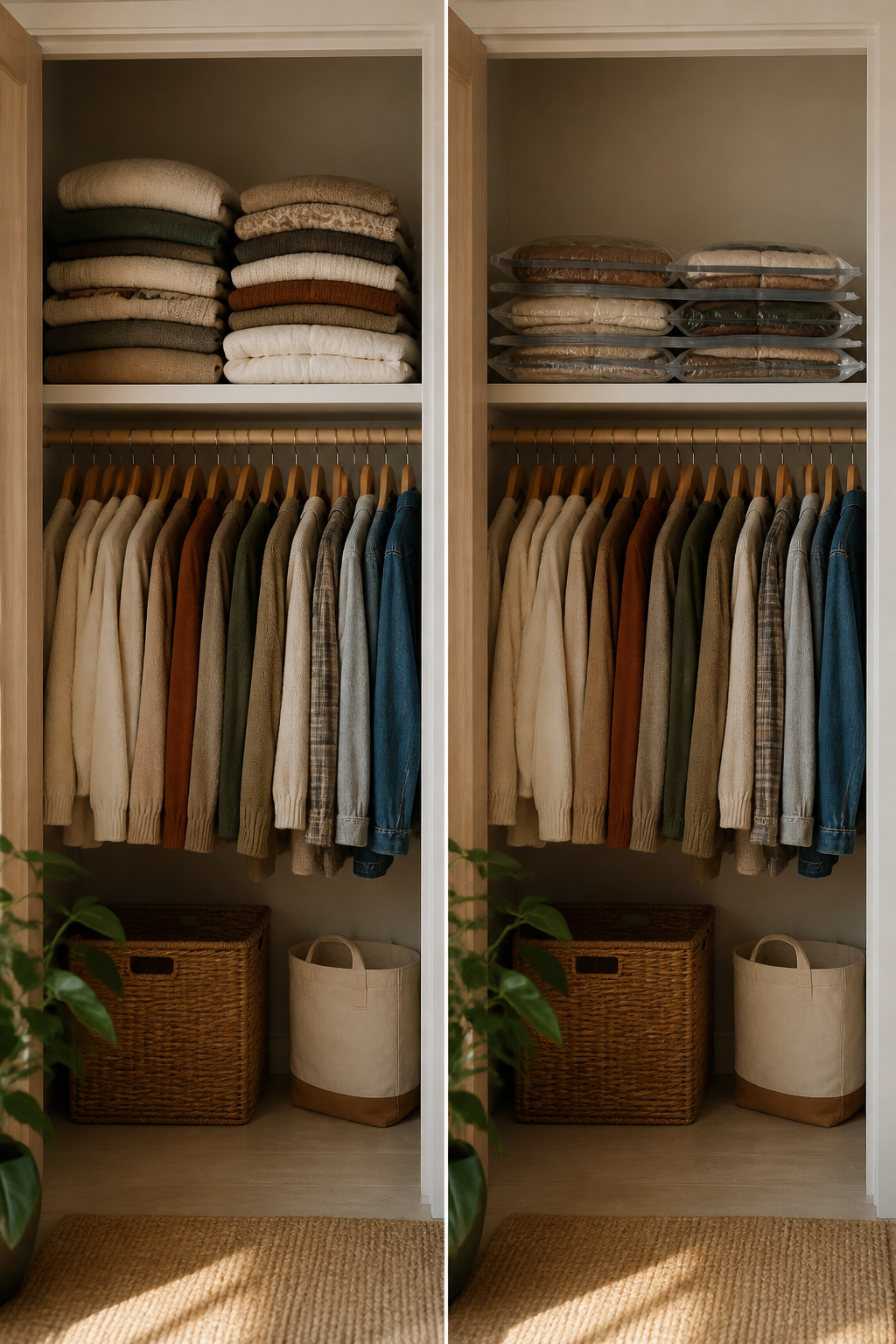
Bulky clothing and bedding eat closet space whole, which is where vacuum bags shrink them down to a fraction of their original bulk. The Spacesaver Vacuum Storage Bags 6-Pack handles the job well enough for seasonal rotation, though the valves can crack if you overtighten them during compression.
I pack away a queen comforter, two pillows, and winter coats come April. The bag pulls them flat enough to slide under a bed frame that sits only six inches off the floor. One bag in my set re-inflated slowly over three months because the seal cap had a hairline split I missed during packing. Now I check caps by pressing the bag before storing it, not after.
The real timeline that works is twice a year, spring and fall, swapping heavy and light layers in one afternoon. Waiting longer means the bags sit compressed for months, and the plastic fatigues faster than the product page suggests.
Declutter First
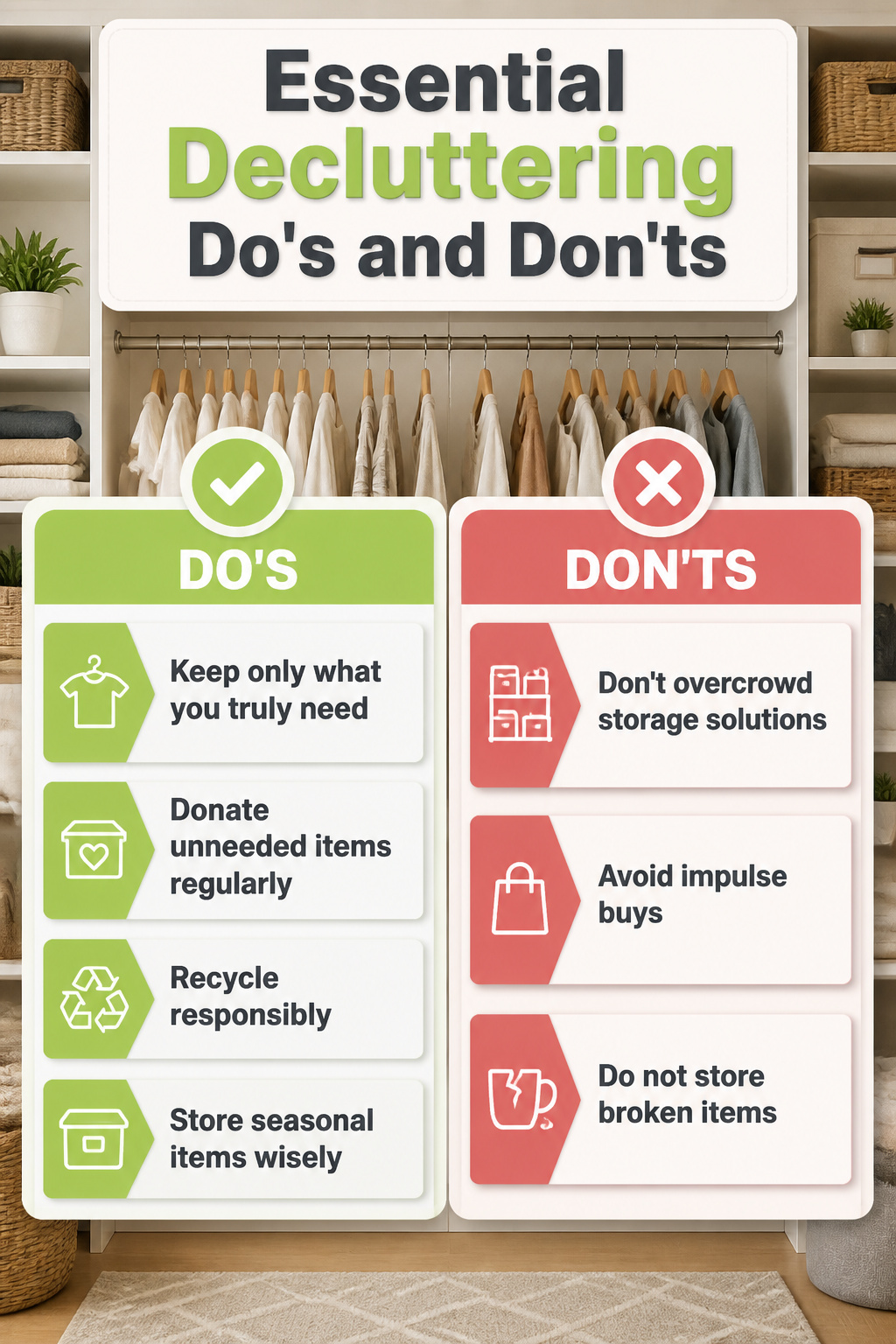
Sorting through a closet I thought was already organized taught me that keep, donate, recycle only works if you’re honest about the "keep" pile. Every source breaks the process into those three buckets, and the room-by-room method matters more than the labels.
In my own reading, the numbers that stuck were the ones people actually reported back: roughly half the volume leaves in a real declutter, and the whole job eats a weekend, not an afternoon. Skip it, and the over-the-door hooks and vacuum bags you buy next sit on top of stuff you should have let go. I have watched that failure twice now, once in a friend’s studio where the new closet system collapsed under retained weight, and once in my own place where "organize" became "reshuffle."
The four-pile version adds "store" for seasonal items, and self-storage enters the conversation there. For renters on a few-hundred-dollar budget, that monthly fee is a judgment call against the square footage you actually live in. The keepers you move out had better earn their rent.
Measure Before You Buy
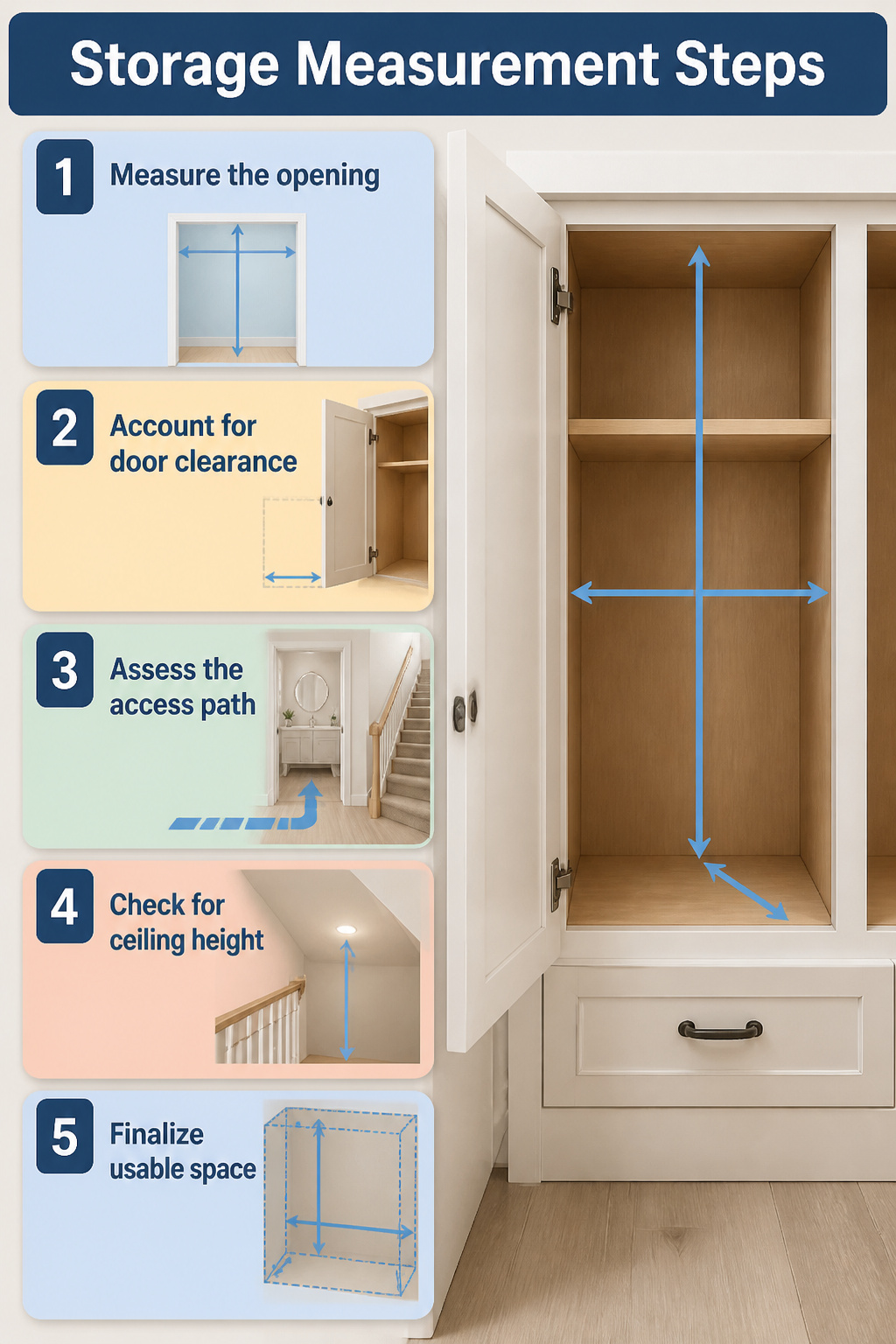
The gap between a storage idea that works and one that collects dust in a return pile is usually half an inch. I learned this the hard way with a rolling cart that cleared the shelf width but caught on the drawer pulls I forgot to account for. Measure the opening, the path to it, and the thing you are opening once it is inside. Doorways are obvious; less obvious is the turn into a bathroom or the low ceiling on a stair landing. For cabinets, depth matters more than width. A twelve-inch depth sounds generous until a shelf lip or hinge takes away two inches and your bins no longer slide out. I keep a folded paper template of my most awkward cabinet in my bag now, cut to the true usable footprint after the door swing and the center divider. The three minutes it took to make has saved me three weekend trips back to the store.
What Multi-Purpose Furniture Costs
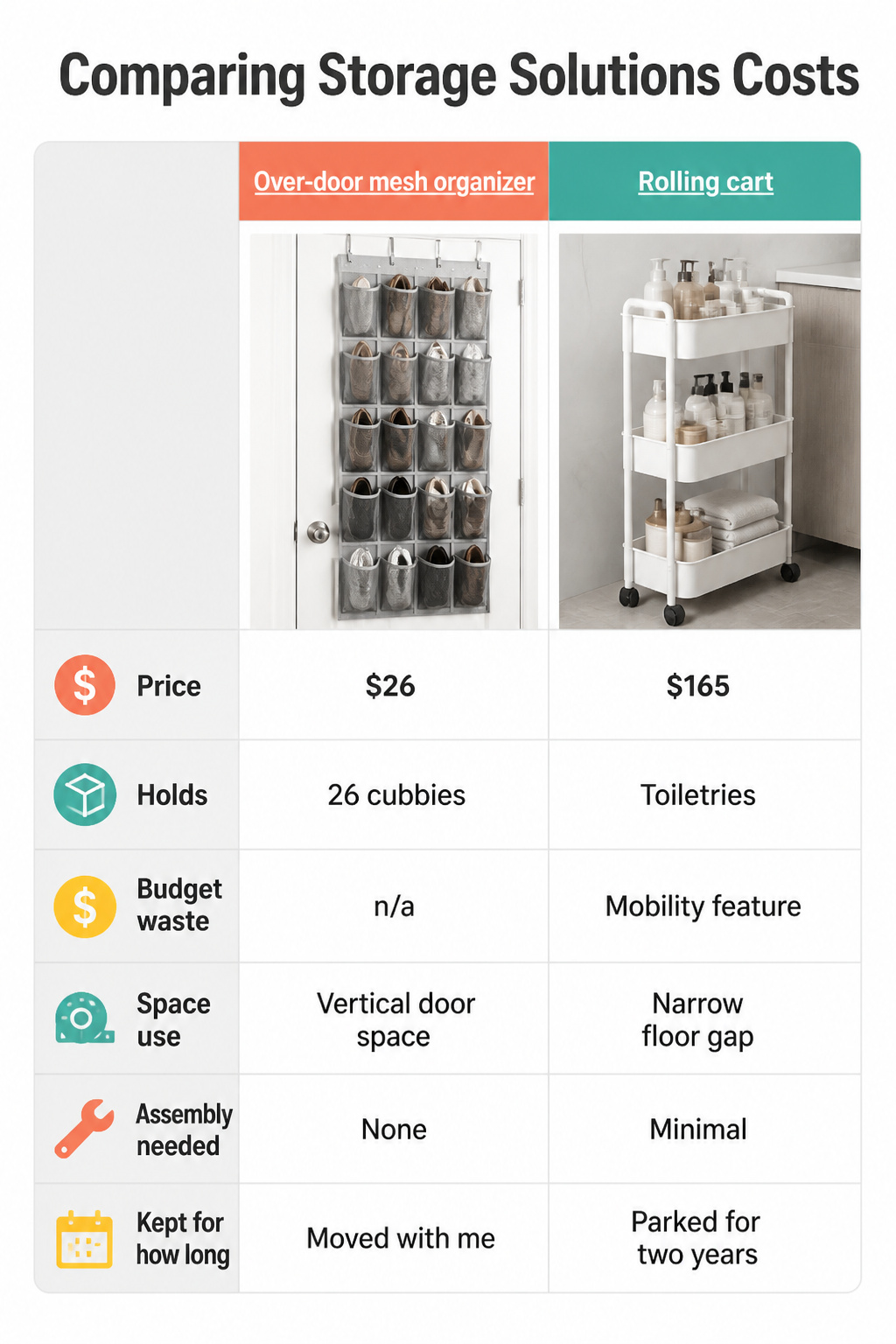
The gap between what storage furniture costs and what it actually delivers is wider than most weekend projects can absorb. I tracked five pieces across two apartments to see where the money went, and the $26 over-door organizer outperformed the $165 cart on dollar-for-dollar storage simply because it used space that was already empty.
| Piece | Price | What It Actually Holds | Where the Budget Went Wrong |
|---|---|---|---|
| Over-door mesh organizer (26 cubbies) | $26 | Shoes to size 11, or accessories, tools, pantry overflow | n/a |
| Rolling storage cart | $165 | Toiletries, cleaning supplies, narrow gaps | Paid for mobility I used twice; static shelf would have worked |
| Magnetic knife rack | $15 | Knives, or metal tools, or small tins with magnetic backing | n/a |
The cart stung because I bought it for a bathroom with six inches of clearance. It rolled beautifully. I rolled it exactly once, to clean behind it, then left it parked for two years. The $15 knife rack mounted on that same bathroom’s door frame and held hair tools with magnetic clips from a hardware bin. The organizer moved with me; the cart got sold for $40 to someone with an actual need for wheels.
Money gets wasted when you shop for the problem you imagine, not the corner you measured.
Corners and Stairwells
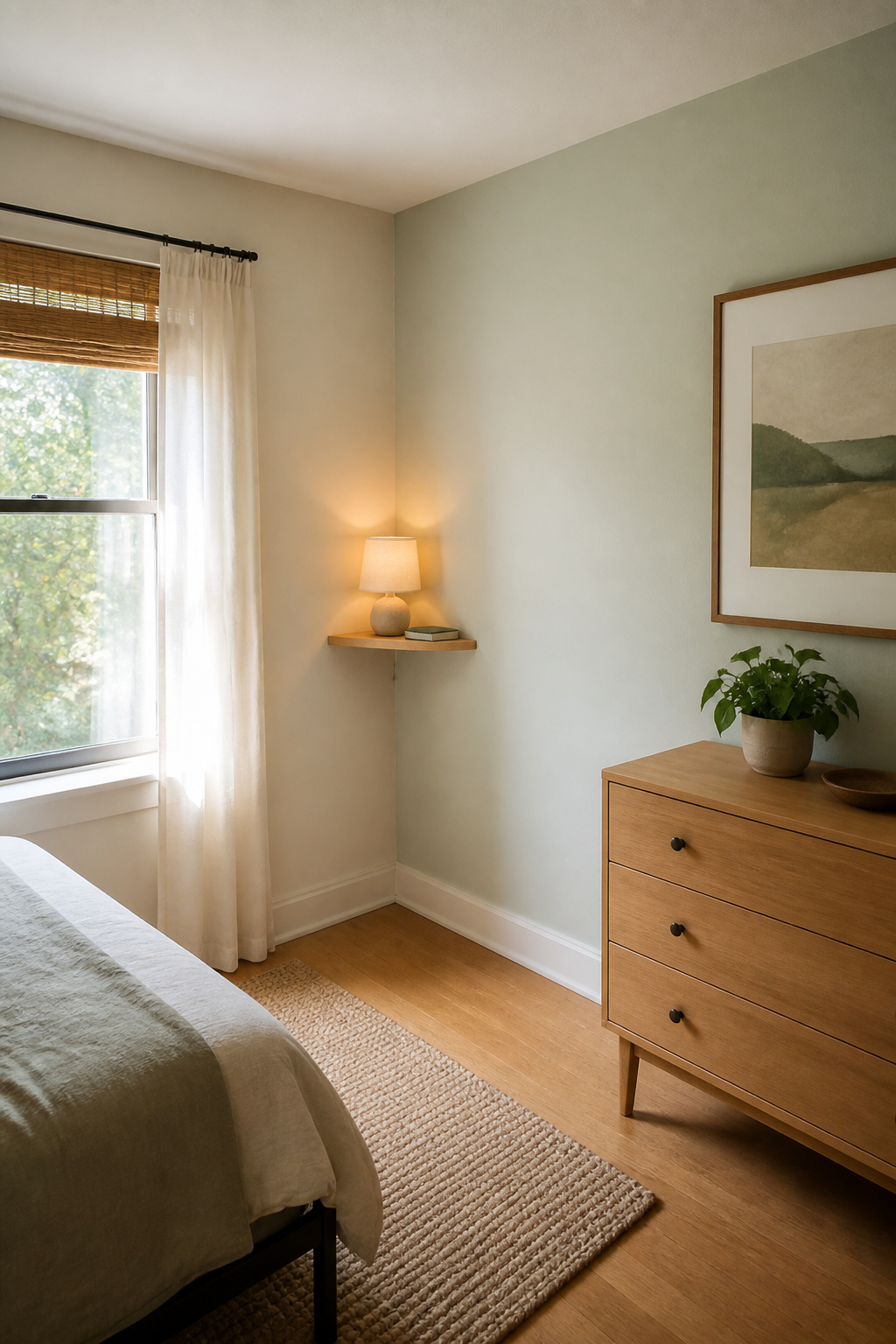
Corners collect dust because furniture never quite fills them, and stairwells sit empty because no one knows what belongs in a pass-through space. Both are dead zones until you treat them as storage real estate.
My last rental had a bedroom corner too tight for a standard nightstand. I wedged a 12-inch triangular wall shelf there instead, just deep enough for a lamp and a paperback. The angle kept the walkway clear, and the shelf cost maybe $25 in pine boards. Two years later I still think about adding that same cut to the closet of my current place, but the geometry there is trickier and I have not sorted it yet.
Stairwells are harder to get right. The wall alongside the steps is sloped, which rules out most cabinets, and anything you install has to survive shoulders brushing past. What convinced me, reading through a dozen setups, is that the only stairwell storage worth building is recessed into the wall or tucked into the gap beneath the lowest tread. Open shelves on a stair wall look tidy in photos and collect scuffs in reality. If you do not own the wall, skip it. A freestanding bench with a hinged seat at the landing works for shoes and needs zero drilling; that is the renter move I would actually use.
What I Would Skip Next Time
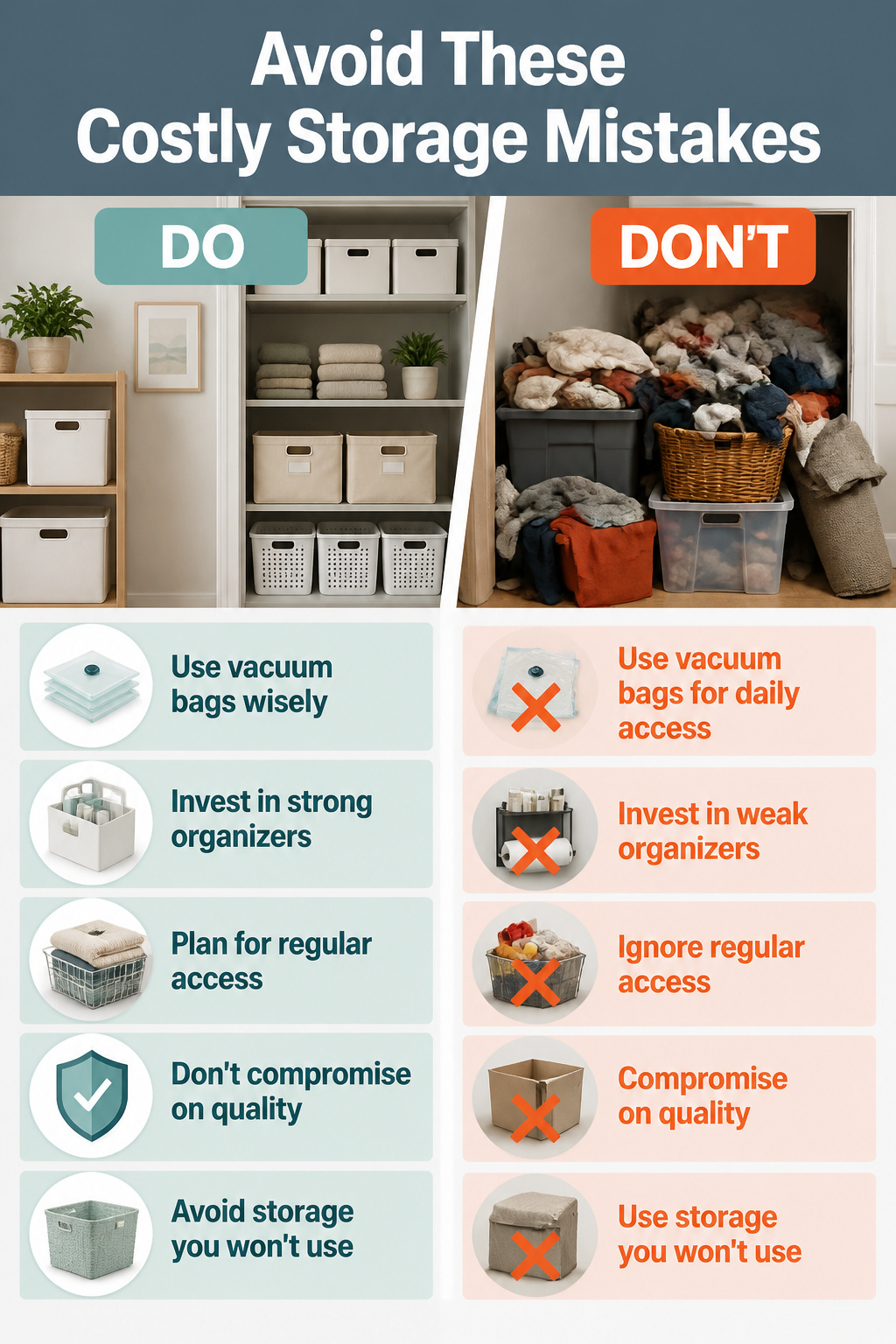
Some small space storage ideas cost more in frustration than they save in square footage. A few that did not survive a real weekend at my place:
- Vacuum bags for daily access. The SpaceSaver six-pack shrank my winter coats beautifully, but the seal failed on two bags within a month. Anything you need more than once a season becomes a chore: unpack, reseal, find the pump. I moved seasonal bedding to them and called it acceptable, but for clothes in rotation they added steps they claimed to remove.
- The Yamazaki Home magnetic kitchen organizer at $55 looks like an elegant fix for a tiny rental kitchen. The magnet is strong, yet my paper-towel roll weighed enough that the whole assembly slid down the fridge face every third or fourth pull. A shelf that needs readjusting weekly is a shelf that stops getting used. For that price, a basic over-cabinet hook and a counter caddy outperformed it.
Frequently Asked Questions
What are some small space storage ideas?
Wall-mounted shelves, over-the-door organizers, and pegboards turn vertical surfaces into storage without touching floor space. Furniture that doubles as storage, like beds with drawers or front-opening ottomans, keeps belongings accessible without adding bulky pieces. Hooks, rolling carts for narrow gaps, and vacuum bags for seasonal items round out the most reliable approaches.
How can I maximize space in a small closet?
Over-the-door organizers with mesh cubbies hold 26 pairs of shoes or rolled clothing and cost about $26. See-through bins on the top shelf keep items visible so you actually use what you store, and metal over-the-door hooks handle damp towels or coats without the adhesive failures that plague stick-on versions in humid spaces.
What furniture can double as storage?
Beds with drawer slides underneath keep out-of-season clothing reachable without lifting the mattress. Front-opening ottomans stay useful because you do not have to clear the top to get inside. The IKEA Ställ shoe cabinet works in hallways at only 6¾ inches deep, and the IKEA Perjohan storage bench hides shoes under a seat in entryways for under $100.


