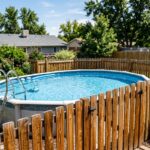
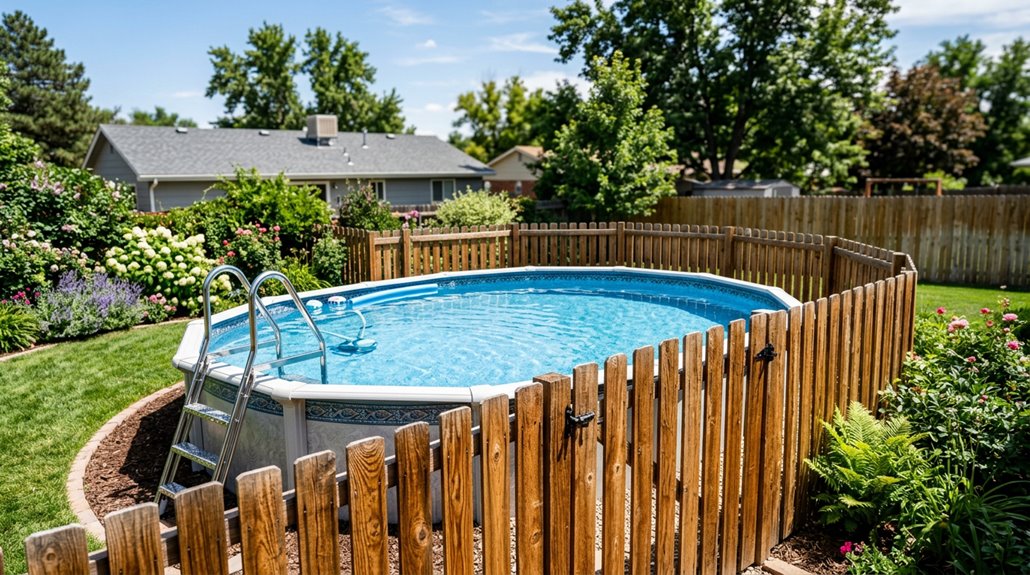
Your above-ground pool almost certainly needs a fence, regardless of height. Pool depth matters more than wall height; anything 24 inches or deeper typically requires barriers in Maryland. I’ve seen homeowners skip fencing, thinking their 4-foot walls were enough, only to face insurance denials and code violations. Your local jurisdiction sets specific requirements; Prince George’s County demands a 6-foot fence, while Montgomery requires 5 feet. Contact your code office immediately to confirm local regulations. Gates must self-close and latch at a minimum height of 54 inches. Failing to comply can result in significant financial penalties.
Does Your Maryland Pool Actually Need a Fence?
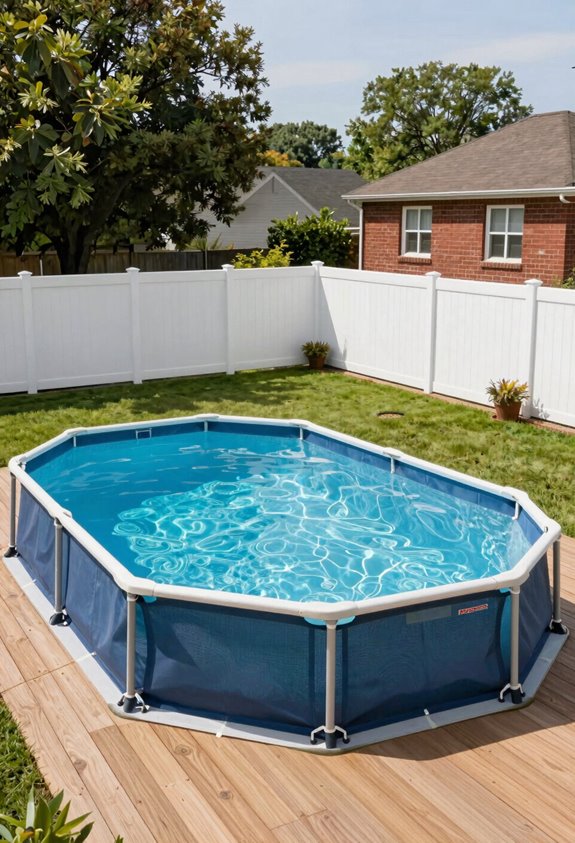
Why does pool fencing seem like a guessing game in Maryland? The answer isn’t straightforward. Your above-ground pool’s fence requirements depend entirely on your location. For instance, Prince George’s County mandates 6-foot barriers, while Montgomery County requires 5 feet. Other jurisdictions might accept 4-foot safety barriers for pools deeper than 24 inches.
Taller above-ground pools with detachable ladders may bypass fencing requirements in some areas, but this is not universal. The specifications for gates and latches are important too; self-closing mechanisms are often legally mandated.
It is essential to contact your local code office or a licensed pool contractor before installing anything. Avoid making assumptions.

Pool Safety Fence for Above-Ground Pools: This pool safety fence creates a protective barrier that helps deter unsupervised pool access by pets and family members

POOL SAFETY KIT - Help to keep your outdoor above ground swimming pool safe with this 24" vinyl safety fence. Helps fight off the risk of accidental pool drownings with this pool barrier.

Removable, mesh, pool safety fencing for use around swimming pools to help protect against accidental falls into the pool.
Pool Height and Ladder Type: The Key Variables
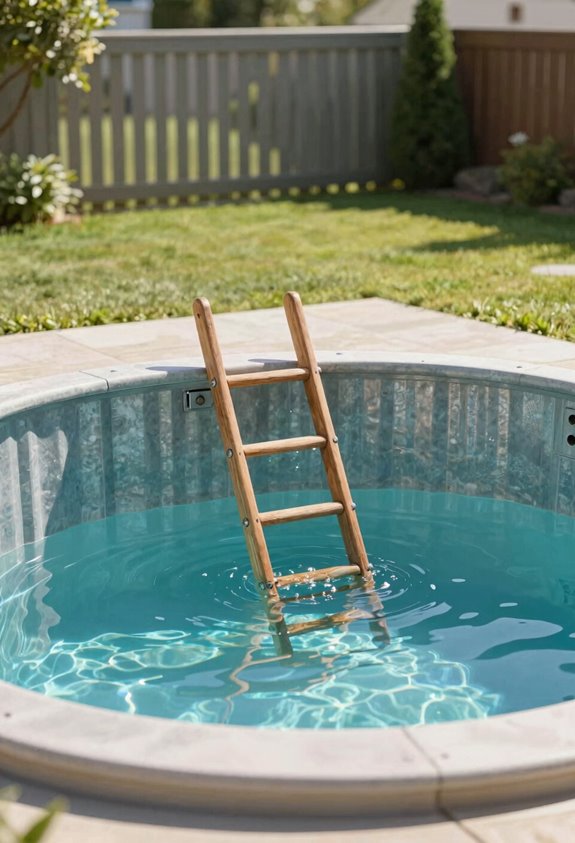
Many homeowners trip themselves up by assuming their 52-inch pool is safe simply because it is tall, or they think a detachable ladder solves all issues.
What actually matters for your above-ground pool includes:
- Pool height alone doesn’t exempt you. Many jurisdictions require fencing around pools that are 24 inches or deeper, regardless of wall height.
- Ladder type changes everything. A permanent ladder attached to your pool is not a compliant barrier. A removable one only works if you actually remove it.
- Barrier height varies by location. Some areas require a minimum barrier height of 48 inches; others want 60 inches.
- Local codes are the boss. Your fence requirement depends entirely on what your code enforcement office specifies.
It is essential to contact your local building department before assuming compliance. This approach is far more cost-effective than dealing with expensive corrections later.

Easy-to-install, do-it-yourself gate kit for use with the Pool Fence DIY safety system; helps keep kids safe from accidental falls into your pool

[MATERIAL/FINISH] Made of high quality carbon steel ,Black powder coated. Size:14". Fit for Side Gate,Front Gate,Single Gate, Privacy Gate

POOL SAFETY KIT - Help to keep your outdoor above ground swimming pool safe with this 24" vinyl safety fence. Helps fight off the risk of accidental pool drownings with this pool barrier.
When Decks Trigger New Fencing Requirements
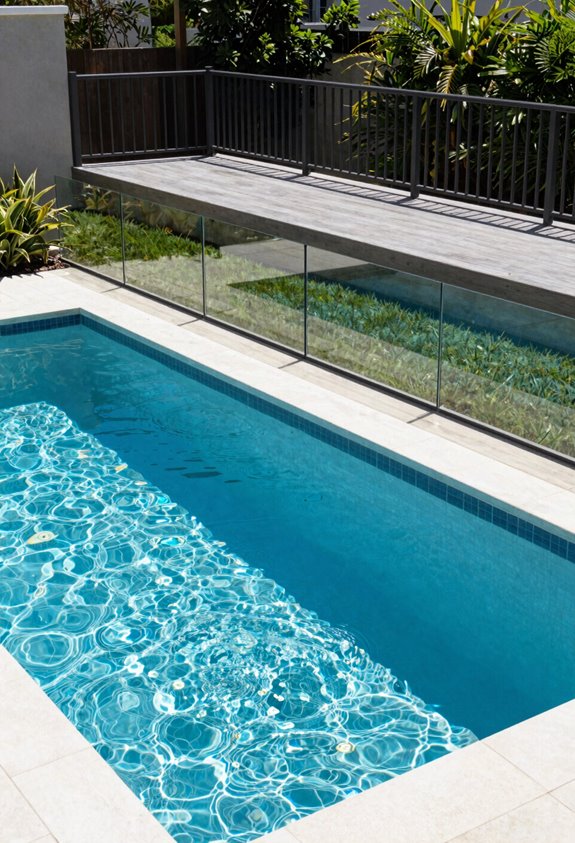
When homeowners build a deck, they often believe everything is fine because the pool wall is still intact. However, when the inspector arrives, they may receive unexpected news.
The raised platform significantly alters fencing requirements. A deck introduces new access points that can circumvent your pool’s natural barrier. Local codes typically require a complete isolation fence with a compliant gate; this is mandatory, not optional.
The height of the deck in relation to ground level is also crucial. Even a tall above-ground pool wall can become inadequate when a deck is attached. It is advisable to verify barrier fence and gate compliance standards with your local building authority before starting construction. This approach is more cost-effective than making retrofits later.

Pool Safety Fence: The premium above-ground pool safety fence is crafted from high-quality materials to prevent accidental drowning. This essential safety feature is ideal for keeping children and pets secure around your pool area.

SAFE AND DURABLE: Unlike above ground leaf nets and winter covers this Safety Net can hold up to 485 lbs when properly installed. It is made of strong polyethylene netting that is treated with UV inhibitors
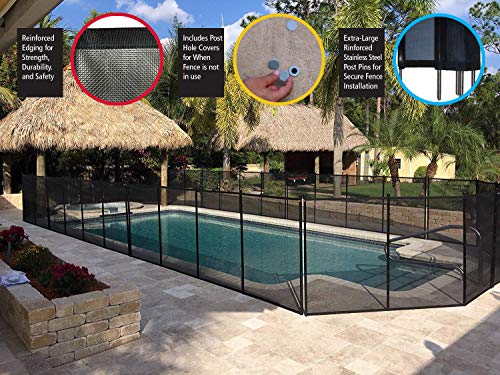
POOL SAFETY FENCE – Protects against unauthorized access to your pool, keeping your loved ones safe. Sturdy & extremely safe while in use, it’s easy to remove. Must be installed on cement or concrete tiled decks. NOT recommended for use with pavers. NOTE: You must determine the perimeter surrounding your pool area to be fenced in, and the appropriate number of 12’ fence segments must be ordered.
What Inspectors Check for Fence Compliance
- Barrier height—minimum 48 inches, though some jurisdictions demand 60 inches of unobstructed protection.
- Gate mechanics—your gate must be self-closing and self-latching, with the latch sitting at or above 54 inches.
- Picket spacing—vertical gaps can’t exceed 4 inches, preventing kids from squeezing through.
- Bottom clearance—maximum 2–4 inch gap stops entrapment and sneaky crawling access.
Inspectors often reject otherwise solid fencing due to overlooked details. They are ensuring the safety of children. Adhere to these measurements to avoid issues. The inspector’s thoroughness serves your interests.

SELF-LATCHING DESIGN: This heavy duty latch can make the door closed easily with a slightly push. On the other side, press the fingertips lightly to open the door smoothly. A pad lock can be used for adding security, and the hole diameter is up to 0.3".

【Child-Resistant】Pool gate latch is horizontally and vertically adjustable, reversible design allow gate to swing both ways (right or left handed) with a easy grip release knob. Pool Latch will help you to keep your little ones safe as the handle is up above the gate.
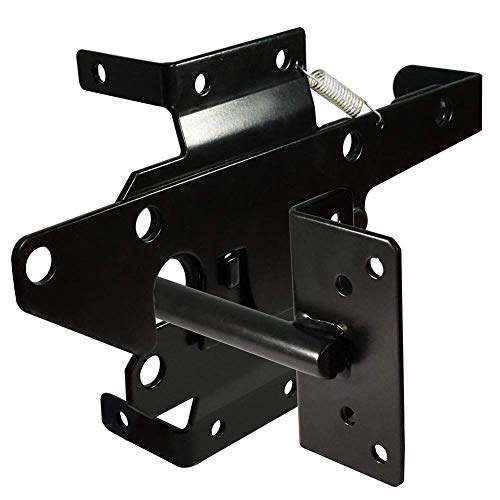
★Premium protection : SANKINS yard gate latch fences lock is for inward and outward swinging wood or metal doors. Its thick steel construction uses gravity locking to provide true safety for dogs, pets, and babies, by preventing predators from getting into your garden.
Why Your Insurance Requires Above-Ground Pool Fencing
Passing inspection is one thing; satisfying your insurance company is another challenge. Your insurer prioritizes their bottom line and requires specific fence standards to maintain your policy coverage. This includes a minimum height of 4 feet, self-closing gates that function properly, and secure latching mechanisms. They will examine everything closely; even those climbable landscaping features you thought were decorative can raise concerns. Insurers assess pool safety through a risk lens, and failing to comply can lead to denied claims or canceled policies. It is essential to verify insurer rules before building. Your fence design must meet both local codes and your insurance company’s standards. Compliance is necessary to ensure coverage when issues arise.

Pool Safety Fence for Above-Ground Pools: This pool safety fence creates a protective barrier that helps deter unsupervised pool access by pets and family members

Pool Safety Fence for Above-Ground Pools: This pool safety fence creates a protective barrier that helps deter unsupervised pool access by pets and family members

Adds safety and style to any above ground steel wall pool