
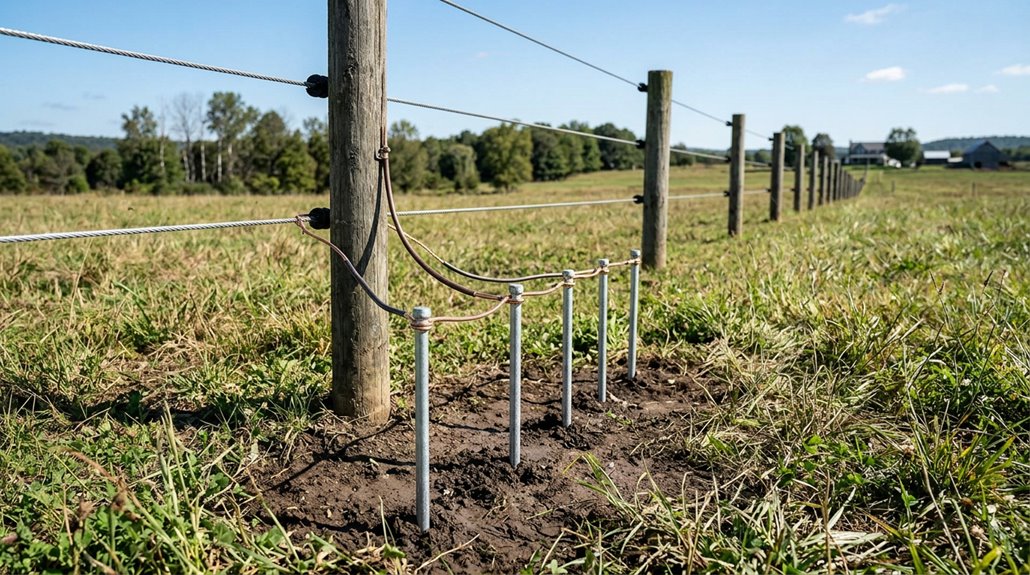
Five ground rods? Not always. Skimping on this can undermine your entire system. Your actual need depends on energizer output: under 1 joule requires just one quality rod, while 25 joules demands five, and 35 joules requires seven. Soil type also plays a role; sandy terrain needs more rods than moist clay. Spacing them 10 feet apart and driving them 6 feet deep can significantly improve performance. The important question is what your specific setup actually requires.
How Many Ground Rods Does Your Energizer Actually Need?
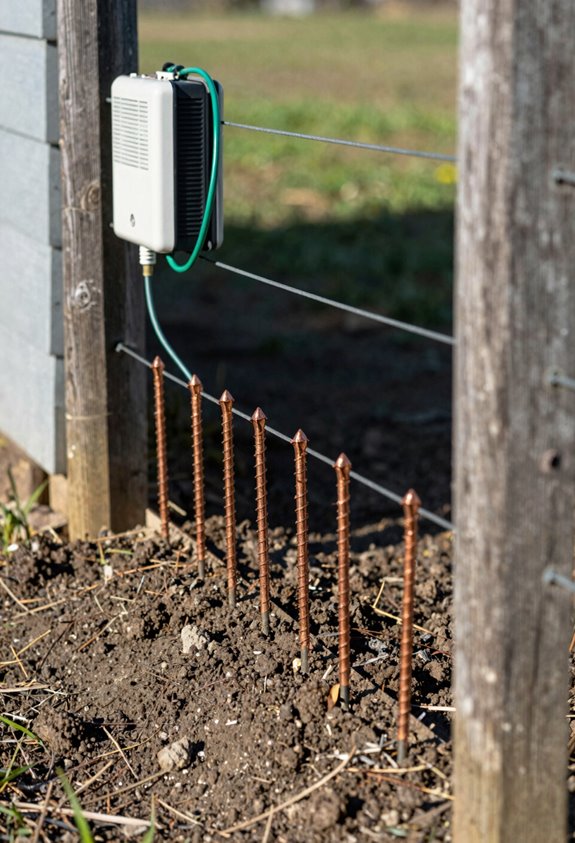
Why do so many people focus on achieving that specific number of ground rods when many likely do not test their fence’s effectiveness?
From my experience, you don’t always need five rods. Industry guidance suggests three rods for energizers up to 15 joules, five for 25 joules, and seven for 35 joules, assuming average soil conductivity. I’ve observed low-output systems (under 1 joule) functioning well with just a single quality rod. A portable 3-foot ground rod is effective for small solar fence energizers when installing multiple rods isn’t feasible.
The key is to position your grounding rods within 10 feet of your energizer and connect them with proper ground rod clamps. Testing your fence energization directly is essential to verify whether your ground wire setup is effective.

One Set Include:1/2” diameter 18” long ground rod.One green 4ft 12AWG UL Listed Tinned Copper Wire electric fence leads with Crocodile clips and cable lugs for Electric Fences,Antennas,Generator.

Set of 3 Ground Rod Kits: Includes 3 pieces of 4 feet long ground rods , 3 pieces of 3/8’’ copper alloy clamps. Ground clamp is ideal for #12 sol - #2 AWG conductor.

Oval-eye ground rod 1/2’’(12mm) diameter and 17.5’’long.Preinstalled with a convenient tinned copper ground wire lug for wires up to 4 AWG solid or stranded .
How Far Apart Should Your Ground Rods Be?
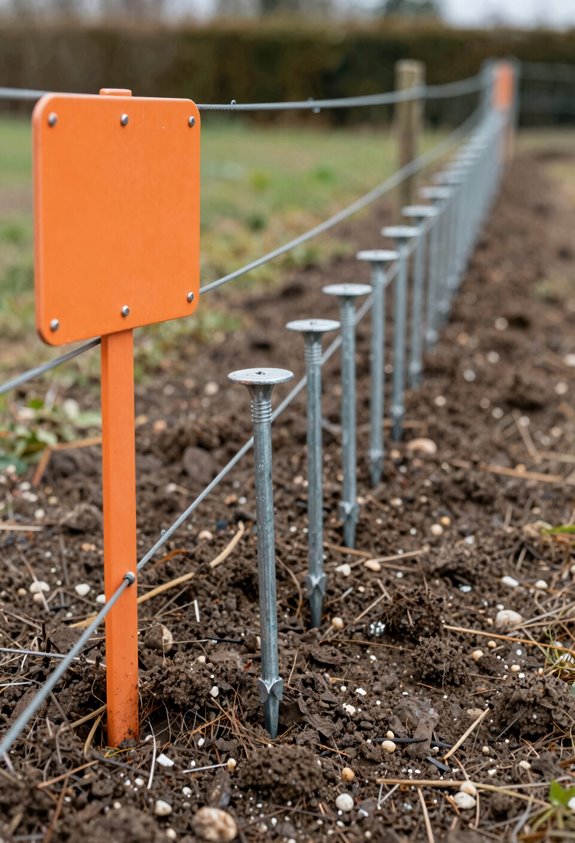
Just how far apart should you space those ground rods? This is where many people make mistakes in their grounding system, often through trial and error.
You need at least 10 feet between each rod. Closer spacing can reduce your system’s effectiveness by limiting the moisture contact zone you’re trying to develop.
Here’s what I recommend for your three rods:
- Space them 10 feet minimum apart to maximize your reception field.
- Aim for 18 feet total moist-contact depth across all three rods combined.
- Drive each rod at least 6 feet deep into moist soil for maximum conductivity.
Proper spacing significantly improves how your electrically fenced pasture performs. Skipping this step results in ineffective rods that do not work properly. Measure twice, drive once.

Pigtail ground rod 1/2’’(12mm) diameter and 18’’long.Preinstalled with a convenient copper ground wire lug for wires up to 4 AWG solid or stranded.

8’ Grounding rod kit:2 pieces of 4 feet long and 5/8 inch diameter grounding rod , 2 copper coupler,2 pieces of 5/8-inch ground rod clamps,1 driving stud,1 driving spike.
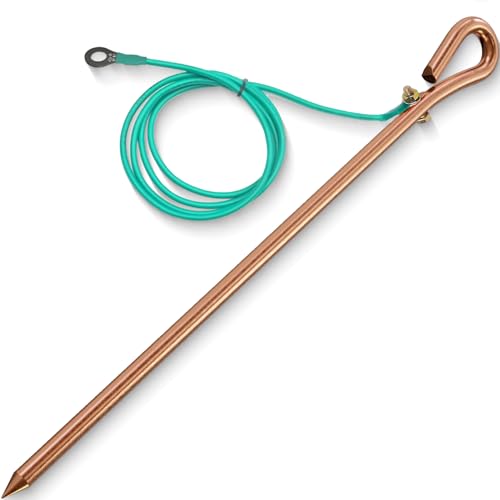
COMPLETE GROUNDING KIT: Includes 1x 17.4-inch-long, 1/2-inch-diameter copper-clad steel ground rod and 1x 6.2ft 12 AWG grounding wire for a compact, ready-to-connect setup.
Picking the Right Rod Material and Wiring
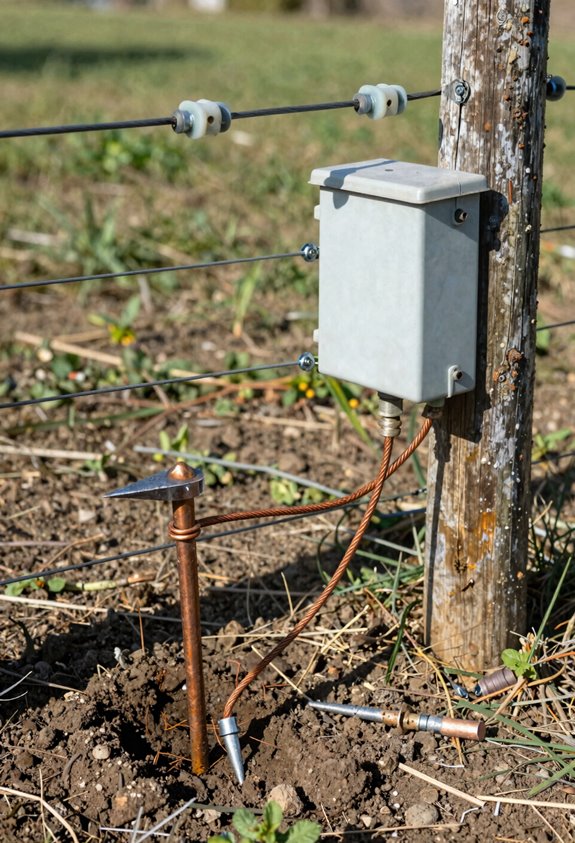
Now that you’ve spaced your rods properly, the material you choose for those rods and the wire connecting them will significantly impact your setup. I’ve learned this through experience.
| Rod Type | Best For | Key Benefit |
|---|---|---|
| Copper grounding | Maximum efficiency | Superior conductivity |
| Copper-clad | Budget-conscious setups | Acceptable performance |
| Galvanized steel | Cost savings | Durable option |
I recommend using copper grounding rods for optimal charge transmission, although they come at a higher cost. For wiring, match your energizer’s power: under 20 joules calls for 12½ gauge galvanized wire, while over 20 joules requires 6-gauge copper or lead-out cable.
Avoid mixing metals to prevent corrosion, which can damage systems. Use copper wire with stainless clamps or keep everything galvanized. By bonding three ground rods tightly to your energizer’s ground terminal, you create a reliable circuit that performs well season after season.

Southwire ground clamps are used to connect copper ground wire to a water pipe, copper tubing or ground rods. This clamp features an integrated lay in lug for faster install. Product is suitable for direct burial.

Material: Copper ground rod clamp with galvanized bolt, standard duty. Maximum service and conductivity. to provide a solderless connection between ground wire & ground rod.
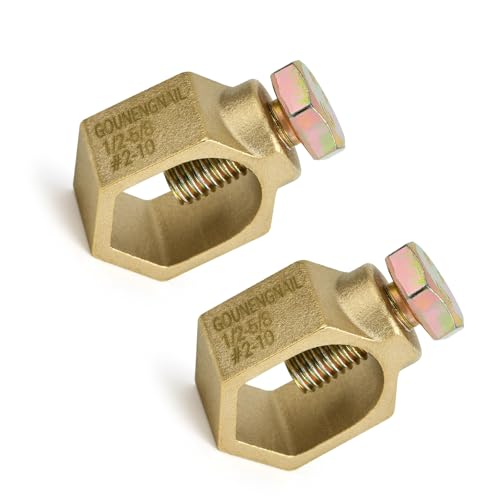
Material: Copper ground rod clamp with galvanized bolt, standard duty. Maximum service and conductivity. to provide a solderless connection between ground wire & ground rod.
Does Your Soil Type Require Extra Rods?
your soil’s conductivity significantly impacts the effectiveness of your ground rods. I discovered this when my sandy pasture struggled to hold a charge; dry soil hinders proper grounding.
Here are some findings:
- Sandy or rocky terrain demands extra rods; I now use five to seven instead of the minimum three.
- Low-moisture conditions benefit from a two-wire system or additional galvanized rod clamp setups to enhance conductivity.
- Moist, clay-rich soil works well with standard configurations.
Soil conductivity directly affects how well ground rods function. In dry conditions, investing in additional rods is essential. Aim for at least six feet of moisture contact per rod to improve your fencing reliability.

HENGTONG Electric fence underground cable can prevent voltage loss across connections with your electric fence. This weather-resistant cable is for use between the fence charger and fence wire or under permanent gates, ensuring proper grounding and make sure connections are strong
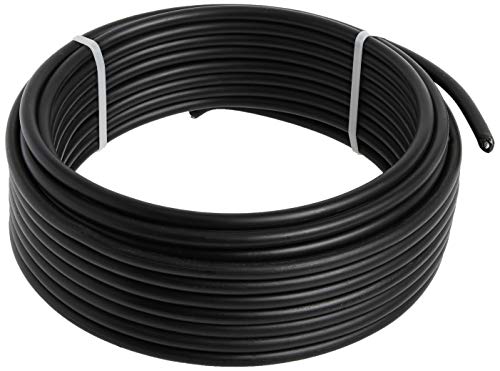
50 FOOT WIRE: UGC50 includes 50 feet of Class III galvanized wire

Includes: OOK 50141 12 Gauge, 100ft Steel Galvanized Wire
Do Long Fences or Challenging Soils Change Your Rod Count?
Why do some electric fences work flawlessly while others constantly fail? The answer often lies in ground rods and grounding. Longer fences require more ground rods than many anticipate. When running a lengthy perimeter through challenging soil, I don’t settle for the minimum of three rods; I increase it to five or seven, spacing them at least 10 feet apart to enhance the reception field.
Poor soil conductivity signals the need for additional ground rods. I’ve learned that skimping in this area reduces effectiveness. I always test energizer output after installation to ensure adequate voltage reaches my animals. Investing in extra grounding infrastructure is more efficient than troubleshooting fence failures later.

【Pure Copper Wire Material】:This fully annealed pure copper cable (OFC) is made of 423 strands of 0.2mm AS copper wire and solvent resistant EPDM rubber insulation sheath (specific voltage, outer diameter, and stranded wire data can be found in the cable table for details)

115 Max Amps (up to 50 feet), Rated up to 600 volts, -58°F to +221°F (-50°C to +105°C)

【Our Apologies】lf you were sent 1FT battery cables in error, please contact us. You won't send the wrong part back. We'll issue a refund forthe incorrect part immediately.