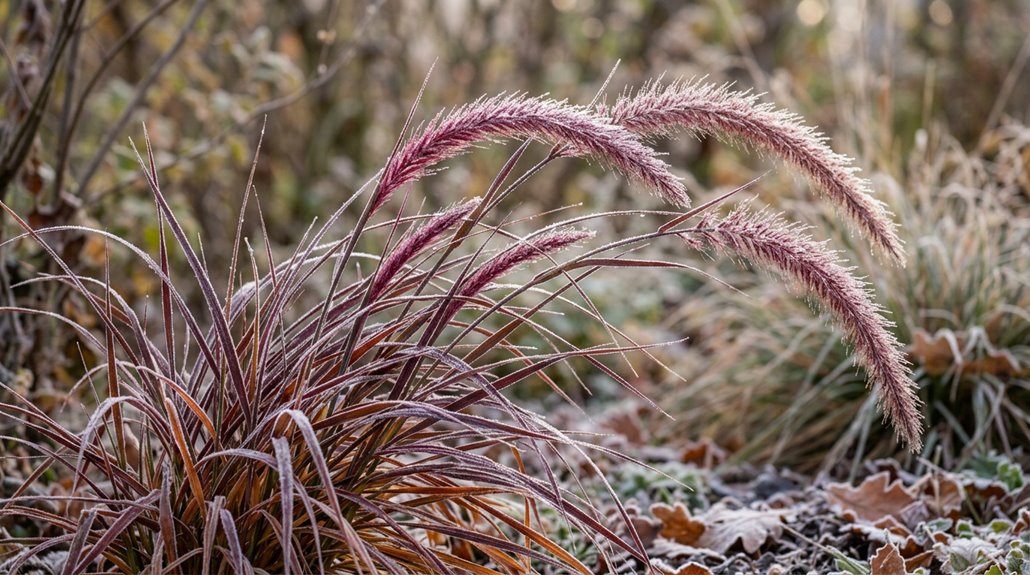
Purple fountain grass won’t survive winter outdoors unless you’re in Zone 8 or warmer; even then, it’s risky.
Below Zone 7, freezing temperatures can kill the plant’s cells and vascular tissues.
Your best option is to dig it up, divide it into small clumps, pot them in quart-sized containers with fresh potting mix, and grow them indoors under bright lights throughout the winter.
Come spring, you’ll have thriving divisions ready to replant.
This strategy has proven effective if you follow the specific steps.
Purple Fountain Grass Isn’t Winter Hardy Below Zone 8
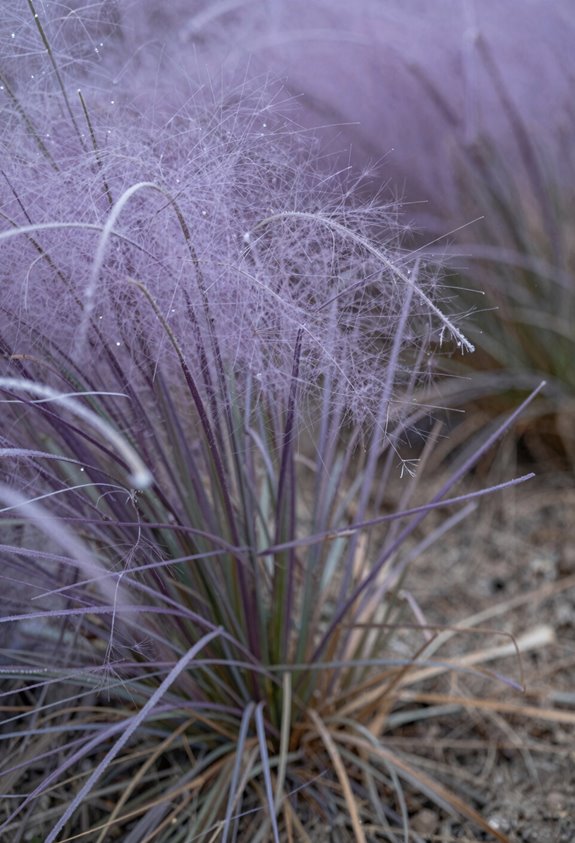
Why do so many gardeners in Zone 7 insist on planting purple fountain grass outdoors, only to watch it disappear come January? I’ve been there, charmed by those stunning purple plumes, convinced my microclimate would be different. The hard truth is that purple fountain grass lacks winter-hardiness below Zone 8. Those brutal 0–10°F temperatures in Zone 7 and colder will kill this beauty outright. I learned this the expensive way. Some sources claim Zone 8–9 survival around 10°F, but many Zone 7 areas remain unreliable. Even sunward walls and warm pockets won’t guarantee protection. You’ll either bring it indoors, wrap it heavily, or replace it. I’ve done all three. It’s not failure; it’s a gardening reality.


STRIKING SMOKY PURPLE-BLACK PLUMES: This Black Fountain Grass features fuzzy, smoky purple-black flower spikes that emerge in late summer, creating a stunning contrast with its deep green foliage. The plumes add a dramatic touch to your garden that lasts well into the fall.

ORNAMENTAL GRASS: Dwarf Black Fountain Grass features striking deep purple-black plumes that create dramatic visual interest in any garden landscape.
Why Do Cold Temperatures Kill Purple Fountain Grass?
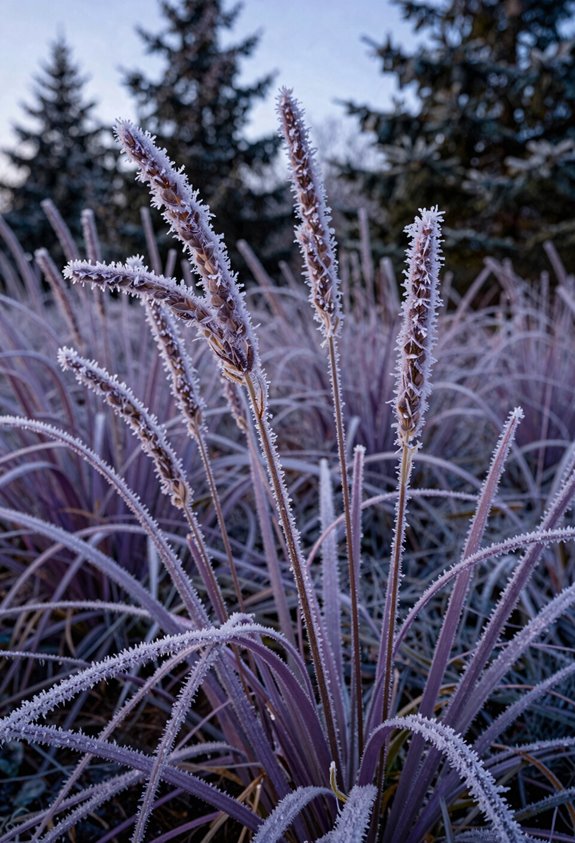
I’ve learned that purple fountain grass can’t handle freezing temperatures. The delicate cells rupture when temperatures drop below 20°F, and anything in Zone 7 or colder, with winters between 0–10°F, likely results in a dead plant unless you have a rare microclimate providing extra warmth. The hardiness of your grass depends on geography; Zones 8–9 might survive occasional cold snaps, but I wouldn’t rely on that for my garden. Cold temperatures damage the tissue, and once that happens, the plant cannot recover.

ALL-NATURAL MIX: Burpee Organic Premium Potting Mix is formulated with plant food & coconut coir to promote seed & root growth and healthy flower, vegetable & herb plants. OMRI Listed for organic use.

HELPS PREVENT YELLOWING LEAVES, BROWN SPOTS & OVER-WATERING: A chunky, well-aerated mix that drains quickly, won't compact, and is nearly impossible to over-water.

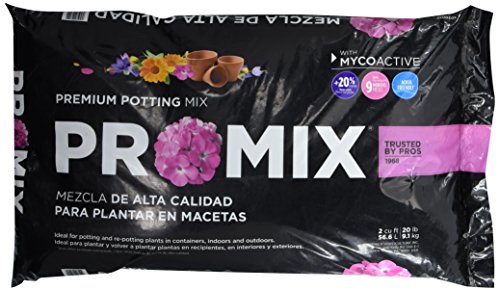
READY TO USE MIXTURE - The same formulation as used by professional growers
Temperature Tolerance Thresholds
purple fountain grass simply can’t tolerate temperatures below about 20°F, which poses challenges for anyone trying to keep this beauty alive through winter.
The plant’s survival depends heavily on your USDA Hardiness Zone. Here’s what matters:
- Zone 8–9 protection: These zones rarely drop below 10°F, giving your grass a chance for survival.
- Zone 7 reality check: When temperatures reach 0–10°F, frost damage becomes inevitable; many plants die back completely.
- Below Zone 7: Outdoor overwintering is not an option; ground hardiness falls below the plant’s tolerance threshold.
In most regions, this grass behaves like an annual. This means you either need to bring it indoors or accept that it will likely perish. No amount of mulching ensures survival when extreme cold arrives.
Cellular Damage From Freezing
Ice crystals form within the plant cells, causing significant cellular damage. These frozen crystals puncture cell membranes, leading to the leakage of essential fluids. Once this occurs, tissue death follows quickly.
Prolonged freezing also harms the vascular tissues, which are crucial for transporting water and nutrients. This results in foliage collapse, browning, and a drastic decline in the appearance of your purple grass. The crown and roots also suffer from compromised integrity. Below 20°F, fountain grass cannot withstand these cellular failures. Therefore, winter protection is essential for survival.
Zone Hardiness And Survival
Why does geography matter so much when you’re growing fountain grass? Your hardiness zone determines whether your purple beauties survive winter or become expensive mulch.
Here’s what I’ve learned through trial and error:
- USDA zones 8–9 offer the best shot, tolerating dips to around 10°F without total winterkill.
- Zone 7 and colder present serious risks, with temperatures plummeting to 0–10°F that can devastate your plants.
- Microclimates matter tremendously; sunny walls and urban heat pockets create sheltered spots where plants sometimes survive against the odds.
If you’re below zone 8, you’re essentially gambling. Your winter hardiness depends entirely on your location. Sometimes plants die back and regrow from roots; sometimes they don’t return at all. Know your zone and plan accordingly. Bring them indoors if needed.
Check Your USDA Hardiness Zone First
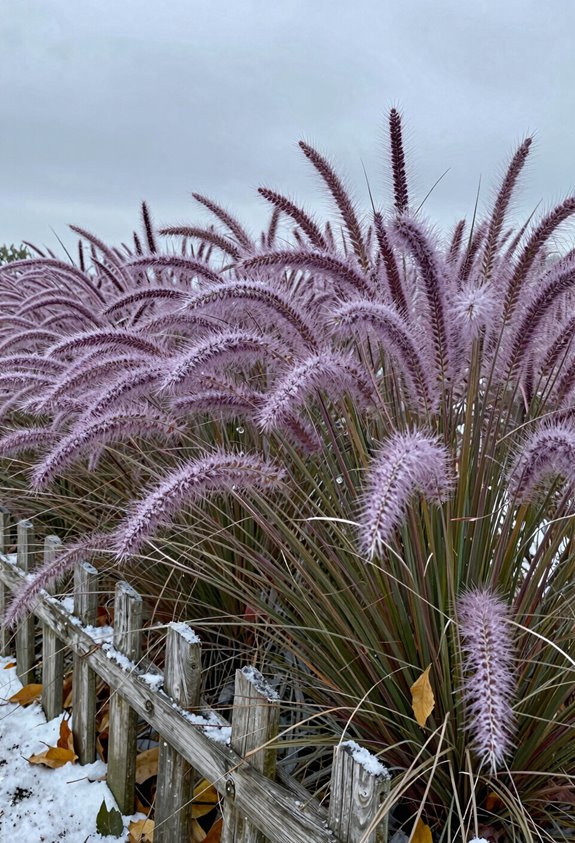
I can’t stress this enough: knowing your USDA hardiness zone is the starting point, because purple fountain grass simply won’t survive outdoors in zones colder than 8. You’ll want to check what zone you’re in; zones 8–9 handle temperatures around 10°F, while zone 7 dips to 0–10°F. Microclimates are also important, so a sun-facing wall or warm pocket in your yard might give your plant a better chance, even if your zone suggests it shouldn’t thrive.
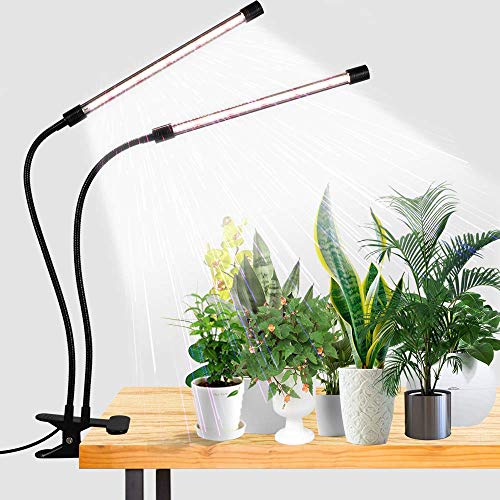
6000K White Light - equipped with 10 Red + 74 White LEDs, this growing Lamp is similar to the full-spectrum sunlight at noon,that is professionally designed for indoor garden plants.Moreover, its color rendering index is as high as 95, the light is soft and flicker-free, which is very suitable for reading lamp

FULL SPECTRUM & NATURAL LIGHT: A19 full spectrum grow light appears 4000K white to eyes but has a red/blue light spectrum. Same as natural sun shine, perfect for tomatoes, cucumbers, peppers, leafy greens and herbs at all growth stages.

Super Bright Plant Light with High Power Output: Compared with other 10W desktop succulents light, our 36W (with 12V/3A Plug) and is equivalent to a 100W halogen bulb, more brighter, more stable and more efficient. It is a great option for your indoor plants.
Cold Hardiness Zones Overview
Where you live significantly impacts the ability to keep purple fountain grass alive through winter. Your USDA hardiness zone determines whether this stunning grass can survive outdoors or needs to be treated as a seasonal player in your garden.
Here’s what I’ve discovered about cold hardiness:
- Purple fountain grass thrives in Zones 8–9, where winter temperatures rarely dip below 10°F; this is the ideal range.
- Zone 7 gardeners face more challenges, as typical minimums can reach 0–10°F, which places considerable stress on this plant.
- Microclimates can sometimes make a difference; I’ve seen it survive near south-facing walls where urban heat creates warmer pockets.
If you’re in a colder zone than 8, you will need protection strategies or should plan to overwinter it indoors. This is the reality for many gardeners.
Microclimate Influence On Survival
Just knowing your USDA hardiness zone isn’t quite enough. I learned this after observing purple fountain grass thriving in one corner of my yard while struggling thirty feet away. This is where microclimate comes into play. I discovered that my south-facing wall creates a warmth pocket, raising temperatures enough to make zone 7 feel more like zone 8. Rock mulch near my foundation absorbs daytime heat and radiates it back toward the plant’s crown during cold nights. Urban heat island effects also influence survival; my downtown plantings outlast those in open yards nearby. Before deciding whether to overwinter outdoors, carefully map your yard’s warmth pockets. Sunward walls, areas near warm structures, or sheltered spots can significantly affect whether plants survive winter and regrow in spring.
How Can Microclimates Help Your Plants Survive?
Why does purple fountain grass thrive against your south-facing wall while it struggles just ten feet away in the open garden? Microclimates can significantly enhance winter survival for your plants.
Here are some effective strategies:
- Sunward walls absorb and radiate heat, creating warmth pockets that raise soil temperatures enough to protect roots during freezing nights.
- Urban heat islands and rock mulch stabilize soil, preventing temperature swings that can harm dormant plants.
- Leaving foliage standing creates natural insulation, trapping warmth around the base like a cozy blanket.
Very cold snaps can still damage plants even in ideal microclimates. However, positioning your grass strategically and adding mulch increases your chances of keeping tender plants alive.

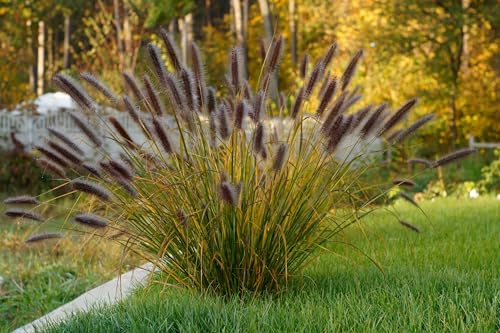
What You Will Receive: You will receive a Pack of 2 healthy Red Fountain Grass (Pennisetum setaceum 'Rubrum') starter plants, each currently 5-9 inches tall. Shipped bare-root and ready for planting, these vigorous starts are the most cost-effective way to create instant symmetry in patio planters or garden beds.

LIVE BLACK FOUNTAIN GRASS: This ornamental grass arrives as 2 live plants about 4 inches tall, suitable for transplanting into garden beds, landscape borders, or outdoor planters.
Overwintering Purple Fountain Grass Indoors Under Lights
Successfully overwintering Purple Fountain Grass indoors involves three essential steps. First, divide your parent plant by cutting it back to 6–8 inches, inspecting the roots, and potting small clusters (just a few stalks per quart pot) in fresh potting mix with time-release fertilizer planted deeper than before. Second, your setup is crucial; I recommend using flat-bottomed pots with drainage holes under grow lights to maintain warmth and encourage fresh green growth. Finally, stay vigilant throughout winter; monitor for new shoots at the base, pinch back the tops occasionally to promote density, and water regularly until everything is established. This will prepare robust plants for transitioning outside when spring arrives.
STRIKING SMOKY PURPLE-BLACK PLUMES: This Black Fountain Grass features fuzzy, smoky purple-black flower spikes that emerge in late summer, creating a stunning contrast with its deep green foliage. The plumes add a dramatic touch to your garden that lasts well into the fall.

Live Purple Fountain Grass Plant: Includes fountain grass in a 1 gallon container; features compact growth suitable for containers, borders, or small garden spaces

4 Red Purple Fountain Grass Plants Live, Ornamental Grass Live Plants, Purple Grass Great for Borders, Containers, 5-9 Inch Height
Division And Potting Preparation
How I learned the hard way that timing is everything when dividing purple fountain grass for indoor overwintering. I nearly killed mine by waiting too long. Here’s what works:
- Cut back to 6–8 inches before divisions. This is crucial for manageable potting.
- Shake out soil thoroughly to inspect roots and spot disease before it spreads indoors.
- Separate into small divisions of just a few stalks each, creating multiple plants from one.
I plant each division deeper than feels natural into quart-sized pots with potting mix and time-released fertilizer. Firm that soil down to stabilize those roots. Then I place them under grow lights and wait for fresh green growth. That indicates successful potting.
Indoor Growing Light Setup
Once those divisions are potted and firmed down, your work has just begun; maintaining proper lighting is critical for keeping them alive indoors. Your fountain grass needs adequate light to thrive. I place my divisions directly under grow lights and maintain warm conditions to encourage fresh green growth from the base. I’ve found that positioning the lights close enough stimulates the elongating shoots, while ensuring they are not so close that they scorch tender new growth. I check my setup daily and adjust as necessary. The result is vigorous basal shoots emerging within weeks. Without sufficient lighting, the plants become leggy and weak, leading to disappointment come spring. Investing in good lights now will ensure your overwintering divisions thrive.
Winter Monitoring And Care
- Monitor moisture strategically. I water deeply using trays that refresh automatically, allowing me to step back without focusing on each pot.
- Prune occasionally for mass. Pinching back top growth encourages bushier, more vigorous plants instead of leggy ones.
- Assess growth regularly. If divisions appear robust after several months, I consider dividing them again to keep plants small and non-rootbound.
Overwatering killed my first batch, as root rot can be insidious. Catching fresh growth indicates success; your divisions are not just surviving, they are thriving.
Prepare Divisions for Potting Before Winter Arrives
When winter approaches, it’s essential to prepare your purple fountain grass divisions quickly. First, cut the plants back to 6–8 inches. Next, separate the plants into small divisions, with just a few stalks each. To keep things tidy and protect the delicate roots, shake the soil away using a bucket. Then, plant each division into quart-sized nursery pots filled with potting mix and time-released fertilizer, going deeper than might feel natural. Firm the soil, water thoroughly, and place everything under grow lights. This preparation significantly impacts the success of your divisions come spring.
Ideal for all seed starting applications

Ideal for all seed starting applications
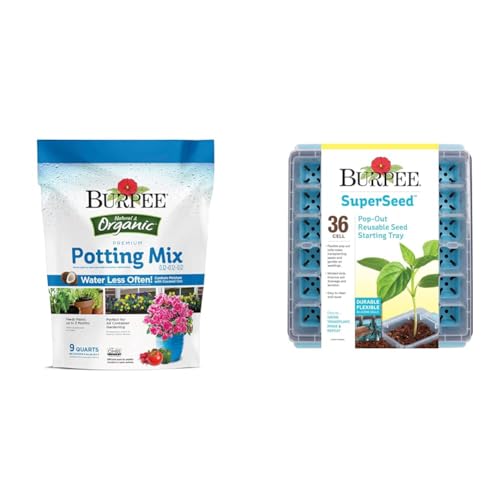
Product 1: ALL-NATURAL MIX: Burpee Organic Premium Potting Mix is formulated with plant food & coconut coir to promote seed & root growth and healthy flower, vegetable & herb plants. OMRI Listed for organic use. This premium mix releases essential nutrients immediately.
Pot Purple Fountain Grass Divisions in Quart Containers
I’ve found that quart-sized pots are ideal; they are large enough for root development while preventing excess soil that can become waterlogged. I mix in time-released fertilizer from the beginning, plant deeper than it may seem necessary, and pack the soil firmly. Using flat-bottomed, straight-walled containers allows for proper watering and monitoring of fresh green growth, which indicates successful establishment.

6000K Full-Spectrum Plant Lights: Similar to full-spectrum sunlight at noon, these LED grow lamps are professionally designed for indoor garden plants and herbs. Equipped with quality bright LEDs, the slim grow light emits a full spectrum ranging from 380nm to 800nm (each head includes 21 LEDs of 6000K white and 3 red LEDs), effectively promoting indoor plant growth throughout the year.

FULL SPECTRUM & NATURAL LIGHT: A19 full spectrum grow light appears 5000K white to eyes but has a red/blue light spectrum. Same as natural sun shine, perfect for tomatoes, cucumbers, peppers, leafy greens and herbs at all growth stages.

Flexible Mounting Options: Enjoy flexible installation with magnetic mounts or zip ties, enabling easy attachment to plant shelf, you can easily install the plant lights by yourself. This sleek design enhances both aesthetics and functionality in any space
Selecting Appropriate Pot Sizes
How did I determine the right container size for overwintering these divisions? Through trial and error. I found that quart-sized containers are ideal for purple fountain grass divisions; they are not too cramped and not overly large.
Here’s what matters:
- A flat-bottomed, straight-walled design facilitates consistent watering and prevents root rot during winter dormancy.
- Adequate soil volume allows proper root establishment while keeping divisions compact under grow lights.
- Stability during handling makes transporting and arranging containers under your growing setup effortless.
I pack soil firmly in these quart containers, planting deeper than feels natural, then backfill generously. This prevents shifting and provides roots with the anchor they need through winter months. Choose containers that feel substantial; flimsy pots will not suffice. I have replaced many cheap plastic ones. These quart-sized containers are reliable partners in keeping divisions viable until spring arrives.
Soil Mix And Fertilizer Application
Once your divisions are snug in their quart containers, the soil you pack around them makes a significant difference. I use a quality potting mix, never garden soil, because it drains properly and won’t compact around the roots. I plant those divisions deeper than their original depth and then top everything up with extra soil until I reach my target level. I pack firmly; loose soil leads to unstable plants and poor rooting. After that, I add time-released fertilizer right at planting. This slow-feeding approach keeps your divisions nourished through winter without shocking them. Getting this step right is crucial for successful growth.
Planting Depth And Container Stability
Where should the root ball sit in your quart container? This positioning is crucial for winter survival.
Here’s my approach:
- Position the crown level or slightly above the soil. This prevents rot and minimizes root impact during dormancy.
- Use flat-bottomed, straight-walled containers. These are essential for even watering and avoiding dry pockets that can harm divisions.
- Ensure drainage holes exist. Waterlogged roots can lead to significant issues.
I pack soil firmly around the division to stabilize it, but it should not be compacted. Think of it as a snug handshake rather than a vice grip. The root ball should not shift when you bump the pot. A common mistake I made early on was planting too deep, which harmed promising divisions more than anything else. Keep it shallow and stable, and your fountain grass divisions will survive the winter.
Keep Your Indoor Grass Healthy Through Winter
Why do so many gardeners assume their purple fountain grass won’t survive the cold months? It’s about intentional care. I bring my fountain grass inside before the first frost, placing divisions in quart-sized pots with well-draining soil. I position them under grow lights to ensure they receive consistent warmth and brightness. I avoid the temptation to dig up and fuss excessively; instead, I let the roots settle and monitor closely for fresh green growth, which indicates living tissue. I prune occasionally, maintain proper moisture without overwatering, and remain calm during dormancy. If there’s no new growth after winter, I replace them with hardier varieties and try again next season.

handmade: this bamboo water fountain Handmade from high-quality bamboo, it is durable and not easily cracked.

Purple Fountain Grass Pot: Purple Fountain Grass is a gorgeous, fast-growing, clump-forming, drought-tolerant perennial grass that forms a tidy, dense clump of purplish maroon blades topped with rose-red plumes.

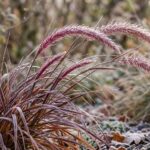
Attractive grass highlighted by fluffy, buff-colored plumes arching above foliage
Give Zone 7–8 Plants Extra Winter Protection
If you’re gardening in Zone 7 or 8, your purple fountain grass likely won’t survive winter without some intervention. I’ve learned this the hard way, watching my prized plants succumb to harsh freezes.
Purple fountain grass in Zones 7 and 8 won’t survive winter without intervention—I’ve watched my plants succumb to harsh freezes.
Here’s what actually works:
- Leave the foliage standing through winter to create a protective microclimate around the crown.
- Mulch generously with pine straw and surround the base with gravel to retain soil warmth.
- Cover plants with sheets or blankets during cold snaps when temperatures dip below 10°F.
Position your plants near sunward walls where microclimates form naturally. These warm pockets significantly influence whether your plants will survive or need replacing. Winter protection is essential in your zone if you want your grass to thrive come spring.

SOOTHING WATER FLOW FOR RELAXATION: Create a calming atmosphere with the gentle sound of flowing water. This indoor relaxation fountain helps turn your space into a peaceful retreat for daily unwinding, quiet moments, or focused work.

Fountain Grass is a stunning ornamental grass

Decorative Tabletop Fountain: Calming, zen ambiance with 3 tiers of gentle, soothing water flow
Look for These Signs of Life in Late Spring
Come late spring, typically May or early June depending on your zone, inspect that purple fountain grass closely. Look for fresh green shoots emerging from the crown. This indicates that the plant survived winter.
| Sign | What It Means |
|---|---|
| Green shoots at base | Plant’s alive—celebrate. |
| Brown, mushy crown | Likely dead—time to replace. |
| No growth by late June | Probably didn’t make it. |
| Tiny green tips | Hopeful sign—keep waiting. |
| Completely dormant foliage | Give it another week. |
Waiting can be difficult. Patience is important. If nothing emerges by late June in Zone 7, your winter hardiness gamble likely didn’t pay off. Consider replacing it with something more resilient.

Helps save on water
When Should You Expect New Growth in Spring?
You’ve done the hard part; you’ve waited through winter and scrutinized your purple fountain grass for signs of life. Here’s what I’ve learned about timing:
- Late spring to early summer marks your window for new growth, typically in May or June depending on your zone.
- Zone 7 and colder means patience; expect delayed emergence compared to warmer regions where perennial growth begins earlier.
- Root survival determines everything. If the crown tissue survived, shoots will push through, but severe cold can extend dormancy weeks longer.
Waiting can be challenging. If you see no growth by late summer, it’s time to reconsider your options. Your diligence is crucial in this process.
Grow Purple Fountain Grass in Containers Over Winter
Bringing purple fountain grass indoors for winter requires real commitment. I use quart-sized nursery pots with quality potting mix, planting divisions deeper than they naturally sit. Here’s my winter care strategy:
| Care Element | My Approach |
|---|---|
| Lighting | Bright grow lights, non-negotiable |
| Watering | Tray beneath containers, infrequent |
| Potting Mix | Well-draining, never waterlogged |
| Temperature | Warm conditions consistently |
| Pruning | Light top-growth trimming |
I monitor closely for fresh green growth, which indicates the plant is alive. I’ve lost plants due to overwatering indoors, so I am disciplined about hydration. Occasional pruning prevents leggy stems while encouraging base shoots to fill out nicely. If nothing is happening after a reasonable window, I reassess. Sometimes swapping for cold-tolerant varieties is a more practical choice. It’s important to find what works for your specific space.
What to Do If Your Plant Dies Over Winter
How do you know if your purple fountain grass is actually dead versus just dormant? I would wait two weeks into late spring before making a decision. Look for new shoots sprouting from the base; that indicates recovery may be possible.
If you determine that your plant is genuinely dead, consider these steps:
- Check your receipt. If you bought it recently, many stores will honor returns on dead plants, so take advantage of that.
- Swap for winter hardiness. Choose cold-tolerant ornamental grasses that thrive in your zone instead of battling against nature.
- Relocate your setup. Move to a warmer microclimate or consider container growing indoors for the next season.
Accepting a plant’s limits can be more effective than fighting against harsh winters. It’s a more practical approach to gardening.
Propagate Purple Fountain Grass Divisions for Next Spring
If your purple fountain grass survived winter, it’s time for propagation. I will guide you through creating divisions that will yield multiple plants next spring; it’s easier than you might expect.
First, cut the plant back to 6–8 inches and divide the clump into small sections with just a few stalks each. Shake off the soil, inspect the roots, and use loppers to cut the rootball in half or into quarters for larger plants.
| Step | Action | Container |
|---|---|---|
| Pot divisions | Plant deeper than original | Quart-sized nursery pots |
| Water deeply | Use water trays | Ensure drainage holes |
| Monitor growth | Place under grow lights | Indoor setup |
Water evenly, prune occasionally, and observe fresh green growth emerging. This is the benefit of winter hardiness; your efforts in propagation will yield results.